Jaime Hope: Habit That
Read the full transcript
Jaime Hope
Jaime Hope can help you be healthier and still live your life.
📚 Books by Jaime Hope
Transcript
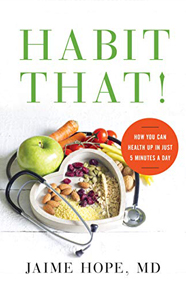
[0:00:14] CH: What’s up everybody, it’s Charlie Hoehn, the host of Author Hour where I interview authors about their new books. In today’s episode is with Dr. Jaime Hope. She is the author of Habit That. Now, Jaime is a physician working outside of Detroit, Michigan in one of the busiest emergency departments in the country. In over 12 years on the job, she’s learned that no matter what brought her patients to the ER, they all want the same thing. Which is to live happier, healthier lives. That’s what this conversation is about. Jaime believes that you don’t have to spend an hour a day exercising and an hour doing yoga and an hour shopping for organic vegetables. Who’s got time for that? If you have just five minutes a day, Jaime believes that you can be healthier and still live your life. In this conversation, you’ll learn about the four pillars of health and how they can support you in your daily life. Whether you’re a busy mother of three or a retiree, this episode is for you. Now, here’s our conversation with Jaime Hope.
[0:01:35] Jaime Hope: All right, confession. I was the pickiest eater ever. If I had to describe my diet when I was in my teens and 20’s, it would not be inaccurate to call me a Cheetotarian. I hated healthy foods. When I was a kid, you know, the rare occasion my mom would try and make us eat canned green beans, it was just the most traumatic thing I would sit there and stare at them, getting colder and colder on my plate until bedtime if I had to. I was not going to eat them. I remember, I think I was 20 years old and somebody handed me a peach and I was like, “Why is it fuzzy, this is so weird.” One can say, I did not consume very many fruits and vegetables. I just didn’t like any of those things, I was perfectly content to eat chicken fingers and French fries at a restaurant and you know, it was hard, it was very difficult. Everyone’s like, “Oh yeah, eat salmon, eat vegetables,” and I was kind of mildly horrified but – I started going through the process of learning about nutrition and getting ready for medical school and I was thinking. “Gosh, it’s going to be really difficult for me to tell people that you need to get healthier while I’m wiping Cheetos dust off my hands.” I thought it would be appropriate if I’m going to try and help teach people that maybe I should try a couple of things myself.
[0:03:08] CH: What happened once you started trying things yourself. I mean, did you change physically? Did you feel any better?
[0:03:16] Jaime Hope: You know, I did. I didn’t think that food had that much of an impact on how I felt, it was a huge difference. I’m going to be honest here. I started off small. I didn’t change all of my habits all at once. I started just by making sure that I was drinking enough water. I put a chart in my closet, in my apartment and my roommate still found it and made fun of me a little bit of course but I was just checking off all the times that I was drinking enough water. I found that after a couple of weeks, I didn’t really need to check it off anymore. It had turned into a habit and so from there, it was so interesting, I was, I wonder what else I could habit? I said okay, I’m going to start eating, I think it was a very modest goal, something in retrospect, kind of embarrassing, three servings of vegetables a week and put it on my check box and I’d have to stare at that every time I open my closet, I didn’t eat my vegetables. Gradually, it started getting better and better and watching this change and feeling good, it all kind of started snowballing. It’s been really fun.
[0:04:29] CH: I remember the first time we had a call, I remember thinking, “Wow, this is a doctor who seems like very joyful.” A lot of doctors I’ve had in the past, I’ve thought, “man, you’re not exactly the shining example of health or I’m skeptical of your advice just because of how you look and operate.” You seem like a very healthy happy person and I’m curious, you were making these changes, let’s start with water for instance, when you started increasing your water intake. What did you actually notice about how you felt, how you looked because I think this is advice that a lot of people obviously hear, you got to drink enough water but they don’t really know what the finish line actually looks like, what that transformation feels like?
[0:05:28] Jaime Hope: That’s a great question. You wouldn’t think that something so simple as water would have such an impact but we forget that we’re 70% water and you will die without it. I’m surprised at how many people are surviving on pop or coffee and not ever actually drinking any water. What I noticed was my skin actually got a little bit better. Partially because I was now drinking water instead of some other things so that was a good change. You realize, “hey, you know what? My pee is not supposed to be bright yellow,” my kidneys actually like it when they’re hydrated. Some of the times when you’re feeling a little bit hungry or even have a little bit of a mild headache, sometimes that can be from dehydration and so a lot of that stuff just went away.
[0:06:11] CH: Interesting. What about increasing your vegetable intake, I mean, if you're eating Cheetos all the time and not eating vegetable, I know people who never eat vegetables and they seem like they’re fine, some of them actually. What did you notice physically?
[0:06:29] Jaime Hope: It’s funny, you can really survive on Cheetos and pop for a long time, it’s impressive, your bod is exquisitely designed to survive but I decided instead of living in survival, I wanted to try and optimize. It didn’t happen overnight, it’s not that I took my first bite of broccoli and then started creating the litter but over time, my digestion got better because your intestines are designed to digest that kind of stuff, not weird bright orange crunchy things and so my – you know, I had less – over time I had less irritable bowel, started feeling better, started feeling more energy and then becoming more adventurous. I mean, for vegetables, I started like celery and carrots. Let’s start easy here. It took maybe a year or two before I was even willing to do anything more than poke suspiciously at a bristle sprout. Now, they’re one of my favorite foods, it’s so interesting how that works.
[0:07:29] CH: Yeah, you can sort of rewrite your taste buds over time, it doesn’t take too many weeks to do, if you do it consistently.
[0:07:37] Jaime Hope: Yes, I was as skeptical as anyone, even knowing the science, putting that in front of a picky eater, it was very difficult and I found, the more I tried stuff, the more I actually liked it. As you start getting more towards eating the healthier stuff, your taste for junk, it gets worse. You’re like, “this is too salty, this taste like chemicals, this taste awful.” I’m sure my 15 year old self would be horrified by the stuff I eat now. That’s also true in reverse.
[0:08:12] CH: Yeah, this brings us to kind of the first part of your book is about, which is finding the motivation why this actually matters, can we paint the picture here a little bit of why it matters to have these habits versus not.
[0:08:31] Jaime Hope: It makes a huge difference. We all know that we need to get healthier and you know, eat better, exercise more, that kind of stuff. Until you connect with that, for some people, I mean, for me, I was in my teens and 20’s. At that age, you’re practically immortal, you know, cut off your arm and you just grow a new one, you know? You’re not even sore. That unfortunately wasn’t motivating for me, I wasn’t thinking, “gosh, I don’t want to be having health problems 30, 40 years from now” because that just doesn’t even seem realistic. For me, my why, why I was doing it and why I kept sticking with it was because I had this big goal of going to medical school and being uncomfortable with the thought of being a hypocrite. The doctors that you described that are so unhealthy the whole due is I say not as I do thing. I just said, that I can’t do that. I can’t be that inauthentic and so that was my why for what was driving. That’s not going to apply for somebody else if that’s not what their goal is. As I started learning more about behavior change and interacting with patients and stuff like that, connecting with something that actually helps motivate somebody makes a huge difference.
[0:09:43] CH: Could you give a couple examples, motivation for patients of yours that you’ve worked with?
[0:09:51] Jaime Hope: Yes, I have found, there can be a bit of a disconnect between what they’ll tell their doctor and what is actually true. I’ll sit down and have some pretty open conversations like yeah, I just want to get healthy. You just kind of look at them, give them the side eye. It’s really something like I want to quit smoking because I heard it can cause wrinkles. The black lung and the lung cancer and stuff like that might not be enough of a motivation for somebody to quit. You know, getting wrinkles, that’s fine. I literally heard somebody say, “I am going to eat healthier because that B word, Heather is skinnier than me and I will not live in a world where she is better than me.” It wasn’t the friendliest type of why but sometimes –
[0:10:41] CH: It was honest.
[0:10:43] Jaime Hope: It was honest, yes. That’s the kind of stuff that motivates you. Like the woman, it really struck me that wanted to get healthier and she said for the first time in her adult life, she just wanted to be comfortable having sex with the lights on and not wearing a baggy T shirt.
[0:10:57] CH: Yes, I’ve heard a friend of mine has said that before, yeah.
[0:11:02] Jaime Hope: Yes.
[0:11:03] CH: I’ve heard that.
[0:11:04] Jaime Hope: When you connect with that, then it makes it easier because quite frankly, I mean, Charlie, we all know we’re supposed to eat healthy and you hear your doctor, it’s like… that doesn’t do anything for you. When you connect it with something that you value, all of a sudden, it’s not such a chore to stick with.
[0:11:24] CH: very good point, yes. That is really the first part of the book, the very first chapter is finding that real why and in that first part, you also part, you also talk about working smarter, break this down for me because it’s easy to hear this but it’s difficult to actually implement for a lot of people because they want to work harder.
[0:11:47] Jaime Hope: Yes, it’s just you know, if I just beat myself into the ground, all of a sudden it will get better. It’s no. What happens is, you know, using the example of new year’s resolutions, we make these big, vague goals, “I’m going to get healthy this year.” But we don’t stick to those, I mean, new year’s resolutions are notoriously bad for people actually following through on them. The reason is, it’s more, you know, as exhibits says, it’s really more of a wish or a confession than an actual goal. I helped people take a goal so for me, the big overarching goal, at the very top of the piece of paper so to speak is to become a healthy person. Then breaking it down and getting more and more specific for you, for me, my first goal was very specific. I’m going to drink this number of glasses of water in a day. That’s specific. No question, check it off and so instead of just saying, “I’m going to get healthy,” what is your goal specifically. You’re going to exercise three times a week, for this many minutes. Then, part of the smarter is just even considering things like roadblocks. Okay, what happens if you hurt yourself or if you get sick? How are you going to still achieve this goal and really helping people look at what’s realistic. For me, I am so not a morning person. All of those years in medicine has still somehow never managed to convert me. I work afternoon shifts and it’s great. If I set a goal to work out at five in the morning, I’m not going to stick with that. Finding you know, something that’s going to be realistic that I’m going to do that, I’m actually going to stick with. I work out in the afternoon or later in the morning after I drop my kids off at school and helping people go through this very specific goal setting process to help set you up for success.
[0:13:44] CH: Right. Yeah, I found I have to do something every single day at least for a half hour, otherwise, I feel like I’m going berserk and going to the point of working smarter, not harder. I always, not always but very often, used to punish myself mentally if I didn’t work out. I gotten a lot better, I don’t have this problem as much anymore but if II go on a walk with my dog or just on a walk or something, that is enough. Yeah, I mean, it just has to be a part of your routine in order for it to become a habit and to get the momentum you're talking about.
[0:14:36] Jaime Hope: Yeah, you have to incorporate it into your current lifestyle. We always, you know, picture this amazing lifestyle where we’re doing yoga every day and working out and making green smoothies and all of these things.
[0:14:48] CH: And getting all the Instagram post, yeah.
[0:14:51] Jaime Hope: Yes. If that doesn’t fit with your current schedule or your current reality, the odds of you doing it are pretty slim. I always just like to bring people back to, this is the realistic context of what your life is right now. I would rather you spend five minutes doing something and being able to check a box and feeling good in getting yourself some momentum than not do anything at all because you don’t have an hour to work out like Rocky.
[0:15:20] CH: Yeah. Jaime, what is your typical day look like?
[0:15:25] Jaime Hope: You know what? I actually have a wonderful variety in my schedule. It depends on, if I’m on shift in the emergency department, that’s 10 hours and we don’t get breaks. You know, on a shift day, either before after my shift if I can, I try and do some type of workout, even if it’s just the opportunity to go for a walk, I bring food with me because we don’t get breaks and try and eat while I’m there because I have found, it’s very difficult to be a good doctor after 10 hours of no food.
[0:15:54] CH: Yeah.
[0:15:55] Jaime Hope: You know, I look at my day ahead, how can I best set myself up for success? If it’s a day off, if I’ve been doing you know, academic stuff. Yesterday, I was teaching at the medical school, today I’m doing a podcast and then this afternoon, I‘m playing with my kids and taking them to gymnastics. I kind of calendar out, I look at the week, look at the month and say, what day – you know, on a day that I have a shift, plus a meeting, I don’t have time to work out so I don’t schedule it that day. Then I don’t feel like you talked about. You feel guilty, you’re hard on yourself, you’re beating yourself up. If guilt and shame burned calories, we would all be – we’re so hard on ourselves and so mean to ourselves. If I had said, I’m going to work out at five AM today and I’d be sitting here like yup, I’m a loser. Failed my goal again as supposed to looking at my schedule and saying, this is what I can actually do and then as you get more and more success, then you feel more motivated to continue.
[0:16:54] CH: Right. Let’s get into actual tactical advice and this brings us to the second part of your book where I love how simple you kept this book by the way. The four pillars of health, eat, sleep, burn, release. Now, you just mentioned food, not being able to you know, sit down for a meal for 10 hours during your shift. What are your rules for people for eating?
[0:17:24] Jaime Hope: I mean, the first rule is, food is still supposed to be enjoyed. Even when you’re eating healthy, it’s not supposed to feel like torture. We need food to survive and so taking all the wonderful aspects of food. Different flavors, the social aspects and stuff like that in creating healthy foods in those things. I bring a healthy dish to a party. I’ll still eat some of the other stuff there but then I know I have something that I can rely on that I’m going to eat that’s healthy. For years, I used to, I experimented it and let’s just say all of my experiments didn’t go as planned. I was making dinner for my parents once and I was so proud of it, I used every healthy ingredient I had read about that week and my dad very lovingly said, “Honey, this tastes really healthy.”
[0:18:21] CH: What a slap in the face.
[0:18:23] Jaime Hope: What a sweet man, what a nice way to word this taste like ash, pleases don’t serve this again. Then I would bring food to parties and they would kind of suspiciously poke it, “Okay, this looks like brownies but are there black beans in here?” You know, experiment with food, play with it, play with flavors, we’re supposed to have a healthy fun awesome relationship with food and when you make food the enemy, it just set you up for struggle if you focus on all the stuff you can’t have, all the things you’re depriving of yourself, we almost get this form of like abstinence where, you know, you’re on your diet all day long. I’ve been so healthy, dang it, I’m going to show that rotten doctor, hope I’m going to eat five brownies as a reward for yourself and so we have this crazy adversarial relationship with food and I would love to bring people back to a place where we’re actually just enjoying it because it’s so good.
[0:19:20] CH: What do you say to people who are I guess, obsessed with the newest diet or now I’m eating keto, now I’m eating low carb, now I’m eating vegetarian, vegan, they’re worried about doing everything right.
[0:19:40] Jaime Hope: Yeah, honestly, it was kind of exhausting, I call it the bullshit of the month club, what are we doing this week, you know? I joke that you can just take a dart and go to a bookstore into that healthy diet section and throw a dart at something and try it. Now, the kind of the dirty secret about those is you can lose weight on just about any crap diet. It can be the bacon and donut diet but if you're only eating so many a day, you’ll still lose weight and I think people have lost the point of what we’re doing. If you remember the piece of paper with our big goal at the top where you’re a healthy person, eating bacon and donuts is not consistent with that. You might have dropped a couple of pounds which we all know you’re going to regain as soon as you go back to your eating habits. Honestly, they kind of drive me nuts. I see why they’re bestsellers because we’re all looking for a quick fix, we want a solution and then slap a sexy name on there and you are golden. You can’t stick with that and so, as not sexy as it is, what I’m encouraging people is to kind of drop all the drama and just incorporate long term healthy habits into their regular life that they can sustain.
[0:21:00] CH: What are the few habits that you really recommend around eating?
[0:21:07] Jaime Hope: Certainly, drinking enough water. I would love people to rethink their drink in general. All of the pop or I guess soda, I’m from Michigan so we call it pop.
[0:21:18] CH: Right.
[0:21:18] Jaime Hope: Soda, the so-called energy drinks which are essentially poison and getting – I would love it if people got all of that crap out of their diet completely. And just strange things like you know, water, tea and coffee without a bunch of stuff in it.
[0:21:32] CH: How do you know you’re getting enough water by the way?
[0:21:34] Jaime Hope: You look at your skin, is it dry if you pinch it, you know, does it make a nice tint and then fall back down pretty quickly or if you pinch it, does the skin stay up there? You're not hydrated enough. You can look at your pee. Unless you had a multivitamin that has a color in it, it should be fairly clear. That’s how you can tell you’re not drinking enough. Probably, the two other biggest things despite all the fad diets out there, you know carbs are good, carbs are evil. Fat is good, fat is evil, it can be very confusing. I think we can all agree that vegetables are good for you. Just about every diet agrees with that. So if people are starting off unhealthy, that’s a really good first place to start and just don’t be crazy. You have to have a fat in your diet. You have to have protein meals are all normal things your body needs to function. The whole low far craze of the 80’s I think caused a lot of depression and hormonal problems in people. So don’t be crazy about cutting something out and then the last thing would be to review how you’re actually consuming your food. Charlie, have you ever seen somebody eat so fast that it’s like did you even chew that and wondered how that tastes like?
[0:22:50] CH: Every time I look in the mirror Jamie.
[0:22:53] Jaime Hope: Oh no, busted.
[0:22:56] CH: No, I hear you. We had another nutritionist on the show, Charlotte Kikel and her number one recommendation was just to sit and don’t eat in your car. That was rule, the most common rule she gave to her patients was stop eating in your car.
[0:23:17] Jaime Hope: Oh yeah because it is generally not the healthiest food. So I just encourage to sit down and just chew your food. If you just chew it, you taste it and enjoy it. I have a rule for my kids. If you don’t like it eat it fast, if you like it eat it slow. Why would anybody scarf down a brownie in record time? You are wasting it because you are not even enjoying it and by slowing down and chewing your food, you give your body adequate time to send you the signals when it is full. Versus if you eat so fast you miss the boat and then all of a sudden you go from starving to scarfing to stuffed without ever getting anywhere in the interim. So just slowing down and chewing makes the biggest difference. You will find you actually eaten less.
[0:24:02] CH: Is there anything surprising in your recommendations for eat, sleep, burn, release that listeners may say, “Oh I haven’t actually tried that one before or I haven’t heard this before” because these recommendations to me seem like this truly are the pillars of how. So these are timeless, these are things that we just need to be reminded of right?
[0:24:27] Jaime Hope: Yes and it is not – it doesn’t need to be so complicated and have 57 steps just to get to one thing but when I find the most that people are missing and surprised about is when they think about health, people always focus on diet and exercise and completely miss the other two pillars. It doesn’t matter if your biceps are strong enough to lift up a Buick, if you are getting crappy sleep and you are stressed to the max. And so people trying to lose weight get frustrated sometimes. I am doing everything right, I am eating healthy, I am exercising, why isn’t this coming off and they are sleeping three hours a night and they are so stressed. You are sending your body this message that it’s in hard times that things are difficult, that things are bad and your body is way more concerned about saving your butt than how you butt looks. Hence people forget that they’re sending your body the wrong message. And it is just hard to let go of weight and it’s hard to feel energetic and healthy if you are not actually focusing on all of the pillars.
[0:25:29] CH: So talk to me about sleep. I am such a believer in sleep especially after having a baby daughter, you have to have sleep otherwise you lose your mind. So tell me what are the rules for sleep?
[0:25:46] Jaime Hope: Yeah, there is nothing like having a baby to make you realize how much you used to love sleep and so we’re doing a lot of things wrong with sleep. First of all, we’re usually on our phone right up until we’re like, “Ah I’ve been looking at memes and it’s 1:30 in the morning, whoopsy!” so I like to ban electronics from the room. Sometimes I hear this BS like, “I need my phone to have it as an alarm clock” seriously? An analog alarm clock is $4. You just spend the $4 to get an alarm clock and get your phone out of your room. The electronics, the television, all of those things stimulate your retinas in the back of your eye and tell your brain it’s day light, don’t product melatonin don’t go to sleep.
[0:26:29] CH: And melatonin and correct me if I am wrong Jaime but I have read that melatonin is an incredibly powerful hormone for preventing cancer and basically preventing all of these diseases that we are all afraid of getting.
[0:26:46] Jaime Hope: Yeah, you know it is actually kind of bordering on magical and the crazy thing is you don’t need to go out and buy it. Your body produces this naturally if you would just stop screwing it up, it is very easy. So I always say cool, dark and quiet. Your room should be cool, dark and quiet. It should be 60 to 67 degrees. You don’t want to sleep when it is too hot and I realize that if it is the middle of summer in Arizona could be difficult but do your best. It needs to be dark, you need to get rid of the electronics. You need to get rid of the fake lights and then quiet. Now for me, kids, dogs, all that stuff, for me quiet means turning out a sound machine or a fan. So when I am hearing that white noise then I am not listening to every little creek or noise in the house and then of course if one of the kids gets up, I am still going to hear them but that way I can just relax.
[0:27:35] CH: Yeah, it’s funny that you mention that. There is a certain amount of decibels that you can hear before it disrupts your sleep and people who are used to going to bed with next to a highway or even with the TV on they think that because they are accustomed to it, it is not affecting them but sound actually really surprised me how much it affects your sleep.
[0:28:02] Jaime Hope: Yeah and it is amazing how much people underestimate that. They’ve done studies in sleep labs where they made sounds that weren’t quite enough to wake the patient up but they change their level of sleep and they are hooked up to brain monitors. They’ve got significantly less around sleep. They were more tired when they woke up even though they perceived that they slept well. So it is not healthy for you. You really want to avoid hearing that. And I travel because I do professional speaking and so I actually have an app or a little travel sound machine because a hotel sounds different than my house and so it is not distracting me and so now it has actually become an anchoring sound. So when I turn that on, my body knows “oh okay, it is time to relax and go to sleep” and it’s actually become a beneficial ritual as well.
[0:28:45] CH: So sleep is huge, let’s talk about – actually before we talk about exercise, I want to talk about release. Stress, talk to me about this because this I feel is the most overlooked of that people don’t even process that they need to do it.
[0:29:07] Jaime Hope: Yes, this was honestly one of my favorite chapters to do because I feel like this kind of stuff is not mentioned nearly often enough in books about health and sometimes if people don’t think that they’re stressed, they are not going to go buy a whole separate book about it. So I am sneaking that in because it is something that people need to address. You know I work in emergency department. We are talking level one trauma center. I’m outside of Detroit so as you can picture, this is not a relaxing environment. It is very high stress and so along the way, there is a lot of burnout in our industry. So I learned to develop this rock star ninja level coping skills with stress and starting to even just recognize if somebody asked you how you’re doing, “Oh I am fine” how does your body manifest stress? So for some people they get tightness in their shoulders kind of their neck and all across the traps there. Where they’re tight all the time or they grind their teeth or they get a little chest pain. For me, I get stomach upset. So I know no matter what I am telling myself and other people if my stomach is getting upset, I should probably take a break, dial it down and relax a little bit. So getting people to recognize how their body feels when it’s stressed and different things that they can do about it because it is so important.
[0:30:30] CH: So what are some of the routines that you do yourself or recommend to your patients?
[0:30:39] Jaime Hope: So I love the idea of meditation. I have to find a different way because the whole sit in lotus position and clear your mind that did not go well for me. About less than a half a second and two I’m like, “Okay clear my mind. Oh wait no, that’s a thought. No stop thinking about that that’s still a thought. Dang it! I am doing it wrong” and getting frustrated. So I found I needed to do more of a guided meditation where I need to listen to it. For me, one of my favorite forms of stress relief is just being outside. So I will go for a walk or go for a jog depending on how I am feeling that day and just be outside. To me that’s meditative and then depending on how I feel some days in order to get rid of your stress, you want to do something like a boxing class. You want to punch it out, you want to get all of that out and some days, you want a hot bath or a yoga or pet your dogs. So I say have a back pocket list of at least 10 things you can do for stress relief and there’s things that you can do even during your day. I started doing one of my favorite ones because I used to commute to work and that was not relaxing. Everybody drives like an idiot. Do people not know how to use a blinker? Is that not a thing? So instead of getting myself worked up, I would either put on an audio book that I loved or a podcast or just crank up the music and start singing. So now instead of that hour where I came home and I was so stressed and keyed up, actually use that hour as my stress relief time and all of a sudden, life got way better for myself and the people who have to deal with me afterwards.
[0:32:13] CH: What would you say to somebody who’s at peak stress levels? They’re super anxious and they are just stressed out like what is your emergency go do this for an hour and that will cut it in half?
[0:32:28] Jaime Hope: The thing that people underestimate the most is just breathe. It is something that we do all day so we forget about the importance but when you are in that state, that high anxiety. It’s the fight or flight state. It’s the same thing we feel when a bear is chasing us or someone just cut us off in traffic and we have to run off the road. You can change your actual physiology and your body’s hormone response if you just slow down. Focus on your breathing. One of the thing you can do is called the square breathing, breath in for four, hold for four, out for four, hold for four and just calm your body down and bring that down. Now for some people if you can’t calm down in that instance and the first thing you need to do is just go pound it out, go run, go punch a punching bag and stuff, that’s fine too. Let it out but eventually you need to get to that spot where you’re breathing and slowing down and getting your body out of that fight or flight response. We’re not meant to stay in that state. It is supposed to be a temporary state only when necessary to save our lives.
[0:33:30] CH: Yeah, have you by the way heard of trauma releasing exercises or tension releasing exercises, TRE?
[0:33:39] Jaime Hope: I have heard of that. I don’t know enough about it but the little bit that I heard about it seems pretty effective.
[0:33:45] CH: Yeah, it’s really cool. I would recommend checking it out. If somebody is super stressed, if any listeners hearing this and they’re like, “I am in that state right now” I completely agree with what you said Jaime for the real intense ones where you feel like you’ve been through trauma, it hasn’t been released. It’s been physically stored in your body. The theory behind it is that animals when they get caught and brought into captivity, they get such an adrenalin rush just like us. That they physically have to release it through tremoring and so you will see, I mean there’s videos you can watch of a deer who’s almost been caught by a lion or an antelope I guess and they are kicking their legs and tremoring and it releases the adrenalin and the tension in their body and you can trigger these tremors in your own body by doing a series of stretches that focus on certain parts of your hips. I forget the muscles, the names of them but I have done them before. It is really, really effective and even though it might sound a little weird, it seems to work really well but in any case, great suggestions for releasing stress and now I am going to loop back to burn, to exercise and again, you seem like a very healthy person. So what do you do for exercise?
[0:35:19] Jaime Hope: I do things that I find enjoyable. I have certainly tried forms of exercise that were not a good fit for me. Some people love to go out and run 10 miles that’s not my thing. I will maybe run a mile and walk a couple and that doesn’t bring me that huge level of enjoyment but I like dancing. I like some group fitness classes. I like high intensity interval training. I like lifting weights because I like feeling strong and I tried swimming as an exercise and that was not my thing. I didn’t like it all but a lot of people do because it is very low impact. It is good on your joints and I tried a variation of Zumba class and I don’t think I have ever felt less coordinated in my life. It was pretty ridiculous so I encourage people to get a variety and try stuff. Exercise shouldn’t be torture, there can actually be a lot of fun and joy in it and I do exercise with my kids. They are about to turn five and seven which is so big. Yesterday we got every ball in the house and just had a ball war. We were throwing them at each other and ducking and diving and running around and laughing and it was fun and that’s a good activity too. I was sweating by the end, those kids are maniacs.
[0:36:42] CH: Yeah and athletic I am sure.
[0:36:44] Jaime Hope: Oh yes.
[0:36:45] CH: Yeah that’s awesome, playing with kids is not just a great workout. It is also – I remember reading a study of 4,000 people and they were asked, “What in the previous day brought you the most joy and happiness?” and of the dozens of responses the most common one was playing with kids.
[0:37:10] Jaime Hope: Oh yeah, it is so fun when you see the world through their eyes. They will put on a cape and make anything into a boat or the floor is lava and it is so fun.
[0:37:19] CH: Yeah, exactly. It is a great way to release that stress as well and so your book is Habit That, it’s got a number of appendixes as well that have some great tips in them, worksheets and I love how simple this book is, health doesn’t need to be this super complicated thing if you just focus on getting the foundational parts right, you can get 90% of the way to your goals in a matter of two months, it’s crazy.
[0:37:56] Jaime Hope: Yeah, it is so much less complicated than people think but the complicated things with sexy name sell better books but this is actually science. This is how the body works and this is how human habits and human psychology work and it is so much more simple than people think. Why not just instead of going against our human nature just use it to our benefit.
[0:38:18] CH: Right, so I’ve got a couple more questions for Jamie then I know you have to hop off but the first question is what has been a favorite transformation that you’ve seen in a patient who’s implemented these four pillars of health?
[0:38:37] Jaime Hope: This is fun because I have the opportunity to see so many people over the years but one of my favorite is a family member who came and stayed with me for a little while and he is and I mean this in the most loving way, one of the most assonant and stubborn people that you could imagine. He is not going to be told what to do by anyone let alone some sassy doctor. So he used to go to his doctor’s appointments and he would tell him: “Okay you could do this and this but not that” completely and so I knew if I tried to tell him what to do that was just going to activate that kind of inner oxidant defensive thing so that obviously wasn’t going to work. So as he was staying with me I was just living my own habits and he quietly watched and then I noticed him starting to do some of stuff and kind of eating the stuff that I was eating and I would make it for him and I would go for a walk or a run and that he would go for a walk. And started off small and just watch it change over the years and he’s lost 65 pounds and I mean he has recently turned 70. So this is not somebody who’s goal is to be an underwear model or an Olympic athlete, he just wanted to feel better. He enjoys travel and doing stuff, his why was just about being able to be there for family and stuff like that and he embraced my whole slow and steady, just change your habits and stick with them and sustain them and it’s remarkable how far he’s come and he has stuck with it. It has been years now.
[0:40:15] CH: That’s fantastic. Two more questions, the first one is where can our listeners find you, follow you, potentially get in touch with you?
[0:40:25] Jaime Hope: A couple of different ways, my website is drhopehealth.com and then the place that people interact with me the most is I created a Facebook group called The Habit That Tried and so we posts all kinds of stuff, articles, sometimes ridiculous memes, silly stuff or somebody will say, “Hey I am struggling with ways to incorporate vegetables into my diet” and then the tribe will say, “Oh here are things that I’ve tried”. It is not just about me teaching, it is a group effort because sometimes somebody will come up with an amazing idea that I never would have thought off and it is just for support. I am having a terrible week, I have done no exercise and nobody is like, “Oh you’re a terrible person” because all of the tribe were all like, “Oh yep, I have been there, get back in when you’re ready, how can we support you” so it is a really nice encouraging loving place to be because we are all just real regular people.
[0:41:27] CH: That’s great and the final question I have is for you to give our listeners a challenge. What is the one thing they can do from your book this week that will have a positive impact?
[0:41:40] Jaime Hope: Pick a goal. Don’t make it 50 things or I am going to lose 100 pounds in a week, pick one goal even if it is just as simple as drinking more water. Record it, put it on a chart on your wall, do something and watch yourself tick off those marks and you’ll get that success of the quick win, that seeing something completed and then you realize how easy it is to do goal setting and then one by one you are going to start changing your healthy habits for the good. Just pick one and just start.
[0:42:14] CH: The book is Habit That, it is out on Amazon. Dr. Jaime Hope, thank you so much for being on the show.
[0:42:21] Jaime Hope: Charlie this was so much fun, thank you so much for having me. I really appreciate it.
[0:42:25] CH: It was a pleasure. Thanks again to Jaime Hope for being on the show. You can buy her book, Habit That, on amazon.com. Be sure to check out authorhour.co for full show notes and a transcript of this episode. Thanks for tuning in on today’s show. If you liked what you heard, here is what I want you to do next. Open up the podcast app on your phone or iTunes on your computer and search for “Author Hour with Charlie Hoehn” and then click “ratings and reviews”. Take 10 seconds to rate this show or leave a review. It is a small favor but it’s really the best way to show your support and give me feedback and if you know someone else who’d love Author Hour, take another three seconds to text them a link to this episode. We’ll see you next time.
Want to Write Your Own Book?
Scribe has helped over 2,000 authors turn their expertise into published books.
Schedule a Free Consult