Cassidy Phillips: Blissful Ignorance
Read the full transcript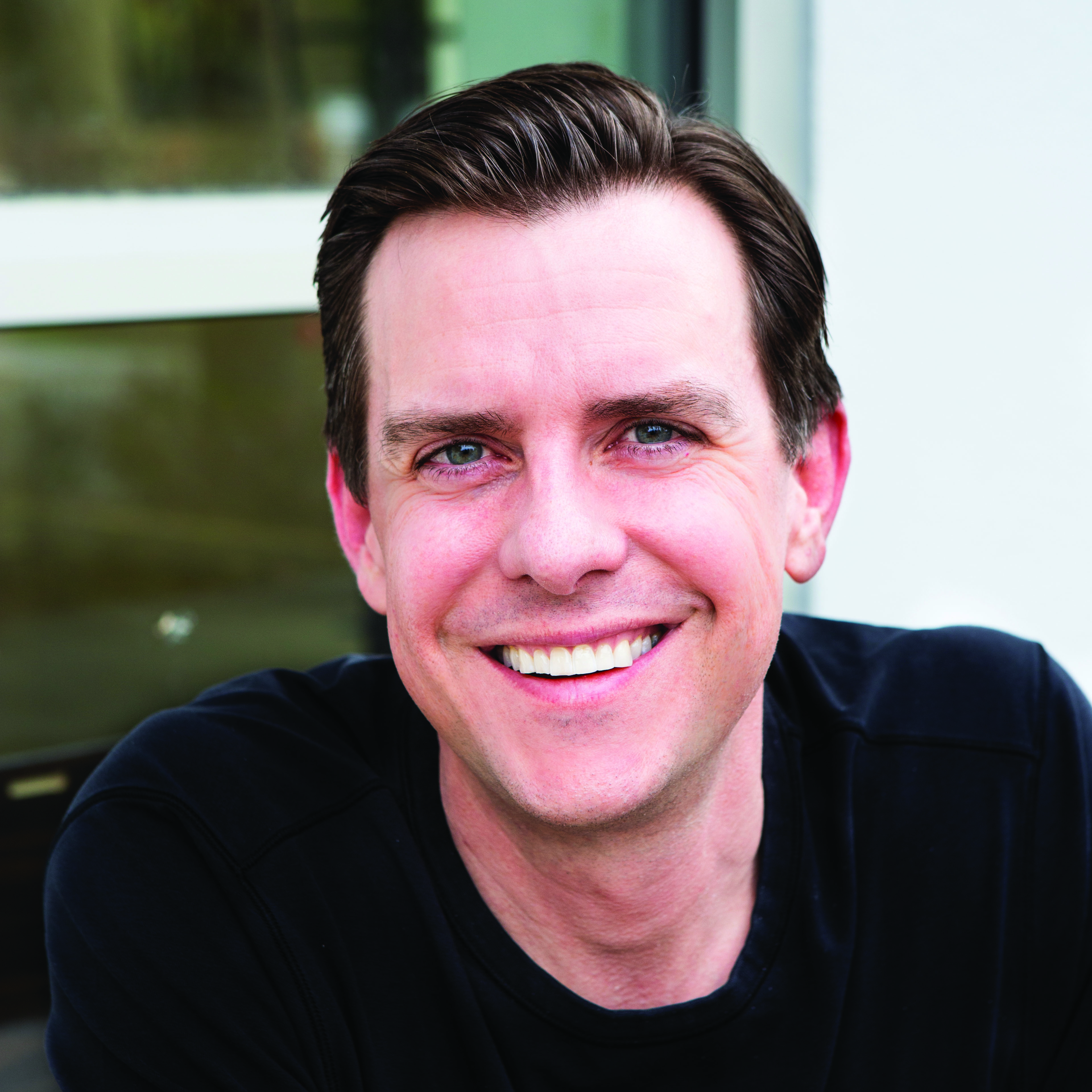
Cassidy Phillips
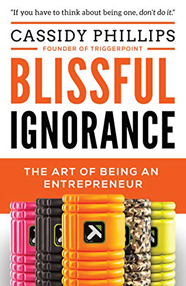
Cassidy Phillips founded TriggerPoint, one of the world's most successful health and fitness brands, and built it into a global company that generated more than $60 million in sales and reached over eighty countries. In Blissful Ignorance: The Art of Being an Entrepreneur, he draws on his triumphs and missteps to help entrepreneurs simplify their approach, ignite their passion, and find their own purpose-driven path.
📚 Books by Cassidy Phillips
Transcript
[0:00:12] CH: What’s up everybody, it’s Charlie Hoehn, the host of Author Hour where I interview authors about their new books. In today’s episode is with Cassidy Phillips. He is the author of Blissful Ignorance. He’s also the founder of TriggerPoint which he built into a global brand that generated more than 60 million in sales while reaching over 80 countries. TriggerPoint was one of the world’s most successful health and fitness brands. While he was revolutionizing this industry, he learned a ton along the way and that’s what this episode is really about. It's about the art of being an entrepreneur. Cassidy shares the missteps and the success he made along the way so he can help you simplify your approach and discover your own purpose driven path. Because as entrepreneurs, we think we have this foolproof plan for success but along the way, we get overwhelmed with all the details and all the new opportunities and we just tend to get stuck. If you need a wakeup call that will empower you to be exactly who you are supposed to be as an entrepreneur or just in life, this is the episode for you. Now, here’s our conversation with Cassidy Philips.
[0:01:44] Cassidy Phillips: I thought I was a stud. I lived in LA, I did stunts in Hollywood, I was an actor, I produced TV and film, had the life of all lives when it came to perception and I moved to Atlanta and when I got there, I moved there because of a girl and when I moved to Atlanta, my body had started to break down in LA and we couldn’t figure out what was going on. Once I got to Atlanta, I started training again to triathlons to redefine my identity, I’ve been a triathlete my whole life and so, I started training really hard and as I did, my body started to break down and yet again, we couldn’t figure out what was going on, I saw every specialist I could, trying to figure out somebody to take care of me, I couldn’t find anybody to take care of me. I had to look within and start to work on myself and try to figure out what was going wrong with my body. There was a fear that I had MS, multiple sclerosis and that petrified me and later diagnosed with a dysfunction called fiber myalgia that takes over the muscle tissue and I refused to allow that to ruin my life. I started studying muscle tissue fiber structure and how to regenerate it. Married it with my biomechanical background as an athlete and created a line of products and methodologies to bring therapy into my own home and that is really where the book begins. That was the beginning of TriggerPoint, the company that I started out of the back of my car and I took it the 86 plus countries around the world doing under my reign over 60 million in sales and it was all on the back of the needs that I have for myself, in the end.
[0:03:22] CH: That’s incredible and I want to actually start by thanking you for TriggerPoint. I’ve used it many times in my life. It has helped me a lot and I know many other people who own them. Your work has obviously impacted tons of people and we’ve all benefited from what you went through. You start the book with two chapters that are similarly titled which is, Who and What I Am and Who and What You Are. Break it down to me, why did you start here?
[0:04:01] Cassidy Phillips: Great question. It’s interesting, through the process of my life, I have always tried to please other people and I have found that when other people give me the emotion or the emotional connection that I need, I am willing to talk or I was willing to talk more about me than listen. I used to think I was a stud, I was the guy, you know? I thought I was the guy. I mean, I want to talk about me and I figured, hey, ladies want to talk about me, right? They want to hear about me, right? I had everything confused and so when my body really started to break down and I couldn’t figure out what was going on and I went from hero to zero overnight and it scared me and I was losing my identity and I moved to Atlanta for a girl and that had fallen through. All of my life was really turning into what - I thought was I was a hero, I was really turning into a zero so I had to look within and really figure out what was going on with me. What was the motivators that allowed me to be who I was and I realized, looking in the mirror that in order to be who I want to be in life, I have to accept who I am today. That was probably one of the hardest things that I’ve ever done because it made me vulnerable in very word that I said because most of the time I was protecting myself and now, I realized that in order to communicate with others, it’s not about me talking, it’s about me listening. Ironically, at the same time - I studied muscle tissue fiber and structure and how to regenerate it, that’s where TriggerPoint came from. I actually also, because I was at the bottom of the barrel, I had turned to you know, religion and tried to figure out, okay, what is it about religion because there’s so many that are across the globe, what is it about religion that really fuels the fire of people? As I honed in on Christianity, I looked at the church and I really got confused because that world is really the Catholic Church and all the others, really got confusing for me. I stripped away the complexity of mainstream religion and looked at the simplicity of this guy Jesus Christ and said hey, wait a minute, I like this dude. He went to the bottom of the barrel to find his disciples, that’s pretty rad. I’m going to follow him, I like the bible and so I looked at the simplicity of who he was and became a Christian through that process. I really re-found myself in a lot of ways at the beginning of where the TriggerPoint was, mentally, physically and spiritually. It was a great pivotal point for me to really start to listen and thrive as a person and look within myself. Now, I know that’s a long answer to the first chapter but it is important for people to understand, I truly believe, people are capable of doing anything they want in life. They can achieve anything they want in life, they just have to believe in themselves, they have to dig deep and understand who and what they are and they can ultimately be who they want to be in life. Chapter two is really about that, really taking the time to look within yourself and understand that you are an amazing person, you’re capable of doing anything you want in life and as a CEO or a father, a mother, brother, sister, it is imperative for you to understand that you are made to be you. Everything that happened to you in the past happened for you, not to you. We can transform who and what you are into the best possible you if you just stop, look and listen to the way that you react to life on an everyday process. That’s really why I go from here I am, here’s what I went through, here is how I went through it and it wasn’t pretty but I’m really happy with who I am today and I believe that you may be able to go through that same process and be the best possible you through you know, reading the experiences and applying chapter two to you.
[0:07:57] CH: Those are some pretty profound realizations. I mean, it takes a great degree of like you said, vulnerability, humility to accept who you are today when you’ve had a different narrative for decades. I know you mentioned religion became a big part of your – maybe not religion, maybe spirituality and Jesus Christ, that became a big part of what helped you turn things around. What about for somebody listening at home who is like man, I’m struggling with the same thing that Cassidy went through. What are some things that I can start doing to help turn my life around?
[0:08:37] Cassidy Phillips: Once again, a great question and I found Jesus Christ, others can find whomever makes them feel comfortable with who and what they are in a state of silence. Most people are uncomfortable being quiet, most people are uncomfortable really listening to what other people have to say. I employed a process of looking in the mirror and speaking to myself in the mirror versus talking to myself while I’m driving down the road. We talk to ourselves a lot and unfortunately, a lot of those words come and go on a regular basis, we never retain any of that information because we’re not seeing the emotional connection through our eyes because you know, it’s open ended words, they’re not directed towards anyone, they’re really surrounded by frustration and anger most of the time or expectation of others. If we just stop and say hey, listen, I’m going to look in the mirror, I’m going to talk to myself. I’m going to see what I’m going through, I’m going to know that I’m a person, I am me. I think a lot of people forget that you are you. You have to look within you to reconnect with you. For me, you know, this rad relationship with Jesus was like my Captain Crunch Decoded to life. That doesn’t mean it’s yours but I think you can find, if not him, someone else or something else that can drive you down the pathway to understand that disconnecting with who you are is what keeps you numb and pacified to the world but tapping in to who and what you are will allow you to fuel the fire or the flame that allows you to accomplish anything you want in life.
[0:10:09] CH: Beautifully said. Now, I want to shift gears a bit more to the next chapter. You have an unconventional view on work life balance. I would say the conventional view of work life balance is something you're entitled to, right? We all deserve to find a good balance in life. You don’t believe that, you what do you believe about work life balance?
[0:10:34] Cassidy Phillips: Well, it’s interesting, I mean, I’ve listened to some of your other podcasts and Tim Ferriss has influenced a population with four hour workweek. I love it but you earn it. You don’t deserve it, you earn it. You know, all the information that Tim has put into his brain allows him to be what he is today. Which means he can efficiently move through our process which was first fueled by passion. In the end, transferred into a process and now can be deployed in four hours. Well, you know, most CEOs, most passionate people are nonlinear in process. You know, process is second. Passion is first and so if you’re passionate about what it is that you want to do in life, you go at it 100%, blissfully ignorant, not worrying about the ramifications. Then you hopefully find people after that, that can put process in place. When I look at work life balance, I say okay, you know, first, you have to sacrifice. As you sacrifice, you have to be aware of where your sacrifice. Because you’re going to have to go back and replenish those buckets. Because if you don’t, then you’re going to be passive aggressive towards what it is you’re trying to achieve. If you just stop and say okay, I’m going to go at you know, business A 100% as hard as I can to achieve whatever it is that I want to achieve. I say, be your best, not somebody else’s best but do whatever you got to do. Once you get there then you build the support structure around you so that you cans then go back and refill the other buckets. You can go back and go back to run and go back to going on date nights, go back to being a parent but for a period of time, you got to sacrifice in order to get what you want. That balance is something that you earn because you’re able to afford the support structure around you to allow you to ultimately provide for your dependents. You know, one of the hardest things, if you have no dependents, work life balance is easy because you have no dependence and so it totally makes sense. If you want to live a single life for the rest of your life, hell, go after the work life balance. Work a couple of hours a day, live wherever you want to live and make just enough money to get by. If you want to make more than what it is that you – a college life will define, if that makes sense. If you want a family, if you want nice things, if you want to experience life at a higher level, meaning, motel six versus the Ritz. I’m not saying you have to do that but if you want more out of life, you’re going to sacrifice and by sacrificing, you can achieve work life balance, you just have to be aware that you don’t just get it. The millennial mindset, I love it man. You know, I want to experience life. But at some point, they’re going to have to realize, they’re going to have to get off their parent’s couch, when they come home and go put their own couch in their own house. Once they do that, they’ve got to have money in the door and so I hope that makes sense to you.
[0:13:37] CH: It definitely does and I’m in full agreement with everything you said. I’m curious on a personal level, what you went through, when did you decide to have a family? When did you decide you wanted to have more than a college life?
[0:13:53] Cassidy Phillips: Well, it’s funny because I – little interesting back story, I didn’t go to college, I went for about a year, I was an athlete, I have ADD, ADHD, I’m dyslexic, I’m like a product of the 70s slow child. Everybody just thought I was slow and that I was not going to be able to perform and when I went to University of Colorado, I went to a state college for a year, got my grades pup, went to University of Colorado because that’s where my dad had gone to school and I’m like hey man, I want to duplicate that. When I got there, they said I had severe dyslexia, long term, short term memory, audio-visual memory, perception of number and letters. All kinds of stuff. They said, you’ll never be able to perform at a university level. You know, this isn’t the right place for you. That was heartbreaking. I went back to Three Port where I’m from, told my family what I was going to do and I had made the decision I was going to go out to LA and be an actor. When I did that, I got cut off from my family because my dad had his vision of who he wanted me to be and an actor in LA was not it.
[0:14:58] CH: Who did he want you to be?
[0:15:00] Cassidy Phillips: He wanted me to be a business guy, he wanted me – he’s very successful and he’s an awesome guy. But you know, as parents, we try to do our best no matter what the circumstances. He was just doing what he was taught, right? You know, parenting, there are a lot of books about parenting but it’s hard to follow one process. He said, “You better get all you can get while you can get it because you’re not going to get a dime from me once you leave.” It was perfect. I mean, I did not know that that was a tipping point for my life. It really defined at that moment that I’m going to be who I want to be in life because I can’t live somebody else’s life. I didn’t know it was that profound at the time but man, I was pissed. I got my car, I drove all the way out to LA, I had 500 bucks in my pocket, I found a rent controlled place near the beach, it was 500 bucks a month and I just went at it, I went into the trades, I submitted headshots, I got an acting gig one and two and three and four and then I started doing commercials and I became you know, pretty successful out there. The whole path of transferring from a perceived college life to an adult life, I never even thought about it. I just was blissfully ignorant. I literally – I didn’t worry about what wasn’t going to come to me. My cup was always half full. I’m going to seize life no matter where I am and unfortunately, I had a brother at 18 years old, he was 18 years old, he flipped his car and killed himself and that was another tipping point for me and that was after I had started TriggerPoint. It was about a year into my marriage and when I launched TriggerPoint, I also asked my wife to marry me. I was like, if I’m going to go all in, I’m going to go all in. But I have to have somebody that can believe on what I’m trying to achieve. Because the whole idea was dependence, when you don’t’ have any dependents, you don’t need any money and so actually, what I did, when I started TriggerPoint, when it was the beginning of my body breaking down and I had moved to Atlanta. I actually put all the money that I had made in the entertainment industry, I put it in savings. I wasn’t going to use that to try to figure out what I was going to do with my life. It was interesting because as my body was breaking down and we couldn’t figure out what was going on and I saw every specialist I could, I spent every dime that I could on that. Trying to find somebody to take care of me. But then when I started to take care of myself, I wouldn’t spend the same amount of money. It was a very interesting equation because I became very conscious of the money that I was putting out because I didn’t know ultimately how I was going to make more money at the time. All I ever heard was in my head, the thing that rang in my head all the time was that you’ll never be able to perform at a university level so you’re not going to be capable of doing anything other than kind of menial work and that kind of stuff. That was kind of a depressing kind of thought process on a regular basis. It was this perfect moment of when I became a Christian, when my body broke down, when I had to redefine my thought process, I was able to look at my life in a new and different way, it wasn’t that I wanted this lavish life, I wanted to have a big house and kids and the perfect wife. It actually was a moment in my life in time that I said it’s not about me, life’s not about me. It’s about all those that are in need of what I have. And what I have right now is this ability to share this therapy that I’ve created and share it one by one, one person to the next. My wife and I, we bought an airstream and a truck or my fiancé at the time, we bought an airstream and a truck and we started the business out of an airstream and a truck and we literally had no money. My grandmother wanted to be a part of it. I took $17,000 from her and said, “We’ll pay you back in three years.” Which we did but we lived as frugal as we possibly could through the upstart of TriggerPoint because money makes people stupid. When you have too much money you do stupid things with it and I didn’t want that to influence the way we launched the business. The business was about helping one person at a time going to event after event sharing the message that we had about what others needed, not what they wanted. They wanted people to take care of them but what they needed was an understanding of how to take care of themselves and in the end, you know the family and the kids and the life and all of that were a natural progression of living blissfully ignorant. I didn’t pursue any of that, it happened for me. And if you have that outlook on life, things happens for me not to me. It allows you to have a much better perspective on life.
[0:19:57] CH: Absolutely and there are so many areas I could dive into from that answer which was so many great things. One of the things I appreciated that you said is it is not about me. It’s about giving to others what I have and that was something that dawned on me recently in a way that I didn’t expect. So talking about our families, I have a one and a half year old daughter and something I was thinking about the other night it just struck me. It wasn’t even like I was really thinking hard about it. It just spontaneously rose was my life before my family was sort of that selfish college lifestyle of everything was about me and how can I make my life as great as possible and I made it really, really nice. But I hit a point where I just thought, is this all it’s going to be? It’s just me trying to up myself and up my own existence? And having a family has shifted it to, “Oh, now I get to relive this experience of life because I will be able to give this great life to my daughter.” Or be a part of the equation and realizing that’s the gift my parents gave me that so that’s how I grew up having such a positive childhood and all of that stuff. So in any case, I just wanted to share that because I appreciated what you said.
[0:21:32] Cassidy Phillips: That’s awesome, you know it is funny when you become a parent you realize that your parents didn’t know anything, you know? I mean they were trying to parent the best way that they could and you are trying to do the same and now is the opportunity that you can change whatever they did wrong and make it right and you can actually look back at your childhood and go, “Here are the things that I don’t want to carry into my parenting skills.” And here are the things that I do want to carry into my parenting skills and ironically those same things are what you apply within the office. Your office children which I am talking about a bunch of CEOs out there in the world and I work with plenty of them and they look at their employees the same way they look at their children. They have expectations that they don’t communicate and therefore, they define their identity through their employees output. Yet they are not willing to invest in who and what they are and understand that that they have a need as well and that need is to be heard and to want to contribute based off of who they are not what they can do for the company. So there is a lot of CEOs out there unfortunately that don’t take the time to know their employees or their children and they expect a lot of output from them. They define their identity by what their output is. And it is just a false sense of security because at some point, the child is going to go away to college and you are going to wonder what the hell you’re going to do with your life or the employee is going to leave and you are wondering how to fill that role because you have no clue of how to do the job that that employee has been doing.
[0:23:07] CH: Do you ever struggle with that yourself Cassidy?
[0:23:09] Cassidy Phillips: What in particular?
[0:23:12] CH: With either your team or your own kids.
[0:23:15] Cassidy Phillips: Oh my gosh, I mean that is the only reason I can say it. You know I made every mistake possible not only in my parenting but in my employment life. I mean I am the guy that made every mistake that he could only to learn that there is a different way and that’s really the reason why I have written this book is I brought on a consultant to work with my executive staff as I started to exit the company and he said, his exact words were, “You are the most functional-dysfunctional company I have ever consulted.” He’s like, “It’s genius! I have no idea how you’re so successful.” And I said because we’re full of passion and in my world, a day is a week, a week is a month, a month is a year. If you can’t keep up, I’m going to coach you how. Which is great when you’re dealing with an athlete but when you are dealing with an employee that doesn’t have an athletic mindset, you can really hurt somebody’s feelings by dealing with them in the same way and you tend to treat people the way that you are brought up. And so, if I have to address my children or my wife in that same fashion, I am going to coach her up and out, that is horrible. You know you have to understand what their capabilities are. You have to understand what their dreams are and then you have to really nurture that aspect of who they are. So ultimately get the help that you want.
[0:24:36] CH: Yeah that is so true and I mean given your background of doing such extreme stuff, endurance sports, being a stunt person, I’d imagine you have a very thick skin and can take critiques and direct coaching whereas modifying and being all that speak to others on their level had to been a pretty steep learning curve.
[0:25:00] Cassidy Phillips: It was the most painful process of my professional career because I thought that I was doing everything right and I was actually doing everything wrong and you know a lot of times I get asked –
[0:25:14] CH: I think that could be a title of every entrepreneur’s book.
[0:25:19] Cassidy Phillips: Yes, it’s so true. I mean I get asked all the time, what would you do differently? If you could go back and redefine a TriggerPoint, what would you do differently? And I say I would have listened more and I would have cared about the person more than what they could do for me. And I bought things for all my employees. I thought that was the answer, we had a CrossFit gym in our office, I brought them food every day. These people travelled around the globe and I didn’t question what they were spending money on because it was like, “Man I just want them to experience a bit of the good life but I also want them to be hungry to do it more.” And I want to provide for them in a way that is monetary. I want to get the cool stuff in the office, I want to have the toys, I want to have the gym, I want to have the trainer, I want to have the food and then I said, “Oh my gosh I treat my wife the exact same way!” I try to show her affection by buying her stuff and you know, how about the house, how about the car, how about the ring? And then it was like, “This is ridiculous!” You know life isn’t about the material things. Life is about the emotional connections that you have with others. So I need to redefine my thought process and look at the relationships that I have with my employees, with my wife and all the other people that we come in contact with and say, “I am more interested in who you are than what you can do for me. And I don’t know that I learned that at TriggerPoint. I don’t know that that was on the forefront of my mind. I mean I kind of knew that my gut was telling me that but I was too busy trying to control everything. I mean we grew so fast and it was a lot of effort to grow that fast but there was a lot of control and restraints that I tried to put in place so that the company was going to be successful. And at the end of the day, I really didn’t have control over any of it. Because we were providing a need for all of those that were in need of what we had. I mean we were an educational platform that happened to sell products. We were a movement, we were a ministry of movement. It was about helping people. It wasn’t about making money and that is why we were successful.
[0:27:27] CH: Yeah and man, you guys were so successful and I again have so many questions I can ask you. I do want to be mindful of our time but where are you today with TriggerPoint? Where does everything currently stand?
[0:27:43] Cassidy Phillips: It’s interesting, I sold TriggerPoint four years ago. And people to this day no matter where I go in the world still think I’m a part of TriggerPoint. So much so that I’ve grown a beard and I’ve got a little hair on my head and I’ve always shaved my head and not have a beard. Because literary people recognize me because I am in the videos and all that kind of stuff and I am very proud of what TriggerPoint became. You know my biggest problem was when it really started to become about money when we were doing 10, 15, nearly $20 million in sales a year. It became about money and I realized that that was my time to leave. That is when the integrity that I created with the end consumer was going to be lost and we were moving into this new world of product and efficiencies and distribution. Now I made a lot of products for TriggerPoint that they are still making today that have never been seen by the public which is really cool. The guys that I sold the company to have done a great job at distribution. Unfortunately, I think the education has been lost a bit in the process but that is natural. The education came from me and there are people that are continuing education but it’s interesting because there is education and instruction and in the book I talk about a Venn diagram and you have to overlap information and education and there’s where you have your marketing opportunity. Because if you give it too much instruction then you are giving the end consumer what they want. If you are giving them education, you are giving them what they need and so if you can kind of pair the two together and get just enough of each, then you’ve baited the customer to be able to want to come back to your brand. Always come back to your brand because it is not about what they want. It’s about what they need and in life, we tend to deal with a lot of problems. In the sense of we’ve always consumed what we want and we rarely go after what we need because we get confused and the wants are agnostic. You have no brand loyalty to a want but a need, you do and it is important that I go over this in the book. It is important for you to understand the difference between the two and if you build a company based off of a need you will have a customer for life. If you build a product off of a want that life, that relationship with a consumer is going to be much shorter lived.
[0:30:06] CH: Wow, I have read a lot of entrepreneur books, talked to a lot of entrepreneurs. I don’t think I have ever heard any of them say that and wow, very valuable, profound and I will reiterate it again. If you start a company based on the need, you’ll have customers for life and if you started a company based on a want, well the tide can turn pretty quickly.
[0:30:30] Cassidy Phillips: It is because it’s based off a price. Wants are based off a price. Needs, if you want to be in the premium product category, you base it off of a need. You keep that integrity with a customer and at the end of the day, the customer is you. CEOs out there in the world need to understand the customer is you and if the customer is not you then you are in a me too category. You’re in a cash flow category. You are in a category that is really about dollars and that’s okay but that means that this book isn’t for you.
[0:31:00] CH: Right and you’re going to lack the passion which is the part that you believe in so much.
[0:31:07] Cassidy Phillips: But check it out, their passion is money and there is nothing wrong with that. We need those people because that builds jobs but that doesn’t mean that I am going to be able to mentor you. I may be able to do it in your later life when you get old and you want to appreciate things. But the whole point of Blissful Ignorance is to get in there and do what you got to do to be who you want to be and achieve what you want to achieve and don’t worry about the glass being half empty. Think about it as half full and if you are on a commodities category, you don’t think that way and one of the other things that I talked about in the book is money makes you stupid. It makes you dumb and we talk about that before but it’s true. I mean how many companies out there today are burning cash. They don’t have any revenue, they have top line revenue but they are not putting money in the bank. Why? Because it is about making money and the value of making money. And I say that there’s a value, an emotional value or an emotional currency and that there is a physical currency and if you don’t look at the emotional currency that you need in your life, you may put more dollars than anybody else in the bank but you are going to look back and your kids and your wife and everybody else that you started the business with are going to be gone and it is a very lonely depressing world to live in. And so if you don’t stop, look and listen to those that are around you and appreciate them for their contributions in your career, well you’re an idiot because those are the values that are the greatest and they’re emotional not tangible, physical dollars.
[0:32:40] CH: So there’s so much hard-earned wisdom in your book, Blissful Ignorance, and I am so glad you wrote it Cassidy and I’ve got two more quick questions for you. The first one is, what is the best way for our listeners to get in touch with you or follow you in your journey?
[0:33:01] Cassidy Phillips: Well, we are creating an ecosystem for this Blissful Ignorance and the website is beblig.com and you know, I’ve got a program that we’ve put together. It’s 50 questions in 52 weeks that pairs with the book and it is the wine to the meal of the book and you get an email every week and it makes you look at who and what you are. It helps you clearly define who you are and maybe who you want to be and then social media, @thecassidyphillips on Instagram on @bliglife on Instagram. You can find me at The Cassidy Phillips on Facebook and I don’t do Twitter because I just don’t get it anymore and –
[0:33:48] CH: You value your sanity.
[0:33:51] Cassidy Phillips: I do.
[0:33:52] CH: Excellent and the final question I have for you is to give our listeners a challenge. What is the one thing that they can do from your book this week that will have a positive impact?
[0:34:06] Cassidy Phillips: You know it is interesting, the holiday season is around us whether it’s post-holiday or pre-holiday or during the holiday and you know family is tough. You go to see family and I have a feeling that this podcast is going to be heard after the holidays and I want you to look back at how you treated your family members and ironically, I am not only talking about the family members within your house but I am also talking within your office. And I want you to really take a look at who you are to this people. It is not about buying them things. This is about being vulnerable and willing to listen to the life that they live along with the purpose driven path that you’ve defined for yourself and don’t get those roads crossed because if you do, you are going to end up questioning where you made certain mistakes. Those that are around you love you for who you are but they also want to see you be your greatness. And look in the mirror after analyzing this holiday season and wondering how you communicated with those within your house or your office. Look in the mirror and say, “I am great at who and what I am. I want to achieve what my purpose driven path is in life. So if you do have any short comings talk to yourself about it and I know that sounds crazy, hocus-pocus, however you want to define it but when you see yourself, speak to yourself there is this relationship from within that is redefined with the eyes that you look at. Sounds crazy but just give it a try and see if it raises the hair on your arms, gives you an emotional charge. I just want people to be their greatness, not somebody else’s greatness. Their greatness and there is incredible entrepreneurs out there that are not pursuing their purpose driven path because they are scared and if they’re genuinely scared don’t do it. But if they are scared because of somebody else’s definition of your success, get out there and make it happen.
[0:36:03] CH: The book is Blissful Ignorance. As I said, there’s a bunch of really great nuggets of wisdom especially for entrepreneurs that was hard one and Cassidy Phillips, it was a pleasure talking with you. Thank you so much for being on the show.
[0:36:19] Cassidy Phillips: Absolutely, I enjoyed it.
[0:36:21] CH: Thanks so much again to Cassidy Phillips for being on the show. You can buy his book, Blissful Ignorance, on amazon.com and you can check out the show notes and a whole lot more for this episode on authorhour.co. Thanks for tuning in on today’s show. If you liked what you heard, here is what I want you to do next. Open up the podcast app on your phone or iTunes on your computer and search for “Author Hour with Charlie Hoehn” and then click “ratings and reviews”. Take 10 seconds to rate this show or leave a review. It is a small favor but it’s really the best way to show your support and give me feedback and if you know someone else who’d love Author Hour, take another three seconds to text them a link to this episode. We’ll see you next time.
Want to Write Your Own Book?
Scribe has helped over 2,000 authors turn their expertise into published books.
Schedule a Free Consult