Patti Temple Rocks: I'm Not Done
Read the full transcript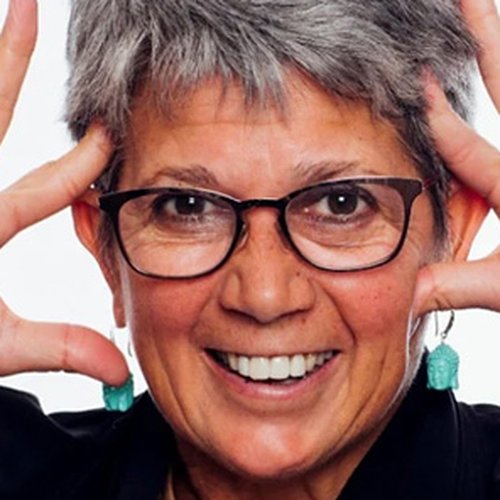
Patti Temple Rocks
Over the course of an impressive four-decade career, Patti Temple Rocks has held senior leadership positions in three different sectors of the communications industry: PR, advertising, and corporate client side. She is an inspirational leader, builder of teams, creative thinker, problem-solver, and agent of change.
Patti is passionate about discussing and fighting age discrimination and helping people understand how ageism stunts business growth and reflects poorly on our society. She is a public speaker and consults with businesses that wish to change for the better. To learn more about ageism and get in touch with Patti, visit
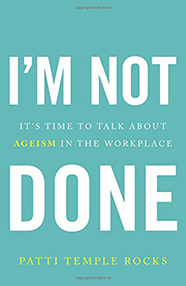
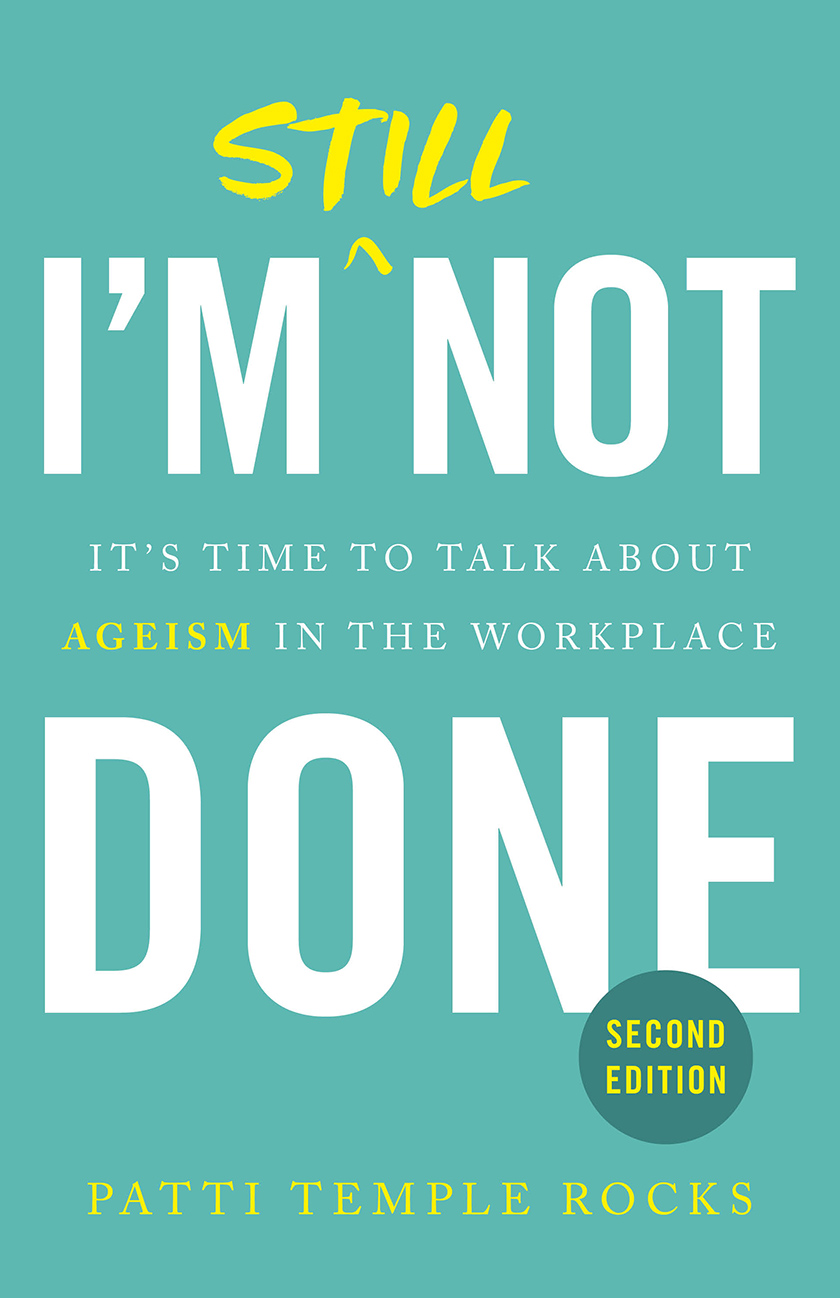
📚 Books by Patti Temple Rocks
Transcript
[0:00:15] CH: What’s up, everybody? It’s Charlie Hoehn, the host of Author Hour, where I interview authors about their new books. Today’s episode is with Patti Temple Rocks. She is the author of I’m Not Done. When it comes to discrimination in the workplace, we’ve come a long way as a society. There’s still one systemically ignored form of discrimination. It happens all the time and it affects everyone. Ageism. Ageism is real. It’s widespread. It’s insidious. Up until now, it’s mostly been hidden because of the low rate of reporting from people who get pushed out of their jobs when they reach a certain age. Patti believes that with the largest demographic that America has ever seen, which is the baby boomers, we’re now experiencing age discrimination at work that it’s time for us to talk about this hurtful and bad for business practice. In this episode, she takes us into a deep dive into ageism in the workplace, what it looks like, how it harms people and businesses and how business leaders can get on the right side of the issue. If you want to be part of a movement to stop this remnant of workplace discrimination, this is the episode for you. Now, here is our conversation with Patti Temple Rocks.
[0:01:52] PTR: Frankly, like a lot of people, I’m not even sure I knew there was a thing called ageism, especially ageism in the workplace. I was in my late 40s, early 50. I think I was in my late 40s and at a very high-level in my career. I’d had great success and had a big job with a big company and was working for a woman who was the first woman to break through the glass ceiling and had this very – in the executive weighing of this company. She was great. She was a great boss, a great mentor, had actually become a good friend over the years and made me so happy to see her success. Then she brought me into the company, so I got to become part of the success. I noticed over what seemed to be a relatively short period of time that all of a sudden, she wasn’t in some of the meetings, or some of the discussions that she used to be. It felt odd to be. It just didn’t really feel normal. People were a little bit dismissive. I would say, “Well, I can run it by her.” People were a little bit dismissive of that. It just didn’t sit right with me, but I had no idea what I was observing. It just didn’t feel good. I happen to be at a cocktail reception that night with the CEO, her boss and my second-line boss who I had a good relationship with. I just said, “You know, hey what? I know you really value Angelina like I do. What’s going on? I can just tell that she’s not as valued as she used to be and what can I do to help her?” That was my only motivation. He looked at me and literally said, “Oh, Patti. This will be good for you. Can’t you see this? This will be good for you.” I was taking it back – he like implying that if something happens to her, I would get her job and that’s odd. Then he went on to say, “I think she’s just tired. She’s been doing this a long time. I think she’s just tired.” That was the absolute wrong word to use to describe this woman. I mean, she’s – I don’t think she’s to this day ever been tired a day in her life. She has nothing but energy and enthusiasm and drive and has spent her whole life that way. I knew that wasn’t really what was going on. That was the first time that I thought, “What does that mean, tired? She thinks she’s old?” It was just the first time that I thought this is a dismissive way to treat somebody and why? From that moment on, I think that my senses were just heightened. I was paying attention to things a little bit more. I heard things that I thought, “Oh, I never really would’ve – I would’ve always taken that at face value, but maybe that means something different.” I started to see others being treated, not just in that organization but in others and friends and people I knew at the end of their career were made to feel a little bit less that. These were universally people who had enjoyed fabulously successful careers, or they wouldn't have been at such high levels in their 50s. My first reaction selfishly perhaps, was to make sure it didn't happen to me. I thought that the answer to making sure that it didn't happen to me would be to have a plan and frankly, to beat anybody to the punch. Before anybody might say, “Patti's tired,” I would have decided, “Okay, I'm tired. I'm going to move on. I'm going to do something else.” I read a bunch of books and there are lots of books about –
[0:05:33] CH: Sorry to interrupt Patti. I want to ask a naive question at this point. Excuse me if this is truly strikes you as naïve, but I'm totally with you on the ageism part. What I wonder about is is it really so bad if we reach a certain age and it's like, “Hey, it's time to retire.” I mean, isn't that the narrative that were sold for so many years? What makes it so bad and what were you afraid of really happening?
[0:06:01] PTR: It's totally the narrative that we've been sold and it's been a narrative that for decades has even had some age ranges wrapped around it. I think, what made me uncomfortable with it and certainly what made my boss and friend uncomfortable with it is it wasn't – it was not her choice. It's one thing if we have planned all along that I'm going to try to – I'm going to work till I get to this age and then I'm going to retire. It's this active choice. When you're just pushed aside, or asked to buy into the narrative that you're tired, or you're not relevant, or something else like that, before you feel that way, it's crushing. It's also demographically, it doesn't make sense anymore, because that narrative that you described that you reach a certain age and yay, you get you retire was when our life expectancy was much different. People today are living much longer and they're living longer in healthy ways mentally and physically. Or not necessarily thinking that, “Okay, I'm ready for the gold watch at 55, or even 60,” because they still feel vital and vibrant. As a purely practical fact, many, many, many people boomers and that's the generation that we're talking about that’s reach this age, which is our largest generation ever, are also financially not ready for this. If you're pushed out either emotionally or physically in your 50s and you don't have enough money saved, you got a problem, because you’ve got healthcare to pay for and all sorts of other things. Part of the reason that I feel this is a problem people need to talk about is because there are emotional and literal harms being caused to the people. On the positive side of this, I think companies and organizations are just completely missing the boat about how to take better advantage of the wisdom and experience that comes from workers that are in their 50s and 60s.
[0:08:07] CH: Right. I'm going to pause you there for another question, which is what is the companies’ incentives to offload workers that they feel have reached a certain age where they're “tired,” is that is the phrase that they use, which isn't accurate. What are their incentives to letting go of these people who are so experienced that they've effectively been training for decades to be stars at their job?
[0:08:36] PTR: Well, it's almost always financial. The method of compensation is evolving and changing, which is one of the messages that I write about in my book. This shouldn't be the excuse that it used to be. For decades, salaries went up as people stayed on the job. It is in fact a true business reality that I'm not suggesting that we hide from it all, that oftentimes the more senior workers are also more highly compensated. There is sometimes an incentive for an organization who could let go of a couple of senior people and hire twice as many people right out of school. Of course, every organization should be hiring people right out of school. My message is that this is not a – ageism slices both ways. I'm talking about it more on the older end of it, but this is not to say that young people are bad by any stretch and every organization should be hiring – have multiple generations. It's jumping all over the place with messaging, but a truly diverse workforce needs to include people from all ages. I think this is becoming even more important. As I said, as people are living longer; so if you're marketing road bikes, 20 years ago you weren't marketing them to 60-year-olds. Now 60-year-olds are taking, or buying really expensive road bikes, because they're going on cool bike trips. Everything's about the way we look at older people needs to change with the changing demographics and as I said, the pure size of this particular population.
[0:10:24] CH: Let's talk a bit about what companies are actually missing out on when they make these moves. How can things be getting worse for them? Because I'd imagine some people are listening are just like, “Yeah, Patti nailed it. It's the financial incentives. We can hire more people. Look, this is just a bottom line decision.” What are the damages that occur that they may not be seeing because they're making these moves?
[0:10:53] PTR: I think there's a couple. One just comes to mind a lot, there's a famous quote from Mark Zuckerberg at an industry event. This was a few years back, but where he literally said, “Young people are just smarter.” I think there was this prevailing feeling that especially in the tech world, you had all of these people that were coming up and had no boundaries to the way they were thinking. Again, there's a lot of truth to that and that's all good, but I found myself thinking a little bit and Facebook is finding themselves literally in the eye of the storm, that if you have an organization that is largely dominated by people in their 20s, 30s and 40s, you don't have a whole lot of people who have lived through eyes of storms before. When you do have people who have experienced it, it's never the exact same thing, but people who have lived through transformations are better equipped to help lead and guide others through transformations. I was talking to an older worker about this and I thought it was interesting. One digital, is the person digital is a classic ageist way of saying is this person young? One of the interesting points that he made was he said, “I remember when our workplace made the transition to e-mail. It was a really big deal.” Today, nobody uses e-mail because it takes too long for people to respond sometimes. You're really doing a great job with your clients if you have their cellphone so that you can do message them back and forth. His point was it doesn't – anybody can learn the difference between sending an e-mail and sending a text. It's helpful to have experience managing some of those cultural transitions in the workplace that some people who have weathered many storms are able to bring to a workplace. I do think that's one of the things that people miss, if they don't have an appropriate mix of all different age ranges in the workplace. One other point I just wanted to add to that is you said there's a lot of people that might be listening that would say, “She nailed it. It's bottom line, it's money.” There's lots of ways to look at whether it truly is a bottom line advantage to do that. One of the things that an HR person that I interviewed in my book talked about was that they had sometimes made the decision that someone took early retirement, or was encouraged to take early retirement. On paper, their job was very clear and specific and they were supposed to do this. They would bring in somebody at much lower salary to do that job on paper. The reality was like all of us, the job that we end up doing is rarely exactly as it's written on paper and sometimes we do this and we do that and we do other things, because we've developed skills or expertise or like to do them. This HR expert said, “Oftentimes, we will find that we think we can replace a more seasoned person with a more junior person, but really it ends up being pieces and parts of other people to really capture what we're missing when that person exits the organization.”
[0:14:16] CH: They find out that as soon as they let go of that person, “Oh, shoot. We actually have to hire three or four people to replace them now.”
[0:14:25] PTR: Not certainly, not in every case. As I said, this HR expert that I talked to said she has seen that happen many, many times. One of the things that I learned through the course of writing this book and interviewing people is that the senior people who have been managed out, or – and a lot of people take a package, because they just don't want to put up a fight. These people are not stupid. They are very aware that their salary was probably making them vulnerable in the event of any financial challenge to the company. What none of them told me happened to them was an honest conversation about that, with the organization, or their boss. Most of them would be very willing to consider a different work situation that might benefit both the company and the person. Maybe it's working part-time in a reduced salary. Maybe it's moving into a different role that – but again, recognizing that with that, might come the need to take a reduced salary. I'm not saying that I think that's always the answer, but it rarely happens because nobody – everyone's afraid to have that conversation. Many of the senior people that I talk to, they would have been very open to that understanding and open to that. For a lot of them, it's just, “Look I want to protect – I'm not ready to completely do nothing. I love what I do. I'm good at what I do. I need the health insurance. I'd love to find a way to keep working.” Very seldom does that conversation ever happen between the boss and the person that's going to be impacted, or even more so, the organization at a broader level, where it feels safe and comfortable to have a conversation about what the end of one's career might look and feel like.
[0:16:29] CH: Yeah. I can't imagine that companies are extra gun-shy to have a conversation around that, if honesty could mean any chance of legal liability, right?
[0:16:45] PTR: For sure. I address that in the book as well. There is an understandable reticence and concern. Again, it doesn't need to be there. If you want to have a conversation with me, let's say and I'm at the end of my career. My salary might be a bit of an issue, but it's really awkward and uncomfortable and you out of the blue say, “Well, how much longer do you want to work anyway?” Which happened to me. I'm going to feel a little anxious and threatened. Is something going on that I don't understand? My reviews have always been good. I feel pretty good about this. What's really going on? It's not going to then pave the way for a comfortable open and honest conversation. If that same boss has had a conversation with me every single year about, “Hey, what are the next couple of years look like for you? What do you want to do? What do you want to learn? What do you want to contribute to the company?” Then that conversation when I'm 40, or 45, or 50, or 55 is always happening so it's not going to ever be that jarring to me. I understand why people are nervous, or uncomfortable about it, but if you approach it in a consistent way with employees of all ages, there's nothing to worry about and you're going to make the employee feel that they can trust you and become to roll enough to say, “I might want to stop working in the next X number of years.” Right now, most people would never say that out loud, because they would be afraid that they would be deemed a short-term person and not given good opportunities and not necessarily given good – a bonus or whatever. People are keeping all that information inside. If bosses are afraid to ask about it, no wonder there's this huge disconnect.
[0:18:44] CH: In your book, you interviewed a number of people who've gone through these experiences. You anonymized them to respect their privacy, but I'd love for you to share some of your – for a lack of a better word, your favorite stories that you gathered from the book, just so listeners can learn from them and experience what this is actually like.
[0:19:06] PTR: Yeah. I think for me, what was – I interviewed dozens and ended up telling I think six or seven stories. What was interesting to me were – that each had something unique that they brought to that. One of them told me, he just felt it was – he was one of the ones that talked about the lack of the honest conversation. He's like, “I know I'm a senior guy. All of a sudden, I wasn't going into some of the meetings with the clients to present my own work. That felt weird. We were not having a great year financially, and so I knew that layoffs were going to happen, but I was just on pins and needles wondering if they were going to talk to me.” He said, “It just also feels like we're a very disposable society.” That was one of my takeaways from him. He’s like, “Let's just try a newer version of the same thing and it might be cheaper.” My take away from my conversation with him was a little bit about the disposable nature of human capital, which I don't think is helpful.
[0:20:15] CH: Human capital is a disturbing term to use as well.
[0:20:19] PTR: Yeah. One of the women that I talked to – Now and it was interesting, because he had a great perspective, because I asked him. I said, “I don't think this is just a women's issue, but what do you think?” Obviously as a male, he wouldn't say that it was completely a woman's issue and he said, “Well, let me put it this way.” He said, “If they're going through a reduction and they're looking to lose some of the senior people and you're African-American, they're going to think twice. If you're a woman, they'll think at least once. If you're a white male, they're not even going to think.” I thought that was a very fair analysis and point of view that he had. He felt again, that's partly where the disposal part in it. Diana on the other hand, one of the people that I talked to, definitely felt that it was – in her case, it was a double whammy of being female and over 50. She was 59 when she lost her job and she just felt there were more pressures on women to look the part and do certain things. She was out to dinner with her boss and he said, “How old are you?” In her view, she said, “I just don't think that ever would have been a conversation with one of my male counterparts.” She definitely felt that the pressures on her as a female were a little bit different. The one thing about any ism for that matter whether it's ageism, or racism, or any of them is it's a matter of how the person affected feels. Is it factual always? Not necessarily, but the way that she was made to feel was very much that as a woman over 50, she just wasn't – there wasn't really a good place for her. She worked in the agency business, which is a very youthful organization.
[0:22:11] CH: A quick question for you, Patti. How do we balance out – and I don't think this is the majority of cases, but it's always a minority in any instances like this I think, where you can't control how a person reacts emotionally, right? An analogy might be on college campuses, when there are a lot of young people who are overly sensitive and things they take them to be attacks, where it may be a little less, I don't know, of an attack. Do you think that dynamic could potentially be at play in some cases here?
[0:22:50] PTR: Well, I think it's – I mean, of course. I think that that's true – anytime two humans interact with each other, one might react a different way than the other person would have wanted, or hoped, or intended that they would react. We can never completely control that, but I think and I've got a whole couple of chapters that talk about this, but when it comes to some of the unconscious bias that exists in the workplace and the way that the snide comments, or certain things that are said, or again, it's as simple as who's invited into the room for parts of these conversations? If all of a sudden, somebody who's always been there and been part of it isn't, it's hard not to wonder what changed other than the fact that I just got a little bit older. I think, there's – certainly, there are people that I think overreact to anything. Anybody can overreact to anything, but I don't think that this is a case systemically of people over 50 just overreacting to things. If anything, I think it's been untalked about, it's been undiscussed for so long, because nobody wants to talk about age. It's the big secret thing that you’re not supposed to talk about.
[0:24:07] CH: Yeah. I appreciate you addressing that, because I definitely don't believe it's a systemic thing. There's always that balance of wondering of the emotional component. I agree. I'm curious for this book, for I'm Not Done. Let's say it's been out one, two, five, 10 years, what do you hope are some of the shifts that are taking place in our society in the workplace?
[0:24:38] PTR: Well, I think ideally, we would have let go of some assumptions and stereotypes and unconscious bias that maybe has led to having a less diverse workplace, then would be ideal for a business. I mean, if you think about how far we've come – we're not done, no pun intended, but I mean, there's still – we still have race. There are plenty of people that could talk about issues that are affected by race in the workplace, or gender, but we are better. I know, I've been in the workforce for close to 40 years. We are way better than we used to be. I think, it's because we've made – as business leaders, we opened our eyes and we were willing to say, that perhaps we have some unconscious bias here and some things that are not okay. Let's do training. There's been miles and miles of progress in a lot of diversity and inclusion training in the workplace. It just doesn't right now, address age as one of the factors that people should be talking about. I love to challenge people when they say, “Well, it's just different. It's just different.” I'm like, “Well, I think it's different because we haven't really called people out on it.” A company I know recently needed to go through cost savings. Again, I'm not running away from the fact that a lot of times these are cost-driven types of decisions, but as part of their – one of the ways that they thought about structuring, restructuring the organization to save money, they thought we could make the organization flatter. Of course, if you're going to make an organization flatter and you take out your lowest level, you're not going to save as much money, because those people aren't paid as well. They took out one of their more senior levels across the board. Now when you do that, the odds are very high that when you take out – this happen to be called the directors, when you take out all of your directors, you are mostly impacting people in their late 40s, early 50s to early 60s, because it takes a certain amount of time and experience to get promoted into that level. Financially, it probably makes a little bit of sense and it creates some opportunity for some young people. Substitute the director, also known as old people, with the blacks and that never happens. You don't say, “we need to save some money in an organization. Let's just get rid of all the African-Americans, because if we get rid of all the African-Americans, look at the salary they will save. Or let's get rid of all the women.” I think that we have come to a place in the workforce thankfully, where people would stand up and say, “Hell no. I don't want to be that kind of company. We're not that kind of company. We're not going to do that.” Yet when it happens more systemically to people who are perceived to be close to retirement age anyway, it's just like, “Well, yeah. Good idea.” I think, all I'm trying to do is say that we, the people that are in this affected population should have a voice in when and how they end their careers. By the way, that voice, you only have a right to exert that voice if you're good at your job. This is not an entitlement thing. This is not a, “Okay, I've worked at the Ford plant for 35 years. If I just hang in there five more years, I'm going to get my gold watch and my pension. I'll just keep showing up.” In today's hyper-competitive workforce, regardless of your age, you have to keep showing up, but you have to keep it good at what you do; you have to stay relevant and keep up with things and provide value to your organization. This isn't, if I thought for a second that this was about entitlement, I wouldn't be doing it. I have seen way too many very talented people with things to offer who have been made to feel, maybe to your point about sensitivity, maybe a little bit too sensitively, but I haven't seen it being too sensitive very much. They just been made to feel that all of a sudden, I'm not as valuable as I used to be. I think that's a lost opportunity.
[0:28:54] CH: Well, I am glad that you're going to be one of the people spearheading this, because I believe you're right, that it's going to be more and more so a conversation that we all need to have. We're late, but better late than never.
[0:29:13] PTR: Yeah. I interviewed a couple of attorneys. One of the attorneys I talked to, Sue Ellen talked about how practically impossible it is to really understand the numbers here, because it largely happens to people who are close to potentially retiring anyway. They're closer anyway. They're in their 50s or 60s, and so retirement for some might be right around the corner if they were of that age. It doesn't look like – it's not as visible to the eye. They're also not as potentially willing to fight the fight. If this happens, if someone is discriminated against in the workplace because of their gender or their color in their 40s, they've got a long career ahead of them, where they need to be able to work and make a good living. They're going to fight. For a lot of people who are close to this, they just say, “Okay, fine. I'll take the package and I'll leave, because I just don't – Maybe they'll hire me later to consult, or I don't want to be blackballed in the industry.” I'm going to have to go try to find another job. The affected people sometimes are not standing up for themselves as much as they should be and that's also part of the problem.
[0:30:34] CH: Patti, this has been really great. I'm again, very grateful that you're taking the reins on this conversation and in guiding it to where it needs to be. I've got a couple more questions for you. The first one is how can our listeners reach out to you if they if they want to get involved in this broader societal conversation, or how can our listeners even just follow you and your journey?
[0:31:00] PTR: Sure. Well, I've actually got – I do have a website. It's called imnotdone.rocks. I put on a blog about eight months ago, eight or nine months ago, where I just talked about my own story and how I ended up deciding I'm not done. I still wanted to keep working. That's when I made the commitment to speak out about it. I was blown away by the response from that. A lot of people told me their stories and said, “Thank you for doing this. You're on to something.” That was part of what motivated and inspired me to write the book. I want to keep hearing from people like that, because it fortifies me and it helps me to understand the issue and the depth of the issue. To be clear, the audience for this book is our business leaders. These are people – this isn't a self-help book about how to get your second career going, or I'm not necessarily even offering people who feel that they've been discriminated with, these are the things that you should do, although there's a little bit of that in there. This book really is a reflection of quite honestly, my optimism as a human. I tend to believe that when people don't know there's a problem and then they find out there's a problem, they will do something about it. I truly have faith that when business leaders realize, “Okay, we've got the biggest population that this country has ever seen, that is now in their 50s or 60s; they want to keep working. Do we know how to make that happen for them?” A little bit of fear should get in the purview of these business leaders, because if everybody – just with the women's movement, like if everybody all of a sudden had a me-too moment about looking backwards at their career about whether they felt like they'd ever been treated in an ageist way and started to feel empowered to speak up about it, business would have a big problem. My hope is that businesses will decide to learn from some of the positive examples that I talk about in my book, some very specific ways that with help from HR people and attorneys, I'm empowering HR and business people to talk to their employees about this, that they can create a truly inclusive workforce, that includes people not just of all ages and sexual orientations and colors, but everything. Diverse and inclusive needs to also represent a discussion about age.
[0:33:36] CH: Excellent. Well, the final question I have is to give our listeners a challenge. This can be aimed to be brief in this, but the challenge is tell them to do something from your book this week that will have a positive impact on their lives, on their business, that sort of thing.
[0:34:00] PTR: Well, I’ve got a – my chapter three in my book is actually called The Mirror Test. It is very specific for how business leaders can hold a mirror up to themselves and their management team, to honestly take a look at whether their organization might be unconsciously behaving in some ageist ways. There are big examples and there are little examples, but I think that every company will probably find themselves in a few of those. For those organizations that find themselves in a lot of those, it's time to think about making some systemic changes in how they are operating from a people standpoint, to make sure that they are not discriminating or behaving in an ageist way. I think that chapter gets very specific for people as well.
[0:34:59] CH: Excellent. Well, this has been really interesting. I'm positive that this is going to go more in the direction that you're seeking to guide it into over the coming years, as this starts to become more and more of a groundswell of people who come forward with their stories. The book is I'm Not Done. It's on Amazon now. Patti Temple Rocks, with the greatest name ever, thank you so much for being on the show.
[0:35:28] PTR: Thank you. It's a pleasure talking with you. As I'm sure you could tell, I'm pretty passionate about this topic.
[0:35:35] CH: That's right. Thanks again to Patti Temple Rocks for being on the show. You can buy her book I'm Not Done on amazon.com. Be sure to check out authorhour.co for show notes and a transcript of this episode and all of our episodes. Be sure to take a minute just to leave us a review on iTunes. It goes a long way. Thanks for tuning in on today’s show. If you liked what you heard, here is what I want you to do next. Open up the podcast app on your phone or iTunes on your computer and search for “Author Hour with Charlie Hoehn” and then click “ratings and reviews”. Take 10 seconds to rate this show or leave a review. It is a small favor but it’s really the best way to show your support and give me feedback and if you know someone else who’d love Author Hour, take another three seconds to text them a link to this episode. We’ll see you next time.
Want to Write Your Own Book?
Scribe has helped over 2,000 authors turn their expertise into published books.
Schedule a Free Consult