Julie Lopez: Live Empowered
Read the full transcript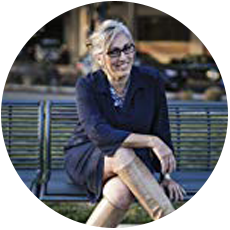
Julie Lopez
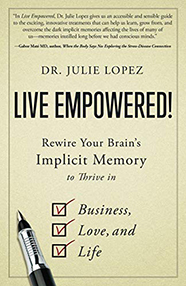
Dr. Julie Lopez is an award-winning clinician, entrepreneur, and licensed clinical social worker, and the founder of Viva Partnership in Washington, DC. Her clinical specialty is working with implicit memory, the stored experiences people cannot actively recall but that still shape their thoughts and behaviors, using advanced brain-based therapies including EMDR, Brainspotting, and Neurofeedback. She began her career as a systems engineer before turning to the human system, worked early on with survivors of sexual violence at the DC Rape Crisis Center, and served for nearly a decade as adjunct faculty at the Catholic University of America. In Live Empowered!, she offers an accessible guide to rewiring implicit memory to thrive in business, love, and life.
📚 Books by Julie Lopez
Transcript
[0:00:16] CH: What’s up everybody, it’s Charlie Hoehn, the host Author Hour where I interview authors about their new books. Today’s episode is with Dr. Julie Lopez. She’s the author of Live Empowered. This episode is awesome because Julie breaks down how to rewire your brain. Specifically, your implicit memory, which are the past experiences you can’t recall but that remains stored deep in your subconscious mind. If you’ve ever noticed these invisible barriers that seem to hold you back from making desired changes, either in your business or in love or just in life. This is definitely the episode for you because these road blocks might seem like minor things or they might seem insurmountable. But with the approach that Julie specializes in, you can get past those roadblocks by hacking into the regions of your mind that influence your daily life. This episode is really perfect for people who are super motivated and have tried different forms of therapy, they understand on an intellectual level what’s getting in their way but on a physical and emotional level, they’re not quite there yet. Without further ado, here is our conversation with Dr. Julie Lopez.
[0:01:52] Julie Lopez: 25 years ago when I was fairly new to living on my own, I was cooking something and I was cooking with oil and a grease fire started and because I was pretty inexperienced, I was trying something pretty new too. I threw water on this fire and the fire exploded and the kitchen caught on fire and things in the kitchen caught on fire and in that moment, I was completely terrified and I ran out of the house because I did not know what was going to happen, I kind of calmed down. Went back in because the whole house hadn’t exploded, it was just the kitchen on fire. I went back in and I managed to mostly put the fire out, called the landlords, called my roommates and all that stuff. But for kind of a long time afterwards, when people and one in particular, one teasing me when I was at the gym kind of telling him about what had happened, in a good natured way. I was pretty cross with him, I lost my temper and actually it made me tear up a bit and I was frustrated with that because I hadn’t died, the house hadn’t burned down, I was mildly inconvenient, we had to do some repairs, I was obviously through it, he meant nothing wrong by it but I was really reactive when he was being playful. It was frustrating because of all the things I just mentioned, it didn’t make sense, it didn’t make logical sense to me and I was being kind of mean. One of the things that was really major for me and this was during a time before I went back to school, I was working as an engineer but I had been in therapy and I told my therapist, I was frustrated. He suggested I try something that sounded really crazy to me. It’s something that’s a brain based therapy, which I know very well know and this brain based therapy is called EMDR and I tried it and in one session, he had – he did some kind of interesting things, I had to follow something with my eyes and there wasn’t a lot of talking but what did happen is that from that moment forward, from one session, I no longer had any other reactions to this fire I had been in that had really distressed me. If someone teased me about it, I was actually fine. The things in my body that had been reacting like the fear and my throat closing up and being agitated totally went away. I thought it was pretty cool because I have had many other times in my life where I’ve known something logically but could not perform physically because I was having a reaction. That really was the beginning of my introduction to this whole world. That works with a different part of our brain that holds kind of data that tells our bodies how to act and it’s stored in our unconscious called Implicit memory and what’s been really cool about it is seeing with myself and with clients about how realities can really shift when you get to the brain center where the messaging is actually stored.
[0:05:24] CH: Wow, man, I have at least 10 questions I could ask you right out the gate.
[0:05:31] Julie Lopez: Awesome.
[0:05:31] CH: The very first one is what is EMDR? What does that stand for?
[0:05:38] Julie Lopez: It stands for eye movement desensitization and reprocessing to really long name, which is why most people just call it EMDR but what’s interesting Charlie is that the founder Francine Shapiro when she developed it, which is based on – it’s a whole theoretical orientation with eight different steps to it but what it’s mostly done for is that it uses bilateral stimulation of the brain, the right and left side of your brain and it’s no longer just limited to the eyes, that’s what she used initially when she was doing her beginning research. But you can use sound so you can stimulate the brain on the right and left side simultaneously with sound, you can use a tactile like touch, there are these tappers. This is all done with equipment but the touch actually goes from the right, left with this bilateral stimulation and it helps to open up neural pathways in your brain that control the messaging to the rest of your body.
[0:06:38] CH: Wow.
[0:06:40] Julie Lopez: It’s pretty cool.
[0:06:41] CH: Yeah, let me make sure I’m getting this straight, the Neanderthal brain that I have with this sort of thing. It stimulates your senses on both sides of your body and because of that, the pathways that may have been previously closed off start to open up again?
[0:07:02] Julie Lopez: No, and it’s actually interesting that you just picked the word Neanderthal and with your brain because the story I just told and I don’t want to get too geeky because you know, the thing that I worked on really hard with my book was to be able to tell things in a very relatable way. I actually had one of my early reviewers say, “Wow, I thought I was doing you a favor to do this kind of book review and read through it but I didn’t know it was going to be such a page turner,” and that meant a lot to me because he’s not a clinician, it’s actually a very successful international business person and he said, “This was very easy for me to read, it was very relatable” and coincidentally the story I just told about, the terror that happened for me in the moment when the explosion happened and flames happened immediately. Actually did ignite a very primitive part of my brain that said, you know, you’re going to die and let’s kick it into high gear to do what you need to do to get out of it. It encoded a message in my brain and it basically said, you’re going to die like fire equals die, right? It’s very primitive and so when my friend was teasing me about the fire. I reacted like I was going to die and that he was making fun of my death moment but I didn’t think that at all. The frontal lobe of my brain did not think that but a different part of my system already had a different code in it. For this particular one, most of the things that are stored in implicit memory happened with the hippocampus and the amygdala is a part of the limbic system, which is what I was referring to. I feel like sometimes when I bring all these terms up that I lose people but if you want to talk about it and get specific.
[0:08:49] CH: Yeah, this is for the listener but I was curious because – we’ll keep it simple but –
[0:08:54] Julie Lopez: Because the amygdala is part of your limbic system and that’s what happened for me but with implicit memory, it’s specifically obviously I remembered the fire but there were other messages that weren’t in words that were telling my system what to do. I go more into details in the book about implicit memory, there are three basic arms and talking mostly about emotional effective implicit memory but it’s basically telling my heard to beat faster, my throat to close up, the tears, I would get teary with this guy and he’s like, “What is wrong with you?” He didn’t say that but I could tell by the way he was talking to me and plus I had been kind of mean and so the messaging to the rest of my body was telling the rest of my body to do other things, you know? You don’t consciously tell your eyes to well up with tears, they do because you have a sensation and just like your limbic system, we’ve all heard the awesome stories when there’s a real threat to survival and people get extremely strong, well why is that? They’re not that strong at that moment but all the blood rushes to their limbs because a part of the brain kicks in and says, “Your friend’s going to die, they’re trapped under this car and you’re going to pick the car up.” You could never do that without all of your adrenaline kicking in to do some pretty incredible things because we’re programmed to survive, we are telling our bodies to do that, our bodies do it naturally so I’m talking about how to recode very specifically recode our implicit memory to have it optimized for what we want in our present day life.
[0:10:37] CH: I’m curious with the instance of the grease fire and your friend sort of playfully teasing you and getting the strong emotional reaction. Had you struggled with that reaction for years or had this been the first time you’d really encountered this emotional reaction that you had?
[0:10:59] Julie Lopez: Have I ever felt sensitive about something, like someone could tease me about? Yes. I mean, typically, I joke around with people like sometimes, especially now, with my work where it’s super intense like a pretty much been able to roll with difficult things. This one tapped into kind of a life or death experience for me. It wasn’t that I’d had a history with it. It’s that you know, only the week prior, this thing had happened and got encoded in that moment. Like all trauma does when there is an image of the worst part of it, that’s how it gets encoded in, if you’ve ever had something happen where you’re like just frozen. What happens, but in real life, you’ve actually passed that, it happened 10 years ago, five years ago, you know, you had to put your dog down or you lost a family member or you witnessed an accident or you were in an accident. Right? Even though time has chronologically passed, some of those experiences can be frozen in our system and then we react off of them if they’re triggered. He was triggering me by bringing it up and bringing it up in a way that is making light of something that to me was encoded as something really serious. Not in my frontal lobe, right? I didn’t even think, I was like yeah, I made it through no big deal but the reaction right away was tapping into that life or death feeling I associated with it.
[0:12:28] CH: For people listening to this, you agave some examples like being in an accident, witnessing an accident. What are some of the more common causes of these traumas that you see when you work with clients now? What are the common things that you’re helping people work through?
[0:12:49] Julie Lopez: The way that I work and the book kind of has a nice array of different texts and examples. It’s very goal focused and so it’s more present day focused so you know, I might be working with someone who wants to be able and actually this is a great story who wants to be able to be more social and go out more, has been asked by her husband, the system on that actually worked with. Consider not saying no to so many social limitations, this kind of a thing and so she came in because she had some social anxiety and she had struggled with anxiety for a lot of her life and tended to be a bit perfectionistic. She came in and we kind of identified and broke down what her goals were and how we would actually measure that they changed. This is the type of goal, underneath what was causing the anxiety was some very early distressing experiences. Experiences she did not remember but she had been told by her parents that had gone through before the age of two.
[0:13:57] CH: What kind of experiences?
[0:14:00] Julie Lopez: She had some trauma in her biological family, which caused her to have to be moved from her home and so she’d had some really rough beginnings and environments that were not ideal for like a little kid. I guess you could probably relate to that with a little one of your own, you know what I mean?
[0:14:22] CH: Sure.
[0:14:23] Julie Lopez: Not that it’s happening.
[0:14:24] CH: Right, not that it’s going on but yeah, totally.
[0:14:28] Julie Lopez: Exactly. Again, she didn’t consciously remember it and this is where the hippocampus comes in because it’s not fully formed till like you’re three or four so it doesn’t time stamp experiences and it doesn’t hold chronological memory. No memory, all these symptoms, I wouldn’t have even known this or gotten into it so much if we weren’t using a brain based approach, which is nonverbal. We did the processing and we changed the coding in her system and to make a long story short. The beautiful thing about doing this type of work is it’s usually not very long term, I only worked with her for about three months , not only did all of her anxiety go away, she didn’t like social environments because she felt like she couldn’t control what was going on and that she shouldn’t think this but she felt like she might be in danger and so not only did all of her anxiety symptoms go down and she felt like around potentially making a safe when she was out and about. But, she had had psoriasis, which is an inflammatory skin condition that had been medically treated for over 30 years and it completely went away. That was really cool because we’re one system but we tend to think of it separately like physical health, mental health, you know, these different aspects of wellbeing. But it’s all integrated and so it was really cool and frankly, she was like, “My dermatologist wants to talk to you she cannot believe what she is seeing,” and I am not a dermatologist and she did not come to me saying, “I want my psoriasis to go away” but it did after we did the work. It was super cool.
[0:16:13] CH: That’s amazing and I’ve heard stories like this with different modalities of therapies some being more effective than others. I mean my friends and I talk about plant therapies all the time of the power of MDMA that’s going to be legal in the next few years and psychedelics but this sounds really rooted in a scientific approach. What kind of success rate do people tend to see with EMDR?
[0:16:45] Julie Lopez: Well I couldn’t tell you the exact statistic. There has been a lot of research done on it. I can tell you for me with my clients it is very high but part of that is that I am very careful about selecting the type of treatment that might be best for them and making sure that we don’t jump into the full protocol until they’re ready. So some people come ready and this is going to get pretty complicated pretty fast but some people come ready. Some people might not be so ready for different reasons. They might have some pretty significant issues with trust, they might have lower resources around being able to shift from one emotion to the other and all of these things when you are in a state where you’re going into the different parts of the brain can make it hard for someone to follow the process not because there’s something wrong with them. They just might need to build up some resources.
[0:17:41] CH: Yeah, they’re not quite ready.
[0:17:42] Julie Lopez: They’re not quite ready and because they’re not controlling what’s happening this is just going to happen then I won’t suggest it. I am very candid with my clients. I tell them what’s happening and we will work to build that until they’re ready.
[0:17:56] CH: Wow, so who is an ideal candidate for you?
[0:18:01] Julie Lopez: Okay, so an ideal client for me honestly is someone that’s really motivated and typically maybe because of where I am in Washington DC or maybe because of some of the networks that because I have this big center and so certain people ask for me specifically, my ideal client is someone who is very motivated and they’re motivated because they’ve tried a bunch of other things and they’re really frustrated that they haven’t gotten the results they wanted. Or they’re frustrated that they understand intellectually every aspect of what’s getting in their way with job performance or relationship struggles or what have you and they’re not making that progress that they want. I love that because I think what really motivated me to write the book is the number of people that I have met in my personal and professional life who legitimately do not understand that at that moment where they feel like they’re backed into a corner. And there really are not other options and they have checked the check box of all the things that they need to try to move forward or to have success in what they want for their life that they realize and they’ve come in contact with a whole other set of opportunities to make change and I love that. That’s the type of client I like and I will tell you honestly, a lot of times these clients are learners. They have come across this because they have researched it on the internet. Or they’re very motivated to have the life that they want to live. So that is my favorite type of client but to be honest, it’s so gratifying just to see people in the reality that they didn’t realize even existed, right? And I am not talking about – I could tell you and I do tell a lot of stories in the book about pretty drastic changes that happened for people but it is the way they actually feel in their bodies. I love that, I go like, “Wow” you know people talk about this and I didn’t know what they meant until this moment.
[0:20:11] CH: Right.
[0:20:11] Julie Lopez: When I actually feel different right now.
[0:20:14] CH: Wow that’s really incredible. I’d imagine this is such a gratifying way to have your career to help people in this way and within three months is when you tend to deliver results with them, right?
[0:20:31] Julie Lopez: It depends on the person. It’s been less than that, it’s been more than that. I actually had a client who was in a plane crash. It was a professional trip and she had to travel for work. She had a very prestigious job. She survived the crash, blacked out during the midst of it, had a pretty significant back injury but survived and you know did her physical therapy for her back but could not get on a plane. She actually couldn’t really tolerate even being in an airport. Because if she heard the sounds that had become encoded in this part of her brain and her implicit memory, she would have a full on panic attack and was immobilized.
[0:21:16] CH: Man, one of my close friends had the exact same thing happened to them, sorry keep going.
[0:21:21] Julie Lopez: About a plane crash?
[0:21:22] CH: Yeah, she witnessed a plane crash actually on the way to the airport and couldn’t get on a plane without having a panic attack, yeah.
[0:21:31] Julie Lopez: Yes, it’s terrible and for this particular person this was a pending major latch. She had worked extremely hard to be where she was and her job required travel and so she was doing – she was referred by another therapist as the best way to do the train based work and she was really working hard not to have to get on a plane. She would take a train across the country but some of her flights were international. It was not sustainable. So with her honestly, okay I always do some preparatory sessions and I do a few follow ups just to get them into the groove of how to integrate the work that we have done but we only had maybe three sessions of the actual brain based work. She was fine to get on the plane no problem and that is pretty awesome. Now, when people have, this was an adult trauma single incident. She had no significant family of origin kind of disappointment, certain neglect or any of that type of thing. I do end up seeing a lot of clients who come from affluent families what the picture looks like is a white picket fence, mom and dad, everything like the way you see in a storybook but their actual childhood was one where they were pretty neglected. The parents were working, no one was around, didn’t really get a lot of their emotional needs met so that is an interesting one. I am a trauma specialist but you see some of the same symptoms was something that society says it’s fine because it all looks fine on the outside but it is not actually really fine on the inside. And I really like working with those clients too because they’re puzzled or they often times feel like they’re broken like there’s something wrong with them if they’re having struggles with relationships or having struggles with public speaking or things like that. So you asked me a question before just about which type of clients and really it has more to do with what kind of goals they want to set and we work from the present day.
[0:23:44] CH: Yeah, man you described a close friend of mine to a tee on that last part and he is very motivated tried a ton of things over the last five years. He understands intellectually what’s getting in his way and he’s from the exact type of childhood that you just described. So I am definitely going to be sending him your book and this episode to listen to but this has been really fascinating and for people who are interested in the book is there anything else that you want to touch upon that they might get excited about and get them off the fence to go buy your book?
[0:24:26] Julie Lopez: Yeah, I was actually thinking about your friend that you just talked about and wanted to tell you, when you send him a copy of the book what I really am proud of is that there is a really nice appendix on the back. You asked me specifically about one of many types of brain based therapies and there are many types of body based therapies that also are effective at getting into some of those codes that are stored in implicit memory and there is a full appendix with lots of websites. That is built to empower the reader to say, “Hey reader, things aren’t what they seem and there is a whole other world out there and let me empower you with a little bit of brain based anatomy.” It may not even be as deep as what you were asking me Charlie. So just to give the reader language and the ability to ask for what they want, in the conclusion there’s specific things to ask someone who provides one of these different types of modalities. The table is pretty expensive, it has a lot of different lengths in it and then in one of my chapters I actually break down a methodology that I developed for people to discover what is actually coded in their implicit memory, which sounds pretty simple but it’s not because it’s in your unconscious. So it is very hard to do on your own but in one of these chapters it actually breaks down this four part methodology called packs. So that the reader can do this on their own not to recode it but to actually identify what might be in there and it’s a wild process because often times once they hear it and they sit with it what the code might be, they’re like, “Wow, yeah that makes a lot of sense” but it’s not something typically that they would come up with on their own because they’re sitting there going, “Why can’t I do this? Why is this not working out? Why do I still struggle with drugs or eating or avoidance?” I work with a lot of people who want love in their life or want relationships but they themselves sabotage it and they are very puzzled about why they would do that because if you ask them, “Do you want this?” They’re like, “Heck yeah, I totally want this.”
[0:26:31] CH: You’re describing me before I did therapy literally, yeah.
[0:26:36] Julie Lopez: Yeah and so, that’s the whole thing that’s why the title ended up being Live Empowered because many, many empowerment movements in our history begin with the idea of seeing what is not visible like the subtle things that keep us held back and so the whole book is designed to empower people and Charlie because you keep mentioning a friend of this or a friend of that or you yourself, they feel like looking through the appendix and being curious about what might be possible next and why.
[0:27:05] CH: Awesome, yeah I so admire you for putting this book together and it really does feel like there is a movement going on toward a better understanding of the systems and the programming in the brain and these tools and methods that we can use to rewire them to live better and I am glad your book is playing a piece in that puzzle. So I just got a few more questions for you Julie. The first one is what is the best way for our listeners to connect with you, to follow you, to potentially even work with you?
[0:27:46] Julie Lopez: So let’s see, well my center in Washington is, do you want the actual website?
[0:27:55] CH: Yeah wherever you send people.
[0:27:56] Julie Lopez: Yeah, www.vivapartnership.com, that’s Viva. More information about my speaking and training and this workshops that I do and facilitation can be found at doctorjulielopez.com and I will tell you a personal favorite of mine, this isn’t necessarily helping any listener find me but we recently developed a free online mental health resource called The Resilient Brain Project and that is where you can find it. It is 100% free and it is built to empower the user through apps and blogs and information. Here now information is scientific information, groups where they can connect and feel normal around struggles that they might be having and it’s also for allies like family and friends. I am really proud of it and it is a personal love offering project that I’d love to see getting out to the world because it is free.
[0:28:58] CH: Awesome, very cool. So Viva Partnership and you also do retreats as well.
[0:29:05] Julie Lopez: I do retreats, not a lot of retreats. I get asked to come in and facilitate other people’s retreats and then I have an annual retreat in the dead of winter in Washington DC. It gets very cold, yesterday it was 12 degrees here and in another week I’ll be heading out to the Caribbean.
[0:29:22] CH: Nice.
[0:29:23] Julie Lopez: Off to an island with a group of women to work together for a week, I love it.
[0:29:28] CH: Excellent, well listeners can be sure to check out those resources and the final question I have for you is to give our listeners a challenge. What is the one thing they can do this week from your book that will have a positive impact on their lives?
[0:29:48] Julie Lopez: So what I would say Charlie is to actually go to that site, The Resilient Brain Project and take a look at one of the topics that you might struggle with right now because if you just look at one you will realize there was a way out of it.
[0:30:09] CH: Awesome. So the book is Live Empowered, it’s on Amazon. Julie Lopez thank you so much for being on the show.
[0:30:19] Julie Lopez: Charlie thanks for having me.
[0:30:21] CH: Thanks again to Dr. Julie Lopez for being on the show. You can buy her book, Live Empowered, on amazon.com. Be sure to check out authorhour.co for a full transcript and show notes of this episode. You can also leave us a review on iTunes, in case you didn’t know that was a possibility I’d suggest you go do that now. It will only take about 27 seconds and it will mean a lot. Thanks for tuning in to today’s show. If you liked what you heard, here is what I want you to do next: open up the podcast app on your phone or iTunes on your computer and search for “Author Hour with Charlie Hoehn” and then click “ratings and reviews”. Take 10 seconds to rate this show or leave a review. It is a small favor but it’s really the best way to show your support and give me feedback and if you know someone else who’d love Author Hour, take another three seconds to text them a link to this episode. We’ll see you next time.
Want to Write Your Own Book?
Scribe has helped over 2,000 authors turn their expertise into published books.
Schedule a Free Consult