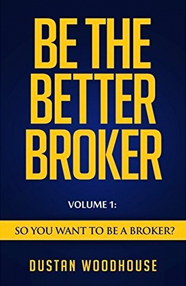
Dustan Woodhouse: Be the Better Broker
Read the full transcript
Dustan Woodhouse
Dustan Woodhouse is an Accredited Mortgage Professional and one of Canada's top mortgage brokers, known for his practical approach to helping both clients and industry professionals navigate the lending landscape. He has funded hundreds of millions of dollars in mortgages and is a sought-after speaker and educator in the Canadian mortgage industry.
📚 Books by Dustan Woodhouse

Transcript
[0:00:21] Charlie Hoehn: You’re listening to Author Hour, enlightening conversations about books with the authors who wrote them. I’m Charlie Hoehn. Today’s episode is with Dustan Woodhouse, author of Be the Better Broker. Are you considering a career in real estate, finance or insurance? Well, this is the episode for you. In a field of 16,000 brokers, Dustan was ranked in the top 20 for five years in a row. By the end of this episode, you’re going to have a much better understanding of what it takes to truly become a top producer as a mortgage broker. And now, here’s our conversation with Dustan Woodhouse. Dustan, tell me about your personal journey in being a broker? What ultimately made you want to write this book?
[0:01:25] Dustan Woodhouse: Well, I mean, I guess that’s sort of a two-part answer. You know, my personal journey as a broker, there’s virtually nobody that grows up as little kids saying, when I grow up, I want to be a mortgage broker or a loan officer, that’s just not a thing that happens. Most of us fall into the industry backwards or sideways and it’s usually through encountering somebody in our orbit who says to us, you know, you’d be really good at this, you should get into this business. In my case, I had a number of people around me saying, you should be to look at this brokering, you should get into the mortgage business. I didn’t even really know what it was despite having purchased several properties and at one point, we had a portfolio of five properties, a few years before I got into the business, I’ve done all that directly through banks and hadn’t dealt with independent brokers. I didn’t really have an awareness of the industry which was pretty common 10 years ago. It’s a lot less common today like – in Canada where I’m based spend specifically in Vancouver, DC, brokers actually enjoy about a 50% market share with first time home buyers. Because first time home buyers do their research, they find out, there’s this independent advocate that works for me and they get compensated exactly the same way. The person at the branch that I go deal with does. They get paid by the lender. I’m not paying them. Why wouldn’t I get somebody who can represent 30 different lenders working for me rather than one. And that was a lot of the appeal that drew me in to the industry when I started to learn that about it. At 36 years old, with a significant mortgage, a couple of kids and a wife who had been largely focused on staying at home, raising the kids and that was our choice that we had made. You know, the pressure was on. When I got in as I say, there was a lot of drive and there was a pretty big fire burning at my heels so I had to make things happen. That always helps and I had the benefit of significant life experience at that point as well which also helps. Away I went and I enjoyed you know, what I thought was typical success and found out very quickly was highly A-typical. So began a series of –
[0:03:52] Charlie Hoehn: In what way?
[0:03:55] Dustan Woodhouse: Well, when you start in the industry, you’re often told, don’t expect to close a file for six months, don’t expect to replace your previous income for three years. Those are two common things you’re told and those things aren’t wrong by the way, although, I struggle with setting expectations that low. I don’t like to set expectations so low. When I got on the business instead of waiting six months to close my first mortgage transaction, it closed in four weeks and in the first six months, I closed 14 files. I replaced my previous income in the second six months basically. I closed up my first calendar year with 95 files behind me. In the industry average is 24 files a year and then in my second full year, we leveled it up to a 177 files. By then, I realized okay, I guess I’m doing things differently than other people are doing.
[0:05:04] Charlie Hoehn: Wow. What were you doing differently? I mean, we were talking before this, you seem like a very hard worker but there are a lot of hard workers. I’d imagine you were doing some other things as well.
[0:05:17] Dustan Woodhouse: Well, you know, it’s like they say, you can have the best product in the world, that’s not going to get you there, you can be the hardest worker in the world, that’s not going to get you there, you can be the most personable person out there, that’s also not going to get you there. If you have all three of those things, you got a reasonable shot but even having all three of those things, still not going to get you there. There’s a lot of little things, I mean, one of my working titles for the book was a hundred steps to a hundred million. Because in my fifth year, we were turning a hundred million dollars, my one assistant and I, we were turning a hundred million dollars’ worth of mortgage volume, originating that per year. A good friend of mine he says, you can’t call it a hundred steps to a hundred million, nobody wants to take a hundred steps, it’s got to be like seven steps or five steps and I’m like, well, that’s just not reality. You know, of course, to his point, most people don’t want to live in reality. I was getting these emails and phone calls from people saying, hey, I heard you’ve had a lot of success in the industry and you really hit the ground running and have you got time for a coffee, a lunch, can I pop by your office and sit down with you? At first, I was the yes man right? Yeah, sure, of course, because that is part of what I did, I mean, I went and sat with the 10 top producers in our company, within my first couple of weeks and they were almost all of them, gracious enough to meet with me and give me a half an hour to an hour of their life. I came away with some really good stuff because why go reinvent the wheel? These guys are already successful, let’s just go find out what they’re doing. The interesting thing was, they were all doing things a little differently than each other and they all had sort of different approaches to the business, I mean, as far as the number of hours they would put in, the type of marketing they would do, from zero marketing to blitz campaigns. There were all these different ways that people were finding significant success. Which was kind of frustrating on the one hand because you’re like – there’s no one secret but also inspiring because it’s like, well great, I can come at this from any number of angles potentially.
[0:07:28] Charlie Hoehn: Yeah.
[0:07:29] Dustan Woodhouse: And be successful but as I got busier and busier, giving brokers that half hour, that hour every second day started to become challenging. Of course, I was largely having the same conversation. And also, I mean, I’ve laid down 200,000 words on the topic between the three books and I’ve got at least one more book in me. In the space of a coffee meeting or a lunch, I couldn’t ever really say all that I wanted to say. Because again, it wasn’t five simple steps. It was a great deal of things. I put together a presentation to give to our network and was lucky enough to travel back and forth across the country and speak to collectively about 1,400 brokers and I’ll tell you what, whatever business you're in, if you want to tighten up your processes, sit down and put together a power point presentation on how you do what you do and imagine that you’re going to get up in front of 1,400 of your competitors or you know, people you work with, you compatriots and say “this is how I do it” because you very quickly realize wow, I can’t get up and say that, that’s horrible. Wow, that’s a gaping hole in my process, I got to fix that. That was the year we jumped from about 175 transactions, I gave that presentation in the spring of the following year and we jumped to 237. Actually I think specifically it was 166 to 237. You know, it was a – and mortgage volume wise, it was about a 25%, actually, mathematically about a 35% jump over the previous year’s production. That had to do with just mapping out my process, realizing where the problem areas were and fixing them. It was a very beneficial exercise for myself personally to go through putting that presentation together and then of course I looked at the presentation and 175 slides and I realized that’s the outline for a book and if I put this book together instead of having to go for a coffee or a lunch, I can just hand somebody the book and say, you know what? Read this book, if you're still interested, then we can have a conversation that will be on a whole other level because your first hundred basic questions. Certainly, your first 20 basic questions will all be answered in the book and more and you may just decide this isn’t for you, you know, as I mentioned before. My father, I had him proofreading the book and he says to me, jeez, kid, you say brokering is difficult once, you say it 25 times and I’m like yeah because it’s a very difficult industry with a very high attrition rate and not enough people learn enough about the industry, the true sides of the industry, it’s multidimensional. I mean, can it be lucrative? can it be rewarding? Absolutely. Does your neighbor drive a Porsche and live in a big, fancy house and not seem smarter than you and he’s this successful loan officer? How can that be? Well, there is a lot more to it than meets the eye and so as I say, I sort of wanted to pull the curtain back and say, here is what you really need to be considering.
[0:10:54] Charlie Hoehn: Let’s talk about some of those basic questions that a reader might ask at one of your coffee meetings and I know this is going to be hard because I know it’s widdling down a hundred steps but if you had to pick just one really critical idea or even a story from your book that listeners could remember from this podcast. What would you pick?
[0:11:22] Dustan Woodhouse: Well, this will be a distillation of a conversation I had recently with a top producing realtor, he was in his third year who knocked it out of the park was rookie of the year, in his first year, he’s been number one in his office, all three years running. He just came in and dominated. We kind of had a few things in common and we connected on a few levels and we were talking about the topic that we get asked all the time, where does all your business come from? That’s the number one question, right? Because people are starving for business, they’re starving for clients and like, where do you get them from? Where do they come from? That’s probably the most popular question and incidentally, I mean, I’ve had realtors that connected with that one through the book, you read the book and you gave me a call because a lot of realtors, financial planners, insurance agents, they’re sort of discovering the first book because it’s not really specific so much to the mortgage world as it is to commission sales in general, right? I mean, how do you attract a client to come work with you? I mean, we’re all kind of looking for the same client when you think about it, I mean, the realtor is clearly looking for the exact same client that the mortgage broker is looking for. That client demographically tends to be the perfect fit for the life insurance salesman for the certified financial planner. You know, as I say, a lot of what the book addresses, it fits for all of those industries and all of those industries, not coincidentally have extremely high attrition rates. Because people don’t realize the fundamental basics that they need to be practicing. So to go back to the point I was going to make, the realtor says to me, you know yeah, I get asked all the time like, how do you do what you do? Where did all these clients come from? I thought he really hit the nail on the head when we got talking about conversations we have with people. First off, we have conversations with people. If I’m standing in line at the Starbucks and my barista asks my name, I ask for her name. When she asks how my day is going, I ask how her day is going because she’s not just some coffee slave, put there to give me my java, actually, I’m a tea drinker, not a coffee drinker but either way – and then the people behind me in line and the people in front of me in the line, those aren’t like obstacles, the people ahead of me aren’t like, delaying my day and the people behind me aren’t clogging my exit out of the store after I get my drink. That is not who the people around you are. Every single person around you is a potential client and every single person is interviewing you for the job that you don’t even know you’re being interviewed for all the time. So smile, be nice, ask questions and if you’re leaning there at the counter waiting for your drink and the other person’s waiting for theirs and it’s a beautiful sunny day, comment on how it’s a beautiful sunny day. If it’s a beautiful rainy day, comment on how it’s a beautiful rainy day and strike up a conversation and the thing is, if you’re a realtor, if you’re a broker, whatever you’re in to, every conversation is about what you do for a living. If you really think about it, within four or five questions, that person is then asking you questions right? Start with asking them questions. Invariably, they will turn it around and start asking you questions. I have again, the advantage of being in Vancouver and Vancouver real estate is a sport, I mean, it’s ridiculous, it’s such a talked to death about topic, it’s unbelievable. That’s largely to do with some extreme price increases we’ve had and of course, all these people that rant and rave about it being a bubble and there’s a lot of bubbles. It’s fundamentally supported but people just can’t wrap their head around it. I don’t see why they’re not in an uproar about the fact that it’s $2.50 for an ice-cream cone, I mean, it used to be a nickel. It’s 12.50 to go to a movie, it used to be a quarter. You know, inflation is a thing that has happened all over the place but we really tend to zero in on it when it’s real estate more than anything else.
[0:15:42] Charlie Hoehn: Right.
[0:15:42] Dustan Woodhouse: As they say, it’s an easy conversation to get started. Every conversation you’re having is you, positioning yourself as an expert.
[0:15:52] Charlie Hoehn: Right. This advice of talking to people, smiling, being friendly, you’re really showing that you’re a true Canadian Dustan because in America, we do not take these attitudes that’s – I don’t know, we’re less warm. Do you find that just –
[0:16:17] Dustan Woodhouse: I don’t know if I agree with that though, I mean, I’ve travelled pretty extensively, you know, 99% of it for work admittedly so a lot of the times I’m at conventions with probably likeminded people. But I mean, I was just at a conference in Texas for the core summit and it was meeting of 570 elite mortgage loan officers and again, okay, I guess I got to recognize the demographic I suppose. But that’s a pretty good chunk of friendly, smiling people who were happy to have a conversation.
[0:16:50] Charlie Hoehn: Yeah. It’s true, I’m teasing you but yeah, I loved your point about you’re always on an interview.
[0:16:57] Dustan Woodhouse: Yes.
[0:16:58] Charlie Hoehn: One of my friends, he teaches how to have a perfect introduction because his idea is that having to introduce yourself so many times throughout your life and so many people just kind of mail it in each time, they have a bumbling answer, they sell themselves short, they don’t make it clear who they help and what they’re really good at. I think you’re absolutely on point is just putting your best food forward always, no matter who you’re talking to and anybody’s a potential client because you’re always on an interview. I think that’s great advice.
[0:17:42] Dustan Woodhouse: I guess there’s a catch there and the catch is, you actually have to know what you’re talking about.
[0:17:47] Charlie Hoehn: No, I knew there was a catch.
[0:17:50] Dustan Woodhouse: Yeah, there’s always a catch right? Lately, my mantra has been, know your numbers and I could write an entire book on knowing your numbers in our industry because there are so many different numbers to know and I mean, the list just goes on and on but to give you a very simple example, people typically, when they first phone or email a broker or mortgage originator, the first question is, what’s your best rate you know? Invariably, what’s your best rate? That’s simply a reflection of the client’s context. That’s their frame of reference. When you hear mortgage, you think rate, but when you hear mortgage, you also think, payment. We take clients away from the rate conversation because there is a wide variety of rates. Now, the range might be very narrow, it might be two tenths of a percent. But people just get obsessed, is the rate going to be 2.49 or is it going to be 2.47. The thing is, when you dollarize that 200ths of a percent difference, they always are amazed. That’s the difference? Like a .05% difference on the rate on a half a million-dollar mortgage is $13 a month. You know, a 30 year amortization. It’s 13 bucks a month that we’re talking about. If you’re talking about .02, now you’re down to like under five bucks a month we’re talking about. Why are we getting ourselves wrapped in knots over rate? I don’t talk rate with my clients, I talk payment. I know my numbers and when I say that, I mean, I know that mortgage money today in Canada costs $400 per month per $100,000. The clients are putting less than 20% down then it goes into an insured product and there’s an amortization restriction so then it costs $450 per month per 100,000. When I veer off there I talk ensured product amortization. I am going into linguistic territory that people big glaze over so I don’t go there. I don’t talk about amortization, insured, uninsured, insurable, uninsurable all the lexicon of the industry, clients don’t need to know that. At the end of the day a client needs to know how much money is going to be taken out of my bank account. How much mortgage money do I qualify for so again, I can say “Well sorry, you make $60,000 a year that means you qualify for a $300,000 mortgage and that will be $1,200 a month”. And I do that in the ten seconds that I just did it with whatever income number they give me versus the down payment, I just do that little matrix and people are blown away. They’re like, “We called our rep at the bank two days ago and we are waiting for them to get back to us to tell us how much mortgage money we can have and what the payments will be and you just told us in 10 seconds and I see that because of my numbers”. I have done this 1521 times before, that’s the current number of transactions I’ve processed. I keep a running total and I work that on my conversations every day.
[0:21:06] Charlie Hoehn: Wow, no joke.
[0:21:09] Dustan Woodhouse: We do a part two of this podcast and I’ll change that number to whatever it is at that point.
[0:21:18] Charlie Hoehn: Author Hour is sponsored by Book in a Box. For anyone who has a great idea for a book but doesn’t have the time or patience to sit down and type it out, Book in a Box has created a new way to help you painlessly publish your book. Instead of sitting at a computer and typing for a year, hoping everything works out, Book in a Box takes you through a structured interview process that gets your ideas out of your head and into a book in just a few months. To learn more, head over to bookinabox.com and fill out the form at the bottom of the page. Don’t let another year go by where you put off writing your book. Dustan who is you book for? Who should absolutely read your book? Do homeowners need to read it or know? Is it only for brokers?
[0:22:16] Dustan Woodhouse: Well I think as I say it’s for anyone in a commission industry who is working with a homeowner. So whether you’re a mortgage loan officer, a mortgage broker or even as I say, if you’re a realtor, a wealth planner, a life insurance agent, I think that there is a lot of benefit for anyone in those industries because it’s very foundational. So the book is targeted and it was targeted initially at people thinking about getting into the mortgage business. So here’s the real deal. Here is what the industry is really about and they say you are going to make this much money but actually this is really how much money you are going to make on a per file basis for instance because there’s always the gross and then there’s the net and then there’s the net-net. So I dig into a lot of that information but I think I am up to 67 reviews on Amazon. Somebody gave me a three star, a couple of people gave me a four star but the rest of them are five star reviews. And a lot of them you’ll see, you know I’ve been a broker for 19 years, I’ve been a broker for 21 years and they got a lot out of the book because it was sort of back to basics things that they used to do that they’ve drifted away from and it pulled them back to doing. So whether you are currently in the mortgage business or contemplating the mortgage business, it’s been extremely well received. I mean like I said, the Amazon reviews speak for themselves.
[0:23:49] Charlie Hoehn: They do. Now tell me, let’s get more into the specifics there, tell me one or two of your favorite success stories of people who read your book and implemented into their life?
[0:24:03] Dustan Woodhouse: That’s really easy actually. My all-time favorite email I’ve had from a reader and I’ve had three now of these very similar responses was, “Holy smokes! Thank you so much for writing this book. You know I picked it up Friday or Saturday, I read through it in the weekend” most people power through it all of them in one sitting. Lots of people have read on one flight. So it’s a pretty quick light read especially if you are interested in the topic. But they power through it in one weekend and they’ll say, “I was actually going in to quit my job on Monday because I was getting into this industry and after reading your book, I realized I am so not ready to do that”. I mean again before we started recording I mentioned in the one province here, the attrition rate that have licensed 5,000 new agents in this one province this year, only 250 of them will renew their license next year. 97.5% attrition rate because people don’t realize what they’re getting into. They don’t realize that they probably won’t get a paycheck for six months and it might be 12 months and so they are just going to be drifting backwards financially for a year or two and it is usually that third year when people get traction. So those are my all-time favorites because disaster averted right? I mean major crisis averted so I love getting those ones and it’s not that they’re turned off of the industry or anything like that. They are just saying I realize I need to actually spend another three, six, nine months regrouping. I can still be studying the industry, I can start implementing a lot of these basic techniques that you talk about for building my database and this sort of thing and I can pay off a little bit of my debt, build up a little bit more savings, put myself in a better position, wait until my partner goes back to work, whatever the case is. So those as I say, those types of responses that I’ve had are for sure the high notes. And then again, I would probably say the veterans of the industry. You know how cool is it when somebody who’s five, ten, 15, 20 years in the business, hundreds some of them thousands of files of experience saying, “Hey I really got some good stuff out of your book” that’s pretty validating. So that’s kind of cool too but I mean let’s be fair, I don’t have any competition. In the Canadian market, there is no other book written targeting brokers and for good reason. There’s only 18,000 of us in the market. So how many books do you think you’re going to sell? What’s the cost and the amount of labor that’s involved? I mean it hasn’t been a profit center. I think we’re up to 6,000 copies of volume one at least a conservatively 6,000 copies out there and I am not on the black on this project yet but it’s not been about that, right? I mean I had an interest in writing a book. I really wanted to write the book and it’s benefited me in significant ways outside of the actual dollars and cents of the book itself. I mean obviously once you have a book, you get the call for opportunities to speak and that sort of thing not that I’ve monetized that significantly in any way either but the other thing it does is it just positions you as an expert in the industry, right? You’re the guy that wrote the book or you’re the girl that wrote the book. So that’s been probably the biggest upside.
[0:27:49] Charlie Hoehn: Yeah, so once you’re the expert how has that changed your life or your profession?
[0:27:56] Dustan Woodhouse: Well a year ago, I was working on volume two and volume three and still cranking away full boar on mortgages. I mean Monday to Friday clients onto my life. I didn’t think about the book, I did not work on the book. Saturday, Sunday I shifted gears and it was all book all day Saturday all day Sunday and I hammered away on these things and the results has certainly taken me to a place at this point not where I would originally intended on going by any stretch. I thought that when I wrote that first book I thought, “Great now I don’t have to go out for lunch and coffees all the time. I can just give people this book, they can read it, it will be great if some people buy it on Amazon. That would be cool and it might have cost me a few thousand dollars to have put this thing out there but that’s cool. I have done a service hopefully by a few people and mom and dad will be proud because hey, their son is an author” and that was as far as I thought it would go. And then the second and the third book which I just felt compelled to write and I am going to knock a fourth book out no later than the end of next year, trying to get on it here this year and get it done that’s where I did start to get a little more passionate about spreading the word because coming back to one of your earlier questions, people say how do you do what you do, most of us in the industry who are doing really well we just have a blank look on our face when we get asked that question. And they say, “Well what do you mean?” I just do the job like doesn’t everybody do what I do? I am not doing anything special but as I say, I’ve realized that there is such a lack of training in the industry. That’s where the second book is a couple of thousand copies out there. The third book is actually a little over 3,000 copies are out there. The third book is like a textbook on brokering. The first two are pretty light, pretty easy reads. The third one really does get into a deep dive of process scripts, the whole nine yards. And so my business has morphed a little bit from my clients being those in need of a mortgage to my clients being brokers in need of better tools and deeper knowledge on how to gain those clients and how to retain those clients and not just through the end of the transaction but how to convert them into referral sources and grab them back up at renewal or refinance or that when they move, etcetera, right? There’s been a shift where people are starting to realize that the lifetime value of that client lasts for their lifetime. I mean if you do a truly great job that person should be a referral source for life. Like why should that relationship ever change and it’s not a one and done. It’s not a hunt and kill mentality. It’s a farming mentality. It’s a nurturing mentality and that’s why I often say this isn’t a sales business. I am not in sales. I advise and clients instruct so I give advice and then they tell me what they want to do. I don’t tell them what to do. I don’t tell them what they should do. I just by advise here are some options, we go from there but I don’t think of myself as selling anything. Maybe that is also part of the secret to the success, right? I am not a super salesy guy. I’m not out there putting business cards in everybody’s hands. It’s not my thing.
[0:31:29] Charlie Hoehn: I 100% feel that that is the right way of treating people and being a good sales person so that’s fantastic and what is a parting piece of advice you have for aspiring authors or people who might be experts in their industry and starts to think, “Hey maybe I should follow in Dustan’s footsteps and put out something on my own”?
[0:31:56] Dustan Woodhouse: Well yes, so let’s be clear on how we define author. So certainly what I have written is –
[0:32:04] Charlie Hoehn: You’re an author.
[0:32:04] Dustan Woodhouse: Well, I am an author but it’s not like I’ve written some amazing literary piece.
[0:32:11] Charlie Hoehn: Hold on, that’s not a fair thing to – you can’t hamstring yourself. I mean an author is somebody who’s written a book. You’ve written three, you’re definitively an author.
[0:32:23] Dustan Woodhouse: Alright, well but I mean it’s business focused, it’s a small niche.
[0:32:28] Charlie Hoehn: You’re non-fiction.
[0:32:29] Dustan Woodhouse: I’m a non-fiction author and I am writing about a subject that I know intimately and I know it deeply and I would say to people out there that you’d be surprised however small the niche you might be in how many people are interested in reading about it. I mean like I say there’s only 18,000 of us in this industry in Canada and one in three of them have a copy of the first book in their hands. That’s pretty remarkable in my opinion. I am amazed at that, I thought if I moved a thousand or 2,000 copies that would be amazing, that would just be phenomenal. So I often say there is no money in books other than the money that I might hide in a book at some point. You know the actual physical $20 bill I stick in one or something. So I wouldn’t say especially for a niche author, especially for a non-fiction business focus book that you should look at the book as a profit center. That’s not what it’s about. It’s got to be a tool that you are going to use to leverage yourself to another level like rather than doing a mail out, rather than doing some big promotional day, rather than running a magazine advertisement. You are going to use it as a marketing tool and you are going to put the expense of it in that marketing expense column and I think if you just look at that as all that money is gone and should I ever sell any copies and actually recover some of that money, hey bonus. That will just be found money. That’s the first way to go into it because if you go into it expecting to earn a profit on the book sales themselves, I think you’re going to be probably let down for the most part.
[0:34:18] Charlie Hoehn: Right, agreed.
[0:34:21] Dustan Woodhouse: So I heard it’s referred to as a business card on steroids and it absolutely is. Event planners love people with a book giveaway, right? So if you want to get up and speak at industry functions, if that’s something that interests you the book is going to be a ticket to make that happen without question. I mean you have obviously got something to say. You said it in 40,000 or 50,000 words. So from your book you can obviously build multiple presentations typically. And so it’s a good vehicle for that and so as I say, if you are looking to sort of elevate your status out there become that tall blade of grass, there’s few better ways to do it than by having a book and then really I would say, don’t be shy. Don’t hide from the fact that you wrote a book. Don’t keep them hidden in a box under your desk. I mean put it out there, beat the drum, right? I mean I have been too conservative. I haven’t done a lot of Facebook ads or really pushed it in any big way, shape or form. That’s one of my resolutions for this year is I am going to make a bigger effort through the end of the year to really beat the drum and say, “Hey this book is out there” you know because as they say, Stateside, the feedback I get from the people that pick it up or stumble across it on Amazon is phenomenal. They’re all three books, they’re like, “Yeah, okay there’s a few things that are Canadian specific” in the third book in particular. But the first two books they’re like, you can be in any state in USA, any city in the USA and it all applies. It’s very, very helpful stuff and I think as I say, I am going to try and shout from the rooftops a little bit more that this thing exists out there but again, not so much to drive book sales and revenue from the book sales as to potentially leverage that into speaking opportunities at conferences and see where that goes from there and then of course, the next logical step is coaching and building out educational content.
[0:36:35] Charlie Hoehn: Awesome. So Dustan, where can our listeners connect with and follow you?
[0:36:41] Dustan Woodhouse: The title of the book, I’ve got a website so they’re the same. So bethebetterbroker.com and I do have a blog that I try and update about every three weeks or so with mortgage related materials. So if you’re a loan officer, a mortgage originator, a mortgage broker, we all go by all kinds of different names but if you are in the business of helping people with their residential real estate financing, you know it’s content that you might find interesting.
[0:37:08] Charlie Hoehn: Awesome. Thank you so much for being on the show Dustan, this was great.
[0:37:12] Dustan Woodhouse: Charlie I really appreciate the opportunity. Thank you.
[0:37:18] Charlie Hoehn: Many thanks to Dustan Woodhouse for being on the show. You can buy his book, Be the Better Broker on Amazon.com. What was your favorite takeaway from this episode? Let us know by leaving a comment at Facebook.com/authorhour or by writing a review on iTunes. Thanks again for listening to Author Hour, enlightening conversations about book with the authors who wrote them. We’ll see you next time.
Want to Write Your Own Book?
Scribe has helped over 2,000 authors turn their expertise into published books.
Schedule a Free Consult