Michael Flynn: Episode 275
Read the full transcriptMichael Flynn
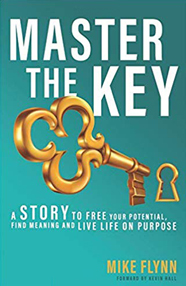
Michael Flynn is the founder and host of The Impact Entrepreneur Show, a podcast featuring conversations on personal growth, purpose, and entrepreneurship. His work has been featured in outlets including HuffPost. He is the author of Master the Key: A Story to Free Your Potential, Find Meaning, and Live Life on Purpose, a narrative that helps readers uncover their purpose and live with intention.
📚 Books by Michael Flynn
Transcript
[0:00:21] RW: Hi, everyone. It’s Rae Williams, host of Author Hour, where I interview authors about their new books. Our next book is a bit of a deviation from our usual type of non-fiction, but it’s very, very, very cool. The great Lou Holtz refers to it as a must read and Mel Robbins calls it “an inspiring story.” Then others have said it’s a fictional story that leads the readers to truth. It’s called Master the Key. Its author is our guest today, Mike Flynn.
[0:00:53] Michael Flynn: I am a second-generation entrepreneur, part of a family business that when I was growing up, I swore I would never join. Yet, I did 15 years ago. I’ve been a financial adviser for the last 15 years and my book has nothing to do by the way with being a financial adviser, or a money management, or anything like that. People right now if you think this is another financial adviser pitching a book, you can stop, because this is not that. What this is is an outcome of my own journey of reflection. The word reflection, to reflect literally means to bend back time, or direct light or heat onto something. What I was feeling in myself and seeing in the world was just a need to really gain a mastery over my identity who I was created to be, so that I could truly have the impact that I wanted to have and that I believed I was capable of having in the world. I believe that each of us are created and wilt into existence by a God who loves us and wants the best for us. Through that, we can do more than we can possibly think, ask for or imagine. We have these experiences in our life that shape us, that mold us, not necessarily in the best ways if we're not taking ownership of it. Back in 2015, I started out of my own need and my own journey a podcast of my own, called The Impact Entrepreneur Show, where I would interview people and learn from the various impact moments of their life, the stories of their lives and how they used their impact moments to have a game-changing impact in the lives of others. What I discovered in that was that people who really were having a massively positive impact in the world, they didn't just ask questions – when they experienced adversity and challenges, they didn't just ask the question, “why is this happening to me?” What they started to do was also ask questions like, “how was this happening for me?” Through my own journey of reflection, what I've come to understand and believe is that the key to unlocking our potential, to finding meaning into living a life on purpose is actually by mastering our identity. That is the key. Instead of writing another non-fiction book about potential and purpose and performance and all of those things, I decided to teach these principles in a fictional story that will lead readers back to the truth that already dwells in them. The title of the book is Master the Key. The key being our identity and a story to free our potential, find meaning and live life on purpose. We can talk more about what that key and what our identity is comprised of if you would like.
[0:04:11] RW: All right, so before we jump into that I would love to know a little bit of your journey and what your story is. Because as I understand, it teaches these lessons in a very unique way, so instead of like you said being non-fiction and drawing on some of your experience, you're going into stories that are not necessarily are based on people, correct? Yes?
[0:04:31] Michael Flynn: Yeah, absolutely. Yeah, every character in any story fiction or non-fiction is based on a shred of truth. Each one of these – there's several main characters in the book. The main character is Steve. And I'll tell you a little bit more about him in a second. The main mentor is a gentleman that we refer to as The Janitor. For most of the book, you find out what his real name is at the end of the book. I'm not going to spoil that. Then there is Chas Cho, a guy named Fidel and another guy named Bill Cooper and some supporting characters along the way who you meet and all have an influence in the book. Another character named Angelica, who is the Janitor’s deceased wife who plays an important role early in the book. The character of Steve starts out based on my own story. In order to develop that character, I use my own experience to a certain degree. I extrapolate on it. I embellish it for the story. The bottom line is that when I started out my career as a financial advisor 15 years ago and Steve in the book is a financial advisor, I was really successful right off the bat. I enjoyed all of the trappings that came with that success, that financial success. I had checked off all of the boxes. I was married to my childhood sweetheart. I had two beautiful daughters. We had just closed escrow in August of 2007, on our first home and I was just loving life, right? I didn't start out in this business really with the idea of being distracted by the money, right? When I decided to join the family business that I swore I would never join, it was because I wanted to have a significantly positive impact in the lives of others. I've always had that desire and that passion and that sense that I wanted to do that for people and for the good of the world. When I looked at different career paths to do that, one of them was the financial services. I saw the impact that my dad had had in the lives of his clients and the community. I said, “you know what? I could do that.” I started out in the career with that altruistic motivation, but quickly became overwhelmed by money, right? I mean, the money became a distraction, so to speak. My identity, my sense of self-worth became attached to the outcome of the things that money would get me; house, status, bank account, all of that stuff. Well as I said, in August of 2007 we closed escrow on our first house. Then in November of that year, November of 2007, I remember that month in particular, because I made $200 that month, okay? The winds in the sails were beginning to change and I didn't quite know what was going on. I started my career in 2005. By 2008, we were in the midst of the greatest financial crisis since the Great Depression. I was still really new in my business. I did not have a tremendous amount of recurring revenue. All of my business was based on new business. I was paralyzed, as were a lot of my clients. I didn't necessarily know how to advise them through this dark time that we were experiencing as a society and as a culture and as a global economy. Much of my client’s identity and self-worth, as well as my own was attached with money, which is why we're so emotional about it. Well my own story how it comes to play in the book is that by 2009, I had blown up my health. My health was out of whack, my relationship with my spouse was out of whack. My relationship with God was out of whack, with my family, with my clients, everything was out of whack. It was a morning in 2009, I was working from home and I can remember this I was sitting at a green desk looking out the window with my two young daughters who were my oldest at that time, was two and a half, or three and my youngest was 18 months, something like that. Yes, they're close together. My youngest was sitting on the floor watching Little Einsteins, I can hear the theme song playing in the background. She was crying, because her sippy cup was over on the stairs and she wanted me to go get it. I did. I got up from the green desk, looking out the window at the cul-de-sac, I walked over to the stairs, I bent down and all of a sudden, I was on the floor. At the time, I felt I was having a heart attack or I didn't know what was going on; turns out that I completely had thrown out my back. Here I am, my wife's gone, she's out of the house at the gym, I don't have my cellphone with me, I'm home alone with my two young daughters, I'm on the floor in excruciating pain, I can't move, I don't know what's going on. Fortunately, I was able to communicate to my oldest daughter and she brought the house phone over. I couldn't get a hold of my wife. I called my mother and she had to pick up – she had to come over and pick up her 250-pound son off of the floor and take him to urgent care, where fortunately they determined I wasn't having a heart attack and I just threw out my back. That was a wake-up call for me, that I could no longer do things the way that I was doing them. Things had to change. That was where the seed broke through the ground, if you will. It took a lot more nurturing and watering of that seed for it to truly come into a blossom. That really started to blossom in 2015 when I started The Impact Entrepreneur Show and I continued to tease that out and to explore and to journey and to write and to think and to talk with people and to share my heart with people and my wounds with people. And to speak to therapists and all of these things. These stories these elements of our identity started to come to the surface. I began writing this book in January of 2018. Man, it just came out like a flood. I finished the first draft on my birthday of September 19th, 2018. It's been off to the races ever since.
[0:11:46] RW: Nice. Let us dive into the concept of identity a bit, because I think it's something that fascinates people and people get confused as to where to go and how it intersects with business and how it intersects with their children and everything else in their lives. In your opinion, what is identity and what is the crisis that most people face with their identity that they need to master the key?
[0:12:10] Michael Flynn: Can I tell you a story that I think might help? Have you ever experienced an earthquake?
[0:12:16] RW: I have actually. I've been through about six.
[0:12:19] Michael Flynn: Really, okay. Where are you from originally?
[0:12:21] RW: I'm originally from Kingston, Jamaica. We had earthquake – yeah, earthquake drills growing up.
[0:12:27] Michael Flynn: Yeah, so I'm from California. I'm from Santa Cruz, California and there was a very large earthquake in 1989. That's all my fault, right?
[0:12:36] RW: Oh, gosh.
[0:12:37] Michael Flynn: The story behind that is I was 10-years-old and it's just before 5 p.m. and my mom had just come home from the grocery store. She had all these bags of groceries that we were going to unload, but she had to leave and go pick up my sister from an after-school sports program and she said, “Michael, do not open that bag of Doritos.” I said, “okay, mom. I won't open that bag of Doritos.” As soon as she got back in the car and drove off, I opened that bag of Doritos and no less than one second later, the entire world starts thinking, because my good old Irish Catholic guilt says that it's my fault, I opened up this bag of Doritos and God is smiting me, right? This earthquake happened, right? I ran out. I ran out of the house and I fall on my knees and I start praying the Our Father. I see everybody else is around. The whole world is shaking. My mom is kicking the tires on our van, because she thinks the transmission blew. I share that story, because we learned recently actually is that when earthquakes can actually instantaneously cause gold to develop deep within the surface. Many times, in our lives we have these earthquakes, big and small, right, in our lives that without us really even knowing, create gold deep within our soul. It's up to us to go and excavate it. In the story Master the Key, the janitor teaches Steve this lesson by taking him down to his wine cellar. In his wine cellar, he has all of these bottles of wines laid out on bookshelves, not wine racks but bookshelves. What he teaches Steve is that each bottle is a manuscript, a story, just like us. If you think about vines for a minute, have you ever been to a winery or walk through a vineyard before? If you think about this, vines are stretched, they're knotted, they're ugly, they're exposed to all of the elements; sun, wind, rain, cold, fog, rocky soil, clingy soil, they even let weeds grow around it in the offseason. Yet it produces this great fruit, right? Then the farmer comes and they come along and they pluck that group, that fruit and they crush it and they ferment it and it gets put into a glass. What do we do with that, Rae? We toast each other with it. All of that adversity ends up in a glass that we toast each other with. What I teach in the book is that we each possess the ability to go into our own cave and to look at the adversity of our life and discover its fruit and begin to master the key by first, believing that we are worthy of a why. Pop culture, pop psychology, messages that it's really important for us to find our why, right? I totally agree with that. I totally agree that it's important to find our why, to find our purpose. Before you can find your why, you must believe that you are worthy of one to begin with.
[0:16:14] RW: It's very true. I think a lot of the time, especially in society today and especially in like you said pop culture, they actually start at the finds your why and don't tell you that you need to feel worthy of it. Then the separate message is, know your worth and they don't ever connect those two, so that's really interesting. What happens when people aren't doing this? What have you seen just in our world within yourself when people are applying just the sense of finding their identity and knowing that they're worthy of their why?
[0:16:44] Michael Flynn: Well, we ended up doing something that somebody else says we should have done, right? We end up doing something that we think we're passionate about, but not necessarily willing to suffer for. We walk around the world holding someone else's light and not letting our own shine. A lot of men in particular I think can relate to this, because we have issues around our own fathers, right? We have issues around our parents who love us, most of them anyway love us and want the best for us. Out of fear of failure, right, they don't allow their kids to blossom into who they were created to be. Not the version that the parents think they should be. This is a great struggle for a lot of men in particular, but women as well. I mean, I've had women who have reached out to me who have read the book and who for the first time, understanding that their gifts, the way that they've been using their gifts might actually just be an expression of what their gifts really are. It's about taking off other people's armor, other people's stories that they've projected on you and stepping into who you were created to be and it's not a fast process, okay? This is not an overnight process. This is a process that requires work. It requires you to reflect. I can't remember if I've said this already, but the word reflect literally means to direct light – to bend back time and direct light and heat onto something. People often say don't spend time reflecting on the past. Don't think about the past. Just move forward on and don't think about the past. Don't think about your mistakes. I actually think that's partially bad advice. I think there's great power in intentionally directing light and heat onto something and taking the energy from it and using it. I think it's incredibly powerful to do that. In fact, still powerful that in the book after each of the main parts, there is a section where you get to experience the main character's reflection in a journal entry. Then you the reader actually get to experience the same reflection and response questions that main character had to answer in his journal; a question like, “what parts of my story have I struggled to own and why?”
[0:19:29] RW: What do you recommend for us as step one on this journey?
[0:19:35] Michael Flynn: Step one is making a choice, okay? The most powerful word in the English vocabulary, this is a quote from Lou Holtz, one of my personal heroes. He said, there's 422,000 words in the English vocabulary. One of the most important words among them is the word ‘choice’, okay? You have to choose. We all have to choose to begin to believe that we are worthy of a why and to engage in the process of exploring our adversity, our challenges, the lies that we've held on to, the false narratives that we've held on to, the narratives that have not empowered us to become what we are capable of becoming. We have to begin to engage in that process. We have to go down into our own caves of our faith, our family, our finances, our fitness and our health, our spiritual life, all of those things; we have to go into each of those caves and choose to begin to master each of them.
[0:20:42] RW: All right. What is something that you would challenge people with? We've gone through step one, what is something, the overriding challenge that you would give to people before they even get to your book after they've read your book?
[0:20:59] Michael Flynn: Before or after they've read the book?
[0:21:00] RW: Both. I think before and after. I think for this particular book, it's very important that we look at both.
[0:21:07] Michael Flynn: I think that the two things that people are going to find the most, it's going to be both the most beneficial and the most difficult things to do before and after, okay? The first thing that is going to be challenging for people is to get silent. Silence is very difficult in the world that we live in today. We have dings and blings and noises and alerts and notifications going off 24/7. We don't spend enough time in silence. Silence is not only necessary for this work to have the impact in each reader's life, it is also the most beneficial. One of the reasons why I think that we don't necessarily engage in silence enough is because we're afraid of what we might see when we get there, right? We're afraid of facing some of the dark challenges that we've experienced in our life. What we need to begin to recognize and through the process of reflection in silence, you will recognize that each of us is going to be able to shed light on those dark moments and to take the power from them that they've held over our life. The only way to do that is to become silent. There's great power in it. The second thing that I would challenge people to do before and after and during while they're reading the book is to go do something physically hard. To do something that's physically challenging. I do CrossFit. I talk about it a lot, okay? Those workouts are incredibly challenging. What happens and there's actually scientific data that back this up, that when you do something physically challenging, you actually – and you overcome it. You come through the other side of that having completed it and you're still alive and you're not injured and your heart is pumping and your brain is firing on all cylinders, you are able to create new things. You've discovered new pathways, because you've broken through limiting beliefs. Getting silent is hard, but going and doing another physically challenging thing is going to be hard, but also incredibly beneficial because it's going to open your mind back to taking control and owning the narrative of your life story; owning your gifts. You're going to see new things. You're going to discover new questions and new answers will be revealed to you. Some of those answers and questions will come from the book, some of them will come from the quiet of your own heart. In order to really get the most out of this book, you're going to have to get silent and you have to do hard things.
[0:24:14] RW: All right, so how can people connect with you if they want to learn more? Of course, we're going to pick up the book. I am actually going to personally do something physically challenging this week. It's something I've been thinking about. Now that you've said it, I'm convinced, so I’m definitely going to do that.
[0:24:28] Michael Flynn: What are you going to do? What are you going to do? Tell me. Tell me.
[0:24:30] RW: I haven't even decided yet. Definitely not CrossFit. Definitely not CrossFit. Not quite there yet.
[0:24:35] Michael Flynn: Well, it doesn’t have to be CrossFit. It could be climbing a hard mountain. It could be go, do something that you don't think that that's just on the other side of what you think you are capable of doing. It's about building. Can I just go off on a riff here? It's not necessarily tied to the book, but it has to do with confidence. Everyone wants confidence. In order to have confidence, you have to have something right before that. Do you know what that is? You have to have courage. Do you know what you have to have before you can have courage? You have to have a vision of something that's different. Right now, you have a vision of something that is making you uncomfortable. This week, maybe today you're going to have the courage to go and put that vision into action. When you come out on the other side of it, maybe you didn't necessarily realize exactly what the vision held, but you did something and you're going to be that much more confident than next time. All of those things stack on top of each other. That is part of the story of our lives, it's having a vision, it's moving from vision to courage and from courage to confidence. I'm proud here that you are going to go do something hard and challenging. Maybe it's being quiet as well. People can connect with me @TheImpactMike on Instagram. That's where I'm hanging out most these days. I'm also on Facebook and Twitter. They can listen to my podcast on – it's called The Impact Entrepreneur Show. It’s been around since 2015. I've got hundreds of episodes, including with one of the co-founders of Scribe, the incredible Zach, and many of Scribe’s authors as well. If they want too, they can go to the website theimpactentrepreneur.net and subscribe there as well.
[0:26:32] RW: All right. Awesome. I do have one quick follow-up question. I just wanted you to speak a little bit to as you talk about challenging yourself and having the courage to do that, a lot of people think that maybe the challenges that they're undertaking are too small. For an example, when you said maybe it's climb a mountain, I'm thinking well, my challenge would just be in the mornings when I walk my dogs to actually physically jog with them for an hour, instead of just walking with them for 15 minutes. That seems really hard to me. I'm just not a very a physical activity inclined person. What would you say to people who are thinking to themselves that the challenges are too small? Because you do say that they build on each other, so I'd love for you to address that.
[0:27:10] Michael Flynn: Yeah. Definitely that's a really good example actually. I think that there is – there are three questions and I include these three questions actually in the book. One of the character in the book named Fidel, who's a Cuban refugee turned a millionaire real estate investor, who's actually based on an experience I had with a Lyft driver, actually. The character Fidel teaches Steve that when you're facing the question what should do next, or what action to take? There are three questions that you need to explore. The first question is what is at stake? The second question is why does it matter? The third question is when does it become real? Whether it's running with your dog, climbing a mountain, having a difficult conversation with a loved one, doing CrossFit, starting a business, stopping a business, those are three powerful questions that you are going to be able to explore. They're going to help crystallize your vision, which will then give you the ability to have courage. The word courage literally means heart, right? To have courage, to have heart and to step forward into action and coming out on the other side of that, you will be confident. Let's say using your running example, you go for a run with your dog. Let's say you start out small. If you've never run with your dog before, you should definitely not do it for an hour. Let's start with a block, right? Let's start with a block. You can run with your dog for a block. That is super achievable, okay? Why that's important? Because you are going to be pulled by something and you need to get comfortable. It's going to feel awkward. You're not going to have necessarily the right cadence and running rhythm and whatever, right? Over time, maybe you do that for a week, for one week you're going to run for a block with your dog and then walk the rest of the time. Then next week you're going to run two blocks and the week after that you're going to add another half a block, or three blocks. Then maybe at the end of your run, you're going to tie that dog to a tree and you're going to do 20 burpees, right? Or five burpees, or whatever. I mean, it's about doing hard physical things and showing yourself that you are capable of overcoming all of your limiting beliefs, beginning with your physical nature, beginning with your – Well actually, I think beginning with your thought life first. That's why I'm saying it's so important to get quiet. Begin with the internal conversations, the dialogues, the narratives and mastering those things. You say, you actually vocalized a moment ago, “I'm not a very active person basically.” I think that's a lie and I know you are. I know you are capable of becoming an even more active person. When you do so, it's going to give new life and new blood and new energy to all of your creative projects that you're doing and into your relationship, all of those things.
[0:30:27] RW: All right. I love it. I absolutely love it. I can't wait to deep dive into your book.
[0:30:32] Michael Flynn: Yes. Of course, the book will be available on Amazon and eventually Barnes & Noble and a couple other places I think as well. Definitely Amazon. We're looking forward to sharing the Master the Key message with the world.
[0:30:47] RW: A lot to think about in that chat. I’ve already snagged a copy and you can do the same on amazon.com for Master the Key by Mike Flynn is available right now. Of course, we'll have a new author and a new book to dive into in our next episode, so don't forget to rate and review and check us out next time on Author Hour.
Want to Write Your Own Book?
Scribe has helped over 2,000 authors turn their expertise into published books.
Schedule a Free Consult