Jim Fischetti: Episode 279
Read the full transcript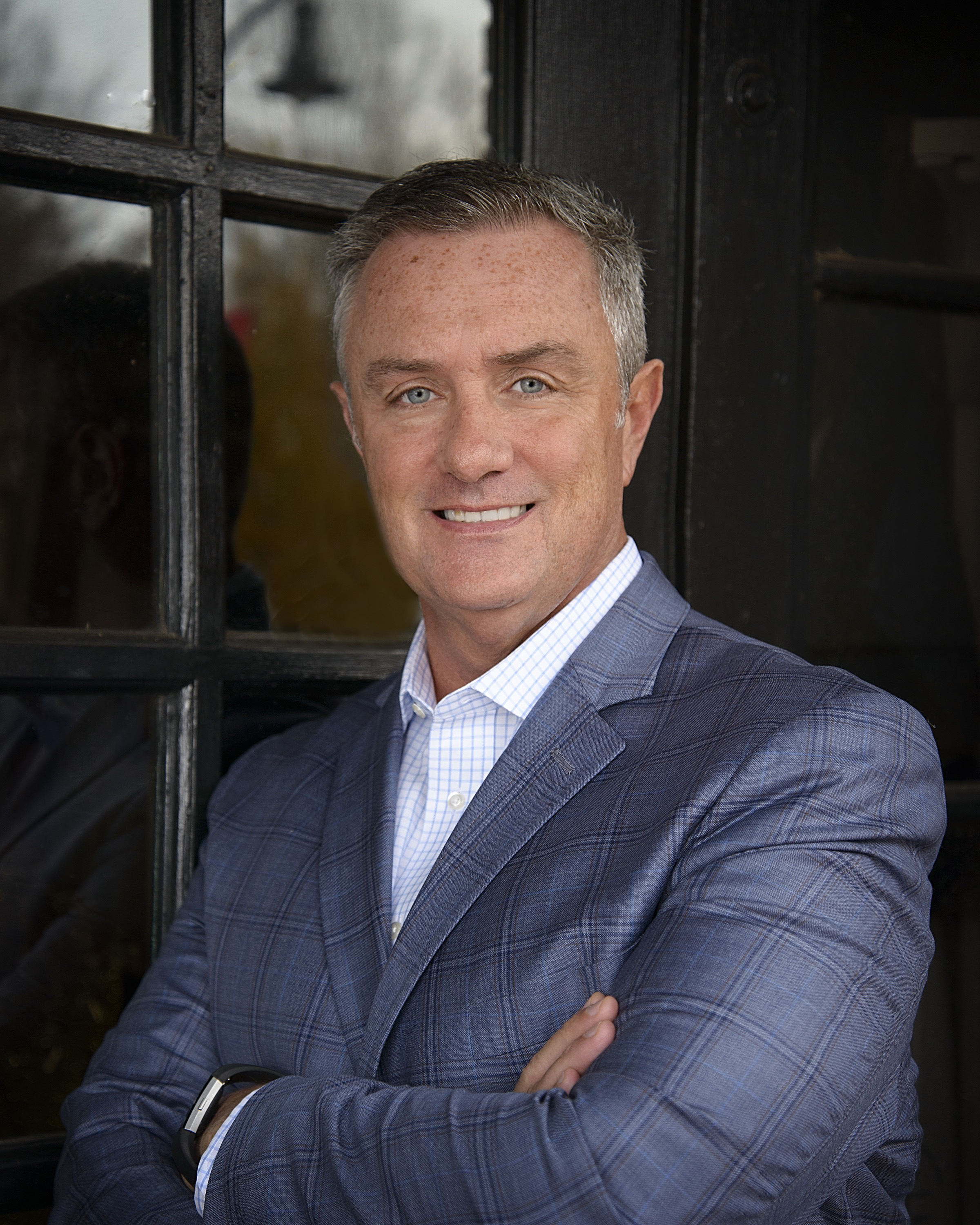
Jim Fischetti
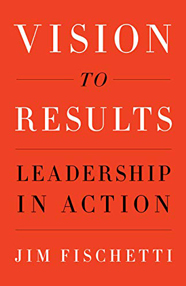
Jim Fischetti is a leader, innovator, and consultant who has spent more than 50,000 hours developing leaders throughout corporate America. In his book Vision to Results: Leadership in Action, named to the Forbes list of best leadership books of 2019, he teaches readers how to create an actionable vision that brings everyone's role into sharp focus and how to build a continuous accountability system that addresses problems before they arise, keeping an organization healthy for years to come.
📚 Books by Jim Fischetti
Transcript
[0:00:17] RW: Hi, everyone. It’s Rae Williams, host of Author Hour, where I interview authors about their new books. As a leader, your job is to make your people and your organization better. It’s safe to say you have no intention of leading a stagnant organization. Yet, organizational decay can creep in and go unnoticed unless you’re actively working to combat it. For every organization in this situation as today’s guest will explain to us, the real culprit is lack of vision. Author of Vision to Results, Jim Fischetti is here with us today to teach us how to create an actionable vision for organizations. Here’s our conversation with Jim Fischetti.
[0:01:00] Jim Fischetti: The first thing is banging my own head against the wall, so my aha moment about leadership needs to be done differently, was my wife and I were driving in the car and my wife said to me, “Jimmy, you know, when you leave, you leave a really big hole,” and she did not mean that as a compliment. As a leader, if you leave a vacuum when you’re gone, that’s not a good sign and yeah, I think prior to that, there is a belief that you do, leadership kind of through charisma and being liked and allowing things and previously had always pushed and used my own effort and energy to make sure we got results. The paradigm shift is learning to get results through people and there’s a lack of leadership that’s really designed about getting results through people and holding people accountable to those results. That’s kind of why I did that.
[0:01:58] RW: All right.
[0:01:59] Jim Fischetti: There’s a vacuum of leadership and I want to see people get better and I want to see organizations hit their goals and their vision and leaders go to the next level.
[0:02:09] RW: Awesome, okay. Right off the bat in your book, you start off with the crisis in leadership. What is the crisis in leadership?
[0:02:19] Jim Fischetti: The real crisis is there’s a lack of leadership, whether we look in the political world, business world, even in the church world, nonprofits. People want leadership and we’re seeing more people that are in positions of power self-serving, versus being a leader, leading an organization, wanting to see their people succeed and a belief and the mission and vision to execute that. That’s – you know, the crisis in leadership, I believe start there, rises and falls with the leader and in this case, a lack of leadership in the world.
[0:02:56] RW: All right. What is something that your readers can take action on in order to begin changing this lack of leadership?
[0:03:08] Jim Fischetti: Obviously for leadership, it starts with vision. There’s a lot written on vision, people have vision and mission statements and it’s important that the vision be more than simply words on a wall and in order to see the vision become reality, which is I think what leaders and the organization want. The people join the organization because they believe in that. What’s missing today is leaders who are willing to be a little bit rough, right? They got to be tough, they got to be firm and in the book, we talk about the accountability cycle process and there’s a real simple – it’s not easy, but it’s simple and that is – it starts with clear expectations. As the leader, I have to set clear expectations with my people, I need to make sure that the people absolutely understand those expectations and they’re clear to them. We start from that premise and then we would move to – as the leader, I need to track and monitor activities and results. My people have been empowered to achieve as a leader, they’re empowered to execute and I want to track their activities. We, as people, have 100% ability to control our activities. We can’t always 100% control results, however, as the leader, I need to monitor results also. The reason being is if the person’s doing the activity and they’re still not getting results, then we probably have a skill or training issue with that person. The second step is to track the activities and the results. The reason why leaders need to do that is because the third step is we’re going to have consistent feedback, those weekly, daily, whatever works for your organization, but you’re going to have consistent and I think most of the time, weekly, or more work better, where you're going to go over the results with the people. Too often in corporate America, people have annual reviews, now, that’s really not enough time, you know, that’s too long in between feedback to course correct or to affirm, celebrate those things that the person’s doing. I want you to have those consistent feedback and by tracking the activities and results, you’re doing an evidenced based conversation and so therefore you’re removing emotion from that. I think all of us form one time or another have had to go to come to a Jesus meeting with somebody and most of the time, in most organizations, those meetings of feedback are usually around a lack of performance, whereas if we’re doing this on a consistent base, the four step is we will either course correct or celebrate their success. If we’re having more consistent and more frequent accountability sessions with our people, often times, we’ll be able to celebrate more and then there’s no anxiety around that meeting, you’re also building a deeper relationship with the people that you’re leading, by interacting with them, checking in with them, being their support them and also. you’re also showing how important they are because you’re taking the time to meet with them. I think that’s a key take away doing the grind of the accountability with your people.
[0:06:43] RW: All right, what’s happening when we don’t have proper leadership? What are some of the things that you’ve seen happen to companies or even your own personal experience when leaders aren’t being leaders or they are not kind of checking in and following up and you know, empowering their employees?
[0:07:01] Jim Fischetti: A couple of things. One, often times, the organization will have a retention problem. It’s really tough to keep top talent, if the leader isn’t engaged and helping their people achieve their role in the vision. If you have a retention problem, it’s very likely you also have a leadership problem. If you have a performance problem i.e, you’re not hitting your benchmarks that you’ve set as far as goals, profit, production, those aspects, there’s probably a leadership issue. You see that, it’s roughly – surveys show 50% of the people in the work force in America are apathetic, they’re not excited, they’re not dissatisfied, but they’re not engaged the high level. That’s clearly a leadership problem. Imagine what productivity would look like if that was 90% of our workforce was highly engaged. 100% of our workforce was highly engaged. What would it mean to the average organization, it would be powerful.
[0:08:06] RW: All right, give me an example of what are some of the success stories that you could share with us, some organizations, maybe clients of yours or your personal experience where you’ve seen organizations grow just because of that change in their leadership, that transformation?
[0:08:22] Jim Fischetti: One of the roles that I had as I ran an organization with about 4,000 people and doing about 4 billion in sales and a little over three years by imploring this method, I was able to take that organization to just under 13 billion in annual sales, increase profit by 250% and doubled the size of the organization. It really was about meeting with the key leaders on a consistent one on one basis and finding out what their goals were, what they wanted to achieve and working and hitting that. It’s not necessarily glamorous work to do a one on one accountability call, but it’s powerful.
[0:09:09] RW: All right, share with us a little bit about some of the challenges that you think that people will face when trying to become the leader that you described?
[0:09:22] Jim Fischetti: One of the things that I always, I ask the question, “what’s the opposite of love?” And the number one answer I actually give is hate. In reality, the opposite of love is apathy or indifference. A lot of people have a hard time calling people out and challenging them and so they’ll be silent versus addressing issue and this type of leadership requires that you know, if somebody isn’t meeting – You’re going to say you’re at 80% a goal, you’re at 100% a goal, you’re 25% a goal. Whatever those numbers are, you as the leader need to help them either celebrate their success or change actions and activities so that they can get the results that they want and that you want. So historically, I grew up in an area where the leader was kind of the front of the room guy and kind of command and control as far as leadership. I believe today the world in that perspective has been flat and it needs to be more collaborative. Leadership really today is collaborative. The leader does not nor should be always be the go-to person as far as understanding things. you have talent in an organization and allow them to do what it is you brought them in the organization for. So that is where that feedback and exercising through them is important and it is also a paradigm shift because again historically leadership was command and control out front, a general, hard charged CEO those types of things as oppose to collaborative leadership.
[0:11:05] RW: All right, so you have a chapter in the book called You are not LeBron James, so I imagine that that obviously caught my eye and I imagine that has a little bit to do with what you just spoke about. Tell us a little bit more about that.
[0:11:18] Jim Fischetti: Yeah, so excluding the current year where LeBron and the Lakers did not make the playoffs. LeBron has an incredible ability to pull an entire organization to incredible success and leadership is not about you being incredibly awesome and doing all the work and pulling your people along. If we say in the same sports analogy, your job would be better to be like say Coach K of Duke. You know the coach doesn’t win, doesn’t play, doesn’t make a bucket, doesn’t do anything on the court other than actually attract talent, develop the talent and get the most out of the talent. And allow them to succeed. So, there is that temptation just as you were saying that most of us think that we need to be kind of lime light, we are not the leaders, not LeBron James. If anything, they are the behind the scenes coach. So as a leader if there’s success, I should not be out front. My people should be out front when we are celebrating success. If there is a challenge or a failure, that’s when the leader is out front. You own the result and you take the arrows and you defend your people. So that to me is what leadership is.
[0:12:43] RW: All right, so I am also very interested to talk about vision with you because I think that that’s something that people have a problem with, especially visions don’t align. If your leaders don’t have their team on board with their vision. What do you recommend in that case that leaders do or how does vision play into this whole thing?
[0:13:03] Jim Fischetti: So, vision is incredibly critical in the sense that while leaders has a vision of how things should be and when that vision achieved what the world will be like and how it will be better. So, an example we use was a young software designer. Campbell was interviewing back in the 70’s, interviewed with two of the leading PC companies and he met with the first one, Tandy and he wanted to – he asked the leadership team what their vision for the personal computer was. And they told him that, “well we think the PC can be the next big holiday gift.” And that vision did not attract this young man to say, “oh wow this is something I want to be a part of.” So, he actually went to Commodore and Commodore at that time, their stock value was about a dollar and they told him when asked the same question that they believe that the personal computer can double the value of their stock market value and again, Mr. Campbell went, “that is not an overly exciting perspective.” So, he ended up taking lunch with a guy by the name of Steve Jobs. He asked Steve Jobs the same question and Steve Jobs went on to spend the next hour talking about how the personal computer would change the way we work, change the way we study, change the way we entertain ourselves, change the way we communicate, change the world as we know it. You know forty years later I say we’re living in that world that Steve Jobs described. That vision connects, so your vision is going to be so strong that it connects with the people. That is what attracts them to be a part of your organization and so in addition to being a vision that attracts people, a vision almost has to be outlandish and what I mean by that is if it is a small vision, then you know if I am listening to you share your vision and I think, “Well that’s nice but it doesn’t seem big,” then if I think, “well you could do that on your own, there is no need for me to join forces with you.” But somebody who has a really big vision and when they share it and they realize, “man it is going to take more than one person,” and you are attracted to that vision then it creates the energy and the connection. So, you have companies whose vision literally brings the talent in the door and brings the customer base because people align with the vision. So that is the first is we connect through the vision and then the second thing is on vision and leadership, the leader has got to then empower his or her people to achieve their role in the vision. So, there is nothing worse than like probably than being responsible for an outcome, but not have the ability to do anything about it, correct?
[0:16:17] RW: Right.
[0:16:18] Jim Fischetti: You know I think it was Bill Parcels who said, he’s a football coach, Hall of Fame Football Coach and he jokingly said about wanting to pick players. He said, “hey, if I am responsible for dinner, I ought to be able to buy the groceries.” So you know we need to make sure our people have the ability to achieve what it is that they want and their role in that vision and then we, as the leader are then going to hold them accountable with that and we track and monitor results and the conversation with them and move forward. So, the vision is really the juice for the leader, the organization and the people and even for their customers.
[0:17:04] RW: So, if you had to issue a challenge and let’s start this one particularly two leaders, but it could be for anyone as well, what would that challenge be that they can use to turn this business around or turn their leadership skills around?
[0:17:19] Jim Fischetti: So, the challenge would be one, to do survey with your entire organization and see how many people could tell you the vision without being prompted and the reality is that a lot of people, a lot of organizations, the rank and file do not know the vision. So, if they do not know the vision then they are not going to be energized by it. As a leader, you need to own that. If your people don’t know the vision, it means you are not sharing the vision enough. Now there’s Jack Welsh, he said that he spent 70% of his time sharing the vision. He jokingly said, “my mistake was I didn’t spend enough time.” You know we really as a leader haven’t shared the vision enough until the people can say back to us unprompted.
[0:18:08] RW: All right and is there anything else that you think is important for leaders to take note of when they are trying to transform their selves into the people that can lead a company successfully with a full and clear vision?
[0:18:22] Jim Fischetti: So, one of the things that you always remember is people matter and if you want massive results, you can’t do it alone. You really only execute through people. So, your people matter. They are incredibly talented. They are the most important asset in the organization and one of the things I like to think is you can love people, without leading them. It is impossible to lead them without loving them.
[0:18:49] RW: All right, thank you so much Jim. I love those kind of words to end on. Thank you so much for taking time.
[0:18:56] Jim Fischetti: No problem. Thank you for having me and continued success in your podcast.
[0:19:01] RW: Amazing to have Jim sharing with us today. You can check out his book, Vision to Results, on amazon.com. We’ll be back soon with another episode of Author Hour.
Want to Write Your Own Book?
Scribe has helped over 2,000 authors turn their expertise into published books.
Schedule a Free Consult