Chris Cooper: Episode 283
Read the full transcript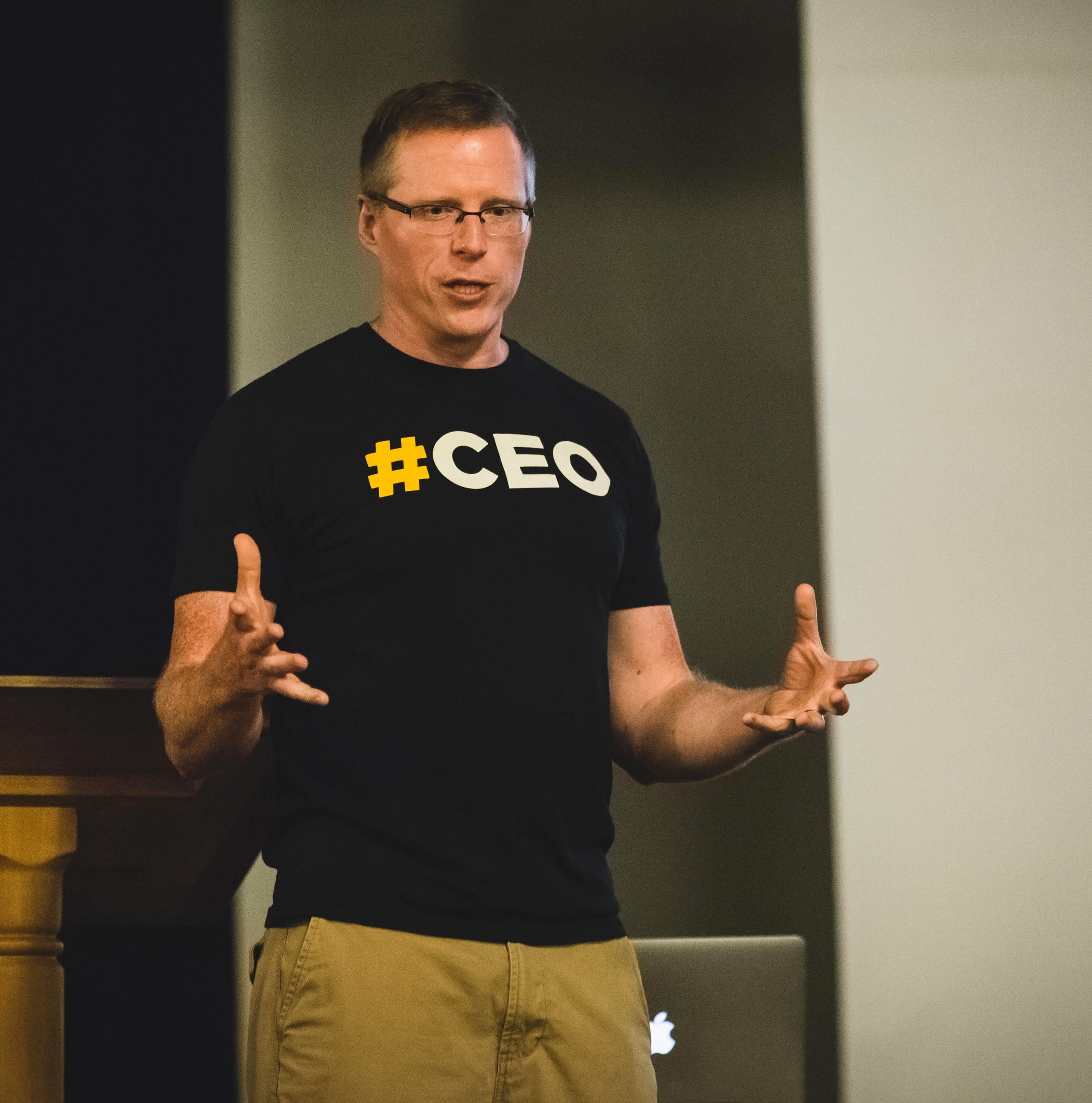
Chris Cooper
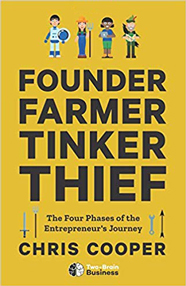
Chris Cooper is the founder of Two-Brain Business, which he grew into the largest gym mentorship practice in the world. He owns several other businesses, including a gym, a coaching practice, and a media company. He is the author of Founder, Farmer, Tinker, Thief: The Four Phases of the Entrepreneur's Journey, an Amazon bestseller in which he breaks the entrepreneurial journey into four distinct phases and lays out the top priorities, and the pitfalls to avoid, at each stage.
📚 Books by Chris Cooper
Transcript
[0:00:24] RW: Hi everyone. It's Ray Williams, host of Author Hour, where I interview authors about their new books. There's never been a better time to be an entrepreneur and yet finding the blueprint that can help you grow your business is a huge challenge. Everyday thousands of blog posts, podcasts, and videos are posted to guide and inspire entrepreneurs just like you. So, why do you sometimes feel paralyzed by the overwhelm of information that tells you everything except what you need to know right now about your business? Our next guest, Chris Cooper, author of Founder, Farmer, Tinker, Thief breaks your entrepreneurial journey into four distinct phases and speaks to each one step by step. Here's our conversation with Chris Cooper.
[0:01:17] Chris Cooper: I've written other books before and they were very much, you know, here's my story of pulling my business out of the gutter and then more of a step by step. And then there was even one on marketing and it was more mindset based. And then those were the foundation of our mentorship platform. And we've worked with over 2000 entrepreneurs around the world. And what we're seeing more and more now is that entrepreneurship has become cool. You know, there are people on Instagram who are entrepreneurs, giving good advice and they look like, you know, they've been to sleep in a bed and they've had like three square meals that day. It's really sexy to be an entrepreneur. Partially due to that though, there's a high degree of overwhelm in the market right now and are so many great ideas out there. There's so much good advice or thousands of podcasts that what entrepreneurs really need is a filter. So, Founder, Farmer, Tinker, Thief is set up to kind of give them an operating platform, so that they can say what's right for me right now? And then filter all of these amazing ideas and resources through that.
[0:02:15] RW: All right. So, tell me a little bit about the title, cause that's kind of a catchy title. I had fun, fun looking at the cover and reading it. So why that title, I know it kind of corresponds with some of the chapters in the book. Tell us a little bit about that
[0:02:29] Chris Cooper: So, Founder, Farmer, Tinker, Thief came about because I was trying to answer this question myself. Like what information do people need and when? So, for example, somebody might say something like, “oh all of my clients get this new amazing gift box when they join my gym.” And that is awesome. And every entrepreneur that sees I'd give box, we'll want to do the exact same thing. Well maybe that's not the best use of their time right now. You know, maybe the best use of their time is actually going out and taking conference calls with their neighbors, or maybe the best use of their time is to learn digital marketing on Facebook or something like that. What we found after talking with over 2000 entrepreneurs and working with hundreds of them for months and years at a time, is it entrepreneurs pass through four distinct phases. And those phases are founder phase where you're really excited that you're in this kind of startup mentality. You don't care if you're working 70 hours a week for nothing. And then you move into farmer phase where now you're employing staff and you're trying to not do all the things yourself and you're trying to delegate and you're trying to still be cashflow positive and learn marketing and just kind of doing all the things and planting as many seeds as you can. And then the third phase is tinker phase, where you kind of understand what your specialties are and you start to focus on those. And what we tell entrepreneurs in our program is that in founder phase and farmer phase, you and your mentor are really focusing on building your business. But once you move and make it to the tinker phase, you're really focusing on developing yourself as an entrepreneur. And this is where all of the leadership stuff starts to become way more important. You know, in founder phase, you're only leading yourself. And then in farmer phase you might have a small team, but systems are more important than like having retreats for a week in the mountains. But by tinker phase you really have to start leading other leaders and developing kind of a a management layer in your business for the first time. And you also have to deal with things like imposter syndrome, you know, and all the trappings of success that nobody talks about. And then in thief phase, really at that point, you're successful. You don't have to work anymore as a choice. Most of us would still choose to work, you know, a little bit anyway just to have a creative outlet. But what you're trying to establish in thief phase is an ongoing legacy. And so, some of us might choose to set up a local incubator for other entrepreneurs. Some of us might set up like a foundation to give money to help prevent AIDS in Africa or things like that. And so over these four phases, we see that if entrepreneurs know what they're working towards, they make progress a lot faster. So, if I can say to an entrepreneur, all right, you're in the farmer phase, you're trying to do these five things and then you'll be in tinker phase. What happens is they focus specifically on the things that will get them to the next level, instead of just buying themselves a job, showing up and punching the clock for the next 30 years and then trying to sell it to like their second in command.
[0:05:33] RW: All right. So, tell me a little bit about, and you started to, I was hoping that you would continue because you started to get into why this matters for your readers and your listeners and just entrepreneurs in general. So, you started to talk a little bit about, you know, if you are focusing on, you know, this is the phase you're in now and this is the next level. It gives you that gold point. Why else is this really important for entrepreneurs?
[0:05:35] Chris Cooper: Okay, so part of challenge of entrepreneurship is that nobody has ever defined success for us. Success for my parents' generation was security. You wanted to have a job, maybe you want it to belong to a union. You wanted to have a pension. You want us to know that at age 61, 62 you are going to be taken care of for the rest of your life. That doesn't exist in our generation. So, we have to redefine what success means. And when we talk to entrepreneurs, we start off by asking them, “what is your perfect day? You know, if you could choose what you do all hours of the day, what would you choose to do?” And virtually every entrepreneur I've ever spoken to, you know, over 2000 of them have said I would sleep a little bit later, but I would go to work, like I want to be in my career. So, what we want to do is give them goalposts to hit targets, things to let them know that they're, they're actually on track. If I look around my city, this is an industrial city, you know there are three major industries until the last decade and then they all went bankrupt. And so, entrepreneurship is not a new concept, but it was never the focus of the area. So, the entrepreneurs who are around our 50 or 60 years old, they probably sold some kind of service to the big industries and now they're realizing maybe I own my building, but how am I ever going to retire from this? Like nobody wants to buy this company for me and is, or maybe it's not worth anything. Yeah, maybe I've been just buying myself a job for the last 30 years. That flip side of the challenge of entrepreneurship is that we can now define what success actually means. And so, for most people, success would be, you know, financial security number one, time security, knowing that I don't have to show up at my business if I don't want to. And it'll run by itself on systems with great people, but also the ability to continue to serve, you know, their market or their audience in larger and larger ways. And so, for a lot of entrepreneurs when they reached tinker phase, they'll say, that's it. I'm successful. I can wear the designer jeans, I can take a speaking gig, I don't have to show up if I don't want to, I can afford the most expensive mocha latte and I can do it in one in the afternoon if I feel like it. This is the romantic kind of ideal of entrepreneurship than most people think about. Well all we've done is just painted a much clearer picture of what that means and how to get there. And then, you know, some of us would prefer for that, that legacy to continue. And for us we'll always be working and it means that we'll be working on legacy projects instead of building one business or another business. And that's thief phase.
[0:08:37] RW: Which phase do you think presents itself? I imagine all of them have of course their corresponding and challenges and of course high points too, but which of the phases do you think is just the most challenging? What phase do people usually get stuck in or not make it out of?
[0:08:52] Chris Cooper: Usually they get stuck in farmer phase and don't ever make it out. There's an old saying that my parents bought a business, but the business really own them. And so, when most people own a business, they are, technicians are like specialists at their craft. You know, they open up a hairdressing salon because they're an amazing hairdresser. Or they open up a massage therapy practice because they're really, really good at massage or they open up a gym because they're really, really good personal trainer or a fitness coach. The problem is that all you've really done here is given yourself a job with the worst boss in the world and no retirement package. Yeah, you're the boss. So if you don't plan to get out of that and build systems to make the business run itself, you'll always be a slave to the business. You'll always earn more money by working more hours. You will always have to pay double the take vacation time because there's no revenue coming in. When you do that, you'll always be at the insecurity of leasing your property instead of actually owning a building that makes you money and you'll never retire because you've got nothing to sell. So, you're going to have to work forever at this job that, that you now own. And what makes the farmer phase, the one that really gets stuck is you have to deal with people. And the psychologist Adler said that every problem is an interpersonal relationship problem. And that is especially true when you're combining emotion and money. And for most people when they get to farmer phase, it's the first time they've ever been a boss. They aren't sure how to lead people. They aren't sure how to pay people. They still have a very close connection to the money that goes through the business, so they don't trust people. Or they're constantly looking over their shoulder and saying like, “are you really earning what I'm paying you?” And frankly, a lot of us tie up our identity in our job. So, an entrepreneur who bakes donuts for example, you know, they rise to fame because everybody wants to eat Bernie’s donuts. And then when Bernie isn't making the donuts anymore and instead, he's working out corporate deals with all the other bakeries, people miss them and Bernie misses being famous. So, Bernie starts sticking his finger in the machine and breaking it and finding reasons to believe like nobody can do it the way I can do it. You know? And there are so many landmines in farmer phase that that is the most crucial phase for mentorship. And because of that, that's where we meet most entrepreneurs in our mentorship program.
[0:11:14] RW: Okay. All right. So what are those kind of first steps, especially within that farmer phase you can take to make sure that you are not, you know, running into this problem of getting stuck forever in and coming back and thinking that you're the only person that can run your business and not being able to actually enjoy the success or growth of your company?
[0:11:33] Chris Cooper: Okay, well the first steps are really to duplicate yourself. I mean, the most common joke that you'll hear from an entrepreneur in farmer phase is, I need to have me. And what they really mean is I want somebody else to do this work so that I don't have to or that I can do other things. So, the first thing that you want to do is clearly breakdown all the roles in your business. And you think of that as like all the different hats that you wear. And if you spend five minutes doing one thing every week, you need to write that down. That's a separate role that you're filling. And then what you do is you go through this list of roles that you've made up. So you've got, you know, bookkeeper, you've got donut maker, you've got clerk that's doing cash out, you've got the bookkeeper, you've got the baker, you've got the person who orders the supplies, and when you start out, all of your names are beside all of those roles. Or your name is beside all of those roles. What you want to do is determine what is the least expensive spot to replace you? So maybe that's a front counter person. Okay? So, you can hire somebody who is bright and smiley and can work the cash register for $12 per hour. And then what we do is we say we're going to hire somebody to work at the cash register for 10 hours per week. That's going to cost you $120, but what we're going to do is focus that specific 10 hours on a higher value role. So, I didn't name the higher value roles, but they're, you know, sales, marketing, partnerships, stuff like that. So, we're going to take those 10 hours, we're going to put you in sales mode for 10 hours. You're going to make relationships and you're going to sell the donuts to other companies, you know, the, the coffee shops in town and we're going to measure that effect for three months. And after three months you should be making way more money and they were going to do is replace you in the next lowest value role. And if you take that strategic approach, what happens is you can reach a successful point, you know, a matter of months, instead of decades. Or some people never get out of that trap. They're always working till they're always buying the flour, kneading the dough, and then trying to balance the books at the end of the night.
[0:13:38] RW: All right, so tell me what happens when people don't employ some of this stuff. So, I would like to, I'd love to hear some examples in your experience, whether within your own career or just people you have advised that kind of didn't do this and what those side effects may be? So maybe we can even recognize if we are actually going off the rails if we're not as self-aware as we would like to be.
[0:13:57] Chris Cooper: Hmm. Yeah. I mean I can share my own experience first, which is what almost bankrupted my company back in 2008. And that was, you know, I took pride in being the best personal trainer in town and I'm doing the air quotes here. I probably wasn't really the best, but my clients said that I was. And so, I would be the first to the gym at 5:30 AM and I would train clients until about 9:00 AM and then I would call home, see all my wife and baby were doing. You know, I would start working on like the backend stuff, you know, the business side of the business. And then I would try to find time to work out before my afternoon clients got there. I would work until nine at night. I would mop the floors, so they were ready for the morning and then I would drive home, sleep for about four and a half hours and do it all over again. And so, what I was telling myself is like, I don't have time to do marketing. I don't have time to balance the books. Look how hard I'm working. And what I thought was that if I'm just the best and or work the hardest, eventually I'm going to be successful. And that's not true. What you have to do is the right work at the right time. You don't have to work the hardest, but you do have to work the leanest and the smartest or else you're just going to get stuck in that flywheel and it's a downhill course. So, when we start working with new entrepreneurs, that's usually when they're stuck. You know, nobody else can make the donuts like I make the donuts. Nobody else is hardworking, you know, they'll usually take a shot at millennials for not having enough initiative. But really like what they're saying is, I haven't explained how to do things well enough yet. So, the first thing we do with every entrepreneur is get all of their knowledge out of their head and onto paper is anybody can follow directions. If we tell people, here's exactly how you should clean the kitchen at the end of the night, they will clean the kitchen at the end of the night. Just like that. You know, if you don't tell them that then they won't and you'll accuse him of being lazy and you'll get frustrated and you'll get sucked back into doing it yourself because quote unquote, “nobody can do it as well as I can. And that's the spiral of death.
[0:15:58] RW: Yeah. So, in this, what's kind of popping out to me too is that it's one thing to remove yourself and be able to teach people exactly what you need them to do or to put that in a process for people to understand and be able to replicate. But I guess there is a sense of leadership that needs to come in at some point too. What are your thoughts on, you know, bringing that kind of entrepreneur leadership, sorry, into your entrepreneurship, into your business, developing those skills?
[0:16:23] Chris Cooper: Definitely once you get to tinker phase you have to be working on your leadership skills. When you're still in farmer phase, usually your staff is small enough that just being explicitly clear, measuring progress and giving feedback is more than enough. So, for example, something that most entrepreneurs don't do when they have, you know, one to 10 staff is they don't do quarterly evaluations with their staff. So, the staff never really knows how they're doing. They're just kind of like looking at their boss and saying, “is he in a good mood today or a bad mood or what?” You know, and they don't know if you're mad at them, they don't know if you're mad about something else or why you're barking at them or whether you're letting things build up in your brain. So, if you want people to achieve things really well, the first thing that you have to do is, is sit with them and say, “what do you want in life? What's your perfect day?” And then together you have to work backward from that perfect day and build what we call a career roadmap. And there are instructions on how to do this in the book. And then every quarter you have to meet with that person and make sure they're on track. You also evaluate their progress toward that goal. You don't just evaluate their behavior. So, you say, “are we on track to meet this goal?” If you're not, well let's try this. If you are fantastic, let's keep going. And then you talk about their delivery of your service. You know, what was a 10 out of 10 what was a 5 out of10? Finish on a high and tell them how to improve. What most entrepreneurs do is exactly the opposite of that. They watch an employee, they wait for them to make mistakes, get super mad, and then they say, “get my office.” Or they just bark at them in front of customers and they regret ever hiring staff and they say, oh, it's just easier for me to do it myself. So, that is definitely some leadership training. But the first few steps are systematic steps. You know, you have to build the processes of, of evaluation, of goal setting and easier to define leadership qualities.
[0:18:26] RW: All right. So, if you could issue a challenge to, you know, people who were reading your book, just listeners, anybody, what would that challenge be? So that they can make it through all four phases of entrepreneurship?
[0:18:40] Chris Cooper: Yeah. So you know, the first challenge is basically like pick one thing and just do that. When I got into trouble, I was kind of drug, kicking and screaming to a mentor and I had no idea how great a gift I was receiving at the time. But the first thing that he told me to do was the roles and tasks exercise, after we did some goal setting and I thought he was going to give me a marketing silver bullet. What he did give me though was clarity. You know, do this exact exercise. You're not going to like it; it's going to kill your weekend. But if you are done this by Monday, we can take step two and ever since then, every good mentor that I've ever had has done that same thing for me. Here is the one step you need to do. Entrepreneurs sometimes mistakenly believe that ideas are more important than anything else. They have to be inventors and they have to be artists or they have to be creative and that's not true. What they have to do is act. So, you're far better if you have an idea where you see an idea to act on that one thing and take it all the way through until it's done and measure the result than you are to try and start five things at once. You know, in the gym industry where we have hundreds of clients or our 600 gyms under our mentorship umbrella today, this is a huge problem. Do I start selling supplements? Let me research that a little bit. Do I bulk up my inventory of t-shirts? I'm not sure. Let me check the bank account. How do I get more clients? I should try a Facebook ad, you know, or this guy's shooting a video. And what happens is instead of finishing one of those things and measuring the results, they kind of do all five but not very well, and they get a mixed result, but they're not really sure what was good and what was bad. Um, so yeah, if, if entrepreneurs are listening to this, what I'd like them to do is take one action, see it through to the end, measure the effect it's had on their business and then either continue or discarded, do something different.
[0:20:28] RW: All right, so how can people reach you if they want more information or just to connect with you to get some advice or work with you?
[0:20:35] Chris Cooper: The best thing they can do is take the test to find out if they're in founder, farmer, tinker or thief phase and that's at two brain.com forward slash test and that'll really frame the conversation for them and give them a of clarity. Um, it'll also get them a ton of free resources that we give out every single day and they can also book a call with one of our team and get a free hour of mentorship.
[0:20:57] RW: All right. Awesome. Thank you so much Chris. I love how amazing this concept is. Thank you Chris for being here. Check out Founder, Farmer, Tinker, Thief now on amazon.com and figure out how to do the most where you are. Check us out next time on Author Hour.
Want to Write Your Own Book?
Scribe has helped over 2,000 authors turn their expertise into published books.
Schedule a Free Consult