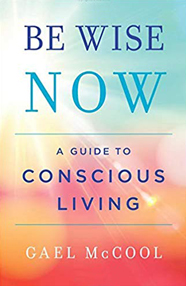
Gael Mccool: Be Wise Now, Gael McCool, and here she is telling us how to do just that
Read the full transcript
Gael Mccool
Gael McCool is a Canadian author, Registered Clinical Counselling Hypnotherapist, and certified life coach. For more than thirty-five years she has taught individuals, executives, and companies to engage the life-changing powers of self-awareness, accountability, and conscious choice. She is the founder, President, and Chief Creative Coach of FEEL Inc., and she lives, teaches, and writes in Halfmoon Bay, British Columbia. In Be Wise Now: A Guide to Conscious Living, she helps readers learn to trust the deep wisdom already within them and to meet life's challenges with clarity and confidence.
📚 Books by Gael Mccool
Transcript
[0:00:19] RW: Hi, everyone. It’s Rae Williams, host of Author Hour, where I interview authors about their new books. When challenges come your way, how confident are you that you’ll know when it’s best to use your head, follow your heart or trust your gut feelings? Our next guest will help us discover and learn to use our natural and acquired gifts and strengths so that we can decisively deal with the obstacles that life delivers daily to your doorstep and your inbox. She’s the author of Be Wise Now, Gael McCool, and here she is telling us how to do just that.
[0:00:54] Gael Mccool: First of all, I’m not sure that the book necessarily came from my motivation to write a book. It came more from request from clients, you know, where can I find that bit of information that you just shared with me or how can I learn more about this and so on and they would say, well, you have to write something about this. The book was really the result of a bunch of requests. The place where it became a motivation for me as I was seeing the same things over and over again with clients and hearing similar things. What I was hearing from people as how can I get rid of this part of me. How can I get over my ego, how can I get rid of these negative emotions that I have? How can I change this and the whole impetus was always about removing something, getting over something, letting go of something. Instead of looking more deeply into what it was that was actually speaking within the person’s system. I think that that’s part of our cultural orientation. We want to eliminate things that we see as imperfect or flawed or negative in some way instead of really standing back for a moment, taking a breath and looking at what is this thing trying to show us in the bigger picture of ourselves and in life in general? Those are the two things that came together, the request from the clients and also what I was hearing form them in terms of what they needed.
[0:02:33] RW: All right, what is the unique and central idea of the book that people will be able to take action on?
[0:02:41] Gael Mccool: You have no spare parts. That everything that’s within you is there for a purpose, has a function, an important role to play in your life and that if you learn how to listen more deeply and discriminately to those aspects of yourself that you can integrate them, learn from them and become more conscious in ways that will lead to a more fulfilling life.
[0:03:06] RW: All right. In the book, I see in your chapters, there are a lot of the self as it were, different aspects of self. Could you explain to us a little bit what that has to do with it all?
[0:03:20] Gael Mccool: I created a model for the book which has people investigate, explore 15 different dimensions or aspects of themselves. That includes everything from their soul, their body, their emotions, their intuition, their survival, drives, their imagination, the way they tell themselves stories, all of these things are different dimensions of self and by creating a model that looks at all of these different dimensions of self, what I was attempting to do or at least, the original impetus for this kind of a model came from my early readings of René Decartes and his you know, declaration that everybody knows. “I think therefore I am.” I remember when I first encountered that statement, how much it grated in my system. Because for me, I wasn’t just my thoughts. I was also my feelings, I was, my impulses, my drives, my needs, my connections to other beings and to the world as a whole. It seemed like such a limited way of perceiving one’s self. I wanted to expand that notion and help people get out of just being in their heads and explore every bit of wisdom that they contain from their living being. That was the impetus behind describing the different selves or dimensions of selves and showing people how, when they’re in alignment with these things, they feel on track with their life. They feel like they’re fulfilling their purpose and so on. When they’re out of alignment, what are the symptoms of that and how do you bring yourself back into alignment.
[0:05:15] RW: All right. Something you said a little bit earlier is that people are always wanting to know how they can kind of remove things to feel better is how do I get rid of this negative thought, how do I get rid of that and this. What is your take on – I know you kind of started a little bit on – it’s not necessarily something that needs to be removed, it’s something that needs to be focused on within or what it’s trying to teach you. If you could talk to me a little bit about what some of those things might be and what they are trying to teach us at certain points and why removing is not necessarily the solution?
[0:05:50] Gael Mccool: Okay, I’ll give you a classic example. We all have a self-critic, at least, I do. Maybe you’re perfect and you don’t.
[0:05:58] RW: I probably do.
[0:06:00] Gael Mccool: Most people have a self-monitoring critical voice in their head that is constantly providing commentary on their performance in one way or another. Most people respond to that so that it is negative, intractable, difficult, self-flagellation or beating themselves up and so on. That’s one way of relating to that dimension of yourself. But another way of looking at it is exploring, what was the origin of that? How did that get created, what was the purpose of that function being installed within you? What are the standards that it’s suggesting that you should live up to and are they standards that are in alignment with who you are or are they things that you’ve just been conditioned to believe that you’re actually not in agreement with and yet you're living out of them which is making you feel out of sorts with yourself and incongruent in life? There’s a way that you can explore the messages of your inner critic and actually use it as a positive guide for yourself in terms of showing you where you are being authentic and where you're out of alignment with your true values but you need to actually connect with yourself in order to discover what your own standards are rather than just living out of conditioning that you inherited and sometimes that conditioning is a valid bit of guidance or correction that we’ve got so we can actually look at it and see if there’s something that I could be improving here. Sometimes our conditioning is just the result of being in the wrong place at the wrong time. Where we encountered someone that was having a bad day and said something intense to us which went in and imprinted deeply. Then we continue to respond from that so it’s true or has meaning or relevance at this stage of life. A lot of our conditioning is installed very early on in life and we don’t go back and update the files. You wouldn’t be using the same computer, well, you’re probably too young for this analogy but you know, you wouldn’t use the same computer as the original computers that came out back in the 50s and 60s and 70s. You update your system all of the time. We also have to update our consciousness and bring ourselves into alignment with what’s real and relevant for who we are today rather than just acting out of a pattern because they happen to be installed.
[0:08:42] RW: What happens when we’re not doing some of the stuff, what happens when we’re not doing this work and maybe we are focusing on how can I get rid of this or how can I do better at this without examining that part of ourselves?
[0:08:55] Gael Mccool: Well, what happens is that you follow a different alignment with what’s really important to you and one of the things that I say early on in the book and I certainly respond this way with all of my clients is instead of focusing on what’s wrong with me which is where a lot of people get stuck, we need to focus on what matters to you. Change the question from what’s wrong with me to what matters to me and you start to get a different set of answers. You start to explore what’s important to you in your life, what truly matters and what’s going to bring you into some sense of connection and fulfillment and put you on a road to achieving what really matters to you in your life.
[0:09:46] RW: When people are trying to move forward and start, what is do you think that first step?
[0:09:53] Gael Mccool: I think the first step is always curiosity. Openness to explore. What is this thing I’m responding to? It’s just to become a little bit more conscious, a little more self-aware and ultimately more accountable for how we’re responding to anything. Curiosity is one of the great gifts that we have, we’re born with that, every child is curious. That’s a safe place for people to begin and it’s just to maybe immediately reacting, just hitting the pause button a little bit and going, I wonder? Giving themselves permission to explore why they respond the way they do.
[0:10:41] RW: All right. As I’m looking through the different divisions, the selves. A lot of them are pretty – interestingly self-explanatory in terms of the names. When I get to the deeper story of your shadow self which is one of your chapters. I wonder about that one because I feel like that’s one that people might not necessarily think about or know about. I would love to explore some more what the deeper story of your shadow self is all about.
[0:11:09] Gael Mccool: Yes, and thank you for choosing that one because the shadow self comes out of Jungian psychology. It is a term that refers to the parts of ourselves that we kind of cut off and repress because they were found unacceptable and so we drive them underground. So these are natural impulses, drives, needs and so on that we have early in life and we are given ample evidence of what is acceptable and what isn’t acceptable within our family situations, our culture, et cetera. So if we don’t later in life start to come to terms with some of these aspects of ourselves that we’ve driven underground, they start to come up for us in the form of inner conflict and turmoil and these things that we have repressed are not necessarily bad things about us and I think that that is one of the biggest challenges that people have with the whole notion of the shadow. They are terrified of it, you know what is in there, what bad thing am I going to discover about myself. But in reality, a lot of the things that are in that suppressed area are things that we actually love and they are aspects of our self that we never really had a chance to explore and express that got we were told early on this is not an acceptable way to be and so we close that down rather than ever being able to integrate that into who we are and express that. So let’s say that for example and aspect of yourself as that you were a fun-loving, very alive, live wire kind of kid. Who was full of joy and rambunctious and mischief and you may have been in a family in which for example a parent is depressed or something and so they are constantly trying to tamp down that stimulation that constant expression of joy in the child because they are too much energy and then in some ways as children, we’re all in a way almost too blindingly bright for our parents that we have so much energy and so much life force. And so if you are taught that it is not acceptable to be that joyful and that free and that expressive and so on and you learn to shut that down in order to be very serious and calm and so on, you lose your vitality and you may be able to maintain a certain way of being where you’re calm and level headed and all of these other wonderful things but you lose your connection to that sense of joy. So that can be as much of a shadow as some other attributes that people are afraid of.
[0:14:17] RW: Let’s talk a bit, now that we have defined some of this primary stuff I love to move into wisdom because of course that’s generally what the title of the book is basically is about wisdom and I would love to get a definition for what wisdom is because I think when we hear that word, we think of all kinds of different things and we think you know, oh maybe only older people can be wise or I have had to go through schooling to be wise. So in your interpretation, what is wisdom?
[0:14:47] Gael Mccool: What a great question, thank you. Wisdom is an inherent sense of integrity. It is where things come together in a seamless way that makes you recognize and resonate with the truth of something and everybody’s had that moment when they have just realized something and it is just so powerfully simple that they can’t believe that they didn’t see this all along. I am sure you know that kind of experience that I’m talking about. And wisdom is I like playing with words. I like to break words down into the components and play around with meaning and so when I hear the word wisdom, it’s got both those qualities to it, wise and dumb and so when we think of wisdom it is like having the humility of not knowing so that something can arise in a natural way. We are always so busy using our mind to interpret everything and run it through some kind of a matrix that we have learned as a right way to look at things. But wisdom is actually a bit more organic than that. It is when a natural truth arises and we recognize that for what it is and there is a calming feeling that comes with that. There is that sense of recognition and aha.
[0:16:27] RW: All right, so it is not something as we’ve been discussing because now it is like I want to put it all together because we have been talking about you know the ways we go about people coming to you and wanting to fix certain things and then the other side of what wisdom is. How do we put it all together? So how do we use the tools that we were just talking about and the way of interpreting ourselves that we were just talking about and use that to then develop into wise people, which I know is the theme of your book.
[0:16:59] Gael Mccool: Well I think the first thing is just actually engaging a little bit of trust. Trust that maybe you are not as far off track as you think you are, maybe if you just gave yourself permission to take a breath and look at how the dots are connecting in your life that you are actually see that there is an underlying intelligence wisdom that is guiding you all of the time and that when we are feeling really out of alignment or off track with something that that’s simply a message to stop and reorient our self. And gain some perspective on what is actually going on because if we are not reactive but are responsive to those inner messages, there is a way that you can bring all of this together to become present with what’s actually going on in your life and make choices from a deeper and more integrated place and when you do that, there is a sense of harmony and integrity and kind of a sense of wholeness and engagement with life that’s just wonderful to experience. So I’d like to take it out of the idea of always kind of emphasizing the pathological dimension of life for where things are wrong and maybe shift orientation a little bit to look at what might actually not be wrong but what actually matters here.
[0:18:48] RW: Awesome, okay so if you have to issue a challenge to anybody listening to people that are reading your book, what would that challenge be?
[0:18:59] Gael Mccool: Treat yourself as well as you treat the person you love the most in your life. Give yourself that same level of attention, caring, respect, support and opportunity to make mistakes and be imperfect and so on. You don’t have to be perfect. You just have to embrace the truth of who you are and give yourself some time to explore it and enjoy who you are and trust that you have something meaningful to offer to the world.
[0:19:36] RW: All right, awesome and how can we contact you Gael if we are interested in just learning more?
[0:19:42] Gael Mccool: You can go on my website at gaelmccool.com and you can contact me through there. I offer workshops and specific coaching along these lines. So if people are interested in getting on my mailing list so that I can send them out offerings as they come up, I would be thrilled to hear from anybody.
[0:20:05] RW: All right, awesome. Thank you so much, Gael.
[0:20:08] Gael Mccool: All right, thank you, Rae.
[0:20:10] RW: After reading this helpful guide, you’ll know how to honor and make use of the life lessons opportunities that you have and will continue to come your way. Check out the book on amazon.com and don’t forget to tune in to our next episode of Author Hour.
Want to Write Your Own Book?
Scribe has helped over 2,000 authors turn their expertise into published books.
Schedule a Free Consult