Anna Crowe: Episode 287
Read the full transcript
Anna Crowe
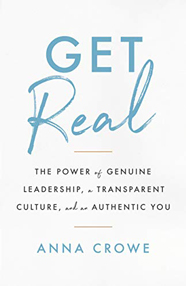
Anna Crowe is the founder and CEO of Crowe PR and the author of Get Real: The Power of Genuine Leadership, a Transparent Culture, and an Authentic You. She has spent nearly two decades working with iconic brands across New York, Los Angeles, and San Diego, building a bi-coastal public relations and marketing agency. In Get Real, she explores the power of authenticity across genuine leadership, personal authenticity, transparent culture, and brand.
📚 Books by Anna Crowe
Transcript
[0:00:19] RW: Hi, everyone. It’s Rae Williams, host of Author Hour, where I interview authors about their new books. Fake it till you make it, that saying may be a hallmark of our personal and professional lives, but the truth is inauthenticity leads to dissatisfaction and disaster to be happy, successful, and sustainable you need to be genuine and be yourself. Our next guest, Anna Crowe, spent years working in public relations and that along with her personal experiences, have shown her that authenticity is a most important skill in business today. So she's going to talk to us about her book, Get Real, where she helps you to break down bad habits and integrate who you are, what you do, how you do it, and how you present yourself into one sincere, powerful package. Here's our conversation with Anna Crowe.
[0:01:02] AN: Well, I've been in the professional world for about 20 years and I've spent 15 of those years in, in different corporate environments, working some really great brands and big companies and in different markets. So I started my career in New York City. I worked in New York and worked in New Jersey and worked in Los Angeles and I worked in San Diego and I traveled quite a bit for my initial jobs all over the world. And so I got a great glimpse into different cultures and what works really well and what doesn't work so well and also interacted with a lot of different people and personalities. And now that I've, you know, been on this planet for quite some time and have some experience with, of course, much more to come, I really felt that there are so many people out there that are not showing up as themselves to, a, professional environments, but also in their personal life. I've had so many conversations with friends and friends of friends of yeah, well that, you know, "If I had my dream job, I would be doing this. Or if I had it my way, I would be with this person," or same thing in the, in the corporate environment, people leading, you know, by being in authentic, by being rude and mean when I know they're kind people or putting on a facade that I also know was genuinely not there is in order to get some sort of respect. And so I just noticed this trend of people not showing up as themselves and I thought, you know, there's something here. Why is it if you had your way or why is it if you, if you didn't work, if you weren't doing this, you'd be doing that. Who is stopping you from, from doing those things? And you can come up with so many reasons and excuses for not trying something or doing something. But at the end of the day, if there's a will, there's a way, and it's a matter of taking a first step forward. So I'm on the personal side. And same thing with relationships. "You know, I've been with this person for so long, it's just too much hassle but I'd rather be unhappy then make a change." And that that sort of thinking does doesn't jive with me because I think you're in control and if you are leading with what's truly you and what's important to you, you're not going to wake up and say, "I wish I was doing that. I wish I was doing that." And same in the professional environment. I've seen people who were very negative and very direct, but that was that how they operated and that was genuinely them. And that to me was way more powerful and consistent and telling if our relationship than people who would be inconsistent who would be one way one day and then show up differently in another day. So I just felt really inspired by all those experiences and thinking, “Huh, why are people acting this way and what can we do to change that?”
[0:03:39] RW: Now you talk a little bit about are actually a lot about the concept of kind of fake it 'till you make it, which is something that especially in I guess the new generations, I hesitate to say millennials because they hate being grouped, but, you know, that's a thing. Fake it 'till you make it. Instagram is a thing. You put all of your, your stuff on there and you know, you live this life in public that you and don't necessarily lead privately. Why do you think that's happening to society? Why do you think that's a problem for us?
[0:04:11] Anna Crowe: It's just such an outdated concept and it just doesn't work in today's world from a sustainability standpoint, from a longevity standpoint, with social media, people do want to show their best selves and their best non-selves, right? They want to build a persona and a brand. But what happens is when people connect with those people in real life or IRL, as they would say, there's a disconnect. And you know, there's this thing called cognitive dissonance, right? In marketing when you have a perception of what the — what's going to happen when you buy a certain product and then your experience of buying that product and when those are different, you have buyer's remorse. Same thing happens in our lives. When we have a perception of somebody and then it's not supported by the facts of what that person is. We have cognitive dissonance, we lose trust. And so I think it's just, you know, so easy now to build a persona from scratch because you can edit your photos, you can put filters on, you can post whenever, you can choose you and control when you, what you want to show, what you don't want to show to, you know, your social community, which something we didn't have to do before or wanted to do before. But at the end of the day, it's all superficial. If it's not real for the persona that you're building is different from who you truly are, it's going to be a big disconnect and people are going to lose trust. And similarly in the professional setting, people have this fake it till you make it mentality, which means while I may not have the right experience or the skills for the job, but I'm sure I can figure it out once I get there. And that's okay if you don't have the right skill set or the experience if you're up front about it and you're a hustler and you've got the grit and the know how to learn it, but if you are faking it and saying, "I've got all this and I know how to do it," and then you fail because that was probably what's going to happen when you're putting a position with their assumption is you're able to handle something and you're not, then people will lose trust. And once you lose trust from an employee or a subordinate or a manager, it's very hard to gain it back. So I'm a strong believer of, you know, owning what you know, what you don't know. Naturally, you want to have the best intentions, but it's at the end of the day people are going to find out what's not real and then that's going to lose the trust and the respect.
[0:06:30] RW: All right, so what are the first steps that we can take in living our most authentic life? Whether or not we are attempting to, I know there, there are people out there who already have this, I'm going to call it kind of an Instagram personality. I don't know if you have a better name for it, but who are just being inauthentic that know they are, that want to come full circle and changed their life in that way. But there there's some people that also, you know, kind of have this fake it 'till you make it work persona. When it comes to leadership, when it comes to all of that, like you mentioned, how do we start to get away from that and live our most authentic lives?
[0:07:04] Anna Crowe: I think whether it's personal or professional, I think there are a few habits you can implement that will help with that. Number one, you know, just being human. We live in a very techie world, but at the end of the day, we are all filled with human emotions and are individuals and our very unique when different from one another. And I think that being human entails, you know, showing who you are, being vulnerable and that's okay to be vulnerable. I think that's a strength instead of a weakness. So if you are, you know, if you're talking about it's the social influencers, does that mean for every positive post you have to pass that one negative? Absolutely not. But be real about it, you know, show that you are human and you're not a picture in a catalog of a person just doing all these sorts of different things. I think this comes also handy the professional environment. It's okay not to know him. An answer to question. It's good to be empathetic and understand where other people are coming from and also be able to share what your point of view was and where you're coming from. Because connecting with someone on a personal level is essential. And at the end of the day, many leaders will say, "What's been one of your big keys to success?" And it's been forming relationships and you can form a relationship if you're not human. You just have to be able to show who we truly are as a human being. And it's okay not to be a robot and have all this. My other big one is to be consistent. I think inconsistency breeds distrust. And if you are consistently inconsistent, if you will, it creates this sort of a negative perception and people aren't certain about how to work with you, how to connect with you, how to, you know, have a relationship with you. So I think it's, it's just really a great way allowing people to understand you and where they stand with you. So as I would say, embrace her inner jerk if you're a jerk, own it but be consistent and if you're a kind person or if you're funny person, like own those things and be consistent. I think that's a big habit that people can, can form. And then I think there's other things you can do. And so for instance, if we're talking about our professional life or even a personal one, I think it's okay to admit when you don't have all the answers. And if you are thinking, if we're, if we're looking at finding your true passion and your true career and things that really matter to you, then I think it's important to have self awareness and to understand and try a lot of different things. Like for me, getting real and finding a career that I was really passionate about, it took years but it took years of trying and every day I tried something new. So if I was at a job that felt somewhat good and was making good money, but it wasn't just right, I did a lot of side hustles. So I take on projects, I'd work for free, I do a lot of things to fill my day just so I would get a chance to try different skills and try out different jobs. And I wasn't reckless about it because I always had a career to fall back on. And I had an education and I had my relationships that I've built. And I would never leave my job unless I had a plan. Sometimes I just think that, although that works for a lot of people and that may be what's real to them. But I think this notion of, well, "I don't know what else to do. I've been doing this for five years, so, well, I don't know where else to live. I don't, I hate my town, but I don't know what else is there." You never going to know unless you try something. So I'm a big believer of developing this habit of just trying things and you'll know then if something's a right fit or it's not, because if it, if it's not perfect, but it's on the right track, it'll lead you to the next stage. That might be more interesting to you. For me, I want to get up out of bed every day and be like, "I'm really excited about today and here's what's going on." And every day of course, is a very tough thing to swallow because you're going to have bad days. Everybody does. We're humans. But from a on an on the average standpoint and on the grand scheme of life, making sure that I'm filling my days with what is genuinely me and what feels right and you know, is really important. And I think most people you talk to will say, "Gosh, I wish I'd done this years ago," and that's because it's, you know, you're scared.
[0:11:22] RW: All right, so how does this translate into your brand now? Because you know, I can see a situation where he, you're an authentic person, you're leading a company, but brands have to have a, have a way of kind of being something. They have to represent something. How do you make sure that your brand is authentic? Yeah. I think similarly you've got to, as a brand, make sure your stick to your mission and vision and try not to deviate based on what's, unless of course you are deviating because it's a new technological achievement and you've got, I want to make sure you're staying relevant in the industry. Obviously is a brand and or as a company you always want to be growing and evolving. But I think creating that consistency and being clear about who you are as a brand and what values you hold and staying true to those is what really separates the more iconic brands from from not. It doesn't take a long time for a customer to get confused and doesn't take much. So if there's any confusion about a brand with a customer, they'll move on. People have very short attention spans, there's a lot of noise out there and there are a lot of companies vying for consumer dollars. So you've got to really make sure you have a clear vision of who you are. And obviously you want to make sure your brand is, adds value to people's lives in some capacity, whether it's an a B2C environment or a B2B environment. But I think the most genuine brands and the most authentic brands that are transparent are the ones who stand the test of time. And part of that is also the connection, the human connection that people have with brands. I mean there, there's a reason people flock to brands that are iconic, right? I mean, think about The Beatles brand and I talk about that brand. But in my book, you know, and Beatlemania came to life, there was a human connection, there was an emotional connection to the brand that was built based on the music. But then based on all the paraphernalia that they were selling, the turtlenecks and the wigs and all these things created this brand affinity. And that's, you know, The Beatles were never not true to their mission or vision. And same with brands that are happening today. And you think with Apple, Apple has become an iconic brand, obviously who doesn't have an iPhone, but it's because it was transparent about what it does. It has a great vision, it had a great mission, continues to do so. And it continues to innovate based on their vision of, of insurance to do so. And it's transparent. And in my book I talk about Netflix, which obviously has also come a long way, but part of being a sustainable brand and the sense of a brand that lasts a long time is developing that message, making a consistent sticking to it. And then owning any mistakes that you have. So in the Netflix case, when they upped the price without letting their customers know, they were forthright about it and said, "We messed up, it was my bad, we're going to fix this and I'm sorry." Versus brands that just hide behind a facade and hide behind talking points that mean nothing. So I think it's, it's same that it's the same concept with brands as it is with humans is with individuals. It's just now you're obviously taking it in and take into account what is your value to all the customers and then how do we continue to evolve by staying true and not tricking our customers just by being real. So how can we kind of check ourselves? Like is there some kind of, I mean I'm sure there's no like procedure, but how can we just take that time to examine ourselves, our brands, our leaders, and make sure that we are being as authentic as possible.
[0:14:55] Anna Crowe: I think it takes time and it definitely takes an effort. But the biggest thing is self awareness, right? So really stepping back and seeing how am I coming off right now in the situation, asking for feedback. I'm a big believer in feedback and I'm believer of giving feedback and asking for feedback and having a genuine, albeit difficult conversation. So I think it's important that it's a two way street and you asked for that feedback on the professional side in particularly. So if, if you see that even someone that reports to you is coming off as authentic, you know you'll, you'll know when that happens and you can have that conversation and you might find out that, you know what I'm, I'm kind of being the same way as well, so maybe I need to step back. And in the personal life I think in authenticity can prevent happiness. So stepping back from your life and just seeing, okay, am I doing what I'm truly meant to do? Am I being my best self every day or am I just not utilizing my potential? Is there more that I can be doing, I should be doing and I'm just doing this because I need to make money or I need to pass the time where I need to be in a social circle. You know, really evaluating that. And maybe that's a quarterly check in with yourself. Maybe it's a daily five minute check in, was today my best day? I think it's different for every person. I don't think there's a routine you can add in because people function differently and different things work for them. But the big thing is to step back and evaluate your day, your week, your month, your year. And I put together my business plan and professional plan and personal plan every year. So in December I do a little recap on what my year has been like, what great things I was able to accomplish, what things did I miss out on or did things that I want to do that I never got a chance to do. And evaluate if that's something that's still on my list of things that I wanted to accomplish. And then I put them on a plan for next year. And I usually do them in a form of a drawing because that feel as natural to me. So I'll draw out a little diagram and put little buckets of, you know, health, relationship, business, leadership, all different buckets that matter to me. And I'll actually put down things that I want to focus on and I want to do. And some things happen right away. Some things may take months, some things get carried over into the next year because you have to prioritize.But for me, it's really important to step back and figure it out. And that's what I've done in my career. You know, I did so many different, I have, I've had a couple of different professions and careers, but I've also just done so many different side projects because I've always wondered if that would make me feel happy and good and accomplished. And some did and some did not. And I was able to cross those off the list. But you do need to check yourself and see how am I showing up and am I delivering on my goals.
[0:17:40] RW: All right, and if you had to issue a challenge to, you know, people who are listening, people who are aiming to, to make sure that their brands are authentic, people reading your book, what would that challenge be?
[0:17:53] Anna Crowe: I think from on the personal level, if there's something that you are saying to yourself, "I wish I got a chance to do this or I wish I was doing that," I would challenge you to take that wish and make it a reality. And it could take years, it could take days and it can take very small steps or one major step. But there's no reason why we need to be thinking, I wish I was doing that or I wish it was different or I wish I was a different person." It's all in our control and it's all in our hands. It just may take time and patience. And then once you do that, examine it. How did that feel? Did that feel like it's a right fit for me? Did that feel like, I'm so glad I got that out of my system? What was that? Because I think that, you know, people spend a lot of years where the regret of not being who they truly are and as the quote I have in the, in the very first chapter of the book by CG John, is the privilege of a lifetime is to become who you truly are. So I challenge people to, to do so and ask yourself, "What is most important to me? Why is it important to me and is there something that I'm not doing that I think I should be?" And then take some steps to correct that, whether it's a big step or a small step, and then evaluate that, see how that felt.
[0:19:07] RW: And how can people contact you if they want to learn more? Probably through my company email, info@crowpr.com I usually scan those or connect with me on Linkedin, Anna Crow. All right. Awesome. Thank you so much Anna.
[0:19:22] Anna Crowe: Sure.
[0:19:24] RW: So don't fake it. Use the genuine tools within and what's exclusively yours to unlock the power of authenticity in your world. Checkout Anna's book, Get Real, on amazon.com and we'll be here next time for Author Hour.
Want to Write Your Own Book?
Scribe has helped over 2,000 authors turn their expertise into published books.
Schedule a Free Consult