Nisa Amoils: Episode 289
Read the full transcript
Nisa Amoils
📚 Books by Nisa Amoils
Transcript
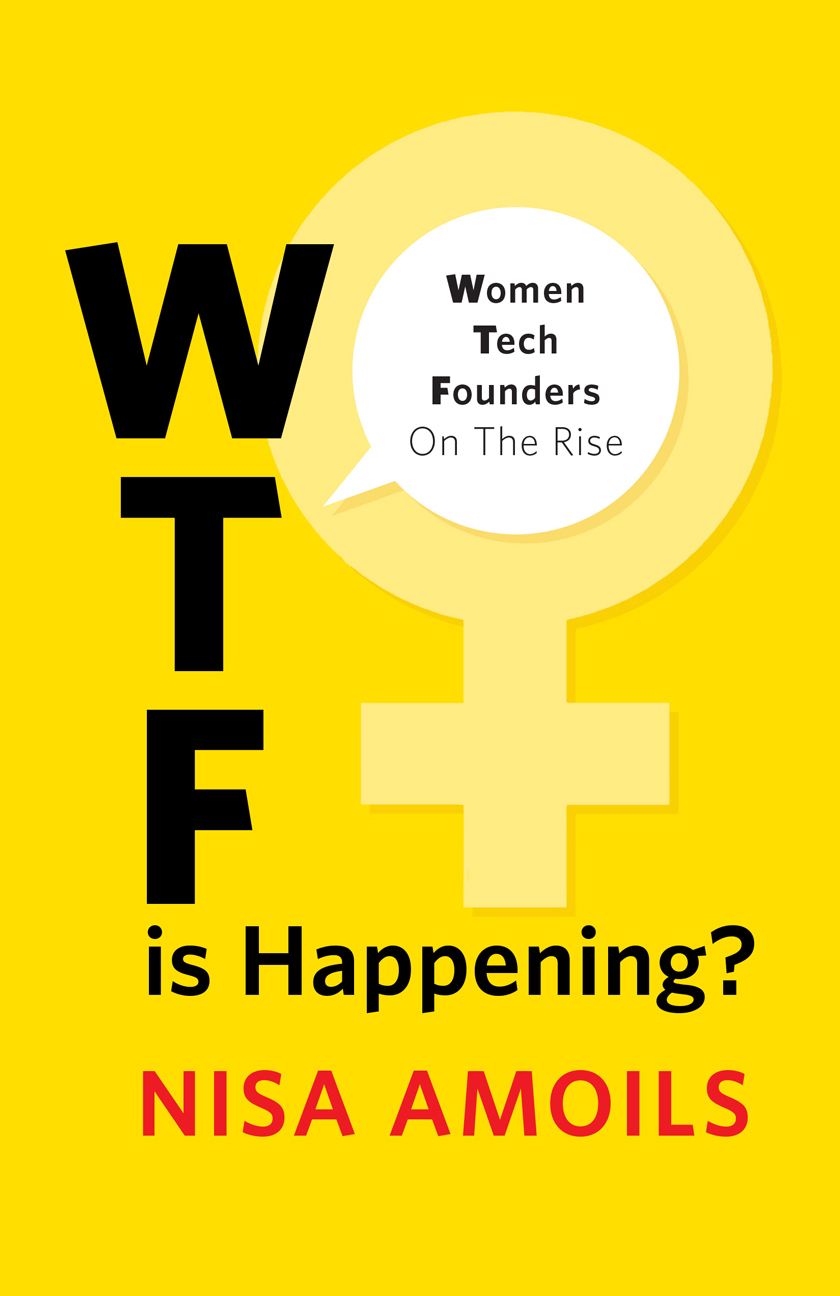
[0:00:13] RW: Hi, everyone. It’s Rae Williams, host of Author Hour, where I interview authors about their new books. Technological innovation is exploding and venture capitalist are continually looking to invest in the next big thing. But while female pioneers are making remarkable strides across a wide range of emerging tech fields, they’re also only getting a small fraction of the available funding. Well, our next guest is doing something about that. She’s tech investor Nisa Amoils and in her book, WTF. She profiles a dozen female founders whose remarkable work will make a profound difference in the way we live tomorrow. I loved hearing about all these incredibly smart and inspiring women and you will too. Here’s our conversation with Nisa Amoils.
[0:01:00] Nisa Amoils: As I wrote in the introduction, I was meeting with a blockchain venture capital firm last year and I asked one of the partners, a man, and how many female founders are in your portfolio and he said, "Does that exist in this sector?" I thought, I was morally obligated to write the book at that point because they didn’t know how to find female founders and the female founders obviously were not making their way to the male VC’s.
[0:01:36] RW: Why do you think that is especially in this industry?
[0:01:40] Nisa Amoils: I think it’s in most industries. Female founders still receive 2% of all venture capital funding in 2019.
[0:01:50] RW: All right, what is the first step that you took in, just preparing to write this book, what did you want to talk about, what is the unique idea in this book that you want to come across?
[0:02:04] Nisa Amoils: In terms of steps preparing, I had been writing for Forbes on different topics in disruptive technologies and that is the area that I had been investing in as well. I knew about all these great women in the world, female founders and I felt like they were not getting enough attention from the media. And so I thought, I could write about each of them in Forbes or I could just put together a book and then I could also make the case for investing in them to achieve offer generating returns.
[0:02:46] RW: As I know, each chapter of the book is a different female tech entrepreneur, is that the case?
[0:02:54] Nisa Amoils: Yes.
[0:02:55] RW: Okay, tell me a little bit about each one, not every single one but how you came across some of them and what their unique issue was with gaining funding and what they needed it for and kind of what their business is a little bit.
[0:03:09] Nisa Amoils: Eight out of the thirteen women have blockchain based businesses that I came across just in researching - just in the course of being an investor in that space and for instance, Dawn Song at Oasis Labs is revolutionizing cloud computing using blockchain. Christina Dolan at iXledger is revolutionizing the insurance industry using blockchain. Briana Fey from Our Loop is using what I call convergence theory, which is the inner section of IOT, internet of things, artificial intelligence and blockchain, in the area of transportation like Our Loop is an extension of the hyper loop and she is very unique because she had a design background and what I love about what she says in the book is about, you don’t need to have a STEM background, you know, science, technology, engineering, math, in order to achieve, you really, you know, STEM is being marketed to young girls in a way that’s scary and she thinks it should be marketed in a way that you can envision something and then design it, which was her backbone and then have those tools to actually build it. Take your idea to life. So I thought that was really interesting, much better way of marketing STEM. Then, there are you know, Marcy Turmon runs an exchange, a crypto currency exchange, Elizabeth Rosielo from Bitpesa is doing cross border, digital payments using block chain. Leanne Kemp from Everledger, disrupted the diamond supply chain industry using block chain. Alison Jennings, Filament is using IOT to operate independent of the cloud or WiFi or cellular using mesh networks and Tongtong Gong from Amberdata is examining data from public and private block chains. Those were the eight women that were in block chain. In artificial intelligence and machine learning, I had two, Olga Egorsheva of Lobster was solving a social media licensing problem of images used by ad agencies and being able to take, to license diverse images using artificial intelligence to find them. and then Rachel Thomas of fast.ai and she is actually created, her background’s a teacher, she actually created a learning lab to teach other women about artificial intelligence. Which I think is amazing and then in the robotics or aerospace drone industries, we had Melanie Wise of Fetch Robotics, who is creating robots to automate warehouses and factories and Fatima Hamdani of Cross Aerospace who is using satellites to solve some of the problems in with Aerospace. And then in virtual reality, Carrie Shaw of Embodied Labs is started out as a medical illustrator and then was taking care of a sick mother and wanted to know how it felt to be the patient in order to be a better caregiver. And so was motivated to create a program to do just that for caregivers, using virtual reality.
[0:07:00] RW: Awesome. Aside from funding for these women, what else are you hoping to achieve just by sharing their stories, sharing what their businesses are and just giving them that visibility?
[0:07:10] Nisa Amoils: I’m hoping that investors recognize what’s out there, these incredible women, there are many more like them, it was hard to narrow down and put them all into one book and that they opened their eyes to investing in them. I talk about the fact that women are building businesses at the fastest rate and also outperforming. It’s really an undervalued asset class and so there’s classic arbitrage opportunity there. I’m also hoping that more women enter into these fields in order to build the future and women have an equal say in what that future will look like. For instance, if we are programming artificial intelligence, we can’t have only have half the population programming what the computers are meant to “learn”. We have to have women’s voices in there as well, same for virtual reality and all of these technologies. So I am hoping that more women will read this and you can’t be what you can’t see. So that they’ll see what is out there and that they’ll want to enter into these types of fields in the future.
[0:08:32] RW: So what is your particular unique background in the tech industry?
[0:08:37] Nisa Amoils: So I am actually not a technologist. I started out as a corporate lawyer. I’ve spent time in the media business, I was an entrepreneur and then I have been investing in these technologies for about the past decade. And so it’s just I represent what a lot of the women are saying in the book that you don’t have to have this STEM background in order to be in these industries that you can learn it and so, my unique perspective is that as an investor I get to see all of these different types of businesses and all of these entrepreneurs and so I was able to write this from that perspective.
[0:09:19] RW: Nice, okay so in the years that you’ve been investing, do you have an example of a particular person or a story or an investment that you made that is just an example of the success that you can have when we give these women the proper attention and the proper funding?
[0:09:37] Nisa Amoils: I have a recent example but it is not in the technology field per se, but these two women started something called The Wing, which is a women’s only co-working co-living space and that was just an idea a few years ago. Nobody was really sure like before the election you know, whether women were going to want to have their own working spaces and so it was a big chance. But given how things played out and a lot of the activism that followed the election demand was overwhelming. And so these women just in two years built up a business that’s opening locations across the country. They had their Series C, led by Sequoya and they are doing really well. So you know that is an example there is so many other examples out there. I think there are less examples in these areas of frontier technologies yet just because they’re newer. So the businesses having grown yet, the technology is still being built and the infrastructure. So you will start to see many more of these examples in the areas I am talking about.
[0:10:53] RW: All right. And so moving forward, tell us about some of the ideas in terms of funding that investors can tie into. So I imagine yes, there is a plain financial investment but what else can investors whether money wise or just even people like me do to make sure that even though I maybe don’t have tons of capital that I am still investing in women’s tech?
[0:11:17] Nisa Amoils: Right, so actually under the job’s act, which passed a few years ago there is new crowd funding rules. So even unaccredited investors can invest in startups now and so we’ve seen the built out of a number of different platforms that allow just everybody to invest in startups even as little as $10 and so what we’ve seen on those platforms is more like 40% or 50% women getting funded and I think that is because they’re not going through the traditional venture capital system. Their stories are reaching everybody and so that’s very telling statistic about the disparity that we have. So it is great that we have all of these different angle groups popping up now across the country where you have organizations like SheEO where you can also invest in women and then get a tax deduction for that. So there is all these different models popping up and so I think we’ll continue to see the evolution of the capital formation.
[0:12:31] RW: All right and one of the questions that you pose in the book to the women that you speak to is what do you think or what do you predict will happen in your field in the next five years? I’d love for you to tell us what you predict is going to happen just in the space in the next five or even 10 years?
[0:12:50] Nisa Amoils: I agree with a lot of what the women said is we are going to see convergence of a lot of these frontier technologies and you will see the creation of new tools, for instance, in blockchain, there’s a lot of backlash right now against companies like Facebook and Google for containing the data, our own personal data and us not having control over it or us having yielded in exchange for convenience control over our data. I think you’ll start to see a lot more decentralized platforms where users can control their own data, you know, that will play out in healthcare, you’ll be able to go to different doctors and have control of your own data instead of filling out forms everywhere and having them transfer it around. You’ll probably be able to drive in an autonomous car the next five, 10 years and take of something called VTOL which is vertical takeoff and landing, similar to – combination of drone and helicopter, be able to get around that way. I think that a lot of this is happening, sooner than people think because the technology is already there and so now it’s just a matter of how we build it to interact with each other.
[0:14:20] RW: All right, you had to issue a challenge to your readers, our listeners, young women may be in the tech industry that have questions, what would that challenge be?
[0:14:32] Nisa Amoils: I mean, the challenge to investors is to seek out these female founders and try a little bit harder to find them and then the challenge to the female readers is to come up with solutions to problems and build a future.
[0:14:52] RW: All right, awesome. How can people contact you if they’re interested in learning more? Of course they’ll pick up the book but what else can they do to get in touch with you?
[0:15:00] Nisa Amoils: They can follow me on Twitter, they can contact me on LinkedIn, those are probably the best.
[0:15:08] RW: All right, awesome, thank you so much Nisa.
[0:15:10] Nisa Amoils: Thank you too.
[0:15:12] RW: Checkout WTF on Amazon.com and don’t forget to rate and review us. See you next time on Author Hour.
Want to Write Your Own Book?
Scribe has helped over 2,000 authors turn their expertise into published books.
Schedule a Free Consult