Josh Zolin: Blue is the New White
Read the full transcript
Josh Zolin
Josh Zolin is the CEO of Windy City Equipment, a commercial kitchen equipment repair and HVAC company. He rose through hard work from a technician working alongside his father to chief executive, helping grow the company into a multi-million-dollar business named to the Inc. 5000. Before joining the family trade, he grew up around the film stunt industry and pursued stunt work in Hollywood. In Blue Is the New White, he argues that success does not require a college degree and highlights the opportunity waiting in the skilled trades.
📚 Books by Josh Zolin
Transcript
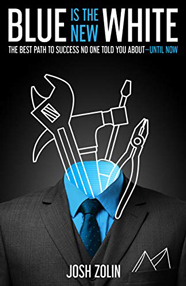
[0:00:27] RW: Hi, everyone It’s Rae Williams, host of Author Hour, where I interview authors about their new books. Becoming successful in today’s America is simple. Graduate high school, go to a good college and get a white collared job. That path is going to get you to the biggest paycheck and the best opportunities, right? Maybe not. Our next guest is here to talk to us about some of the most lucrative jobs out there that are actually blue collared jobs. Yet society pushes the perception that being an auto mechanic or a plumber, electrician or a construction worker somehow indicates a lack of success. Josh Zolin is the author of Blue is the New White. He’s here with an awesome conversation about skilled trades as illustrated in his new book.
[0:01:13] Josh Zolin: As I talked about in the book, I own and operate an HVAC refrigeration, cooking equipment, service company with my dad. And, you know, when we started out, it was just the two of us, you know, just running around Phoenix, Arizona, fixing restaurant equipment and you know, we had made the decision to grow the business, something we really wanted to do. Before I came aboard, he was a one-man operation and I was still young enough to kind of take the bull by the horns and really throw myself into the business and everything to enable me to understand it enough to scale it. So, as we started to grow, obviously, we had to bring on more technicians to facilitate our services and expand our operations. So, we began looking and it didn’t take us long to realize that technicians were extremely difficult to find, good technicians were even harder to find and it was even harder to figure out how to pay them because of what they were making. I mean, just put it very blunt, you know, we were a small company, just getting our start, it was incredibly difficult for us to compete with a lot of the salaries and things that good technicians were making. I made it very difficult for them to come on, you know, we did end up getting lucky and we found some that believed in our vision, we were able to recruit them. But I always ask myself why that was, you know? I didn’t know much about the industry; I was still learning. All I knew was how to fix restaurant equipment and kind of how to add and subtract. That’s what I did. As I began doing a little bit more research on technicians, trying to recruit them, I found out that it was a glaring problem. Not necessarily just in my industry in HVAC and refrigeration, but you know, in all of the trades, you know, everything from electricians to construction to plumbers, auto mechanics, I mean, you name it. This skilled trades industry is all having a problem trying to find people to do the work. So that really led me kind of down a rabbit hole to try to figure out why and it became obvious to me, after doing a lot of research that there were more people in this industry retiring than entering into it. Which is gigantic, right? I mean, it’s basic supply and demand, the less people there are to do these jobs, the more you’re going to have to pay them to recruit them and more benefits you’re going to have to provide and all that. And in turn, prices go up on everything because employers need to make money to run their business. That’s really what ultimately led me to write the book, is the problem is so evident that somebody needed to do something.
[0:04:07] RW: Tell me a little bit about what the trades are because your book is heavily based on the trade industry and what that is.
[0:04:15] Josh Zolin: Yeah. Typically, when people think about the trades and when the skilled trades are mentioned, they think of manual labor, you know? Masons and electricians and construction workers, carpenters, you know, HVAC technicians, that kind of thing. And ultimately, that’s the majority of what I talk about in the book because that’s what I relate most to being that you know, being that I have this company and I’m seeing this problem firsthand. But, you know, at the heart of it, the trades are a lot more than that, they extend into the manufacturing sector, you know? I mean, you can basically classify a trade as anything that requires some sort of a formal education that isn’t college, so that’s the broad definition. Think like dental hygienist, EMT, even police officers. Technically these are all trades. Not all of them are experiencing the gap that I discussed. That’s really for service trades, construction trades and industrial trades, but you know, just so people have a broad understanding of what exactly a trade is, it’s anything that requires a formal education that isn’t necessarily college.
[0:05:38] RW: All right. What would you say is the unique idea of your book that people can act on?
[0:05:47] Josh Zolin: Well, basically, you know, the entire idea of the book is the perception behind the trades. So, the purpose is to kind of open people’s eyes to the reality that they have a tool to go on and another option rather than relying on the perceptions of people about the trades because over the years, you know, the perception of the trades has been skewed, you know? I want to preface this by saying that I’m not against college. I’m not anti-education. I am pro education, for the right individual. So, the right education for the right individual and what I mean by that is that there’s an idea out there right now that a lot of young people are adhering to, that’s if they want any chance of success, college is, the way to do it. Unfortunately, that’s outdated advice. The trades offer unique solution in that you can be wildly successful beyond your wildest dreams in the trades because there’s just so many different avenues to take and you know, the profession in itself doesn’t require a college education. Most people, when they get started in the trades, they either go to trade school or they start as an apprentice right out of high school. And there’s some huge differences in taking that route over the college route. Because number one, if you’re not typically good in school, right? Take me for example. When I was in high school, I was a smart enough kid, you know. I knew how to do everything that the teachers were teaching, I graduated, you know? I didn’t drop out, I rarely went to class, but I didn’t drop out, you know? It was just one of those things where everybody knew that I was smart enough to go to college. So, that’s what they pushed me towards, especially my guidance counselors, my teachers, things like that and it just – I had always known because I hated school so much that I didn’t want more of it. I didn’t know what I wanted to do per se, but I knew that I didn’t want to go to college and I didn’t know what I wanted to do the rest of my life. I also knew that if I did decide what I wanted to do the rest of my life required a college education, that college was always going to be there, you know? I can always take some sort of a formal school at any point in my life. So, I made the decision to explore my opportunities without spending the money that college requires. I think in 2016 or 2017, estimated budget for college for tuition, room and board, fees, books, the whole nine was about $25,000 a year. That’s $100,000 that I didn’t want to take out loans for. So, I was at least smart enough to know that. I didn’t know that I could get the type of ROI from a college education that I needed to consider myself a success. That’s kind of what I want to get across the people is that the trades, yes. You know, they’re hard work, but I’d argue that you know, college education or not, if you want to be successful, hard work is inevitable. No matter what sector you’re in, no matter what you're doing for a living, if you’re trying to do it without working hard, chances are, you’re not going to realize whatever your definition of success actually is. That’s really what the whole book focuses on is peeling back the perception that the trades don’t pay well, that the trades are for a lesser individual, that they don’t’ require the same kind of knowledge that you know, accountants have or lawyers have, which of course is not the same, right? It’s definitely necessary. And, the fundamentals are the most important part of what the trades can teach because anything that you learn with them while you’re working with your hands or while you’re working in the back office and you know, assisting the technicians and the people that are actually on the frontlines out there, doing the work. No matter where you are in the trade, it teaches you that, it teaches you character, it teaches you hard work, it teaches you that you’re going to get knocked down but the only way to keep going is to get back up. College in itself, I don’t think teaches that, you know? There’s a lot of dependence that surrounds college, you know? It’s like an introduction into being independent. But to me, that’s still a form of dependence. That is the best way I can describe, it but the book gives people options, it shows people the reality of the trades and not the perceptions that have been passed down through the generations. You know, that they may think are true but aren’t.
[0:10:56] RW: It leads me to a question which is okay, if we decide and I think a lot of young people do feel forced to go to college and feel like that’s a path they have to take, if they want to be successful. But if you do realize that you know, that the trades are for you or you want to go down that route, how do you even start that process? I know you mentioned a lot of people who go through apprenticeships. How do you recommend that young people, especially start to get into those trades and start to get that experience and get that training?
[0:11:25] Josh Zolin: Yeah, there’s a couple of different ways to break into the trades. You know, one of them is obviously trade school. There’s trade schools for some trades, but not all trades. For example, you can find a school that will teach you how to be an Hvac tech or refrigeration technician or that will teach you how to be an electrician. But there is not school that will teach you how to repair restaurant equipment. There may not be a school for saddle makers, you know? These are all trades. The best way in my opinion is if you're interested in a trade that requires or has a trade school I should say, go to trade school, it’s a fraction of the cost of college. Usually, they have courses, they range from anywhere from six months to two years but it will help you learn the fundamentals of what it is you’re actually getting into before getting into it. The most cost effective way and you know, the way that I did it, the way my dad did it and the way that a lot of my current employees did it is to become an apprentice and that’s no trade school whatsoever, but you know, coming out of high school, you literally go to a company, you know, a trade company and you do anything and everything that it takes to get your foot in the door. I have one kid here that he came to me right after high school. Usually, from an employer’s standpoint, you know, it’s hard for us to bring on anybody that isn’t experienced because of this gap that we’re seeing, you know? It’s really hard to invest time and money into somebody before getting a return because we’re always behind, we’re always looking for the good tech, the next tech, you know? Somebody who can generate an immediate return for the company because most trade companies are growing because it’s a growing industry, but a dying profession, that’s what I like to say. Anyway, this kid David, he came in right after high school, you know. Basically, said that he would do anything to come work here and he wouldn’t leave me alone, right? We were in super growth mode at this point and I couldn’t really afford to bring on anybody that couldn’t give me that immediate return. Finally, he wore me down and I said fine, “you can come in and take out the trash a couple days a week.” You know, he got his foot in the door, he would come in, take out the trash and you know, I think one day he overheard us saying, “oh man, this technician forgot to take this part with him on a job, then he needed to repair one of these pieces of equipment.” You know, he came running over and said, “hey, I’ll take the part.” At that point we were like, “hey, you know, this might have some value because there is a lot of times that text either forget parts or they need a part they don’t have.” Just small things like that. So, we ended putting him in another position called the parts runner and it was his job to pick up the parts that any technician needed to perform a repair and bring them to them. So, he did and you know you got a slight pay increase for that because it is a little better than taking out the trash. So, you know he went to that and not long after that, we opened our preventative maintenance department, where all we have to do was maintain the equipment. You know people pay us to put together programs for them that will keep all of their assets running as they should and basic cleaning, disassembling, re-assembling. So, he got bumped again, he got put into the PM department. You know did that for a while and excelled at that and now he is actually on our install crew installing large equipment. Big 15-ton AC units a like and he is doing very well for himself and that was about three years ago. So, although it may not be easy to get it on apprenticeship, you know formal or informal, when I say formal or informal I mean union or non-union, but you know to go to a company and to tell them, “hey this is something I really want to do. I will do whatever it takes to get there.” It is not something we hear all that often. So, when we do we see it more as an opportunity than an expense, you know? Because it is a breath of fresh air seeing somebody so young make the decision, “hey, I see the value in this industry, in this business and I want to be a part of it however I can.” So my advice to anybody out there that wants to get into the trades is either go to trade school if you want to get those fundamentals down or if you literally don’t have a dollar to your name and you want to get started, you can get paid, you just be persistent and go to these guys. Go to these companies, these trade companies and make your case and don’t stop, you know? Don’t take no for an answer. They will appreciate it in the end.
[0:16:10] RW: All right, so what would you say to some of the parents because I do think that again this whole tradition of you must go to college and you must take this traditional path. Some of those pressure come from parents. I know your dad was an integral part of your career choice and in the beginning of the book your dedication you know right to him to say thank you. So, what would you say to parents whose children decide that maybe this is not the path that they want to go? How should they encourage them, how should they accept that, that kind of thing?
[0:16:40] Josh Zolin: Yeah, so having the biggest part here is to not automatically think you know what success means to your kids. Look, I mean instinct is that you want to protect your kids and you want what is best for them, obviously you want what is best for them. So, you are going to do anything that you feel is best for them. But you reach a certain point and I think that point is late in adolescence like this where kids and young people they start to formulate their own ideas of what it means to be successful, right? Because everybody is constantly talking about, “oh what do you want to do when you grow up? What do you want to be when you grow up?” And let us look at this college and let us look at that college and I think it is just – it comes from a good place. I will say that. I know that it comes from a good place and parents just want to see their kids succeed, but I think that a lot of them just get stuck in the ideal that they grew up in and obviously that was told to them and pushed on them. Probably by their parents, you know the surest way to succeed is to go to college get an education, get that degree, so when you go looking for work, you have something to show for your efforts. You know unfortunately it is just outdated advice and I think that you know parents and educators just need to take a step back. They know their kids; they know their students better than anybody else does besides them. So just recognize the talents and the strengths that they have and listen to them. I was very vocal about not wanting to go to college and I was blessed to have parents that supported me in what I wanted to do and they knew that I was the type of person to make the right decision in any avenue that I decided to take in life, whether that meant going to college now. Whether that meant going to college later, whether that meant not going at all. But I know there is not a lot of parents out there like that or at least there are a lot that aren’t like that is, maybe how I should word that. But I think it is just important to recognize the strengths and weaknesses of your kids and let them make their own decisions. You know be there for them to teach them how to fail properly. Don’t try to protect them from failing. So, whether that means going to college and not going to college that you know it is just about not pushing too hard on what you feel would make them successful if they don’t feel the same way because ultimately that is just the recipe for disaster. I mean that is why the dropout rates in college are so high, that is why people don’t end up getting a degree. I think it was 27% of people actually get a degree that is closely related to whatever it is that they majored in or something like that you know and it is just statistics in that sense. They don’t lie, you know? People at that age are trying to figure out not only themselves obviously, but what they want to do with themselves for the rest of their life. And if they are not sure. If they are unsure in any way whatsoever then it is hard for me to understand why the best decision would be, “hey the first thing you should do is rack up a ton of debt and do something that you might absolutely hate, but don’t worry you can pick it out of the list out of a book before you actually go and do it.” You know to me it is just – it doesn’t make a whole lot of sense. If they are not sure what they want to do, why not wait? Unless they’ve got scholarships or they know exactly what they want to do the rest of their life, whatever it may be, but there are better options in those circumstances than just, “hey go take some core classes, get some credits, you know you will figure it out while you are there.” To me that doesn’t make a whole lot of sense.
[0:20:38] RW: All right, so if you had to issue one challenge and that would be to anybody listening to us, people are reading your book, maybe young people who are thinking about you getting into the trades what would that challenge be?
[0:20:51] Josh Zolin: It would be to stop and think. All right, so I will speak to two different types of people here. I will speak to young people, if you are thinking about what you are going to do after college and you are like me and you are just completely and utterly unsure, stop for a minute and ask yourselves some real questions and hold yourself accountable to some real truths. You know what is it that makes you motivated? And if you don’t know that is fine. Maybe challenge yourself to question whether or not college is the right choice and when I say that, do some outside research. You know read this book, do some Google searches and really get to the nitty-gritty of well that is college going to be the best path for me or could the trades possibly be an option for me as well? You know one of the things that I say is that passion is great and you hear that all the time, right? Follow your passion, follow your dream. Well at this age a lot of people don’t know what their dreams are. They don’t know what their passions are. They’re still trying to figuring it all out. One thing that they can do while they’re figuring it out is pick up a wrench, all right? Or get involved with the trades in one manner or another because at the end of the day, you know, the skills that you learn in the trades are going to carry with you throughout your entire life. You can do anything with it, you can go anywhere with it, you know? You don’t’ have to get greasy, grimy, grungy, you know, your whole life if you start off as a technician, you can quickly transfer into other sectors of the trades, you got salesmen, you got management, you’ve got teaching, you’ve got entrepreneurship. I mean, there’s just so many different ways to take it, without building that big hole of debt and you know, I would challenge kids just to really take a step back, do some research, as boring and mundane as that might sound, there’s a lot of cool stuff out there now with social media. About the trades and about the people in them. There’s a lot of tradesman and women out there that are posting their journey on Instagram and Twitter and Facebook and it’s becoming more and more visible to everybody to kind of see what you’re getting into before you get into it. That would be my challenge for the younger crowd, the younger generation. The parents and educators is the other group I want to talk to and that would be to question yourself. And ask yourself if you really know beyond a shadow of a doubt that the kid, you're thinking about is going to be most successful being pushed toward a college education or being pushed in to college? Or could it be that that’s the type of personality that would thrive in working with their hands and one on one relationships, working closely with people and figuring stuff out. That was always me, I was the kid that was always trying to figure stuff out, I wanted to know how everything worked. I didn’t even realize it at the time, you know? But had I realized it, I probably would have gotten into the trades much sooner than I had, but that’s a huge indicator, right? If you’re just naturally curious about how things work, the trades is a perfect career path for you because again, not only does it pay supremely well, but it will give you the ability to at least explore something that you know you’re already interested in which is how things work and then in turn, how to make them work if they don’t. So, educators and parents, they need to recognize these qualities and not drop everybody into the same category of hey, you’re going to be better off, you’re going to get a better career, you’re going to be at a better place in life and you’re going to be most successful if you go to college, you know? Each person is different and we need to play to that for each individual. I think that’s the biggest challenge that I can give parents and educators right now is just recognize the talents and abilities in the people, the kids that you influence.
[0:25:15] RW: All right, how can people contact you if they’re interested in learning more. Obviously, we’ll go out and get the book but how can we get in touch with you?
[0:25:23] Josh Zolin: Sure, they can always email me at josh@blueisthenewwhite.com or they can follow me on social media everywhere @joshzolin. That’s just about everywhere and then, you know, we do have a pretty popular YouTube channel for Windy City Equipment just search windy city equipment or wcecommercial.com. Should be able to get to hold of me and see everything that I’m putting out there.
[0:25:49] RW: All right, awesome, thank you so much Josh.
[0:25:52] Josh Zolin: No, thank you Rae.
[0:25:55] RW: We thank Josh for giving us that important alternative. Check out his new book, Blue is the New White, available on Amazon right now and we’ll see you next time on Author Hour.
Want to Write Your Own Book?
Scribe has helped over 2,000 authors turn their expertise into published books.
Schedule a Free Consult