Lori Jean Glass: Episode 297
Read the full transcript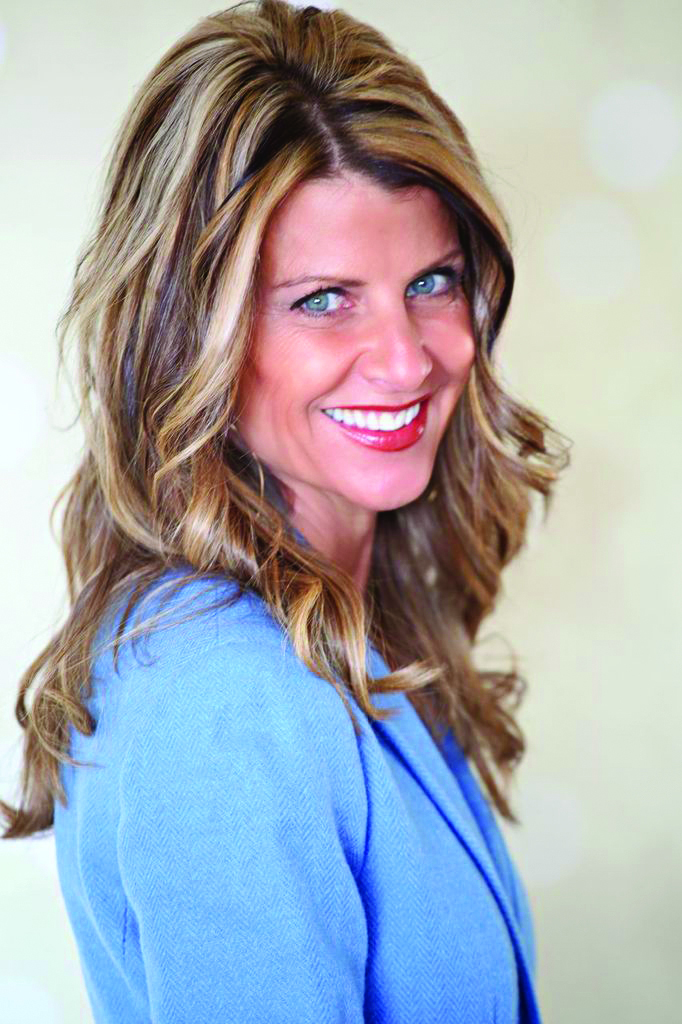
Lori Jean Glass
Lori Jean Glass is an educator, mentor, public speaker, and certified relationship, professional, and bereavement coach. She is the CEO and founder of PIVOT, a relational alignment group comprised of trained coaches and therapists certified in The PIVOT Process. Lori Jean’s personal experiences brought her to her current work, which focuses on those who struggle in their adult relationships based on attachment wounds of the past. She is also the CEO and founder of The Glass House, a residential setting offering workshops for individuals, couples, and families to take a deep dive into the PIVOT Process to get high impact solutions to achieve positive relational outcomes.
📚 Books by Lori Jean Glass

Transcript
[0:00:30] RW: Hi, everyone. It’s Rae Williams, host of Author Hour, where I interview authors about their new books. Do you find yourself in the same unfulfilling destructive relationships time and again? Or do you know that your relationship has potential, but you can’t really seem to unlock it? If like so many others, you find yourself stuck on a crazy train of secretive, addictive and self-sabotaging behavior, it’s time to turn your life in a different direction. It’s time to experience true healing and relational freedom. Our next guest, Lori Jean Glass’s personal experience with childhood trauma, inspired her to develop The PIVOT Process and write the book; #HealthyAdult. Here is our conversation with Lori Jean Glass.
[0:01:15] LJG: For me, it was because when I really needed the help, it wasn't readily available, nor was I finding avenues that simplified it enough for me to want to engage in behavioral change. It was so complex, because I had suffered from a lot of trauma as a child, that people were very almost were too delicate with me. It was a lot of listening, a lot of compassion, a lot of holding space, a lot of heart. But there wasn't really a process that was clear to help me with behavioral change.
[0:01:56] RW: All right. Tell us a little bit about your journey and about your story.
[0:02:02] LJG: Sure. A lot of it is in the book. And I think to put words to it now, I was born into this world in a very loving environment and at a very young age, had some trauma that made me lose my caregiver, my father, which gave me what clinicians call an attachment disorder. My mom turned to alcohol as a survival pattern, to manage and tolerate her own feelings. What started out as being a very loving, beautiful, healthy-attached environment for me, very quickly before the age of four, turned into a very fear-based life that was confusing and traumatizing. So, that's really how it all started was one big flip of a pancake with my life that left my little spirit craving with this unmet longing, that seemed to plague me for several decades after.
[0:03:07] RW: All right. Of course, your book is entitled Healthy Adult and deals a lot with relationships and destructive relationships. What is it that makes us healthy adults that, on the very surface of, then we’ll get more into the details, but what is it that makes a healthy adult? What should we be thinking about and looking for and trying, or striving to be?
[0:03:32] LJG: I don't think that what we teach and what I know is that when we define healthy adult, it's somebody that is responsible for how they're living their life and choosing to live their life and managing and tolerate their feelings, so that somebody that is engaging in life in their healthiest possible way and not taking others, or making others responsible for their emotions. It's really about having good self-esteem and good self-efficacy with muscle for social awareness, so that you are getting along with others and discerning when things aren't safe for you, so you can take the appropriate action. It's just having that higher level of consciousness, so that you can engage people, places and things, without instilling more conflict into the world.
[0:04:22] RW: All right. The first chapter in your book is, or the first part in your book is Acknowledging the Crazy. I love that, because we don't do that enough. We know that there's crazy going on. We either try to pretend it's not happening, or we try to heal without acknowledging. Tell us a little bit about acknowledging the crazy. What does that mean?
[0:04:45] LJG: Yeah. No, great question. Thanks for asking it too. I'm laughing, because it's really helped a lot of people. What it's referencing really is that it's not thinking that you're crazy, because of the behavior. It's looking at the behavior you're engaging in as looking crazy to those around you. Like, you're not crazy, it's just that you're operating and engaging in life to be able to not feel what's hurting you. So, acknowledging the crazy is you've got to look at the behavior that other people are looking at. You got to learn to observe yourself, so you can see why you're appearing crazy. Like, if you're calling somebody 38 times in a row, they're going to think you're crazy. If you're engaging in some of this behavior that people are doing, especially with social media and online dating and all of this stuff that people are engaging in relationally, people are going to think you're crazy. And oftentimes, you don't realize what you're doing. Like I've worked with hundreds of people now who don't even realize that what they're doing looks crazy. Then people will say, “you're crazy.” And then they're like, pain-body wound gets activated and they’re destabilized and, “I can't believe that she called me crazy.” I'm like, “well, hand on heart, it does look crazy.” Let's look at you not being crazy, but let's look at the behavior that you're engaging in as an honest attempt to try to feel better. That make sense to you?
[0:06:23] RW: It does. But my question is where do we start with acknowledging, or not even acknowledging. Where do we start with finding the healing pattern and the beginning to moving on from even the triggers that are causing us to have these crazy behaviors? And is it internal, or external that we should be looking? Because I think that's a question that a lot of people have, “is it my environment, or is it within?”
[0:06:48] LJG: It's both. Typically for a lot of people, it's from within. You've got to change your environment, in order to move through what you need to move through from within. How many times have you heard somebody say, “oh, my God. I married my mother.” Or, “oh, my gosh. I’m in a relationship with my father.” You hear stuff like that. We’re drawn to what's familiar, regardless of merit. So, our environments that we’re naturally drawn to are often familiar. The work, the real work that needs to be done within is that's a deep dive into taking a look at your patterns. You'll see later in the book; we talk about separating parts of self to really get an in-depth look at what that will like. So, why are you feeling what you're feeling and doing what you're doing? Is it because of something that was learned in your child, or in your adolescent years when you were supposed to be individuating properly and you didn't get to, or is this something that you learned in your adult life? You almost, not almost, but we teach that you separate those three parts of self out. I know it's going to sound a little complex, especially right now in this interview. It's not as complex as it sounds, and it's not about giving you multiple personalities. It's really about taking a look and owning when those messages were imprinted and when those behaviors were on-boarded to help you manage and tolerate your feelings. It's why people drink. It's why people shop. It's why people do drugs. It's why people do – have affairs. It's why people – A lot of what we do behaviorally is driven by a way to fulfill something that's either missing, or is engulfing us, internally. So, it's an inside job. We've got to be mindful of where we are environmentally also.
[0:08:41] RW: All right, so what are some of the common – I hesitate to use the word trigger. If you have a better word for that, for what I'm about to ask, please feel free to let me know. What are some of the common triggers, or things that you see that have happened to people that have affected their childhood – them in childhood, or adulthood that caused them to then end up having destructive relationships with themselves, with other people?
[0:09:05] LJG: Yeah, so great question. Say for example, somebody is starting to date somebody. Then all of a sudden, they get left. The person says, “you're not the right one for me.” It starts off really hot and heavy. They're together for a month or two. Things are going really well. Then all of a sudden, somebody leaves. With that individual who's being left, was left as a child by a parent, there's a good chance that that person is not going to be able to just go, “okay, I'm hurting. Obviously, this wasn't the right relationship with me, for me. I'm going to take some time and move on.” That person is probably going to get so destabilized that they're going to have a panic attack. They're going to feel they can't breathe. They're going to have a really difficult time sleeping. They're probably going to stop eating. Their work environment is going to suffer. Makes sense?
[0:09:57] RW: Yeah, definitely makes sense.
[0:10:00] LJG: Yeah. So, that happened to them as a child. Now if they were left, is it adolescent, then typically the behavior they're going to have is probably going to be to fight it. They're going to want to know why, they're going to gots to know, which is a language term that we use when you have to know something really right away. They're probably going to bring about protest behavior and fight it, or just go and grab another relationship right away to replace it. They won't even allow themselves to drop down into the deep pain. They'll just go out and try to fix it right away, or fight it right away. So, depending on the individual, I think what's really important about this work is to understand that there's no certain formula for everybody. Everybody has to look at their own patterns and they've got to look at their own repairs, in order to be their healthiest self, i.e. healthy adult.
[0:10:54] RW: All right, so what is one thing that people can take action on if they recognize that they have destructive behavior? What is one thing that they can start with to begin to heal that?
[0:11:07] LJG: Again, it's individualized. But, in a general way, if I were to answer that, that probably would be a universal repair would be to not take any action, until they've given themselves 24 hours to either write out, or define why they're so destabilized.
[0:11:24] RW: And that's interesting, because I feel like most people as you said earlier, do have an instant reaction. Usually when I ask a question like that, what action can we take, the action is action. In this case, the action is inaction, which I think is very interesting. Again, we acknowledge that it's different for everybody, but one thing you'd recommend is definitely writing things down?
[0:11:44] LJG: Mm-hmm.
[0:11:46] RW: All right. Tell me a little bit about what happens, and you touched on this with not eating and not sleeping, but what really happens to a person when they don't acknowledge this and they do engage in destructive behaviors?
[0:12:01] LJG: Oh, gosh. Many things. They lose families. They blow up relationships, friendships. Their health gets activated. I mean, Louise Hays wrote the book You Can Heal Your Life. She talks a lot about how emotional wounds trigger medical challenges. I mean, so many things happen. So many things happen. People blow up marriages. They react so instantly, sometimes they're not even aware of what's really going to happen. I mean, I've watched people wake up and look at their life and have such deep pain, because they realized that they didn't even really take care of their own children. They just threw money at them, so it looked on the outside like they had the nice life, but there was no connection. Or they took him hostage and made that children carry all their emotional pain and over enmeshed with them. I mean, I could go on and on and on and on that one, but gosh, nobody would ever want to listen to, because it's so negative. The point is not to bring up the negative. The point is wake up! It doesn't have to be this way. If we could all just be responsible for our own feelings and learn to manage and tolerate them. It sounds like a Hallmark card, but that's a tall order. People really like to blame other people. And it's easy to sit in that victim role when we have been victims. I write in the book about my mom's death. There's a long story around that, which is not in the book, because I didn't really want to include two or three chapters of that much drama and trauma. But the point is I spent a long time in my life blaming her for my faults. And we lose precious time. And we also lose our own right to love freely, other people when we let these old wounds keep us in our own internal prison emotionally.
[0:14:09] RW: So, that's a good segue into The PIVOT Process, which is at the heart of your book. What is The PIVOT Process exactly, and how can we use that?
[0:14:22] LJG: The PIVOT Process is a body of curriculum that was created to help people maintain and sustain healthy relationships with themselves and others. That's really the heart of what it is. It's a curriculum that has a library of various modules that can help you with any relational challenge, or growth that you want to engage in. We have for example, the book #Healthy Adult is a lot to do with healthy relational alignment, which is about the process one would take when they grew up with unhealthy attachment. That's really what #Healthy Adult is about. Like I could actually probably write a book for each module. We've got a great one on parenting. We have one on dating. We have one on relational internal boundaries. The third part of the book is all geared towards our core curriculum. And besides the core curriculum, we also have all these other modules to speak to any relationship. What's cool about The PIVOT Process is that with the curriculum, which people can get through their PIVOT advocate, they're also walked through it with a trained facilitator, that also can help them by helping assess and understanding what the next piece of curriculum needs to be. So, we've had hundreds of people that have gone through the process, the whole process and their lives have changed dramatically, like dramatically.
[0:16:04] RW: I would love to hear an example of someone who has used the process that, where they started and where they came from and what they worked through, if you have a good example of that.
[0:16:15] LJG: Yeah. I have many good examples. I'll give you an example of a young girl who was about 24 when she came to us. She was sent to us, because her parents were having a hard time with her. That failure to launch stuff was going on. And what was happening was that the parents were entitling her by giving her whatever they thought she needed to have in order to be successful and she was not being given any tools to be responsible for her own self. When she started the process, she started looking at who she was from a whole perspective and she realized that her dependency on her parents was so great that she couldn't really stand in her own personal foundation. She was still acting as a teen. So, when we did the survival patterns with her, what she realized that she had the ability to identify with the child self and the adolescent self, but she had no adult actions, because she was so dependent on her parents. So, her parents were so wanting her to launch and yet, both sides of that coin were contributing to the inability for her to launch. So, the PIVOT Process itself, helped her take responsibility of who she was, helped her understand the feelings that were coming up and different actions, because she carried a lot of shame based on the fact that all of her friends had moved on with their life, and she was still stuck in her own adolescent energy. And so, going through the process, she was able to attach more securely with herself. Therefore, she felt stronger going out into the world and starting to create life for herself. So, she had to draw the good internal boundaries, which are the relational circle boundaries with her parents. She needed to look at different ways to act when she would get activated as she would in her teenage years, from her low self-esteem. So, it was flushing all of that out with her in 90 days. By the end of that 90 days, she was a complete different person. To this day, she's 26 now and I still stay in touch with her and she's doing extremely well. Another example for something like that, if you want another example quickly. Would you like that?
[0:18:32] RW: Yeah, please.
[0:18:33] LJG: Yeah, another example would be a woman that came to us and she had found an old flame on social media and started texting and the texting quickly turned into phone calls and the phone calls quickly turned into secret meetings with this old flame that she felt was the love of her life. She had been in a marriage for about 12 years and she blew up the marriage, because the marriage got to a place where a lot of long-term relationships do where it needs to be fed in order to be maintained. And they'd stopped feeding their marriage. She went outside the marriage and had an affair and ended up leaving her husband and disrupting her kids. She went for this new relationship. And then that blew up, because what she thought it was of course was never – is never usually what it is. When she came to us, she was completely destabilized. I mean, she was really, really not even wanting to live. And she had to completely go through the process and look at who she needed to be based on the actions that she had took. So, she had to be accountable for them. She had to understand why she was so activated. In her case, she had never done her attachment work and she had pretty severe attachment disorder. So, in her marriage and in most of her relationships most of her life, she had unrealistic expectations, which made it really easy for her to just leave the marriage when she thought there was an opportunity for her to repair that wound by having this soulmate and love of her life come back into her life, which ended up not being any of that. She did a lot of the relational alignment work. She did the attached work, the boundary work and then she looked at who she wanted to be moving forward. And she spent two years repairing and restoring the relationships with her children. She has a great relationship with her ex-husband today and they co-parent effectively and well together.
[0:20:33] RW: Nice. Yeah. Okay, so how much of this once you've done the work, because what I'm getting is a big part of this is accountability of course, and really being willing to –
[0:20:42] LJG: Motivation. It's motivation and accountability. You've got to be motivated to want to change, because the change process itself initially is really hard, because you've got to sit with some feelings that you have worked in most cases a long time, not allowing yourself to feel. And again, I know that probably sounds really simple to people listening, but it's not simple.
[0:21:11] RW: How much of this requires maintenance after the fact? After you have done some of this work and in the examples, you Illustrated, they are still doing very well. How much of it requires maintenance afterwards?
[0:21:26] LJG: Again, it depends on the individual. But, typically, what will happen in most of the PIVOT advocacy relationships is that we work very effectively and well with therapists, or other types of healing modalities. And so, depending on the individual, the PIVOT advocate will stay in relationship with them. We like 90 days to six months minimum, and then typically what someone will do is they'll check in once a month. Or if they have a big shift happen in their life, they’ll re-engage for another 90 days. You know, it just really depends on the individual. Oftentimes, they'll check back in periodically and they'll have long periods of time where they don't need the advocacy. And then something will happen and they'll want to jump back in. It's a relationship that we create with them. It's always available for them should they need it.
[0:22:14] RW: All right. So, if you had to actually issue a challenge, so to people that are listening, people that are maybe recognizing that their behaviors are destructive and are willing to hold themselves accountable, anybody at all, what would your challenge to them be?
[0:22:32] LJG: That's a great question, because again, what we do is so individualized. If somebody's naturally avoidant, that's going to be really different than somebody that's naturally anxious. So, I hate to just give a stock answer, because then I'm not doing what we do so well, which is to be able to see and meet people exactly where they are. I think that one thing that everybody could probably do is to give an honest assessment and observe themselves for a week. Like every time they get activated by something, can you keep a journal and write it down for one week? Can you really look and go back and read? I have people bring in. Sometimes I'll ask them, “well, bring in your journal if you're comfortable enough, when you get to know me better, reading it to me.” So many journals are filled with fantasies and wish lists. Again, I'm not trying to suggest how somebody should write in their own journal. That's so personal, right? What I am saying is that oftentimes, we don't really look at these relationships through a lens of reality, because it's too painful, or we can't see it. Many times, people can't even see what they're doing. Hence, get called crazy.
[0:23:51] RW: And then I think that being called crazy itself, triggers people again.
[0:23:55] LJG: Oh, absolutely, absolutely. That's why they love it when I say acknowledge the crazy. It's not that you're crazy, but the behavior is. Then people can laugh at themselves, they can have compassion for themselves, they can lean into the tougher conversation. When I see somebody really activated or angry, I always talk about three words. I always say, “well, tell me more.” Like, if somebody's really upset or angry, I always like to ask the question, “tell me more.” As opposed to backing away, which so many people do.
[0:24:27] RW: Okay, so how can people contact you if they want to learn more, if they're ready to start doing the work, if they need some help, how can they get to you?
[0:24:35] LJG: Well, there's two ways. If they're really motivated and they want to do a five-day deep dive intensive, they can come and do a workshop at the Glass House. They can find us at glasshouseintensives.com. If they're curious about PIVOT and they want to look at getting an advocate, they can reach us at lovetopivot.com.
[0:24:58] RW: All right, awesome. Thank you so much.
[0:25:01] LJG: Yeah, you're welcome.
[0:25:03] RW: At last, you can get off that crazy train onto a connected highway and find your way to a healthy, happier you. #Healthy Adult is available now on amazon.com. Check back soon for another episode of Author Hour.
Want to Write Your Own Book?
Scribe has helped over 2,000 authors turn their expertise into published books.
Schedule a Free Consult