Lonnie Ogulnick: Episode 3
Read the full transcriptLonnie Ogulnick
Lonnie Gordon Ogulnick is the founder and CEO of Gordon Wealth. He began his career on Wall Street in 1998 and rose through the ranks as a Vice President, Managing Director, Sales Manager, and Chairman's Club Member before opening his own firm. He holds the Series 7, 9, 10, 24, 63, and 65 registrations and is registered in all 50 states. A graduate of the State University of New York at Oneonta, he was a two-time all-county wrestler and an all-conference soccer player. Lonnie is married to his wife, Dara, and they have two daughters, Leah and Ella. He is the author of The Heart of a Beast: Surviving in the Lone-Wolf Economy.
📚 Books by Lonnie Ogulnick
Transcript
[0:00:00] Host: At the end of the day, as a general rule, I kind of want to be that guy that's known as a person with a good heart, a good person. And I only really want to surround myself with people who have good intentions, who have a good heart.
[0:00:21] Lonnie Ogulnick: You're listening to Author Hour, enlightening conversations about books with the authors who wrote them. I'm Charlie Home. Today's episode is with Lani Ogolnit, author of The Heart of a Beast. Lani is the founder and CEO of Gordon Wealth. And in this episode, he shares how he was able to pull himself out of a deep funk when he was in his 20s, and how this one simple routine has kept his performance and his profits up for the last two decades. If you've ever dealt with depression, this episode is a must listen. And now, here's our conversation with Lonnie Ogelnick. Today's guest is Lonnie Ogalnick, author of The Heart of a Beast, Surviving in the Lone Wolf Economy. And he's also the founder and CEO of Gordon Wealth. Lonnie, welcome to the show. Thanks for being on.
[0:01:32] Host: Thanks for having me. It's my pleasure.
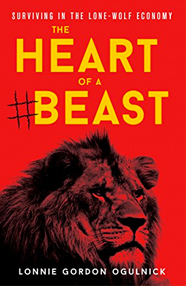
[0:01:34] Lonnie Ogulnick: Yeah. So let's talk first about your book. Describe the cover of your book. It's a unique cover.
[0:01:42] Host: OK, so let's start with the title. Where'd I get the Heart of a Beast? The heart of a beast came really from two things. One, the heart, right? So the heart of a person to me is very important and you can generally figure people out whether they're good or bad. But at the end of the day, as a general rule, I kind of want to be that guy that's known as a person with a good heart, a good person. And I only really want to surround myself with people who have good intentions, who have a good heart. And at the end of the day, that's where I wanted to inject that heart part. Beast is the best version of you and when you see the word beast in there is the word best and the best version of you is really maximizing who you are and what your God-given talents are and whether that's somebody pursuing neuroscience or chemistry or nuclear physicists because they have been born with that type of brain or someone like me who was just born with a gift for Talking, selling, whatever you want to call it, that's my strength. And then what do I need to do to make sure my strengths and my talents are the best? Working out, doing things constantly, pushing the envelope. And when you think of the word beast, by no means did I think of myself as a beast, but I've been on this kind of mission to find these unique individuals that combined both a good heart and were doing something that was like, How the hell are they doing that? So I went and I interviewed seven people locally, mainly one guy in the Navy seals. And I kind of like took my 20 years of experience on wall street and sprinkled that in from what I learned. And then I also took some quotes from some famous people that I really liked over the years that I picked up on. So that's the heart part really. I like people with a good heart and I think you want to surround yourself with them. And then the beast is just. that quest to be the best version of you. Surviving in a lone wolf economy is sort of like where we are in the world today as yourself, just kind of, you know, how do you get by? And everyone is on a journey by themselves. And that doesn't have anything to do with the fact that I have teams all over the world, whether it's, you know, you guys or it's, you know, my analysts or my asset allocation team, but me as a lone wolf, I have to build out that infrastructure to make sure that I'm at the best. That's where you got the title, the beast, the lion. There's something associated with the confidence, the calmness of a lion. It's, you know, out there in the jungle. It fears no one. It fears nothing. And the intensity on the eyes on that lion kind of just symbolizes a calmness that you really need. Whether things are good, they're bad. You have to, you know, have the mindset and the mentality of being calm, being focused. And I think that picture kind of was a good emblem for what I wanted people to think of when they think of that book. Focus, calmness, determination. And you just know, a lion fears no one or nothing. Hope that answers your question.
[0:04:58] Lonnie Ogulnick: It does. So I want to get into more about what the book is about. But first, who is this book really for? And who is it not for?
[0:05:08] Host: Okay, so when I went on this journey of... I have to write a book. It stemmed from me graduating college, getting dumped by my girlfriend, moving back home with my parents and having to send resumes out. And like, when you're the social chairman of your fraternity and, you know, you're having a blast with your buddies, you're in this fraternity, you're in this world that's a bubble. And then you come out of college and it hits you like a ton of bricks. At least it did for me. Now, I guess if you're going to law school, if you're going to be a doctor, you're on a journey, it continues. you have your new fraternal orders in medical school and what have you. But for the people that don't have that vision, it's just a reality that hits you. And I said to myself, if I have the ability to ever get out of this rut, and you can call it what you want, rut, depression, it was a bad, bad time, it was a bad place that I was at. So I said, if I ever got out of that, if I could give back a blueprint or a script or something, for an individual or a person to latch onto and read to give them a little tip or pointers to how to get out of that, I'm going to say that depression or that rut. That's where it was originally designed for. What I found through 20 years of Wall Street, if you understand the stock market and the volatility of it, the ups and the downs, you had the crash in 2001, you had the crash in 2008, you had the volatility of the last two years, oil crash 80%. I realized that I needed it just as much at age 40 when I started writing this book as I did when I was coming out of college. And I often, even last week, you know, you get hit with a client call or something. I went back to the book and I reread it. It's that type of book because there's so many little pointers and tips that just remind you of how you have to stay back, you know, on that path of really being and the best version of you, you're going to get knocked off, you're going to get hit. And there's all sorts of little tips and pointers of how to get back on your path of being the best version of yourself. So who is it for? It's anybody who, you know, gets a setback feels kind of like lost. I kind of wanted it to be a Bible for that type of person and help them get fixed and tweaked and back on the road where they're supposed to be.
[0:07:41] Lonnie Ogulnick: I love that.
[0:07:42] Host: Yeah.
[0:07:43] Lonnie Ogulnick: I love that you read your own book.
[0:07:46] Host: For me, it's me. I have to tell myself. I have to go back and write out some new goals. I have to get back in the gym. I have to do jiu-jitsu and stuff. I know that makes me the best version of me. Sometimes I need to be reminded by myself, but yeah.
[0:08:03] Lonnie Ogulnick: So tell me what is the number one takeaway from your book? What is the one... If you had to pick one, you said there are a bunch of tips. What is the one thing listeners can take away from it to get out of a rut or get out of a depression?
[0:08:20] Host: I mean, as hard as this may sound, I think the greatest thing that I have done recently, but I also did it to get out of that hole when I was in it, At 20, 21 or 20, 21 issue after college. If anybody on this podcast is listening and you're getting up at seven, seven 30, and you're showering and going to work. If you can set your alarm clock for six or like I do at five 15, I go to a bootcamp at six o'clock in the morning. Okay. Why do I go to a bootcamp at six o'clock in the morning? And I do an hour bootcamp that is pure torture and hell. Okay. Torture and hell. And then I go in a cold plunge, which is torture and hell. I have a little post-recovery workout that's at a spa where I live. But the reason I'm doing that is there's two bank accounts that we have. Okay. The first bank account that I want to fill up is my endorphin bank account. Okay. When you work out an hour of hell, you get a bank of energy and those are endorphins that are firing away. Boom, boom, boom, boom. And that wave of energy takes you a good six hours. It doesn't leave you. You throw in a little coffee. If you like coffee, gives you another little booster. And that's the bank you want to fill up right away out of the gate to fill up that bank account. The other bank account is your monetary bank account. And when you are feeling good and doing well, you're going to impact the monetary bank account. You're going to do well at work. Your boss is going to notice you. You're going to. you know other people may notice you they want to partner with you and then it kind of complement each other goes you know one hand washes the other and then you have a few dollars in the bank you feel good maybe you want to try out a new boot camp or or you can you know for some money to buy you know the latest DVD and do the workout in your house or you feel good you made a few bucks and now you're going to run four miles in the morning feeling good so they really compliment each other so the first thing i would tell anybody who stuck in get out there and do some exercise for the first 30 to 60 minutes that you wake up and really get that bank of endorphins going for you. And I don't say do that at seven o'clock at night. I say do it at six o'clock in the morning or seven in the morning. Because when I work out late at night, even when I do jujitsu at night, I can't fall asleep. It's almost like wasting money, right? Like think about it, like just wasting money. So if I work out at seven and I have all these endorphins, but I'm going to bed, I'm wasting those six hours of endorphins, like throwing away good money. But if I'm going to use that early morning workout and take those endorphins to work, everybody I interact is going to feel that positive energy and that endorphin flow that I'm pushing out into the world. So that would be my number one.
[0:11:07] Lonnie Ogulnick: That's a good one. When did you discover that? What was the exact moment where you had the breakthrough realization that, wow, exercising early in the morning is the gateway out of my rut?
[0:11:24] Host: You know, got dumped and I had no job and I was back at home. You know, in college you worked out with your buddies, right? So, you know, I would go to the gym with my friend at four o'clock, you know, after work or whatever, and I would lift weights and I would get bigger and I felt more confident. It always made me feel better working out. When did this 6 a.m. type thing happen was more recently when I had a bad shoulder injury. And I, I had to work out to get the shoulder better. And I went back to my old school lifting weights. I played tennis for like 10 years straight. I thought that was my working out, but it's not. All right. That's just having fun and running around a little bit, but you convince yourself that's working out. So when the shoulder injury occurred, probably from tennis, I started lifting weights and a buddy of mine said to me, Hey Lani, you know, what you're doing is like, you know, you're lifting weights like it's 1990. I go, I go, yeah, but that's what I like to do. He's like, you got to come to one of my boot camps, you know, where you do a whole body workout. And this guy only had six to six 30 that he opened up this guy, Emil, who's in the book. He opened up for me and my buddy, Sammy. And I said, all right, I'll give it a try. So we went two days a week and it was like, wow, this is great. And I did that for about a year, just two days a week. And then from that, we were at a friend's house and they told us about this fish shop and it's fish shops. So amazing. And that's an hour. So I went to that one on the other two days, Tuesdays and Thursdays from six to seven. And then I was like, wow, this is amazing.
[0:12:47] Lonnie Ogulnick: What was the fit shop? Was that like CrossFit?
[0:12:51] Host: Yeah. So the fit shop, it's in the book. The fit shop is CrossFit Lite. So you're going to use, instead of those big dumbbells that you're picking up and heavy weights, you're going with, you know, lighter weights, you know, lighter dumbbells, not barbells. Like you're not clean and jerking and all that. But you're doing rope climbs, you're doing pull-ups, you're doing push-ups, you're doing burpees, you're doing squats, you're doing everything but with actual dumbbells. And you can go with lighter, as heavy as you want. But it's an excruciating, soul-crushing workout. And when you sweat, I always tell you're beating up your red beast. You're crushing the soul of your red beast. And the red beast is in the book, too. how that's that little guy gnawing in the back of your head, like, stay in bed, don't work out. You don't need to do it. You could take a day off, you know, the little guy in your head that makes you, you know, lazy. So you just want to crush that guy. So then what ended up happening was I live in this, you know, place called Williams Island. There's a spa and I went to them and I said, look, there's no 6 a.m. boot camp. I go, what about for guys like us? So I actually created on Wednesdays and Fridays now where I live. And there's like 12, 13 people that are like older 40s, 50s, 60s, 70s that are getting after it at 6 a.m. and we call it the beast. So now I'm literally going like Monday, Tuesday, Wednesday, Thursday, Friday and even Saturdays at 7.45 I'll go to the fit shop and I'll just go as hard as I can and this whole endorphin bank realization kind of really just hit me through this process while I was writing the book and realizing just how powerful that is. I realized it through this last three to six months of just killing myself early. Believe me, it doesn't get easier the more you do it. They crush you.
[0:14:51] Lonnie Ogulnick: Yeah. I love that you started the beast. You started a workout because it didn't exist. That's great.
[0:14:58] Host: yeah i was like i would i went up to the director i go so you have classes here starting at seven but you have it for everybody who that don't work with the afternoon classes but what about the younger people who live in williams island that need to get to the office by eight o'clock where is it we have nothing so they're like all but nobody comes i go start one day wednesday see what happens and i had five people to the five people i got five people now it's just taking the life of its own so now there's just it's growing so that director there was like, yeah, I can't believe how good it is. And people talk about it and they love it. It's the hardest class they have. And you see 60 year old people doing it. It's great. I love it.
[0:15:37] Lonnie Ogulnick: This is my, one of my favorite things about talking to authors is I think most people forget that they can change reality, right? That they, if they want something to exist, they can figure out a way to make it exist. And you did just that. So that's awesome.
[0:15:55] Host: I often talk about something called C Y O D create your own destiny. It's something that's always stuck in the back of my head. Create your own destiny. You have that ability to do that.
[0:16:04] Lonnie Ogulnick: Yeah, everyone does. So what I'm curious about is this red beast that you talk about in your subconscious telling you to take it easy and everything. Everyone deals with that. People who are in a rut are really in a rut for a reason because that red voice is totally dominant. It's nice to think that, hey, I can just be like Lonnie and just go out and crush that red voice and just work out in the mornings. But for somebody who's been there for a long time, what would you say to them? Like, how can they get through that period where they're starting to crush the red beast? Because they might have a day where they go work out in the morning at 6 a.m. They feel pretty good. And then the next day, they're right back to where they were.
[0:16:53] Host: Okay. So to think that like every day is going to be this great day is a fallacy. It's not reality. Like that's just not going to happen. You're going to have good days. You're going to have bad days. That's just the reality. Okay. I fight the red beast every day. You fight the red beast every day, but the red beast, it's not real. It's sort of like this, this fake person that's out there in your brain talking to you. And I think that a lot of us have to come to the realization and deal in reality. We put a crutch on ourselves. So whether somebody's got dumped or if, you know, they had a bad childhood or, you know, we always go back to this crutch of, oh, I'm depressed because of this person or that person or I had a rough childhood. And that's just your excuse really, because of your own insecurities and your own flaws. Like you have like this kind of gnawing thing that's out there. Like I'm so miserable and my friends won't talk to me. It's all because of her. She did this to me, but that's not really true. That person, if they left you, if they hurt you, that person wasn't who you thought they were. Right. That, that was just a lie. Okay. And if your parents are bad or what have you, it could be close relatives. Well, we talk about the fact that you have to cut these people out of your life, right? Like that's step one, the negativity, the bad people, it's okay to be alone and by yourself and At my point where I am in my life, like I don't care who you are. I don't care if you're a blood relative. I don't care if you're, you were my best friend. I don't care if you were someone that I call the girlfriend. If you're a negative influence on me, I can't have that in my life. Okay. I can have somebody give me an honest slap rather have an honest slap than a false kiss, but a person that thinks they're negativity and you can feel it in your bloodstream. They need to be removed from your life. That's step one. Step two is you got to work out. That's it. We talked about this, but you got to get yourself healthy. And the way you get yourself healthy is just by getting those endorphins in your brain. And it might be a slow process. It might be something like a walk around the block 10 times in nature and breathing in the fresh air, but you got to get your body moving and doing things that you actually enjoy and getting the negative people out of your life and realize that You're going to help yourself. Nobody's going to help you destroy that little red guy in your head, but you. And there's nothing wrong also with talking to a therapist and going to see help and professionals that want to, you know, if it's really that deep, you gotta, you know, talk to somebody about it. It's very therapeutic to get all that crap out of your system with somebody who's never going to judge you. There's nothing wrong with that. So if you're stuck and, and you're, and you're in a deep, dark place, The working out's great, but if you need to get stuff off your chest, you know, once a week or every other week until you feel good, you know, there's people out there that can help.
[0:19:53] Lonnie Ogulnick: Absolutely. Those are all great recommendations. And I mean, it really sounds like the biggest two are exercising first thing in the morning and cutting out toxic people from your life. A friend of mine, Shane Niemeyer, he's an Ironman triathlete and he's a huge proponent of Exercising is the number one way to get out of depression because the stagnant thoughts that you have, like you mentioned, thinking about your ex-girlfriend and your parents, these thoughts that keep playing on a loop in your head that are very negative, as soon as you start moving, those thoughts just immediately go mute and they quiet themselves down. So just start moving.
[0:20:34] Host: Think of your brain as an engine with endorphins that crush those thoughts.
[0:20:37] Lonnie Ogulnick: Yeah.
[0:20:38] Host: No pain, no gain. The more pain you have in your workout, the more gain you'll have after. It sounds cliche, like no pain, no gain, but stick that in your brain and it is true.
[0:20:56] Lonnie Ogulnick: Author Hour is sponsored by Book in a Box. For anyone who has a great idea for a book, but doesn't have the time or patience to sit down and type it out, Book in a Box has created a new way to help you painlessly publish your book. Instead of sitting at a computer and typing for a year, hoping everything works out, Book in a Box takes you through a structured interview process that gets your ideas out of your head and into a book in just a few months. To learn more, head over to bookinabox.com and fill out the form at the bottom of the page. Don't let another year go by where you put off writing your book. So tell us about the highest moment you've had in using... You really stuck to this system and tell us the moment that you really felt you had the heart of a beast, to use your expression.
[0:21:55] Host: Well, I think the hard part is good. The one time before I even wrote the book, but again, this book is 20 years in my brain. I was like the C D student or B student if I really got lucky and studied, but if I was interested, but I wasn't really interested in school. I was interested in like athletics and having fun and whatever the case may be. I was, my attention span in school just wasn't good today. They label all these kids, but back then I just wasn't interested. So I got by however I had to get by. I got by. So when I actually graduated and I moved towards the stock business, the financial world, there was this series seven test. And again, I was never a big student and I didn't really think I could pass the exam. So for me, passing this exam, the series seven, I actually was the first time I realized that 22, 23, that I had this brain that was like, Oh my God, if you put in the work and study and focus, you actually can achieve that. And it was the most amazing thing because I always knew I can sell, but I didn't realize I had the intellectual capacity to pass a major hard test. So once I passed that test and once I actually was able to sell, I still can recall that day as being probably the most proud moment of my life. You know, from where I was to where I was going to go. So all this negative energy that I had that I was like in that dark deep place. I was able to transform it and I talk a lot about a plug and an outlet. So when you walk into a room, it's dark, but if you can find the plug and the outlet and stick it in, the light goes on. So for me, that plug in that outlet was becoming a financial advisor, being in that world. So I took all that darkness and transformed this into this energy and that energy that I had made me the top financial advisor for new accounts my first year in the business when there was like 400 advisors at the firm, maybe even more. You know, cause sometimes when you have that dark place, that darkness, most unbelievable people or things, they were all in that dark place. So if there's anyone in that dark place, you know, you just need to find the outlet to plug into, to give yourself the energy to make that positive. So once I did that, like cold calling for, you know, eight hours a day, getting five leads. I was like, this is amazing. I didn't care. I was so happy. And I'd just be like out there doing something with other people. And while most of the people in there were like miserable that they had to co-call, I was just happy to be doing something that was productive and I could see my future. The energy you get when you can plug into something you're passionate about is, you know, it's something that I think when you talk about maybe like, you know, people who are depressed or dark. I think a lot of that has to do with also not having any outlets to plug into. You've got to really work on finding an outlet. Because if you do, if you find something where you can actually wake up and be excited to go to, the working out is easier because you want to have that energy to get to work. So I would say it's right there finding something that can really make you want to work hard and be the best version of yourself. And that's also why I wrote the book. I kind of like helping people. I kind of like talking to people and it's really invigorating helping people, you know, try to become the best version of themselves.
[0:25:25] Lonnie Ogulnick: It's a lot of fun.
[0:25:26] Host: Like I got, I got people jumping into cold dips where I live, you know, this cold plunge and working out and it's not monetary. I don't, I don't get any money from it. Fortunately for me though, some people now they're talking and they want me to be their financial advisor because they like me just, you know, kind of, I guess the world's overlap, right? But the main thing I like is just seeing people improve their lives.
[0:25:49] Lonnie Ogulnick: Absolutely. Yeah, I mean, you're dipping into my next few questions that I had for you. But what I wanted to ask first is somebody who feels like, man, I don't have an outlet. What is how can they go about finding it?
[0:26:04] Host: I mean, that's a phenomenal question. In my book, I write about know thyself. So, you know, what were you happy about in life at any point, right? when you were a kid growing up, there's something in you, there's something out there that you're interested in. It's curiosity that you find interesting and follow that.
[0:26:24] Lonnie Ogulnick: What was it for you?
[0:26:26] Host: Well, I mean, you know, at 13 years old, I was dealing baseball cards at shows. I was a little kid with adults to the left and right of me at the Nassau Coliseum hustling Don Mattingly rookie cards. And like in my basement, like stuffing all these like little brown bags and like ziplocks and like making a sign. Like there's a John Mattingly rookie card and like made like 40 and charged five bucks and had to draw people to my booth. So that entrepreneurial spirit. And then in ninth grade, like, you know, I was a bookie. My friends wanted to bet on games. And I sort of like, you know, this 12th grader and he was doing it. And I said, Hey, how you doing that? And I followed his path. And I started to take my friend's bets and made a little bit of money on that. And I was just, you know, if you asked my friends when I was a kid, you know, you know, as early as like, you know, eight, nine years old, you know, teachers and coaches were like, you know, you need to be a lawyer because you could sell, man. You could talk, you know? So those little things, you know, my dad was, you know, a second generation salesman in the uniform business and just watching the adults, you know, the guys just talking and always business. It was just something I guess in my DNA that kind of knew I always want to be a salesman. Like that's just who I am, right? So I graduated college with a degree in speech communications and a minor in business economics. Why did I pick speech communications? Because I knew the only damn thing I was good at was selling. So I said, let me just focus on that and kind of sharpen that tool. So, you know, public speaking classes and marketing classes, they all were part of where I was heading. Finally enough, people told me, you know, hey man, you should be a stockbroker. You know, they say one person tells you something, you know, you can listen to it or not. But if two or three, you better open your ears up and pay attention. So I kept getting that, you know, you should be a stockbroker. You'd be a great stockbroker. You'd be a great financier. It's 1998. It was called stockbrokers today. You know, you take your Series 65, your financial advisor, there's not many stockbrokers out there anymore. Once I realized that in my brain, I took my 7, 63, 9, 10, 24, 65. I just took my real estate exam for fun just because I mistaken exams and I love real estate. And, you know, my whole life I played Monopoly and poker and all these little things, you know, that I really love. It sort of kind of correlates with being in the world of finance. So for me, that's what it was. But if you were a kid that just liked putting together bicycles and dissecting it, well, maybe you're a mechanic. Maybe you should have your own auto body shop, right? There's something as a child that you had that little spark, that God given gift or talent and kind of focus on those things. You know, if you were a kid that you just like loved fires and maybe you should be a fireman like, you know what I mean? It's a little things like that.
[0:29:14] Lonnie Ogulnick: Yeah, I was laughing when you were talking about the baseball cards because I used to spend hours, hours and hours just organizing them and putting them into the best possible arrangement. I wouldn't go out and sell them. But collecting and organizing them and making them look beautiful was a real OCD tendency I had at an early age. Now, I primarily make a living editing other people's work and making it beautiful or making it sound great or making it look great.
[0:29:50] Host: There you go. You're thinking back to your childhood and saying, hey, it makes a lot of sense now. I had the same thing where I was just like you and I would look at them and be like, Hey, I can flip all those cards so you make some money. What are you doing? And they're like, no, I like those. I just want to hold them forever. And my brain was automatically thinking about, OK, I can make money selling Don Mattingly for $20. And then I can take all this money, and I can go buy the Don Russ rookie set, and I can sell that set. And that's just sort of the way my mentality was.
[0:30:24] Lonnie Ogulnick: I was like, oh, man. If we were childhood friends, my life may have turned out differently, Lonnie. You touched upon a few of the stories of some of the people that your book has impacted. What has been your favorite success story or instance of somebody having read your book and having it change their life in some way?
[0:30:51] Host: Well, I can only talk really in reference to people that I deal with. On a regular basis, more or less, you know, a lot of people read the book and I get like an email or a text. Like it was amazing. I love it. It was such an easy read. It was quick. It was so amazing. I get a lot of that. But when I actually see the guys or the girls that read the book and are following through with all the advice that's in the book and they're just telling me, you know, like, It's so amazing how you changed my life, how you got me to get up now at 5.30, I'm in this working out, I'm in the cold plunge, I'm in the steam, I'm following the routines you tell me. It's changing my life and I see it spreading and it's a nice message to spread. But watching it in action and going to the tennis court, playing with a buddy and showing me a text message because he made it mandatory for all his employees to read this book. And he's showing me text messages of his employees being like, you know, I just hike the Andy mountains. Look at me. I'm in beast mode. Like I'm a total beat, you know, like I'm getting a lot of that feedback and I just put a smile on my face. Or when I go to an event now and someone's like, you know, Hey man, you wrote a book. That's so amazing. It's still, it kind of like, it makes me feel like I don't even know how to react. Cause I'm just like, I, I, I, I'm like a regular guy who just wrote a book and put this down on paper, everything that's been in my brain.
[0:32:14] Lonnie Ogulnick: And.
[0:32:15] Host: I'm happy that it's helping other people. Really, my only goal in writing that book was to help other people. I did not ever think I was going to make money or a lot of money on the book. If I did, that was great. But I just said like, hey, man, I got some knowledge here. I got to help some people out. And that's why I did it.
[0:32:34] Lonnie Ogulnick: That's fantastic. And those end up often being the best books. So that's great.
[0:32:39] Host: Yeah.
[0:32:39] Lonnie Ogulnick: So Lonnie, before we let you go, I like to do a speed round at the end. So these are succinct answers to questions I'll throw your way. So you ready for that? I was born ready. Awesome. All right. Number one, who is the one person you most want to read your book?
[0:33:00] Host: Hmm. Who's the one person I most want to read my book who that's an unbelievable question. I would have to say, okay, here we go. Oprah Winfrey. There you go. Why, why Oprah Winfrey? Oprah Winfrey has the most explosive audience. She has the most dynamic personality of anyone probably that's ever done it. And she can get the message and she can get the book out to the masses. Again, not for monetary reasons, but just for somebody to read and be like, all right, this is awesome. And let me see if I can kind of get after it and work my tail off. And she has the widest reach. She has a big audience. So that's probably who I would have read it. So if you want to send her a copy or get me her address, I'll send it to her.
[0:33:54] Lonnie Ogulnick: I got you. Good answer. I think I know the answer to this next question, which is how long did it take you to write this book? May I guess 20 years?
[0:34:03] Host: Yeah, I think everybody has a book in them, right?
[0:34:06] Lonnie Ogulnick: Yeah.
[0:34:06] Host: Everyone I talk to is like, I want to write a book. Everyone has it in them. There's no doubt that everyone has a story to tell. but nuts bolts, probably about a year and a half of like, okay, I'm doing this, right? And then just saying, I'm doing this, telling your wife to suck it up. I won't be around on Saturdays and Sundays that much. Got to get this book done and sort of, you know, little nights mornings between it all. But the nuts and bolts about a year and a half thought process in theory is 42 years because it's a life story. I go deep into the early days and take it straight through till today.
[0:34:43] Lonnie Ogulnick: Right. What was the most challenging part of the process?
[0:34:47] Host: I think, you know, everyone has a job. I'm not a writer, right? So I write in the beginning, I'm not a writer, I'm not a history, I'm not a professor. So putting together something that, you know, is good reading material for someone who's never written a book is probably the hardest thing to do. Right. So, and then just following through finishing something you set your mind to starting, And then being okay with a product that might not be perfect, right? At some point you just kind of let go and say, all right, put it out. Because if I read this book one more time before, I mean, you know, you can find something wrong with it and changing it in format. But, you know, I would say perseverance. I talk about this in the book, patience, persistence, and just if you write a goal down, do it, get it done. And that's, that's. fighting through every roadblock that pops up. You got to get up around or through it somehow and get it done. So that's sort of, if that answers your question, you know, the whole process is hard. There's no, there's no easy thing. What I would say to you is find a topic you enjoy. Like I really love this topic of, you know, finding your beast, finding the people that are beasts and, and really trying to dig into like how you can be better. And right now today, I think the book has made me better, a lot better.
[0:36:07] Lonnie Ogulnick: Very good.
[0:36:08] Host: I mean, I even started my own firm after being done with the book. I was like, you know, I wrote about being a lone wolf. Like now I'm really going to do it from being an employee at a firm to starting my own.
[0:36:18] Lonnie Ogulnick: That's interesting that the book, would you say the book gave you the confidence to make that move?
[0:36:25] Host: 100%.
[0:36:26] Lonnie Ogulnick: That's great.
[0:36:26] Host: Because you interview these people that are mainly lone wolves and they're just like, yeah, the only way you can really, really make it successful and be your own man, you have this little brain in your head and Everyone's saying, no, you can't do this, you can't do that, stop. You're just not letting me use my mind, my brain to what I want to do. I mean, sort of like, I think messed up, right? So when you're on your own, you can experiment, fail, make, but it's you who's going to create it.
[0:36:56] Lonnie Ogulnick: Yeah, so one of the things I like to ask authors because people often hold authors up in high esteem and think they're a different caliber. What is something embarrassing that happened to you in the last year and how did you deal with it?
[0:37:13] Host: Explain embarrassing.
[0:37:16] Lonnie Ogulnick: that you personally felt embarrassed by, or maybe your family was embarrassed by it. You seem like a pretty confident guy. I can't see you getting embarrassed.
[0:37:29] Host: Yeah. Embarrassed? You have to care. If somebody doesn't like me or doesn't feel like maybe they have a misinterpretation of me, I don't care. I can't let that bother me.
[0:37:41] Lonnie Ogulnick: Let's redefine it then. Let's say a personal failure.
[0:37:46] Host: not to get too far into the weeds here, but as I was wrapping up the book, one of the reasons I had to leave my advisory firm and start my own firm was I started to get massive amounts of resistance from the compliance end of the firm. After I was told that I was allowed to do this, this self-help type book, I guess The people who said I could do it never actually thought I would finish the book, right? Like, oh yeah, you could do that. It's fine. Like no big deal. We'll sign off on it. And then when the rubber was hitting the road and it was coming out, it was like roadblock after roadblock of like, you know, you can't do this yet. We have to reread it. We're not sure about this, that it was just constant. I was just like, literally went into the, elevator one day and just like broke down like they didn't understand that the hours the time away from my family that I put into this process they just didn't get what I went through or what I wanted my vision to be and I had like a breakdown you know like tears coming out of my eyes and that was it I said that's it I'm done with this bureaucracy and I'm going to be my own man and I'm going to start this Gordon wealth firm. I'm going to keep everybody happy because I'm just going to kind of branch off into the independent channel of my, my firm. So there'll be no animosity. And I just cut the cord and I left and I brought my clients with me and I started this new journey. So it wasn't so much embarrassing, but it was something where I was just like, this is just, it was enough. I couldn't take it anymore. And it kind of gave me what I needed to really branch off and be my own man. So I turned a negative into a positive.
[0:39:34] Lonnie Ogulnick: That's powerful.
[0:39:35] Host: Yeah. Cause I might've been a little sarcastic and just been like happy, like in my little La La Land, but now the pressures of your own firm that makes you better.
[0:39:43] Lonnie Ogulnick: Yeah. Yeah, that's great. Thanks for sharing that. On a lighter note, if you had to lay down a soundtrack for your book, what is a song that you would pick?
[0:39:56] Host: That's pretty, it's pretty funny that you asked that. So, I come from the generation where I was in fourth grade and hip hop and run DMC came on the circuit and the Beastie Boys. I was kind of the first guy to really, really take to hop like I love hip hop. And I was made fun of where all my friends liked Van Halen at the time. Right. And I just was like, I don't really like Van Halen. I like run DMC, you know, and I was break dancing and all that. But, you know, I think that. Biggie Smalls, it was all a dream. I used to read Word Up Magazine, like how he came from nothing and like started from the projects and kind of became one of the greatest hip hop artists of all time. Sort of like, is like emblematic of kind of the heart of the beast that here's this guy from the projects, tough upbringing that had his gift. His gift of gab was rap music and he created You know, modern day hip hop, he's a mogul. They just put his name in the rafters of Brooklyn net stadium. So that song would probably be, you know, if you added it out any of the cursing, but I would say that song really would be it for this genre. Because, you know, it's a dream. It starts as a dream. It starts as something in your mind. And then you, if you can follow that dream and stay on a path where you fight off the red beast and. Whether it's alcohol or drugs or bad influences on you, if you can just kind of focus on you, making yourself the best version of you, you're definitely going to get there. Or if you get halfway there, it's going to be better than where you are today. So focus on having a good heart and being a beast in that. That's it.
[0:41:38] Lonnie Ogulnick: It's a great choice. A couple more questions and then we'll wrap. What is your favorite online resource or app that could go with the book? What is my favorite app that could go with the book or website that if somebody read your book, they would go out and use the app or the resource to get more out of the heart of a beast.
[0:42:01] Host: Well, I interview a guy by the name of Jocko Willick, who's a Navy SEAL without a doubt. He's had such a major impact on my life. I think if you have to pick an app, I would say podcasts are without a doubt. one of the greatest tools that you can ever imagine. If you think about, and I said this in the book, back in the day, like 2000 years ago, these guys who had, you know, ran the world, they would hire Plato, Socrates, all these philosophers to help them with their lives, right? Today it's at your fingertips, right? So if you're interested in becoming a Spartan, listen to Spartan a podcast and get motivated by these warriors or these Navy SEALs and And these guys are just unbelievable motivators and you can find a podcast on whatever profession. If I want to read, listen to Ron Carlson and his advice, just whatever it is that you're passionate about or the direction you want to go in, find some podcasts about it and just kind of like, you know, when you're doing anything, you know, listen, take notes. Yeah. That's what I was. And ironically, we're doing a podcast. I I'm a big believer in it. I think you're doing a great thing, you know?
[0:43:17] Lonnie Ogulnick: Oh, thank you. Yeah. I mean, we're thrilled to have you. If you were going to write a follow up book, what would that book be?
[0:43:25] Host: I actually thought about this the other day, but I mean, you know, inner peace is the new success. And, you know, we talk about getting after it a lot in this book, just being, you know, a beast and all that. But a follow up book might have to be towards, you know, life after monetary success. Now I'm not there yet. I would love to say to you on my next call would be life after monetary success, but how do you maintain that same inner peace and drive and hunger after you make monetary success? And how do you fight off that red beast of like, you have millions or tens of millions or hundreds or billions. Really got to imagine that the forces of Evil come even more into play because you can do whatever you want, right? Like so I would say that my goal today would be Total financial freedom and then I always said if I had a boat it would be called pocket change Why because I won't get a boat unless it's a pocket change So if I get to a point where financially it's just you know kind of like a non-issue then maybe I would write a book on like You know, how do you maintain that hunger and that passion for other things? Once you're, you know, kind of out of the hunt, but I don't know if I would change a thing. Like someone asked me once, like, you know, if you had all the money in the world, would you change anything? And I say, no, right now I would not change a thing of what I'm doing. I'd still wake up at five 15 and worked out. I'd still, you know, go to Jiu-Jitsu because these things are just like making my soul really better. And that's what this whole thing. in life I think is about like just kind of making your soul happy, crushing the negativity. You really got to crush that negativity in everyone.
[0:45:21] Lonnie Ogulnick: Beautiful thought. And I love the idea of a book called like fighting the red or something that's just focused on staving off that inner voice that continually prevents your soul from reaching its full potential.
[0:45:37] Host: It'll never go away and it's who you are. So you don't want to kill it. It doesn't want to be, you just kind of, kind of, you know, chain it up and discipline. Like if you had a German shepherd, if you had a German shepherd dog, you're going to train that dog and put it in its cage. And when people come in, it can be nice, but if you don't train that dog well, it's going to bite people and be an animal and get you in trouble. Like, but that little red beast in you, sometimes that red beast is your best friend, right? Like if you're in flight or flight, if you know, if you're witnessing something that's not right, you know, physical altercation comes in. Well, then you want that little red beast to come out of nowhere and, you know, destroy everything in sight because your family. So you definitely don't want to kill it. You just want to make sure you tame it and keep it.
[0:46:25] Lonnie Ogulnick: Train it. Exactly. Train the red beast because it's there.
[0:46:30] Host: It wants to come out and, When your friends are pulling you to go out and you're married and you know nothing good can come from going out, you're going to be drunk and hungover the next day. That's when you have to have discipline and say, no, not going.
[0:46:45] Lonnie Ogulnick: Truth. Truth. Lonnie, where can our listeners connect with you? They can obviously get your book on Amazon. It's the heart of a beast, but where can they connect with you and hear from you again?
[0:46:57] Host: Yeah, I've been really having a lot of fun on Instagram at Gordon Wealth, I think. I was a little upset. I was like, so there's no pages in the book.
[0:47:04] Lonnie Ogulnick: Yeah.
[0:47:05] Host: I was, I kind of wanted some pictures and stuff, but I was happy to realize that Gordon wealth is my financial firm. You can look me up at Lonnie O'Gulnick also on Instagram, but all of the book and all the pictures in my life is right on there on my Instagram. And I have a lot of fun doing Instagram stories. or Instagram live where I start to, you know, starting to do that more. Twitter is a great spot if anyone wants to shoot over, you know, a question for me. It's an easy, you know, way to, you know, fire back any question and answers. That's also at Lonnie Ogolnick or Gordon Wealth. Facebook, I'm Lonnie Ogolnick. Kind of used to be more private, but I don't, not that private anymore. You know, just starting to get my message out there on podcasts. I'm happy you were kind enough to reach out to me. It's a lot of fun doing this and that's really it. And if you need any financial advice, you can always send an email to Lonnie at GordonWealth.net. That's my email for any questions in regards to anything, but that's my email. And the website is GordonWealth.net. Financial website is GordonWealth.net.
[0:48:15] Lonnie Ogulnick: Lonnie, thank you so much for being on the show.
[0:48:18] Host: Yeah, had a blast. Thank you.
[0:48:23] Lonnie Ogulnick: Many thanks to Lonnie Ogelnick for being on the show. You can buy his book The Heart of a Beast on Amazon.com. Be sure to check out our next episode, where we'll be talking with Lawrence Benstorp, the author of The 30-Minute Stock Trader. Thanks again for listening to Author Hour, enlightening conversations about books with the authors who wrote them. We'll see you next time.
Want to Write Your Own Book?
Scribe has helped over 2,000 authors turn their expertise into published books.
Schedule a Free Consult