Scott Heiser: Healthcare is Making Me Sick
Read the full transcript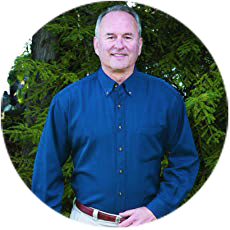
Scott Heiser
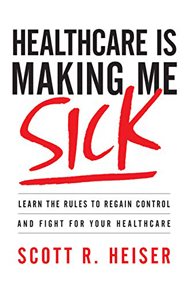
Scott R. Heiser has more than twenty years of experience in healthcare benefits and has managed over half a billion dollars in health benefits in the Midwest. He is the author of Healthcare Is Making Me Sick: Learn the Rules to Regain Control and Fight for Your Healthcare, a practical guide to understanding healthcare costs, negotiating rates, and making the most of insurance coverage.
📚 Books by Scott Heiser
Transcript
[0:00:14] RW: Hi, everyone. It’s Rae Williams, host of Author Hour, where I interview authors about their new books. Have you ever taken a backseat rule when it comes to your healthcare and insurance decisions? Maybe you’re mad as hell about checking boxes you don’t understand and you’re just watching your premiums go up. Sometimes it just feels like the industry is speaking a different language. One you’ll never understand. Our next guest is Scott Heiser and he’s the author of Healthcare is Making Me Sick. He’s going to talk to us about what he’s learned in his 20 plus years of experience in the industry and teach us about taking back control of our healthcare. Here’s our conversation with Scott.
[0:00:56] Scott Heiser: After doing employee benefit consulting for 26 years and talking to clients and solving their issues. After the advent of ACA in 2014, started experiencing dramatic cost increases, they were being filmed not only by the employers but by the employees as well. And had a realization that the employers, there was just great focus on them reducing cost, just causing a cause shift to the employees and a lot of the changes that would have to come were behavioral changes on the employee’s part. To change how they took care of themselves, how they purchased medical care, how they purchased health insurance. Then that employer really isn’t in the business to provide the necessary training education, motivation to promote someone’s health. They’re in the business to produce whatever they’re in business to produce and that’s their first and foremost goal. There’s a gap of actually being able to change costs with that dynamic. I’ll give you one example of that. I was with a large client and a national client, reviewing their pharmacy spend and they had their pharmaceutical vendor in the room at the same time. I come across a coupon program for a pharmacy that would reduce significantly some branded and some specially drug cost on coupons from the manufacturers. Now, these coupons and offers weren’t forever, they weren’t guaranteed forever and they could change periodically. Which made them potentially in the employers are a little bit unstable which could cause noise or feedback from the employee population. But the savings in one example for a blood thinner drug would take the cost from $432 to $10 a month. Pretty substantial. That idea didn’t go anywhere that day and it was obvious to me why the pharmacy vendor didn’t want to do it because they were paid on a percentage of the drugs and if you reduce those costs, they would get less. It struck me more is the employer was more focused on continuity, stability with the plan than saving money. As I thought about it, that made sense but then I thought about we didn’t affect any change. Then I thought about it again and said, but if I had access to that employee where I could reduce their cost from $432 to $10 a month, do I think they would be interested in that? Even if it could potentially change on them. My gut was, “yeah, I think they’d be very interested in that.” Therefore, I thought, I really need to get to the end user to impact the change that my clients have been asking for. That was a different paradigm for me. That’s coupled with the fact that I’m also retired from my company that I helped found and eventually sold and was looking to make a different impact and address a different audience and address an audience that is underserved and underutilized in this healthcare equation and that’s primarily you and me, the individuals.
[0:04:10] RW: All right. So, if you had to choose the uniques idea or story from your book that listeners can actually take action on, what would that be?
[0:04:20] Scott Heiser: Here’s the great thing about that. I can’t tell you just one, there are so many. What was so exciting about is I undertook this endeavor and started researching and I uncovered areas that I had not traditionally researched. I went to different reference points and discovered a whole new burgeoning industry out there for healthcare. You’ve got the major technology players, Apple, Google, Microsoft, wanting to get into one sixth of the economy which is what the healthcare spend, represents. And they’re bringing new and innovative thoughts to it. That was very exciting and as I learned that and I started learning more about people that are taking some stuff for it. We start to share those ideas with people and came up with just numerous examples of people making a difference. I’ve already talked about briefly the pharmaceutical area. There are programs out there where you can get coupons, you can get significant discounts off of your drug cost by making phone calls. So, it’s not overly burdensome to do so. There are people that are finding surgery cost in different parts of the country and have different quality outcomes. You literally just drive down the road or do different city, you can cut your surgery cost, enormously. We found examples where people start to understand what the cost of their health insurance is and when they look at what they’re actually spending, maybe a totally different plan than they had previously taken, which they thought for example, a high deductible plan would be overly burdensome and when they actually calculated the numbers, it was a better payout than a lower deductible plan that they have for years. And then in some simple situations, it was just helping people find with the transparency tools that are available now to confirm with the doctors they’re using or they’re considering using for major surgeries or major treatments are considered some of the best in the field that they’re practicing in. Giving them that comfort zone helped them process all over the trauma they were going through and become more comfortable with their direction and goals. So, that was the most encouraging part is there wasn’t one story, there were multiple stories and more importantly than that is each and every day, I run across new stores. This book will do as it will encourage people to know that they have choices, they can impact change in their life, they just need to do so. That’s what I intend to help them do.
[0:06:40] RW: All right, why is this important for people, why does it matter? What’s going to happen if we don’t do anything with this information and we’re not taking charge ourselves of making sure that our healthcare is streamlined and affordable?
[0:06:53] Scott Heiser: Well, the first thing is again, going back to the prior to ACA, the healthcare cost were going up astronomically as well. The access to care could have been limited to those with preexisting conditions and that was more than enough challenging situations for those with a preexisting condition. So, ACA did bring some advantages by getting rid of preexisting conditions, so everybody can get insurance. But what it didn’t do is it didn’t lower the cost at all, the cost gone up as fast, if not faster. And then, importantly enough, with those costs coming up, there were subsidies for those who couldn’t afford those and then there was totally free care for people who couldn’t afford, they were at the federal poverty line and could take Medicaid expansion. But for those people that didn’t get a subsidy, their cost, they bore the brunt of the cost increases. So those people are totally bewildered, angered and can’t afford they’re seeing their budget becoming substantially healthcare costs of just the insurance. They’re seeing their cost, once they get the insurance for the insurance to pay, have gone up substantially over 50% of the country is in a high deductible plan now. So, all of us, if we want to manage those cost in any way, shape or form is to become more informed about those. What are we buying, why are we buying it, is it the right thing that we should be buying? Are we taking care of ourselves so that we don’t have to use the programs? So, it’s incredibly important because you do not want to have financial burdens when you have a health situation, that is double the stress and what we know and is stress exacerbates illnesses. So, it’s very important about this is to become empowered to understand what’s going on the marketplace and how it impacts you, what transparency tools are available to give you more knowledge to be more comfortable, to understand who you are as a health profile. And how you can put this all together and have a better outcome on the health quality side at a lower cost.
[0:09:02] RW: All right. So, before we move on, I wanted to touch on some of these actual things that we can do and some of the things that need to be transparent and some of the resources that we do have. Specifically, as you speak to certain things in your book, you do have a section that talks about why we are where we are. The third party syndrome and so I know you touched a little bit on why healthcare is in the state it is in today. What is the third party syndrome in particular?
[0:09:27] Scott Heiser: Great question. What I try to do in the book before we get directly into the third party dilemma is I’m not intending, no intention of demonizing anybody. Everybody in the system has their own objectives. Their own mission, their own goals. What I highlight in the third party dilemma is that there are entities out there that are pursuing their goals and we’re not involved in them and let me explain. So, the third party dilemma is what I look at upon it as the insurance health insurance industry. The provider community hospitals and such and the government. They’re constantly negotiating with each other, determining what should be covered, what shouldn’t be covered, what should be paid, how much it should be paid for and all of that. And they’ll work out agreements and they spent an enormous amount of time and energy during ACA and negotiating all of that. All the different parties in the development of HCA. What was obviously excluded from that is you and I. And at the end of the day, the person that pays for health insurance, for surgeries, for lab tests, for doctor visits, for pharmaceutical drugs, is you and I. And we’re either paying for it in the premiums for health insurance, taxes for Medicaid and Medicare or the out of pocket costs in our insurance plans. So, we’re paying for it and we’re not at the table. Again, I’m not demonizing those people, they’re doing what their business goals say they should do. I’m saying, it’s time for us as individuals if we want to change that, we have to have our voice heard and we can’t have our voice heard until we understand more. So we can become confident that we can express ourselves and have an opinion and a position that is founded on fact and of what we want. In essence, what we have to become is consumers of healthcare. Like we’re consumers of just about everything else. I like to tell people to make to maybe draw a conclusion here is I think there are a number of us that spend more time and energy and research and picking out a pair of fashion gym shoes than we do on our own health. And I just wonder how perverse that is given the impact of our health, not only for just the quality of life on a day to day basis but on the financial impact on our life. How that can be.
[0:11:51] RW: So, that’s actually a perfect segue because the next question I was going to ask you is actually about the portion of your book where you talk about becoming a healthcare shopper. Becoming that smart consumer, consumer of healthcare. What are some of those things, especially as you mentioned that we do have options and we just need to research them and know what they are. How do you start to become healthcare shoppers?
[0:12:12] Scott Heiser: Great question and the old adage is we’re going to begin at the beginning. So, what you do is if you're buying anything else, if we’re buying a TV, if we’re buying an iPhone or a phone, what you do is you start back and say, “what do I need? If it’s a phone, what do I need to communicate? Is the communicating just verbally, do I need to send emails, text, chat book, Facebook, what level of communication do I need to stream movies in, do I leave – what do I need?” Second is you say, based on that, “what’s out there?” What are the various options available to you out there? Third is you say, what it’s cost, okay? That will stop at usually the phone analogy and then we’ll translate that into the health arena. You’re going to do the first thing, you’re going to create a health profile of who you are. How can you buy insurance or anything else if you don’t know what health situations you may or may not have? You could either ensure or under insure. What you’re going to do is you’re going to do a health profile and that’s going to include a health risk assessment or working with your doctor to understand your current health situation, along with your family history. Thing is that you may have. You could go so far to get genetic testing, I’m not suggesting that, I think that would be overkill at this point, but you know, that’s probably down in the future that you would actually know what your DNA says that you may or may not get. Once you have that and you want to know, what are those conditions are just found I may have or I already have or I may get cost. We’ll walk you through what the retail and some of the discounted cost are in the market place for that. Once you know that then you got to say, “what’s my financial situation, can I afford those costs?” This is where you start talking and understanding what risk is. It’s the risk, and a managing risk. I know I may have a certain procedure at some point in my life and that procedure might cost $70,000 that CNE replacement. If fit’s $70,000, do I have $70,000 to spend? I can self-insure that. Or do I want to transfer that risk meaning to generally as an insurance? Or do I want to avoid it? Those are basically the three ways to do that. When you’re empowered with what you know are going to be and you know what the costs are, you can now make a better decision of how you want to pay for it. For 99% of us, that’s going to be insurance. So, when you go into the insurance market and I do have to apologize to everyone, when they go through that section of the book, it is dreadful to go through all of the acronyms and names and insurance to put on health plans and whether it’s to purposely make it difficult or just is. That’s what it is and but unfortunately, you need to learn enough of it so you pick the right programs.I’ll get you through that. But once you go in, once you know what you’re going to have and what your financial needs are, you can pick a more appropriate plan and by doing that, I’ve already had a number of people pick different plans than they would have picked by understanding who they are. Again, basing everything off the whole profile, you pick one trench you have now you get to pick a doctor. Well, maybe we should pick a doctor based on who we are instead of just picking the doctor down the street or a neighbor or a friend. So you now have ammunition on your side of who you are and you start looking for doctors that can treat or specialize in your areas and that’s how one way you pick him along with references and referrals from neighbors and employers, your insurance companies and so on and so forth. And then once you pick them, you partner with them. You are going to have to learn how to communicate with them and communicate effectively with them, so that they can do their job to the best of their ability. So this isn’t about the whole system coming down on you and us and we’re aggrieved and it is our responsibility too to be informed of who we are and to communicate effectively to our providers so that they can make very good decisions on our behalf. If we went in to a car mechanic and just drop the car off and said, “it’s knocking. I am not sure where, can you fix it? I will be back in four hours.” They are probably going to run every diagnostic test on that car because they have no idea where to start. You are going to spend more money and you may not get the answer to fix what you did. So the more you explained to the car mechanic exactly where it is, when it clinks, why it clinks, the more, better chance you have of them quickly fixing it for a lower cost and a better outcome. Physicians are no different. So we talk about how to pick them and how to talk to them and communicate effectively so you can get a better outcome. And then finally, if you are now again have the ammunition of the knowledge of who you are, we are going to talk about the transparency tools out there. One of the benefits of ACA is the opening up of what things cost medical. When I say medical costs and what the quality of those services are on a comparative basis to other physicians. There are systems out there, they are not perfect, but they are growing that show that. Well now you can sit and tell the physician, “I’ve picked you because you do these certain things. We have a relationship in communicating it effectively with you and I know what these things cost, so let’s talk about that and let’s just have an open dialogue like we would go back to the gym shoes with dialogue about the gym shoes. What do they cost?” I may pick Nike or I may pick Adidas based on the costs. So we are going to do that, now you are negotiating and we’ll do that. Pharmacy will do that for hospitals and we’ll do it for doctors and then after that, we are going to revisit risk management and because one of the options under risk management was avoidance and everybody is like, “well, I can’t avoid getting sick.” And I challenge you to say, “yeah, you can maybe avoid all of this to don’t get sick.” Because roughly 50% of all the illnesses that we have, chronic illnesses out there are lifestyle based. Well, lifestyle based means you and I can do something about that. We are not talking about genetic issues that you can’t do anything about. We are talking about lifestyle. That is within your purview to change. So, we are going to put it back on you again and say maybe look about yourself and say what things can I change that will reduce my health liability and improve the quality of my life? And then finally we are going to look at it and say, “you are going to need to think about this.” Unfortunately health care, you are going to use it in your life, even if you are as healthy as you can be and how much does it cost and should you be thinking about saving money specially, in retirement for health care cost and that does not generally go on in most financial analysis that people go through. So we are going to take people through the full continuum. From who you are to how you should be saving and everything in the middle, how you take care of yourself, how you communicate with the system, how you can negotiate, where you can get the information, how you can make an impact on your life and the point of the book isn’t that we are going to cut costs in half or miraculously make them go away or make it through that you never get sick, but that if you choose to get involved, you can impact change for yourself.
[0:19:01] RW: All right awesome and actually you answered pretty much my next question, which was going to be about the chapter in your book that talks about avoiding the health care costs all together, but we had the perfect segue there talking about that. So I would love you to share a few of your success stories, a few of your favorite success stories and just how some of these things applied in real life work out for real people.
[0:19:24] Scott Heiser: Okay and what is so interesting about this is a number of the things that really helped people in their minds where pretty basic steps. And I see that as a sad statement on where we are on helping the average consumer and health care or how far this journey they’re going to have to make. I had an example of a husband and wife team that unfortunately both got cancer within three months of each other and were devastated. And what we know statistically is that when you are confronted with a major healthcare issue, your cognitive reasoning diminishes greatly somewhere up to 70%. It is just very challenging for you to comprehend all of that and do all the things I just answered previously about understanding who you are, it is very, very challenging. So in this example, a neighbor knew I was writing this book and connected me with this couple. And ne of their major concerns was, were they seeing the right doctors? Were they getting the best they could give within their world and their insurance that they had? And using some of the comparison tools and transparency tools confirmed yes they were, one of them they were and here’s two or three others that they could consult for second opinions and then also, simply connected them to services they had and their insurance policies that they didn’t know they had, concierge services. That then had walked them to the remaining year and a half through their journey through cancer, which gave them comfort, gave them assistance or an advocate going through their journey, cancer journey, which allowed them not to think about it as much and focus on their health and had the peace of mind that they are going to best doctors. The end story, which I had nothing to do with was that they were gratefully both cured of cancer and on road to recovery. But the amount of thanks they give me is so unwarranted based on what the doctors did for them that it just told me that there was time to write a book like this, just to help people so that they can have better outcomes and hopefully lower cost and have control again. So that was one. Another one was an associate, friend of mine that when we introduced a health savings account, which had a high deductible some years ago in our business, she had debilitating arthritis and a couple of other issues. That she was a high health care spender and having a high deductible plan was very stressful for her except she became a true consumer of healthcare and she is a shining star in the book and an inspiration to write the book because what she did is she did the math because the whole point of all of this is if you can keep emotion out of it and do the math and do the research, you can make better decisions and that is true in just about any decision you have to make in life. But she removed the emotion from it, did the math and figured out that actually the high deductible plan, she was going to actually save money and the book will tell you how that is, but she actually saved money versus the plan she was on previously. The difference was she had a cash flow disadvantage because she had a high deductible. So she had to spend upfront money before the plan went through 100% but then she didn’t just stop there, She went to her doctors and told her about her financial situation and could they help her? They put her on a payment plan. So, now she could afford the monthly payments to pay off the deductible in essence. Then she further went on to look at her lifestyle and realized, “If I changed my eating habits and exercise habits, I may have better outcomes,” which she did and which reduced some of her medicines she was required to take because she improved. And then finally, I mean she became the biggest star. And so she got a little giddy and she went back to the doctor’s office and gave him the payment plan and she had saved enough money later in the year to say, “what happens if I pay you a little bit early and negotiate a further discount of the money she owed them.” So, she took total control of herself and made the system work better for her, work for her physicians at the same and was motivated enough because she was involved with a lot of the money situations now to change her lifestyle. And so that is – I will sidebar here for a second, what I find this encouraging in the marketplace now is five years ago, this book will fall on deaf ears five to seven years ago, but now that people are paying so much upfront dollars on it and there is transparency available to look at the costs and you have social media. The opportunity to take some of these issues and go viral is that the aperture, the receptivity of the individual to grasp this and to do something about it is like no other time. And I think that if we take that approach and people get motivated, they cannot only have those personal experiences where they have whether they are small wins or big wins to them and we start to compound those that we have a chance of turning the page of this increasing health care cost, but that’s because we’ll become consumers of health care and not passive participants and there is a section in the book that goes with that as well. That really explains why historically we’ve become passive participants instead of engaged consumers of health care.
[0:25:18] RW: All right, so if you have to issue a challenge to people that are going to read your book, to listeners right now, what would that challenge be that they can take control of their futures as it regards to their health care?
[0:25:31] Scott Heiser: Basically get off the couch. I mean decide to do something about it. It’s not easy. Like anything else, it will take work, effort, it will be new, it will be changed. So you will be uncomfortable doing it but again, if you do it – well, let me say it this way, if you don’t do it what’s your outcome going to be? It is going to be exactly like it is today because you don’t see any movement coming out DC. They have been stalemated on this for five years. So, you are not going to get a ton of help there. But if you get off the couch and start addressing this, you can make changes and I will give you some inspiration. I’ve told you a couple already of examples of individuals that made changes in their lives. There is one, the EpiPen example. EpiPen was a serum to treat severe allergic reactions. It had a delivery system, both the serum and the delivery system were from the mid-1970s cost 60 to 70 bucks. The pharmaceutical company bought it, it was the only serum by then out there that was being in the marketplace. Raised the price upwards from 60 to 70 to $600, required you to buy two and told you the serum was ineffective after one year, okay? By 2014, people were paying higher deductibles with these. Families went from paying 60-70 dollars a year for one pen to paying $1,200 a year for these pens. They couldn’t afford that. They took to social media. That highlighted the issues, the press got a hold of it. When the press got a hold of it, congress got a hold of it. Congress brought it the company. They reduced the cost from 600 to $300. Even more so though, competitive products were fast track. So the market responded to consumers who responded and said, “we don’t like this, there is no alternative.” And the market responded. Competitors came out and the government health fast track those in and now costs are somewhere back to where they originally were and there are options in the marketplace. So it is proof positive that you do something, you take some actions this can change. And further support of that is to look and most people are aware of who Amazon, Berkshire Hathaway and Chase Banks are. Jeff Bezos, Warren Buffet and Jamie Dimon, the three of them of course are all quite wealthy and have wherewithal to do things but they have said this, “enough is enough. The healthcare is adversely impacting the competitiveness of the US economy.” And they are forming their own health delivery and health financing system. So, there is encouragement in the marketplace that not only you and I can make a difference, but that other people are saying they are and powerful physicians are saying they are going to make a difference and we are going to change things. But their are programs who will rely on us making changes ourselves too. So if we again, get off that couch and either read my book or get hired by the three companies that I just talked about or don’t do any of that. Just start practicing the techniques you do for buying a phone, fixing your car, buying a TV and applying them to your health care situations, you are going to find different results and those results will be the first steps you need to move down the road to potentially solving this issue.
[0:29:17] RW: All right and, so how can people contact you if they want to learn more or if they have just any kind of questions or any kind of things that they want to see how they can help and speak out about?
[0:29:28] Scott Heiser: Oh yeah that would be great. I can be contacted at uncoveredhc.com.
[0:29:34] RW: All right, awesome. Thank you so much Scott.
[0:29:37] Scott Heiser: Well, thank you. I have really enjoyed it today.
[0:29:39] RW: Okay, so this is really important you guys, I actually took some of Scott’s advice right after this conversation and spoke with my doctor and found some great alternatives to the EpiPen that I was just doing without. So there’s no limit to what you could do when you take control of your health care. So do yourself a favor and grab this book. Thank you for listening and join me next time on Author Hour.
Want to Write Your Own Book?
Scribe has helped over 2,000 authors turn their expertise into published books.
Schedule a Free Consult