Gunjan Bhardwaj: Inside the Cockpit
Read the full transcript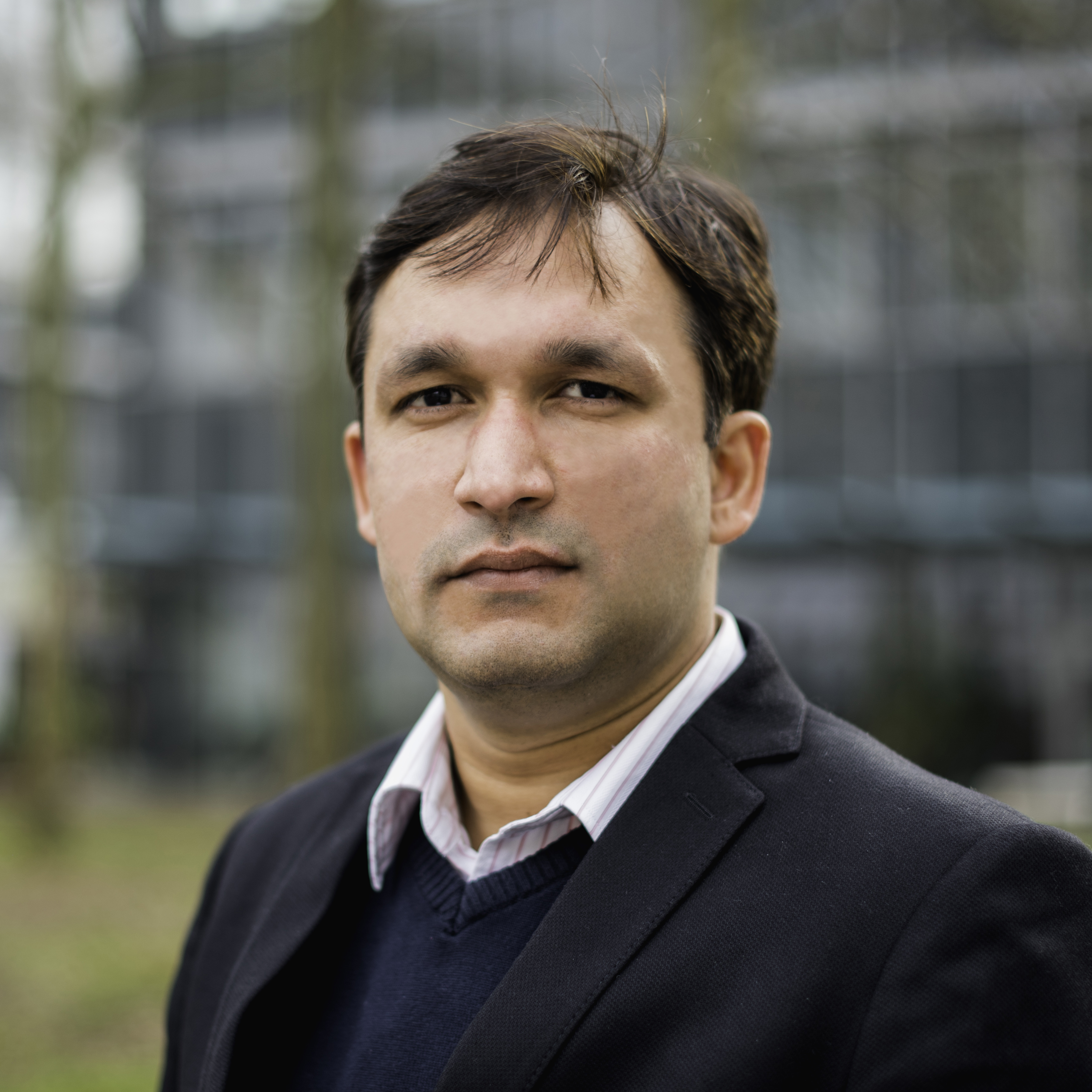
Gunjan Bhardwaj
Gunjan Bhardwaj is an entrepreneur and the founder and CEO of Innoplexus and Cancercoin. He holds a doctorate from the European Business School in Germany. In his book Inside the Cockpit, he makes the case that artificial intelligence and blockchain can bring lifesaving drugs to market faster and more affordably, arguing that much of the most valuable data for drug discovery sits locked in silos and unpublished research.
📚 Books by Gunjan Bhardwaj
Transcript
[0:00:36] CH: What’s up everybody, you are listening to Author Hour. The podcast where we interview authors about their new books. Today’s episode is with Dr. Gunjan Bhardwaj. He is the author of Inside the Cockpit. So, this episode is about how the modern system of drug discovery and development is broken and how it can potentially be fixed and made exponentially better with AI and block chain. Gunjan is the CEO of Innoplex and Cancer Coin and he and his team are working to bring lifesaving drugs to market faster and cheaper. His hope is that the innovative combination of block chain technology and AI will change the incentives for all the players in the drug development ecosystem. Gunjan is also the author or coauthor of 23 patent applications and he currently serves on multiple advisory boards, including the Center for Human and Machine Intelligence and the Forbes Technology Council. He also lives in Germany. He actually did this recording in a Swiss restaurant in the outskirts of Basel. It’s a great conversation. If you care about the future of healthcare, this is the episode for you. And now, here is our conversation with Gunjan Bhardwaj.
[0:02:10] Gunjan Bhardwaj: I had a non-eventful childhood, I went to the best schools, I did good grades, I went to the best university in India. I got a scholarship, came to Germany, finished fast, a senior part from picked me and I got a chance to work in that consulting firm. So, everything went okay, fantastic cool parents, everything goes well. My only family in the strange country I came to where everybody said, I would need five times the time I would need in the US or UK to get to somewhere because it’s an extremely conservative country, Germany. My only family, my first board and my sponsor who would work like crazy, typically our update calls would happen at two in the morning when he would be driving back from office to his home and ask me, “hey G, how was your day?” He called me one day and told me that he was diagnosed with cancer. And that was the moment that kind of shook me the first time in my life. Subsequent that I spent a number of days working out of the hospital where he was being treated. And seeing his family rituals, my only family at that point in time in that country, looking hopeless, sometimes helpless, having questions on their faces. And when, the friend told me that the head oncologist told him that there was this specific therapy. I said, well, “why do you believe all what he says? Because he is the head oncologist.” And I said, “well, he’s not Albert Einstein, he just studied medicine.” “What are the alternatives to what he says? Where can you get access to those alternatives and who are the real experts for this specific kind of disease?” Of course, when I spoke to this oncologist, he said, “well son, we are not complete idiots, we have tumor board in this country for the specifications to be discussed with other experts.” I said, “experts need to be qualified, presented.” Do all of these experts have experienced and this specific kind of tumor? Probably not. So, I went to the German Cancer Society, talked to my fantastic mentors in big Pharma and I found the questions that I had which all of you would have in such a situation were profound questions because not just layman like I or friends and family of somebody who is facing the grueling rounds of chemo, would have those questions but also medical practitioners because healthcare is all about data. Data which is exploding. Some studies say, doubling every 73 days. There are mountains of data, there is no way to sift through all of these data to make sense of it, to answer. Some of the questions that I had in my mind, when this good friend of mine was facing this question. Thankfully, the friend of mine is [inaudible 00:05:28] is doing amazing but this question remains. And this question has confronted me a couple of times again after this experience. And I’m sure this has confronted many of the audience that is listening to this podcast.
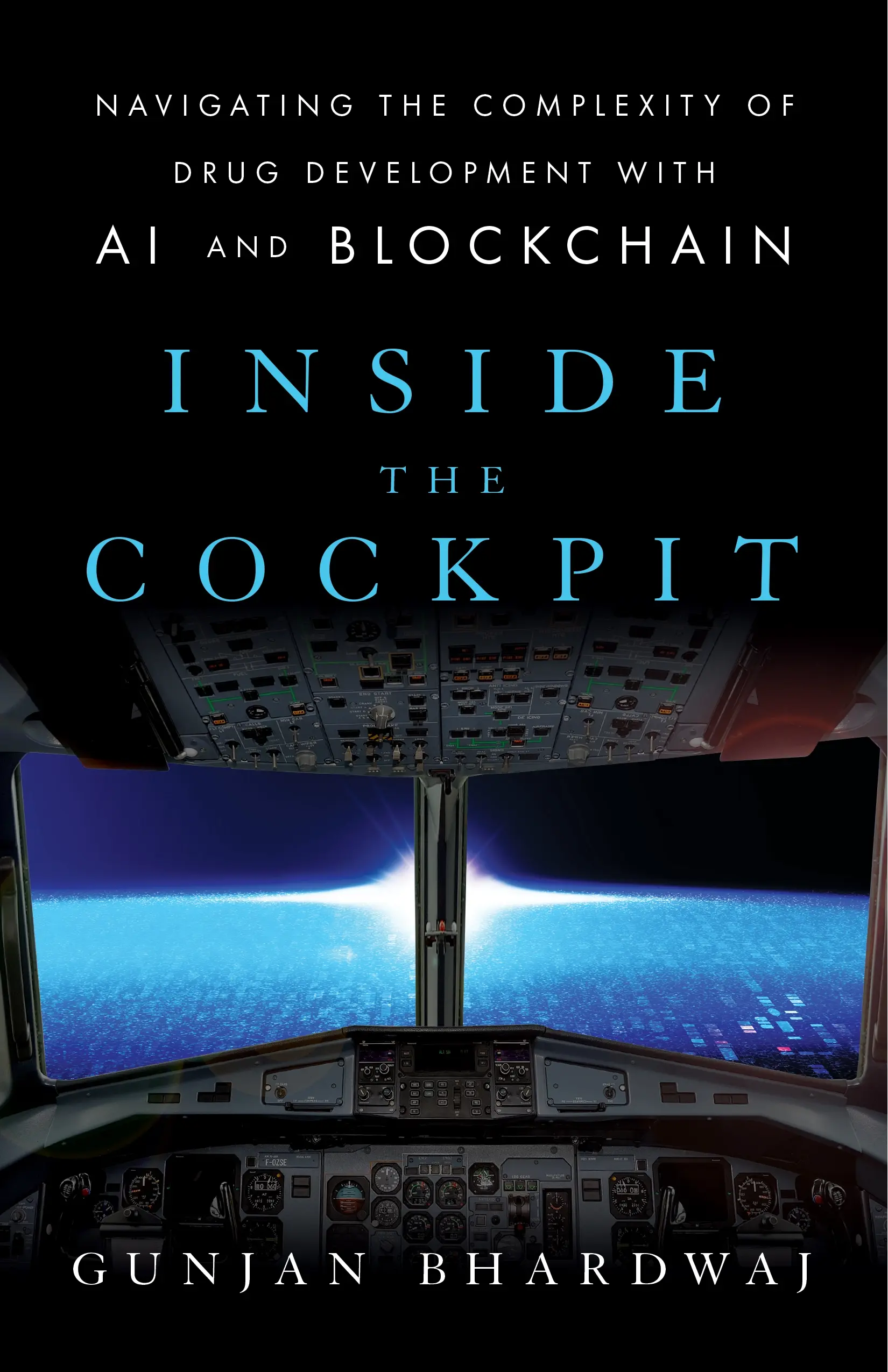
[0:05:45] CH: Wow, I’m glad your friend is doing okay, first of all. And second, that leads us into your book. Inside the Cockpit: Navigating the Complexity of Drug Development with AI and Blockchain. So, if you had to pick one, what would you say is the core idea in this book that you want listeners and readers to take away?
[0:06:12] Gunjan Bhardwaj: To do any analytics or to answer any questions through machines, the data needs to be structured. Machines can work with structured data and data which is structured in a context. Unless we provide the context to a machine and structure the data that needs to be analyzed, machines cannot answer questions. For AI to be successful, for creating better healthcare outcomes, to really fix the broken drug discovery and development system, we need to structure the published universe, we need to make it searchable in a specific context and we need to mobilize data stuck in silos in the unpublished universe. Unless we do this, we would remain in the Middle Ages in drug discovery.
[0:07:11] CH: How bad are things now? I mean, from an outsider’s perspective, I have no industry knowledge in this but from an outsider’s perspective, it looks like “ hey, they seem to be doing a mediocre job, I would guess.” How bad are things really?
[0:07:30] Gunjan Bhardwaj: It’s bad because the individuals that are in the system, be it in the big Pharma innovative drug discovery model or individuals in the science, they all mean well, they all want to do something good, that’s why probably they choose this careers. At least the majority of them. But it’s bad because the system in itself, the design of the system, the incentives, now, they broken in such a way that it makes it impossible to really transform drug discovery in a way that would get better healthcare outcomes as are desired for patients awaiting these therapies. And if you look at some of the things happening. More than 65%, 60% of all drugs that are approved by USFD has been fast tracked. People said, “ Europeans were too fast earlier on USFD was too slow.” Now it’s the other way around. Therapies which are not really conclusive in studies and evidence, also gets passed because there are so much of public pressure. Now, public say, “ we need all the drugs and we need them very cost effective and hence big Pharma is crooked because they just care about making money.” Which is not the case because if you want to get a good drug out in the present system, you spend from 1.5 to four billion dollars to get one block to give you more than one billion dollars revenues per year. Which you need because if you want to be commercially viable, you also need to pay for your RND investments. But nobody sees that, of course, the patient waiting for specific peanut tumor in his brain, looks at therapy and of course would complain if the therapy cost upwards of $200,000 a year. People say, “well, the science is doing a great job but it’s the big Pharma’s in the industry which is not doing a fantastic job.” I said, the incentives are, they need to come out with the successful blockbuster because they need to have a very commercially viable model, to fund their RND investments. And you know, capital markets are cruel. If today an AI entrepreneur, tech entrepreneur would invest 200 million dollars in finding a new way of looking at specific cancer therapy and he fails, he would be applauded, “ wow, great try, fantastic guy, visionary.” But if a big Pharma CEO would invest 200 million dollars in a project and would fail miserably, the capital market would punish them. You know, markets have a different perspective to traditional industries and it kind of frustrates the leadership of this industry can take. Look at science. Do you think scientists per se in the system really care about patients? No. They don’t give a damn. What they care about is publishing in highly ranked journals because that’s what secures their tenures. Do scientists share their failures? Or successes, they do not even share information about the failures. All journals bask in the glory of successes and that’s what they publish; successful experiments and reverse thereof. Nobody publishes very few failures. The failure of one scientist could be extremely valuable for another or extremely valuable for the industry which should not ideally commit themselves to the same experiments. Then when we talk about knowledge sharing, all peer viewed literature, journals require 18 to 24 months, there is a blind spot in science part of that time. What people share afterwards are these published papers, whereas the currency for AI, for machines to analyze is this experimental data. Even journals sometimes not get access to this data. So, if you look at all these aspects that shows, it’s not just the industry, it’s also science which is not designed in a way, that’s where it quite best therapies in the fastest possible manner for patients that are waiting for that. And look at the incentive, why should a scientist give away all of his or her data? Is he incentivized to do that? What are the incentive structures, publish more in good journals and you get a tenure, why? Is the industry incentivized to do that, yeah? From an orphan point of view, yes, regulatory agencies are doing a lot but is it really optimal? Probably no. So, both the design and the incentives for the industry and science are not really aligned to create a drug discovery and development system that really looks at the patient even though there is a lot of noise about it.
[0:12:55] CH: It seems like with all the limitations of humans and art and incentives and everything, it seems like artificial intelligence could come in and make things significantly better or at least get around those limitations that we currently have and I’m sure, AI has many limitations in and of itself but before we talk about the benefits, the pros and the cons of AI, can you paint the picture of what you believe science and drug development could look like using AI and blockchain? How much better could things get? Could it be two times better, 10 times better? A hundred times better?
[0:13:37] Gunjan Bhardwaj: It would be multitudes of improvement, not as two, three, four, 10 times. But hundreds of times better. Imagine – I mean, we talked about this when we talked about science. You’re doing an experiment, how do you set up an experiment? You look at the literature, you look at the scientific gaps based on those gaps, you design an experiment, you collect data and then you try to establish the science further, you know, covering those gaps. And in doing so, you would have maybe a couple of hypothesis or somewhat more. Imagine if you were to have access to all the evidence that is out there and you are a machine, which could look at all the permutations and combinations of hypothesis that are possible and were at the same time look at proprietary data from the unpublished universe. That you mobilized securely via blockchain being an immutable resistor because scientists could broadcast their product claim on blockchain and test those hypotheses for plausibility to say what should work best. You would do away to a lot of innovation redundancy, which is out there in the system. It will speed up a lot of the failures and this false sense of serendipity that we have that I talk about in my book in science and eventually would have patients get access to therapies faster, which are also very cost effective.
[0:15:14] CH: And for the patient, how much better would the experience of being prescribed taking drugs and the killing or improving from their condition, how much different would that experience be if we have AI and blockchain working in tandem in the background and helping scientists making these discoveries?
[0:15:38] Gunjan Bhardwaj: See, we are all talking about precision medicine and if you look at reality, of course many people are trying with their heart and mind in the right place, but there are simple things that are broken. If somebody has an infarction of whatever they will need, a blood thinning agent, you get prescribed Warfarin. You know that for specifications who have a specific mutation, Warfarin doesn’t even metabolize in the human body, for those specific patients. That means those patients should not be given a Warfarin. The entire medical system is based on spray and pray approach, whatever works for 80% of the patients should work for 100% and it doesn’t work. Everybody and there are many studies about it, misdiagnosis is the biggest driver for cost and so on and so forth. Imagine if you would have all of these data structured, searchable for elements at the fingertips of a physician making those decisions. Eventually, patients will get the right therapy and you could look at different set up, pretty curious, you know you could look at it of course oncology everybody talks about it. The lion’s share of all investment goes into oncology, which is palliative. So, if you go wrong first line, you are screwed. So proper diagnosis is so critical in oncology. But it is also true for neurodegenerative diseases based on what therapy would exactly work for you if you would get the right recommendation in the first step that decides all your quality of life would be so it is absolutely critical and I say that at many places in the book. It’s criminal for us to give a lift service to precision medicine and saying, “you know AI is everything and blah-blah.” What is AI? AI computational power, its algorithms, its people but eventually, the most important element for AI is data. Unless you structure this data and make it available in a context and mobilize all of these data that is strapped in silos it’s not going to work. And I feel extremely sad when some of these entrepreneurs complain. Well, the models outside Europe of both creating large data pools is the way to go because that is how you can train AI models. Why should scientists give up their data? Why should patients give up their data to a center that bundles this data into a company which sells this data for billions of dollars to a big pharma? This is ridiculous. Why shouldn’t the owners of the data have the right to decide what’s done with this data? And the right to have the proper incentive to share this data and being in Europe, I would say that’s the European way and that is the AI and blockchain way and that’s exactly how future should be built, especially for life science because you don’t want your behavioral aspects, your genetic information, your medical history to be shared with everyone. You can’t give a blank check to a company who just gets access to this data large treatment center in your country. You want complete control over it and blockchain is this fantastic disruptive technology that enables exactly that. Combine this with AI, you can train models from data coming in from these different silos and usher healthcare into what I call the third wave of AI.
[0:19:27] CH: Talk to me about that third wave of AI where blockchain and AI are working together in drug discovery. What is that really start to look like? Paint a vision of the future for us.
[0:19:38] Gunjan Bhardwaj: So, imagine everything that is published out there is crawled, extracted, structured into a large searchable platform, but then you can search for everything for relevance. So, it is kind of a Google Plus for health care. I say Google Plus because Google doesn’t necessarily structure all of these data and unless you structure you can’t do an analysis. Imagine you want to compare the prizes of all iPhones in all US cities. You can’t just get all of this data and you’ll have to crawl all of this information and so on. So, all of the published universe, which is exploding is available in real time, in a structured format at your fingertips to do any kind of analysis with this information. At the same time, you have all of these data silos, be it medical records, experiments, setting in university, clinical data sitting with some of the CRO’s. All of this is mobilized and of course, data that patient owns and create, all of this data is mobilized and that completely security incentivizing fairly and appropriately. All of these data creators and owners and all of these data is flowing into one large domain specific AI, that speaks and understands the language of health care and life science. And that AI process this, analyzes and tries to find answers to a lot of questions, some of them I refer to in the beginning of this podcast. That’s the future we are envisaging. So a virtual life science paradigm, if investors are going to invest in a life science company and a biotech company they will come to this platform. If Pharma, a biotech or an emerging bio Pharma wants to invest in an indication, wants to know what novel targets or novel biomarkers, they will have to come to this. If patients want answers to questions, they’ll have to come to such a platform. And next, big Pharma will not be built in a research lab. It will be built in such a platform.
[0:22:01] CH: You know at the beginning of this podcast, you said if things don’t change to become what you just described we’ll stay stuck in the Middle Ages. And it is funny, I had a bit of resistance of the phrase, the Middle Ages, because I think of scientists and the drug industry as I just associate it with “hey, they’re at the cutting edge.” There is so much money in it they are doing hard research but as you just described, the way things currently are it really is the Middle Ages.
[0:22:32] Gunjan Bhardwaj: It indeed is. I mean what transformational, what architectural innovation have we done? I always feel in healthcare and in life science, we all solving point problems. So somebody will have a great idea, there is a real indication that do a small research graft, buy all the data that’s available and try to solve that problem. Somebody will have an idea about diagnostics, he would try to solve a problem. But if he wants to solve this problem at scale, we need to solve the data problem because if you solve that problem then many problems can be solved at once and some of the gurus in AI call it AI at scale. AI at scale is not a generic AI. I believe it is completely non-sensible to think of an AI predicting prices of baby diapers and the same AI being leveraged to find the next kinds of drugs. All of us from various domains know very well people in those domains do not speak English, French or German. They speak medicine French, medicine German, you know journalists have their own lingo, bureaucrats have their own lingo. We all have a domain specific intelligence that helps provide a context and unless we create that we can never get scale in solving the healthcare challenge, which is in front of all of us. And you look at any country, if you look at the biggest challenges everybody says it’s healthcare. One of the top three challenges. If you look at the solutions they are looking at, they are all point problems that are being tried to solve and this approach can provide a scale to solve many of those problems. So, we indeed are in Middle Ages, if Middle Ages stand for not being transformative, not having the courage to do the right thing at the scale that will really truly benefit mankind.
[0:24:45] CH: Let’s say you only have 100 copies of your book, Inside the Cockpit, who do you most want to read your book and why?
[0:24:55] Gunjan Bhardwaj: Everybody who truly believes healthcare needs to be transformed. Why? Because it’s the purpose and the idea that conquers the world, that changes minds. It started with Mahatma Gandhi being thrown out of a train, which created an independent India. So, if I would look at it from an industry perspective, maybe I would say the top guys in medicine, all the CEO of big Pharma, but I would look at people who believe it is their purpose to transform healthcare, no matter what they do.
[0:25:31] CH: Well, I absolutely hope your book is read by them, gets reached by them and ripples out into their organizations and ultimately, into the customers that they serve. So, I have a few more questions for you. The first one is what is the best way for our listeners to either follow your journey and the work that you are doing or to potentially connect with you?
[0:25:57] Gunjan Bhardwaj: They should read my book and reach out to me at gunjan@innoplexus.com
[0:26:03] CH: gunjan@innoplexus.com. And finally, give our listeners a challenge. What is the one thing that they can do this week related to your book that will have a positive impact on their life?
[0:26:20] Gunjan Bhardwaj: Look at anybody in their friends and family that suffered a near death experience subject to a specific disease and think what would change in that context if what I described in my book were to become a reality?
[0:26:39] CH: Excellent. The book is Inside the Cockpit. Gunjan, thank you so much for being on the show.
[0:26:46] Gunjan Bhardwaj: Thank you so much for this opportunity.
[0:26:50] CH: Thanks so much again to Gunjan for being on the show. You can buy his book, Inside the Cockpit, on amazon.com. Be sure to check out authorhour.co for show notes and a transcript of this episode and take a second to leave us a review on iTunes. It means a lot.
Want to Write Your Own Book?
Scribe has helped over 2,000 authors turn their expertise into published books.
Schedule a Free Consult