Brian Burkhart: Stand for Something
Read the full transcript
Brian Burkhart
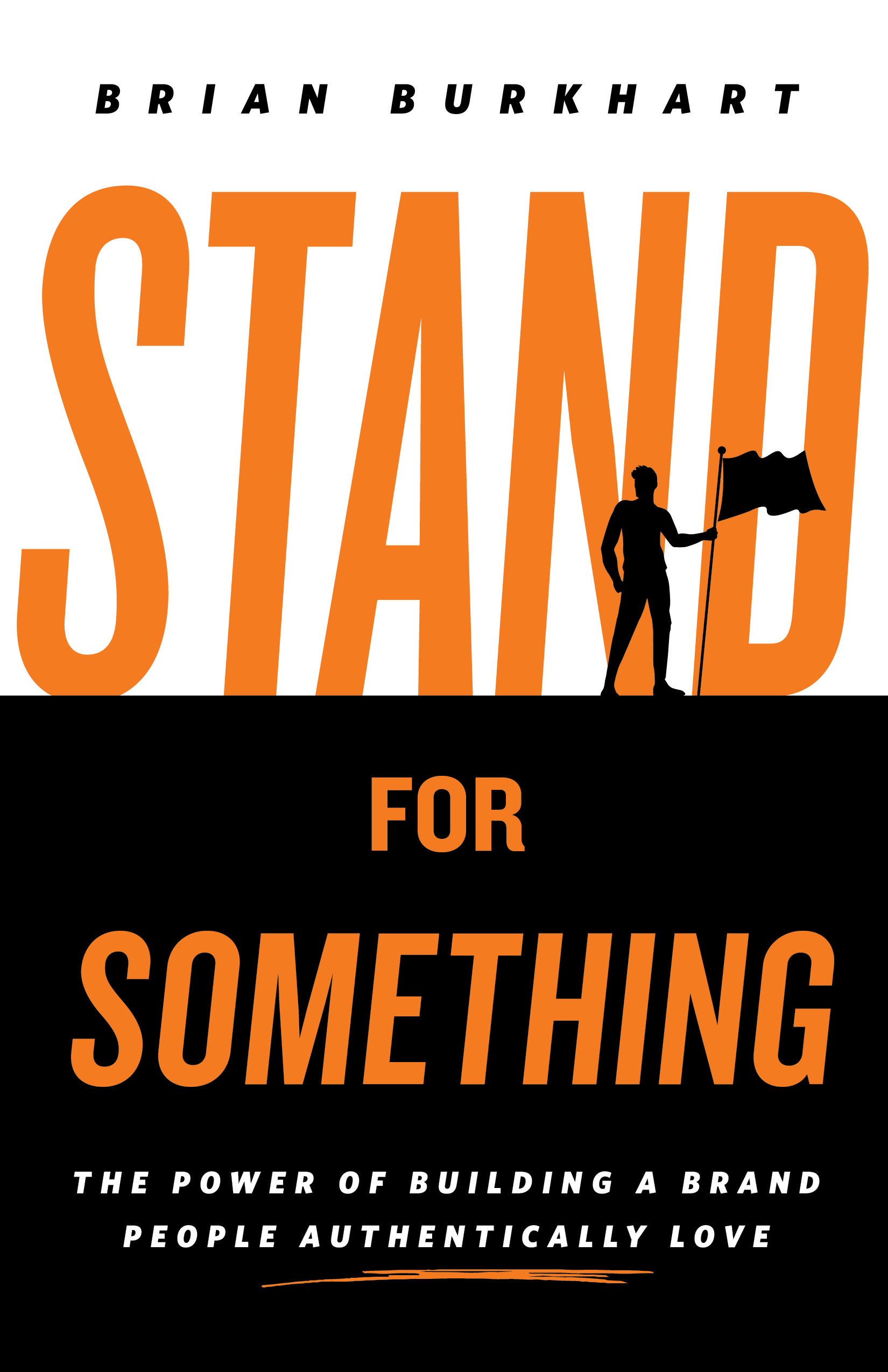
Brian Burkhart is the founder of SquarePlanet, a presentations and messaging company named to the Inc. 5000 in 2018, and he serves as a founder, CEO, or partner across several businesses. A sought-after keynote speaker, he has worked with leading brands including Google, Red Bull, McDonald's, United Airlines, and Citibank, and is an adjunct lecturer at Northwestern University's Farley Center for Entrepreneurship and Innovation. He is the author of Stand for Something: The Power of Building a Brand People Authentically Love.
📚 Books by Brian Burkhart
Transcript
[0:00:19] CH: What’s up everybody, you’re listening to Author Hour, the podcast where we interview authors about their new books. Today’s episode is with Brian Burkhart. He’s the author of Stand for Something. We’re all guilty at this. When someone ask for what we do for a living, we tell them about the services we provide or the products that we make. We never tell them what we believe. Unfortunately, business works the same way and the result is forgettable brands with zero identity. We just assume this approach is right because everyone else does it, but Brian believes that we’re wrong. Way wrong. In this episode, Brian is going to invite you to break free from the herd and reconnect to your core beliefs that make you stand out. By the end of this episode, you’ll see how everything is better in your life and in your business when you deeply understand what you stand for. Now, here’s our conversation with Brian Burkhart
[0:01:30] Brian Burkhart: The work that I do on a regular basis is to help our clients, the people that pay us to elevate their most important messages in a way that audiences will both remember and act on. And if you think about it, Rae, we have all set through far too many business presentations that is sort of in one ear and out the other. My job is to make that not happen. The more and more that I dove into this and the more science that emerge, the more time I spent in it, the more I realized that most important component to that isn’t going to be some of the things that people would immediately think. People think things like, “I have to tell a cool story and I have to have great visuals and maybe I could tell a joke.” Or any of those more tried and true methodologies and none of them are necessarily wrong or incomplete but what they are lacking more than anything else, is a deep fundamental base that grounds and connects people and what that really gets expressed in is a core belief. My book, Stand for Something, was really a completion of a lot of work around helping people organizations and individuals, profoundly change the way they connect and command audiences. And so, really, more than anything else, this is the output of years of work, a lot of trial and error and finally, once we crack the code, it became so obvious to me. In many ways, arresting because it seems like such a rare thing that I had almost no choice. The truth of the matter is if I was able to line up or you were able to line up a thousand people or even a hundred people and again, individuals or organizations so when I say people are kind of a combination of words there. If we said okay, “tell us what you stand for, what do you believe?” If you ask a thousand people, you’ll find that about 990 of them kind of go – they just don’t know. This book was a necessity as much as anything.
[0:03:25] RW: Cool, what would you say is the kind of core message, like the crux of the book that people can actually take action on? What is that action point in the book that you offer to people?
[0:03:38] Brian Burkhart: That’s a great question and I would tell you, it’s really about making peace with the notion that working with everyone is a ridiculous notion. The action step here is to get super comfortable with the idea that by shouting your core belief, you’re going to eliminate a good portion of the marketplace. You’re going to make a whole bunch of people say, “I’m not interested in working with you.” And that’s awesome, that’s what you want. You want to find those that believe exactly the things that you believe. An example that I just love it so topical and timely and it really seems to strike a cord with people is Nike. The shoe company. First and foremost, they sell a commodity, you can get shoes from a lot of different manufacturers and so price is something that’s easily negated. We don’t really care, you want it cheaper, you want a more expensive pair, no problem. Nike sells something different, they sell a core belief. And so when they promote things, like women being equal to men or people like Colin Kaepernick, the former NFL player who kneeled against a bunch of different things, there were a lot of people who said, “I will never ever buy Nike again.” They ripped logos of, they burned products, they said, not for me. Conversely, there was a great many people that went out and bought more Nike products. They actually saw a bump in the stock prices through all the craziness. And that’s the whole point, that’s the action step, that’s the crux that you want to find that camp of people that understand that get it and deeply believe the same things. The only way that that can happen is by first understanding, codifying your core beliefs and then screaming them from the rooftops.
[0:05:17] RW: Nice, I’ve actually never thought about Nike that way. I never thought about why they made that. Obviously, it had something to do with their marketing and advertising but I never thought of it as positioning the company as from their belief standpoint rather than their product standpoint. That’s awesome.
[0:05:34] Brian Burkhart: Let me just add to that and I think you’ll understand what I mean. One of the things that I do in my book with a whole lot of frequency is sort of take a couple of good swipes at McDonalds. And I do that from a very interesting place. My affinity for McDonalds is actually quite high. A million years ago, I flipped burgers at a McDonalds restaurant in my home town and I even worked at their very famous training headquarter institution called Hamburger University, just outside Chicago. I worked there for four or five years in a very interesting role and so I have a lot of love for McDonalds. And yet, if I asked you right now, what does McDonalds stand for, what do they believe in, you’re going to struggle to answer. And what’s interesting is over the last five years, they have lost, ready for this? Half a billion customers. They’ve had half a billion less in store visits in just the US alone. And so, you can look at the notion of McDonalds as a growing enterprise because their stock and their unit sales, they’re okay, that’s buoy buy things like growth in Asia in a dominance and some other spots around the country or around the globe, I‘m sorry. But here in the US, they are sucking. It’s because I think consumers, people like you and I, we see things like these gimmicks of breakfast all day and an international menu and now they’re no longer doing frozen beef, it’s all fresh. That’s great and that’s fine, but those are just gimmicks, they’re just tactics. It’s not a core belief. If you think about it. Imagine if McDonalds decided to stand for family. What if they said, “you know what? We love the notion that seniors are encouraged to work there and that kids want to have birthday parties here and moms and dads who are super busy and maybe stressed and even perhaps running out of money can come for a quick, convenient, tasty, inexpensive wholesome meal.” I mean, imagine if they said, “we’re going to believe deeply in the American family.” That’s something, versus right now, saying, “we’re going to believe in an international menu. Would you like a chicken fried sandwich inspired by Canada?” It’s got mozzarella and tomato on it. How is that Canadian? How is that going to make you go to a McDonalds? It’s not. So, this notion of knowing your core beliefs and then really expressing it to pull people in, it’s way bigger than people think. It is not just a tactic, it’s not spin, it’s about how to lead.
[0:07:57] RW: That’s so interesting too, especially as you mentioned, McDonalds, we don’t have McDonalds where I’m from. In Jamaica, it came for a couple of years, it really didn’t do very well and then it disappeared and the fast food chains that have done well in Jamaica are one that have done exactly as you said. That is awesome, that’s really true. That’s pretty cool. I never thought of it this way. You're opening up my mind right now. Let me ask you this.
[0:08:19] Brian Burkhart: I am here for you Rae.
[0:08:20] RW: Thank you. Now you have one more McDonald fun fact, we don’t have a location in Jamaica but –
[0:08:26] Brian Burkhart: I’ll give you one more fun fact. Here in Phoenix of course. McDonalds is a McDonalds. But if you get in the car and drive a couple of hours north. You end up in an absolutely beautiful part of really, the whole world. Just happens to be in our backyard and its Sedona, Arizona. It is truly magical. Big huge tourist hot spot. But the one thing that Sedona does really well is they preserve their natural beauty and even the way humans interact with it. They passed an ordinance, long before McDonalds moved in, that dictated the certain type of exterior structure for all of the buildings. The only place in the world that you will not find the golden arches is Sedona, Arizona, where the arches are in fact teal, because it matches the environment better. So, it’s a normal McDonalds but you go, wait a second, those arches are funky, they’re teal.
[0:09:17] RW: Nice, awesome, I love it. All right. So, let me ask you this. Why does this really matter for just our listeners too? So, I can understand why it matters for the actual corporation or company in order to reach their audience but for the listener too, what’s missing, what doesn’t happen, what doesn’t connect when we are kind of not going through beliefs and more just coming from a standpoint like McDonalds, what are the detrimental things you’ve seen?
[0:09:45] Brian Burkhart: This is one of my favorite parts of this whole equation. And it’s one of those things that I’m going to start by just asking a rhetorical question. That is, have you ever heard anyone say that they don’t like their job? “I don’t like my job.” When you hear people say that. There’s any number of reasons, it could be too far, too much of a hassle, commute wise, it could be work or uninspired by. It could be a client base that doesn’t make them feel great, it could be a culture that just isn’t quite right. But really, if you start peeling back the layers of that onion, one of the things that you're going to find out is that as an individual, you’re going to have a certain set of beliefs that are incongruent with your employer. That more often than not, what you stand for, what you believe in and the place that you work, what they believe in are at odds. And so, it just doesn’t feel right. Similarly, if you’re in any kind of a client service environment. I mean, even things like – you could be a teller at a bank, if you have these relationships with customers, that no matter what you do, no matter what the price is or how well you try to serve t hem or whatever it is that goes into it, it just doesn’t seem to work. And then, you have others that no matter what happens, you can be delayed, it could be expensive, it could be a problem but it’s just fine. It really comes down to having a congruence or incongruence and core beliefs. When there’s that conflict, we just see the world different and it could be everything from the foods you eat to the places you go on vacation versus those that we see the same way is just like a warm knife through cold butter, it’s just easy. Knowing your core beliefs as an individual will help align you in so many ways. It will help you find the right place to be, the right people to be around, the right way to have a life. And as much as anything, it’s based in this notion of something called cognitive psychology theory, it’s an old scientific theory, it’s been around a long, long time. The basic thing that I can tell you about it is essentially that what you believe leads to what you do. The way I would explain that is let’s put it this way. If you think that your body is your temple and you only get one shot at getting your body right, there’s a high likelihood that you will eat right, you’ll avoid things like sugary snacks, you’ll go to the gym frequently, you’ll do all the right things because your body is your temple, your beliefs lead to your actions. If you believe that using petrol chemicals, gasoline, and polluting the environment is a horrible thing, if that’s what your belief is, then maybe when it’s time to buy a new car, you’ll look at a hybrid or an electric vehicle. If you believe things like guns are horrible, terrible things that kill people, there’s a very high likelihood that you will not own a gun. Your beliefs lead to your actions. So, as individuals, the thing that’s so important about this is that it dictates so many things. And for so many people, the unfortunate truth is, they have absolutely no clue what it is they believe in. They have no idea what they stand for. We just sort of go through life blind or at least half awake, half aware, half connected and what I want is for people to be fully expressed, to be fully authentic, to be their full true selves. And in my mind, the only way you can really do that is by deeply knowing what it is that you personally stand for. And it’s deep and it can really be emotional and it can take a certain toll on people. From a perspective of business, I mean, we see right away that it matters deeply on the bottom line. But for us as individuals, as human beings. It matters in a far different way. And it’s really about the connections in our world. From those we date or marry or to the friends and family we keep, to the places we live and the activities that we do, our core beliefs dictate our actions. It’s a big, big deal. And for me, I choose very much to be fully aware, I don’t want to go through life blind, I want to know exactly what it is I stand for.
[0:13:41] RW: All right, awesome. So, jumping onto the chapters of the book a bit. There are one or two that I wanted to kind of touch on with you and just have you kind of explain to us, how this fits in to the message and what you mean. Congruence and the core belief filter. What is that? What needs to be congruent here and what is the core belief filter?
[0:14:01] Brian Burkhart: Well, that’s a little bit about what we just described just a second ago and so, I think it’s a perfect transition to get into this with a little bit of depth. The way I would describe that starts again with this notion of cognitive psychology theory. From a business perspective and that’s really what this book is geared towards. Towards business, individuals and organizations. So, I’ll use that as a notion. I’ll use spirit airlines as a great example. There are bazillion different air carriers out there, you and I can get online and find lots of different routes and lots of different options to get from point A to point B. But for me, the thing that’s most important to me is my schedule. Time is the one commodity I can never seem to get enough of and so in some regard, I kind of don’t care about amenities, I don’t care if t here’s free WiFi in the plane, I don’t care if they show me a movie, I don’t care about even the price. What I care about is about schedule. How does it fit into my world? Well, there are other people, the only thing they care about is getting the cheapest, most affordable airline flight they can get. For companies like Spirit Airlines, they do an amazing job of knowing what it is that they stand for. They provide the absolute bottom of the barrel, cheapest priced ticket going. Now, if you want to bring luggage onboard, they’re going to charge you, if you’d like a water, they’re going to charge you. If you’d like a few more inches of room, they’re going to charge you. At every turn, the price gets ratcheted up with more and more amenities. But the congruence there, the filter, that if yo8u are someone who really values the notion of the cheapest flight possible, then Spirit Airlines is for you. If you’re like me where it’s all about schedule, then I’m going to look at some of the different carriers like American, United, Delta. I don’t care about price, I don’t care about a lot of things, I want schedule. And so, really, what you’re looking for is congruence, you want people that know and believe and feel the same way, because it just makes perfect sense to your brand. The only way to do that is to have those really well highly codified beliefs thrown out to the world that we can then use as a filter to say, “this is for me or it’s not for me.” Guys like me who really don’t care about price, I am going to look at Spirit Airlines and go, “oh no this is not for me” they have one flight a day. I want 50 flights a day. I am going to choose the one that best fits my schedule. That’s the filter.
[0:16:19] RW: All right, nice. Okay, so moving into – this is a question and it deals with a chapter. So, the chapter is how to lead with belief, and what I am curious about is how as a business we start to go ahead and implement that belief based – you know I wouldn’t say marketing but belief-based authority of a brand, putting that forward. How do we start doing that? What is our first step?
[0:16:46] Brian Burkhart: Well the first one is actually figuring out what it is they stand for. This is really, really, really, really hard. So hey, the thing about that is easy to say, “well just tell the world what it is you’re all about. Tell us what you stand for.” But then the minute you try doing that, you realize how challenging it actually is and so to lead with your beliefs, you first have to codify them. It’s a simple little phrase, but I’ve often said, it’s so much easier to read the label when you’re outside of the jar. The reason that my firm exists, the things that we help our clients do is to make waves. That’s the belief that we have. We’re going to cause a little trouble. We are going to be disruptive. We are going to help you elevate your message in a really unique and interesting way and we can do that because we are on the outside looking in. So, when people hire us, it’s the kind of deal where I can see past all of the history and the politics and the current situation to make a certain set of waves to really elevate that company. That’s the work that we do. If you are doing that internally, man it is tough and so try to figure out your beliefs first and foremost is step number one. Once you have them, then you have to deploy them and it is super, super hard. I’ll give you a quick example and I think you’ll find this to be interesting. There was a polar explorer back in the day in the early 1900s. His name is Ernest Shackleton and this was at a time when technology was nothing like we see today. And the world was a very well-known thing and we are talking at this point 200 years ago, 150 years ago. It wasn’t that long ago, but it was just a different time. Well, Shackleton was leaving from New Zealand. He wanted to go down to the polar artic center of Antarctica and claim his rightful place in the history books as the man who found the south pole and he put a team of guys together to get on a boat and head down to this absolutely frozen death, right? And it was quite a story. His boat was called The Endurance and he’s got his guys and they head out and the next thing you know, they are finding some trouble with ice. The ice is starting to surround them and they are in the middle of nothing and it’s about 30 guys on this wooden boat with big tall masts being surrounded by the encroaching ice of Antarctica and becomes really clear that they are going to be stuck and they’re stuck at this point a long time. I mean like a long time. At roughly the two-year mark, Shackleton the captain says, “enough. We’re going to send out some guys in a small…” it looks like a row boat, it was eight guys that he sent out to say, “go get some help. Our ship is going to get crushed by the ice, our reserves are running low. We got to get some help.” And so these guys take this little sailboat and out they go and eventually they come back and they bring some help and Shackleton and his guys are rescued. This is a horrific and horrible experience for all parties and if I said to you, “how many people do you think died during this whole deal?” The answer is zero. Not one and it’s because at the very beginning before the expedition ever left, Shackleton put a want ad out back in the day with newspapers and want ads and it said something like, “wanted: Men for hazardous journey. Death likely. Outcome not good. Cold, frozen, dark, horrible, low-pay, bitter cold, awful. Interested? Reply here.” And so, it was one of those kind of things where Shackleton put out to the world what he knew to be, what he believed the experience would be and the right people for the job applied. Softies like me, guys who sit at a desk and don’t want to get dirty, I look at that ad and go, “are you out of your mind? Thank you. No thank you.” But there was a certain group at that time who thought “this sounds awesome.” And so, they endured one of the worst conditions known to man. I mean it wasn’t like they could just hop out of the boat and run to Chick-fil-A to get a sandwich, they only had what they had. They’re in the middle of nothing and yet somehow someway, these guys all managed to survive. That’s how this works. When you know your beliefs and again, that’s the hardest is figuring it out, you can then implement that through everything. The things you do, the people you hire, the work that you do, the clients that you keep and all of a sudden success finds its way. It’s what emerges and so it’s truly one of those things that having that belief first and foremost and then using it everywhere you can as a filter, that’s where the success, that’s where the cool part kicks in.
[0:21:16] RW: All right, nice and actually a perfect segue into my next question is going to be as you talk about getting the right people in there, how do we attract people that have our same beliefs? How do we make sure that our team is on board with our beliefs and our missions and what do you do if somebody is clearly isn’t, but maybe they’re a good employee? Maybe they’re a good worker but they’re not aligning with the beliefs and the visions, how do we navigate that landscape?
[0:21:39] Brian Burkhart: I get the amazing fortune that’s one of my most favorite things I get to do. I get to stand on stages and speak at a lot of different conferences and invariably, I actually see it happening typically about a third of the way through and sometimes, I am in fairly large rooms with a thousand people or so, but I can always see that one or two people in the audience, I see the emotion. It is just very much all over their face and I know that when that presentation is over, there’s going to be a group of people waiting to say hi and hand over their business card. And those people that are emotional, I always see them in line. They are always at the end and they are always waiting for that line to kind of die down and they come up to me and they always know what is going to happen next. It’s people that are in a job and in the middle of my presentation come to a very deep realization that’s it is the wrong place for them and it happens all the time. The reality is, Rae, that there are lots of people who have really never stopped to consider what it is that either themselves and or their organization stand for. And once they do, it really becomes in some cases really problematic and the only thing you can do is leave. I would tell you that there are lots of really talented employees, lots of really talented people but if their core beliefs and the organization’s core beliefs are different it’s just never going to work, ever. The other thing about it is that it really can help in advance to weed out problems. I’ll give you an example, I don’t mind saying this on this podcast. And if anyone is offended, you know my book is about having core beliefs, I don’t care. I am a communications guy, I help people present all the time, do a lot of marketing work, if anyone from the Trump campaign wanted to hire me, I’d say, “absolutely not. I have absolutely no time and interest in working with anyone that has that set of beliefs.” They can come to me with a $100 million in cash in a big suitcase and say, “it’s yours if you work with us.” And I’d say, “no, thank you.” Beliefs really truly help figure it all out and so for employees and employers, once you know you can absolutely find the right place. You can absolutely exceed all preconceived notions of what success looks like. You can absolutely do your job better than you ever had before, but the firm has to know what it believes and the employee knows what it believes and then that is when the two really come together. One of the things that we do around here when we post jobs is our postings are long. I mean I am talking about three, four, five pages of printed copy long and it gets deep into the things that we believe and we get replies back, we get a number of people who say things like, “oh my god this is my dream job. I have to work there.” We also get about an equal number of people who say, “are you serious? In a million years I would never come work for you. You are an ass” And I say, “perfect, you’ve done exactly what we wanted to do.” We’ve eliminated those that would be bad fits before they even had an interview and we found those that deeply understand us and get us at a core cellular belief level. Those are the people who we want to interview and so it really is truly this deeply personal thing but you got to get it right. You got to get that core belief figured out first.
[0:24:52] RW: All right and so, I know you pointed out Nike as an example of a company who stand with their beliefs and presents their company that way but we’d love to get some more examples from companies that you’ve worked with or your personal companies and I know that you have done a lot of work with people who presented in Shark Tank and that is a show that I love. So if I can put you in a position here to give me an example from that that would be awesome too.
[0:25:17] Brian Burkhart: I can give you a bunch of examples. This is actually one of my favorite parts of my book is that it’s just loaded with really cool insightful case studies. Sometimes ones that are very meaningful and direct to us. Others that are a little bit more tangential, like Spirit Airlines. That is not a client of mine but I can clearly see what they are doing and so to give you a few examples, case studies if you will, one of the ones from my world that I really love and I just think it is one of those things that if you stop and think about what is going on there, it’s got so much depth. It is a company called Asurion and Asurion is one of those firms that I am quite jealous of as a business owner. They have about 18,000 associates around the world. They do damn near 10 billion that’s with a B in sales and they have this amazing company and culture and a couple of just ridiculously talented people at the helm. The CEO is a guy named Tony Detter and Tony’s become a bit of a friend of mine. Asurion’s business however is about the least sexy in the world. They’re the folks that if you lose your mobile phone and then all of your data and your photos and your music and all that stuff, they’ll replace it, recover it and have a new phone in your hand in 24 hours. They’re the insurance guys and they do a lot more than that, but that’s what they are known for. Well I was working with Tony and after a bunch of time and a lot of deep investigation what we realized is that what Asurion really stands for, what their core belief is, is being actually helpful. That at its core, they’re actually helpful. That in your time of need when you are feeling the most vulnerable when you lose your phone and pictures of all of these important people and your memories of your life and your stuff, you really want someone that can come save the day and that’s what they do. And once we were able to codify that for them, it absolutely changed everything. Before that, they have a mission and a vision, a bunch of values and all of those are safe and fine and in some cases, benign. And in many, many ways transferrable. You could put any logo, any company, any other brand on there and it works, but in this particular case, finding that core belief, understanding that Asurion is uniquely actually helpful changes everything. All of a sudden you have a different sort of hiring strategy, a different way of dealing with customers. You have a different way of looking at those already in the team to say who believes this and who doesn’t. And so that is a really good example of a case study of a firm that’s big. I mean that is a big company. That is a lot of associates, a lot of transactions who took a very bold step willing to change the tact, change the communications, change the internal structure to really truly live that core belief to its fullest. That is not easy and so that bravery is something that I am really, really proud of people like Tony the CEO and all of those that were involved because it is a tough, tough step. But that is a good example of really big firm. A small one like my company, my main company is called SquarePlanet. Our core belief is to make waves and so what that means is that we’re going to do some things in a little bit unique different kind of way. I have had a number of conversations with clients that are sometimes a little bit challenging. I have to say things like, “no this is actually really wrong.” Just yesterday, I was on a conference call with a client we’ve had for a long time. They’re a big partner with Google and so it’s a big project that matters deeply to them. It is very important from their financial perspective and everything that they were doing I had to confidently stand in front of them and say, “yeah that is all wrong. You got to do it this way instead.” That’s what making waves is all about and so you can imagine that that’s not always so easy, but if that is the core belief, if that is the thing that you’re going out to the world with, well to be authentic you actually have to do it. These cases there’s a bazillion of them and I can go on but I have a hunch that you are going to say, “Brian, we have to move on to something else.”
[0:29:23] RW: All right and I love the example. It’s actually my favorite part but yes, if you had to issue a challenge, so I’ll leave it very broad, a challenge to people reading your book, people listening to us now to people in companies that are kind of stuck in the inverse of having a belief based business or those who do, what would you challenge them to do?
[0:29:43] Brian Burkhart: I would challenge them to really stop and carve out a chunk of time and really just get quiet in their world and ponder what this really means. And I mean think about this for a second Rae, when was the last time that you or anyone that you know, you or anyone you know, that’s everyone in your world actually chunked out a portion of their schedule to say, “I am going to stop, I am going to get quiet and I am just going to think.” It’s rare, I mean crazy rare and so for me, I would challenge people to do that very thing to really stop and investigate what it is that as individuals and as organizations that they represent, what is it that they stand for? Why do they exists in the world and how does that mean anything to those around us? If they can’t come up with a good answer, I would say that they probably have a book to read. It is called Stand for Something by Brian Burkhart. And so my point is, is that we just don’t do it and so the challenge first and foremost is to just stop and think and then if they can’t come up with a good answer, figure it out because it will change everything.
[0:30:51] RW: All right, awesome and how can people contact you if they want to learn more?
[0:30:56] Brian Burkhart: There’s a bunch of ways. We are pretty easy to get a hold of. The first thing I would tell you is you can check out my book website, which is standforyourbeliefs.com. That is not the number four, standforyourbeliefs.com or this one I think is actually easier, it’s my main business, it’s squareplanet.com. Think round earth, squareplanet.com or check us out on LinkedIn, Instagram, Facebook, all the socials.
[0:31:22] RW: All right, awesome. Thank you so much for joining us Brian.
[0:31:25] Brian Burkhart: Rae, thank you. I appreciate your time and your efforts.
[0:31:30] CH: Thanks so much again to Brian Burkhart for being on the show. You can buy his book, Stand for Something, on amazon.com. Be sure to check out the shownotes and the transcript of this episode at authorhour.co and if you have a second, leave us a review on iTunes. We love to hear from you.
Want to Write Your Own Book?
Scribe has helped over 2,000 authors turn their expertise into published books.
Schedule a Free Consult