Kris Kluver: The Aspiring Solopreneur
Read the full transcriptKris Kluver
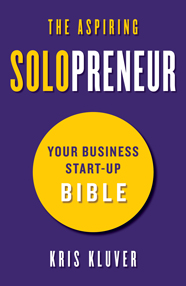
Kris Kluver is a seasoned entrepreneur with more than thirty years of experience who started the first of his fourteen companies at age nineteen. He has been involved in businesses ranging from consulting and real estate to online services, advertising, and financial services. A former business broker and current strategic advisor and mentor, he has studied entrepreneurial strategy at Harvard Business School, is a Certified Exit Advisor through STS Capital, and is a fellow at York University in the United Kingdom. He is the bestselling author of The Aspiring Solopreneur: Your Business Start-Up Bible.
📚 Books by Kris Kluver
Transcript
[0:00:14] CH: What’s up everybody? You are listening to Author Hour, the podcast where we interview authors about their new books. Today’s episode is with Kris Kluver. He’s the author of The Aspiring Solopreneur. It’s never been easier to start your own business but avoiding the many pitfalls can be a challenge. As a solopreneur, you need to think not only as an employee but also as an investor, manager, sales person, bookkeeper and more. But Kris believes that it is worth it. Kris is a seasoned entrepreneur, he has more than 30 years of experience and he’s been involved with hundreds of businesses, ranging from consulting to real estate, online services, advertising, financial services and many more. And in this episode, he hopes to impart his love of solopreneurship on to you so that you can achieve your dreams. In this episode, Kris is going to give you the tools you need in order to define success into research and launch a spectacular solopreneur life. So if you’re thinking about opening a business, there’s no better time than now to make it happen. Now, here’s is our conversation with Kris Kluver.
[0:01:43] Kris Kluver: In 2015, I needed to get a hip and a knee, total hip and a total knee replacement. I didn’t have a big traumatic injury that had happened, it was all, you know – it was in my late 40s and it was 100% a result of my own foolishness as a youngster. I owned it. It was a result of the sins of my youth, let’s put it that way. So, with the surgeries, I found myself on the couch, stoned out of my gourd, not able to move and candidly, I suck at being immobile, I suck at downtime. I’m not good at that. So, I was trying to read, I would just sit there and read the same page three or four times and drool on myself and I was just man, it’s awful. So, I started watching television which I don’t do a ton of. Through that process, I discovered what a Kardashian was and it scared the pants of me. And then I ended up flipping over these shows that showed these guys in Alaska or these people living on the frontier and things like that. For some reason, I liked that, I liked the back country and that was really intriguing to me and then watching those, “wow, you know?” This guy makes less than $8,000 a year. If we treated our criminals like this, we’d go to jail. He’s got duct tape on his glasses and on his jacket. He drives a snow machine from the 70s but he can’t get through an episode without saying how fortunate he is, how grateful he is to live the life he has. Something really clicked in my head that made me realize that, “holy smokes, you know? We’ve completely lost control of the narrative of what success is. We’ve lost the idea of what success is on our terms.” This guy, this hillbilly out in the woods is owning it and he’s more successful than the really wealthy successful people I know, the Kardashians who appear to have everything in the world. They’ve got money, looks, fame and all they do is sit around and bitch. Whereas this guy was looking at it differently and it really was a paradigm shift in my thinking and I really started to go deep into the rabbit hole, researching and studying the idea of helping and defining what success is but on our terms. And it was through that, that I started to learn, there are so many opportunities for us as individuals and for people to go out and live their dreams, you know? Dude, we live in the most abundant times ever, since the dawn of time, no matter what anybody says, things are getting better and better and better and better. Humans are the only animals on the planet who look at the past with nothing but fondness and the future with nothing but trepidation even though there’s nothing to suggest than anything but the opposite. So, anyway, going through this, I started really researching and embracing it and I realized that you know, my gift is - I started my first of 14 companies when I was 19. I have built them bought them, sold them, advised hundreds of people on them and I realized that that’s how I’m wired but that most people aren’t. And I started really digging in to what does that mean? Through that, I realized that it’s my opinion that when you see people who want to go out and live life on their terms, they can. We can do anything we want right now, anything is possible. But we get in our own way. And when it comes to owning your own small business, it is never been easier to test it, to vet it, to start and then slowly transition so you get it and thrive. But most fail, most business fail and it makes me sick because the numbers would suggest that roughly 50% of all businesses that start fail within the first five years. And that’s a trainwreck. That takes people’s lives, it takes their health, it takes the relationships. And all they’re looking for is they want freedom, they know there’s more out there but they don’t know how to get it. Now, the scary thing to me is that of the 50% that make it, I would argue, another 50 to 70% of those are bumping along, succeeding, despite themselves because they are too stubborn to give in or they keep throwing money at the problem. They aren’t thriving and it was through this whole process that I started realizing, “man, you know, it doesn’t have to be that way and I know that because I’ve lived it, I’ve helped a lot of people with it.” That’s where I want to be able to help change that. I want to help to be able to change the trajectory of where people are, so they’re not just getting by. Getting by sucks. I want people to thrive, that’s my objective, that’s the goal with all this. I kind of rambled there but is that –
[0:06:22] CH: No, that’s beautiful. I love that story and before we talk about what makes a thriving business, a thriving solopreneur and everything. I’m curious, what did you uncover in your research on success on your own terms because that really strikes a chord with me, I can totally relate to that. I was having this conversation last night actually with somebody, how there’s this template that a lot of people unconsciously follow of if I get more success, more money or more fame, then, I will be happy in life or then I will have done life well. And how many times like the Kardashians, how many times do we need to see that template played out to its fullest, to see that it does not work?
[0:07:17] Kris Kluver: It’s broken thinking to me. These are just my theories on this, but I believe that we’re the first generation in history, since the dawn of time, that doesn’t have to invest most of our energy in not dying. We’ve got unlimited water, we have almost unlimited power, we have issues absolutely we do but for the most part, we aren’t worrying about starving or people coming over the hill and killing us or people coming over and stealing all our stuff. And you think about it, it’s been within the last three generation that that’s happened. New generations never had the experience with world war, with mass famine but the most part, if you’re in this country, we are so insulated that we don’t see that. So by that nature, I think that our parents and our grandparents have been ill equipped to help us think differently. And that we’ve been totally wired for more, more, more, more, need, need, need, need, stuff, stuff, stuff, stuff. Because historically, somebody was going to steal all our shit if we didn’t or we weren’t going to have enough. I think by that nature, the fact that we’re transitioning that thinking, we’ve handed over a thinking to our parents, to our peers, to our advertising, but we haven’t taken control of ourselves. That’s why I start in the book with that, with that very idea that if you can determine what success looks like on your terms first and foremost. So, if you decide that that means that I want to go to everyone on my daughter’s ballet recitals, win! If that means that you want to live in a simpler house but you only want to work 20 hours a week, right on. If it means that you want to be famous or you want to make more, you can do those things. The challenge is that if we don’t know what we’re going for, there’s no way you’re going to get it. Nobody goes on vacation and says all right, “honey, let’s go on vacation.” They just go and get in the car, start driving. “Well, do we have gas? Do we have any clothes? Do we have direction, do we have the kids? Do we have bags?” No, but that’s the way most people live their life, is just mind boggling to me. If we can help people figure that out, and the device being that most people can live that life, whatever they choose through their own private business, wonderful. Does that make any sense man?
[0:09:40] CH: Absolutely. I had a conversation with someone recently and I’m not criticizing him at all, I was guilty of this at one point but he was talking about wanting to get out of debt. I asked him, “okay, what’s our plan? When do you think you’re going to get out of debt?” It was like this foreign concept of, “oh, there’s no plan, there’s no end date, I don’t know, I’m just stuck, this feeling of being stuck.” And to your point as well with the abundance, how we’re living now, we’re no longer concerned with dying really as much as we were in the past, you know? OR in ways that we were in the past. A friend of mine actually has an Instagram account, where all he does is post reviews of water fountains. And on first glance, we were like, “this is such a weird thing that he does, why does he do it?” Then he wrote this post about how the reason he does it is because he finds it amazing. That we live in a country where water is freely accessible in public, that it comes out clean, that we’re one of the lucky countries that you can just walk up to this magical device, press it and out comes clean water. And to your point, you are right that we live in a very blessed time. Now, what I’m curious about is with your book, the aspiring solopreneur. First of all, could you define what a solopreneur is to the layman who maybe hasn’t heard that term?
[0:11:23] Kris Kluver: I define solopreneur as an entrepreneur. In essence, this is somebody who wants to be in charge of their own life, control their own business and work mostly likely by themselves. They may contract with somebody to help them with their books or they may contract to get some help with their marketing or things like that. But in essence, it’s somebody who is kind of like a gig worker. They are truly accountable for who they choose to work with, when they choose to work, what they choose to do and how they get compensated. Does that make sense?
[0:11:59] CH: Yeah, totally. Let’s talk about how becoming a solopreneur is potentially a solution to these modern dilemmas that we face and how do we get to the place where we’re not in the 50% of solopreneurs whose business fails in the first few years and we’re not in the other 40% or 50% where we’re just chugging along and kind of kicking the tires and hoping things will go well. How do we get to the place where we’re thriving and really achieving success on our own terms?
[0:12:32] Kris Kluver: It would be my opinion that first we have to define what success looks like for you, you have to define what your true north is, who you are in your soul and then define where you’re going. What that looks like and you have to know crystal clear but you need some ideas. It’s on that note, for years, I own a content marketing and social media management company where we worked with people from New York to Indonesia. And I had a lot of younger people working for me and a lot of people say, “oh, the millennials, they’re a bunch of slackers and they just whine and I don’t know how they’re entitled.” And I would argue, I think that a lot of the millennials are some of the hardest working generation we’ve ever had, if you provide a good why, if they know their why. If they know why they’re doing something and they buy into it, holy smokes, those guys will dig in like nobody’s business. As with that, as a solopreneur, if you know what you want, if you know where you’re going, your true north of what matters to you and then you define the next step of where you’re going, it’s going to help you get there. But in the majority of the cases, I would argue that almost never does a small business or solopreneur or gig worker fail because they aren’t great at being a technician in that business. If they’re a writer or an accountant or a therapist or whatever it may be. Almost never do those people fail because they’re not good at actually performing the task. The reason that they fail is that they go in blindly. Hoping that they can just go build a business. One of the key concepts in the book that I’m really pushing to try and transition people’s thinking too is if they can start to think more as an investor, they’re investing in their business. What does that look like? What’s it going to take? Be honest, be pragmatic about it. To think more as a manager, you’re going to have to manage yourself in the processes and actually making sure that the work gets done and things are getting done that they need to. You’re going to think of it as a business development person. Who is going to drive the sales and the success? And then lastly, as the technician actually operating within the business. It’s those first three steps that if you suck at one of those, you could go right of the rails and not even realize it before you’re in trouble. But I promise that this is the most abundant times ever, it has never been easier to outline and in the book, I go through a step by step process with lots of exercises on how people can actually go in and test this and start building that and how to create a full board of advisors that aren’t going to cost you any money. From peers in your network or peers in the industry, to finding a good banker, finding a good accountant, finding a good attorney, finding a good insurance person. It’s their job and in some cases, they’re a solopreneurs and their whole job is to make sure that people like you are successful. How do we do that and then how do we very intentionally figure out where we want to go? Build the plan, test it, research it, become an expert so that then we can very safely and very intentionally transition so that we’re very, vert successful when we go and launch. So often, people just start, “let’s ready fire aim.” “Dude, yeah, you want to start a business, I get it.” Let’s figure out how we’re going to do that, don’t just jump on the car and start driving because you’re going on vacation. Where are we going? I don’t know.
[0:15:59] CH: Yeah, let’s talk about the stakes here a little bit. Before we get into what you sort of lay out in the book, the step by step, here’s how to become a thriving solopreneur. Tell us a bit about the stakes. What really does it look like? What happens if let’s say a fitness trainer, somebody who is a solopreneur, starting a business, gets it wrong and doesn’t do what you prescribe in your book? What happens to them then?
[0:16:30] Kris Kluver: Well, if people choose not to do this, unfortunately, most of the people who are thinking about it or dreaming about it won’t do anything. And then they’re going to become a victim and they’re going to be stuck in their doom loop of their job and I call that office hell. For those who choose to actually go out on their own and try and do it the best they can, the statistics say that 50% of those people will not fail. But 50% are going to fail. And there’s another – but the challenge is that you’re going to see that 50% failure rate about every five years. The problem is rarely your people going to thrive. What does that specifically look like? Looks like bankruptcy, it could look like divorce, the worst health impacts that you can imagine, you think about the stresses associated with that, there are all sorts of negative things that can happen. It could be a beautiful, wonderful, exciting when you get there, but that road from starting to getting into it, that’s a whole different set of skills than actually executing the task, the product or service that you’re selling. Does that answer your question?
[0:17:40] CH: Absolutely Kris. So, let’s make this even more real. I’ll share a little bit of my story and my journey as a solopreneur. Let’s walk through what you prescribe and map it to my situation if you’re cool with that because then the listener can have it be a real tangible thing. That sound good?
[0:18:05] Kris Kluver: Right on. Let’s see where it goes.
[0:18:05] CH: Cool. I’m an author myself and I’ve written a few books. One of which, not only did pretty well, it continues to create both opportunities and result in people reaching out and telling me it changed their life. So, spoke with an executive at a 50 million dollar company this week who told me- my book was about how I went through burnout and really hard period of overwhelm and stress and anxiety and how I tried everything for two years and nothing worked. And then I started adding play back into my life like the way kids play because kids and teenagers have stressful existences too. But they play as a release valve and as soon I started doing that, within less than a month, I was completely symptom free, totally back to normal. A that is the book that I shared and so a lot of people in this high powered careers have really responded positively to that message and this guy told me, “you know this literally saved my family from falling apart, kept me from becoming an alcoholic, all of these things.” And so what I’m wanting to do, I’ve spoken on this topic for several years on burnout and incorporating play. And I am at a point now where I am strongly considering doing group workshops, where it is just a day maybe two day workshop where we practice these principles and it is group coaching. Now I’ll tell you I’ve experimented with little things in the past like courses and stuff and I have gotten by but I fall into the category of somebody who’s been in business for a while, but hasn’t really thrived. And so I am in this situation now where I have a little bit of that muscle memory where I do feel trepidatious about the future even though it is something I want to fully lean into and knock out of the park and be one of your thriving solo-preneurs but I have that sense still of like, “well, I have tried things like this in the past and maybe it hasn’t gone so well.” So that’s my scenario. Am I making sense?
[0:20:22] Kris Kluver: Absolutely.
[0:20:22] CH: Cool, so what would you say based on your book? I know you’d start in part one with identify motivations and assess the market, is that the place I need to start or do I need to define success on my terms first?
[0:20:35] Kris Kluver: I so embrace and love your idea of play to the point that I too work with high dollar leaders. I am an adviser to billion dollar CEO’s. From solopreneurs to billion dollar CEO’s and I have a lot of $100 million leadership teams I work with but I too get a little wrapped around the axel sometimes about how important I am and how stressful then. So I actually am into the point now where my wife paints my toenails and she buys be superhero underwear just remind me. So I am not kidding.
[0:21:05] CH: That’s amazing.
[0:21:06] Kris Kluver: But anyway, for you I think the most important thing is for you to start really define what great looks like. If you know where you want to go and you can have a visualization of what spectacular looks like for you in three to five years, dude you’re halfway there. Have it crystal clear on what those retreats look like, how many you’re doing, are they adventure based, are they overseas or they’re local? People coming to you is it in Bailey, is it up in Vale, what are those things that really, really float your boat? And define that and I firmly believe that the universe will line up and give you exactly what you want, but we have to know what we want. So once you start there, if I were in your shoes I would start with defining it crystal clear and who you want to work with and the more you can say no, the more you can narrow it down to where these are specifically the people I want to work with, you’re going to be able to be laser focused in how you approach them and how you go after them and I talk about that in the marketing component of this. But that’s where if I were in your shoes I would start with that and then the second and this is again recommended in the book is I would start finding out who are peers in that space that are even kind in that space and call them and say, “hey dude, I would love to start doing workshops in this kind of space doing this and this and this. If you were in my shoes, what would you do?” And then shut up. And remember, the good Lord gave you two ears and one mouth. There’s lists of questions that I ask people, but starting out with other people in your industry and in your case, it is not like people across the street that do what you do but there’s people that would do retreats all over the country. Start finding those people and ask them what worked for them, what worked and what didn’t.
[0:22:45] CH: That’s great I love that and it’s funny, I have given that advice to others and hearing it for myself it’s like, “wow!”
[0:22:58] Kris Kluver: We get our own way. So on that note Charlie, I believe that extraordinary lives in the unreasonable. Fucking be unreasonable, dude. Go out and get it and dream big and go ask those people and if somebody says no, well maybe they are scarcity minded. Let them go, there is a lot of people out there who can help you and keep asking that but you may find people that’s like, “you know I love that idea. Would you want to do one with me?” But again, that’s what’s going to get that start for you. Does that make sense?
[0:23:28] CH: Absolutely. Yeah, it already gives me the sense of relief and that I have a tendency to take everything on and be the person who can do all the things and that is absolutely a way to crash and burn in your business. So that’s great. I love that. It gives me a sense of relief because I know I can lean on others and start at a crawl and then get going walk and then run.
[0:23:57] Kris Kluver: Well and then they’re going to open up so many doors. They’re going to open up doors on who you should talk to from a financial basis. They are going to open up doors on who you should talk to for potential networking basis, on the types of structures you should do, on the type of insurance, where are those things. But it is a matter of being curious and listening and to the extent, I don’t care who you are. You can’t do everything on the planet well, no matter who you think you are. Some people could do a lot of it and it’s awesome, but those people get in their own way more than anything. I would encourage you to think of yourself as the composer and the conductor of a symphony. You may be a virtuoso who can play every instrument but you know what dude? You can’t play every instrument at the same time. It’s your job to figure out what is the music, what is it going to look like, what is the flow going to be and then you coordinate that flow. And it could be through some of your contractors, it could be through a lot of what you do but that’s where as the manager you have to manage that process. You can’t do it all and there’s actually some tools that I create called the delegation matrix and some other tools to help people define what are those things that we can let go of? And what is going to be highest and best use of your time, where you get the most value, the most juice for the squeeze?
[0:25:13] CH: Wow I love that. Yeah, that is a brilliant analogy, be the conductor. You can’t play every instrument at the same time, I love that. So this is invaluable and I really appreciate you turning the mirror back at me for a little bit. Tell me more about some of the big ideas in your book or maybe something that might surprise a listener that they’d find in your book to help them in their paths towards becoming a thriving solopreneur?
[0:25:43] Kris Kluver: Two things, one is in many cases I am going to encourage people to be very, very open and candid with themselves. Have that deep conversation on whether this is a right fit because I consider it just as big a success if somebody reviews it, digs in, looks at it and says, “wow, this is not a good idea. I shouldn’t do this.” That –
[0:26:07] CH: I love that you said that, yes opportunity cost.
[0:26:12] Kris Kluver: It is not only opportunity cost but that to me, the education, the paradigm shift that somebody’s gone through when they are thinking is awesome. It means that holy smokes they’re realizing that this isn’t the right fit. Maybe they are not wired for it or maybe it is just this opportunity but what that says to me is that, “boom, we just saved somebody who wasn’t going to be in that 50%. We just saved somebody who is going to lose their entire life savings.” Or who is going to get divorced or who is going to end up in the hospital because of stress and to me that is a massive, massive. So that’s the first thing, the second thing is on that same vein. As people go through with this, they may think that their original version of what they thought success was going to be for them, for the business they wanted to start that was their one shot. It’s like, “oh god, I got to make this work or I am never going to get there. I got to do this.” And that is not the case. I am going to beg and plead with them not to believe that because I literally have gone through this entire process that I teach hundreds of times and 90% of the businesses that I thought were spectacular that I thought it was just brilliant were bad or it was close, but it wasn’t a great fit and with that in mind, I want these things to just be total no brainers for people. I want it to be that when they do this it’s like, “oh my god, this is what we should be doing.” Then you know it’s a good fit. So if it is closed but it’s like, “nah, it’s not quite right” don’t worry about it. You’ve turned on all sorts of new switches in your brain that you are going to start to see opportunities all over the place and it is through that that you are going to end up finding out what’s really lights you up, what really turns your crank. So being in Omaha, I’m a shareholder in Berkshire Hathaway and I go to the Berkshire Hathaway, which is Warren Buffett’s company. And they do big shareholder meetings that they call it the Woodstock of Capitalism and I go to that every year and Warren Buffett’s number two, his name is Charlie Munger and Charlie in my opinion is just as smart as Warren and just as big a deal. He’s a little bit older and he’s kind of a curmudgeon and gruff and I love that and he’s very, very blunt and at one point listening to Charlie talk, in the stadium when they do their shareholder’s conference. He said and I quote this in the book, the idea is that people think that we are really brilliant. “That we’re some kind of soothsayers or gurus, we’re not. We read a lot of stuff. We look at a lot of deals. When we get a good deal, we look at it, we research it, it’s like, ‘huh it’s a good deal,’ you know what? We do those deals. We only do no brainers.” And I know that sounds really basic but the problem is that when somebody who’s really smart wants to start their own business they can rationalize their way into anything. And just because they can doesn’t mean they should. So the intention would be is it a no brainer. It’s like, “oh my god, I love this. This is going to be home run. This is going to be awesome. I don’t know everything yet and I might get clobbered here and there, fair enough but for the most part yeah, I got this.” That is where we want to get to.
[0:29:30] CH: To extend the home run and baseball analogy, you’ve seen Warren Buffett’s documentary, right?
[0:29:38] Kris Kluver: One of them I have seen Being Buffet and a couple of the others but yes –
[0:29:41] CH: Because in the HBO one, he talks about how his investment strategy is similar to Ted Williams hitting strategy and Ted Williams is still widely considered the greatest baseball hitter of all time and Ted Williams whole strategy was don’t swing at bad pitches. Swing at good pitches and nothing else.
[0:30:03] Kris Kluver: And that’s it. So often people think, “oh my god, this is my one chance to get, this is my one shot.” And it is so not true. It is the first time that maybe they’ve looked at it, but if they go out swinging because they are swinging at bad pitches, they’re going to be burned. They may never ever, ever want to go out again and the problem was they just swung at the wrong pitch but nothing out there teaches us how to research. What is a good pitch? What is a good fit? How to build a pro forma? How does this have any financial viability? Are we taking into account how much the government is going to take, how much it costs for taxes, for insurance, for our suppliers? Have you factor them? No, people are just, “okay, we’re just going to get in the car and drive, we’re on vacation.” Okay, where are we going?
[0:30:51] CH: Wow, there’s so much good stuff in your book, The Aspiring Solopreneur. You force the reader to really ask themselves the tough questions to make sure they are going down the right path and you are really setting them up for optimal odds of succeeding not just succeeding, but thriving. There’s a big difference. I have talked to a lot of entrepreneurs who have done really well on paper, but grow to hate their business and I think you are really getting them not just aligned with the path to success but the path to their own North Star. As you said, their own inner meaning, their own inner authority.
[0:31:35] Kris Kluver: That’s what I would hope is going to be the case. I think going back to the idea of millennials, asking the right questions. I think we are on a paradigm shift on how we look at what success is and it’s with that, with the idea of I grew up going to school in the 80s and 90s where it was how much Pabst blue ribbon and cheap bourbon could you drink. It wasn’t let’s have one craft beer and it was a debauchery. Instead it was the era of cocaine and big hair and things like that. And now it is tiny houses and 20 hour work weeks and craft beer and adventure and I think it is a different definition of success, but it can be on your terms. You know for me and my wife, after we did that, after I went through my hip and my knee replacement and that discussion, we went through and really defined what is success for us? And it is different for most people. We met travelling, we met in Chile and we loved to adventure travel. We also love doing what we do. We feel like the luckiest most fortunate people on the planet, man. So now, we very intentionally designed and built our lives to where we take three months off a year doing adventure travel and we get to work with people we love and help them. And candidly, we’re making more money than we ever have. You know I am in the best health and physical fitness I have ever been because I made that a priority. Since the hip and knee I have lost close to a 100 pounds and I –
[0:33:02] CH: Wow, congrats.
[0:33:03] Kris Kluver: Thank you very much and I was able to complete two ultra-marathon trail runs this year. So it’s absolutely ridiculous what is possible when you start putting intention behind it and defining what you really want.
[0:33:17] CH: And you know you can hear it in your voice too. I am sure listeners can hear your authenticity and your joie de vivre. You actually really sound like somebody who is successful on their own terms and I think that is something that we can all aspire to and would make our culture a lot healthier if we stopped taking the old or the advertised ways of success and started defining our own. I think it is really inspiring. And what I would love to hear from your Kris is you’ve worked with so many entrepreneurs, so many solopreneurs, can you maybe tell a story of somebody who’s gotten a lot of the ideas in your book and how it transformed them? So maybe say what their life was like before, how you came in and helped them and what their life was like after.
[0:34:08] Kris Kluver: My wife, she was an accountant for a venture capital firm in London and she was good at it but she didn’t really love it. It was okay and in her particular case, she ended up completely transitioning to a different career, but it was over a long period of time it took her to get there. It was a long journey. But through the process, she ended up finding that she really wanted to be a couples and family counselor, counseling had helped her, it helped us and it helped her about some of the challenges she had when she was young and it was really important to her. And through that process, she went through and she ended up going back to school and we had to figure that out and then she ended up getting her degree and then she basically had to work for 3,000 hours under somebody else. So she did and then she decided to go out on her own and she’s a very smart person. She had a background in accounting with a venture capital firm. She had a master’s degree in couples and family counseling, but there was nothing out there that had taught her how to actually start her own practice. There was nothing out there. She had been on boards and other things. So with that, we went through and we slowly built her whole model. She vetted it and we built a plan for her to transition and safely go into it. Long story short is that she now makes about twice the money she did as an accountant, working about 20 hours a week. She’s an ultra-athlete, so she does a fair amount of training and has the time to do that and she loves her life. She gets to help people in ways and it’s really fulfilling and she is choosing to even move on forward to where she is starting to look at couple’s coaching and individual life coaching and things of that nature. It is really exciting to see that and have a literally a front row seat and see how that is gone.
[0:35:49] CH: That’s awesome, you two sound like a great power couple both being athletes and taking care of yourselves, that’s great. Now, I want to be mindful of our time. I have a couple other questions for you. The first one is, what is the best way for listeners to either follow you on your journey or potentially connect with you if they are running a business, they want to get your input, that sort of thing?
[0:36:15] Kris Kluver: Okay, so on that note I am more than happy to help people in any way that I can and I encourage people to please reach out. I will get back to you as soon as I can. I really am wicked about managing my time, but I do try and follow up on all my emails. So the primary place they can find at the website, which is aspiringsolopreneur.com. My wife and I also have a YouTube channel called solopreneur-life.com that we talk about some of the couples retreat stuff we do. But mostly it is a place intended to celebrate the life of a solopreneur and it is exciting for us and then the third place is probably feel free to connect with me on LinkedIn. I have a couple other social platforms but candidly, I am not that active on them anymore.
[0:37:01] CH: Awesome and the final question I have for you is to give our listeners a challenge. What is one thing that they can do from your book that will have a positive impact on their life or their business this week?
[0:37:16] Kris Kluver: So I have thought about this a bunch and there’s a few different tools that they could do.
[0:37:20] CH: I will challenge you Kris. Only pick one in the likelihood that they’re probably only going to do one and they’ll get your book if they want to get more, but just one.
[0:37:33] Kris Kluver: Okay, so if you are going to do one, if you go to The Aspiring Solopreneur, there is a free video that talks about identifying your LCG, your life changing goal. It’s an exercise that takes you through two steps, that shouldn’t take more than 20 minutes that will help you dig down and define what is that thing that is just extraordinary in your life? What is that thing that’s like, “holy smokes I have been dreaming about that forever but I didn’t realize it.” To help you define where is it you want to go and how you’re going to get there.
[0:38:06] CH: Fantastic. The book is The Aspiring Solopreneur, it is on Amazon now. Kris, thank you so much for being on the show.
[0:38:14] Kris Kluver: Charlie, thank you so much dude.
[0:38:16] CH: Thanks so much again to Kris Kluver for being on the show. You can buy his book, The Aspiring Solopreneur, on amazon.com. Be sure to check out authorhour.co for show notes and a transcript of this episode and take a second to leave us a review on iTunes. It means a lot.
Want to Write Your Own Book?
Scribe has helped over 2,000 authors turn their expertise into published books.
Schedule a Free Consult