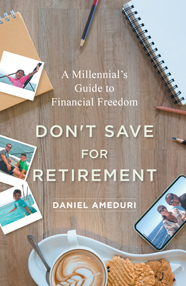
Daniel Ameduri: Don't Save for Retirement: A Millennial's Guide to Financial Freedom
Read the full transcript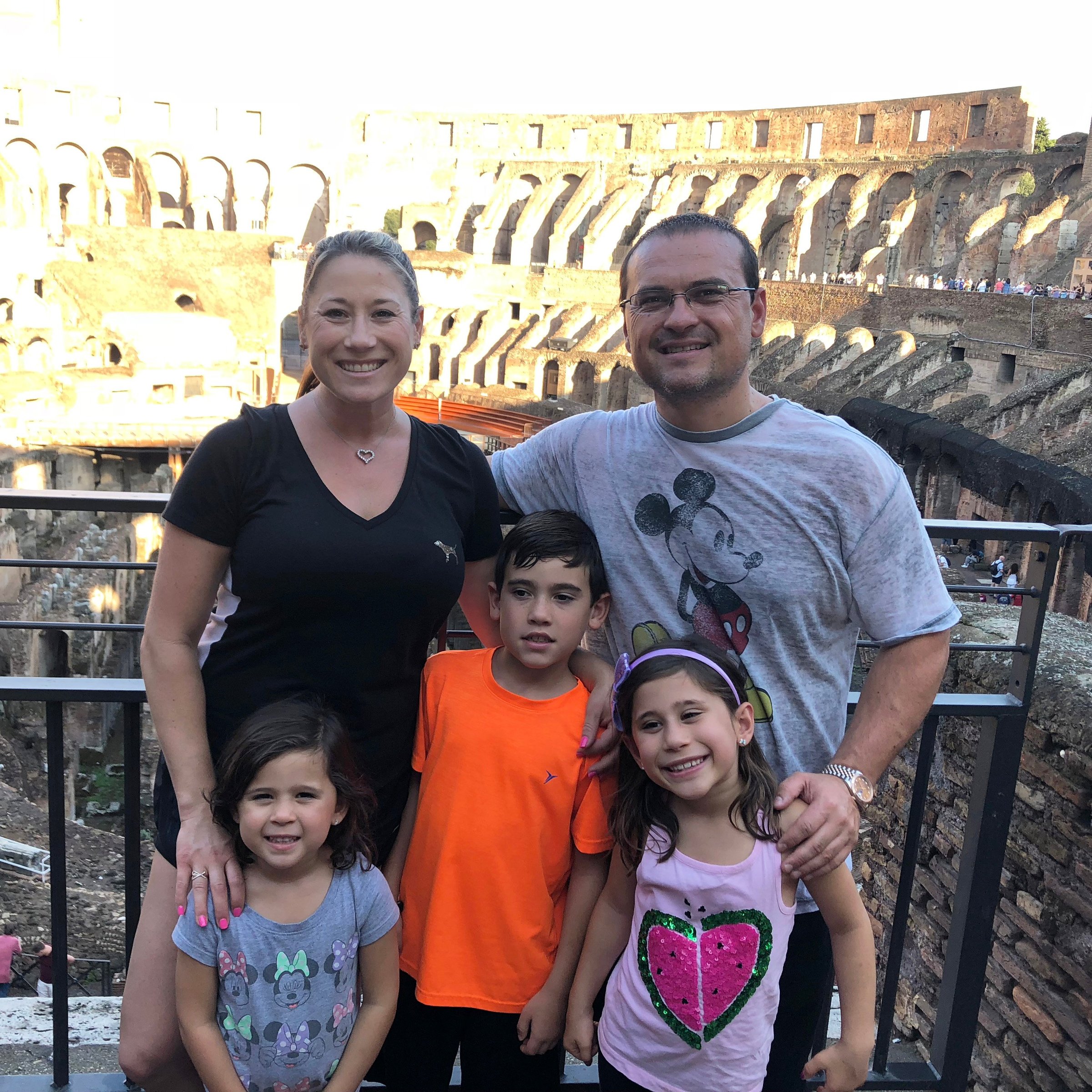
Daniel Ameduri
Daniel Ameduri is a self-made multimillionaire, a full-time skeptic of conventional financial thinking, and the cofounder of the Future Money Trends newsletter and FutureMoneyTrends.com, one of the most widely recognized online sources of investment ideas and economic commentary. He has been featured in The Wall Street Journal, on ABC World News Tonight, and on Russia Today, and he correctly predicted the collapse of Lehman Brothers, AIG, and Washington Mutual on Vision Victory, the YouTube channel he launched in 2007. In his book Don't Save for Retirement: A Millennial's Guide to Financial Freedom, he challenges the traditional retirement model and shows readers where they should be putting their money to build real economic security. He is a proud father of three.
📚 Books by Daniel Ameduri
Transcript
[0:00:24] CH: What’s up everybody, you are listening to Author Hour. The podcast where we interview authors about their new books. Today’s episode is with Daniel Ameduri. He is the author of Don’t Save for Retirement: A Millennial’s Guide to Financial Freedom. So Daniel’s an impressive guy. He is a self-made multi-millionaire and a proud father of three. He’s the cofounder of the Future Money Trends Newsletter which has nearly a hundred and fifty thousand subscribers, it’s the most widely recognized online authority in investment ideas, in economic advice. He’s been featured on the Wall Street Journal, ABC World News Tonight, Russia Today TV. And he even correctly predicted the collapse of Lehman Brothers AIG and Washington Mutual and his YouTube channel now has roughly 13 million views. I say all this to establish that Daniel is an expert in this area and the advice that he gives is rock solid. Even though it goes against the traditional advice that millennials get from baby boomers, which is to save for retirement. Daniel believes that’s actually terrible advice because the results are in. For the retirement experiment of the last 75 years, most of the results have been really bad for people and he explains why in this episode. If you are a millennial or even a baby boomer or a Gen X, it doesn’t really matter. If you're somebody who cares about financial independence and being able to control how you spend your money, how you save it, how you invest it and you do it wisely and you’re not prolonging your life until you’re 65 or older, this is absolutely the episode for you. Especially if you’re somebody who is stressed out about money. This will give you the relief that you are seeking and more importantly, the wisdom. Now, here’s our conversation with Daniel Ameduri.
[0:02:44] Daniel Ameduri: It was after the 2008 financial crisis and my wife and I were in a bankruptcy attorney’s office and it was quite shocking to even be there because my entire life, I had felt destined to be wealthy. I was always fascinated by money. I always enjoyed reading about finance, investing, real estate and I had actually done quite well. In the year 99, when I graduated high school, By the year 2000 or maybe just before 2009, I already purchased my first rental property. Then six months later about my second rental property. I had done very well in life and then 2008 came and like many people can relate to, whether you’re millennial, Gen Xer or baby boomer, it was a very significant scar and for me, it was so deep because I had went so aggressive and leveraged myself to try to make as much money as possible because back then, the only thought in my mind was, "How do I get really rich?" Post 2008 in that bankruptcy attorney’s office with my wife crying next to me and I was realizing where we were and where me, realizing where I was, that was a very defining moment in my life because I didn’t like that feeling, we did not end up filing bankruptcy, we ended up coming up with you know, everything that we laid out in the book where we had to make deep sacrifices and focus on sustainable living. But that moment in that attorney’s office and seeing my wife cry, who has done so much for me and I met her when I was 16 and she was 15 and we’re soul mates — to see my soul mate sitting next to me crying over a financial issue and this was supposed to be the thing that I was in charge of, that I was good at and here we were and it was a disaster and that was the moment where I knew I had to do something different, it wasn’t going to be easy like it was from 2000 in 2008. It was going to be much more difficult because I was starting with a lot of debt this time. I was digging myself out of a hole. I didn’t even know what to do so honestly, all I focused on was, "How do I not be poor?" I never initially started this journey to become really wealthy. The goal was just to not — to have some sort of base because I was scared of falling any further.
[0:05:07] CH: Wow. I can’t imagine, how scared were you Daniel when you were – was that the most frightening moment? What did that really mean to you?
[0:05:18] Daniel Ameduri: It was the most frightening moment. My wife and I were having – we’re going to have a baby and our first son, our first child and I was just looking at what had happened with the 2008 crisis and what I was going to do. I’ve been doing real estate for years and years and all of a sudden, I didn’t really know how to make money in real estate yet in a down market. In hind sight of course, this all becomes a big blessing because this actually taught me to make money in a very bad market but at that moment, I didn’t know what I was going to do and I had gone do a truck driving school. I was like, maybe I’ll drive a truck, I did that but I was like, this is just not for me and then I went and applied for jobs and because I had been an investor and you know, didn’t really have job experience. I was basically not very qualified for anything except for real estate. I ended up getting a job at a grocery store because at that time, I was in depression and I thought the whole world economy and everybody can go back and remember that. 2008, 2009, as far as we were concerned, we were going to go to the greater depression. A grocery store type of job said they would hire me and I didn’t want to do it but I did it because I was like, "I need to do something," and I figured that people would always buy food and it was depression proof. That was where my mind was. I was definitely scared because my entire life, I had been focused on entrepreneurship and building businesses and creating your own destiny and at this point, in my life, I was willing to settle for anything but homeless and I just – that’s where my mind was.
[0:07:01] CH: On one hand, it may have been somewhat comforting to know that other people were in dire straits too, that they were going through stuff but it doesn’t make it any easier on your marriage, right? Were you and your wife scared that this was potentially going to break you with having a kid come along?
[0:07:20] Daniel Ameduri: You know, my wife was a school teacher, so that was actually huge help, right? Very safe job, good job. We had this core job. However, my wife was literally — like her passion is being a mother and she wanted to be a mother to our child like every day, being with him. She wasn’t able to do that initially and that really affected her. Our marriage was good but she was definitely trying to think of ways of how could we make more money or what could we cut back on, in order for her to be able to quit her job. As our journey progressed, I mean, my wife, I didn’t ask her to do this. She approached me and said, "Let’s sell my wedding ring and pay off our car." She actually told me, I didn’t even know about this until we wrote the book and she said, she was actually nervous to even say that to me because she thought that I would be hurt by it, that she would get rid of something that has such value to the marriage. She was on the same page with me which was a huge help in the marriage that we were both on the same page. We weren’t even worried, neither of us were worried about living some lifestyle that keeping up with Joneses. Both of us were of the mindset, how do we get my wife out of her job so she can raise our son at home and we were willing to do anything, we moved to the desert and just to give people an idea and I don’t care what year it is in California. When you buy a $95,000 house in the desert of California, you are living in a fairly poor area in California. That’s where we moved, we moved to the desert of California, about an hour from where we were from, an hour from where all of our family was and we lived like poor people to be frank.
[0:09:12] CH: You started living like poor people, amazing that your wife was willing to make that sacrifice to get you guys in a better position, what did that look like? What did it look like when you’re living out in the desert?
[0:09:26] Daniel Ameduri: Well, it was weird when people would come visit us, friends of course because our friends went on and got the five and $600,000 homes and they stayed in the same area which was fine and we moved, we had no choice. It really was something that we had to do in order to just – make sure the spiral down didn’t go any further than it already had gone. You know, it was weird, you invite people and you’re living in the desert.
[0:09:49] CH: Were you guys in a trailer?
[0:09:51] Daniel Ameduri: My view was a trailer park, it was across the river bed and then you know, friends would invite us to like let’s say, I always tell this story, to do a wine party and they like, "Hey, it’s 120 bucks, everybody pitch in, it’s for the wine, it’s for the limo," that type of thing and we said no. It wasn’t because we didn’t have the money. We did have the money. Now at this time where we’re saving money, we’re being frugal we're cutting cost, extreme cost cutting. I mean, we got rid of our dogs, I mean, we did crazy things to save money. We would get invited to a party and we would say no and then our friends would say, "Hey, we’ll pay for you to go," and we had to tell them, "No, it’s not about that, I don’t want to take your money, I have the money, I just choose not to go. At this moment in my life, I have a very strong objective here," and at that time, it was the payoff the house, we really saw that as our ticket to her being able to quit her job. If we could just get rid of the mortgage and we were only responsible for utilities and groceries. We can survive anything because at that time, we had sold the wedding ring, paid off the car and now we’re just focused on how do we pay off this house. That really was like our main focus for a few years.
[0:11:09] CH: A lot of people talk about sacrifice in the financial community but I think you just drew a really clear picture of what that actually looks like. Selling your dogs, living in the desert. That’s pretty extreme.
[0:11:27] Daniel Ameduri: Yeah, I mean, we got rid of our TV, which felt great, there are so many benefits to living like that too. I mean, we got rid of the TV which – or not the TV itself but you know, direct TV and this was before streaming and Netflix. Nowadays, anybody could do that, you could live off of Netflix or you could actually even share an account. Just use somebody else’s Netflix or Amazon. Back then, when you canceled your direct TV, you had no TV. We got rid of gym memberships, we had to get rid of our dogs because they had medical bills, it wasn’t that they were – their food was such a problem but their medical bills were a problem. We got them to a nice home that actually took in the Weiner dogs. That was very hard on us though because we had both of those dogs for seven years. But they were about $150 a month in expenses. We started shopping at discount and grocery stores and we almost practically went vegetarian. Started shopping on the outer rim of the grocery store so a lot of things was actually very healthy for us to do that. We did not have smart phones, we maintained the cheaper flip phone for as long as we could. Just really focused on cost cutting so that every extra dollar could be applied towards the mortgage which within 24 months, we paid of that $95,000 house.
[0:12:41] CH: That’s awesome. Good for you. Before we get really into the meat of your book, Don’t Save for Retirement. I want to share a little bit of my story and my journey just a little bit because what you just laid out is like, I have so much admiration and respect for it. My wife is similar in that she wants to stay at home with our two year old daughter and she’s been able to do that and it’s been great. But it hasn’t been without its financial strain, right? We just moved from Texas back to Colorado to be closer to family. Right now, we’re in an apartment and we’re looking at houses and I look at it and she looks at it as well as like this seems mathematically, it could be really problematic for our finances. If we kind of go with the norm. All the messaging that you get from mortgage lenders, from realtors, it’s like, "Yeah, you guys are good, you guys are clear for this much and shouldn’t be any problem," but when I talk to folks like you, I’m like, "Maybe my spidey senses were on point," you know? All of this to say, I’m excited to dive into your book. Where do you want to start with your book? We could talk about what you’ve learned about wealth, we could talk about what people get wrong, where do you want to start?
[0:14:13] Daniel Ameduri: I would say, on the title, Don’t Save for Retirement, what do I mean by that.
[0:14:17] CH: Yeah, what do you mean by that? Why not save for retirement?
[0:14:22] Daniel Ameduri: It’s not that I’m against saving for retirement and I’m certainly I love saving money. I think it’s a huge thing that people are missing out on because it does create a financial peace and it does liberate your life, oftentimes doing things that you may not want to do like working at a specific job or perhaps working a lot of overtime where you’re missing out on that finite time with your family. Especially if you have children. What I don’t mean by 'don’t save for retirement' is don’t save for conventional retirement, the way they’re telling you. With the financial media and the mainstream press, we have to remember that they make money from selling products. They make money – we forget that you know, wall street is just like walking into a Walmart. They have a lot of products and they’re trying to sell those products to us. A lot of times, we think that they’re just – you know, the financial advisor is there to help you, he is – many of t hem are, most of them are, they have great intentions. But everybody is making a commission or fee and they make money from all these vehicles, whether you’re buying a mutual fund or an ETF or a stock, a hedge fund. That is how they make money and this entire retirement scheme is built in to that. Because with the 401(k), what they have convinced you to do is to defer all of your enjoyment and all of your money until you’re an old person. It’s a very arbitrary number by the way. 65, there was no study done, it was literally, you have to imagine, FDR and a few people in the oval office saying 60 is too young, 70’s too old, let’s do 5 because that’s what the Germans did. The Germans were the first ones to come out with a program like this and it was 65. But same thing. The only reason the guy in Germany picked 65 is because I think they originally started at 70 and the story goes — it’s actually in the book, the exact factual details. At 70, the guy is running for election against the other guy so he’s like, I’ll bump it to 65 and the other guy is running at 70. That’s how we ended up with the 65 year old number as the perfect age to retire. Really, if people actually, there’s a lot of opportunity cost in saving for retirement because you know, when you have to pay a penalty to extract your money out of a 401(k) or an IRA, you don’t know what you could have been buying or what you could have been investing in a business, you could have been investing in a rental property that would pay you every month. I mean, I have passive income that comes every month into the household and if I followed their plan, that money would be compounding somewhere in retirement land and maybe I make it, maybe I wouldn’t. Maybe I would live that long or maybe who knows, we don’t know what would happen. But I know when that check – when a check comes in from a passive income, say, a rental property. I’m able to either save that money, reinvest that money or spend that money and that’s a great option to have. A lot of people, they look at passive income, residual income and they think it’s got to be a mountain that they’ve got to have 10,000 a month or 100,000 a year or something but you don’t start that way, you focus on just paying one bill and that’s what I tell everybody in the book. Just focus on how am I going to get passive income to pay the water bill. That will happen easily because you’ll be able to invest in either a passive income fund or buy a rental property or dividend paying stock or some sort of private business and all you need is like 50 bucks and that will take care of one small bill. Then it will grow and then you’ll have $150 a month coming in. It will take care of another bill or a bill or two. That just keeps – that mindset is what keeps compounding in your own mind that hey, I can actually make money from multiple sources of income and that is, what the rich do. Because ultimately, what you want to do is you want to mimic the rich. Because the rich do not rely on a single source of income. When I say, "Don’t save for retirement," I mean, don’t put everything in on account that you — it’s your money, but you have to pay a penalty to get it out and defer it til you’re 70-years-old. Why not set yourself up in a way where the retirement funds that you saved, instead, pay for your lifestyle right now?
[0:18:43] CH: You make a compelling case my friend. That is very good. I’m thinking, all right, I’ve got this money in an IRA, I’ve got this money in a 401(k), I’m automatically investing. Now, I just need to pay one bill which I love that you make it that small. Let’s say I got $100 family cellphone bill each month. Where do I start? How do I get started with creating a passive income stream? What do you recommend?
[0:19:14] Daniel Ameduri: You know, the first thing I would recommend people do, after they read the book, is to research the passive income ideas that I have in the book. Some of them are private real estate funds, some of them talk about different ways to buy real estate, if you have bad credit. I haven’t purchased real estate in gosh, probably 10 years with a conventional loan, just to give people an idea. And I lay it out in the book exactly how I do it and I’m not paying cash, I am leveraging them, I am getting a loan but I’m not doing conventional financing, there are so many different ways to do things once you break out of that box of how you’re supposed to do things. And when you’re building your passive income portfolio. You write down the things that you’re comfortable with. I’m comfortable with a rental property or some people think of a rental property and they’re like, "I don’t ever want to deal with that." Don’t ever want to hear from a tenant, that’s fine too, that’s just one of the many ways. There are hundreds of ways nowadays because of the internet. It’s easier than ever to have passive income, there are all sorts of businesses and crowdfunding has risen up in the last 10 years, that is another way you can actually become a lender. Whether it’s to — throwing 50 bucks for somebody’s mortgage, that’s a million dollars and you’re collecting a small piece of that. Or, buying crowdfunded, where they loan money to certain businesses or they buy certain investments in businesses, that cash flow. You build your passive income portfolio and you kind of reverse engineer it, you say, "Okay, what are my goals? How much can I save a month? How much can I save a year?" And that’s how you begin to build a passive income portfolio. I would say, before you do any of that, you actually go through your lifestyle and you start cutting costs. Because the – what’s going to free yourself up to put more money, I tell people, look at it this way, you’re buying income. Who doesn’t want to buy income? If you buy income, you’ll actually be able to pay for all the things that you want or that you would have gotten if you would have let’s say for example, just paid for something that you’d want it, rather than that, buy the income, buy passive income, build that portfolio up for one, two, three, five years. And see where your life is. Where you have this – your dollar bills all of a sudden have jobs and all your George Washingtons are out there working for you while you sleep. They’re working for you while you're on vacation and they’re working for you all day while you’re doing your job or running your business, or whatever you do. But you’ve got to cut costs because you want to free up capital. You know, the biggest expense everybody has is where they live. People always say, "Where can I cut?" There’s credit cards, there’s interest rates, there’s all sorts of things. Shopping, different spots, you know, getting you a close up Roths. Look, if you really want to cut cost, you have to look at where you live because if you can move, either, if you can move out of state because you’re in a high tax state, right of the bat, you’re going to save money on lifestyle. You just talked about Texas and Colorado, you know, California, as we do this interview, the cheap gas is about 4.20. In Texas, it’s probably $2.50. There’s a cost savings to moving strategically if you can. Now, if you’re like "Hey, look. I’m a police officer for Los Angeles. I have to live in LA County or LA City." Now, you have to start looking at where else can you live within that zone? Because I guarantee you, there are areas where you can save money. I’ll just use LA Country as an example because I’m familiar with it. Let’s say you lived in Monterey Park or LA City. You’re probably paying $2,000, $3,000 a month for 300 square feet but if you move simply 30 minutes out, your cost are going to go down by about 30% and if you move an hour out, your costs may even go down 50%. You can save 50% by moving and doing a drive or hoping on the train instead of having a car and I will be honest with you, everybody knows that I have a little money and I actually don’t even own a car today. When I was a millionaire in 2012, I was driving a 2003 Nissan Ultima. I didn’t but a luxury car until four, five years into this in 2016. And now it is 2019 and I just gave them the keys of the car back because I’m like, “You know what? I actually kind of enjoy ubering around and I am saving a ton of money by just ubering around and I never have to look for parking. Sometimes I just go on walks on the beach and when I am done walking, I don’t have to go back to the parking lot. I just hit the Uber app. So there are all sorts of ways to save money so that you can free up capital because that is what you need to do. You need to free up capital in your own life and I guarantee you it’s there. Most people think that they’re living a sustainable life but they’re not. They’re living like everybody else and everybody, we live in such a bubble in society. A spending bubble, debt fueled, driven bubble that we all think we are walking on level ground but we are not.
[0:24:17] CH: I agree and I think it is those type of statements that can shake us out of that hypnosis, that trance that we’re, “Oh, this is sustainable.” Can you break that down even further Daniel like where do you see people spending and not batting an eye and do you think it’s just nuts?
[0:24:39] Daniel Ameduri: Yeah, it is. It is so unfortunate that the society has been conditioned to accept financing for nearly everything. For example, when people purchase a car I don’t know why if you make $50,000 you would ever buy a BMW or a car that even costs $50,000. But that is very normal. In fact it is so normal that when you buy a car and get yourself in debt for five to eight years people actually see you and say, "Congratulations," which actually it’s the opposite. It should be, "My condolences," because after the new car smell leaves and after you get to enjoy the fulfillment of showing your friends the new car that first and second day, it’s over and let’s be real nobody cares what you drive. It is all in your head literally nobody cares, you know? So you do this for other people, oftentimes, you know? Actually it is funny, my kids are always asking me about cars and I don’t know anything about them. So we are walking down the street the other day and my son loves race cars and stuff, of course like any little boy and we walked into the Bentley-Lamborghini shop and you know I was like, “Let’s see what this is about.” So I actually test drove a Bentley and I got out of the car and the guy goes, “What do you think?” And it was 250 grand and I said, “You know I am kind of shocked," the Bentley didn’t have the safety features that a Cadillac does and your Cadillac is 90 grand. It didn’t even have the cup holders that heat up or cool down, which is in a Cadillac. Again, this is a Cadillac, I am not talking about — you know? But it just goes to show that even in that rich category, why would you buy a Bentley other than it says 'Bentley' on it? But otherwise, the guys tell me it is handmade. It’s like what does that even mean? I don’t care if the car is handmade. I want a car that is safe. A car like this new [inaudible] and stuff, if you go to the next lane it buzzes your leg. And this car doesn’t have anything, it was like 20 years behind the Toyota Corolla in technology but people are willing to pay that because it’s a Bentley but it is the same thing. You take it down and people will buy the zooped up truck, the truck that they don’t need just because they feel like it’s impressing people but look, if you are buying – if you make $50,000 you should be buying a five to $10,000 car not a $25,000 car, not financing either. You should do everything you can to pay it off and it extends to homes too. People who buy homes, I don’t know why people buy such expensive homes and you can save money by either renting, you also have the mobility when you rent or if you are going to buy a home, buy a home that is sustainable. If you make a hundred grand a year, you know 200, 350,000, maybe but you shouldn’t be buying a $600,000 house, which is what most people who make a 100 grand are buying. My wife and I, when we bought that $95,000 house, that was about two times our annual income or just under that and then later when we moved to Texas, we bought a $350,000 house and that was probably one times our annual income at the time. So you know you have to focus on sustainability and that is something people don’t do because it is so normal. Everybody is financing their houses, everybody is financing their cars. And then of course if it gets really bad, people are doing things that they could save money on. I can’t think of his name but David Bach talks about The Latte Factor. You know going to Starbucks every day or using a Keurig because it is convenient. Going out to eat, buying expensive bottles of wine when you probably just as happy with the $10 bottle of wine. Believe me, there is not much of a difference between a $10 and the sommelier will kill me. But a couple $100 bottle of wine versus a $10 bottle of wine, I will guarantee you unless you’re a sommelier, you will not going to be able to tell the difference and you may even like the cheaper bottle better because it’s probably got more sugar. So you know, just the sustainability of our lifestyles, people don’t realize it but there is a waste happening all around us.
[0:28:41] CH: I couldn’t agree more and I personally appreciate that pep talk. So let’s talk about turning your hobby into your business. It sounds like you already had sort of a passion for real estate and you love doing this. What is your advice on turning your hobby into your business if you’re not into real estate or you’d rather not do that?
[0:29:07] Daniel Ameduri: Yeah, so many of us have different hobbies that we like. Let’s say you love fishing or I actually spoke to a subscriber yesterday. She was really good at knitting and she was creating a business that sold blankets for babies and infants. But it really doesn’t matter what your hobby is because with the internet, you can monetize that hobby. You can either teach other people how to do that hobby or you can sell the products or value that comes from that hobby. That is something that it is very easy to do now thanks to the internet. You know tied in with the hobby is your own job. Let’s say you really love your job, which many people do. You can easily turn your own job into your first business by making your current employer your first client. I have spoken to many subscribers who I have helped them, walk them through the proposal with their employer about how the employer can actually save money, by making them a business instead of an employee. So if you are invoicing your employer, they are obviously not paying worker’s comp, they’re not paying for your health care. They’re not paying into retirement funds. So they can actually save money but what that does is that it frees you up to go get another client and now you can make twice as much money because you will have two, three, four, five clients perhaps and you might be working from home. Your own hours. A lot of freedom and a lot of liberation can come from just turning a hobby or your job into a business and it is not a difficult thing to do because of the times we live in. I know so many people, I mean look, I had a hobby of talking about investing and the economy and I did it on YouTube for free. It was literally a hobby and about a year into it because Google had acquired YouTube, about a year into it, Google reached out and said, “Hey we’re going to put some ads and you can be a YouTube partner. Fill this application out.” And I was one of the first YouTube partners and that got all the way up to $2,500 a month in income and I didn’t do anything different. Just every Friday, I would take the economic news of the week and I would do a 30 minute video and just talk about the economy and investing and saving money and that’s all it was. It was just a hobby. I never did any edits, I wasn’t sophisticated with video work. I did I think it comes out to 242 videos all about 20 to 30 minutes. None of them ever edited, just me in front of a large stick webcam. And so that was just a hobby that I turned into a business. You know my kids they love to joke around. So actually as soon as this calls done I promise them that I will help them set up their own YouTube channels and they are going to do the joke of the day and that is just something they want to do and maybe they will make money from it, maybe they won’t but it is something they want to do and they have a lot of fun.
[0:31:56] CH: I love it. How old are your kids?
[0:31:58] Daniel Ameduri: Five, seven and nine.
[0:32:00] CH: Awesome, now you have at the end of your book a section that is called “Do As I Say And As I Do.” What do you mean by that?
[0:32:10] Daniel Ameduri: Well, look, I have done everything I can to mimic the wealthy and I have taken those sacrifices and done the things that I have had to do and that’s what I mean. A lot of people will tell you what you are supposed to do and their lifestyle is completely different. There isn’t a single thing in this book that I tell people that I haven’t done.
[0:32:37] CH: Thank you. As a reader, thank you.
[0:32:40] Daniel Ameduri: Yeah and that comes from the sacrifices to the investments as well and the same goes for my newsletter, Future Money Trends. If we do a stock idea, I don’t own the stock before we cover it. But I will own it within three days and it is the only stocks — the only stocks I own when we talk about Disney, it is one of my favorite companies that I own. I own Disney, my kids own Disney, I wouldn’t tell anybody to do anything that I am not.
[0:33:07] CH: That is good to hear. I own Disney as well and I say it’s my number one stock recommendation to everybody too so that’s great. No, I really appreciate that from a philosophical and a moral standpoint. So many authors do not do that and the reader has no idea and so I appreciate that as a reader so thank you for doing that. Before we start to wrap up, I want to make it clear to listeners like what happens to their life if they don’t follow what you say. If they do just go with the norm, the “traditional advice,” which is really just mainstream media advice, which is schilling different types of financial products to them, what happens to their life if they do save for retirement and do the norm? Is it really that bad?
[0:33:57] Daniel Ameduri: That is a phenomenal question to ask because I think I want every listener to ask themselves this, "Is it working?" First of all, retirement is relatively a new idea. We don’t think of it, especially if you are a millennial-Gen Xer because you are born into it but is it working? And most studies, whether it’s by Fidelity even the retirement cartel studies, they are telling you it is not working. Seniors are perhaps not retiring the way they thought they would or if you ask – If you look at any of the baby boomers, almost all of them that retired they end up living like peasants because they are scared to death. They’ve lost their active income, which is my stomach is upside down even thinking about losing active income just relying on social security and a pension. It may seem like it is relaxing but I don’t know what it is, maybe it is a state of the mind but most people they won’t even spend it anyway because they are so used to not spending it and deferring, they continue to do that in retirement. They actually continue. I know millionaire retirees who actually didn’t work out and they are still living poor because their mind has been conditioned for 40 to 50 years to — do not spend and defer quality of life and they continue to do it. Those people are the exception though. For the most part, it isn’t working. Over 50% don’t have enough saved for retirement and even those that do are living off social security. And social security is not a livable wage, it is basically a survivable wage. You know actually because of inflation, my goodness it is way under it actually — where it even should be. So I would ask people is it even working for most people and I would say it’s not and when you think about the 401(k) and the IRA, these things were passed by congress in the late 70s, implemented in the early 80s. So think about how new this idea is. And it’s combined, at the same time, we had a time where post World War II, the US, I mean this goes far down the rabbit hole but US gets off the dollar standard. We have a crazy bull marker from 1980 to 2008 with very little interruption. The internet, baby boomers, the largest generation having peak spending in the 90s and early 2000s. A housing bubble, interest rates going down for 30 straight years. So you have a very unique time in history, where this experiment of retirement happens to have been conducted. And it did not even work successfully in perhaps the best times. When you think about the 90s, the internet and the dot com boom and then the housing bubble from the artificially low interest rates and the government subsidized loans. Even in those circumstances, people are still not able to retire and not having saved enough. So that was kind of that. It was never going to get as good as that. So let’s now just go into a normal state of times. Like we sort of where we’re in from the year 2000 to basically 2015, inflation adjusted. The stock market didn’t go up a penny. So those are more normal times, the US, the GDP is slowing down. So things are definitely not going to be the 80s and 90s and early 2000s. So is it going to work? Is it going to work for the Gen Xers and millennials? I don’t think it is. If it didn’t work successfully for the baby boomers, who had the best circumstances, I don’t see how it’s going to work. So you ask what is going to happen to people, you know, I think it is going to have a lot of different results for people but for the most part, I don’t think it is going to work out anyway. I think you are saving for something that is not going to happen.
[0:37:32] CH: Yeah, I agree. That is a compelling argument. What do you think of millennials who are like, “Hey man I am throwing it all on bitcoin and I am hoping that pans out.”
[0:37:44] Daniel Ameduri: Well that’s gambling. My letter was the first letter to profile bitcoin. We profiled it at $13 and we have done tremendously well with bitcoin. We helped launched the very first publicly traded bitcoin mining company. So we’re very heavily involved in cryptocurrency but I always give people the disclaimer that it’s new. It’s like investing in the dot com company or the internet in the late 80s or early 90s. Sure, it is going to get adopted and it’s going to be global. And everybody is going to use it but I have no idea who the Amazon is and a lot of people say, “Well, bitcoin.” Well perhaps. Perhaps but does anybody remember EarthLink or a company called AOL? I mean seriously, did anybody ever think AOL would not be the dominator? They owned the internet in the beginning or not owned it literally but you know what I mean. There was no path into the internet without them sending you that CD or think about like Blockbuster Video how their dominance over the video market. So bitcoin is the dominant player and in my opinion bitcoin is the best coin to own but I don’t know. You don’t know so it is speculative and it is gambling but I would not just go all in on anything to be perfectly honest with you.
[0:38:58] CH: Right, yeah good advice. I totally agree there. So I have a couple more questions then we’ll wrap up Daniel. The first question I have is let’s say somebody is listening and they’re like, “This all sounds good. What impact does this Daniel guy made on people’s lives?” Can you share a transformation you’ve had on a reader of yours or YouTube subscriber, somebody who’s gotten a lot out of the ideas that are contained in your book?
[0:39:25] Daniel Ameduri: There are many people who have emailed me and many people I have even taken the time to talk to on the phone. One of them, what really shocked me was in 2016. I was speaking at a conference in Houston and some guy, he was probably 75 years old and he came and shook my hand and he goes, “I flew from San Diego to shake your hand.” He goes, “I am financially independent today.” And that was it. We talked for about 10 more minutes and then I went on to speak. And God bless that man wherever he is today. So I would say those were the best stories I hear from people and a lot of people on their journey and things are improving or the beauty of hearing somebody say, “I just paid off my credit card bill with the passive income. The passive income paid for it and now I am going to use the passive income to pay for more passive income.” But in the most general broad way, I would say the best thing I have done to help people and this is just from the feedback I’ve gotten is to help them change that mindset of, “I need to be a gambler and focus on capital appreciation,” from, “I need to focus on cash flow and income,” which is exactly what the rich focus on. The rich mind is not in a rush to get rich. So they keep collecting income. The poor mind is trying to get rich and it is doing urgent and speculative things and it is dangerous that is why it never happens. You need to mimic the rich and that is what’s helping the subscribers at Future Money Trends and that is what’s going to help anybody who reads this book. Is simply implementing what the wealthy do and that is where I think the stories that I hear from people, whether it is a subscriber, there is a single mother that has three children. She just had a baby actually, a very tragic story but long story short, she has implemented all of these things and she’s working from home using her hobby. That is a beautiful thing. I know another subscriber who actually met me on vacation and I vacationed with him in Hawaii and then I met him in a Carlsbad, California and today, he’s a multimillionaire from taking his hobby – he was working by the way six days a week for about 10 hours a day being a tutor and today, he is completely financial independent and him and his wife had the dream of perma-traveling. So they are in their ninth month of not having a home. They have been to probably 15 to 20 countries. I actually just met them in Israel, Kenya, Portugal and Spain about three weeks ago but they came from Thailand and New Zealand. I mean they have been all over and again, it is from implementing with a relentless focus on having that cost cutting in the beginning. This isn’t a permanent cost cutting thing by the way. You know I don’t cost cut anymore, that much. But you know it’s in the beginning there’s going to be a few years where you are really cost cutting but you just have to get this mindset of focusing on income. Because I am telling you, if you’ve got eight different businesses or eight different investments sending you a check in the mail, it feels great and it liberates you.
[0:42:25] CH: Amen. And so you mentioned your site, could you say that again, where our listeners and connect and follow you?
[0:42:34] Daniel Ameduri: Yeah, if you go to futuremoneytrends.com, you can subscribe free to my weekly log digest there is no upsell. I do not have a paid letter. We used to have a paid subscription but honestly I am at the point of my life where this is my mission. My mission is to help people because I look at it as also just something that we need to do as a country that people need to live more sustainable lives and that ties in well with a lot of the millennial trends. And I think people can live very sustainable lives and yeah, go to futuremoneytrends.com. I have plenty of special reports you can download, one of them on bitcoin. You can download all the information free.
[0:43:12] CH: Awesome and my final question for you Daniel is give our listeners a challenge. What is the one thing they can do from your book today that will have a positive impact?
[0:43:25] Daniel Ameduri: One of the biggest things you could do is simply write down everything you are spending money on over the last 90 days. Print out your statements actually and start using a highlighter on everything that you think you could have done without and see how much yellow it ends up on those statements.
[0:43:39] CH: The book is Don’t Save for Retirement: A Millennial’s Guide to Financial Freedom. Daniel, thank you so much for being on the show.
[0:43:48] Daniel Ameduri: Thank you for having me.
[0:43:50] CH: Thanks again to Daniel Ameduri for being on the show. You can buy his book, Don’t Save for Retirement, on amazon.com. Be sure to check out authorhour.co for show notes and a transcript of this episode and give us a review on iTunes, will ya? I mean, man this episode was solid gold and we’ve been doing this for over 300 episodes now. If you are a long time listener, give us some love.
Want to Write Your Own Book?
Scribe has helped over 2,000 authors turn their expertise into published books.
Schedule a Free Consult