Evan Allen: Oversaturated
Read the full transcript
Evan Allen
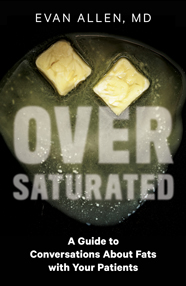
Dr. Evan Allen has practiced medicine for a quarter century and is board-certified by the American Board of Obesity Medicine. He has opened two practices in Henderson, Nevada, where he lives with his son. After paying closer attention to nutrition, he saw the health of his patients improve. In Oversaturated: A Guide to Conversations about Fats with Your Patients, he offers a thorough review of the research on saturated fat and gives clinicians counseling techniques to help patients eat in ways that support long-term health.
📚 Books by Evan Allen
Transcript
[0:00:22] CH: What’s up, everybody? You are listening to Author Hour, the podcast where we interview authors about their new books. Today’s episode is with Dr. Evan Allen. He’s the author of Oversaturated. Saturated fats used to be really easy to discuss with patients. It was like talking about cigarettes, you could just say, “Avoid them.” But for the last 15 years, Americans have been drowned in a sea of misinformation created by the food industry and that’s what Dr. Evan Allen is here to talk about. He believes that this distortion of the truth ignores decades of established research and has led millions of people to embrace a diet high in saturated fat. Because of that, he believes that many will suffer the consequences of diabetes, dementia and heart disease. Now, Evan has been practicing medicine for over 25 years and in that time, he’s opened two practices in Henderson, Nevada. He’s received board certification from the American board of obesity medicine. But more importantly, when he really started to pay attention to nutrition, the health of his patients improved dramatically. In this episode, he hopes to give healthcare providers what he never had which is a guide to talking to your patients about a healthy diet that’s low in saturated fat and ultimately, genuinely improve the health of your patients. Now, here’s our conversation with Dr. Evan Allen.
[0:02:09] Evan Allen: I was a fairly traditionally trained and traditionally practicing family doctor for most of my career and in 2011, I was going to have my first child and I had to get an insurance physical. Having a been a vegetarian my whole life and never really having the belief that I could be at risk for any serious diseases, I sort of didn’t care about it much. I had gained some weight and you know, had some minor nagging illnesses but nothing that was preventing me from working. Basically, did the blood draw and the EKG and all of the stuff that you when you get an insurance physical. It came back and reported that I was a level two candidate because I had a fatty liver, which I was a little miffed at, right? I’ve been vegetarian my whole life and never really voluntarily eaten any meat that I know of and occasionally taken a bite of stuff and had to spit it out. I thought, "Well, how is this happening." I really didn’t know exactly where to go from where I was but I had read the traditional stuff that all of us read in the media about how carbohydrates are really bad for you. It’s sort of transitioned to eating the higher fat, eggs and cheese and butter and trying to avoid loads of crackers and pasta and grains and things like that. The time, well my wife was pregnant and we were doing this, we were eating eggs and butter all the time and so I was fairly surprised, given everything that was going on in the media at that time about how, no, saturated fat isn’t bad and carbohydrates are the real source of all the problems. I didn’t really know what to do with that and a few weeks later, actually, after my son was born, I ended up watching the video, Forks Over Knives on Netflix which at the time, I’m significantly upset me and sort of caused me to become angry about this ridiculous propaganda that this movie was putting forward. I decided that, you know, I’m a very educated physician, I know lots and lots about medicine and lots and lots about nutrition and I’m going to show how I don’t want to use any excessively pejorative words but I was going to show how the doctors who had been in this film had feathers and bills, let’s put it that way. I went and researched fairly intensely for a couple of weeks, all the data, one side or the other and all the information I could find. And the data had a fairly clear cut bias, which was they type of diet that they were recommending which were very high in fiber, very low in saturated fat which is in line with all the traditional guidelines anyway, were actually significantly better both in laboratory studies and randomized control trials and observational cohort studies, where you look at people over long period of time. Then most of the recommendations they were making were fairly well grounded and fairly solid science. The only thing that I found that I could use to get around that and to sort of support the narrative that I had been supporting in my mind up until that time and telling my patients, you know, I would tell my patients, to avoid all carbohydrates and really try to increase their fat protein to improve blood sugar. The only narrative I could find that supported that practice was to disregard cholesterol and to think that, you know, cholesterol was actually good for you in having a high cholesterol was good for you. I knew already at that point from having practiced since 1994, that was impossible. My clinical experience was far too strong, treating patients with high cholesterol and watching them improve in the cholesterol got lower and watching them get worse when their cholesterol stayed high, to believe that cholesterol was not a serious risk factor. To this day and there are plenty of people out there who deny this and argue the other direction and I don’t know that there is a way to silence those voices but the scientific evidence against cholesterol is incredibly strong and it's only gotten stronger since I did that initial foray into the research. Having found all this stuff out that high fiber diets, low in total fat and low in saturated fat, are really beneficial, I ended up doing the experiment of just adopting that plan myself. I was already vegetarian, so I wasn’t really that hard of a challenge for me to give up meat but giving up butter and eggs and cheese were actually somewhat of a challenge. I’m sure much easier than somebody who is eating traditional diet. But it was a little hard for me to give up all the pizza I have been eating and things like that. When I did that, I dropped 45 pounds, found out that I no longer wheezed, fixed my urticarial vasculitis that I had been diagnosed with when I was in the air force, it was sort of an annoying nagging thing and just generally felt substantially better even in my late 40s that I had in my late 20s and 30s. My sleep improved, because I lost weight, energy improved and again, these are the kind of stories you hear people tell with any kind of nutritional change from an unhealthy diet to a less unhealthy diet. I don’t try to argue that my personal experience with that is in any way compelling to anyone else, lots of people tell all kinds of anecdotal tales about what improved with them. What really – my focus then was, well, where does the literature really go on this and just having read all this literature, I thought, well, let’s try this with some patients. I started making different recommendations to certain patients about what to cut out and what to emphasize and what I found was that the results were much better across the board in patients who made big changes. Again, it’s going on a diet low in saturated fat in the western world is very unusual and very challenging. It takes a lot of effort and a lot of energy to really closely look at all your food and be very careful in restaurants and be very careful when you shop to keep your total saturated fat under 6% of your calories, that’s really a lot of work. It’s a lot that could be made better by changes in society in general, obviously. But, when people did it, I found blood sugars normalizing blood pressures normalizing, significant improvements in body composition, reversal of fatty liver, which is very common in the United States. And so it really made a big change in how I sort of approached things. And what I started to get disappointed was the amount of time that I needed to deliver that message was not easy to deliver in sort of our canned office visits that we have under typical insurance models. I sort of changed up and developed a new practice model where I opened a concierge practice, I had more time to spend with patients and more time to emphasize lifestyle and went ahead and got board certified in obesity and that has really helped me with patients and helped develop sort of a more overall approach to problems where I still do traditional family practice and I’m quite good at it and I can still prescribe medications for problems whne people need them. But for people who can and have the energy to make the lifestyle changes that I generally recommend, I find that the amount of medication they need or the amount of interventions that they need are really quite a bit smaller than they would have needed without the changes in lifestyle.
[0:10:07] CH: Evan, what types of people are you really making these recommendations to? I mean, is this across the board all of your patients? Or is it for people who have specific problems?
[0:10:21] Evan Allen: I make the recommendations across the board and the reason I do that is because heart disease is the number one killer in the United States. It starts in childhood. The first evidence that someone will have — of heart disease in men is sudden death and one and four and in women it’s even higher, it’s one in three. It’s really not legitimate, in my opinion, to wait until you have symptomatic disease to make the changes required. If some other disease were the number one cause of death, then I might say well, we should target these recommendations more narrowly, right? At the moment, that’s not the case, we’ve dropped heart disease deaths, we’ve taken about two thirds from the peak in the 1960s. In the 1960s like 600 people per hundred thousand were dying annually of heart disease and that’s down to about 200. It’s still the number one cause of death just a little bit above cancer. From my point of view, that’s a lot of dice to roll to just go ahead and keep doing what you’re going to do naturally and just not worry about it until you develop symptoms, given that at best, you have a 25% chance of suddenly dropping dead. In the book, we talk about, there’s an example of a guy, Bob Harper, who was the host on The Biggest Loser and was a quite physically fit and was doing what he thought was best nutritionally and was working out and had a sudden death event which was his first evidence that he had heart disease. Luckily there was somebody there with paddles to shock his heart back to life but if he had been there by himself or that have been had happened in another circumstance, he probably wouldn’t have survived it. There is an example of somebody who didn’t survive which is Jim Fixx, also in the book, who is author of The Runner’s Bible back in the 70s, he had high cholesterol, thought running would solve all his problems and so died at age 52 while running.
[0:12:23] CH: Your book obviously goes against what our culture right now is standing up for, right? Which is everybody’s trying to do the keto diet, everybody is in for a couple of years back, everybody was putting butter in their coffee and mixing it up and fat has become a hero. What made you decide, you needed to take a stand against this current wave of fat champions?
[0:12:55] Evan Allen: 'Fat-philia', yeah. The point is that the scientific and historical narrative that has been constructed in support of this keto diet is tissue thin. When you interrogate it at almost any point, you find that it’s built on a set of assumptions about the state of the earth that don’t hold up and you know, I find that the current situation when it comes to nutrition is you have a decent amount of people who are sort of in the middle but generally agree that cholesterol is dangerous and yet still think that maybe carbohydrates are dangerous and I get where they’re coming from, right? Carbohydrates are dangerous when they’re in foods that are not good for you, that’s your refined grains that are associated typically in America with desserts, those are your sugary desserts that are cream based, those are your carbs that you’re going to get from foods like pizza and so I think everybody agrees that those foods which are both high in refined carbohydrate and also high in saturated fat are negative for health. They should not be a primary source of calories for anyone. I think a lot of people get better when they do keto or something else because they eliminate a lot of discretionary calories. You know, if you’re on keto or you’re on a healthy plant based diet and there’s a jar or a bowl of M&M’s in the hallway, that you have to walk past every day, in either case, you’re not going to eat the M&M’s, right? In either case, you’re getting a lot fewer discretionary calories. Where as if you’re not doing any kind of modification of your eating then you’re going to take some M&M’s when you walk past. They taste good, they like them, they’re yummy. The situation for the moment, for keto is, that a lot of people with a lot of money have been funding this idea that keto is the solution. The primary funder of it has been Laura and John Arnold Foundation and when you – this is not in the book but when you really follow the narrative back far, you usually find somebody who is funded by the Laura and John Arnold Foundation. I don’t know exactly why Laura and John Arnold’s Foundation, which they made with Enron money has decided to push a low carb narrative but they certainly have and there’s certainly big money there. The dairy industry has also funded lots of research that tries to suggest that saturated fat generally and specifically the saturated fat found in high fat dairy foods, which are the number one source of saturated fat, are actually beneficial to your health. It’s a tell of the way they’re doing this. They’re doing it all with either observational studies or studies of studies or what are called meta-analyses but not doing basic science research. Basic science research is really sort of the pillar that allows us to know that something is actually causal or not causal. I mean, basic science research, whether we fit it the lab animals or drip it on cells and culture or any other thing. When we add saturated fat to an animal or cell culture, it is harmful, it causes deleterious metabolic effects across the board. These studies sort of get ignored and again, cohort sized epidemiological sites where we follow people over time and you have Finland which 20% of their calories from saturated fat in the Seven Countries Study and have the highest rate of heart disease versus japan which ate between three and 4% of calories from saturated fat and had the lowest rate of heart disease. These are all poo-pooed because all of their observational or their laboratory and mice or rodents are primates but not in humans and somehow humans are uniquely different. The keto arguments when you interrogate them just don’t really hold up. Even the biggest proponent of low carb diets, there is which is Gary Taubes admits that in general, low carb diets raise your LDL cholesterol. There’s a chapter in the book about LDL cholesterol and just how dangerous it is and if you believe that, then you have to believe that diets high in saturated fat are dangerous because they’re going to raise that LDL cholesterol.
[0:17:23] CH: To the point of Finland and japan eating lower levels or Finland ate higher levels, japan ate lower levels of saturated fat. Japan had the lowest rate of heart disease. Can you counter that as well as the Roseto community in the United States. Are you familiar with them?
[0:17:45] Evan Allen: Yeah, they’re Italians and they ate a fairly traditional Italian diet but they also have you know, some American foods as well and they are better than most American societies, that’s correct. They don’t have better statistics than [inaudible] Adventists and the [inaudible] Adventists are vegetarian. I know them well because that’s where I grew up.
[0:18:07] CH: In just a quick bit of background for the listener, the Roseto community was Italian immigrants, it was a community of Italians who ate lots of saturated fats, smoked a lot, worked in coal mines, just generally didn’t seem to have markers of a healthy lifestyle but had the lowest rate of incidents of heart disease in the United States at the time and the reason I bring them up also is because the factor I believe that they said was the most influential in their rate of heart disease was community and a lack of stress, basically. Because they had so much communal support.
[0:18:53] Evan Allen: Gatherings and communal support and all those things and those are great things and I agree.
[0:18:58] CH: Yeah, you actually have a chapter in your book called 'When Communities Change How They Eat'. Talk to me about that chapter?
[0:19:05] Evan Allen: Interestingly, The Seven Countries Study which again from the keto point of view is considered this fraudulent study which you know, you know that somebody is giving you line when they tell you that the seven county study was fraudulent because it was run by so many different researchers in so many countries that have had it been fraudulent, it would have been the most massive conspiracy ever and would not have gone undetected. For example, we had a fraudulent study just recently, the PREDIMED Study which was banded about by people who recommend high fat diets as this wonderful study that showed how high fat diets were not dangerous and then was found within a decade to have been completely fraudulent and was retracted. If the Seven Countries Study had tried to do something like that, that also would have gotten out certainly between 1970 and 2019. It hasn't and because it wasn’t fraudulent. In the Seven Country Study. Finland actually, the highest rates of heart disease and the Finnish government took this as a sign that Finland should change and do something different and so an amazing research named Pekka Puska put together a program for the region of North Karelia in Finland which had the highest death rate from heart disease and what he recommend was transition from diets high in saturated fat to much more plant based diets. Take much of the pork and meat out of their stews and replace them with potatoes and vegetables and try to get farmers to instead of trying to get dairy products made to grow the natural berries that grow very well in Finland and freeze them and use those as a source of calories over the year rather than doing as many dairy products. Generally changing the fat content in almost all the products that were available and asking people really to be educated in this way. In the North Karelia Project, over the period of a decade, they dropped heart disease death rates by 80%, that is an 8-0. A much higher drop in a much shorter period of time that happened in the United States over the last 50 years. Have largely maintained that and so, if the narrative that keto people put forward, which is that saturated fat is really quite good for you, you should try to eat as much as possible were true, then the Fin’s health and death rates from heart disease should have worsened in that period of time when they were being specifically told to eat a low fat, low saturated fat diet. Well, that’s exactly the opposite of what we see. For me, this is compelling evidence that the world does not work the way that this prevailing and what I sort of think of as slightly industry sponsored counter narrative has suggested is the case. If putting butter and coconut oil on your coffee were good for you, then the Fin’s should have gotten less healthy over time and the Japanese should have over the last 15 to 30 years, as they increased their consumption of fat and decreased their consumption of rice seen actual significant drops in the rate of heart disease. What’s really happened is, in Japan, things have been pretty flat because heart disease treatment’s gotten better and stats has been put out whereas in Finland, rates dropped dramatically.
[0:22:28] CH: When did we really start measuring heart disease? When did it become a pervasive problem and de-evolution of humanity?
[0:22:37] Evan Allen: Yeah, there is a great graph that the CDC puts out, that shows causes of death over the 20th century. What you see is that there was heart disease as a significant cause of death in the 1900, it was number two behind pneumonia. If you go back earlier or even to 1870, heart disease was actually really quite rare at that time. It’s really, last half of the 19th century and then the early part of the 20th century we see a big bump. Now, a whole lot of things are happening industrialization at that time. So when you get industrialization, you start to get electricity, refrigeration, you get industrialized transport of foods you get much better storage of foods and so, rather than having those people get their calories from a dry goods store, people start to get their calories more from markets that are selling meats and dairy products and eggs and other things like that because those foods won’t spoil nearly as quickly. So they become a bigger part of the diet. And in general heart disease is first reported in the 18th century where we can be clear from autopsies done that this was actually heart disease but it was quite rare. It was really quite limited to the wealthy and upper class. I think there is good reason to think Henry the 8th also suffered from heart disease and he was also wealthy. And we know pretty much exactly what he ate and when we look, we don’t see a really high carb diet. We see a lot of wild game and a lot of pheasant and grouse and duck and beef and loin and all sorts of the things that rich people would have liked to eat throughout. And so in general, heart disease was considered sort of a product of wealth and if somebody who is wealthy had heart disease the general advice was to adopt a more peasant style diet. Lower in saturated fat and lower in animal products and this would generally improve the symptoms and that was sort of widely understood and as it became more common in the late 19th and early 20th century a bunch more different nutritional approaches were tried and many of them were quite successful at treating the symptoms. But it was only in the early part of the 20th century that researchers started testing laboratory animals with various diets to see what would instigate the process of heart disease in those animals. And what became quite clear early on, we’re talking about 1917, 1920 is that it was diet high in saturated fat and cholesterol that promoted this hardening of the arteries. So you could feed rabbits cholesterol and they would get hardening of the arteries that look just like human beings and then you could also feed the same rabbit saturated fat without cholesterol and the liver would turn the saturated fat into cholesterol and the rabbits would get the same hardening of the arteries. And so, over the course of the 20th century it became clear that the primary driver of the high cholesterol in the blood was saturated fat and not cholesterol. So it was actually a mathematical equation that has been developed on the basis of feeding studies where you put people on the metabolic ward and limit everything that comes in and out and you can actually calculate if you know someone’s baseline cholesterol what will happen to their cholesterol level, if you feed them a certain number of their calories from additional saturated fat versus unsaturated fat versus cholesterol and the saturated fat is the single most important variable there. You have to double the quantity of saturated fat to make the equation work correctly, whereas cholesterol is actually you take a route of the amount of cholesterol because cholesterol has less of a total effect but they both have an effect and so again, if industry and these people who pushed the keto narrative really wanted to change the minds of people who know the science in depth. What they would do is they would fund basic science research where they put people in metabolic ward, feed them additional saturated fat and watch their cholesterol drop. But they don’t fund that kind of research and the reason why they don’t fund that kind of research is it has already been done and we already know the results and the results don’t support eating diets high in saturated fat, if you want to have a reasonably low cholesterol level.
[0:27:09] CH: Well I want to pause you there because I want to ask a question that I am sure is on the tip of many listeners tongues, which is what about the narrative right now that it is sugar and inflammation that’s the problem that’s the over assumption of sugar. Sugar is in everything, right?
[0:27:27] Evan Allen: And that is absolutely correct and I really hope that there is nobody out there in the nutrition space who is recommending a high sugar diet. And if there is someone out there recommending a high sugar diet, I will find them and tell them to stop doing that. Because the reason to avoid high sugar diets is because sugar does have some significant negative health effects but it is pretty hard to tease those negative health effects out once you control for the primary sources that people get their sugar from. People generally don’t get their sugar from hard candy. They generally don’t get their sugar from tablespoons of sugar that they put in their mouths from a Domino’s bag. They generally get their sugar from foods high in sugar. Well what are those foods? Those foods are foods like donuts, pop tarts, cookies, cakes, pies, brownies, delicious foods and foods that are easy to overeat but also foods that are very high in saturated fat, right? So if you are eating lots of donuts and lots of ice cream you will get lots of sugar and it will be bad for you. And I don’t stand behind anybody to tell people that and neither did, by the way Ancel Keys who wrote extensively about how Americans should be replacing their sugar calories and should not get significant amounts of energy from sugar. But we look at nations like Cuba. Cuba in 1995 underwent what was called in Cuba, The Special Period where after the collapse of the Soviet Union, the money coming from the eastern block to Cuba dropped dramatically. And so Cuba was in a tough situation and they needed to adopt a whatever calories we can get approach because total caloric intake dropped to famine levels. The average Cuban lost 11 pounds, death from starvation went up. I’ve talked to people who were living at Cuba at that time, they were eating rats. Nobody had pets anymore because they would kill them and eat them. So it was a very, very dangerous time but Cuba grows a lot of sugar cane, right? And so because they grew sugar cane and this was a source of calories that they could easily get to the populous without needing to generate currency, sugar consumption actually increased dramatically during The Special Period up to a total of 27% of calories. Now I would find that kind of disgusting, right? That would be a very sweet diet if you are getting 27% of your calories from sugar. I think even a child might get tired of that. But obesity rates dropped, diabetes rates dropped, heart disease rates dropped. So the theory that sugar causes all these horrible metabolic problems seems to fly poorly in the face of that data and, you know, we can’t do experiments. I don’t think it will be ethical to do an experiment where you fed someone 27% of their calories from sugar. I think that is harmful and the Cuban experience doesn’t make me want to go drink a lot of Coca-Cola and eat hard candy, right? But it does suggest that the narrative that sugar is uniquely and only the problem and you can completely ignore saturated fat and put coffee with coconut oil in your stomach every morning isn’t particularly accurate, right?
[0:30:57] CH: Yeah that’s true. There is a chapter in your book that I haven’t come across this word before or this condition, ceramide.
[0:31:07] Evan Allen: Yes, that is something that is relatively new and I hope is instructive and informative to people who read the book. Ceramide when I was in medical school wasn’t really capable being studied at the time except as a major component of things like skin cells and ear wax because in regular tissues it is present in such small amounts that’s very, very hard to get accurate assessments of how much is present. But techniques in an analytic chemistry improved so dramatically that by the first part of the 21st century, we were able to do much more analysis on what are called sphingolipids. Which is just a fancy word for a very specific kind of fat. And so what we found over the last 20 years is that diets high in saturated fat tend to raise the levels of certain of these ceramides that are metabolically harmful. These are ceramides that are based on palmitic acid, which is the most common saturated fat founded in foods and steric acid, which is the second most common saturated fat founded in food. These ceramides seem to indecently predict risk of things like heart attack and other significant metabolic disruptions like fatty liver and diabetes, independent of what we call the traditional markers, things like LDL cholesterol and blood sugar and insulin levels and things like that. So studies have been done feeding people diets high in saturated fat versus diets high in unsaturated fat and what we have shown is ceramide levels both in the liver and in the serum go up dramatically. There is interesting research that I don’t have in the book implicating ceramide also in the development of asthma. Which would fit sort of what we know in general., we know that people with obesity have higher rates of asthma. We know that people with higher circulating levels of saturated fats have higher levels of asthma and so ceramide is really a new and a novel bio marker that does help us predict metabolic disturbance and is uniquely linked to diets high in saturated fat and interestingly since the book has been published, there is actually an editorial that just got published last week out of the University of Utah that suggest that we should maybe begin screening patients. Certainly at least patients who’s had a heart attack or stroke for their ceramide levels to maybe to try to take steps to reduce those ceramide levels because those patients are such at high risk. So the benefit for me of ceramide is it acts independently and a mechanism that is different from cholesterol. So unfortunately there is a subset of patients who have bought into this low carb narrative and have been convinced that cholesterol is not a bio marker of concern and for these patients it is difficult, as medical providers for us to treat them or talk to them about the risks because when we bring up cholesterol they glaze over. But the ceramide data is independent of the cholesterol data and again in fact in a study that is published, again since I published the book, ceramide levels were better predictors in patients who had heart attacks already, who mostly get statins to drop their cholesterol levels. They were better predictors of the risk of a reoccurrence of heart attack than even LDL cholesterol was. So I think this is an avenue where there hasn’t been much misinformation propagated to the public yet and as a physician, if we can start measuring ceramide levels and decreasing saturated fat intake to drop the ceramide level will also hopefully drop cholesterol levels and drop overall risk in the population in general. So the reason I wanted to put that in the book is because the data and science on ceramides is really quite strong. But there’s basically been complete radio silence on the part of media about this emerging risk factor and I wanted to bring it to more health professional and the general public’s attention.
[0:35:30] CH: And one of the cool things about your book is at the end you have a chapter specifically for health care professionals, for doctors. On how to talk to their patients and I’d imagine a lot of them now have patients coming in and saying, “Doc, I feel better having more fat. You know I think more clearly. One of my favorite authors, Dr. Jordan Peterson, he is on a carnivore diet. He has been that way forever and he got tested and his cholesterol levels were good to go. What’s the problem?” And they have their defenses up, what is your advice to these health care professionals on how to speak with their patients?
[0:36:15] Evan Allen: So whenever you are dealing with patients what you have to try to explain is how the science shows to their specific situation and yet any individual case you can’t use as a general rule, right? So I deal with this all the time when it comes to cigarettes. People tell me, “My grandma smoked a pack a day every day and he lived to be 98 so I am not worried.” Well you know, I can easily imagine someone who drives without their seatbelt who never got in a wreck. That is easy to imagine, right? It is easy to imagine somebody who has never had fire insurance and never has the house burned down and feels perfectly comfortable not having the insurance, right? But any cursory examination of those cases suggest, look you can’t count on someone who is lucky adopting a risky behavior necessarily applying to you. And sad to say, red meat is a class 1B carcinogen and processed red meats, which are common enough, you know, bacon and burgers and things like that are class 1A carcinogens along with asbestos and along with cigarettes. So the idea that a diet composed entirely of these foods is going to be beneficial for health, just is way too big of a hill to climb and requires much, much larger evidence base than one guy who does it who seems to be doing well. Now as far as I know, Jordan Peterson’s own family has had some health problems, not in Dr. Peterson himself but in close family members, who apparently have adopted this diet and so that fact is also not reassuring, right? You know in general what you want is an eating plan that’s been tested in hundreds of thousands or millions of people and been found to be associated with low rates overall of disease. So for example you have Ireland in 1835. Ireland in 1835 the average person ate 4,000 calories a day of white potatoes, right? Everybody pretty much knows this and they know what happened after 1835 when the potatoes started dying, the Irish started dying, because they had no calories and they started starving to death. But when they are eating 4,000 calories of white potatoes a day, their death rate from diabetes was two per million. So I know that eating a diet relatively low in fat and high in unprocessed plant based carbohydrate is probably pretty safe in terms of somebody who is diabetic is not going to significantly increase their risk in doing that and there is plenty of scientific research to back that up. I have no idea that eating a diet composed entirely of meat is going to prevent diabetes. In fact the studies show the other direction and one of the big proponents of this carnivore diet, Shawn Baker has pre-diabetes blood sugar levels on his own blood test. Well how is he getting pre-diabetes if he never eats any carbohydrates unless blood sugar is not entirely based on just exactly what carbohydrates you eat but more on your overall insulin resistance and a diet high in saturated fat causes that insulin resistance, which I think we show pretty clearly in the book. So you can’t go on individual anecdotes and individual anecdotes are useful to generate hypotheses but they are not the way you find out facts, long term and we have data going back millennia that suggest that disease rates of non-communicable disease, things like diabetes, heart disease and cancer, are quite a bit lower on people eating traditional agricultural based cooked food, plant based diets. Death rates in Chicago in 1850 from cancer were one in 400 and that is being generous. Because the published death rate was one in a thousand. So I will say one in 400 because they missed a bunch of cases. Death rates from Chicago now from cancer are one in four. It is hard to imagine that that’s genetic alone.
[0:40:34] CH: I think that’s a phenomenal point. It is easy to latch onto anecdotes that are fascinating but you’re right. It’s like they could have – it is irrelevant because they could have just made a change from a really poor diet to a slightly less poor diet and the ramifications of that decision haven’t caught up with them yet because they haven’t been on that diet long enough. So useful for a hypothesis but not for making a lifestyle change.
[0:41:12] Evan Allen: Exactly that is why I try to – although I find my story very compelling for me and I am happy about my story, I try not to base my case on what happened to me personally. Because other people have made other big changes in their diets that are different from mine and still gotten big health improvements and that in it of itself isn’t how we find out the truth.
[0:41:34] CH: Absolutely, so this has been really great Evan and I would encourage everyone listening to grab a copy of Oversaturated on Amazon. I’ve got a couple more quick questions for you. The first one is what is the best way for our listeners to maybe follow you in your journey or even connect with you?
[0:41:55] Evan Allen: So I interact probably the most on Twitter and my handle is @EAllen0417 on Twitter and that is probably going to be the easiest way for people to get my latest info. I also have office hours and obviously is anybody wants to come and see me in my concierge practice in Henderson, they are certainly welcome to. I’ve had patients travel from as far as Paris, France to come see me in my office. So that always sort of shocks me that anybody is that interested in my point of view but it is certainly a nice compliment. In addition, if people really wanted to get a hold of me, they can certainly contact me by direct message on Twitter. Unfortunately, I am not able to give any individualized medical advice because of the laws against practicing medicine without and examination and so in general they are going to get general information from me but on the other hand I think that the general principles of healthy living are pretty nicely applicable to most individual situations and can be explained without too much difficulty to just about anyone.
[0:43:09] CH: Absolutely and the final question I have for you is give our listeners a challenge, what is the one thing that you would like them to do this week from your book that will have a positive impact?
[0:43:23] Evan Allen: So I talk about this all the time and I think a top five approach is a really good quick and easy approach, I have used it in the office multiple times and it is something that people who are rushed for time and really just want to give good advice in a short period of time can do. Which is to get rid of the top five sources of saturated five and those top five are pretty easy to remember once you’ve gone through the list. I think I have gone through it a couple of times here. And it’s cheese, pizza, grain based desserts, dairy based desserts and chicken. So if people remove those top five sources of saturated fat from their diet, most people see significant improvements in their health and I’ve had patients who just didn’t want to hear anything else that I had to say but followed that advice and they dropped weight. Their asthma improves, their cholesterol comes down and they see really improvement significantly across the board when they’re able to make those changes.
[0:44:18] CH: The book is Oversaturated: A Guide to Conversations About Fats with Your Patients. Dr. Evan Allen, thank you so much for being on the show.
[0:44:27] Evan Allen: It’s been my pleasure and thanks so much for having me.
[0:44:31] CH: Thanks so much again to Dr. Evan Allen for being on the show. You can buy his book, Oversaturated, on amazon.com. Be sure to check out authorhour.co for show notes and a transcript of this episode and take a minute to leave us a review on iTunes. If you are enjoying the show we'd love to hear from you. We'll see you next time.
Want to Write Your Own Book?
Scribe has helped over 2,000 authors turn their expertise into published books.
Schedule a Free Consult