J Cornelius: Episode 337
Read the full transcriptJ Cornelius
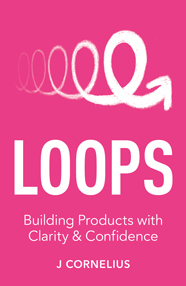
J. Cornelius is the founder and president of Nine Labs, a digital product strategy, design, and experience consultancy with offices in Atlanta and New York City. He has been building digital products since 1996 and has helped countless startups and corporate product teams create products and services people use every day. A serial entrepreneur with multiple exits, he is the author of the Amazon bestseller Loops: Building Products with Clarity and Confidence.
📚 Books by J Cornelius
Transcript
[0:00:17] RW: Welcome to Author Hour. today I’m joined by author J Cornelius who recently wrote the book Loops: Building Products with Clarity and Confidence. J is a really interesting guy who went from teenage entrepreneur to rock band sound guy, to internet pioneer, to product design and branding specialist. Today J is the founder and CEO of the Atlanta based company, Nine Labs, a digital experience designed in strategy consultancy. In his new book, J teaches readers how to create, build and bring to market products that consumers love. The type of products that consumers don’t just use but that they become rapid fans of. The secret ingredient to all of this is designing with human beings in mind. Well, that might sound obvious, according to J, far too many companies have lost the human touch that shoppers are seeking.
[0:01:14] J Cornelius: I kind of started in the entrepreneurial world, making businesses back when I was a teenager. I was in a band and we were at a battle of the bands and the guy who was setting up the audio system was either drunk or high or both and just wasn’t getting the job done in order for the show to start on time. I set up audio systems for our band many times, so I pushed him aside, I hooked the whole thing up, got the show on the road and the owner of the venue came over to me and he was like, “hey, you know a lot about this sound system stuff? Can you help me fix some stuff around the club?” I said, “Yeah, sure.” He asked, “Well, how much do you charge?” And I said, “$200 bucks an hour.” He said, “Okay, great. Can you be here Monday?” For a 17-year-old kid who is working the drive through at Wendy’s for at that point, I think minimum wage was like 3.75 an hour, this was a wind fall, this is a major opportunity and so I skipped school and I went to the club on Monday and fixed up his stuff and got paid some decent money and never looked back. At that point, I started my first company which was sound and lighting for rock and roll bands. We did tours with some bands that you probably heard of and have their music in your playlists. And then when the internet came around in the 90s, it captured my attention and a friend of mine was just starting some software that help people make websites, so I jumped on that bandwagon and we grew that company to about 50 million users around the world. We started a web hosting company in 2000, we sold that to Rackspace, sold the software company in 2006. And then when I finally left the software company in 2012, I just kind of floated around for a while and people kept coming to me asking, “how do you make software products? How do you make things that people are actually going to buy? How do you grow a company?” And so, I decided to answer their questions instead of just doing it from the goodness of my heart, I decided to charge for the answers? That’s spawned the consulting company which I ran today.
[0:03:06] RW: J, I’ve heard a lot of stories and I’ve never quite heard that story before. That’s incredible.
[0:03:13] J Cornelius: Well, it doesn’t feel incredible from my perspective. It feels like a lot of work and I’ve got a lot of scars to show for it, but I appreciate you saying that.
[0:03:20] RW: Yeah. What is it about software that appealed to you? Did you see an opportunity just in the internet and how it was this emerging thing or is there something specific about software that really drew you?
[0:03:37] J Cornelius: Well, I’ve always had kind of a balanced creative/engineering or analytical mindset towards things. I’m inherently curious about how things work and why they work the way that they do. And then I’m also very curious about how people make decisions and why people behave the way that they do. It wasn’t necessarily that software captured my attention but the internet definitely did. At that point, we were doing a lot of work with the sound and lighting company, it was a lot of late nights, we were doing all kinds of other things that took a lot of time and having a job where I could sit in air conditioning all day and type on a keyboard and make better money seemed pretty appealing. That led to the software business and through the course of that company producing. I think we make 60 different pieces of software over the course of those decade or so, it really cemented in me this idea of understanding what people need and building something that satisfies that need and selling it to them. That is the core of entrepreneurship, of startups is identifying a need and fill it. I think that was Henry Ford’s quote was you find a need and you fill it and that’s how you start a business. So, in the consulting practice, we work with a lot of startups, we also work with a lot of big companies and fundamentally, they’re all trying to do the same things, they’re trying to make their customer happy and they’re trying to make a little bit of money along the way. And so, the process that I’ve identified over all of these years of doing this is really not much to do with software as much as it has to do with products. That could be a software product, that could be a physical product, that could be service, it’s any number of things but it’s really around finding out what people need, what people are willing to pay for and building a product that satisfies that.
[0:05:21] RW: So, you’ve had a front row seat over the last 20 years now? More than 20 years to watch how business and product development and marketing have really changed with the internet. With that overview, what do you see that A, people are really doing right and be that they’re really doing wrong today?
[0:05:43] J Cornelius: Yeah, I think the thing that people often get wrong is they have this idea, they see something happen in their life or they experience something and they have an idea, it’s like, “oh, I should make a thing so that that is easier or better or doesn’t happen in the first place.” They immediately run out and they start thinking about what they’re going to call the thing, they’re going to brand it, they go buy domain names and they set things up and they absolutely skip the fundamental first step which is validating that that problem exists for other people. Once you figure out that that problem does exist for other people, you have to figure out how many other people that problem exists for and that’s what we, in the startup world as your total addressable market and your market size. A lot of people just skip that entirely, they think because they had a good idea that it needs to exist in the world and they go forward, spending all types of time and money, trying to create that idea and make it stick. That’s a completely backwards thinking. The people who are doing it right are the people who identify a group of people that they can help and that they can understand and then listen closely for what those people need and then figure out how to build that in a way that is profitable for a company.
[0:06:53] RW: This validation process, what should it look like? Give me an example of what that might be tethered down in the real world?
[0:07:02] J Cornelius: Sure, let’s take an example and this is an example that’s actually in the book, is an entrepreneur came to us and he had this idea to help people save money. So, I guess the environment that he was in, he saw a bunch of people around him who had difficulty saving money. And I don’t know if they were living paycheck to paycheck or just didn’t have the discipline or whatever. But he came up with this idea that he was going to create new – create an ecosystem of coupons and this network of shops and stores and restaurants that would accept the coupons and you could get a discount off of whatever their products or services were and then you could trade those coupons with other people and so you would end up spending less money on those things. But it never addressed the core problem of putting money into savings. He was out trying to raise money, trying to convince people to use this thing when he never actually figured out, what the pain point was for those people who had difficulty putting money in savings. It had nothing to do with coupons. People can use coupons, that’s fine. The discipline that people need to put money in savings is often as simple as just doing it automatically, which you can see with products like Digit and even some of the banks are starting to do this automatically where they just move miniscule amounts of money and 37 cents at a time, a dollar here, a dollar there into a savings account for you automatically. That’s the way to solve saving, not this other harebrained idea that this guy had. And I think as of writing the book, he’s still running around town trying to get funding for his idea. He skipped that identification of the core problem that people actually have in trying to accomplish that task.
[0:08:43] RW: So, do you think situations like this are a matter of people trying to get to tricky with their products or do you think it’s just not being able to identify the root of problems?
[0:08:55] J Cornelius: I think it could be a little bit of both. I mean, human nature is that we’re all fascinated with our own idea and everyone thinks that their idea is the best. And few people are willing to do the mental gymnastics that it takes to separate their idea from their identity. If you have a bad idea, that doesn’t mean you’re a bad person or that you’re dumb or that you know, anything else derogatory. It just means that that idea doesn’t have viability as a company. A lot of people just don’t know how to do that work because they’ve never given it that much thought. Part of what we’re doing is trying to provide a framework for people who have an idea that they want to take to market, to figure out how to do that in a way that maximizes their time and maximizes their effort. And it could lead to them figuring out, “okay, this is not viable. Yes, I have this problem but to solve this problem at scale for a large number of people, it’s going to cost way more than the people would pay for it so it’s not a viable business and it’s still fine if you want to do it as a hobby but it’s not a viable business.” Few people know how to think through that or in some cases, people just don’t want to think through it because they just love their idea so much that they’re going to try to make it happen no matter what.
[0:10:11] RW: Yeah, I was really struck by what you just said about our difficulty separating our ideas from our identity.
[0:10:19] J Cornelius: Yeah, you know, one of the things that happens in human nature is you know, we come up with an idea and because we can see it clearly, we think other people should be able to see it clearly too and that’s just not the way that the human experience works. S overcoming some of that in a fundamental human psychology is I think one of the steps that more people who want to build the business need to do in order to be successful.
[0:10:45] RW: So, on the flip side of this idea and identity, you talk in the book a lot about the necessity of building products that customers love. We’ve talked about validation, what else goes into building – first of all, identifying and then successfully building products that customers love.
[0:11:05] J Cornelius: Yeah, the main phases of work are doing research and that research is highly focused on a target market. That could be a target market that you belong to, it could be a target market that you see out in the world. Basically, understanding those people at a very intimate level. One of the examples that we give is we’ve seen plenty of startups come to us and say, “oh, we’re building this thing for professional women in their 30s.” “Okay, that sounds good but professional women in their 30s is a very broad audience and that doesn’t tell me anything about what their needs are, what their pains are.” We recommend getting very intimate in terms of who you’re targeting. You got a professional woman in their 30s who lives in a specific zip code who works at a certain type of company, drives a certain type of car, she goes to the local coffee shop, not Starbucks, she’s on Instagram, post a couple of times a day, usually pictures of her dog. She follows Martha Stewart on Facebook, she is into art, she goes to a yoga MeetUp and she probably has a tattoo that you’ll never see. That’s a much more precise picture of who that person is and how they make decisions. Getting that level of intimacy with your target market is going to help you understand that person’s pain point which is going to enable you to build a product that satisfies that pain point with much greater accuracy.
[0:12:27] RW: So, the idea here is to move away from this idea of a big market and being successful that way and instead, really getting sort of intimate with our consumers so that we understand them and can capture them on a niche level, is that right?
[0:12:44] J Cornelius: Yeah, there’s a phrase running around the internet, there’s riches in the niches and that’s very true. If you can find an audience of people who have a specific type of pain point and you can articulate your value proposition to them in a way that resonates, that they get. Then you’re going to be able to sell a product that they love and then you can build the company up from there. Something that I also work with a handful of startup incubators and other innovation and entrepreneurship programs and one of the things that we’re working on in one of those programs is dispelling this myth that you have to be the next unicorn. You have to build a billion-dollar business. It is simply untrue for a lot of people. Most people in this country and around the world are middle class, right? So, in America let’s say and I don’t know if this number is true. I am just going to make it up let’s just say that the average income is $80,000 a year and if you can create a business where you can earn $15,000 a month that is a substantial increase in your lifestyle and that is not a billion dollar business and then once you have that fundamental business in place and earning money you can then leverage that to build out to a wider range of customers. You can then go and introduce more products or introduce the same product to a different market with a slightly different spin and then grow the business from there. Like people skip that first step of getting that initial traction with a small market and then that leads to growing the business into larger markets.
[0:14:14] RW: Is there a company you love that you really emulate these ideas?
[0:14:19] J Cornelius: Yeah, there’s so many. If you look back at the origins of Airbnb for example, I don’t know how much you know about their history, but one of the things that they did early on and one of the founders is from here in Atlanta. So, I had a conversation with him about this. One of the things that they did early on was they as the founder would actually go door to door and talk to the people who had agreed to be hosts or talked to people who were interested in being guests. And really understand what was important to them and part of the findings from that were that they needed to have a greater idea of matching the guest and the host in terms of like lifestyle and what is important to them and it is not just about how big is the space and how many beds are in it but what’s the vibe of that room, what is the host want to know about the guest so that they are comfortable allowing a stranger into their home? And so solving a lot of those pain points really early on by intimately understanding that and we talk about this in the book too is fear and desires that are the two main motivators for decision making in humans so really understanding the fears and the desires of the host and the fears and the desires of the guest enabled them to create an experience that answered both of them and so now as we all know Airbnb is a giant business. But what they did early on was that really hard work going door to door and talking to people face to face to understand what their challenges were and find novel and creative ways to overcome those challenges.
[0:15:52] RW: I am very struck by the humanity of everything that you are talking about. I think that when we think of tech, we think of it as sort of a cold thing and this is all very human centric.
[0:16:04] J Cornelius: It is. It is human centered design and that is a core tenet of the book is that in the end, we are not designing a product or creating a product for a computer to use, we are creating something for a human to use and in order to create something a human will use, you have to understand that human.
[0:16:20] RW: Yeah, you talk in the book about how – this is a book that makes sense out of chaos, but what is interesting to me because when you describe all of this, it is very logical, actually. You may not be talking about things that would have been intuitive to me if I were designing a product for the first time, but it all very logical once you break it down.
[0:16:44] J Cornelius: Yeah, well it is easy to see how something’s put together once it is already put together. It is assembling that is hard, right? So, if you have a jigsaw puzzle on the table and it is already completed, you look at it and you can see a pretty picture, but if it is still in jumbles and pieces then you can’t really tell what is supposed to happen there. So I think that what you are describing is the fact that over the past 25 years we have been figuring out how to put these pieces together in a way that makes sense and now we have gotten to the point where we’ve got a system in place that people can follow to make order out of chaos and so from the outside looking in, it seems to be pretty straightforward.
[0:17:24] RW: Now, the name of your new book is Loops. Explain to me why that is the title for this.
[0:17:31] J Cornelius: Yep, so a lot of people specifically in software, in the old school there’s these two competing methodologies. So, in the old school there is waterfall methodology. It means that you can do one thing until you do the thing that comes before it and if you think about putting like building a house for example, you can’t put on the roof until after you have built the walls and you can’t build the walls until you have the foundation. So that core principle of waterfall is something that is present in software and product design, even to this day. And then there’s this concept of agile, which is you move, you do things in very short bursts and you are constantly iterating and constantly improving on the thing, which exists in a certain point within software and it is a very helpful and useful methodology, but what it lacks is you can’t accomplish, you can’t have that level of speed and that level or iteration until you have laid the foundation. So, it is agile within the waterfall methodology, if that makes sense. So, what Loops introduces is the concept that you can’t have just one linear path. So, you can’t have the – and going back to the house metaphor, if you build the foundation and then build the walls and then build the roof that’s fine but what if you discovered that you need to have three bedrooms instead of two? Or what if you discovered that it needs to be two stories instead of one. And that you don’t know until you are further down the process and you only know that by talking to humans that are going to use that house. So if you go out and you just lay a foundation for the house and then you go and talk to the people who are going to buy it and they tell you it needs to be a different layout, you got to go back and relay that foundation. In a physical world that is a lot harder than it is when with a software product because you can go and change things pretty rapidly. So, what Loops basically does is it introduces this concept of looping back and forth between these different phases of work. So, the phases are researched and then definition or prototyping and then building and then deployment and going to market. So those five phases don’t change but what you have to do is in your prototyping phase you have to be willing to loop back into the research mindset in order to make sure that what you are building is actually good for the people you are building it for. So you have to go back and forth between this mindset of research and discovery and then this other mindset of analytical and building things or creativity and building things and that is a constant process and as long as you or your company is alive you are going to be looping back and forth between those two general mindsets of research and analysis and creativity and building things.
[0:20:19] RW: So, it sounds to me like really inherent with success with this strategy is both flexibility and the willingness to iterate.
[0:20:28] J Cornelius: Yeah, exactly and I think flexibility is a good word around just keeping a general mindset of being able to adapt to what you’re seeing in front of you. If you build a prototype of something and you put it in front of people who might use it and they get stuck at some point in the process, you have to be flexible enough to recognize whether that is a problem with the way that you put something together or whether that is maybe a learning gap that you need to overcome with them. Or maybe it is just not answering their problem in a way that is compelling to them and the only way to answer those questions is by going back into the mindset of research and doing that fundamental understanding of those people’s needs.
[0:21:12] RW: So, even validation is not a one and done process, it is constantly going back. Is that correct?
[0:21:19] J Cornelius: That’s correct, yep. So, one of the metaphors we use is as a passenger on a flight from New York to London, it is pretty straight forward, right? You get in the seat, you sit there, you watch a movie or read a book, whatever you’re going to do while you are sitting on the plane. And as a pilot it is a much different experience. Typically, there are eight to 9,000 course corrections over that flight from New York to London. So even though you know where London is the plane is going in that general direction, things happen. Weather happens, the wind changes, maybe there is another plane coming that you need to avoid. There is all types of things that happen over the course of that journey that you need to adjust for and those tiny little course corrections are that validation that research and that validation that you are doing as you are going along the journey of building a product.
[0:22:07] RW: Great analogy. Okay, so if you were to give listeners who want to bring a product into the world one beginning piece of advice. So, a little thing they can do as soon as they finish listening to this podcast, what would that be?
[0:22:25] J Cornelius: Well I mean outside of the shameless plug of buying the book, what I would encourage people to do is get a fundamental understanding of human psychology and how people make decisions because one of the hardest things to do is to get people to change their behavior and if you are introducing a product to somebody that is going to require them to change their behavior to use your product instead of a competitor’s product or to use your product instead of doing something manually. So, taking action instead of doing nothing, those are difficult things to make happen. So, getting an understanding of basic human psychology and then really putting your ego aside and fall in love with the problem you are trying to solve. Don’t fall in love with what you think the solution is. If you fall in love with the problem, the solution will sort itself out through your research and your prototyping and your work. If you fall in love with the solution, what you think that solution is going to be, then you are going to be running around forever trying to find somebody to buy something that might not be perfect.
[0:23:26] RW: Excellent and finally, this seems like an appropriate question to ask you, what is your favorite product? If you remove yourself from the process of making it, what do you personally love as a consumer?
[0:23:40] J Cornelius: Well, it depends on what category you’re in. The things that come to mind, I think about the company services and products to which I am loyal, things like that I would that I have used every day and that I am really fond of and it might sound weird, but one of those is American Express. They do such a good job with the service offering, the website is clean and clear, they are super on the ball if that if you ever had a problem with the charge or the card gets lost or whatever. They actually bailed me out of a bad travel situation in Spain one time when I got stuck when I lost my passport. So, the service is just fantastic and that is not one product, it is a suite of products but they all work together really well to help me with both personal and business finances in a way that few other companies do.
[0:24:29] RW: I had anticipated that it would be a more novel product that is very interesting to me that one of your favorite products is such an established company. Clearly, they’re looping I would guess.
[0:24:40] J Cornelius: Yeah, absolutely. They are constantly listening to what their customers need and they are constantly introducing new ways to provide a solution to those problems.
[0:24:52] RW: Wonderful and J, is there anything I haven’t asked you that you want to make sure that we get into this podcast?
[0:25:00] J Cornelius: I don’t think so. I think you’ve covered all the bases and I am sure that people will be able to click the shownotes and get to the book and maybe the only other thing I’ll say is that is that as part of the book there is also an online course that people can take that leads them through all of those processes and a little bit more guided way that you usually can’t get out of a book. So that is going to be I think super helpful for a lot of people who might not be able to get through all of this stuff without some level of support. I mean we all need support to do things that is why we have friends and family. So maybe that will be helpful for some of the people.
[0:25:35] RW: And where can listeners go to find that course?
[0:25:37] J Cornelius: Just go to loopsbook.com and the course is actually going to be at loopscourse.com.
[0:25:44] RW: Perfect. Thanks for joining us today J.
[0:25:46] J Cornelius: Yeah, thanks for having me. It was a pleasure.
[0:25:49] RW: Thanks for joining us for this episode of Author Hour. You can find J’s book, Loops, on Amazon and a transcript of this episode as well as other episodes at authorhour.co. For more Author Hour, subscribe to this podcast on iTunes and if you are feeling it, we love reviews. Thanks for joining us, until next time.
Want to Write Your Own Book?
Scribe has helped over 2,000 authors turn their expertise into published books.
Schedule a Free Consult