Mark Davenport: Episode 342
Read the full transcriptMark Davenport
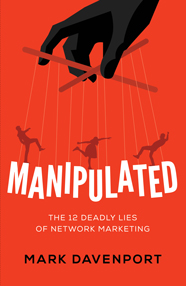
Mark Davenport is a veteran of direct marketing, multilevel marketing, and network marketing with more than twenty years in the industry. Throughout his career he built his reputation on transparency rather than aggressive sales tactics, an approach he credits with helping him outperform competitors and build lasting business relationships. In his book Manipulated: The 12 Deadly Lies of Network Marketing, he draws on that experience and his own research to help readers tell reputable companies apart from operations built on hype.
📚 Books by Mark Davenport
Transcript
[0:00:23] CH: Welcome to Author Hour. Today, I’m joined by Mark Davenport for a fascinating conversation about the ways in which companies have corrupted the fields of network marketing, direct marketing and multilevel marketing. In his new book, Manipulated: The 12 Deadly Lies of Network Marketing, Mark shares with readers the 12 red flags they need to be on the lookout for as they are considering engaging with a company. In our discussion today, Mark shares his views on how companies arrived in this place of corruption, the toll it takes on those who invest in and engage with these companies and how to protect yourself when working in this field which Mark says is still a viable field. As long as you are discerning about the companies you work with.
[0:01:13] Mark Davenport: I have been for so long in the industry of direct marketing and I’ve seen the same things happening over and over again and because I like the industry, I could not understand why things are going the way that people are being abused and tricked into a business that they probably wouldn’t have chosen otherwise in the first place. I thought, instead of just writing another book where they are telling you how to stay motivated and do their business. To also have a positive message by warning people what they have to be aware of so they can make a better choice in the first place.
[0:01:50] NVN: Let’s dive into that a little bit. How has the once viable enterprise of network marketing and multilevel marketing been corrupted today and also, what does that corruption look like?
[0:02:04] Mark Davenport: I think that’s why we have chosen the title that deadly lies. It’s like an unspoken agreement between different parties. It is the companies that are forming part of the problem, it’s the leaders that are hungry for more success and it’s even the new person joining the business that are all striving to have the success they always dreamt about. Instead of using just the good stuff that the industry has to offer or the company has to offer and go with the fact. It seems to be a battle of who can over exaggerate, who can make the good stuff even better because they seem to be afraid that the facts are not good enough. It’s like a snowball effect. One person is starting to say we are the best in everything so the next one has to find something to make that even bigger and better. Even if the company probably won’t say some of the information, they just start adding more stuff to the story in order to make it more attractive. At a certain point, you’re out of control and then it becomes said performing and that is when the new person that doesn’t know any better is falling for it not probably having the chance or the interest or the time or the knowledge to do a fact check and before they know they are sucked into the business and finding themselves in the place that they shouldn’t have been the first place.
[0:03:37] NVN: Talk to me a little bit about the toll that these companies are taking on the marketers who are buying in to this and getting involved. How can they get harmed in the process?
[0:03:50] Mark Davenport: You know, I think in general and this is maybe going too far but it’s like – everything in life, it’s even in relation should be like, I’m a big fan of framing. It’s like, if you promise one thing, you have to live up to it, right? If you are a person that is going to work with you side by side and you say I do it for 10 days or 10 years. You just have to live up to it and the toll that it’s taking on people is really that they are falling for false promises such as that they don’t have to invest a lot of time. Instead of telling people well, which is normal for any kind of business, you have a learning curve, you have to be open minded to learn new things, you have to invest at least eight to 10 hours a week as otherwise you can’t possibly expect to do a four or five or six-digit income per year, that’s not possible. They tell them that they can do it part time, they tell them that they don’t have to invest time or money and then they find out once they’re in the business, that they have to go to educational meetings which cost money and time. Then they find out that they have to have some kind of stock as otherwise come to problem with the product. This is the challenge that it’s not the fact that you have to invest in a business, right? Everybody has to invest in whatever business you run. It’s the fact that they have been promised that this is so special, that this is not the case in network marketing, then eventually they find it out when it is either too late or when they have to make another step in order to stay in the business and have a chance to succeed.
[0:05:41] NVN: It sounds like there’s some magical thinking at play here.
[0:05:46] Mark Davenport: Well, it depends what magical means. It’s like wishful thinking. It’s like if I tell you only half of the story, I guess, people think once you're trapped into the business, then you can’t leave anymore. Instead of telling you which is so much better long term, this is what it takes, this is the amount of time, this is the amount of money you have to invest and this is what you can expect which you know, makes life so much easier because no, you can’t come back to me and complain about me having painted the wrong picture. Whereas opposite the way most people work in the industry, telling you that it doesn’t take time, you don’t have to invest money and you have a fantastic income in no time like in 90 days. 99% that won’t happen. Now we have all the reason to come back to me and say, “Hey Mark, you told me that this is going to be a different story here. What’s wrong with you?” They are creating their own problem but somehow, you would think that common sense will tell them that after the first, the second, the hundredth time, it’s time to change but it seems to me like a trap that for some reason, they can’t escape and hence, I thought the book would be a chance for them to read it, you know? I have a kind of mural by saying well, I can read about myself and really have a better chance to be a long term stable successful business. If I don’t fall for the same lies that the majority of people use all the time.
[0:07:22] NVN: One of the things that shocks me when I was reading through your book is how widespread this is. I believe you said that 50 million people are approached with these sort of opportunities, that is a lot of people to potentially fall prey to this.
[0:07:42] Mark Davenport: Yeah, you know, this is obviously, it depends which source you look at but if you just take the amount, DSA is a direct sales association from the body of meta marketing. If you just look at their official numbers and then you’ll think about all the markets where they are in the numbers like China and you know, nobody knows because usually it’s illegal because all the big MLM marketing companies are working in China. Probably you have to add even the bigger number of existing business partners, distributors, reps, whatever you want to call them. If you just take that amount and multiply it by five or 10 people that they have to pitch per month, you know, we are easily ending up having a number that is even bigger than 50 million. That’s why I will think, you know, on the book is addressing, not only the existing network marketer that’s already full time in the business but especially those that are being pitched or have been pitched recently and they want to have a chance to see if they can find which is I would say a hundred percent chance that one of the lies that are in the book has been used on them and now they have a chance to respond and do their due diligence in order to come up with an educated decision.
[0:09:06] NVN: I love that. Is there in your mind a certain group or population of people that MLM specifically, particularly like to prey upon? Is there an at risk group here?
[0:09:20] Mark Davenport: I can say that I guess I won’t be gender racist since I’m a male, I can talk about my own people. I think male in general are more receptive because they are the ones that wants to live a high life, you know? They want sports cars, they want to live in massive mansions, they want to impress their girlfriend/wife. For us, it’s easier to fall for the promises and the hope that this is my way to stardom, you know? To become rich and wealthy and famous at the same time which was by the way a big deal recognition in this industry. You know, if you compare male and female I would absolutely say that the male population is the one that is at risk and then if you talk age groups, everything between 20 and 35. You know, when men are trying to find who they are and kind of grow up. This is the main risk group I would say.
[0:10:24] NVN: Are there any stories or companies that stand out in your mind that really exemplify what has gone wrong or what the collateral effect of this can be?
[0:10:37] Mark Davenport: There is actually a recent story that’s went viral but they were acting globally. Maybe you have heard about it, one coin was one of those cryptocurrency and network marketing companies. You know, when they came out, they had the old fantastic story, the founder kind of doctor from Bulgaria, former investment banker but she had enough and wanted to create a better world which is always a case, they are – she’s like founders. Then you know, you could invest in a cryptocurrency that will be bigger one day than bitcoin but it wasn’t real yet. It has to be built so that’s why you buy token for the right to have the currency at the later stage. If you applied common sense, everybody would say, who finished basic school. That must be a fraud system, can’t work, will never be the way they are saying it and the way the top leaders pitch that and pushed for having people investing not like normal MLM businesses, maybe 200, 300 or $400. They had start packages that went all the way up to 25, 50,000 or $100,000 so now we’re talking serious harm because once greed starts taking over your brain, you know, they start to getting another mortgage on the house, so that’s not even funny anymore. Despite the fact that newspapers and authorities started investigating the company, everybody was like on the winning train and singing songs because the top leader, obviously if you don’t have a product, and you do a couple of billion dollars in sales, you have a lot of commission to pay out because you don’t have to buy or produce anything. Just have air. They a couple of months ago, the first country started to seize assets and shut down the company and then eventually arrested founder and brother. But at the moment, government from different countries are guessing that they probably destroyed anything between three and 15 billion dollars of money from people. This is why this is so sad. You know, where I’m saying, we can look at the companies, we can look at the distributors, the leaders but we also have to look at the government bodies. We’re saying in most of the countries. Well, you can do that business model and we suggest you do it this way, you know, you have to be focused on customers which once again should be common sense why I produce a product in the first place if you don’t sell it to anyone but your own people, it doesn’t make sense. But instead of making that crystal clear, everybody could work in a legal frame. They have a lot of grey zone area where people then start becoming creative, especially criminal minds and then you get companies like OneCoin where absolutely not only destroying lives and stealing money but also giving the entire industry an even worse reputation that doesn’t help it at all. This is really a bet but good example in terms of how you can see what happens if a company really goes crazy in the wrong way.
[0:14:10] NVN: That is a staggering amount of money for a product that doesn’t even exist, that’s kind of mind-blowing.
[0:14:17] Mark Davenport: Yeah, it is. Sorry, you have already see, once you have enough people making big money, big income and then it seems like an invisible like I said an unspoken agreement then you even have network marketing magazines and online portals who start appraising those leaders and say, “Well, fantastic story. The so and so guy from OneCoin made last month $1.5 million” and so obviously if people read that on the “news” news in quotes here, they are saying: “Well if that magazine is reporting about it, it can’t be all that bad, so it’s a third party an authority if you want, they are saying this company is legit and the leaders are making so much money. Maybe I am just too negative. I should join them and make money as long as it lasts.” So it is really like a combination of many factors that lead to that disaster of destroying a beautiful industry that is fantastic in many ways but giving it such a bad reality check.
[0:15:26] NVN: It occurred to me as you were telling that story that one of the things that seems like it could get very tricky here is how entrepreneurialism and technology play into this. So the MLMs of old that mainly involved products, tangible products, people were sort of wise to those and could identify what was going on but now, we are so deep into this world of entrepreneurialism and products like cryptocurrency that are not necessarily tangible. It seems like there is a lot more room here for lines to get blurred and for people to potentially think they’re getting into one thing when actually they’re getting into something else. Is that correct?
[0:16:11] Mark Davenport: Yeah, absolutely I agree and it is also that’s one side and the other side is that even as a criminal in the old days, you have to have some money to produce a product. You need to have warehousing; you need to figure out how to ship a product. You need logistics. Now these days all you need to have is a laptop, put up a website, put up some fake names that are often not even real and the worst cases that I have seen, give them a fantastic background story. Awarded investment banker, is the CFO, a marketing genius, as a CMO and these people never even went to school in a world where every information and now information at the same time seems to be at your fingertips and people just stopped doing proper due diligence. So now you don’t need to invest any money in order to become a fraud artist and then if you have enough friends and followers who believe your story and start repeating it often enough. And start believing that you are a part of something very special, which none of those guys are very gifted in to align it to a social cause or something bigger than themselves, them obviously technology and being an entrepreneur from the dark side, a bad combination and I totally agree.
[0:17:39] NVN: One thing you mentioned there that I do want to touch on is that this can be a really wonderful industry. So we’ve talked obviously because of the nature of this book and what you are trying to enlighten people about, about the negative aspects of it but let’s round that out a little bit by talking about what is good and why it’s worth people’s time to discern between companies that are legitimate and companies that they want to stay away from.
[0:18:07] Mark Davenport: Yeah that is nice to do that. Once again, if you look at just the fact if somebody is listening now or sitting at home and thinking about becoming an entrepreneur, you just have to look at options, right? So you could say, “Well I do ecommerce” and there is a million of people out there, which would be worth another book, you know, the lies about online marketing, where people are saying, “Well it is super easy. You just put up a shop, you do something you like that you are passionate about and you start blogging about it and you make money,”, which couldn’t be farther from the truth. So that if you look at the statistic, once again it depends which source you believe, between 60 and 85% of all ecommerce projects dies within the first 12 months leaving the people in debt in average about $25,000. So not a lot of people talk about that but that is the reality. So you say, “Well that’s ecommerce. I could do franchise that seems to be safe.” Once again, number one the average franchise investment is around $185,000 and between 35 and 65% of all franchisee get out of business the first 18 months. Franchise as a business model has a greater support. So you have to dig and to look for the numbers but even on their own franchisee platform, you got to read those numbers they are not hidden anyway. So once again, it is not as easy as some people might think by saying, “Well I will open a McDonald’s.” Which is one million plus dollars to get it going in the first place. So there is a huge risk and the story goes on. If it is a traditional business, we all know within the first two years, 80 plus percent are getting off business having the average debt accumulated of $45,000. So now you compare the traditional models with network marketing where you usually have an investment to have some basic products of three to $500, you really have something that is great to start with. And then you look at the fact that you literally can start part time while you are doing your main job so you don’t have to risk losing your main income stream and once you have a plan and somebody told you how much time you have to invest in order to make what kind of money, you have all the time in the world to take two or three or four or five years to replace your main income and I usually tell people to have at least twice or three times the income from network marketing that they had in the main job as being an employee. Then it is time to move on to make the decision and to get fulltime. So those are all ingredients to have a fantastic business model, add to this that you have almost every kind of product and every kind of marketing strategy that really could suit the way that you like to work whether it is having home parties, which is more than direct marketing model where you probably invite people to your house and present the product or it could be more online driven or you do online presentations through webinars. Or Zoom or what have you so you really can find a model that suits your personality. So all of that combined makes a great opportunity, hence me being angry that they abuse instead of using all of those positive facts you know the fact that it is growing since almost 50 years every year. The fact that it has created more income millionaires than any other industry but instead of focusing on the great facts you know for some reason as we said in the beginning. They exaggerate and messed the whole story up by using something that even does not have a positive effect on their business in the first place.
[0:22:17] NVN: So as listeners are beginning to discern between the two, obviously you have these 12 deadly lies listed in your book but what is the one piece of advice you would leave them with. What is the first or most important thing they want to look at when it comes to deciphering whether this is an opportunity to get on board with or want to run away from as quickly as possible?
[0:22:43] Mark Davenport: Yeah, I tell people that if they’re together in a relation, married, they really have to decide at home what they want, you know? And what they want means it is a balance of how much time you’re willing to spend as a family because obviously if you’re part time, it takes time away from your own family, your kids, your hobbies and what is the outcome you expect is number one. Number two, you have to give yourself 12 months’ time in order to find out if that is good for you. You know there is a million books that you can find that people are saying it takes 10 to 20,000 hours to achieve excellency. So there is no difference to this business model. You have to give it time in order to understand that turning into an entrepreneur even if you are one. If you are turning into an entrepreneur in a different area, in a different type of marketing, you have to start learning understanding the strategies, the way it works and then you can conclude after 12 months if it was worth it or not. And number three, you have to do your due diligence to see if the core facts like about the founders, about the product. If they say it is unique, it is special, that it has been tested, all the necessary things done, you have to spend some time to do your due diligence to see if that is true because that would be the foundation and it will be determine if your business will be stable even until three, four, five or 10 years and I think without promoting my own book here in the first place. But I really think as a summary of the 12 steps of the 12 lies on the 12 core information you want to know about and you want to check, this is what’s all compressed and can be found in the book and that will give you the chance to really come to a good decision and then hopefully have a second career that allows you to do whatever you have in mind, whatever the goal might be that people have.
[0:25:03] NVN: Perfect. One of the things that really stood out to me in what you were just saying is that we really need to abandon ourselves of the notion of get rich quick schemes, which we all know logically but it can be easy to get pulled into when you are hearing a really wonderful pitch and your imagination starts going.
[0:25:26] Mark Davenport: It’s all true and it is the same story that we probably all heard or received in the email where you know, what they call the inherited scam where somebody is selling you, “Hey, I am so and so from Nigeria and I have $150 million inherited and we need somebody to take 50” and people would say, “Well you can smell this as a scam” right? Nobody is going to reach out to you via email that you never heard of offering you $50 million.
[0:26:02] NVN: Unfortunately.
[0:26:04] Mark Davenport: Yeah, unfortunately, but this scam is generating, watch the documentary a couple of weeks ago, I think this year so far, so half of the year is gone, six months, generated already $4.5 billion of damage. Who are those people falling for that? It’s crazy. It is like you said, it is the hope that maybe because we heard of stories where people got rich quick, maybe this is the one chance and if you don’t lose a lot, let us invest a few bucks in order to be the lucky one that can make all that money without really hard work and dedication. Which unfortunately, if you don’t win the lottery one in a 140 million cases it ain’t happen you know? And that is the point.
[0:26:50] NVN: Is there anything I haven’t asked you yet Mark that you want to make sure that you get into this podcast?
[0:26:58] Mark Davenport: I would say your question of the word from passing. So no, I really am happy that the book is out. I really believe that it is going to help all the different groups in the industry whether you’re brand new or existing and if that is my main wish that all those parties read it sits together and say, “Well it really makes sense once I apply what he said” he being me in that case, we can see that our business is not only better but is honest and you build long-term relations and all the positive stuff that comes with it. So that is really my main wish, my main hope that this is going to happen and lots and lots of people will have that effect and come back and we’d be happy about the book.
[0:27:56] NVN: Wonderful. This has been a fascinating conversation. Thank you much for joining us today Mark.
[0:28:02] Mark Davenport: Thank you so much for having me, my pleasure.
[0:28:05] NVN: Thanks for joining us for this episode of Author Hour. You can find Mark’s book, Manipulated, on Amazon and a transcript of this episode as well as other episodes at authorhour.co. For more Author Hour, subscribe to this podcast on iTunes and if you’re feeling it, we love reviews. Thanks for joining us, we’ll see you next time. Same place, different author.
Want to Write Your Own Book?
Scribe has helped over 2,000 authors turn their expertise into published books.
Schedule a Free Consult