Sean Herman: Episode 348
Read the full transcript
Sean Herman
Sean Herman is the founder and CEO of Kinzoo, a private messenger designed to turn screen time into family time. An expert in children's digital privacy, screen time, and social media, he was inspired to start the company by his own daughter's experiences online. A CFA Charterholder, he brings a background spanning startup leadership, corporate finance, and marketing to his analysis of technology's effect on families. He lives in Vancouver with his wife and two children. His book Screen Captured, which helps parents separate technology fact from fiction, debuted at number one in Amazon's parenting category.
📚 Books by Sean Herman
Transcript
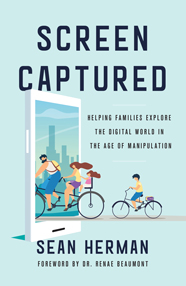
[0:00:16] CH: Welcome to Author Hour. Today, I’m chatting with Sean Herman who recently released his new book Screen Captured: Helping Families Explore the Digital World in the Age of Manipulation. As the father of two young children and the founder of Kinzoo, a private messaging service that turns screen time into family time, Sean has a lot of insight into how parents can begin to tackle the issue of tech and kids. In this interview, Sean talks about how parents can introduce tech to their kids in a healthy way.Teach them how to be good digital citizens and incorporate technology in a way that benefits our children and is additive to their lives.
[0:01:03] Sean Herman: You know, speaking from my daughter’s perspective, she’s eight now and really technology has been there from day one for her. Basically, you know, ages two and three, we always joke because she would walk up to the TV and try to swipe it like an iPad. So, I still remember those days and really, you know, that taught me a few things. Number one, she’s always watching what we’re doing and number two that I was going to have to deal with you know, technology as part of her life. So, over the years, I’d say, the relationship with technology with my daughter has been really up and down. I think we’ve had pretty much a love/hate relationship with her and the use of technology because I’ve watched her use technology to learn a lot of things, she reads a lot of books on her iPad which is great. She stays close with friends and family which is great as well. But on the flip side, then, she’s seen videos with inappropriate content. She’s learned swear words, she’s made in app purchases that she wasn’t supposed to make and then sometimes she just vegges out in front of the iPad for long periods of time which gets us a little worried about this notion of addiction. And so, like I say, it’s really been a love hate relationship but that really prompted me to do a lot more with my own research and just learn more about what technology and what’s actually happening in her brain.
[0:02:20] NVN: Yeah. This is one of the things that I think about a lot. We’re big readers in this house, my daughter at two years old already is and I move a lot, so I got really tired of hauling books around, they’re very heavy and started switching over to mainly eBooks and I can see, like you were talking about that she is constantly looking at me and what I’m doing. So, I’ve really had that battle like, “do I even want her to see me reading eBooks on my electronics?” I guess what I’m trying to say is, as a parent, it becomes so difficult to figure out these lines because technology is going to be part of their lives. What’s good and what’s bad, how do you figure out what to allow and disallow and at what time? There’s so many questions.
[0:03:10] Sean Herman: Yeah, there really are and those are all questions that I struggled with over the past number of years as my daughter grew up with technology. But I think one of the biggest outputs that I’ve found in doing all of my research is, often times, we as parent seem to be so focused in on the time that they’re spending on devices. So, almost every week or on a regular basis, we are seeing new guidelines being released by various bodies, whether it’s the World Health Organization or child psychologists or other people in the space and a lot of the time those searches focused on hard limits of time that they recommend that children spend on devices. So, as I kind of dug in and started doing a lot more of the research on it, the conclusion I really got to was I care more about what my child is doing on the device than how much time she is actually spending. So, I think it’s important that you maintain limits, we have limits in our household to make sure my daughter’s getting a good balance of screen time and off-screen time. But I don’t think something magical happens in the brain at 30 minutes or 60 minutes or 120 minutes where suddenly it’s not a good thing for the psyche or the brain. So, really what I honed in on is, what are they actually doing on devices and my research led me to basically distinguish between positive screen time where I think tech can be a connector, it can be a great learning tool for kids, it can be a way for them to problem solve and connect with friends and family, which I think is all positive. But on the flip side, I coin the term screen captured to talk about the times that they’re being persuaded or manipulated by platforms to either keep them on the platform, to get them on the platform, to take a certain action on a platform and basically making that distinction has really helped me and in our household, remove some of that anxiety that we seem to constantly feel about tech.
[0:05:09] NVN: I like that. That seems like a good middle road, realistic way to think about tech and kids.
[0:05:17] Sean Herman: Yeah, I think so. I think that like you said earlier, technology is, it’s here to stay so I came to that realization a long time ago and you know, I think for us as parents, we have to look in the mirror as well and look at our own use of technology and we give kids a lot of credit, they’re always watching and we’re also setting an example. So, if we’re on technology constantly like children, it’s only natural that they’re going to want to as well. But as I said earlier, I think technology can do a lot of positive things. I watch how my daughter interacts with it and whether it’s staying in touch with her grandparents who live a number of hours away, doing things with friends online, solving problems, doing math problems and things like that. I think there’s a lot of positivity that can come from tech, but of course, it’s not without its challenges and risks as well.
[0:06:06] NVN: Let’s dig into that idea little bit more about how parents ultimately have to set the example and be aware of our own habits. Obviously, I would think that this involves making sure that we are not buried in our tech all the time and that we’re still engaging. I’m wondering if there – if you’ve noticed any more subtle things that parents do with the tech that they need to be mindful of doing on their own so that our little mimics don’t start adopting the same behaviors.
[0:06:39] Sean Herman: Yeah, I think that we as parents, just have to be acutely aware of what we’re doing. And the fact that our children are like I say, almost always watching us and observing what we’re doing. So, back to my example, my two-year-old son actually oddly enough or funny enough, also walked to the TV and tried to swipe it. It’s really, I guess a credit to the designers of technology and how intuitive it is but yeah. Children are always watching and you know, I can’t tell you how many times I have seen parents kind of admonish their child for using tech, “get off the iPad!” And then they go back to their own Instagram feed or go back to playing Candy Crush or whatever it might be. So, I think it’s just important that we as parents are also aware of the role of technology in our lives. And while my book kind of focuses in on the fact that younger and younger children are getting on to these platforms and being exposed to kind of manipulative and persuasive things that the platforms are doing, we are also doing that as parents and being exposed to a lot of those same things. So, we’re being gamified a little bit, they kind of take advantage of the things that are in our psyche, the need to belong and really social media’s done a very good or bad job I guess, depending on how you look at it, of doing that and figuring out how to kind of link in to our need to belong in order to keep us on platforms longer and longer. In writing the book, obviously it was kind of on the lens of looking at my daughter and how she was using tech, specifically. My son has two, it’s a little young for him. But also, I learned a lot about kind of my own use of tech and I was not a big social media user anyway but certainly, I think it’s helped me be just a little bit more aware of kind of what’s going on behind the scenes and really, the motivations of big tech in keeping us on the platform and trying to drive specific action, whether it’s staying on the platform longer or clicking on an ad or whatever it might be.
[0:08:40] NVN: Excellent. So, you feel so passionate about this Sean, that you actually started an online messaging system called Kinzoo. Can you tell me a little bit about this and how it works and what your intention is here?
[0:08:55] Sean Herman: Yeah, definitely. Really, the beginnings of Kinzoo correspond very closely to the beginning of the book. Kinzoo came around because really of a desire for my daughter to start to use connected technology with friends and family. So, she was watching with my wife and I were doing and saw us on our Instagram feeds or Facebook feeds and things like that and as we talked about kids mimic what their parents wants. So, she was really showing a lot of interest and getting connected and sharing messages with my wife and me and friends and people like that. So, I took a look at what was out in the market and I found there wasn’t much. Things either fell into one of two kind of camps. Number one, there are a lot of tools out there that basically mimic social media so they feature likes and followers and have the children basically post and then try to get reactions on those post and as I dive into in the book, I really worry about the kind of the social validation and social comparison that that’s fueling and what that might be doing to the psyche of the brain as children are getting exposed to it and start to crave it. And again, it kind of taps into a bit of a vulnerability that we have as people. And on the other side, we saw platforms designed for kids, but came from major players so specifically Facebook Messenger for kids which I didn’t feel great about just for various reasons. I talk about in the book. I worry, Facebook is obviously trying to grow the next generation of Facebook users but also just in connecting with Facebook and my daughter on Facebook, I’d be giving Facebook a lot more data on myself which I didn’t feel great about as well. So, telling them that I have two kids and here’s kind of how we interact and things like that. So, basically that kind of led me to create a business plan for a new messenger that focuses on doing the things, what we say the right way. So, when it comes to tech what we’re trying to do with Kinzoo is inspire people to use it and not manipulate them too. That really led me down a rabbit hole of research in trying to kind of get to the features set in Kinzoo that we wanted to include and the things that probably just as importantly, we didn’t want to include on the platform. So, I didn’t want to rely on persuasive tendencies, things that are more addictive in nature to keep coming back. I want families and children to use Kinzoo because they enjoy using Kinzoo and not because they’re craving the feed or need to sees what’s happening or how many likes that their post got. So, that kind of led to Kinzoo and that’s really what we’re trying to do and with both the book and Kinzoo, at the end of the day, what I’m really trying to do is make technology a much more positive force in the lives of families.
[0:11:34] NVN: It’s interesting. When I hear you talk about Kinzoo, it sort of reminds me, it sounds to me sort of like, the digital version of being a kid in the 80s, where you weren’t being manipulated or prompted to use the telephone to call your grandparents. You were doing it because it was an available mode of communication. So, it was more natural and autonomous. Am I understanding what you're getting at correctly?
[0:12:03] Sean Herman: Yeah, I definitely think so and Tristan Harris who is one of my heroes and who I speak about in the book, he has a great line where he basically compares – and he talks about telephones in that kind of context and what he says is what was different about telephones back then is you didn’t have thousands of engineers on the other side of the telephone trying to figure out how to keep us on the telephone or keep us coming back to it. So, that’s a reality of kind of what the world is at today and I just didn’t feel that there were platforms out there that have that kind of lens and in the context of a business, it definitely benefits the business to have more users on the platform, there’s no doubt about that. What we’re trying to do at Kinzoo is really build a ground swell, kind of a grassroots kind of feel to it, a community feel, where parents and families can join. We want to actively communicate and interact with them and really build a platform that people feel very good about and like I say, remove some of the anxiety that we as parents feel about technology, make technology a much more positive force and just make technology less contentious issue in the household because I was just getting tired of fighting with my daughter all the time about iPad use or how much time she was spending. So, think there is a good opportunity to strip away all the negative aspects of tech and focus on the good and I think the good aspects of tech are actually quite awesome. I’m quite envious of children today and the world that they have available to them. But again, we have to focus on the right things and strip away the things that could be potentially harmful.
[0:13:34] NVN: Excellent and you talk about how being a parent today involves an element of demonstrating to our children how to be good online citizens. Can you talk to me a little bit about what that entails?
[0:13:49] Sean Herman: Yeah, definitely. I think that there is a lot of ways that we as parents can do that. And really what it means is I think first and foremost, participating. So basically, I think leading up to or taking a look at technology and how I felt as my daughter is starting to get onboard and onto it, before I started doing a lot of the research into it, it really felt like an all or nothing type of decision. So, I could keep her off technology all together or I almost felt like I had to open the flood gates and just let her go and do my best to mitigate and things like that. And that just didn’t feel like a good way of doing things and of course I think a lot of parents can relate to every time your child wants to download a new game or app, you want to do the research. You want to take the time and sometimes it is challenging to do that. So, what we are trying to do is twofold, number one, educate parents on making that decision easier. So, as children are looking to get the newest game or app, to arm parents with some knowledge about how to easily tell if that is a platform that a child should be using and age ratings don’t always work unfortunately. But the other thing that we are really trying to do is create a platform where parents could act as a mentors on that platform and teach their kids what it means to be a good digital citizen. And what I mean by that is my daughter can watch me interact with my brother and her uncle and we can have playful fun and poke each other and playful jabs at each other in a non-hurtful way. So, she can watch that and hopefully differentiate between that and you know bullying, cyber bullying some of those negative aspects. I think what it also means is just being acutely aware that everything we put out is on our permanent record and on our digital footprint. So, teaching my daughter at an early age, the importance of being on a private and secure platform, but even that doesn’t guarantee that things are truly private and secure. So unfortunately, we see instances almost every week where somebody’s past is coming back to bite them, something that they did on social media, something that they posted online, something that they shared on a collaborative document with classmates or whatever it might be. So, it is things like that that what we are really trying to do is educate parents about that, but also give a platform where in real time, parents can get that kind of feedback and teach your kids what it means to be online without just giving them the keys and hoping for the best.
[0:16:19] NVN: I love that. So, going back to our earlier discussion about how children are these little mimics, you are setting up a scenario where they can see good digital behaviors and mimic it. That’s so smart.
[0:16:36] Sean Herman: Yeah, absolutely and I think that watching interactions between people and participating in them I think will be a new experience. But there is other things that we are trying to do as well in terms of doing things like helping to keep creation and consumption in check. So, when my child is on her iPad, what I am really mindful of is how much time is she actually creating things and problem solving versus just sitting there consuming content on YouTube or whatever platform it might be. So, in addition to watching that, we are also giving tools where children can be creative where they can problem solve and then they can share their creations with friends and family as well.
[0:17:15] NVN: Excellent. Okay, so one of the things I have really enjoyed about talking to you is that you have a positive slant on all of this and I feel like we can get a little bit gloom and doom when it comes to kids and technology. So, let’s leave listeners with a thought or something they can feel really positive about in terms of where the world is headed in your mind with our kids and their access to technology.
[0:17:44] Sean Herman: Sure. Yeah, it was really interesting writing this book because it was kind of a positive/negative/positive take on technology. Certainly, there is a lot out there and I think that is just the nature of how news works we tend to see a lot more negatives than positive. So, some thoughts that I would leave people with would be at the end of the day, I think technology can be a very positive force for children and families, but of course, it is not without its risks. And as I talked about earlier, I am asked all the time how much screen time should I give my child. And when parents ask me that, I politely say, “your heart is in the right place but you’re just asking the wrong question.” So, the time our children spend on devices is far less important than what they are actually doing with that screen time. Also, at the end of the day, really quality really matters over quantity when it comes to screen time and I coined the term screen captured, which really refers to anytime we are being subtly manipulated or persuaded by tech platforms to take a desired action. Whether that is visiting the platform or posting ensuring content, staying for a whole, eventually clicking on ads, which are really the backbone of how they work. So, I think technology can be great but we as parents must differentiate between positive screen time and being screen captured and what I am really trying to do in the book is arm parents to make that distinction. And again, having this understanding has really removed a lot of the anxiety that I used to feel about technology and it has made technology much more positive force in my household. I have also armed myself to have much better conversation about technology with my kids and it is much easier for me to decide, which games and apps my daughter can use, which ones require more or less supervision, which ones need to be avoided at her age and hint, hint, it’s social media. I want other parents to feel the same. It is a much better feeling to be able to identify and evaluate different games, apps, platforms. Again, some of the key learnings of the book and be able to have much better conversations with their children as well.
[0:19:46] NVN: Really incredible Sean. Okay and then finally, is there anything I haven’t asked you that you would like to go ahead and add in here to make sure listeners hear in advance of the book?
[0:20:00] Sean Herman: Yeah, a few other thoughts. I mean, I touch on this earlier, but you know until recently I’d say technology was the single largest point of contention in our household. We argued about how much time my daughter was spending on the iPad. My wife and I felt really anxious around it and especially when she was starting to get onto more connected to technology. And over the course of researching for the book, we have been armed to have much more productive conversations about technology and ask all the right questions and as a result, technology has really become much more of a connector than a divider in our household. And I can point to things like my daughter and I, we code mods together on Minecraft and Roblox, which is really cool. I’ve learned how to really keep things like YouTube in check. We definitely haven’t banned YouTube. My thoughts on it are pretty conflicted, but there are things that we can do to keep it safer. And my wife and I, I think at the end of the day feel much more prepared for my two-year-old son and how we plan to incorporate technology into his life more and more as he gets older. And at the end of the day, I just hope that parents can start to view screen time differently and start focusing on maximizing the positive screen time while reducing or eliminating those activities that really focus on keeping us screen captured in it. And yeah, I am just hoping in the book I have done my best to hope and share in what I think is a fairly practical and digestible way to move the conversation forward and unfortunately as I touch on in the book the tech platforms themselves, we just can’t rely on them to do it because the motivations are just not in line. I think that they mean as well as they can. I don’t think that they are doing things to be evil, but the motivation for them are to attract and retain users and that just doesn’t line up with things like safety and privacy all the time.
[0:21:54] NVN: Yeah, you know it sort of took me aback to the point you made about Facebook Kids earlier. I guess, I haven’t put that much thought into it since my daughter is still too young, but it makes so much sense that that would be from a business standpoint the intent of it is to you know, become a known sort of instinctual commodity for kids, that’s a really good thing to think about.
[0:22:21] Sean Herman: Yeah. I hope in the book, you know, I break it down into – I mean, it’s really simple. Platforms are after users and what’s interesting is a lot of the original founders of social media have started to speak out against kind of what they did. They speak out against the dopamine cycle and they tell us how the gamed it, really gamed us as people and our vulnerabilities to help the platforms grow. So, what’s interesting is they are now speaking out against it but what I try to do in the book is really break it down into why they’re motivated, why do they do these things, only to renounce them later and at the end of the day, it’s all about user growth and retaining users. And that’s just the way the world works and as our children will eventually get on to that. So, I know my daughter will eventually be on TikTok or Snapchat or whatever the newest social platform might be, but really, what I’m trying to do is have good conversations with her now and through the book, I’m hoping to arm other parents to do the same and what we’re trying to do with Kinzoo as well is to give a platform that can be a bit of a learning ground for children, so that by the time she goes on to social media, my hope is she is better equipped to value the right things which is real connections over social validation metrics like likes and followers and things like that. And hopefully just have armed her to treat people better online because we know it can be pretty toxic out there so. So, I think the wrong thing to do is just ignore tech, I think it’s here, it’s here to stay and I think all you have to do is go to a restaurant or an airport and look around it, how many kids are on phones or iPads. So, the fact is it’s here and we can’t just ignore it anymore, we really have to arm ourselves to understand a better and make better decisions and our markets to make better decisions.
[0:24:13] NVN: Thanks for joining us for this episode of Author Hour. You can find Sean’s book, Screen Captured, on Amazon. A transcript of this episode as well as previous episodes is available at authorhour.co. For more Author Hour, subscribe to this podcast on your favorite subscription service and if you’re feeling it, we love reviews. Thanks for joining us, we’ll see you next time. Same place, different author.
Want to Write Your Own Book?
Scribe has helped over 2,000 authors turn their expertise into published books.
Schedule a Free Consult