Curt Mercadante: Episode 351
Read the full transcript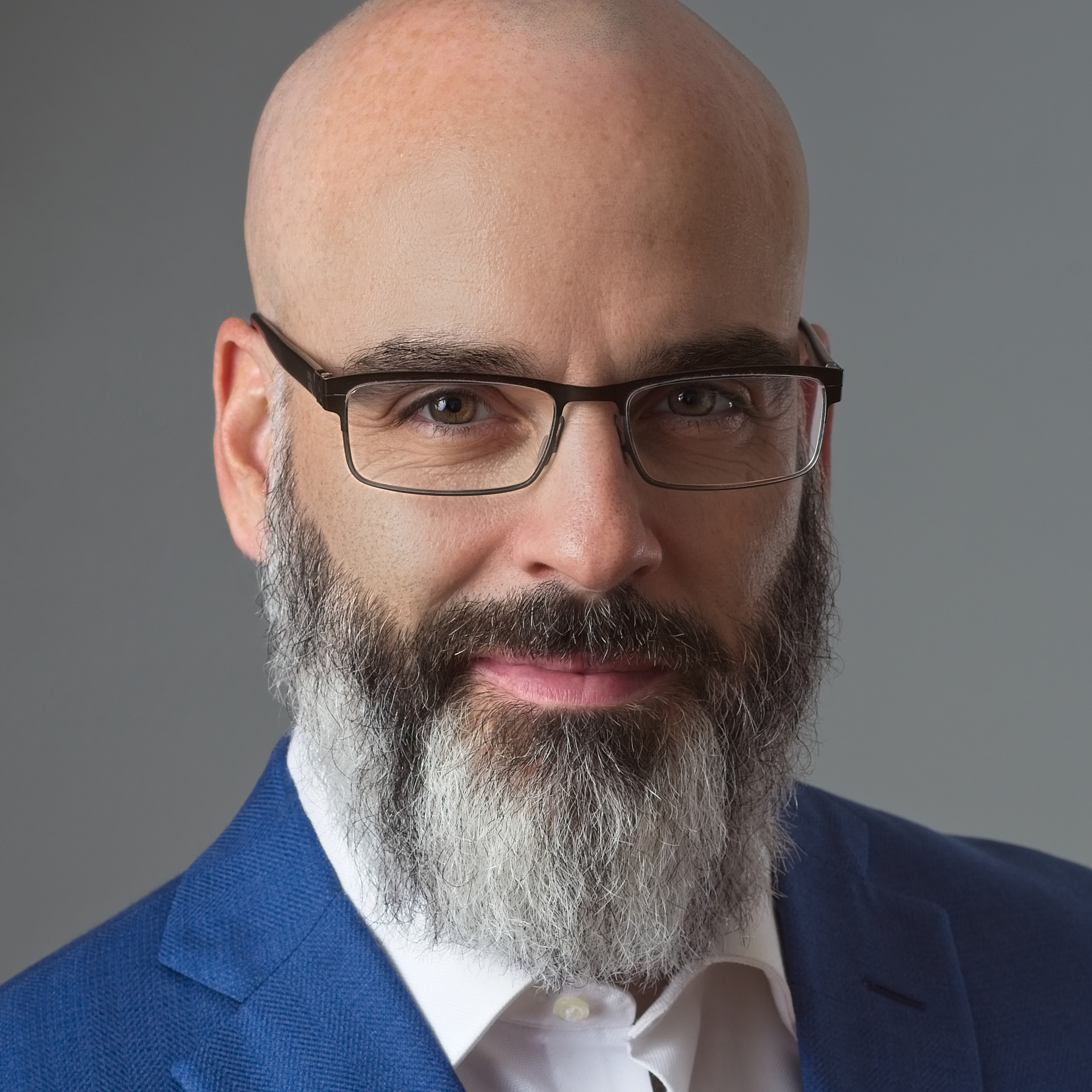
Curt Mercadante
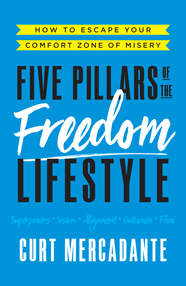
Curt Mercadante is an international speaker, trainer, and author who helps individuals and teams become more purposeful, productive, and prosperous. A Gallup-certified strengths trainer, he has built three profitable businesses, including a seven-figure public relations and advertising agency that counseled some of the largest corporations and organizations in the country. He hosts the Freedom Mindset Radio podcast. Raised in the Chicago area, he and his wife, Julie, live in Charleston, South Carolina, with their four children. He is the author of the Amazon bestseller Five Pillars of the Freedom Lifestyle: How to Escape Your Comfort Zone of Misery.
📚 Books by Curt Mercadante
Transcript
[0:00:16] CH: Ask a five-year-old what they want to be when they grow up and their answers are limitless and untethered. Ask a 40-year-old what they want to be when they grow up and you’re likely to hear a far more constricted answer. As Theroux puts it, perhaps even a note of quiet desperation. Welcome to Author Hour. Today, I’m talking to Curt Mercadante. Author of Five Pillars of the Freedom Lifestyle: How to Escape Your Comfort Zone of Misery? In this episode, Curt reminds listeners that their lives are something they can build to look how they want them to and he provides some practical steps for beginning to make this life a reality. Spoiler alert, this practical advice doesn’t include “quit your job tomorrow.” Curt talks about how we can make immediate and every day, changes that help lead us toward breaking away from apathy and conformity and toward living a life that fulfills our unique purpose. Most of all, Curt reminds us that it’s never too late to start asking ourselves what we want to be when we grow up and it’s never too late to start doing exactly that.
[0:01:29] NVN: Curt, tell me what led you to the mission of saving the world by helping people fight for their lives of freedom and fulfillment?
[0:01:37] Curt Mercadante: Yeah, ever since I was young, you know, I was a kind of an only child, I had half brothers and sisters and my parents wrote were both married before and the closest in age to me was nine years older than me. I have a brother who is 20 plus years older than me. I was kind of raised as an only child and I did a lot of self-play, a lot of superhero play, watched a lot of movies, those types of things. At the same time, my dad was a real-life superhero. To me, but I think in general, he was like a real-life Tony Stark. He worked on the space program designed fighter jets, helped design – lead the team that designed all the electronic switches on the Boeing 777. I had this feeling from a young age that I was supposed to save the world. That feeling was always with me but like a lot of us, when you’re young, people ask you on a regular basis, “What do you want to be when you grow up?” You know, my eight-year-old son recently said, “I want to be a movie director and a spy.” You know, you kind of laugh but it’s that sense of wonder and excitement that kids have. Often, we lose that sense somewhere along the way and we stop asking ourselves what do we want to be when we grow up? We stop asking other people, other people stop asking us that question and I had stopped asking myself that question. You know, in high school, I wanted to save the world, I wanted to be in politics and then I drifted into public relations and advertising. I started a successful agency, I scaled it over 13 years and about five years into it, I was having some productivity problems, I fixed those, I became free. But my dad, my hero passed away in 2012, and we’re at his wake and you had these grown men in tears. All the things that I mentioned about my dad’s incredible career, not one person mentioned his career. It was what kind of husband he was, father, volunteer in the community, reading audio books for the blind, volunteering at our church. He was president of the local university of the Notre Dame club. It dawned on me, here was my hero, my mentor, my superhero, and he had set this example for me that I was not following. I was putting everything into the agency, we were making a ton of money. I thought, that’s what I was supposed to do, I was a paycheck provider, I was the man, I was the breadwinner. I was having anxiety attacks, I had been on for a long time a number of prescription drugs to help with cholesterol and anxiety and I was probably about 45 pounds heavier than I was now. I felt guilty that I wanted something different because again, I was taught, not necessarily by my parents, they weren’t like this but by society, by teachers, you know, by bosses. This is what you do. You sacrifice, you put your head down, who cares about how miserable you are, you’re cashing that paycheck, that’s what you have to do. When my father passed away and there was that example that was there, I said that’s it. I have freedom in terms of financial freedom, in terms of productivity but I didn’t have fulfillment. That started a journey that led to a couple of years ago, it was a thanksgiving day, thanksgiving week, morning, it was that Tuesday morning, it was my week off and I had clients that felt that they owned me and I had let them own me and they were calling me. “Hop on this conference call, this is email, can you get us that report,” even though it was my week off. I woke up one morning and I said, “That’s it.” I went to my wife, I said, “Honey, I’m shutting it down. Can’t do it anymore.” She looked at me and said, “It’s about time.” I had been coaching for a while and in my mind, I had a four-year plan to ramp down my agency and ramp up coaching. Now, if I had just kept it at that four-year plan, four years would have turned into eight years, would have turned into 12 years, you know, it’s that comfort zone of misery. “I’m making money, I can do this for a while regardless of the anxiety attacks, the mental, physical health. I can put up with it a while because I can tough it out.” I decided enough was enough and so that four-year plan turned into a four-week plan and I began coaching, speaking and training full time. The reason I do what I do is because I want to help folks who are going through the same thing that I went through so that it doesn’t take them eight to 10, 15 years to break out of that comfort zone of misery and to help them build a runway so they don’t have to do what I did, which was jump in the ocean without a life preserver, there’s benefits to that but you don’t have to do that.
[0:06:05] NVN: You know Curt, what really strikes me about you, I spend a lot of time listening to people and you have this note of legitimate happiness in your voice that I hear very rarely. It’s cool.
[0:06:21] Curt Mercadante: I appreciate that. In my book, I quote, Thomas Heath who is a local personal branding coach here in Charleston. Last year, I said, “How are you doing Thomas?” We co-hosted an event and we’re on a photoshoot and I said, “How are you doing?” He said, “You know what? I’m fulfilled. I’m not very happy right now but I’m fulfilled.” And he was in a sad state because his mother was in ill health, she ended up passing not long after that. There were some other things going on in his life and he said, “I can be happy and fulfilled, I can be sad and fulfilled.” What I like to caution people is, happiness shouldn’t be the goal. Fulfillment should be the goal when there were those years when I was unfulfilled, when I was with my wife, my kids, you know, certainly, I felt happy and now that I’m fulfilled, certainly there’s times. You know, stuff happens, people die, people get sick, there’s times when I’m sad but if you’re fulfilled, it means you have that meaning in your life, that life hits you across the face with a 2x4, it hurts, it sucks but at least you're fulfilled and you keep moving forward and the sting of getting hit goes a lot quicker than if you’re unfulfilled.
[0:07:29] NVN: Yeah, it adds more meaning to everything.
[0:07:32] Curt Mercadante: Absolutely.
[0:07:34] NVN: You know, I can’t help but notice some of the language you use which is jarring. I think probably because most of us can relate to it, so it sort of puts a microscope on how we’re living our lives but you use the word that we have to fight for living lives of freedom and fulfillment and you talk about comfort zone of misery. Can you – I mean, this is a big question, but can you talk to me about how we get in that position as human beings, where this becomes our norm?
[0:08:06] Curt Mercadante: Yeah, you know, I think that two of the greatest threats to human existence, humanity, the earth, the globe. If you look at threats that we know are coming or threats that may come in the future. I think the two greatest threats are apathy and conformity. It starts when we’re young, you know, we come out of the womb with a senses of wonder and excitement and somewhere that gets squeezed out, you know, you have kindergartens now canceling theater programs because they’re not college and career ready enough. You have kids now that are so overly structured, you know, we used to have a lot more free play when we were kids. Go out, play dodge ball, now dodge ball is banned because it’s too violent, someone might get hurt, you know, litigation concerns. My kids got chased down from climbing trees in a city park. Everything has to be structured. It has to be the school football team, it has to be about extracurricular activities because those extracurricular activities will help you get into college and my goodness, that’s the end all, be all. Dr. Peter Grey writes about this, there’s an increase in anxiety, a loss of sense of control amongst 17 and 18-year old’s. Because from age four through 18, they never have to make a decision, they never have to make a choice, their parents are going to drive them to this practice, you have to do this practice and you got to be in this – you got to do that because it’s all about college. They get to 17 or 18 and it’s like “All right, now make the biggest decision of your life, what’s your college major because that’s the most important thing for the rest of your life” and they freeze, they can’t do it. What do they do? “Why did you choose to major in finance?” “Because dad said that’s what’s going to get me a good job.” Now, I work with a lot of people who hit 40, 45 and they’re like, “This sucks, I hate finance, I never wanted to do this.” Again, it goes back to that question, “What do you want to be when you grow up?” And we get on this kind of, this treadmill when we’re age four, that everything is planned out for us and so we stop having to think for ourselves, we have a school system now where it’s basically sit down, shut up, memorize, standardize, and if you don’t do that, we’re going to put you in the corner, we’re going to label you with some sort of disorder, we ‘re probably going to recommend drugs for you. Thomas Edison, when he was eight years old, his teacher said, “Well, he’s got an adult brain, there’s something wrong with him” and his mom said, “Nope.” She took him out and she home-schooled them, the rest is history, a thousand inventions, right? Nowadays, we would have drugged Thomas Edison and I think this leads to conformity, apathy, standardization, it starts when we’re young, it starts in the schooling system. It bleeds over into parents let that schooling system raise their kids, it’s all about getting into college, it’s all about that conformity. People get into – I interviewed on my podcast, Anthony Iannarino, sales guru, sales expert, multi-bestselling author. He called it The Drift. It’s like you’re drifting along and it’s comfortable, you may be cashing that paycheck, you feel guilty if you even want to think about something being wrong. By the time you realize it, you’re 700 miles off shore. It’s been this slow drip. I call it the comfort zone and misery, Henry David Theroux said that the mass of men. Now, he said “men,” but it applies to women as well, “Lead lives of quiet desperation.” I think that quiet nature of it is more dangerous than loud desperation. Because it’s quiet so we can kind of tune it out. We can tune it out and say, “Well, I’m making good money, we’ll go on vacation, I’ll forget all about it, yeah, I hate my commute, I hate my job, I’m not fulfilled. But you know what? I’m comfortable right now.” It becomes that comfort zone. You might be miserable but when it becomes so loud that you have to deal with it like it did for me, you get back into a corner, it’s fight, or flight, right? I fought back and then I dove into the ocean. But when it’s quiet, when it’s that comfort zone of misery, you can go on for years, for decades, and a lot of people go on ‘till they’re 65, 70, 75 years old.
[0:11:59] NVN: It’s terrifying. Quiet desperation is precisely the correct phrase for it because it seems like such a mundane thing that you can talk yourself out of on a day to day basis and meanwhile years are passing by.
[0:12:14] Curt Mercadante: Absolutely and you know, I talk about work-life balance in the book and one of the five pillars of the freedom lifestyle is alignment and a lot of people look at work-life balance and they say “Okay, well, I have this project, I’m going to put my head down on this project, I’m going to ignore my relationships, my self-care, for the next two weeks and then when the project’s over, I’ll pull my head up, maybe I’ll come home early for work, maybe I’ll go on a date,” whatever it is. If that even happens, often that two weeks turns into a couple of months, turns into a few years, turns into what I call the 65 year plan that so many people have which is, “Well, if I can just make it to 65, then I’m going to retire, then we’re going to enjoy life, we’re going to travel the world, we’re going to do all these things.” And just in my family, stroke, heart attack, prostate cancer, list goes on, and a knee replacement, all those plans that you had, you spent your entire life waiting instead of living. The key isn’t work-life balance. It’s alignment. Right now, building that life that aligns the three facets of your life; relationships, self and work in a way that works for you.
[0:13:20] NVN: Let’s talk to our listeners at this point, perhaps quite directly and maybe uncomfortably directly, for some people. What are some of the most common excuses that you hear people give for why they can’t do this right now.
[0:13:34] Curt Mercadante: Yeah, you know, you hear a lot about gratitude and the importance of gratitude. The problem is, way too many people bastardize that term and use gratitude as an excuse for guilt and stagnation. The reason that comes about is, there’s a lot of, what I like to call – actually, I don’t use this term in the book, but I coined it a few weeks ago and I really liked it. Scarcity pimps. We either have an abundance mindset or a scarcity mindset. You know, a scarcity mindset says there’s not enough resources to go around, whether you want to talk economically and wealth in the world or just, you look at other people who are doing well and you say things like, “Must be nice, they must be privileged. They must have had it all handed to them.” An abundance mindset says, “Hey, they’re doing pretty well, you know what? I’m going to do even better,” and so that gratitude can get in the way of, if we don’t take it at an abundance manner, as “I should just be happy with what I have. I have a nice house –“ This is how I felt and this is a lot of people who come to me, this is what they feel. Why am I going to rock the boat? You know, “I’m making good money, hell, my dad, my grandpa worked in the coal mines, what do I have to feel guilty about?” I urge people, every morning, pair gratitude with a sense of forward-looking purpose. First thing, ask yourself two questions when you wake up in the morning. The first question is, “What’s awesome about today?” Right, that’s the gratitude. The second question is, “What will make today even more awesome?” It’s a way of looking at the world, listen, you may be used to waking up and thinking, “I got that damn conference call, I got lunch meeting with that moron that I can’t stand at work. I have that commute.” Turn it around, what’s awesome about today? Start with the fact that you’re above ground instead of six feet under. Start with the fact that the sun is shining, the world didn’t end overnight, start with the fact that perhaps you’re waking up in bed next to someone you love, you’re going to spend some time that day with someone you like or love. Then look, what could make today even more awesome. Instead of telling yourself, “Well that commute really sucks,” well, you could say, “All right, you know what? I’m going to use that two-hour commute to listen to a new podcast for some self-development.” Or you can tell yourself, “You know what can make today even more awesome? This is only the 20th time I’m ever going to do this commute because I’m committing right now to get into a new job, a new career, a new industry.” Pairing gratitude with a sense of forward-looking purpose helps you combat the scarcity pimps and cultivate an abundance mindset on a daily basis.
[0:16:06] NVN: I like that. You know, I’ve had sort of a niggling feeling about gratitude and myself but could never quite articulate it and I think that you just sort of hit the nail on the head. Like certainly, gratitude, there is a place for it, and it can be a superpower in life but it does have to be balanced or we can be led into complacency.
[0:16:28] Curt Mercadante: Yeah, I get a lot of push back when I bring this up. Gratitude is like – gratitude is important, but you have to pair it with – you know, I do a lot of videos on LinkedIn, in my podcast and I talk a lot about helping people build the lives that they want. A part of that can be business success, I talked about the fact that I built three successful businesses and the first two, I ended up, they were successful financially, but I ended up hating them, you know? So, I got out of them and invariably, there’s always people who come forward with, “Well, you could at least acknowledge your privilege.” Now, I look at these folks and to a person, the people who are bringing this up are not impoverished people, they’re not in the inner city, they’re not in Africa, usually, they’re middle-aged white people. It’s interesting. I look at some of their content and in many cases, they’re angry because they haven’t done it themselves. So they want to inflict the scarcity on other people and a lot of people, it becomes a scarcity virus where then, yeah, they called it gratitude but it’s something else. “They call it gratitude but it’s you should just be happy for what you have, you shouldn’t want more.” When I say more, they also confuse when I say more with just money to have money or vanity awards. No, the more is freedom and fulfillment, whatever that means for you, if that means moving to the mountains and living like a monk, fine. If that means building a business of impact in the world, that’s great too. I used to make a – I made a lot more money than I did now. I love money, I’m a free market capitalist but I look at it a lot differently than I used to. I look at it as a tool to be able to travel with my family. I look at it as a tool to be able to reach more people and have an impact on the world.
[0:18:12] NVN: So speaking of money, with everything that you have said in mind, I think that for a lot of people and especially people who are responsible for supporting a family or other people, the money part of it can start to feel like a trap. So, do you have any words of advice for people who are really struggling with how to make a change but knowing that they still have to provide X amount?
[0:18:38] Curt Mercadante: Yeah, I think a lot of folks will come to me and they are doing well money wise and well, let me backtrack. They have good salaries, but they have allowed their expenses to rise to the level of their income. So, they’ve made lifestyle choices that keep them in a hole no matter what their income is. So, I ask them that question, “What is holding you back?” And they throw out a dollar amount, “$250,000.” “Okay, so you need to make 250,000.” Okay, great and so I say, “Okay, how much do you want for your wife?” “Say what?” “Yeah, 250 grand, you want $250,000 for your wife?” “What are you talking about?” “What is the bounty you are putting on your marriage?” “Why do you say that?” I say, “Well, you are making 250 now, your relationship sucks, your mental and your physical health sucks, you don’t have a good relationship with your kids. So, you are making 250 now that hasn’t made a difference in your life. You are going to lose your wife, you are going to lose your kids, your health is poor.” And you have this aha moment. And you start realizing that they’ve made lifestyle choices. Their freedom they thought they tied to their income, but in the end, they have given up their lives for that income and once you start investing, you start realizing that the term freedom and the amount of money you need to make to survive, it doesn’t have to hold you back. The amount of income you make is not in direct correlation to how free you are in the world and again, this is coming from someone who is a free market capitalist. You can do what you love, you can build a life of fulfillment. Heck, there is a guy out there I recently ran across who made a million dollars over six months teaching people to do handstands over the internet. So, if you think that you can’t turn what you love or what fulfills you into financial freedom, I will point you to that person.
[0:20:30] NVN: Seriously, that’s amazing.
[0:20:32] Curt Mercadante: Yes.
[0:20:34] NVN: I love that. So, in your own work with people are there any stories that just really stand out in your mind as inspirational, or someone that you saw truly get from this place of quiet desperation to a feeling of expansive freedom.
[0:20:51] Curt Mercadante: Yeah, you know I have one client who came to me and he was – you know a lot of people ask me, “Well do I have to quit my job?” And they think maybe the problem is their job. I have a client who came to me and he had significant health problems. Was having some relationship problems and he actually came to me for my branding course, my personal branding course. I start from personal branding at a different place than many people start. I start with who are you, who fundamentally are you? And people usually answer, “Well I am VP of sales,” really? When you came out of the womb, did you have a nametag on that said, “I’m Jim. I am VP of Sales.” So, we start asking who are you? You know one of the five pillars of the freedom lifestyle is defining a clear life vision. Your vision statement that pairs your purpose for living with the impact you want to make in the world, and that is part of building a personal brand. Because you can’t truly build an authentic personal brand if you don’t know who you are authentically. So, this particular client realized, “Wow, before I build my personal brand, I have no idea who the hell I am.” So, he started working with me. Fast forward and this was in January, it’s even become more than that now. He lost about a 100 pounds. He had a goal of dunking a basketball by age 40, did it. His relationships are great. You know what? He is still in that same job because it turned out it wasn’t necessarily the job. It was the rest of his life where he was lacking fulfillment and that’s where I come back to alignment. He became what I like to call radically outcomes-focused, which is another pillar of the freedom lifestyle, where he started setting these goals. Man, he wanted to dunk that basketball and every week what’s your outcomes for today, he set those outcomes. He reversed engineered them to get there. His relationship, his marriage is excellent. His relationship with his kids is excellent. He’s actually carved out an entire pro bono practice where he works, so he loves what he does for work. So, he came into alignment, he’s becoming radically outcomes-focused. He is unleashing his superpowers every day. He has a clear life vision. He kept his job, he kept his income. He’s actually increased his income and now he’s fulfilled. That to me, I love it because a lot of people think they are scared to talk to me because they think I am going to tell them to quit their job right away and that is not what I do. Fulfillment doesn’t necessarily have to be linked to your current or your future job. It might, but you can live a life of fulfillment within your career, within your relationships, within where you live right now. It really depends for each and every person. It is different what works for them.
[0:23:23] NVN: Okay. So, I am going to loop back to something that you talked about a little earlier on the conversation. So, first of all in this example, you were just saying, you can’t build your brand if you don’t know who you are. Going back to this idea that we talked about earlier about how our kids are being raised with all the structure, it strikes me that it is going to be increasingly difficult for people to have a true understanding of who they are and what they’re all about and what their purpose is because they are following this path. There is not the time to think about it or the space. So obviously, this isn’t a parenting book but with that in mind, I am wondering if you have any advice with parents in terms of giving our kids more freedom to start to figure out what their superpowers are, what their purpose is, so that hopefully, they don’t get stuck in this comfort zone of misery that a lot of us have found ourselves in.
[0:24:20] Curt Mercadante: Yeah that is a great question. You know my wife and I, we homeschool. We actually un-school our kids. So, we have chosen incredible freedom in self-directed education. I think where you can – listen not everyone wants to homeschool or un-school, or can afford to send their kids to private schools, or whatever. I think allowing your children to have more freedom to choose what they want, not reverse engineering an outcome as getting into college. I think a lot of this is going to happen whether they like it or not because I think, financially, there is a bubble with higher education that’s going to pop and I think that it is going to make the economic recession of ’07-’08 look like a candy store. Financial institutions have their fingers in the student loan debt crisis, and I think it is going to pop and it is going to affect things. But beyond that, the future of work is automation. I think if we keep training humans to be bots, to compete with the bots, ain’t going to happen. The future of work in our world is going to be the folks who can reason, who can problem solve, folks who are creative. You know you look at the Avengers, in the end, it wasn’t – you know when they fought the bots, Tony Stark was a smart guy but, in the end, he was a creative person. We’re going to need people who are going to know how to shut the switch off and be creative about doing it to shut off the bots you know? And I think a lot of it is going to happen in and of itself. But let’s start asking, instead of making the end all be all, get a good job, reverse engineer, get into college, reverse engineer, extracurricular activities. Reverse engineer a life of meaning, what does that look like? Give your kids the freedom to help, to start directing where they go in life. You know, I am a Gallup certified strengths coach when you talk about unleashing your superpowers. You know Gallup has its strengths discovery. Get into that for teens, it starts with 10 years old. You know we have done it with our kids. Look at what those strengths are. They are innate talents. You know poets don’t have to be math wizzes and math wizzes don’t have to be poets and I think in this world, there is going to be a lot more specialization. That is not to say you can’t be well-rounded but never stop asking your kids, “What do you want to be when you grow up? What excites you?” Let’s stop force-feeding them the round peg and the square hole and say, “You got to major in finance because that’s what it means to get a good job.” I think we are seeing on the tail end of that that just doesn’t work. I think it is leading to this loss of sense of control. I speak from a man’s point of view. There is a lot of men who were told them. That is the key to life, get a good job. 45 to 54 year-old-men account for seven intense suicides in America right now and number two I think is like 85-year-old men and women suffer depression more but they seek help. Men get stuck in this comfort zone and misery where they feel guilty about even admitting it. And they are living this life that they thought they were supposed to live that was set out for them when they were 10 years old. They get to 45 years old and they’re like, “I can’t talk to anyone about it. I am not tough if I talk about it and so I am just going to try to internalize it,” and it’s a major problem.
[0:27:38] NVN: I’ve been thinking since we started talking, what a magical place a world would be if we didn’t lose that mindset of what we can be when we grow up. Like that would just really shift everything in the most amazing way.
[0:27:54] Curt Mercadante: It would and I really think that if people started thinking for themselves and really plotting the life that they actually want to live instead of feeling they have to live a life by default and realizing – and it takes an abundance mindset and I work with some folks right now who are doing incredible things, who still feel they can’t start their own business. I have one client right now who lost 160 pounds. He is getting all of these followers on Instagram, they are so motivated and yet he’s like, “No one is going to like me. No one is going to pay me to do this business.” I’m like, “Just start charging them now. They will throw money at you.” But he has limiting beliefs that go back to scarcity. Heck, he’s got some people in his life, in his family who are saying, “Well you got that college degree, what? For nothing? Because now you are going to help people get in shape?” Again, they’re those scarcity pimps and it is easy to infect our brains.
[0:28:50] NVN: Yeah, so it sounds to me like in order to find this freedom there is a combination of a shift in mindset and a shift in practice. It’s two-tiered. Is that right, okay?
[0:29:02] Curt Mercadante: Absolutely. You know, getting that abundance mindset, you know, I have on my podcast episode tomorrow, I have an economist that talks about everything in the world that is getting better. You know if you just watch the news or your Facebook feed, you’d think poverty was increasing. You’d think violence was increasing. It is not true. You’d think the environment was getting worse. In fact, everything over the past 50 years has been getting better. Poverty plummeting, violence plummeting. The environment is even getting better actually everyone is getting wealthier. Some people might be getting wealthier quicker than others but if you focus on everyone getting better and if you focus on the world getting to be a better place, that is a key to improving your mindset on a daily basis. That is when you cultivate abundance. That is when you start to think, “Listen life has smacked me around, maybe I am in a career for the past 10 years I don’t like but damn it, I can create whatever life I want because I am an autonomous human being.” It is that mindset when you start to realize “Listen, money is not hard to renew but money is renewable. Time is not renewable.” Yeah, we are all going to die. Some are going to die tomorrow, some may die later today and ask yourself if you die in 20 minutes or in 20 years are you happy with how it all turned out? That is the mindset part. The process part is summed up in the book, in the five pillars. Unleashing your superpowers, defining your clear vision, building, defining and living a life of alignment instead of balance, becoming radically outcomes-focused. So you reverse engineer that vision. So every year, every month, every week, every day you know those three outcomes that you need to achieve to win every day, every week, every month, every year and then the last pillar is flow and it is the accumulative effect of the first four pillars. Where you’re not grinding through life. A lot of what I call the hustle and grind pornographers, you know they’re out to, “You know you got to grind. Sleep when you are dead. It is all about brute strength.” They’re wrong and when people listen to them, a lot of those people fit two hours of work into a 14-hour day. The key is flowing not grinding and when you work in your superpowers on, well you know what it takes to achieve to win the day when you have those clear goals. And they’re not just long-term goals, they are short-term goals, when you do that, you get in that state of flow and those are the five pillars and that’s the process you can use it on a regular basis to more easily and step by step build that life of freedom for yourself.
[0:31:20] NVN: Beautiful. So, for listeners who are really resonating with what you are talking about here, what’s the one little thing they can do right now after they finish this podcast to start bringing some of this into action?
[0:31:34] Curt Mercadante: Yeah, first of all you can pick up my book or sign up to get a free chapter of my book at fivepillarsoffreedom.com. We leave the roadmap and in the book, I actually share stories of folks I have interviewed on my podcast, folks who made the conscious decision to take massive action. But in your life, I think the two things I ask people to do right off the bat starting tomorrow morning – well starting right now if you are listening, but then again, tomorrow morning. The first thing you do every day is ask yourself, “What’s awesome about today?” And the second thing, “What would make today even more awesome?” It’s about cultivating that mindset. You start doing that for two weeks, you write it down, it’s amazing how it will just transform your world because you won’t be as upset when you get up in the morning. You won’t feel as rushed, you won’t hate that commute in the morning. Your interactions with others will be better. Instead of saying, “Gosh I got that god awful meeting” you might say, “Well how could that meeting provide value for the two of us?” It is just a mindset shift and it is such a vital precursor to start getting down the road to realizing that your life is something that you can actually build, not something you’re confined to by default. People who are listening I am sure who are stuck in a rut and when you are stuck in rut, that scarcity mindset, listen I’ve had it, and I’ve got to combat it every day. It is hard to see much further out of the rut that you are stuck in and I know it is hard to believe, that’s why I urge people to start just again those two questions every day. Start cultivating, start small, then branch out from there.
[0:33:05] NVN: Curt that was amazing. I was sitting here jotting down notes at first for the podcast and then just started taking notes for myself so.
[0:33:13] Curt Mercadante: Awesome, well I am glad. Thank you.
[0:33:15] NVN: Yeah, really, really great stuff. You are a joy to talk to.
[0:33:19] Curt Mercadante: Oh thank you. It was a great pleasure to talk to you.
[0:33:22] NVN: Thanks for joining us for this episode of Author Hour. You can find Five Pillars of the Freedom Lifestyle on Amazon. A transcript of this episode as well as previous episodes is available at authorhour.co. For more Author Hour, subscribe to this podcast on your favorite subscription service and if you’re feeling it, we love reviews. Thanks for joining us, we’ll see you next time. Same place, different author.
Want to Write Your Own Book?
Scribe has helped over 2,000 authors turn their expertise into published books.
Schedule a Free Consult