Marty Park: Episode 358
Read the full transcript
Marty Park
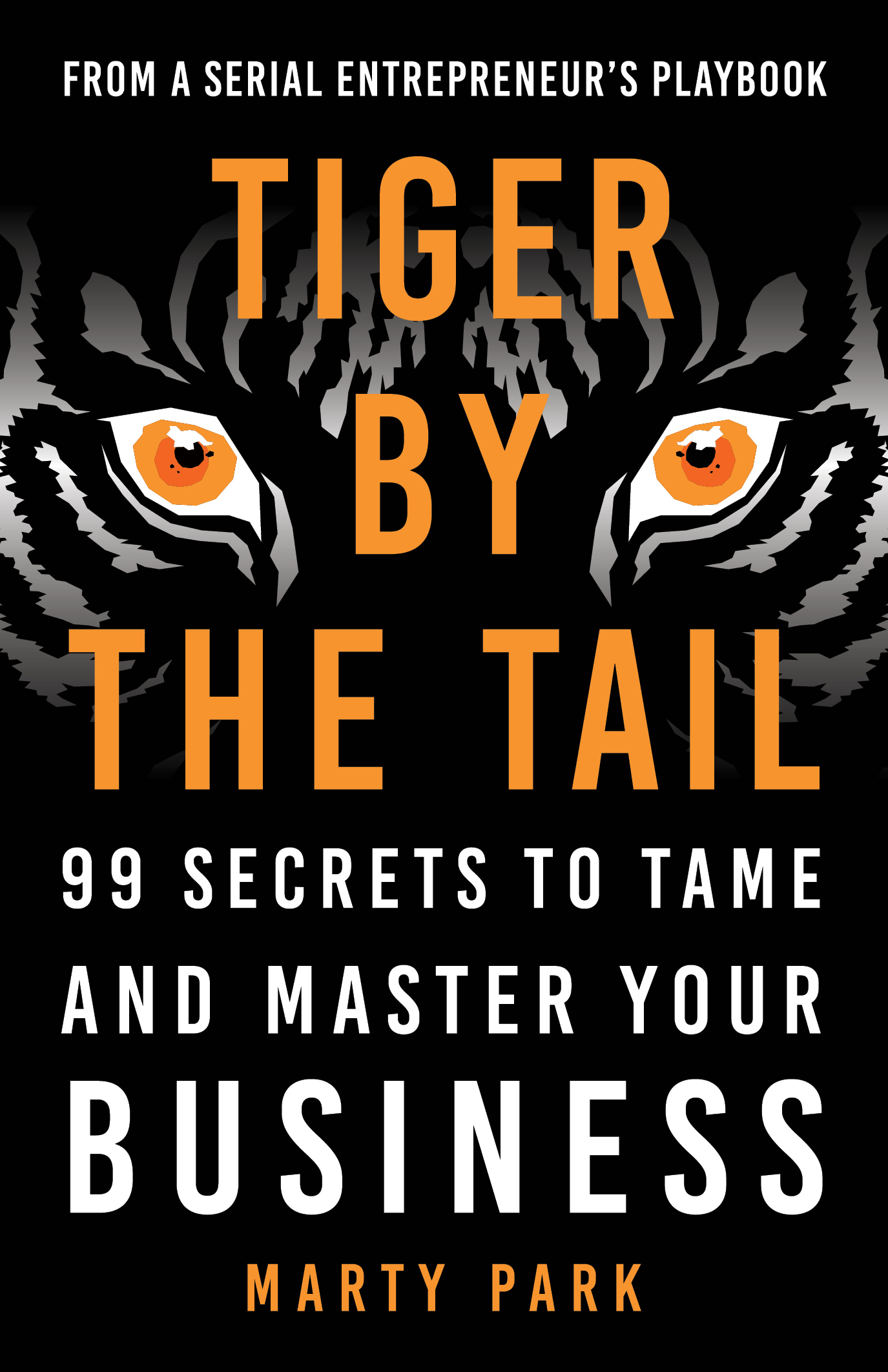
Marty Park has been a serial entrepreneur since the age of twenty-one, operating thirteen companies across seven industries in Canada and the United States. For more than twenty years he has coached and advised entrepreneurs on growth and performance as a business coach and strategist. In Tiger by the Tail: 99 Secrets to Tame and Master Your Business, he shares ninety-nine practical lessons for entrepreneurs who have made it past the startup phase only to find the challenges getting harder.
📚 Books by Marty Park
Transcript
[0:00:29] NVN: As serial entrepreneur Marty Park puts it, he was initially playing business when he suddenly found that his first entrepreneurial endeavor was taking off. In his new book, Tiger by The Tail: 99 Secrets to Tame and Master Your Business, Marty addresses that feeling entrepreneurs can experience when their businesses start to take off. It’s almost as if they have the tiger by the tail and don’t know if they’re going to get bitten, die or hold the beast at bay. That’s how the stress and pressure can feel. Marty speaks to entrepreneurs who have made it through the startup phase only to find that there are more challenges lying in wait. He shares the secrets, tools and ideas of entrepreneurial tiger tamers. So, Marty, talk to me a little bit about your experience being a 25-year-old which probably doesn’t look like everyone’s experience being 25.
[0:01:24] Marty Park: Yeah, 25. I had a lot more pressure and I guess, responsibility than most people. I think there’s a lot of that you know, you graduate from college and you think, “well now, I got to go get a job.” But at that point, I’ve been in business for four years. I’d really been playing business for a year and then my business partner Greg and I had to go to his dad and ask for second mortgage to be put on the home. You can imagine a second mortgage really ups the stakes pretty fast. So, over the next few years, with some guidance from our parents, our fathers and some other guys who had become business mentors, by 25, I think we had a dozen staff or 14 staff, we had our first software company going, we were just launching a second one and so the pressures of payroll, rents, just all the moving pieces of the business really were dynamic and stressful. People worried about where they were going to go drinking on the Friday night. I had so many other things to wrap up and that filled my mind. As a 25-year-old, you have that energy but I certainly had a lot more on my plate than a lot of people take on at that age.
[0:02:22] NVN: Talk to me a little bit about playing business. I’m intrigued by that phrase.
[0:02:28] Marty Park: This is fantastic. So, Greg and I started the company when we were 21 and our impression was, “what do you do first?” You go get office space. What do you do next? You hire a receptionist and the criteria we had as 21-year-old boys for what a receptionist needed to be is vastly different than my perception today. We used to head to an office space that was so large, I remember Greg would push intercom on the phone and it would take me 50 yards to get to his office and 50 yards back. There was only three of us in the office to begin with. And so, we really were constantly updating our marketing materials and brainstorming. One day, we were sitting around with Fast Car Magazines talking about whether it would be a Ferrari or a Porsche and we hadn’t sold anything. We were actually transacting nothing, we were not doing business, we were simply playing business. The realization of that, really, our bank account became the realization of what we were doing wrong.
[0:03:18] NVN: That’s hilarious and sounds very accurate for what it would be like to be a 21-year-old in business. What was that business out of curiosity?
[0:03:27] Marty Park: We built interactive voice response systems. So, It’s the technology used in voice mail or in a telephony system, where you’re pressing one two and three to get to your choices and so we were building that system. And in fact, started with voice mail and then realized, there was some significant telecom players who were in that space and so one of the ways that we were fortunate was pivoting to really focus on niche programs where at the front of – now, this goes back a few years at the yellow pages. They had a lot of options too – you could dial a law system, you can dial into a health system and so we started to specialize on those data systems for individual industries and that’s what really made us successful.
[0:04:04] NVN: Okay. That’s a perfect segue into something I want ed to ask you. Throughout your career, you’ve worked in such a diverse number of fields. How has that been possible for you? I feel like a lot of us think of business as being a more limited thing, where we kind of stay in our lane. So, I’m fascinated you’ve been able to do that.
[0:04:23] Marty Park: I would say, there’s a couple aspects to that. One of them is starting so young. I use the phrase blissful ignorance. I really didn’t know a lot. In fact, there’s a piece in the book where I talk about my friend Dom who I reference fairly regularly. Dom was talking about how he chose industries and how I had. And my approach really had been, people asked me, “hey, you want to get into this?” And I went, “that sounds like fun, let’s do it.” There wasn’t necessarily – I looked for the enjoyment factor, I looked and thought, “would this be challenging?” But I never really spent a lot of time thinking, am I qualified to be doing that? I had gotten into a number of industries and by the time I really started to feel the confidence as an entrepreneur or as a business owner, and felt like, I could get in to just about anything, that probably took close to a decade.
[0:05:06] NVN: That really strikes me as not stopping to think, “am I qualified to do that?” How amazing it would be if we all had that mindset and kind of carried it through that we just followed where we want it to go without stopping to ask that question. Obviously, it could get you in trouble in some ways too, but I think there’s so much freedom for discovery and joy in there.
[0:05:29] Marty Park: There really was. I had so much enjoyment. I was very fortunate to be involved in industries that really for a guy in his 20s when I started out, were fun. And this technology side was very challenging. I’ll give you an example. A good friend of mine who was a really expecting to be a lifetime bartender had one day said, “I want to open a music club and a bar and you know business,” because I had been in it for a while by then, in our late 20s. He said, “would you help me set it up?” And I thought I negotiated the best deal ever. I said, “I will take 5% equity and free beer for the life of this club.” To this day, I still think that’s my best negotiation. And what happened was, other business partners he had taken on who were other bartenders slowly started to fall off. I said to them, “listen. When it’s a cash call and we need to put more money in, you can’t be trying to sell a car.” Six weeks later, a guy was trying to sell an RV and I said, “hey Mike. I thought we talked about this.” He said, “well you said car, this is an RV.” I slowly started picking up equity and the day we opened, I owned 50% of a bar and music club, with no knowledge of the industry, I’d had some bartending experience, but knew enough from my other businesses to know revenues needed to exceed expenses. And there was a little bit of luck, we opened our we opened strong, there was an opening in the market that we recognized. But there was certainly, it was really lean when we opened up. I think it drove a lot of innovation because we did not have a lot of capital. But what a great experience, I mean, in terms of fun, those are the kinds of businesses that we really just love putting in the hours and the community we had with the musicians and that crowd and so many customers become great friends. And so, some of those kind of lessons have actually really carried me through in all sorts of businesses and with clients and I’ve referenced some of that stuff like building community and how you go doing that in the book.
[0:07:10] NVN: I love that. This experience you're talking about reminds me of this metaphor that you’re using throughout your book which is having a tiger by the tail. So that when your business starts to take off, that’s what it can feel like sometimes. Talk to me a little bit about why that’s how you see it and also, what that experience feels like when you’re in it.
[0:07:34] Marty Park: Yeah, absolutely. If you look at how business is supported, there’s so much when you start out in business as a startup, whether it’s technology or any kind of startup. Often times, there is programs, there is funding programs, government support, lots of websites and online stuff that you can take that always focuses on startup. Now, what I discovered is, beyond this startup, when you really kind of reached stability where you have some customers and you’ve got a physical space, bricks and mortar, maybe you got a couple of employees. As you get to that place of stable or established that really, the resources drop off. If you think about somebody who strikes a business that often times they’ve gotten their business cards, they know what they’re going to sell. They figure out how they’re going to price it. Well, that’s pretty easy, but things certainly get complicated the second you start to get clients, have to transact, you take on an employee. And all of a sudden you realize, “what about time sheets? What about payroll? What about contracts? My god, we just got a client, how do we invoice? Wait, accounting.” And you can see the snowball effect of all of the moving pieces of a business and it really starts to become a lot more daunting than I think a lot of people realize. And the phrase tiger by the tail came to me — I was actually sitting with a gentleman who owned a business. If you can imagine, he sort of leaned in across the table and it was just the both of us and he leaned and like he was going to whisper and he had been pretty confident and almost a little bit aloof or casual about the meeting. But something I had said obviously, hit a nerve with him and he leaned in and said, “you know, I never expected it to get this big. I mean, I just went out on my own and now I got 22 employees. I mean, it’s overwhelming, I don’t know what I’m doing, they think I know how too lead and I don’t and I don’t have all the answers and I’m telling you man, every day, I feel like I got a tiger by the tail.” And that phrase and that experience of hearing his stress in his voice and seeing the concern of I think a little bit feeling like a fraud really led me to as I was working on the book to be like, “that’s the feeling.” It is that sense of chaos of your fumbling around a little bit. You know that there are some big stakes involved, sometimes you know, lots of entrepreneurs have their house on the line when it comes to running a business. Yeah, it really felt like having a tiger by the tail sort of summed up the day to day emotion and feeling a lot of days.
[0:09:40] NVN: When you look back at the moments where you’ve perhaps had that feeling. What in retrospect are some of the advantages of being in that position?
[0:09:50] Marty Park: I think that when you’re in those moments of yeah, really feeling like you’re in over your head or there’s so many things you don’t know. I think one of the things that entrepreneurship and business ownership forces you to do, it’s not like you can turn around and say, “I’m just not coming in tomorrow.” You have to be able to go back in and say, “okay, I’ve got a face this, I’ve got to face it for my customers, for my staff, I’ve got to face it for my family.” It forces personal growth; it forces you to be thinking innovatively. It forces you to persist and I think those are all traits that can help you not only in your business. They help you as a human being, as an individual. So, I love the idea that entrepreneurship not only might help you create a great business, but I think it can help you become a great business owner and improves your skills dramatically, better than any other opportunity that might come along career wise.
[0:10:37] NVN: In your own life, you’ve grown up in business. I’m curious about this correlation that you make between business growth and personal growth. How do you see those two dovetailing?
[0:10:50] Marty Park: Well, it’s interesting. A business is very much a reflection of the owner. You know, when you get to be a larger corporation enterprise size, a business extends usually beyond a president. Although, very often, if you get a great corporate leader, people talk about how the business culture and what’s important and its focus and everything starts to mirror that CEO. And it is very, very true when you are dealing with small medium size business that the business is a reflection of the owner. I will give you an example of your natural tendency was procrastination; you will find that deliveries are always late. Bills are always slow being paid that there is a lot of delay and procrastination in the business operations as well. And I’ve just found that there is such a great opportunity that as the business owner is forced to grow and look at their own personal habits change the way they work, change the way they communicate, learn new skills like maybe how to sell or how to market, that as they grow the business starts to grow. And so, anybody who thinks, “well the business is just going to grow, but I don’t have to do anything,” I always say there is such a direct correlation between the opportunity for you to grow as an individual is absolutely going to be reflected in the growth of a business.
[0:11:56] NVN: How do you feel like you’ve grown the most personally through being a business owner over the years?
[0:12:03] Marty Park: Wow, I mean I could make a list of so many different skills. But when I started out, the first thing I learned about with sales and recognizing that going from playing business to doing business, the first thing you need to do is actually convince somebody to buy your product or service. So, I went from being really unsure, I mean I am a fairly confident person, but in that sales situation for years I was convinced they were just going to turn around and say, “get out of my office.” Or, “I have seen through you and we are not buying this product.” So, developing sales skills, developing a confidence in that space then starting to hire people and recognizing almost like being a personal relationship, “where is my communication skills good and where are they not very good?” And then starting to say, “well, how comfortable am I with promotion?” Or, “I have a chance to get in front of a group, how comfortable am I public speaking?” And then being able to get into, “I really don’t like finances, but I really have to dive into learning about accounting and numbers.” And I touch on this in the book that I actually as a general rule hated accounting. I took it repeatedly at college. And finally, when it was my own money, it got interesting to me but I had to learn all about finance. I mean there is just so many aspects. And then you get into even in marketing, now you go from learning traditional marketing to digital marketing, to now social media, you look at tools within a business. I haven’t even talked about what the product or service might be in all the innovations that come with that. So, I feel like there is such a progression of the ways it can improve you. But some of it is maybe the most impacting thing is just the comfort zone it creates that you have tackled so many different things that other areas of your life seem much more manageable. You just start to develop that confidence of, “well, I know I could tackle this and I know I could tackle that. Because compared to what I dealt with last year in business, these seems really easy.”
[0:13:46] NVN: That makes sense. So now that you have reached the point of being a serial entrepreneur, do you still find yourself in these situations where you can be in a tiger by the tail sort of scenario? Or does that not happen to you anymore with all of these background behind you?
[0:14:07] Marty Park: Well, I would love to say that never happens, but I think that would be misleading. You know where it happens? I give this story of a young guy, I had spoken at a conference and he came up to me and asked about cash flow and he said, “when do you stop lying awake at night thinking about cash flow?” And I said, “well, what time do you wake up, usually about 2 AM?” And he said, “yeah, how do you know that?” And I said, “oh, that is sort of the entrepreneur’s alarm clock.” I said, “your cortisol level spikes, you are wide awake. You are thinking about cash flow.” But I said, “the progression becomes you’re thinking about how much you’re worrying about now?” He said, “well about $500.” And I said, “well, the next progression would be you don’t get out of bed or it doesn’t wake you up until it is $5,000 and then eventually you would be comfortable at that level and then at $50,000 it is keeping you awake and it just keeps going like that.” I certainly have the same anxieties at looking at other companies I might buy or just still going to a bank and thinking, “okay, well this is a much bigger number for this loan now.” So, it is still the same, maybe that balance of the same nerves and concern and fear. But offsetting that now is the experience and the confidence of, “hey, I have done this before. I can do it again and I know a lot strategically and tactically. So, I’ve got a lot more tools to be able to make the next business a success.”
[0:15:18] NVN: All right, let’s say we have a listener who really is resonating with what you are talking about right now and realizes that they’re in this situation. What’s the first thing that they can do pretty immediately to start to feel like they’re maybe not bringing that tiger under control, but at least getting a teeney-tiny step closer to it?
[0:15:41] Marty Park: Well, the way I open the book is talking about mindset and people have sort of said, “well, why don’t you dive into some of the tactics of a business first?” But to me, when you get control of how you’re thinking about the business, it really starts to dictate and change what happens in the business. The results of the business really begin in a business owner’s mind. And so, some of the things I talk about is I really try to get the message across to people that while you may not feel like it today, you absolutely have the skills and ability to do this. That really my message of yes you can I hope resonates with people because just believing that is a huge thing. I think one of the best skills as an entrepreneur is persistence and being able to persist, adapt and innovate a little bit and then continue to persist that if somebody says, “well it is going okay,” my number one message would be well, just keep going. Start to add some of these ideas and just keep working at it. I think too quickly people give up on what could be a really, really successful business because they maybe have been misled that you know in the first year it is just going to take off. But really the cycle for a lot of entrepreneurs can be up to seven years before the business really explodes. It’s like that rock band that tours in a van for 15 years and then they become an overnight sensation and people don’t appreciate it the 15 years of lead up. I think a lot of business owners like that. And one of the things I love is talking to people about that there is an abundance of business more than ever before for every small business, Whether it is online international markets, just being able to reach more people I mean right to their handheld smart phone, there is so many great things about today being the time for entrepreneurship. I like to point those out to people because if they are struggling, it brings them back to recognize like, “oh, yeah there is opportunity and I just need to focus on that abundance, that opportunity.” And that focus certainly makes business day to day way more fun.
[0:17:27] NVN: And when you look back now at your career thus far, what are you most proud of retrospectively where you realize, “wow I was really out of my depth at that point and I resolved it and came out ahead?”
[0:17:42] Marty Park: I had a moment where I built out a restaurant and without having knowing anything about the construction process, having run a restaurant but again never building one or designing one, I remember one of those moments where just before we opened everything was set up, the furniture, everything was absolutely complete, all the decorating plates were ready to go in the window of the kitchen. And I had some quiet opportunity to open a bottle of wine and just sit and appreciate what had been built. And I think I’ve had a lot of those moments where and I think a lot of business owners recognizes that sometimes if you’re in your shop or your store and sometimes it is just at the end of the week on a Friday night being able to flip off the lights and appreciate that, “hey, look what I have built and we had great sales or look at all the customers we’ve served.” To me that is one of the most rewarding parts, those little moments where you just stop to say, “hey, look at what I’ve built, look at what I’ve created from nothing, look at the people I’ve served.” Those are still the things that drive me forward. That the next business I want to look and say, “well, who is the audience going to be? How are we helping those people? What are we doing?” And I think for the book that was really my motivation was that if there was an established entrepreneur, somebody already running a business and having a bit of struggle that they could read this and say, “not only did I get some idea but I am re-inspired. I feel a little bit empowered and I’ve got some new tools that I can bring to work tomorrow and ideally make it more fun and more successful.”
[0:18:59] NVN: That’s such a great reminder, especially in the entrepreneurial world. I feel like we can get so focused on driving to the next thing that we forget to stop and take that moment to recognize what we’ve built.
[0:19:11] Marty Park: Absolutely. And I will say, it sounds really smart as I maybe talk about it today but that lesson took me a decade to figure out and learn.
[0:19:19] NVN: Yeah. Still, I think some people can not learn that entire way through. You got it. Okay Marty, is there anything I haven’t asked you that you want to be sure to get in here?
[0:19:31] Marty Park: I don’t know, I think we’ve covered a fair amount. I do want to – one of the things I stress is that I really want people to buy the book. But because there’s only so much you can dive into in a book in each of the areas that I’ve sort of set it up to be able to say, “here, read the book, there’s all sorts of tools we’re going to have available on the website.” and we want you to use those tools and move your business forward. To me, that’s really a – there’s nothing worse than something that’s sort of gives you the idea, but doesn’t give you the how to and with the book, we really try to make sure that we give the idea in a clear simple way. Then we say to people, please, go to the website, there’s a template that you can use, there’s a tool there, there’s a sample. So that people really have the ability to apply it at the application and execution in somebody’s business is the piece that just resonates with me. I want people doing it and taking action not just finishing the book and going back to their struggle.
[0:20:19] NVN: What is that website Marty?
[0:20:21] Marty Park: It’s tigerbythetailbook.com.
[0:20:25] NVN: Nice job. Marty, you did such an excellent job of getting really specific with situations and bringing readers in. I felt like I was sort of floating above, watching it all happen and it’s great when that happens.
[0:20:37] Marty Park: Well good, thank you for being such a good host.
[0:20:40] NVN: Thanks for joining us for this episode of Author Hour. You can find Tiger by the Tail on Amazon. A transcript of this episode as well as previous episodes is available at authorhour.co. For more Author Hour, subscribe to this podcast on your favorite subscription service. Thanks for joining us, we’ll see you next time. Same place, different author.
Want to Write Your Own Book?
Scribe has helped over 2,000 authors turn their expertise into published books.
Schedule a Free Consult