Andrew Samuel: Episode 359
Read the full transcript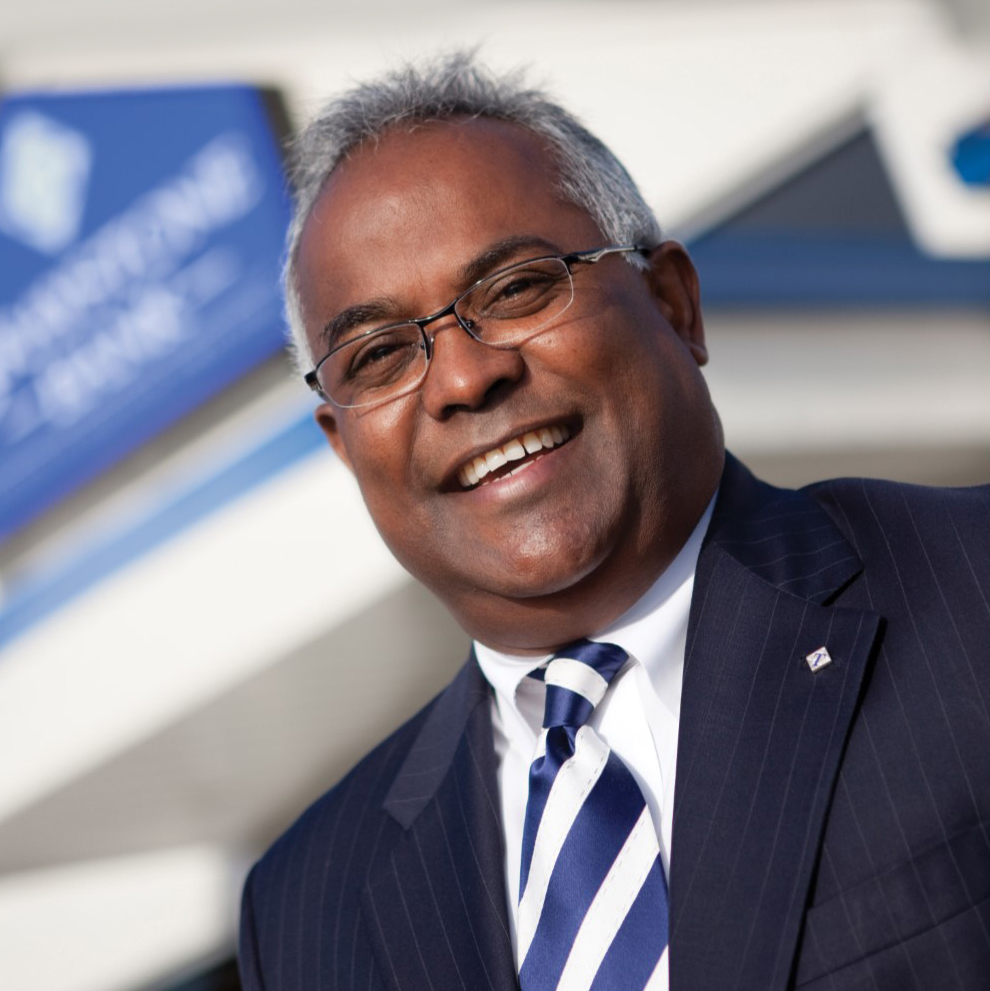
Andrew Samuel
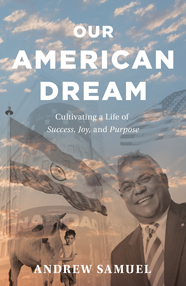
Andrew Samuel is a banking executive and the author of Our American Dream: Cultivating a Life of Success, Joy, and Purpose. Chairman and CEO of LINKBANCORP and LINKBANK, he built his career from humble beginnings in India to leading community banks through growth and acquisition. His book distills his personal and professional philosophy into practical habits for leading teams, serving customers, and giving back to the community.
📚 Books by Andrew Samuel
Transcript
[0:00:25] NVN: Andrew Samuel was born into a life that looked very different than his life looks today. Andrew spent the first six years of his life living on a cow dung floor in India. From there, his family moved to Zambia and finally to America. Today, Andrew is the chairman, CEO and director of LINKBANK Corp. He has been involved in the mergers and acquisitions of more than 10 companies with an aggregate deal value of more than 1.5 billion dollars. Despite all of this, in his book, our American Dream: Cultivating a Life of Success, Joy and Purpose, Andrew explains the fulfillment comes from far more than the false promise of money. It requires finding the balance between success, purpose and work and happiness at home. For him, joy, yes, even in the workplace and finding ways to be of service are integral parts in this. In this book and on this episode of author hour, Andrew shares his own inspiring story and explains how focus, persistence and an emphasis on family can be used to build a life and a business brimming with purpose.
[0:01:38] Andrew Samuel: I lived in India till I was about six, after which, my family moved to Zambia, Africa because of some job opportunities that my father had in Zambia. And I refer to it in the book a lot of my early years in India and then some in Zambia, Africa which is where my father was and then from Zambia, Africa, I came to the United States to a small Christian college, called Messiah College based outside Harrisburg, Pennsylvania, that was in 1980. Met my wife there, we’ve been married 36 years, we have five daughters and 12 grandchildren and son in-laws. So, that’s my background and central Pennsylvania has been home for me for a while.
[0:02:31] NVN: that is a lot of different versions of life all wrapped up into one life.
[0:02:36] Andrew Samuel: That’s right.
[0:02:38] NVN: So, tell me a little bit about how it’s impacted you seeing all these different cultures and having different experiences? How has that shaped your world view?
[0:02:49] Andrew Samuel: It really is interesting because it’s not just that I’ve lived on different continents, but I’ve also you know, spent so much time with people of different cultures, languages, religions. And it’s interesting, even with all those differences, at the end of the day, it’s all about relationships, you know what I mean? Even with cultural barriers and language barriers and religious barriers, it’s all about relationships, you know? I talk in the book, a lot about the things that I learned from those early years that I’ve applied in business and incorporated into my business life, but it’s all a lot of the similar principles that are brought over. You know, that’s something that I think has helped me to be very willing to try new things. I’m not uncomfortable with meeting new people, moving to new circumstances, it’s given me a lot of comfort because I’ve kind of been raised that way, you know?
[0:03:54] NVN: That is such a gift. I feel like that is a super power actually.
[0:03:57] Andrew Samuel: That’s right, you know? I’ll be honest with you. I’ve said to so many people that one of the prerequisites for graduation from high school here in the United States should be spending a minimum of three to six months in a third world country before you graduate. Because I think you would have a whole new appreciation for the opportunities here in our country, if you spent that time overseas, particularly in a third world country.
[0:04:32] NVN: Talk to me a little bit about that. What do you think – this is a big question, but what are some of the things you think that we take for granted or not able to put into perspective because third world countries are kind of a nebulous idea and a reality that we haven’t walked through? Many of us.
[0:04:53] Andrew Samuel: Yeah, you know, I’ll refer to some things that I refer to in the book. I’ll give you an example here. We have access to so much food all around us, you know what I mean? You know, my mother at times when she woke up in the morning, her biggest worry was, “how do I make sure that my kids get a meal today,” you know? We don’t even know what that means or feels like because when we get up in the morning, our biggest challenge is, “my gosh, I’ve got five different cereals or do I do Eggos or do I do toast or do I do eggs?” That’s the biggest decision and that’s the biggest stress whereas in a third world country, you know, as my mom did, she just wanted to make sure we were able to get a meal, you know? So, we take that for granted, you know, every morning we get up and we just have so many options, you know? That’s one example that I point out, you know? Another one would be just even you know, we don’t even think twice about driving to work because we get ready, we get in the car and we drive to work. Not realizing that that is a privilege that millions and millions of people in other countries don’t have that privilege. They have to walk to work, you know? Or catch a crowded bus to work, et cetera.
[0:06:26] NVN: Talk to me a little bit about what this experience has been like in your own life? Going from living in a third world country and having the concern be that there was food, not the type of food to becoming successful? What has that taught you, what have you carried with you and what does money mean to you because of that?
[0:06:48] Andrew Samuel: Right. I talk about this in the book a lot. It really is you know; we think of the American dream as dollar signs and it really isn’t, you know? The American dream is about living a purposeful life serving others, being creative, challenging yourself, motivating yourself, impacting others positively and in the process, you know what, you may make a lot of money, that’s okay. But that’s what the American dream is all about, you know? For me, from the time I came to the country and graduated from college, one of the things that was instilled in me was that in this land of opportunity, I could do whatever I wanted because it wasn’t going to be about my pedigree, did I have the right name? Did I come from the right connections, et cetera? But it was going to be more about how I applied myself and took advantage of the opportunities that are there. So, from an early time, I really felt like the opportunities were there. And it was further helped by the fact that as a child, I watched my parents and what they displayed to us, you know, the hard work, the creativity, the entrepreneurial spirit which I talk about in the book, you know? All of those things kind of carried with me and put me in a position to say, “you know, I’ve got all of those things that were displayed by my parents and the society that I was surrounded by when I was younger and now, I have a place where I can put those into motion.” I talk in the book, I’m an average student, I was an average student, I was not a 4.0, I was an average student. But principles and traits like being bold, having a humble spirit, willing to serve others, wanting to impact other’s lives positively are the things that allowed me to have a greater purpose than just making a few bucks and that’s what that has driven me. And I think that’s one of the reasons that I strongly feel God has been present in all of that in helping me kind of navigate this business environment.
[0:09:15] NVN: One of the things that stands out to me is, so the subtitle of your book is Cultivating a Life of Success, Joy and Purpose. Success and purpose, we talk about you know, putting regularly but joy is unique in that, talk to me about this emphasis on joy and why that’s important to you.
[0:09:37] Andrew Samuel: Joy is very important to me because you know, again, just by the fact that if we’re born in this country, we have so many opportunities and therefore we should be expressing a lot of joy and thankfulness that we have these opportunities, you know? It’s interesting, in today’s business and the stress and just the fast pace, we don’t take enough time to just laugh and share and enjoy every moment, you know? To me, the joy factor really ties into impacting people’s lives, you know? All of the companies that I’ve been associated with, I’ve always said, you know, “we need to be about joy, we need to be about impacting people’s lives positively and if we do that, you know, we’re going to win as a company.” So, don’t look at the purpose as being make money, look at the purpose as bringing joy and happiness to people because it’s very easy. Take the banking industry for example. If everybody we touch feels positively about the company and were able to uplift them, make them laugh, help them enjoy themselves, they’re going to say, “we want to be around you more. We want to tell others about you.” And all that leads to is more customers and more profitability for the bank. The purpose ought to be to impact people, whether they’re customers or not, just bring joy to their life so that when they go home, they bring joy to their families and their families bring joy to other families and we can really impact our communities, our nation and our world, you know?
[0:11:25] NVN: I’m not sure that I’ve ever heard the words joy and banking used together in the same sentence before.
[0:11:33] Andrew Samuel: You’re right, a lot of bankers are not necessarily known for fun or joy but we are.
[0:11:42] NVN: Yeah, you nailed it, that’s like massive differentiating factor right there.
[0:11:46] Andrew Samuel: Absolutely.
[0:11:50] NVN: I love this idea and what I think would be really helpful for listeners is just sort of tether that down in reality. I think we all want more joy and especially infused into our day to day routine. So, when you’re in moments of stress or you know, just standard, rote business. What do you do to help keep that idea of joy at the forefront of your mind?
[0:12:20] Andrew Samuel: Right. I think you know, a lot of it is really driven around being authentic and real and transparent, you know? Have numerous times with our executives and employees, you know, have just gone out there and said, “listen, I’m going to be totally transparent with you. I’m not sure we’re doing the things we are, I’m a little stressed about some things that are going on and I need your help with this.” But, a lot of times, when we keep this emotionless façade that we’re carrying, it’s not helping us you know? Because we’re internalizing that I tend to be very authentic and transparent about it. And that is a sense of relief that I always feel, you know? I have also always tried to think about the things that really matter in my life and keep it in perspective. So, an example would be my priority and order in life is always been my faith, my family and then my work environment. So, if there’s stress at work, I always try to remind myself, “that is the third thing on my list of things that are priorities to me.” So, I shouldn’t let this stress at work or the circumstances at work impact the other two items that are far more important to me, you know? So, what I would say is just being authentic and transparent I think right off the bat allows you to shed this artificial mentality that creates a lot of stress and anxiety.
[0:13:59] NVN: Yeah. I feel like we live in a time where it’s so easy to put all of the emphasis on work. You know in large parts because of technology too it is always there. So, it is interesting to talk to someone like you and hear that there is success to be found when you can put work in its place, which is not number one.
[0:14:25] Andrew Samuel: Absolutely. You know keeping that priority in order and you are right. You know with technology today it is all consuming and it is so easy to just get so engrossed that you don’t even realize how much time has passed by you know but it is just as I said earlier, you know it is trying to keep those priorities and perspective and to really live an authentic, real life.
[0:14:50] NVN: Another concept that is really important to you is this idea of service and servant leadership. Talk to me a little bit about that?
[0:15:00] Andrew Samuel: Absolutely. And you know this is a very important topic in today’s world, particularly with young leaders because servant leadership is about having a heart that is willing to serve people and in that process people tend to follow you, rather than if you can appeal to the hearts of people they are going to go the extra mile for you. The idea of using your title or dominating people or demanding, being demanding with people is not the way to get long term followers that will climb any hill for you. But if you can appeal to the heart by being a servant leader, one that is willing to serve before leading, you really develop followers for the long term and it’s followers that you don’t really have to monitor as much because they are going to do it because they want to do it because they want to please you rather that people that are doing it out of fear or intimidation, you know? And I found – I’ve been at probably over six different banks. One of the common traits has always been if you can appeal to their hearts, you are such a better performer individually and collectively than if you have a very intimidating autocratic environment in your company.
[0:16:39] NVN: I am curious about what the crossover is between all of these things. So, when you talk about service and treating people in this way, it seems like joy is related to that too. It seems like there is a flow here.
[0:16:53] Andrew Samuel: Right, absolutely. All of this is really most of the banks that I have been at, our mission statement has been very simple. It is to positively impact people’s lives. In fact, the company I am running right now, LINKBANK. That is our mission statement is to positively impact people’s lives and if we do that, we are going to make lots of money. That is not going to be the issue but we should focus more on impacting people’s lives positively. Which means being servant leaders that bring joy, challenges in everything we do. For example, if we are firing somebody do it in a graceful way. If we are hiring somebody do it the right way. If you are correcting somebody, do it gently with a purpose, so that their dignity is not compromised. You know all of those things – so if you come around living a purposeful life you know it automatically brings those things out of you and that is what we try to do at the companies that we’ve been at.
[0:17:57] NVN: When you talk about all of this, it is so logical. It just makes sense as a human being and it strikes me that sometimes when it comes to business, we lose that. It becomes all about business and we forget about these basic principles.
[0:18:11] Andrew Samuel: That’s right. And Nikki part of it is I think we have to be so intentional about it because guess what? Everything around us whether it is technology, whether it is a television, the billboards, everything else is telling us the opposite, you know what I mean? So, we have to be real intentional about it. So, I will give you an example, you know somebody asked me you know when we started this new bank or the banks that I have started, “what have I cautioned our people about? What are the challenges I worry about?” And I never bring up things like capital or loan growth or deposit growth. I always tell them you know, “first of all, leaders is about check yourself. Ask yourself is your motivation ego, pride driven, you know control driven, etcetera? Or is it driven to have a purposeful life that impacts people?” And we have to intentionally remind ourselves of that because human nature is to deviate to those things you know? So, you are absolutely right, these things are very simple and straight forward, but where we have to really caution ourselves is the coaches, the mentors, the teams we have around us have to be intentional about making that a priority and living a very authentic life.
[0:19:36] NVN: Is there anyone you can point to either in your own life or someone who is more well-known that really inspires you on any of these counts?
[0:19:48] Andrew Samuel: Oh, there are numerous folks, you know what I mean and I can tell you one that comes to mind right away and I refer to him in the book, Nelson Mandela. You know he sacrificed years in prison, but when he came out, he could have been president for life. We all know that; you know what I mean? South Africa would have made him president for life but no, he led them through the new government, set the stage in infrastructure and said, “It is now time for the next generation,” and he moved away. And a very humble spirit, a very soft-spoken person but very authentic, very real, very humble. So, there is an example that comes to mind right away. But there is many examples and I have been fortunate that some of my mentors over the last 35 years in business have been folks with similar traits. You know very humble, servant leaders that want to serve, want to pour into your life and I have been very fortunate to be able to have a number of those folks in my life.
[0:20:56] NVN: You strike me as the type of person who is very good at recognizing qualities like that and embracing them, seeing what people have to offer in a way of inspiration.
[0:21:06] Andrew Samuel: You are absolutely right because a lot of people think of you know, a CEO of a bank. When people ask me, “so, what do you really do?” And I tell them there is a lot of things I do, but a lot of people think, you know I look at number a lot and I do analysis and things like that. I say, “you know one of the biggest jobs is really recruitment and identifying talent and getting like-minded folks with like-minded values on our team so that we can fulfill our purpose.”
[0:21:38] NVN: Now as we are talking to listeners who might be hearing you and thinking that there is some lack of joy or purpose in their own lives, what is one little thing they can do after finishing this podcast to start to cultivate more of that?
[0:21:56] Andrew Samuel: Yeah, you know I think one thing they could do right away is to really step back and reflect upon themselves and say, “you know what? Let me at least try having a spirit of service, a spirit of serving others.” And it may be go to the local food shelter or something, just make up your mind to go serve and you’ll be amazed what you will get out of that and apply that in your home life, in you work, etcetera. And just self-identify and stop and ask yourself, “are my motives selfish? Are they driven by my needs? Are they driven by my wants? And let me just at least for a day just focus on others, serving others, doing for others and putting my needs and desires aside.” And they will be amazed the fulfillment and joy they’ll receive from that.
[0:22:59] NVN: Beautiful. Awesome and Andrew. Is there anything we haven’t gotten to that you want to make sure you say to listeners?
[0:23:07] Andrew Samuel: All I would say is, you know, for a number of years, people have asked me, you know, for a number of years, people have asked me, “Andrew, listen, why don’t you put some things that you talk about in a book? Because you can reach a much greater audience than just speaking to different groups.” And so, that’s what I did. The book was really written because I really have two things, I want coming out of it. One is that the American dream is absolutely alive and well. In today’s age where there’s a lot of negativity about immigration and the American dream. I want people to realize, listen, the American dream is very alive and you know, as immigrants, anybody that comes to the country, the opportunities are wide open for you to do whatever you want, but just apply yourself, you know? Because you can do anything. The second thing is, in the book, I’m trying to reach younger generation of leaders and I hope that some of the principles in their principles of humility, authenticity, humbleness, things like that will really speak to them and help them to be better leaders, that are more values based and have a desire to serve others. So, I’m hoping that those two things come out very clearly to readers.
[0:24:26] NVN: That is such a powerful message, especially right now.
[0:24:30] Andrew Samuel: Absolutely. I hope that readers will pick that up. I know without any doubt, they’ll pick that up. They don’t need to remember all the principles. It’s one or two of those principles will make a dramatic difference in their lives and as I say in the book, you know, will lead to a successful, fulfilling joy filled life.
[0:24:49] NVN: Excellent. Thanks for joining us for this episode of Author Hour. You can find Our American Dream on Amazon. A transcript of this episode as well as previous episodes is available at authorhour.co. For more Author Hour, subscribe to this podcast on your favorite subscription service. Thanks for joining us, we’ll see you next time. Same place, different author.
Want to Write Your Own Book?
Scribe has helped over 2,000 authors turn their expertise into published books.
Schedule a Free Consult