Govert van Sandwijk: Episode 361
Read the full transcript
Govert van Sandwijk
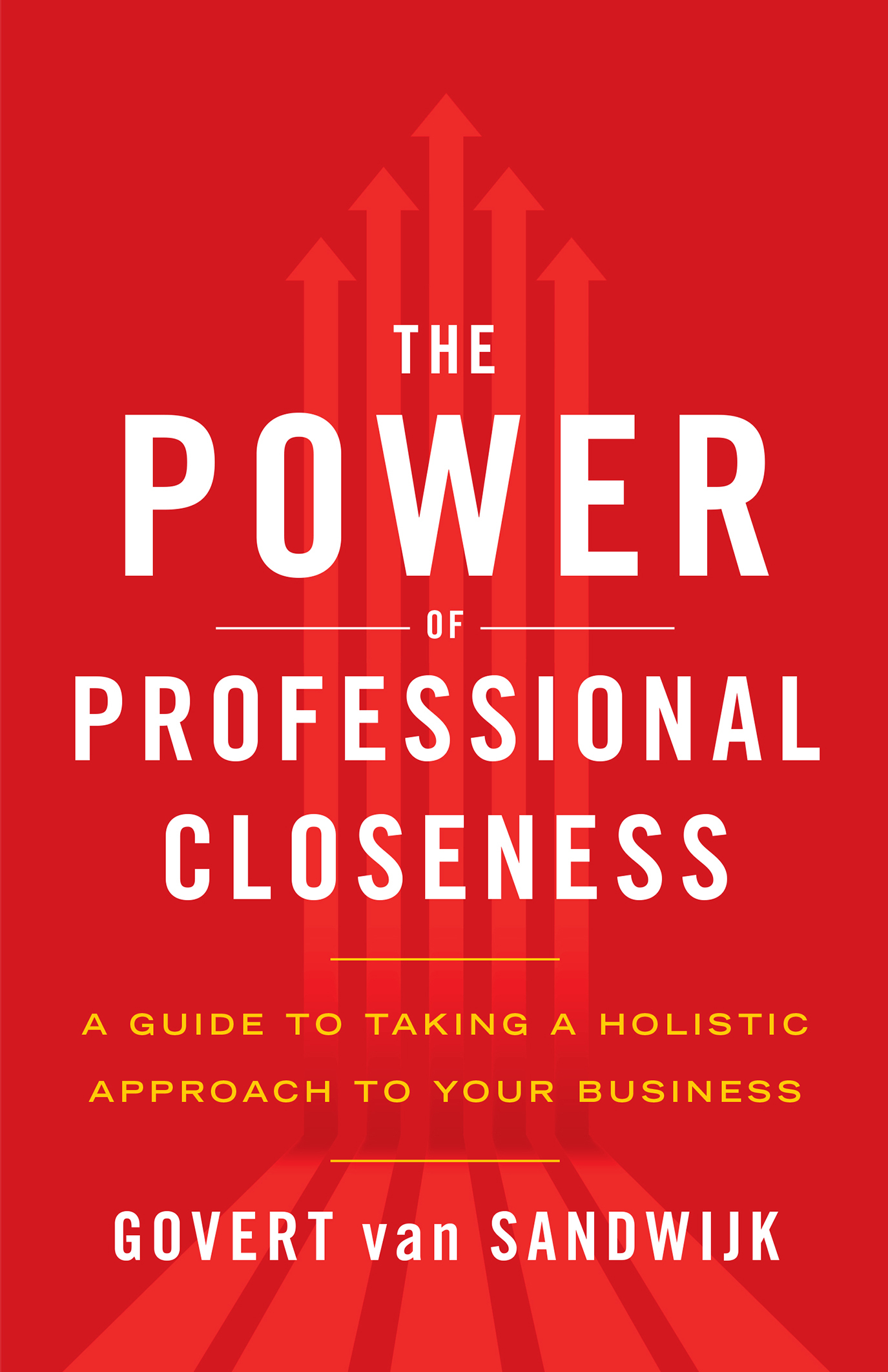
Govert van Sandwijk is an international strategy facilitator, leadership development consultant, and executive coach who has delivered business, people management, and leadership programs to more than 5,000 leaders across 40 countries. He is the founder and managing partner of Time to Grow Global, a boutique consultancy that helps organizations with strategy, human resources management, leadership development, and personal growth. Drawing on a background in organizational psychology, he helps teams see what is happening beneath the surface, resolve challenges, and grow. He is the author of the number one Amazon bestseller The Power of Professional Closeness: A Guide to Taking a Holistic Approach to Your Business.
📚 Books by Govert van Sandwijk
Transcript
[0:00:30] NVN: I’m here today with Govert Sandwijk, author of the book, The Power of Professional Closeness: A Guide to Taking a Holistic Approach to Your Business. Despite the fact that outdated professional norms might tell us otherwise, Govert argues that it’s increasingly important that professional teams be able to be open and vulnerable with one another. Not just on a business level, but also on a personal one. They need to cultivate real relationships in other words. And this begins with business leaders, the example they set and the culture they establish. Without this, trust can’t truly be established, companies miss out on collective intelligence and end up with teams of individuals that are each moving their individual mountains as supposed to collaborating to move mountains together. Govert, let’s start by telling me a little bit about your company, Time to Grow Global.
[0:01:26] GVS: Time to Grow Global is a boutique consultancy firm but basically, it means that they have a small crew of trusted people I work with, there’s a couple of people on the payroll and we do great things for the clients we work with but we are really niche in that sense. So, we are super well-known by the clients that know us and outside of that, you will not have heard of us. What we do basically is we try to help companies become better when it’s about strategizing, leading and basically being a solid environment for people to work in.
[0:02:05] NVN: So, what you’re writing about in your new book has to do with creating openness and vulnerability in companies and beginning with leadership which is something that I feel most leaders are just not naturally inclined to do. There’s this level of professionalism and sometimes even a veneer that leaders feel the need to keep up with their reports and the rest of their company. Can you talk to me a little bit about why you feel like that’s so important in a business sense?
[0:02:35] GVS: A lot of people actually, they sort of a need or an expectation that there should be some level of veneer which is attached to professionalism, right? So, when you’re professional, then you should always be also a little bit distant or at least that seems to be the mantra in a lot of cases. And what I’m trying to talk about and basically what I was finding out over the years when I was working, trying to be professional, but at the same time, also acknowledging the fact that you’re a human being and that you have these emotions that also guide you as much as your analytical part of your brains makes for a much more whole way of leading. So, you’re actually using the totality of what makes you human instead of only focusing on one part. I think business schools or at least they used to focus too much on only one part. And then it becomes mechanistic, it becomes plastic and then sometimes people lose themselves as well in the process. While I know and what I see around me, you know, once you are truly opening up and that doesn’t mean you have to share everything in your life with everybody, but really showing what you feel, what you think, where you’re coming from, what your thoughts are and also sharing your doubts and doing it in an authentic way, that will open up the line of communication much more. And creates a different context and also for the people that are around you.
[0:04:08] NVN: You just hit on a really interesting point to me. It’s getting a little bit specific, but you talked about this idea of sharing doubts. And my feeling is that for leadership especially, there’s this notion that projecting confidence is always so important and I understand the confidence and having doubt don’t necessarily negate one another, but can you dive into that a little bit for me about how it’s okay for leaders to have doubts sometimes and to express that to their team?
[0:04:43] GVS: Actually, it’s not only okay. It’s a necessity because that seems like all too often that when you are in the leadership position, whether that’s the CEO of the company or a first level frontline manager. When you’re always projecting this air of confidence, it’s also sending out the message, “hey, I know everything and I know the answer to everything.” Which of course basically is just not a reality, you know? You don’t know everything and you don’t have to know everything. One of the things I talk about in my book is, and I truly believe this is becoming comfortable with being uncomfortable. Because we live in a fast-paced world, everything is changing around us when we used to talk about management, it was about predictability and we know now that’s nonsenses because the world has become so much more unpredictable. Why keep up that you know at all, instead of embracing the fact, “hey, you don’t know it all but when you connect all those brains together, and you create the right climate, you might be reducing the uncertainty much more than when you’re only focusing on your own knowledge.” So, I think it’s essential actually that you learn this and that you start to be comfortable with actually not being certain all the time.
[0:06:04] NVN: You just hit on such an interesting point to me. I’m making a bit of a jump here, but my feeling is that a lot of the lack of predictability in the world today is an offshoot of technology and the way it allows everything to grow and evolve so much more quickly. So, it seems to me like there’s an interest juxtaposition here that in some ways, technology is also requiring us to be more human and how we interact in our professional lives.
[0:06:35] GVS: Yeah, that is absolutely one of the things I truly believe in and I’m also exploring and how I facilitate and how I coach the companies we work with. And it’s basically, where you dive much more into what it truly means to be human and also using the qualities which are sensing which are you know, being able to read between the lines, but also being able to project or to let’s says synthesize what might lie beyond. So, connecting dots in a way that you construct the reality that might be or might not emerge, but you start to think about what might be possible. And of course, when you do this, you are actually leaving a little bit the path of the predictability, knowing everything for sure, analytically knowing what the next step will be, and also knowing what the effect of that next step will be and entering into an area where you are much more let’s say, trying to move forward without knowing it all. That again makes the circle come back and you need to be vulnerable in the sense that, “hey, there will be a lot of mistakes and there will be a lot of learnings because the path to it won’t be linear anymore.” In order to still function in the right way, you need to be using, digging deep and being more human so to speak, in order to also keep on functioning as a team.
[0:08:03] NVN: I’m curious –
[0:08:03] GVS: If that makes sense. I mean.
[0:08:05] NVN: It absolutely makes sense and I’m wondering – so, your background is actually in organizational psychology. Do you feel like this has allowed you to look at business in a different way than other consultants might?
[0:08:24] GVS: Wow, that’s a tricky question actually because I used to – when I was studying and especially in the last year of my studies. I actually was always thinking, once I will be done with my studies, shit, what will happen? I will never have a job because nobody in this world – especially not commercial world will want to pay for the type of knowledge or the type of skills that I’ve acquired.” Back then I thought, “this is too much intangible, this is too vague. What is it that we’re actually learning here?” I think it’s not necessarily the background from an educational standpoint, that allows you to have whatever perspective. I think it’s really – once you start to look at what’s going on and you work a lot with people, which is what I do obviously, then there can only be one conclusion and that is you know, how people interact, how people behave in their day to day working reality, professional roles is so much connected to the psychological makeup. And then, you have to look at the person behind the professional. I think that conclusion is not a conclusion of the psychologist per se, that’s a conclusion of somebody that’s just looking and observing, “hey, what is happening?” I think this is also why if you now look at, a lot of consultants that have completely different backgrounds, they start to focus much more on, “okay, who are the people in the room and what are they doing together?” in order to make a company move forward and to get to great results and at the same time, also have fun while doing it. So, I think it’s just kind of an undeniable thing which is going on, but the human part becomes more and more important and it’s also being acknowledged by more and more people.
[0:10:17] NVN: This is a little bit of a chicken or egg question. When you first started working as a consultant for businesses, did you go in looking at individuals and human interactions and coming at the work that way? Or did you initially go in with more of an organizational perspective and then it occurred to you over time what we really need to look at here is relationships and how people interact with one another?
[0:10:46] GVS: When you say it like that, I want to correct it a little bit. Because I think t’s about how people interact together, but it’s also how people function as individuals which is super important and then thirdly, I think it is how people find their way in business together. How they strategize, how they come from A to B, how they project what the future should be like. But I will come back to this a little bit later because your question was, starting from an organizational point of view or starting from an individual point of view. My own journey was, I was a psychologist by training, then I started actually working for a small psychological firm which was basically tasked by the court system to determine whether or not suspect was during the time of committing the crime, he had any form of pathology. So, this is more on the clinical side, a very individual, so no context of organization works forever. Kind of fast forward a little bit a couple of years later. I ended up with a consulting firm when my main job was running the assessment center practice which is basically looking at the psychological and competent strip of people’s individuals, within a job context and within an organizational context. So, my starting point as a professional was more the individual route and then when I started my own company, obviously, that was the main part of my business in the beginning was much more on the individual side and much less on the organizational side. Organizational is always there but more as a context. While right now, I am trying to focus actually on getting those parts more together. So, I don’t believe anymore in leadership development programs that are focusing on personal leadership for leaders. I don’t believe in team development programs that are – you know, taking the team, looking at the team dynamics and such. I don’t believe in strategizing as a single activity. I think in the real day to day lives, companies, all those things have to name, all the time together simultaneously so why is it that when you look at a lot of organizational practitioners that they tend to fragment the problem into parts and then just focus on one thing. So, what I like to do is actually grab a theme and look at all of those different things together. And then we might have some of the different time zone or a different time in the year, you will have different accents, but they are always there. So, it is much more connected.
[0:13:34] NVN: That’s fascinating. I mean that truly is holistic, which is what you are talking about in this book is a holistic approach to business.
[0:13:42] GVS: Yeah and I think holistic, I was actually doubting to use the word also in my title because it has also this connotation of kind of wishy-washy type of not concrete – it might have the negative association for some people. But for me I think it is about holistic and approaching a company in a holistic way. Because in the end of the day, if you want to run a business in the right way, you need to really tie those parts together in the right way instead of fragmenting everything and then hoping something whole comes out as an end result, which has been of course the path a lot of organizations have been on for a long time. Thinking if we specialize enough and then at some point you will have a better outcome. And I think nowadays, more and more you see the realization that that doesn’t fly anymore. It doesn’t work anymore like that.
[0:14:35] NVN: That makes sense. Another thing that you talk about in the book are these basic laws of influence and how they can be used to raise the collective intelligence of the team, can you explain that a little bit and talk to listeners about that?
[0:14:51] GVS: Yeah that is a very interesting and I did this in a bit on purpose. So, this is a part in the book where I talk about how behavior influences other behavior when it comes to interactions and how you can use this to lead and to also raise your collective intelligence. And there is so much to say about this and in the book, I scratched the surface. But basically, what I am saying is whatever you do in an interaction whether it is conscious or not conscious, you are always creating impact and there is a couple of laws connected to this. So, if somebody is in an interaction let’s say super enthusiastically sharing his views and you almost cannot get a word in then the effect and this is a behavioral law, the effect will be that it petrifies others in the room. So, for this person to create more balance in the conversation they just need to zip it. Shut up and let other people talk because otherwise you create patterns that might not be so healthy in order to move the talk forward. And there is a couple of those laws. So, this is one of them you know, active behavior, following behavior, create leading behavior and leading behavior creates following behavior. But when you try to talk about content, the fact of the matter so to speak you also create conversation around that same type of content. So, if it is all about facts, then it becomes all about effect. The same thing goes for much more relational conversations. So, when I start to be interested in, “hey where are you coming from and what do you think is important and what do you bring to the table and what moves you in life?” Then you create a dynamic, which is on the relational side and once you know a little bit and you know your own preferences and you know a little bit of preferences of the people around you, you can start to use it in a conscious way to move the conversation in the right direction. And connecting that to collective intelligence is one of the things I read about in researching this book was that this one factor that is determining the collective intelligence of a group or with a team is so to speak distribution of activity within a group. So if there is all – if all group members are equally participating in the discussion or in the conversation, the collective intelligence of that group becomes bigger. And that is of course interesting and when you tie that back to your question about self-confidence, I think a lot of leaders they have this mindset. Self-confidence means talking all the time, giving your vision which is of course then creating not what they want, but it is creating more pessimism in their teams and it is actually not creating collective intelligence.
[0:17:44] NVN: That makes perfect sense. And then of course along with that the engagement has to skyrocket also I would imagine.
[0:17:53] GVS: That goes hand in hand, I would say. You know if you have whatever is in the executives being more than any other teams, once everybody is participating in this equally and knows, “hey, what I am doing and what I am saying and how I am contributing goes into our collective outputs” well then everybody becomes the owner as well and then come of the classical problems that you see in companies they build a strategy and then they say, “hey the strategy doesn’t fly.” And then they say, “duh, because you made it on your own, somewhere in the back chamber, three people in the room.” And I am thinking for the rest of the thousand people, but once you start to have really have everybody participate then the effect will be completely different.
[0:18:38] NVN: It makes sense. Are there any stories that really stand out for you in terms of shifts that you have seen in a company once they begin to utilize this idea of collective intelligence? Like any great breakthroughs or anything like that?
[0:18:59] GVS: Yeah, I mean I have seen a lot of different examples and I have also described a lot of different examples in the book. But one which is pretty recent is basically this company, where we were asked by the CEO to help out. This guy he put together a team of superstars so to speak. So, everybody was in their role and everybody is on the top of their professional level in their role. And they moved mountains but when he came to us, he said, “you know I have this great bunch of people and they move mountains but what is lacking is that they are moving their own individual mountains.” So, there is no sense of what are we trying to achieve together. And we started working with them, in one of the first sessions or actually it was the first session the word trust came on the table pretty fast. So, I think we were a day into the session and people start to talk about trust and the lack of trust. And then fast forward a little bit, it turned out that it was not this mistrusts where people were personally not trusting each other and feeling unsafe, but it was more of a superficial trust of, “hey, can I count on you to deliver when you to deliver your part of the process so that I can do my job.” So, it was a kind of a superficial mistrust and it came from not really making the hours together and not really knowing each other much more than, “I know you’re a professional and I know you do your job in a great way.” So, what we started to do is we put the pressure cooker on the personal side to get them to know each other on a much, much deeper level, which had nothing to do with working reality, but everything to do with who am I as a person as a human being? What do I think is important in the world? And then once we started to do that, we basically saw a shift happen and pretty fast where the word trust or mistrust completely disappeared. It was not even a topic anymore. So, the conversations became much more real but also on the business side. You know they were talking business in a very authentic and real way and starting to connect dots in the way they didn’t do before. When you see that happen you see how much more a group of people together can achieve without that level of professional closeness. It was just amazing to see.
[0:21:45] NVN: The thing that keeps coming to mind to me as you’re talking Govert is in this instance in particular and more generally speaking also, how much happier people must be at work also along with all of this. It just feels like a huge exhale.
[0:22:01] GVS: Yeah, I think that is definitely the aim. It is a big part of it. I think once you are dealing with professionals that are having the space and the room to really work on top of their game, but also learning from all the disciplines and doing just great stuff. Achieving cool project and cool results and getting things done in the way that you want to get them done, without the negative competition, you have them – people are obviously much more happy and actually much more fulfilled, but it is not the goal in itself.
[0:22:41] NVN: Okay, so for business leaders who are listening to this right now, if they are feeling some resonance with what you are talking about and seeing that their own companies are lacking some of these things, what’s one small thing that they can do immediately to start facilitating more professional closeness in their own company?
[0:23:05] GVS: There is not a one thing, there is no golden bullet here. But I do believe that making sure that everybody has contributed. So, it is a little like that first thing, look at yourself. You know, how do you lead? When you are having those conversations together, what is it you’re talking about? Is it the day to day reality? Or is it taking those numbers and it is why didn’t you get to those KPI’s, etcetera, etcetera? Or is it asking bigger questions and trying to get away from the day to day reality? Is it zooming out? Is it really we’re looking at where are we going? And so that’s the second question would be, how am I interacting? Am I hogging all of those conversations? Am I always there? Or do I dare to shut up and listen and let others do the talking? To really, really put myself in their shoes and listen from their perspectives. And I think these couple of simple things I would say and I dare to also say that a lot of leaders if they would be honest they would probably have to answer, “hey, I am too much looking at the wrong leaders and I am too much active steering the boat.” Instead of really thinking, “hey, we need to steer this boat together.” And there’s other people maybe on certain topics that can do a much better job than I can and I need to facilitate it.
[0:24:35] NVN: Excellent. So, I am hearing at the heart of all of this just cultivating, stepping back and cultivating an awareness of how things are operating around you, who is involved and how much ownership you’re taking where perhaps other people can be contributing also.
[0:24:54] GVS: Absolutely.
[0:24:56] NVN: Okay Govert, is there anything I haven’t asked you yet that you want to make sure listeners are aware of when they hear this podcast?
[0:25:04] GVS: Well there is tons of things we didn’t talked about, but I guess you know that’s maybe for next conversation. No, I think we had a great conversation in capturing the essence as to what I want to talk about in the book, yeah but no, I can’t think of anything right now.
[0:25:20] NVN: Perfect. Govert, you did such a great job. This is a fascinating conversation. Thank you.
[0:25:26] GVS: Well, you’re welcome I would say.
[0:25:29] NVN: Thanks for joining us for this episode of Author Hour. You can The Power of Professional Closeness, on Amazon. A transcript of this episode as well as all of our previous episodes is available at authorhour.co. For more Author Hour, subscribe to this podcast on your favorite subscription service. Thanks for joining us, we’ll see you next time. Same place, different author.
Want to Write Your Own Book?
Scribe has helped over 2,000 authors turn their expertise into published books.
Schedule a Free Consult