Stephen Gillett: From Simi Valley to Silicon Valley
Read the full transcript
Stephen Gillett
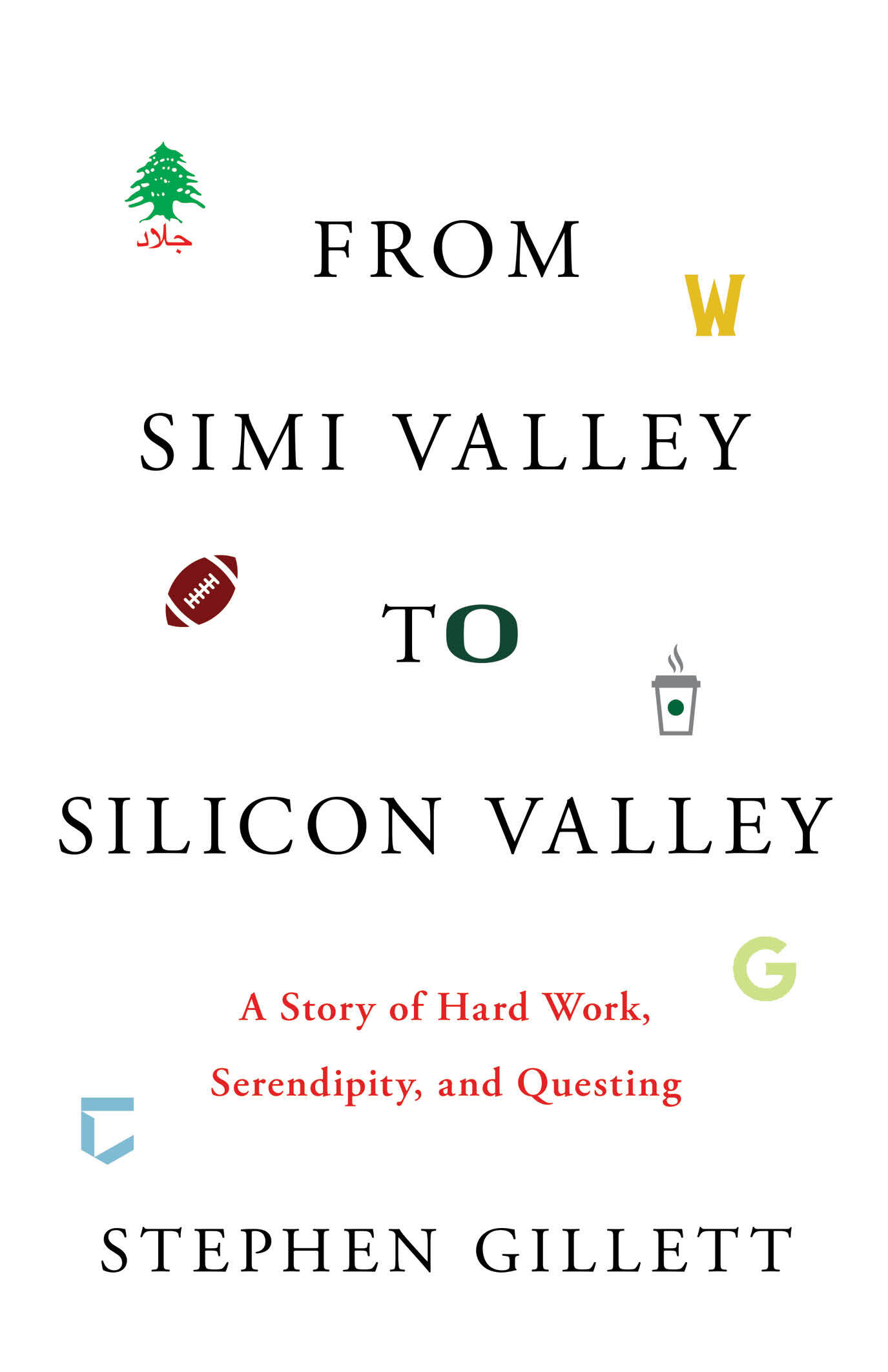
Stephen Gillett went from a part-time technology specialist at Office Depot to one of the youngest chief information officers of a Fortune 500 company. Over his career he has worked alongside leaders including Bill Gates and Starbucks' Howard Schultz, co-founded and led the Alphabet cybersecurity company Chronicle, and served as executive vice president, chief operating officer, and board member at Symantec. In his book, From Simi Valley to Silicon Valley: A Story of Hard Work, Serendipity, and Questing, he shares his journey and the lessons he learned along the way.
📚 Books by Stephen Gillett
Transcript
[0:00:33] CH: What’s up, everybody? You are listening to Author Hour, the show where we interview authors about their new books. Today’s episode is with Stephen Gillett, he’s the author of From Simi Valley to Silicon Valley. Steven is an amazing guy, he is not only the cofounder and CEO at Chronicle which is an alphabet company born out of X, the moonshot factory. He is also an executive adviser to the CEO at Google. He is one of the youngest CIOs at a fortune 500 company in history, he was responsible for leading the tech transformation at Starbucks under Howard Shultz. He’s also worked directly with Bill Gates as the CIO at Corbis, he was the president at Best Buy and the COO at Symantec. As you can tell, he has had an astonishing career but what I love about Stephen is that he wrote this book for his kids. His eight kids. In this book, he shares the lessons that he learned and the remarkable journey that he’s had. If you want to succeed in business and in life and you're focused and committed on having a remarkable journey yourself, this is the episode for you. Now, here’s our conversation with Stephen Gillett.
[0:02:09] Stephen Gillett: It was the late 1990s and I was the member of the University of Oregon football team. I had been invited to join the team, we had a great year, we were just coming of the Rose bowl and the internet was also taking of, this was the late 90s and I had this restriction where I couldn’t be the athlete and have a job and I wanted while I was at school to start working in this technology space. I ended up making an important decision in my life which is I quit the University of Oregon football team and took a job as a business machine’s associate at the local office depot in Oregon. That was a great job, I used to setup computers and troubleshoot people’s laptops and help them with their dialup issues which was the way you connect to the internet back then. People would come in and ask for help or memory upgrades and it was a nice setup and we used to have this customer that would come in every couple of days and he would always ask for tech support, he would never pay for anything. The group of us, the team started to shun him a bit but I always helped him because he was an older guy and he reminded me of my dad or whatever the reason was, I helped him out and he never paid for anything and he always said thank you and he was nice. We thought he was living in his car, that was what our impression was. Then one day, maybe a year into my job and having done this for 10 months or so, he comes into the store of Office Depot and he’s dressed in a suit and he has his hair combed and he has a wife for heaven’s sake, we were all shocked and he walks to the back office of this Office Depot where the manager sits and about 30 seconds later, I get called on the overhead speaker. Hey Stephen, can you please come to the office and I was worried they caught me taking some printer paper or whatever. I go back to the office in this Office Depot and there’s this customer. He sends out the store manager and now I’m standing in this room, this little office, it’s hot, he’s got an old desk and this customer says to me, Stephen, do you have a few minutes? I said sure. He says, you know, you’ve been helping me out with all my technology needs over the last year. I really appreciate it and he said in response you’ve never asked me who I was or what I do. A 20-year-old Stephen saying who are you? He says, I’m the administrator of what will soon be a part of one of the largest hospital chains in the pacific northwest from Oregon, Washington, Idaho and Alaska. We’re building a new hospital just south of where you live and I’d like you to come be the IT coordinator and run IT for this hospital. I’m shocked because one, I’m 20 years old, two, I’m a student and three, I said, John, his name is John. I know a lot about fixing your laptop and your printer and maybe helping you connect to the internet but I don’t know anything about this IT stuff. He said to me some words that really stuck. He said, you have the ethics and the personality that I want working at this hospital and I’ll train you, we will train you on the rest. And then he takes out of his pocket, like a little checkbook and he writes a check for I think $400 which was a fortune for me then. He says, in part of if you accept this job is go out to the furniture section of your Office Depot and buy you a new desk because you’re going to have a little office down there. I adjusted my schedule, I quit Office Depot, I called my wife, back then, my girlfriend back then but now, wife. We used to pay for the minute on your cellphone so I talked really fast and basically got the update in a minute. I quit my job, became the IT coordinator as a 20 year old kid at this hospital and true to his word, he brought in the experts on Linux and Windows and networking and for my final two years of school, I got trained up on all the most sophisticated medical IT systems that this hospital had to offer and it was the height of the .com boom in 1998 and which I was recruited directly out of college. My wife as well and we moved to Silicon Valley. Being nice to this guy, not knowing who he was, not really expecting anything from him, turned out to be one of the most unexpected detours of my life and career that set me on a path that would materialize over the next 20 years.
[0:06:29] CH: Wow, Stephen, you have an amazing background, you’ve had a really incredible career of course but we were talking about before we started recording, why you decided to write this book, who it was for. Can you give a quick explanation on that?
[0:06:47] Stephen Gillett: Sure, I’m married to my high school sweetheart. I’m 43 years old, we’ve been together 26 years so you can do the math there. We had our eighth child, yeah, that’s eight. Not a mistake there. I thought, after being told for many years, you should write a book, you have a lot of this interesting stories and experiences. I kind of passed on that, never really was inspired to do it. But when I had this eighth kids, I knew this eighth kid was coming, even after the first seven, I thought, how do I capture this unexpected life of the first 43 years of the ups and the downs. You expected the unexpected, the detours and all the lessons of those years in a book or in a format as sort of a time capsule so that these eight kids can have it for the rest of their lives and when they get married and have kids and their families, I always have the story of this period in our life and our family’s life and so I wrote it with that in my heart and that in my mind which is I wanted to gift it to the kids. As I did that, as I wrote it, as I edited it, as we got editors to help publish and edit and do all the things that you do in the book writing process, I was encouraged strongly to make this book more available and while they were honoring the original intent of being for my family, the people that were helping me felt like there was a lot of life lessons in here that could be much more valuable to our broader set of people and so therefore, I agreed with them and now here we are making it more broadly available.
[0:08:21] CH: I love it. It reminds me of the very first episode of this podcast that we actually did with JT McCormick who originally wrote his book for his family as well because he wanted them to know where he came from being the son of a pimp and the son of an orphan mother and he had no idea where his last name came from, that sort of thing. I’m curious for you, what was the journey like for writing this book for your family. How did you decide what you wanted to tell them, what you wanted to leave out, what was it like?
[0:08:59] Stephen Gillett: Well, you brought up JT who was one of the first people I talked to and my original decision point was, do I write one book about family, one book about work and one book about gaming or all the things. Do I do one about business lessons and life lessons and I realized that if I’m telling the story and if I keep my message true to the people that was intended for, then it’s really going to be a mix of all. Because if I try to parse out work, life, hobbies, serendipity, expected, unexpected, you really kind of deconstruct the actual life that I’ve lived so far. The original direction that I decided on was how do I weave it in a way that represents and reflects the way I actually lived it, which means it’s a little bit of everything in a storytelling mode that kind of moved and weaved in and out of all the things that happened in somebody’s life. I think it’s the combination and the constitution of all of those elements of one’s life that I really tried to bring forth in the book.
[0:10:02] CH: Excellent. Speaking on behalf of maybe the listener who wants to get into the meat of the book, you’ve worked with amazing people, Bill Gates, Howard Shultz, a bunch of other influential innovators. Let’s tell some stories, what are some stories you have from working with Bill Gates for instance.
[0:10:24] Stephen Gillett: Yeah, Bill Gates who was an – as an IT professional in those years and still am to a degree. Working for who I would consider one of the most iconic IT leaders of – I’ll take you back to 2006 when I met him. I was a head of IT so head of technology. Microsoft had been the dominant IT company in my personal and professional life for the 20 years prior to that. Here I was, not only being recruited to go work for a company in which Bill Gates owns but then to have the opportunity to meet the person and meet the man and meet the kind of the legend. This was in Seattle, I was working for one of his smaller companies called Corbis and we could talk about what that is later but I’m being now, I’m on staff, I started in May of 2006 and in June or so, about a month later. I’m going to have my first meeting with Bill Gates because he’s the only board member, he owns the company 100% and I started to hear stories that the last head of technology which we call a CIO, chief information officer, I’ll use CIO, the last CIO only lasted until that first meeting with Bill Gates and didn’t continue after that. There was a lot of energy, a lot of anticipation for who is new Silicon Valley guy who had just left Yahoo. How is he going to do with Bill Gates and so I was getting a lot of advice? People telling me, don’t do this, do more of this, don’t look this way, don’t say this word, don’t drink this beverage, I get an over coached. I thought, look, if I try to be something I’m not, if I try to fake my way through this first meeting, if I try to overly orchestrate who I am as a leader and as a person or how I make decisions or what I’m here to do in his company, he’s going to see right through that I’d expect. I have to be myself so I kind of pushed aside all of that feedback. One of the things is I had to do a PowerPoint presentation and the first slide has to be introducing myself. The first draft of the slide was like all my resume and my degrees and I looked at that and I said, who cares about that? You think Bill gates is going to care what my grade point was or what project I worked on at some company? I said, I’m going to introduce myself in a new way. Back in that same year, I had been named one of the top guild masters in World of Warcraft by WIRED magazine so there’s a big article about me floating around. I decided to put on my first slide of my PowerPoint and my first meeting with Bill Gates, my introduction slide but it wasn’t an introduction to Stephen, it was an introduction to my gaming character in World of Warcraft. My paladin. I had a picture with flame coming out of his eyes and this huge sword that was glowing blue and all the stats of everything that our guild had accomplished and then I went into like who Stephen was. Fast forward a month, I’m sitting there in Microsoft Campus, we used to do our board meetings over there and Bill Gates is on the other side of the table. I’m nervous, I felt like I was a duck. A duck in the sense that above the water, I look calm and calculated and deliberate but below the water, man, those feet were pedaling. I sit with Bill and my turn comes to introduce myself and go through my PowerPoint so I pull up my slide and he’s looking at it and he’s looking at me and he’s looking at it. I’m talking about World of Warcraft and gaming and questing and our achievements and all those stuff that brings the online world into that room. After the intro, he says to me, “You know, I’ve been reading a lot about these guild masters and it’s nice to finally meet one.” In that moment set off the next several years in which I met with him nearly every month, usually for multiple hours and had one of the most exciting and interesting and humbling chapters of my professional career.
[0:14:19] CH: That’s a great story. I love that What surprised you about working with Bill Gates, what kind of things did you learn from him that maybe a normal person wouldn’t do?
[0:14:33] Stephen Gillett: Well, one, he is very deliberate in the kinds of questions he asks and he has this ability in my experience with him to create kind of a mental model or a mental construct of the conversation that we’re having and kind of move it around in his mind and when there’s a weak point in that construct, usually that’s the question he’s going to ask you. You learn very quickly, work with him, don’t fake it. If you don’t know something, just say you don’t know and you’ll get back and don’t talk too much about something that you don’t feel that you have a deep competency to talk about. He’s very nice – he was very nice to me, we end up having a great relationship over those years and so he really was going to point out and push on the one thing in your presentation you hope nobody asks about, he’s likely going to be the one to ask.
[0:15:24] CH: How were you transformed in your work with him?
[0:15:29] Stephen Gillett: Well, it’s interesting because if I set the stage a bit more, you have Bill Gates, he’s at Microsoft, he’s the chairman I think or maybe just the final year of his CEO. He’s also running the Bill and Melinda Gates Foundation which is his philanthropic. And then he’s got this little tiny sibling in the middle called Corbis which is doing online photography and writes management, all the historical archives in black and white photos and making those available to the world. Often times, I found that the technology that Corbis needs to adopt or needs to buy may not necessarily be the stuff Microsoft is selling. During my conversations about technology strategy or technology procurement, what applications we buy, what services we buy, often times, I’d get in very detailed, very heated, not bad but just very heated technology conversations about the future of Corbis as IT strategy and sometimes I would not converge with what Microsoft is doing. Sometimes it would. I learned over those years, when you have that confidence and you have that ability to understand these capabilities in terms of technology or business processes and you’re sitting across a table from Bill Gates, kind of the preeminent leader in one of the most legendary leaders and this is overall but in that space in particular. Is first, a sense of humbling and kind of intellectual humility, but then you start to be confident and he pushes you and he molds you and he shapes you to really have passion and belief about the things you’re asking. I think that would be the lesson I took after those years working with him.
[0:17:05] CH: What did that look like? Him pushing you, molding you like tell me more.
[0:17:10] Stephen Gillett: Yeah, what would happen is we would go in to a meeting and we’d have a particular technology we needed to purchase or an architecture we needed to design and you would walk right into what I talked about that mental construct where he immediately gets all the elements of what you're saying, you don’t have to tell him things twice and the conversation then goes to in some cases, why are we building it this way and are we using the right services and technology solutions if indeed, that’s the way we want to build it? Sometimes, most times, he advances the dialog past your understanding of it. Meaning, you leave learn a few things that you walked into that room knowing in the beginning. But sometimes, you're in the right and you got to push back and when you push back, you’re not going to be received by a docile voice, you’re going to be challenged as well and those conversations which I found the most interesting. Ended up in the end creating much better outcomes for me, for the company and for him on the kinds of solutions that we were bringing to bear for those particular set of technology issues and those over the two or three years that we were having those conversations was a very powerful influence on how I then later in my life and career interacted with people on my own.
[0:18:22] CH: I want to dive deep into each topic but I know I have to jump around a bit. Let’s shift a bit to leading the technological transformation of Starbucks under Howard Shultz. What was that like? Tell me some stories?
[0:18:39] Stephen Gillett: If Bill Gates influenced me on how I think of myself as a technologist, as an IT professional, as an architect. Howard went above and beyond that in many ways, he taught me over the many years I worked for him. How to lead wit the humanity of your leadership and your person, your being. I remember distinctly in my years with him, lessons learned that we can talk about but if I go back to the first chapter, an article had leaked, I don’t remember exactly but article had leaked, I think that Howard Shultz was hero to memo that leaked about how Starbucks had lost its way. I think it was late 2007. He wrote this very compelling memo on how it had lost its original third place intent which is between home and work you have this third place. I was at Corbis, I read this memo in the press too. I ended up getting connected to him as he ended up becoming back as CEO and started to form his executive team and through a very long and difficult process, I ended up in the final interview with Howard Shultz before being considered their chief information officer. The same role I had at Corbis working for Bill Gates would be the same role I had at Starbucks. The interview with Howard was mostly about my experience having visited a store before the interview so my assignment was, I would visit a local Starbucks in Seattle and I would come to the interview with Howard and be able to talk about what I observed in that interview. I had gone to my local Starbucks, I wasn’t even a coffee drinker at the time, never had a latte and I tried everything on the menu over a few day period and chai teas and lattes and Americanos and cappuccinos. I came prepared and I wrote a bunch of notes down to what I observed in the store. When I got into the meeting with Howard the ice breaker, the first part of the conversation was me gearing up to tell him what I saw on my visit to my local Starbucks and he stopped me from talking and he himself went in and talked about his experience at his local Starbucks. He did it in the most beautiful founder-esque CEO way about the environment and the smell and the sense of community and the wonderful wood grain tables that brought people together, it was just beautiful, right? Here I am shrinking as he’s talking because I pull out my paper and it’s about you know, bad WiFi and not enough plugs and the bathroom was kind of dirty and it smelled like burnt cheese because someone was cooking a sandwich. I thought, after this long grueling set of interviews, I just bombed with Howard. We proceeded to talk for the next couple of hours about my experience and what I had saw and what I’d done and how I make decisions and what kind of leader am I. how do I encourage others to be their best and so I ended up getting the job, clearly and for the next four or five years, he shaped me, he took a – he originally took a bet on me that my resume never would have supported. I didn’t know anything about retail really and I wasn’t a coffee drinker but because I had this technology background and he was willing to take a bet on me, he single handedly reshaped my life overall and the next several years at Starbucks, really taught me how to be that kind of a leader.
[0:22:01] CH: So you say he reshaped your life, tell me more. What happened next?
[0:22:05] Stephen Gillett: Yes, so I joined the company. I went from being a midlevel manager to now being one of the executive team members of one of the most iconic companies in the world and really, we instinctively knew and he instinctively, I’d give him the credit for, he knew that when Starbucks was going to go through a transformation technology needed to be at the core of enabling that and so he wanted somebody who had maybe even a generational proximity to the way current technology was being used in the world with consumers, with corporate, with the back office stuff. And in the situation where my resume and my experience in retail would never have justified getting that job the fact that he brought me on and didn’t just leave me to the masses to figure it out but coached me and shaped me and challenged me and taught me really and refined instincts that I may have had or may have used to say, you know when you are leading people he said to me once, “The guy who sweeps the floor should pick the broom.” Meaning don’t be overly bearing, don’t come in with all the answers, know that everyone we work has in many cases has a family or a spouse or a partner or someone they love and this is the humanity of the company and never lose touch as you are making decisions that will impact the company on the technology side to never lose touch with that humanity that is thriving across all of these countries we operate in and all of these people and partners that we employ. And that really stuck with me in a way that is truly mission driven and then we had a wonderful set of years together.
[0:23:46] CH: You know it is something I have noticed in flipping through your book is and you mentioned this on the cover as well is the word serendipity keeps showing up and I think of working with not just by one but two titans of industry, two business icons and actually more, frankly, we have just listed two, would you say that serendipity has been the driving factor in your career in your life?
[0:24:17] Stephen Gillett: I wouldn’t say it was the only factor but I would say over the last 20 years of at least my professional career but it even goes to my personal life, there’s been these moments whether it was Office Depot and the serendipity of this customer and be in this executive who offered me a lifetime opportunity, whether it was meeting Bill Gates and going from a traditional resume to talking about my gaming and happen to be the same month that article came out about World of Warcraft. Whether it was Howard Schultz and him releasing that Starbucks had lost his way and that technology happens to be at the core of what he felt would help transform the company and I was available there in Seattle. So there is a whole set of moments I would say or short periods where serendipity, timing, luck and grit converged to like totally changed the trajectory of my life and career and that was why I put this on the cover because I try to capture and dissect and analyze those moments now in retrospect. And when I get asked about, “Well how did you get to where you are? How did you end up doing family and work successfully?” Like these moments kept coming back that defined a key periods along the last 20 plus years what ultimately shaped what I am and who I am what I’ve done today.
[0:25:41] CH: Wow and your career, your life kept advancing. You went on to become the president of Best Buy, right?
[0:25:51] Stephen Gillett: Yes, so after we are going to our fifth year and I will talk about the details of this transition of the book, but I’ll save it for the book, I ended up joining Best Buy and at this point, I had had a really good run at Starbucks. My life had been changed by Howard and the culture and the mission and what we did together as a team over those years to really get the company back on track and I am humbled to say I had a small part in that and Best Buy from what I know hired a consulting firm. They were going through some difficult times in 2011-2012 and they had hired a consulting firm to say, “Tell us the companies over the retail landscape that have had a successful transformation in which the use of technology in digital was a key catalyst” and so the researchers went out and figured two companies who were at the top of this, Domino’s Pizza and Starbucks and so they said, “Find us the person in Starbucks that did it.” I get the call one day and that started my chapter at Best Buy as the President of digital marketing and business operations kind of brought in to be that next generation voice at the leadership team to help allow the company to move and compete at the new era.
[0:27:07] CH: So before we talk about your time at Best Buy, what were the big accomplishments you had from a technological standpoint at Starbucks?
[0:27:16] Stephen Gillett: So prior to Starbucks, I had a career in IT in Silicon Valley. I worked at CNET and Yahoo. I was a very accomplished or confident and experienced internet technology IT executive. Starbucks really refined the other part of my career. So while we had great technology and great digital, I also learned how to be a better leader and I learned how to bring those elements into my leadership style and I would be remised not to give kudos out to all the tremendous amount of people at Starbucks. And marketing and digital and IT who I happen to be the ambassador for but that collective team over that four or five year period developed some of what I would consider and I think the world may consider some of the most innovative technology solutions for a retailer. It involves a world-class highly successful loyalty program and if moving to free WiFi and giving that, how do you get people on WiFi in one click fast and high performing in all of your stores. How do you get mobile payments set up and a lot of people pay with the devices that they are brining into the local Starbucks and then all of the backend IT inventory management, labor scheduling, store point of sale, most people think that, “Wow you went to free WiFi and mobile payments and loyalty” and that is all great and it was transformative but I would argue that even support that some of the most transformational IT work that was done at the company has never been written about in the magazine or showed up at the cover of some article. It is all the backend IT that allowed the company to operate and be more efficient, connect with the users and with internal employees in new ways and that I believe is what gave us the currency, that kind of capital to then go do these consumer things that everyone knows of today and if you just tried to jump right to the digital or the consumer piece without giving their back office we structure and write, I don’t think it would be as much of a success today and I think it is in the combination of those two. That a team was able to execute this digital and technology transformation. So all of that had been done by the time I got to Best Buy.
[0:29:26] CH: That’s great and so when you came to Best Buy, what type of work did you start on? Were they wanting you to do backend stuff for them as well or the front-end consumer facing?
[0:29:41] Stephen Gillett: Well, for the first time in my career I stepped out of just being the CTO or the CIO with just technology and now I am running it. I have a CTO, I have a CIO but I am also running marketing and supply chain and HR and all the other functions of a company and Best Buy, by the way the CEO at the time would put it to me over dinner when he was recruiting me and I had this notion that I wanted to go somewhere where I mattered. If I had gone to another Silicon Valley company or a big successful consumer company, maybe my work would get noticed but at Best Buy they were this critical junction where they had spent a decade competing against other retailers like Good Guys and Future Shop and Circuit City and won that war. I mean they won the war of consumer electronics retailers and their goal was how do we get someone to leave their house and drive past a Circuit City and come to Best Buy and they won. Now they are competing against Amazon and Apple and not even leaving your house. Just totally e-commerce and mobile commerce and their whole system and their whole structure was geared around the physical retail world and that is the serendipity that brought me to their attention, which is how do we bring in a leader who can help us transition from this analog bricks and mortar world, which is still important and critical but also they compete now in this digital online world and that was the narrative of which I ended up joining.
[0:31:12] CH: Now with each of these transitions, I mean it really feels like you are leveling up each time in some way, shape or form when for most people they’d be like, “Well this is the ceiling. This is as high as it’s going to go.” How did it feel transitioning into these new higher roles? Like going from CIO to CTO to president is a huge deal. Best Buy is a Fortune 50 company right?
[0:31:43] Stephen Gillett: They are. Yeah, they were. I don’t think they still are, yeah.
[0:31:46] CH: Yeah, so what did that transition feel like for you? How did you mentally get yourself in the right place?
[0:31:53] Stephen Gillett: Well, if I had tried to go from Yahoo to that or from Corbus to that, I think I would have had a more difficult time and I have to go back to the time I spent working on Starbucks and frankly working for Howard where over those four or five years, the confidence and the learning and the observation and the chance to be supported in what I was trying to do and what the team was trying to do I think gave me a top spare, gave me a momentum and a confidence that I didn’t have in the earlier years. I mean I was much more insecure about my business understanding and my financial understanding, it ended up getting an MBA that helped that along the way but it was at Starbucks and particularly it was with Howard that kind of polished my uncertainties and my insecurities and said and taught me how to be that kind of a leader that would allow me to go on to be successful and it was that momentum that I had going into Best Buy that I think gave me the ability to kind of view their world and what they needed to do with that same sense of confidence and humility but with the understanding that we can do it and we can compete to be successful in this new world.
[0:33:01] CH: So tell me a story about your time as President at Best Buy, what stands out?
[0:33:06] Stephen Gillett: Well there’s two. One it was a short chapter and I will give you a little bit of the flavor for that but the full story is in the book. The first thing that happened was they had reached out to me, I was entertaining external opportunities while I was at Starbucks for various reasons that I outlined in the book and Best Buy had called and I had said, “Best Buy, wow you are going to have trouble like I thought you’re going under.” I didn’t know what was going on. So I met with their team, I met with the CEO. Had a great dinner here in Silicon Valley they came out and then I went home that night to my wife, Asia and I said, “Hey, I just had that meeting with Best Buy and it was wonderful and I didn’t realize it was a Fortune 50 company and that they were number one or number two in every important consumer electronic product and they had 50 billion in revenue” all of these things I didn’t know about the company had come out in this meeting. And I am going on and on about this and my wife just staring at me. I remember my wife and partner just staring at me and she says because I told her I want to go out to Minnesota and really learn more. She said, “There is only one question I want you to ask while you’re out there, which is, is there anything worth saving? Is there anything worth saving at that company or are they just a person or a company of a bygone era that is now moving online” and that shocked me. Which was I had never asked a CEO like tell me why you’re worth saving and it was all about the company and the business and the products and it was Asia who gave me that laser beam focus to say, if you go out there and I am supportive of you going out there to talk to them more, go figure out if their company is worth saving because we just went through this in the last several years here in Seattle and it was worth doing and we are happy but we don’t want to go to that again if at the end that’s a company that just no longer used to be here and so I got armed with that and flew out to Minnesota to have quite an interesting week out there.
[0:34:57] CH: Well what did they say? Did you ask that question in those exact words?
[0:35:02] Stephen Gillett: Yeah, you got to read the book, right? It is all in there.
[0:35:07] CH: Fair enough. Well it led to you being the president at the company so obviously there was something worth saving there. There is so much I want to cover, Stephen. You have such an incredible story. What I find most incredible about you of course is the fact that you have eight kids who will now have a book that they can learn about their father, all about everything that you have been through. What are the one or two lessons that if you have to leave everything else out of the book, if they could only take this away I would be thrilled?
[0:35:45] Stephen Gillett: I think looking back now, all during that it may have been more difficult and more emotional but from someone my best planned ideas, I have some of the biggest adversities and some of my most unexpected moves, I’ve had some of the biggest success and I think it is one the moments in your life where you allow unexpected things to happen, you take some risks and you make decisions based on the best information you have at the time. And I think that on the professional side is one of the lessons, which is be available, be open, look around corners, try to let unexpected things happen and push yourself in situations where these things can happen to you. The other part is on the family, especially in this era we live now it is very odd for us anywhere especially in Silicon Valley to say we have been together since high school, we have eight kids. People are like, “What’s wrong with you or something? Is there something we need to know?” And so I think don’t sacrifice family and children and the moments that make that special and this part where the one story, I was in the middle of my hay day of Starbucks. It was probably 2009 or 2010. We were going through a lot of change and challenge and everyone was saying we’re going to fail and it was a real stressful time and I remember sitting in my office in the building in Seattle, I was taking lunch. I opened up I think the New York Times. Or one of the big publishers and they had this full spread online article and the moment this article or the timing of this article is perfect, serendipity again, it was the summary article was about this Hospice company. Hospice is company that are organization that goes into the home and takes care of people as they’re near the end of their life, very sad but you know we all deal with that and this company I think was 100 years old. So it was like 1909 to 2009 or something along those lines. And for the first time ever, they released the same 10 questions they ask people as they are about to die: What do you regret most? What do you wish you did? The same 10 questions, they released the answers of the last 100 years of what people say and I remember that in the middle of this maelstrom and the business world and family and everything going on like silence as I read these answers. You would be able to click on 1952 here is the answers. 1928 here is the answers, 2005 here is the answers and when they asked people on their deathbed as tough as that sounds, what is it that you regret most? What is it you wished you did more? It is all the things I tried to live by and try to even more live by since then. It is I wish I had buried the hatchet with somebody who I had a strife with. I wish I had that second or third child. I wish I had gotten reconnected with my faith. I wish I had called my mom because we weren’t talking. I mean it is the same answers, the human condition span that 100 years in a way that is eerie. It is the same answers and the same categories whether it is the high tech industrial age we live in now or it is near the term of the century in the 20th century and that hit me like a brick of like wow, never lose focus on what’s the most important thing in your life, which for me is family and love and children and it is in that that I tried to write the book and it is in that that I would give them the lesson of how they lived their lives.
[0:39:20] CH: That is beautiful and could you say one more time, where you read that article? Was it in the Times?
[0:39:27] Stephen Gillett: I tried to find it because as I was writing the book people helping me say, “Hey can you find this?” it was like an interactive website or an interactive flash website where you could go in and click around and read these answers. I have not been able to find it online since. It’s been over 10 years and I tried and I am good at that, I worked at Google so I am good at that and I couldn’t find it. I think it was like a spread like they did it and they just took a data. It is not something that stays up forever.
[0:39:54] CH: Oh man.
[0:39:54] Stephen Gillett: And I am not sure if it was the Washington, it was one of the big ones, Washington Post, New York Times, Wall Street Journal kind of set up but wow, reading that was like a lightning bolt.
[0:40:03] CH: Well, your book although made for your family is a fascinating story for anybody who cares about the topics that you talked about, it cares about the companies, the people that you have worked with, From Simi Valley to Silicon Valley, it is going to be on Amazon and a few other questions I have for you. The first one is what is the best way for listeners to potentially either follow you or even connect with you? Say they like something from the podcast or from your book and they want to share their thanks, what is the best way for them to do that?
[0:40:43] Stephen Gillett: So I included in the book, I have an email address. It is svtosv@gillett.org it is in the book. You can see it, I think it is in the beginning and in the end. I am on Twitter @stephengillett you can find me there. I am on LinkedIn, I am everywhere that you need to be in social. So if you want to talk or chat or connect or tell me how great something is or how bad something is, you can email me. I think that is the best way. You can send me a tweet but I may block you if it is too bad but I will like you if it is great and so there is a couple of ways there to find me.
[0:41:17] CH: Excellent and the final question I have is what I ask every author, give our listeners a challenge. What is the one thing they can do from your book this week that will have a positive impact on their life?
[0:41:32] Stephen Gillett: So for me it would be and I got to ask this question when I wrote the book, which is, who is it for? Is it for business professionals, is it for students, is it for gamers, is it for parents? And so my advice would be as you read the book, one or two if we are lucky, one or two things you’re going to come out either some adversity, remember, my book isn’t about all rainbows and sunshine, there is some real adversity in there. I hit some unexpected challenges in life and career. So it is the ups and downs of that but look through that when you find one or two things whether it is about a career move or being a parent or being a gamer or making a big and tough decision or going through adversity as a family that you talk about that and you keep a sense of optimism that no matter what life throws at you whether it is career or family or health or work or anything that there’s always going to be a dawn. There is always going to be a way for you to overcome that. And with the right people and the right mindset and the right optimism as far as what I have seen, you can nearly accomplish and overcome any adversity that hits you in life and I think that would be my message to them for years.
[0:42:45] CH: The book is, From Simi Valley to Silicon Valley, Stephen thank you so much for being on the show.
[0:42:52] Stephen Gillett: Thank you so much as well. I am glad we had the chance to talk.
[0:42:56] CH: Thanks so much again to Stephen Gillett for being on the show. You can buy his book, From See Me Valley to Silicon Valley, on amazon.com. Be sure to check out authorhour.co for show notes and a transcript of this episode and take a second to leave us a rating and review on Apple Podcast, it means a lot.
Want to Write Your Own Book?
Scribe has helped over 2,000 authors turn their expertise into published books.
Schedule a Free Consult