Kevin WIlhelm: Episode 365
Read the full transcript
Kevin WIlhelm
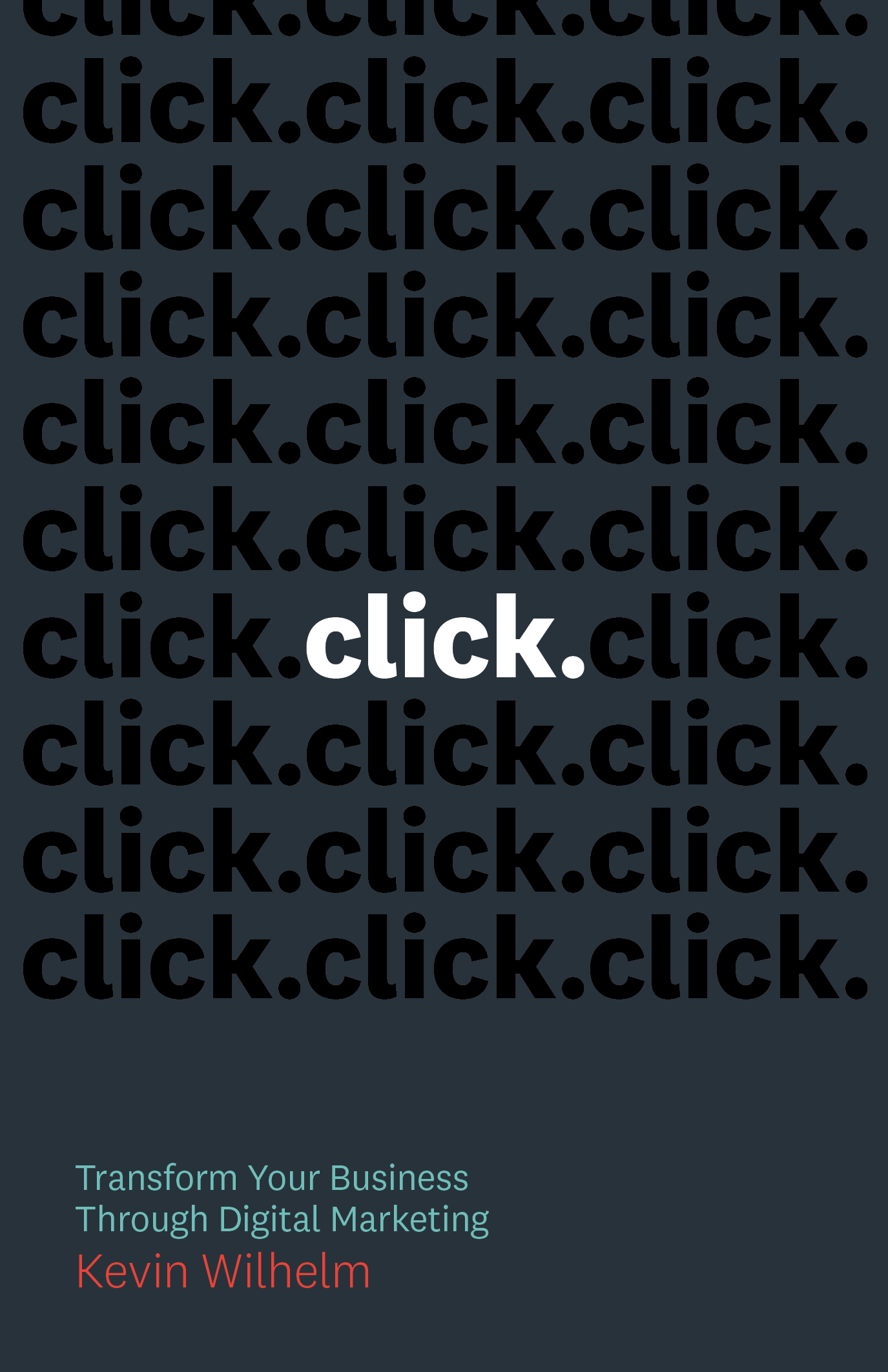
Kevin Wilhelm is an entrepreneur and marketer who has worked in digital marketing since 2008. He is the president of POD Marketing, a network of marketing agencies he co-founded in 2014, which has grown from a single client to more than one hundred. He published his first book, Click: Transform Your Business Through Digital Marketing, in 2019, and it reached bestseller status on Amazon in multiple categories. Through his work, he helps business owners approach digital marketing with newfound clarity.
📚 Books by Kevin WIlhelm
Transcript
[0:00:28] NVN: Today I’m joined by Kevin Wilhelm. The author of the new book, Click: Transform Your Business Through Digital Marketing. Of course, at this point, every business knows that they need to have a digital presence. But creating an effective digital marketing program, that drives results isn’t as easy as designing a website, building in CEO and collecting a social media following. In this podcast, Kevin breaks down what building a successful digital marketing program looks like. How to successfully bring all of the different elements of it together and explains to readers the questions they need to ask themselves in order to ensure their digital marketing program is successful. So, Kevin, you’ve been at this for a long time but tell me what the digital marketing world was like back in the old days of 2008?
[0:01:24] Kevin WIlhelm: Wow, that was the old days? Yeah. 10, 11 years ago, Facebook had just sort of come out and was changing the game. YouTube just kind of in bare infancy and the digital marketing space really came down to convincing business owners they need a website. That they should be advertising on Google which was you know, fairly new, kind of in their preschool ages at that point in terms of advertising on Google. SEO was a wild-wild west and there was a lot of unknown on the horizon rather than I’d say unknown and fear from a lot of business owners, rather than excitement is kind of where it should have gone.
[0:02:08] NVN: That leads into an interesting point which is how did you get into this in the first place because it wasn’t an emerging field.
[0:02:16] Kevin WIlhelm: Yeah, so, my background, I left - I was raised by parents that told me, if I go to university, I could be anything I want and I could leave university and make $80,000 a year. That was my expectation. I didn’t even fathom the possibility of making less. So, it’s kind of funny because when I sat in my first job interviews, now that I interview people right at the university, I kind of look at – if I’ve been looking down at myself in those interview rooms, I must have seemed very arrogant, but I came out with an expectation that I should be making that type of money. And so, I got a lot of doors closed in my face right out of university. I was a little bit discouraged and I saw an ad that said, I could work with small to medium size businesses, with their marketing and there was no cap in terms of compensation. And so, all of that sort of check the box for me and I went to the interview and I found out that it was a sales position selling both print and digital media for Canada’s largest media company which was the Canadian Yellow Pages. Which is different than what you would find in the United States because the Canadian Yellow Pages owns that name and so they were really a dominant player, really, the only directory book and they were going through a big transition when I showed up, which happened to be 2008. They were really looking to transform their product offering from simply a book to a suite of digital solutions. For the first couple of years, I did work in sales and I worked with hundreds of business owners and really understood and learned how – you know, learned the issues that they face every day and their outlook on marketing and just their outlook on just business in general. And when the business transitioned, when Yellow Pages transitioned to more of a digital medium, they put together this task force that I was asked to be a part of and the taskforce really was transforming from digital or from print to digital and I joined a sort of an elite group of I would say digital marketing experts with some really tenured, senior people in the organization and I learned a ton. We were essentially trained to become digital marketing masters and we were kind of – we had amazing guest speakers brought in and we went to boot camps and so, I learned a lot of my digital marketing skills actually there because of Yellow Pages’ necessity to transform into that space. And from there, I actually was pursuing sales. My passion is marketing and so I – while I was looking at the sales route, I decided I had to take one final look at marketing and see, “this is my path forward and I really wanted to stay in marketing.” And so, I applied and actually got the job of running the entire marketing department for a company called BrightPath Early Learning, which is Canada’s largest network of childcare and preschool kind of centers. And at the time, they were publically owned and it was on the stock market and so I ran a national brand of marketing and I sat on the other side of the table. So, for years I was selling and the other side I was buying and then I understood firsthand what it was like to deal with agencies and to just be pitched SEO and be pitched Google advertising and why the cost of websites are the way they are. And so, from all of that, I sort of formed an opinion and decided, “I want to do this myself and I feel like there’s just a better way, there’s a better way of providing agency services.” And some of those frustrations that I felt were that every time I talk to somebody that was selling, they didn’t know my business, they didn’t know my industry, they didn’t really care about me and their solution is always buy more product. So, I was dedicated to really understanding clients like industries and their businesses and finding scalable solutions and I really wanted to start predicting ROI and yeah, I took about six months and planned out the business before I took the jump and left the job that I was in, kind of four years into that. I left the company, I had essentially no clients and kind of no real path forward, but I knew what I wanted to create, I partnered with – and you're going to see this person in the book, his name is Bruce who is the owner of a very large home services company in our home town. And we became partners because he understood the overwhelming necessity for effective digital marketing and he just hadn’t found that solution for him. So, we were introduced by a mutual friend, worked really well together and together we started the agency. Him more of a kind of a mentor and kind of a financial partner and me sort of doing the day to day work and he essentially became our first client. And that’s January 1st, 2014 and from that, we’ve grown the company to be millions of dollars of recurring revenue over a hundred clients across North America, implementing just proven digital marketing solutions in various vertical niches.
[0:07:21] NVN: Okay. POD marketing is the agency that you founded in 2014 that you were just mentioning. When people come to you, when your clients come to you, what are some of their biggest pain points? Where are they really struggling?
[0:07:37] Kevin WIlhelm: When they come to us, they typically realize that they have built an effective and successful business. That is usually as who is reaching out to us already. But they realize that their current solution is just holding them back for one of variety of reasons. One is they just don’t believe, they haven’t seen success in marketing, they’ve built a really good business which has resulted in incredible word of mouth and so they’ve built a business there, but they’re limited by the number of customers or clients they see. And they know there’s more but they know marketing’s going to help them. Or they have a current solution that isn’t as effective as they would like it to be and what that could look like is multiple vendors. So, they have somebody managing their websites, someone managing their SEO’s, social media. They end up having to play quarterback and coming up with all the ideas and then project managing three or four different companies which ultimately results in the blame game because you if you don’t get the results you're looking for, everybody’s quick to sort of point the finger at everyone else. And that is very frustrating as a business or an entrepreneur, you don’t have time to deal with that. And so, that was a pain point. The other one which I mentioned earlier, the marketing team or the marketing people they deal with don’t understand their industry and they don’t understand their particular pain point. They’re spending time training, marketing people to understand their company and their industry in their competitive landscape which is expensive because you are paying for their time and they’re not going to be as proficient out of the gate because they just don’t understand, they’ve never done it before. So, those are sort of all of the pain points that I saw. And then the last one would be every time I talk about, “I need more leads, I need more customers.” The answer was always just, “spend more money with me.” Instead of just, “let’s be more effective or how can we just improve the results?” It was always just spend more money. And that can’t be the solution every time so adding up all of those problems and when I started the agency, I really interviewed a lot of entrepreneurs and business owners and friends that were sort of media buyers in marketing, I asked them this pain points and these were the consistent answers that I got. And so, when I created the agency, the company, I said, “look thought, I get to start from scratch here, let’s put together a solution that solves all of these problems at once.”
[0:09:54] NVN: So, let me ask you. The problem that stands out to me that I’m curious about how agencies can navigate is that when you bring in an agency, they’re inherently not in your industry, so is that a problem that can be resolved through an agency? Or people, businesses smart to bring an in-house element to their digital marketing strategy because of that?
[0:10:20] Kevin WIlhelm: It’s a great question and I don’t think it has to be either or. I think a combination can be there. For me, the industries that I’m in currently are some in healthcare so we have an agency in optometry called Marketing4ECP’s, we’re in dental and the agency is called SmileShop Marketing and we’re in home services and the agency is called [inaudible 00:10:36] marketing. There are agencies that exist in particular industries and almost every industry that I know of, there are agencies that are there to understand and deal with majority of their clients are in that industry. You can search out and find agencies in your space that will have efficiencies built up. However, having internal people give you the responsiveness and the sort of the feedback, the ground floor feedback that you're missing with an agency that says, “what’s actually happening when the phone rings? Are we able to convert what type of questions are they asking? What are we seeing, what type of customers are we seeing and prospects are we seeing?” And when that adds into a feedback loop back to the marketing agency, that’s where the real magic happens is when there’s a partnership between both the internal marketing function and the external marketing function because when you hire internally, it’s almost impossible to find the person that’s great at everything. I know we call them unicorn and I truly don’t know if that person exists, that’s an amazing website developer, that also understands SEO, that’s a great content writer, that can also come up with a very creative concept. Marketing is so diverse and what agencies bring to the table is they offer that specialization in different areas of marketing that you need, rather than a generalist that can do pretty well everywhere.
[0:11:59] NVN: For listeners out there who might be concerned about the amount of noise that’s out there from competitors, which is in general, everybody’s audience is so bombarded from all fronts these days. How can a company make themselves stand out in the digital landscape so that the people who they want to find them can actually find them, can actually find them?
[0:12:23] Kevin WIlhelm: I love that question. Effective marketing essentially comes down to delivering the right message to the right person at the right moment. And the companies that are doing this effectively are the ones that are winning. So, what that means is from a strategic standpoint, really understanding who your target audience is. Not who it is today but who do you want it to be and everybody sort of has that customer they deal with and the customer they want to deal with. So, start building your marketing around the person you want to deal with and then understand where do they spend their time online? And not just online like digital marketing is great but marketing in general is about putting the right message in front of them where they are. And so, understanding your audience mindset, how they spend their day, what type of digital mediums are they using? Are they using Spotify, Gmail, are they on Facebook or Instagram or Snapchat? How are they spending their day and so that way, you know how to target them. Understanding your geographic sort of market size, there is a threshold, maybe you’re like a pizza delivery place and your threshold is only where your free delivery goes or you could be an engineering firm and the world is your market. So, understanding your marketplace geographically. And then it comes down to putting together a campaign or creative message that speaks to the pain points. Sort of the – “if you hire us, your life will be like this,” and really highlighting the positive result of using that product or service and putting it in front of the right person at the right time. And then tracking how effective these campaigns are and then being able to optimize it. So, there’s a lot of noise and I think the word noise is appropriate when certain companies and advertisers just blanket market without any strategy, they just feel like I have to just show my logo and my name over and over again and they’re going to spend a lot of money doing that. But if you can become very strategic in terms of what you say, how you say it and to whom, then that’s when marketing works.
[0:14:18] NVN: That makes sense. Speaking as a consumer, I know that when I see the same company over and over again and when it doesn’t apply to me, I either become blind to it after a while or I get annoyed by it which is obviously the opposite of what they’re looking to do.
[0:14:36] Kevin WIlhelm: Yeah, you’re right, they’re sort of like an audience profiling that effective digital marketing should do and it’s when that person is sort of either fits the right demographic or they’re in the buying cycle right now. So, let’s use automobiles as an example, you kind of realize when you’re starting to shop for a new car and you’ve narrowed it down to a particular make and model, you start seeing it everywhere. So, it’s not just on the street that you see, you probably start to see it everywhere online as well because automobile manufactures, they have big agencies behind them that do great things and part of it is as soon as you start searching for a particular car. Let’s say it’s like a four-door sedan, you’re going to start to see four door sedan ads show up in your Facebook feed and you know, on the weather network and on CNN and things like that that just in the side ads. And if you get engaged, you’re going to start seeing a lot with wedding photography and wedding venues. If you’re traveling to Las Vegas, you’re going to start being advertised the shows and the restaurants and so the better the message fits where you are in your life, the more effective the marketing is and the more effective and more likely you are to actually click on the ads and start consuming the content.
[0:15:44] NVN: Speaking as someone who recently bought a car, I can confirm that that is correct and it is effective in that particular instance.
[0:15:51] Kevin WIlhelm: And it’s actually what you want as a consumer because you're in the buying cycle, you’re currently of your free time, you are thinking, you’re hoping you don’t miss a particular make or model that you haven’t thought of, you want to make sure that you’re hitting it the right price, that the service is there, the warranty is there, you’re actively trying to learn as much as you can. And so the people that win the game, the companies, the winner, the ones that are delivering the content that you care about, again, in the moment that you are actually researching and the moment you're thinking about it and that’s when you’re going to start clicking. The problem is, once you’ve purchased the car, it’s kind of annoying to now start seeing those ads, three, six, nine months after. Because now you’re like, “okay, I’ve been there, I’ve done that, I don’t need to see it anymore.” And so, they should be thinking about the life cycle of how long it takes somebody to buy a car. Then they just start pulling those ads back and spending those dollars on other people.
[0:16:40] NVN: I think you made a really interesting point in there which is that this phenomenon appears to work offline also. As soon as you start thinking about a certain Honda model, that’s suddenly all you see anywhere. It’s like it’s the only car that exist that you didn’t notice before. So, it makes sense to me that when you’re in the buying cycle, what’s happening digitally is sort of a reflection of how the human brain already works. It starts to parse through information to what it’s focusing on.
[0:17:11] Kevin WIlhelm: Yeah, absolutely. That’s sort of what branding and advertising is all about. It’s what implanting sort of your brand with the synonyms that you want your brand to be known for associated with, without the consumer knowing that. So that when they enter the buying cycle and they see your logo, what do they think maybe for the first time, they have actually seen it 20 or 30 times and they have an emotional attachment to it because of the advertising and messages that they’ve seen. It’s just you want to make sure that it’s done, essentially tastefully so that you’re right, it doesn’t annoy them to the point where they have a negative connotation with your brand.
[0:17:47] NVN: Do you have a favorite story, a company you’ve worked for with POD Marketing who was struggling in some way with their digital marketing program and it came out of the experience thriving?
[0:18:01] Kevin WIlhelm: Well, the one I like to tell the most often and it is because I have been with them the longest, it is our first client and also my partner’s business, which is why I can share a little bit more about his business than I can of others and that is the story of Action Furnace. This is your typical small to medium, size business, but without the typical owner mindset. And the reason that I highlight them is because the results that I can share with you are not purely because of the agency strategy. It is also because of the mindset of the owner and that’s why we have been able to see such great results. And so, when we started working with this company. They were successful like I said, you know when people come to us, they typically are successful and they were utilizing many different forms of digital advertising, sort of trying everything that they could. And when we put in sort of a strategic approach about bringing all of these services under one roof, having their SEO department talking to their social media, talking to their website, talking to paid ads and having strategy sessions with all these people together, we re-launched the website with the consumer in mind, which fed off of the type of ads that we were running on Google, that fed off of the advertising and the messaging that fed off the type of content that we created for SEO and social media. And so, when you add all of that together, we see a company that was originally, maybe a little bit gun-shy to spend a ton of money on digital marketing and instead had a lot more in traditional. And when they started to see the results you know 10 times ROI for every dollar they put in digital, they started to really open up their budget. And what we noticed was they’ve actually moved to an unlimited budget model because they know that for every dollar they put into Google Search for instance, they are seeing a minimum 10 times return on that money. And so, they continue to run ads as long as they have availability to service. And we have seen this company grow from $9 million a year from we started working with them to over 20 in a period of just over four years. And so when you look at the growth of the company that’s 30 plus years old to see that they grew by over a 100% because they have the mindset of willing to invest, willing to try new things and allowing their agency partner to put in particular strategies that are founded in sort of proof that is when you start seeing a formula really work. And so that is probably the most successful case that we have seen. But so many times, we just see people that just have never advertised at all on digital advertising. They have been either a yellow page’s customer or they have done radio only or done direct mail only and when they start to implement digital strategies, they’re amazed at the type of feedback that they can get that people are actually seeing their ads, clicking on them. Phone calls can be recorded, leads can be trapped and they start to see the journey that their customers are taking in interacting with all of their marketing and all of their digital media and that gives them the confidence to keep reinvesting and because of that they start to witness exponential growth.
[0:21:10] NVN: The thing that I really appreciate hearing your talk is because there is a creative aspect to marketing, it seems to me like it could be easy to focus on that and just sort of shoot blindly, but what you’re describing there is actually a lot of science to it. It seems like an extremely organized process that you can follow to make it more of a science that this wild art.
[0:21:35] Kevin WIlhelm: Yeah, so I think you nailed that. When we started the company, the tagline that we launched with on week one was, “the science of marketing and the power of collaboration.” And digital marketing really allows for you to understand the scientific approach to marketing because it really becomes a math equation. If I generate X number of impressions which is how many times an ad is served that will result in so many people seeing the ad and clicking on it, going to my website, which will result in so many people calling me, which will result in so many people becoming my customer, spending X dollars and those dollars that are generated when compared to how much I spent for those initial impressions builds your whole return on marketing investment. And so, there is a scientific approach and then you start manipulating certain areas. You make the website more effective so it converts at a higher rate. You try to bring the cost of your clicks down. So, all of those sort of things you can manipulate. However, that is one side. The other side is, which is what marketing is all about, which is telling your story more effectively than your competitors and I think if you take it a step back, it is actually defining what is that story, what makes you unique? So many people that I ask and I say, “you know, what do you do that is different?” They struggle answering that question about what makes them different than their competitors. And so, our job is to try to really pull out of them why do customers choose you and why do they come back? Why are they choosing you again and why do they refer you and focusing in on those answers because if new customers are choosing you and they are referring you there is a good chance that there is other people out there that would value the same reasons and so good marketing is about finding those and then telling that story in an effective way.
[0:23:20] NVN: So, for listeners who are feeling motivated right now, what one thing they can do as soon as they stop listening to this podcast outside of buying the book, just start to incorporate some of this into their own business.
[0:23:34] Kevin WIlhelm: The first thing that should happen is building the goals, understanding what success looks like from a marketing standpoint in your business. I recommend looking three years out. Where do you want to sales to be, where do you want your profits to be, what is your revenue next like what products are you selling? What is your profit margin? And sort of writing that on paper. And then backtracking one year or two years but one year from today. And what do you have to achieve in the next year in order to be on track to hit your three-year target? And then backtrack again and say what do I have to do in the next three months and that sort of mindset, that thinking would start to help put this out because I tell everybody you know your website is the most important thing and digitally it probably is. However, you may have the world’s most effective website and so I wouldn’t start there. So, it is really coming back to, “what do I want to accomplish in three years? What do I have to do in one year to hit that? And then what do I need to do in the last 90 days to make sure that I am on pace for all of this?” Whether it is hiring the right marketing team, it is making sure that we understand our story that we need to tell to, “hey, I just need to get on Google ads and actually try investing in this and see where this could take me.” So that path is going to be a little different from everybody. But that is outlined in the book. It is creating that marketing plan and saying, “where do I need to start and then what are the steps in order to get there?”
[0:24:55] NVN: Great, another thing that really strikes me about what you are talking about here is that it is very industry agnostic.
[0:25:01] Kevin WIlhelm: Yeah, this is the business approach. So, this could be applied to your finance department, your HR department, it really is more of a strategic approach in business that just happens to be in marketing that I am referring to. But when you put this in our own business from a 10,000-foot view and we apply to all of our divisions but when we are talking about marketing specifically that is where you are putting in sales targets, profit margins, product mix, any kind of backdating it from there. Yeah it is definitely not industry specific. It is more business specific.
[0:25:31] NVN: All right Kevin, is there anything we haven’t gotten to that we want to make sure listeners are in the loop with.
[0:25:33] Kevin WIlhelm: If you are listening to this podcast, you are probably already on your way to achieving success because the business owners, the entrepreneurs and marketers that are complacent, the ones that are sort of given up and believe that things happened to them, they are the ones that are not spending time investing themselves and looking for business books such as Click that is going to help you grow your marketing. And so my advice really is keeping an open mind to, “is there a better way to do things?” that as digital marketing changes so quickly the philosophy of implementing and trying new things, tracking if it works and then reinvesting and reallocating the funds that actually work, reinvesting into the profitable avenues, that sort of theory will always be the way that marketing should be done. So, I highly recommend as business owners and marketers to stay very amiable and very open to change and be willing to try new things and having feedback loops in place to make sure you know what is working and what is not working.
[0:26:43] NVN: And my last very important question for you, on the back cover of your book, you have a picture of a high top with the word click in it.
[0:26:51] Kevin WIlhelm: Yeah.
[0:26:52] NVN: What is that about?
[0:26:54] Kevin WIlhelm: So, I took a family vacation to Victoria, BC for anyone that has not been to Vancouver Island. It is one of the most beautiful places in the entire world. So, I’m with my family, we’re walking by a store and it had a little A frame sign that said, “world’s largest collection of converse shoes.” I just said “okay, prove it.” We walked in and there were hundreds – I mean, my daughter walked out with a high tub of a watermelon design, I don’t’ know why but that’s what she wanted. And so, there were hundreds and then on one wall, there’s a wall that says custom kicks. I go, “okay, perfect.” I created a sort of a wall of fame in my office. Inside my office, when we work with a new client locally, we will design them a pair of Chuck Taylor converse shoes and we will mail them a pair for them to wear, we’ll mail them one, like the right shoe to put up in their office and the left shoe goes on my wall as sort of a wall of fame. So, when you come into your office, you can see all the clients that work with and sort of the unique way and yeah, when we designed the book, I knew this had to go on the wall because it’s something that I’m very proud of and so it has a place on my wall.
[0:28:08] NVN: Okay, that’s really freaking cool. I mean, that’s the great marketing right there, I’m sold.
[0:28:13] Kevin WIlhelm: Yeah, when customers open up their pair, what do they always do? They will always take a picture of it on Instagram. They share it with their network which are typical other business owners and they’ll always tag us thanking us for the gifts. So, it does work.
[0:28:26] NVN: Yeah, these are very cool looking shoes, listeners can’t see them right now, but worth looking at the book or the book cover specifically for that. Is this an actual pair of the shoes that you use?
[0:28:38] Kevin WIlhelm: Yeah, like I said, they are – I have two pairs, one that I wear and one that sits on my wall and my office so yes, they are.
[0:28:45] NVN: Love it, awesome. Kevin, thank you for joining us today.
[0:28:49] Kevin WIlhelm: Thank you so much for having me, I really appreciate the time.
[0:28:53] NVN: Thanks for joining us for this episode of Author Hour. You can find Click on Amazon. A transcript of this episode, as well as all of our previous episodes is available at authorhour.co. For more author hour, subscribe to this podcast on your favorite subscription service. Thanks for joining us, we’ll see you next time. Same place, different author.
Want to Write Your Own Book?
Scribe has helped over 2,000 authors turn their expertise into published books.
Schedule a Free Consult