Nick Dancer: Episode 366
Read the full transcript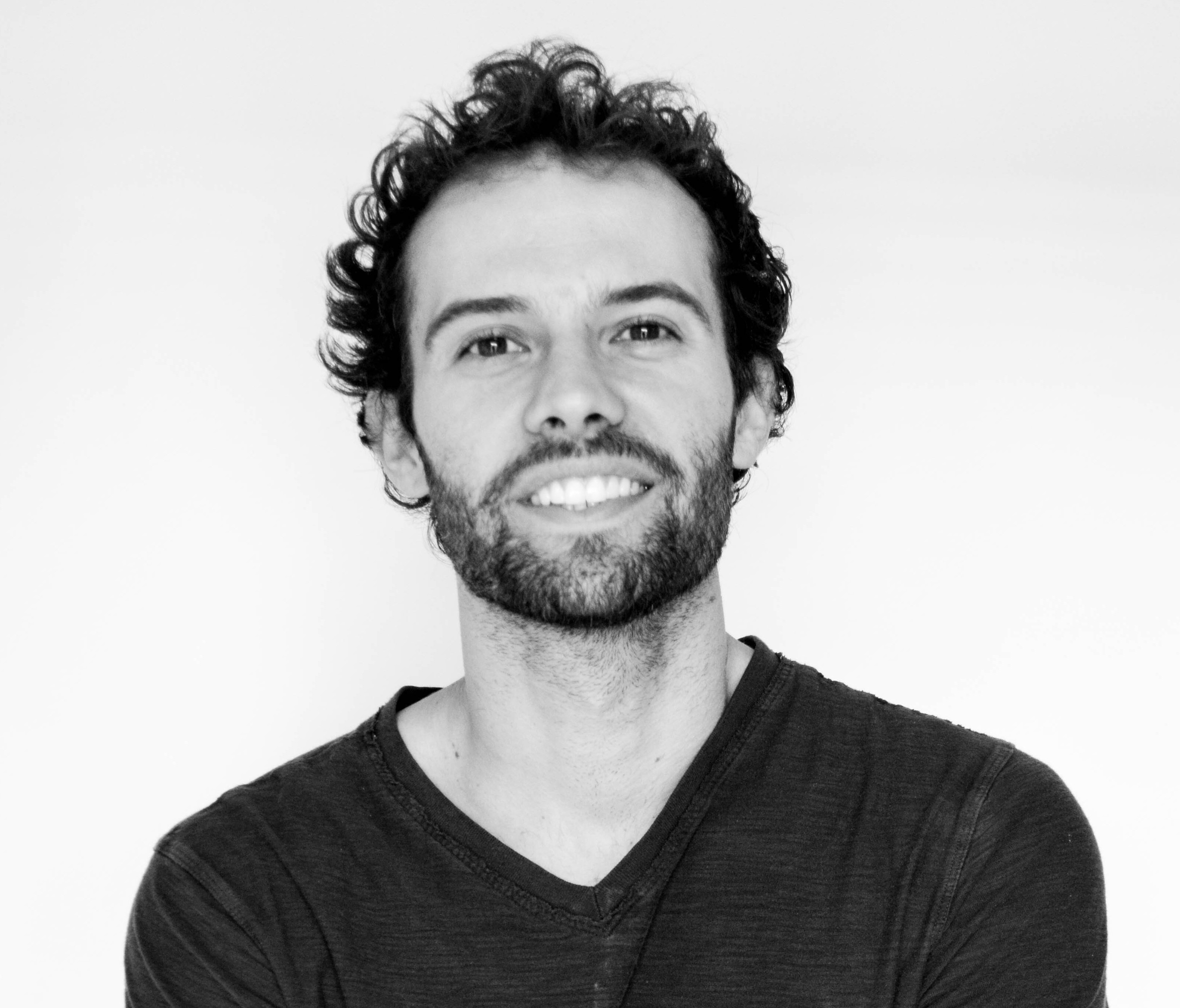
Nick Dancer
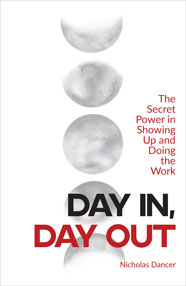
Nick Dancer owns and operates Dancer Concrete Design, a specialty concrete finishing company that began in his basement and grew into a regional leader for architectural concrete finishes. He lives in Fort Wayne, Indiana, with his wife, Alexis, and their three sons. In his book Day In, Day Out: The Secret Power in Showing Up and Doing the Work, he draws on his experience as a husband, father, and business owner to show that there are no shortcuts, sharing how he and his wife applied that principle both at home and in their business.
📚 Books by Nick Dancer
Transcript
[00:00:14] NVN: It’s probably not news to you that the feeling of overwhelm in the world today is no joke. Sometimes it can feel like we have to take drastic steps and make sweeping changes in our lives to make things happen. In his new book, Day In, Day Out: The Power of Showing Up and Doing the Work, author Nick Dancer reminds us that it doesn't have to be that complicated. Sure, technology often makes it seem as if the world has picked up speed. But the truth of the matter is we’re still contending with the same internal issues that human beings have had to deal with for thousands of years. Things like distraction, pressure, frustration, and a lack of patience. By sharing stories from his own experience as a husband, dad, and business owner, Nick helps readers find their way back to the basics and demonstrates how it's the simple things done on a daily basis that leads to the path of greatness, both in work and in life. Nick, let's start today by talking a little bit about what led you to write the book Day In, Day Out?
[00:01:22] Nick Dancer: Yeah. It was never thought to be a book. I read a lot of books, so I like the idea of books. But what started for me was a weekly email I sent to my team at work and just a couple people in my life who wanted to see our business succeed, or we’re kind of interested in like more details than may be an Instagram post or something like that. Kind of like they wanted to see the inner workings of a company. So, based on the book Verne Harnish wrote called the Rockefeller Habits, I started what he calls a CEO one-pager. What it is is just a weekly email I would send to my team and those people, and it was just kind of like the things that were going on in our business. Everything from real technical-technical, like “this is the project we’re going to be working on this week, and this is the goal we think we should hit by the end of the week”, to, “somebody has an anniversary in our company, “and we want to celebrate that, or we have an upcoming meeting where we need to be at. And then I've always added something else to that email, and that was the start of my writing. So, I would start to write about maybe I saw something in a contractor we’re working with. I saw how they handled the situation, and I would write about what I liked about it or what I didn't like about it. I was trying to help shape our culture based on stories of other people. So, if I saw how somebody did their marketing really well, I would talk about like why I thought that was really good, or why these other people thought it was good. Same thing when something went bad. If I had a bad experience at a restaurant, I would share that experience with my team to help shape like how we’re going to proceed as a business and why we believe what we believe. And so, that's what started my writing. After a couple years of the realized I actually had a lot of writing and thought the idea of a book would be neat to capture these essays or capture these thoughts. One thing I noticed too is like the same things kept repeating. There were only so many things that were good or negative. Once I saw those trends start happening, I realized, “wow! All these is pretty simple. It’s not as complex as I originally thought.”
[00:03:31] NVN: Like what? What things were you seeing repeat?
[00:03:34] Nick Dancer: Just that that life or business isn't as complex as it needs to be. So, for one thing, just the idea of greatness. That sounds complex and it sounds intimidating. It's like, “well, I want to achieve greatness, or I want to do a great job with this.” It's such a big word that’s thrown around and there're a lot of people that tell us to work hard and give it your all. But what it was was a lot of simple things done over and over, and it wasn't as complex or intimidating as it seems. To say that to achieve a great goal, it can be intimidating if I think about where I'm at now and where I need to be. But when I break it down into what I need to do each day, it's really simple. If I make a .05% improvement per day, that's actually a 20% gain in a year. When you do just like some basic math, that's doubling every four years. So, to think about taking a number like 100 and doubling it to 200 seems like a huge, intimidating, goal. But when you think about it like, “oh! I’ll achieve it in four years and I only had to do a .05% improvement each day to get there. It sounds doable and it's actually an actionable step I can take.”
[00:04:50] NVN: I like that. One thing that your book talks about is how we've gotten into this reliance on quick fixes, and hacks, and tricks, and that that can kind of get us in trouble and it's for long-term change, it's better just to simplify. So, can you talk to me about the difference between hacking something and just sort of simplifying it?
[00:05:19] Nick Dancer: Yeah. I don't think hacks and trying to come up with quick fixes or new to our generation or our time period. Every generation has this. We all are looking for an easier or faster way, and a lot of that seeking can lead to improvements in things, and there's a good part of that. There's a good part that leads to like the way I'm doing this isn't working. Maybe there's a better way to communicate. So, the idea of people looking for better and faster ways is the reason we email now instead of sending a horse with a letter. So, I'm glad someone was looking for an easier, better way. But when we think about things that can't be hacked, like weight loss or building a great business, or building a great relationship with your wife, or husband, or kids, those things have yet to be hacked. Those principles that play in those really important things in our life have been the same for the last 500 years. If I want a great relationship with my kids, I got to show up. I actually got to spend time with them. And there are different research and studies that say time is as important, presence is more important. But the idea of just like I can't be a great dad by logging in with my iPhone and chatting with them. That's a tool I can use, especially if I'm on a business trip to communicate with them. But is not a good long-term strategy. It's a nice quick fix solution, but I know that I actually have to be present with them to be a great dad. And so, there're things that play that way in all of our lives. In the book I just share what I've seen play out in other people in my life of what those principles are.
[00:07:00] NVN: So, speaking of that, it's interesting to me that this book ultimately sprung from emails you are writing in a professional context. But in the book, you don't just share stories about business. You also share stories about being a husband and being a dad. So talk to me a little bit about how you personally made that jump from sharing these observations in email to then perhaps applying some of the things that you were noticing in business, into your life, or how you started observing your own life and your personal roles in a different way once you started writing those emails.
[00:07:42] Nick Dancer: Yeah, I guess I just don't think I have a personal or a professional side. I'm just who I am and I just treat people who they are. And so, like me and you have a professional context of this interview and then we’re going to talk to each other. But I would say that if we were going to talk to each other for five times, I would probably start to find out if you are married, or in a relationship, or have kids, or what you like to do outside of this, or what other books you’ve wrote or worked on and those things interest me. So same thing with my team. I don't want them to have to be someone else at work than they are at home. I want to act with people like I would if my six-year-old son was with me all day. Of course, there are certain situations where I might have to adjust what I say. But who I am as a person, I want that to be the same person. And so, if I had to have the excitement of hiring somebody in our company, I want to have it the same way as if my son was in the room. And if I would have to let someone go, I’d want to do it with grace in a way that my son would be able to see his dad in that tougher situation as well. And so, I don't think of myself in two different contexts. I believe I talk about that in the book, but it seems like a lot of work to have to be a person at work and a person at home. And so, I just think that a more harmonious life is just being your whole person.
[00:09:08] NVN: I agree with you. But, man! I got to say, that's a really interesting way of looking at things through that specific lens. I personally feel like I try and be authentic and true to myself all the time. However, I don't know that I always try to act like my daughter was watching me. That to me is kind of a next level.
[00:09:34] Nick Dancer: Yeah, and there're constructs around it, like me and my wife need private time where we do things we don't want our kids to see. But at the same time, I want them to see – Recently, my boys have been teasing me when I kiss my wife, like it's so funny, but it's also like it drives me to kiss her in front of them and they’re like, “eww! Dad loves mom.” I'm like, “yeah, I love her more than anybody else in the whole world. I’m going to love her forever and ever and ever.” And so, it might seem next level, but when we take off those masks, it's hard to be ourselves. So, during this interview, I might say something silly that I later regret. Of course, this might be edited, so that might not ever make it to a podcast. But that's the risk I'm willing to take, because wearing a mask and pretending to be someone takes tremendous amounts of energy. I'm okay with where I'm at right now and I know I have systems and processes and I'm still doing work in my life that are going to take me what I think my purpose is or my duty. But I'm also proud of like just where I'm at right now, and even if that's different than where someone else thinks I should be at.
[00:10:50] NVN: Man! That has to be a great feeling. That just sounds like freedom.
[00:10:56] Nick Dancer: Yeah, I mean it can sound like that, but it’s also – Sometimes I hurt people, because my filter is broke. And so, I might be too quick to judge sometimes, or maybe I speak up when I should be quiet. So, it comes with consequences. It’s just the path I took, because when I was in my early 20s, I tried to be two different people, and I was but I realized I was wearing a mask on one side and it didn't feel right for me. So, I just wanted to do the work. So, I didn't have to do that anymore.
[00:11:27] NVN: Was this one person at work and another person at home or in your personal life?
[00:11:31] Nick Dancer: Right. Yeah. Exactly. Yeah, I tried to be someone I wasn’t. I tried to play the role where kind of pretended that I was doing the work, and I like the idea of doing the work to be that person. But I just kept falling short and I found myself always frustrated with myself.
[00:11:49] NVN: So how did these emails that you started sending play into that? Did they come after you sort of abandoned that one mask or were they part of that mask being cast off?
[00:12:03] Nick Dancer: They were part of it. When I started writing, it was part of me doing my work to become the person I felt called to be. And I think we can all feel that too. I don't think that's unique to me. I think when we’re still are quite with ourselves, we can find what we could do and then we can look at our current actions and see that maybe I could be doing something different. I'm not talking about like career-wise. I'm talking about just the daily choices we take. If I drink 5 cups of coffee in a day, I’m like at the end of the day, “that was way too many cups of coffee.” I love coffee. I have appreciation for it, but five is too many. Maybe tomorrow I'll try for three. So that's a silly, small example, but we still have many things in our life like that. The idea is we don't have to fix it all at once. It’s like just being present with today and what I can do today is a lot more powerful than people think.
[00:13:02] NVN: So, what does that look like for you? Are you kind of always observing yourself and what you're doing and what that means in the long run and making minor adjustments, or is it a more subconscious thing? What's that like for you?
[00:13:19] Nick Dancer: I would say two years ago it was like conscious through my day. But it was like I was always thinking, and so I couldn’t be. What I'm learning to do now is be more during the day and then have moments of reflection at the beginning of my day and in the end of my day. So, I can be with my day and then have those moments of reflection as part of a system I have or a habit to help myself make sure I'm staying on the path that I think I've been called to live.
[00:13:47] NVN: Talk to me a little bit about what your life looked like before you did this, when you were kind of skipping some of the steps.
[00:13:55] Nick Dancer: Yeah. I’ve always had – If you've ever seen a kid with lots of energy and all the adults say, “man! I wish I had that energy.” That was me. I was lots of energy. I like adventure and excitement. I don't like sitting still and listening to lectures. So school was never a strong suit for me. I got an early work release program when I was, I think a junior in high school. So, I got to leave school early to go to work, and I’ve always loved to work. I've always had jobs where I worked with friends. And so, I mean, it is kind of like hanging out, kind of working, but I've always liked work. I’ve always liked physical type work that's like physically exhausting, and that's the kind of business we’re in now. But with all that excitement and adventure, sometimes those adventures lead down paths that might not be the most productive. And those areas when I would wake up in the morning and feel like, “that was probably not the best use of my gifts.” If you have enough string of those piled together, you realize that maybe I could do something better with this energy inside of me. Maybe I could do something different with the gifts and abilities I’ve been given.
[00:15:01] NVN: It's interesting to hear you say that, because you sound so chill and thoughtful, which that those two things aren’t mutually exclusive, but it's interesting. That's my initial impression of you, is that your super chill.
[00:15:14] Nick Dancer: Yeah. Not at all. I think when I see these like 60-year-old guys with like gray curly hair in coffee shops that like look really smart and insightful, I’m like, “that’d be sweet to be one of those guys.”
[00:15:29] NVN: Well, now you have a book, so you're halfway there.
[00:15:32] Nick Dancer: Yes. Yeah. No, my team and my wife might disagree. I think that's an initial thing people like tell me right away, that they think I'm that way. But after being around me for a little bit, they are like, “holy crap!”
[00:15:45] NVN: They realize they were wrong. So, another think you talk about that really I wanted to stop and think about this for a little while, is this idea that technology has changed our lives, but nothing has changed about the battle inside of us. That's interesting to me. I think because I feel personally, I've almost gotten into this mode without even consciously recognizing it. The technology not has somehow changed me, but that it's changed the circumstances in my life in such a way that I can allow myself more excuses, almost. When I feel frazzled or I'm not getting things done, I can blame it on technology, and the fact that there are too many things coming at me.
[00:16:37] Nick Dancer: Yes. That’s a common thing. I think technology or just for simple use, like let’s use our iPhone as an example. That's a tool that is in our current life, and 100 years ago they had different tools. They had different distractions. A hundred years from now they’ll have different distractions as well. But I think that the idea of escaping the work we should do or boredom has always been around. So, the principles at play that I've learned about from the reading I've done have been around a lot longer than I've been around or my great, great, great grandparents. Some the earliest writings we have are from like B.C. China, and they were dealing with the same stuff. The Stoics were dealing with the same stuff in Rome. All the prophets that we learn or read about are dealing with the same stuff. So, when we talk about distractions or checking Instagram too much or checking email too much, that's just like a current problem we have. But the principle at play of distraction or avoiding work have always been around.
[00:17:40] NVN: So, it's not that iPhone. It’s being human. Yeah. It’s the human condition. I guess we all have it and we should be grateful to have it. You also have to have grace with yourself. It's okay to check email too much or check Instagram too much. It’s just like if you don't want to do that anymore, then you can maybe try to work on that. But you don’t have to beat yourself up if you do it too much. It's just bringing consciousness around it. It’s not just like it's 11:15 and you're like, “oh crap! I just unconsciously was on Instagram for the last 15 minutes.” That's not good, because you don't even remember opening it. You just remember like you start scrolling and then you’re like, “oh crap! Time when away, but where did it go?” Yeah, caught in the endless scroll.
[00:18:24] Nick Dancer: Yeah, and sometimes that's fun. Me and my boys do that with YouTube. That’s something actually we do together. We watch guys do crazy flips on dirt bikes and then we watch people swim with sharks. But we sit down and plan. We don't have a goal coming up. So, we can mindlessly browse without guilt that we did it, because that was part of the plan.
[00:18:49] NVN: Yeah. I kind of like that idea of allocating specific time for that.
[00:18:54] Nick Dancer: Yeah, because you’re going to do it either way. It’s very true. So, with all of the stories that you've sort of sat back and thought about in the process of putting this book together, what story to you is the most impactful and are you most excited to share with readers? I don't know if it's most, but the one that keeps coming to my mind is a story I have with a guy named Brad and Dinky, and I made up both of their names. I've never met him. I just thought Brad sounded like a big, strong name, and Dinky – Well, Dinky didn't sound strong.
[00:19:30] NVN: I would agree.
[00:19:32] Nick Dancer: And my wife and I were at the local YMCA. We did some polished concrete floors for them and we are getting pictures. So, these two friends, they probably look like their early 20s. We’re working out together. Brad looked like a guy who hangs out in gyms, and Dinky look like it is his first time there. And they're working out together. They look like friends. Brad, the way he's doing this front lunges are like real focused, real intentional. He’s starting with his back up against the wall. He's dropping his knee till it touches, and he raises back up. It’s just like smooth, strong, just solid form. It's like textbook how to do front lunges. Then when he gets like halfway across the room, Dinky starts up. Dinky kind of starts his back up against the wall, but then kind of like scoots his feet a couple of feet and then drops his knee kind of, and then raises back up, and he’s kind of falling over. It’s just this this like sloppy look. And I watched him go down and back, and it’s the same thing. People might be quick to say, “well, maybe Dinky, it’s his first time there. He's not as strong as Brad.” But the thing is like he just didn't put the attention and care and he was focused on something else, or he might've been focusing on how much it hurts rather than just like doing the work in front of him. You don't have to – If it’s your first-time front lunging, you can just use your body weight. It’s better to do your body weight and do it well than to try to match Brad's weight or do something where it’s sloppy. I think there are so many things in life we’re Dinky-ing around with, when maybe we should just figure out how to do them like Brad or drop them. And that principle at play I think sums up a lot of this book. It’s like what we’re going to do, we’re going to do, we’re going to learn how to do well. We’re going to practice and we’re just going to put attention and care towards it. In my example, in a small business that's the thing I help build, that I’m the most proud of. But it's anything that you're going towards a goal with. Anything you want to work towards. There's key principles in how to work towards that goal.
[00:21:43] NVN: The word that kept in mind for me as you were talking is really patience. It's as simple as that.
[00:21:51] Nick Dancer: Yeah. I’ve heard it said once that if you pray for patience, God will give you plenty of opportunities to practice it. We all want patience. None of us want to practice patience.
[00:22:00] NVN: So true. It would be nice if it could just be bestowed upon us. That would be so much easier.
[00:22:08] Nick Dancer: Yeah. It's like every day we get that opportunity. It's just sometimes we forget that to be a patient person, we have to practice it. We all see it in other people. It's like a trait we all – It’s like goodness and gentleness and kindness, like patience. That's a pretty solid place to be.
[00:22:30] NVN: Yeah. Yeah, it's true. I would say that I don't just have an opportunity to learn patience every day. I have several opportunities to learn every day, most of which I bypass.
[00:22:44] Nick Dancer: Yes.
[00:22:45] NVN: And then think how nice it would be to have more patience.
[00:22:47] Nick Dancer: Yeah, we have so much to do. And anyone with a career and a family or – I mean, we all have a lot to do, and there's these pressures that we have to perform and certain duties. And sometimes it’s letting go of some of those things. That's really tough to do. I have an example in the book about we stop doing Thanksgiving with our family, and it's not like we don't like our family. My wife and I moved to a city about an hour from our hometown, and in our business, we work the day after Thanksgiving. So, once we started having kids and realized how much work it was to load up kids to travel for the day, it's more exhausting than a day of work. And so, we made the decision that on Thanksgiving we’re going to stay at home. We’re going to make a meal, hang out, watch movies and that day completely changed for us. Instead of like being a burden in the middle of the week where it’s like, “we have to travel here. Then we got to get to my family, then your family, then back home.” It’s a 12-hour day with four hours on the road, and we just decided like, “what if we just woke up late set? Sat inside and drink coffee. Put on a movie for the boys and like just made a meal together?” And that's not a popular choice with your family. So, anyone wanting to try that, your mom is not going to tell you that's a good idea. But people respect that even if they don't like it. Maybe someone else will try that and realize like it serves them. And we try not to be selfish with those decisions. We want to make decisions where we can serve ourselves, but in the capacity that we’re serving ourselves, we’re actually helping others too. So, I might be better suited to be – We celebrate Christmas. So, I might be better suited to be happier to see you at Christmas, because I just didn't see you a month earlier at Thanksgiving. I’m going to be more of myself, because we took a couple more days off or on Christmas to be with everyone. So, it’s just making choices. That's a small, personal example. But we all have those kind of choices. But socially, it's never going to be popular. No one's ever going to pat you on the back and say, “good job.” But when you try it, you can see if it works for you. That's what we did. We tried it one time a couple years ago and we’re like, “wow! This is different. Let’s try it again next year.” And if for some reason that changes a couple years down the road, our boys are older, they want to see their cousins, maybe we will go back and change it. The decision I make today doesn't have to be my forever decision.
[00:25:17] NVN: Yeah. That strikes me as a difference in what you're talking about versus the culture of hacks and self-development we’re living in, where it seems like everything has to have this air of permanency to it. I like that it sounds like you're just sort of checking in and evaluating where you are at any moment in time and seeing how you can adjust from there in little ways.
[00:25:42] Nick Dancer: Yeah, it's hard for me to put that into words, but when you say those words, I’m like, “yeah, that makes sense.” The thing is it's not like I'm not retreating to a cabin once a year to do it. That might work for some people and maybe that's a good practice for someone to be in. I haven't done that personally. But for me, it's hard for me to do big things. So, if I want to retreat somewhere for a whole day and do that, it's hard for me to accomplish big things. So, I have to break it down into small daily habits or weekly habits, and that's where the book Day In, Day Out came from, like big things intimidate me. So, I have to break it down into manageable, like actionable steps. So spending eight hours during reflection, I'm probably not going to be that great at it. Spending five minutes each night, like that's my sweet spot. That's where I perform the best work.
[00:26:33] NVN: Great. So, let's give listeners an idea of that, whether it's from your life or from someone you've worked with their life. Wherever it might come from, of what those small, like .5% changes, can look like over time, as they accumulate?
[00:26:52] Nick Dancer: Yeah. I guess I could talk about our business. If someone had walked through our business, so you came to visit and I give you a tour of our shop and showed you how we work. We get a lot of compliments on how well-run it is, how organized it is, how it seems like we have a really strong team. All those things are true, but we didn’t try to do any of that all at once. Just like if you've ever heard any story of a business starting like in a garage with credit card debt and then building it, that was the story of our business. Except in a lot of those stories they usually get like one big client and all of a sudden, it’s like the windfall moment that changes their life and their business. Except it wasn't that way for us. It was just a little bit at a time. When we started doing – Right now in our business, we do a lot of commercial, like general contractor and architecturally-driven work. But that's not how the business started, even though we like to be around this type of projects, it started with doing like private residential work. We just didn’t have the capacity to do those big jobs. We didn’t have – We couldn’t pay the insurance to even have the insurance to do this type of projects or the capacity or the equipment. So we just started with what we had and then continued to make improvements. We trusted we would get where we needed to be throughout that, from zero dollars to revenue, to a $1 million of revenue. I never wanted to take that step in one year. That’s just too big of change in too short period of time. And so, we've grown on an average growth rate over the last – Coming up on 10 years. We've grown about 20% per year. That's allowed us to learn. It's allows us to grow, make mistakes, but also recover from those mistakes. Because when you do something so fast, you don't have time to recover from those mistakes. For example, just setting up for this podcast interview. I waited to today to set it up. But I set up my microphone on my desk at like 2:00 and I did some test on it. I didn't like how I was sitting or standing or positioning. And so, I moved it to the side of my desk, and then I did some more tests, and I didn't like how that was. So, I made another minor adjustment. Now by the time we have this interview, it's in a different spot, and I didn't go like all in on it. I went a little bit at a time, tested it, saw how it worked and then made the adjustment. I think a lot of people think that they’re going to miss out if they don't go all in on something. There's this missed opportunity, “like I have to say yes by 5:00 tonight or I'll miss the opportunity.” But if you take out your emotional response to those things, none of that stuff really matters. The deadlines that you think are real are not as real as you think. Having good friends around you is good too, because when my friends call me with a problem they might have in their business, I have no emotional connection to it. So, some of the things that they think are really a big deal because they've emotionally got involved in it, I can let them know it’s not a big deal. And they do the same thing for me when I can get emotionally attracted to an idea or a thought or a big change I have to make. And most the times, that advice or the information is like to let it sit for a little bit, and like everything loses its power with a night of sleep too. Things that make us really anxious after a night of sleep seemed to not be as bad. So, I think just allowing time and space for things, but I think anybody that tries it out and trust that process will know. I think everyone have seen it play out in their life in some capacity too. I think most people have tried an exercise or weight reduction or muscle gain program at some point in their life. And I bet they've also seen results from that too. It's that same process when we’ve worked the system that was given to us, we've seen those results. We can take that same approach to all things, all kinds of things in our life.
[00:30:46] NVN: Is there one area of life that you find the most challenging to apply this idea of simplicity to?
[00:30:56] Nick Dancer: Maybe not simplicity, but I really want to be a great husband to my wife. And relationships are always changing. We dated in high school. So that was the style of relationship. We dated when the business started and she was in college. So that was the style of our relationship. We had children. That was the style of our relationship. So, we’re becoming different people and we are madly in love with each other and we continue to be, yet we’re still completely different people than we were 15 years ago. There are similarities, but there're differences too. And so that might be the most challenging, but it's also the most rewarding. The only permanent thing in my life, the only thing I signed up for life for is my marriage with my wife. The business could come and go. My kids are going too. I have a role to play for a certain amount of years and they’ll kind of be on their own and I’ll have a different role with them, but the relationship with my wife is probably the most important one to be and the one that continually changes and the one I want to put the work in to succeed in.
[00:32:04] NVN: Can you go ahead and explain your business to me in an few sentences?
[00:32:09] Nick Dancer: Yeah. Our business, the name of the business is called Dancer Concrete Design, and we’re a local installer of polished concrete floors and epoxy floor coatings. So, if you've ever been in like a hip coffee shop, they probably have polished concrete floors, or a university locker room, or a commercial kitchen. They have epoxy floors. And so, we’re the people that install those systems. We don't pour traditional concrete. We come in as part of a finished package and put like toppings or epoxies or polishing treatments on existing concrete floor. So, we work in new construction, remodel construction, and we’re based in Fort Wayne, Indiana. We work throughout the region, and then we do some private client work for clients little bit further away that like how we think and how we design things.
[00:32:55] NVN: That is so cool. Those floors are one of those things I always notice, and I am delighted every time I see them. They totally transform spaces.
[00:33:03] Nick Dancer: They do. They’re newer in nature. Epoxies have been around for a while, but polishing is what I consider probably still in like its infancy stage. We’ve seen mass-market appeal with like grocery stores and whole warehouse type installations. But some of the funnest or the most exciting or the most rewarding kind work is we get into like 100-year-old building and we’re able to actually use the concrete that that’s there for a structural purpose and use it in a way that it's actually like performing as the finish floor. Just like using reclaimed lumber or exposed brick, polished concrete floors of have gained a lot of popularity and a lot interest in that capacity.
[00:33:45] NVN: Oh, that's so cool. I don't think I've ever seen it incorporated into an old space before.
[00:33:50] Nick Dancer: Yeah, like these old – In our town, they’re taken like an old GE factory from I think early 1900s, and they’re turning into a mixed-use space. So those kind of projects are so neat, because the concrete’s already there. It's like hidden underneath old floor coverings or scratches and being able to expose stone and sand. Some of the ways they make concrete back then, the aggregate that's part of that isn’t even around anymore. So, you’re seeing different colors and shapes of stone that you can't get anymore, because those quarries aren't around. So, it's neat and it's like a one-of-a-kind floor.
[00:34:29] NVN: Wow! I’ve never talk to anyone who has this job before, ever. You’re the first person, which is so cool. I’ve talked to people who have most jobs at this point. So that job in and of itself, correct me if I'm wrong, but it strikes me as something where your artistic mind would have to be going. And then you have to be thinking linearly too to an extent, and also it seems like it would require a lot of patience. I mean, first of all, is that accurate or am I making up a story about your job that's not true?
[00:35:02] Nick Dancer: That's true. I never thought of the patience aspect until you just said it. But, yeah, like what we do – Like our polishing machines kind of look like a push lawnmower, and when you mow your yard, you mow it once and then it's kind of a satisfaction right away, and then you mow it the next week. But our polishing machines, we go over the same surface over and over and over again. Most people and customers, they’re like, “what are you guys doing? It doesn't look like you're doing anything.” But then there's that like monumental shift at a certain point in the process where it's like it all comes together. So, you kind of trust that it's going to come together at that time period.
[00:35:40] NVN: But the correlation between that and what you're talking about in the book is really interesting to me.
[00:35:47] Nick Dancer: Yeah, I have never put the two together. A lot of people in our trader are very contractor driven. One of the things that my wife is a designer by degree, and just an artist and a designer. So, she said tremendous influence on my ability. I definitely had like a contractor type getting, get it done type feel and didn't know how important it was to create beautiful spaces or how important the aesthetics are in a space. And not just aesthetics, like paint colors, but how – It might seem woo-woo, but how energy flows through a space or how important it is to our capacity to produce or feelings we elicit by being in different spaces. And we’ve all felt it if you pay attention to it. We can walk in the place and be like, “ah! This just doesn't feel right,” and we’ve all walked in places and we’re like, “wow! This is nice. This is clean. It’s simple.” We have the capacity innately in us. One neat thing is we can all start listening to it. I say in the introduction, like we all have this creativity inside of us. It’s just listening to it and letting it out and being okay to like if you know what that feels like, you can go home and actually make your home feel like that. If you have a desk, you can make your desk feel like that. So, you might not be able to change the whole design of your building or your company, but you have control of your desk. You have control of – If nothing else in your house, maybe there's a bathroom. You only get – Like it’s your bathroom. Maybe you have control there. And so, you can start with things as simple as that.
[00:37:15] NVN: Yeah, it's true. I mean, I also agree with you that the energy is a very palpable thing and it matters a lot too. You start to absorb it and it impacts you after a while. So, taking control of that energy is important.
[00:37:31] Nick Dancer: Yeah. And the thing is like we don't have to completely understand it to experience it, and that's like we don't have to have that specific reason and tactile reason. We don't have to defend our answer. We can feel it, and it can feel right for us, and that's enough. That's okay.
[00:37:50] NVN: So, let's turn our attention toward listeners who are not in this place of simplicity and basics, and everything just kind of feels like it's swirling around. What would your best advice to then be for starting to make a little shaft that leads them back to this idea of just showing up?
[00:38:14] Nick Dancer: Yeah. I don't want to give anyone advice. I can only share what’s worked for me. There are too many people I pay in my life to help me with advice. One of the things I had to do was I had these big ideas, these big dreams, these big things I wanted to do. I want to do this. I want to do that. I've done it all, from your mission, vision, affirmations, any kind of self-development work out there, I feel like I've probably done or tried. Even the crazy woo-woo stuff. It's all been tried. But what worked for me was actually stop doing certain things. Before, I tried to just do more. So, if my life feels like a whirlwind, like there's too much going on, instead of adding one more thing I need to do. Stop doing something sometimes can be the biggest impact. And so, we dream about building this mountain to stand on, but maybe we just need to stop digging holes. There's a chapter in the book called stop digging holes, and that's what it talks about. Just stop doing some the things that are driving you crazy. For everybody, that’s going to be a little bit different. But just stop doing something.
[00:39:19] NVN: All right, Nick. Is there anything we haven't talked about that you want to make sure to get in here?
[00:39:23] Nick Dancer: In our city, I think every city, like real estate is in a good spot right now where lots of homes are being sold. We've heard stories of putting it on the market and being sold in 24 hours and getting over asking price. Just like all kinds of crazy stuff. But when you're shopping for a new home, when we looked for a new house – My wife and I lived in an apartment. We had one-year-old and we found out we are having a second child. We had an 800 square-foot apartment, and it wasn't like a nice apartment. It was like, “hey, we’ll move in here during college apartment, because it’s the cheapest place in the city.” Then when you graduate college and make your money, that's when you buy your nice house. The only problem is we were not making money and we were having a second kid in the small crappy apartment. And so, we started looking for houses, and we just looked for every house on the market, like any house within our price range was available to us. We didn’t have any direction for where we're going to buy. And so, we’re driving north one day to look at a house. Then south the next day to look at house, then east, then west, and we just spent so much time looking for any house. Anytime there's a for sale sign, we’re turning around to check it out. But what about like if you're shopping for a new home and you just have some idea of where the ZIP code you want to live in? If that's your like one thing, “we want to live here because I was raised here, or there're these kinds of people in this neighborhood, or I like the shop that's there.” How much less time it would take to find that right place or how much less energy would it take? And you’d go through these moments where like my wife and I were very busy looking for the right house. So, we spent – on a Saturday, we might spent all day Saturday driving all across the town to look at six houses. It felt like we are accomplishing something because we’re busy all day. But what if we said, “we want to live in the 07 ZIP Code, "and on that Saturday we only looked at two houses and it took us two hours? Part of us feels like it should take more time and energy, like we had to put everything into it. But sometimes if you have direction and you have less distractions in your life and you know what you’re aiming at, you don't have to run around like crazy. You don’t have to say yes to every new opportunity. You don't have to drive across town to do everything. You can just sit still the rest of the time, and that's where I don't think a lot of us are used to that. I don't think that's natural to us. I think that’s something you got to learn and be okay with, like, “hey, there's only two houses on our ZIP Code available. So, we spent two hours looking. Now we’re going to do something else for six hours, or we’re going to read, or we’re going to clean or anything else.” I see power in that, and I've switched from when we looked at the house to now. But that’s still process, because it's not we want to brag to each other about how busy we are. No one wants to talk to you and you’re just like, “yeah, how is your life?” “Oh, pretty good. I'm working towards a couple of things and chilling out the rest of the time.” People want you to be busy. They want to be overwhelmed. I don't know why that is. I'm not trying to figure that out, but I'm just trying to do what's right for me so I can do my best for the other people around me.
[00:42:36] NVN: It is strange too, because they think you're right about the busy thing. But then we all turn around and complain about it too. Busyness is a e strange thing in our culture right now.
[00:42:49] Nick Dancer: It is, and my life is not in some zen state where I'm never like frustrated or I'm not doing stuff. But my day does have some kind of structure. I work quite a few hours, but that's a path I took in the business and what I think is needed in our current business state to get the results we want and how I want to serve my team. But then I go home and I give my all to my family. So, with three young boys, by the time we cook dinner and do some kind of activity and get baths going, it’s an all-night process. So, I'm active, but it's also the path I chose. And I guess when you feel like you made the choice rather than being it forced upon you; it feels a heck of a lot better.
[00:43:32] NVN: Yes. I think you hit upon a really important point there, which is a lot of us get so busy that we forget that it's not something that's been imposed on us and there are actual choices behind it. So maybe part of it is continually checking in with yourself and either deciding to make those choices again or making a different choice and reevaluating.
[00:43:56] Nick Dancer: Yeah, and it's also okay to just have stuff that sucks. In business, every once in a while, we’re going to have a project that’s not profitable or go bad, but that's normal part of business. I might go home tonight with the intention that we’re going to have an awesome dinner and kids are going be great to go to bed. I might have like somebody run around the house naked refusing to put on PJs and go to bed. That's okay. Is that normal for my age of children and of my current circumstances? Yes. In the book there is a chapter, I think it's called love the sludge or love the suck, and it’s just like part of our process to make beautiful floors involves grinding concrete, which either creates a lot of dust or a lot of sludge. The sludge is just a mixture of water and cement paste, and it's a dirty, messy job, and there's no way around it. There's no way to make beautiful floors without getting really messy. And rather than trying to avoid that, it's just okay to let it be what it is and have fun with it as much as you can, and then the rest of the it, just realize it's part of the process.
[00:44:59] NVN: That's a great metaphor, especially for parenthood. There's a lot of sludge.
[00:45:04] Nick Dancer: Yeah, that sludge gets everywhere, and it's smelly.
[00:45:11] NVN: It is, and permanent sometimes too no matter what you may try to do with that sludge.
[00:45:15] Nick Dancer: Yes.
[00:45:17] NVN: All right, Nick. This has been really good. You've got great stuff in here. Thanks for joining us for this episode of Author Hour. You can find Day In, Day Out on Amazon. A transcript at this episode as well as all of our previous episodes is available at authorhour.co. For more Author Hour, subscribe to this podcast on your favorite subscription service. Thanks for joining us for. We’ll see you next time. Same place, different author.
Want to Write Your Own Book?
Scribe has helped over 2,000 authors turn their expertise into published books.
Schedule a Free Consult