Laurie Meinholz: Episode 369
Read the full transcript
Laurie Meinholz
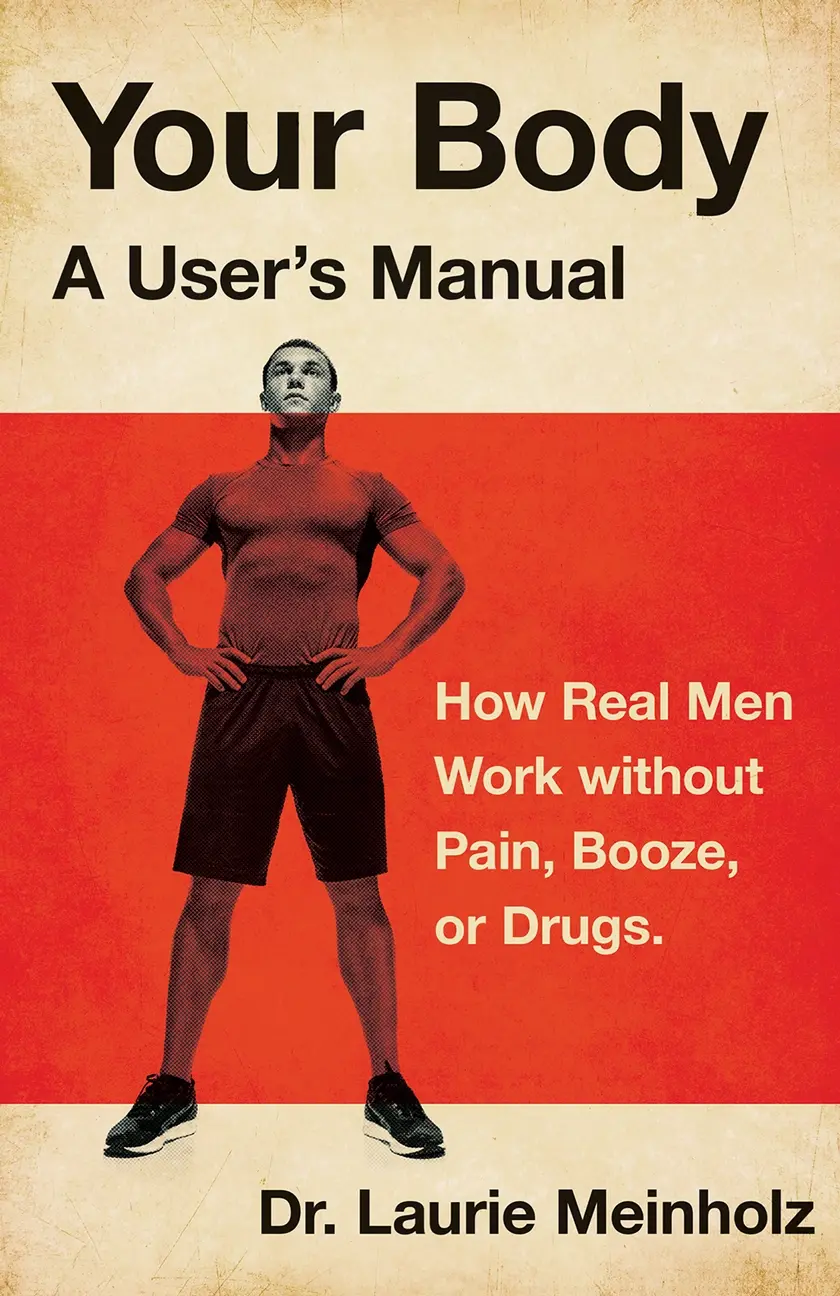
Dr. Laurie Meinholz is a chiropractor, entrepreneur, and philanthropist who owns and operates Nordic Chiropractic in Decorah, Iowa. She is the author of Your Body, a User's Manual: How Real Men Work without Pain, Booze, or Drugs. In the book she shows readers that they do not need to live and work in pain, explaining how increasing the amount of stress the body can handle can help restore it to a younger state with less pain and quicker recovery times.
📚 Books by Laurie Meinholz
Transcript
[00:00:41] NVN: In this episode of Author Hour, author Andrea Wilson Woods shares the incredible story of her then 15-year-old sister, Adrienne’s, cancer diagnosis and journey. In her new book, Better Off Bald — A Life in 147 Days, Andrea explains how post diagnosis Adrienne squeezed more life into 147 days than many of us do in a lifetime. This is a powerful conversation about love, cancer, advocacy, and what living truly means. It’s also a story about making beauty out of tragedy, as Andrea has gone on to do, both through this book and with her two organizations, Cancer University and Blue Faery, the Adrienne Wilson Liver Cancer Association. So, Andrea, let’s start by sharing with listeners a little bit about your sister, Adrienne.
[00:01:36] AWW: Sure. When I was 22 years old, I got custody of my then 8-year-old sister, Adrienne. So I raised Adrienne all through my 20s until she was diagnosed with stage IV liver cancer at the age of 15. She only lived 147 days with liver cancer, and she died about 2 months after my 29th birthday.
[00:02:01] NVN: Wow! You were a baby.
[00:02:04] AWW: That’s what everyone says. I didn't feel like it at the time. But today, when I see 22 and 23-year-olds, I’m like, “Okay, yeah. Maybe I was young.”
[00:02:15] NVN: Yeah. That’s beer pong age more than custody of another human being age for most of us. That's incredible. Let's talk a little bit about Adrienne before the diagnosis. What was your relationship like? What was she like? Paint a picture for us.
[00:02:32] AWW: When she came to live with me, she had been running a bit wild for the last couple of years. Adrienne and I have the same mother but different father. Her father died before she was born, so she never knew him. After I left and moved away to go to college at USC in Los Angeles, my mother just really struggled. So by the time Adrienne came to live with me, she had not had any rules whatsoever. It was quite challenging, especially the first six months, and we kind of had a standoff moment where she gave in and was like, “Okay.” So we had this very deep understanding that I was her parent first, then her sister, and I was looking forward to being her friend, when she grew up.
[00:03:16] NVN: So did you feel like a parent at that age?
[00:03:19] AWW: Oh, yes. Absolutely. I really – I did. I was responsible for her. Like I said, she needed a lot of discipline that she hadn’t had, so that took a long time to work on. I really – I was the only parent I knew at that age, and my friends sort of became my sister’s, aunts and uncles, if you will. So I did have help. But when I think about it now, it was. It was incredibly challenging. But she was also just this really remarkable, spunky, smart kid, and just I call her the best kid ever.
[00:03:52] NVN: Amazing. Let's talk about the time leading up to the diagnosis. What sort of emotional state was she in at that point?
[00:04:01] AWW: Well, she had struggled in middle school, trying to find her identity, and I feel like a lot of females, in particular, struggle during that time. I know seventh grade was the worst year of my childhood, and she struggled. But by the time she got to high school, she had really figured out who she was and she was unapologetic about it. She was an honors student. She had a 4.0 GPA, and she was doing really well. She was excited about school. She wanted to go to college. She had already planned that. Then she was diagnosed just after her 15th birthday, three weeks before her freshman year of high school was over.
[00:04:44] NVN: How did the diagnosis even come about? Did something seem a little bit off or was it a random circumstance that led to the diagnosis?
[00:04:52] AWW: It felt more random, but then it made sense later. What happened was while I was raising Adrienne, I had become a teacher to be on her schedule. So in high school, she actually was in school from 7:00 to 2:00, and I was teaching from 8:00 to 3:00. So I come home, May 16th, 2001, you never forget that day, and find her curled up in a fetal position, crying and saying she couldn't breathe. She was just clutching her right side. This is a kid who never cries, and so I knew something was wrong. We went to see her pediatrician, and we had just seen him two weeks before because she had hurt her shoulder, and he thought we were back because of that. We said, “No, she's in pain,” and she showed him her stomach. He said, “Well, how long does it look like this?” It was very distended, and I was fortunate as a parent that she was quite modest, compared to some of her friends. So she always covered up. So I hadn’t seen it. He was very concerned. He sent us immediately to the local hospital, to the ER. When we got to the ER, they thought based on what she said, she might have internal bleeding. Just a few weeks before, she had gone to Coachella. She loved music and went there to see her favorite musician, Dave Navarro of Jane's Addiction. She had been pressed up against these metal bars for hours and hours and hours. So that's what we thought had happened. That something had happened internally, and she had bleeding, and it was because of this concert she went to. Well, she goes to get a CAT scan. To give you an idea of her sense of humor, just as she’s being wheeled in for CAT scan, she says, “Hey, sissy. Watch it be cancer,” and I start laughing. I am like, “Oh, bite your tongue,” and she starts laughing too. Then we’re waiting for the results of the CAT scan, and we’re just sitting there and waiting. They’d given her something for the pain, and this ER doctor comes in. I have never seen the color completely drained out of anyone’s face before until then. I knew it was terrible, because he would not look at her. Then I I heard the worst words I've ever heard in my life. He said, “She has tumors in her liver and lungs. We are not equipped to handle this situation. We've arranged for transport to Children's Hospital Los Angeles. I’m sorry.” Then he walked out.
[00:07:16] NVN: Wow!
[00:07:17] AWW: Yeah. We burst into tears. Like almost on cue, we burst into tears. Then she stopped crying and she said, “Man, I was just joking.” I said, “What are you talking about,” and she said, “I was just joking when I said, ‘Hey, sissy. Watch it be cancer.'” Then we just started laughing again. I mean, we very much believed in humor as sort of one of our core values. So we go to Children's Hospital to get her checked in there. My friends who came there with me, they did not think it was cancer. They thought, “Oh, this is a mistake. She’s on the wrong floor.” But I knew. I knew she was right, and then we got the official diagnosis two days later.
[00:07:56] NVN: I mean, what was that like for you?
[00:08:00] AWW: Well, that third day when she went in for a biopsy, when the doctor came out, he did not seem very happy. He said, “You know, we’re getting the tissue out now. We’ve seen it.” Then he stepped back in, and then he came out again, and he said, “Your sister has hepatocellular carcinoma. It's very serious. It’s late stage. I'm so sorry.” At the time, I remember that I didn’t even know what he just said. I just heard the word cellular, and I was like, “Oh, okay. Cellular, cell phone. Remember that word.” But I couldn’t remember the first word. So I couldn't even pronounce the disease she had, which is primary liver cancer. I didn’t even know I was crying until I looked to the floor, and there were tears on the floor.
[00:08:50] NVN: How did Adrienne react?
[00:08:52] AWW: Well, she was in recovery, and I went in there. At the time, I had a very serious boyfriend who was the only father figure she ever had. We had made a decision that we could not lie to her. We had to be honest. She was waking up, and she asked what happened and what was it. I couldn't even talk, and he did all the talking, which is a little unusual. Usually, I did all the talking, and he kept saing the word cancer over and over. I just wanted to shut him up. Then she looked at him, and she looked at me and saw the look on my face. She said, “Hey, guys. It’s not like I’m going to die. What’s next? Chemo?” I was like, “Oh, my gosh. This girl is being so brave. I cannot be upset. I have to step up.” In fact, she started chemo a few days later. Before she started chemo, she had blue hair. She had blue hair. Blue was her favorite color, and she wanted to keep her blue hair. So she actually shaved her head into 4 Mohawks, which we – I know. It was awesome. Which we call –
[00:10:03] NVN: She sounds amazing.
[00:10:04] AWW: Which we called the quad-hawk. So she was able to keep her blue hair, and that’s how everyone kind of knew her. She was the blue-haired girl on oncology ward. I mean, she started chemo a week to the day later, the week from the ER visit. It was a week later. She was in her first round of chemo. It was fast.
[00:10:23] NVN: Yeah. I mean listening to you tell this, it sounds like your life was one way just sort of trucking along the trajectory it was on. Then all of a sudden, literally, in the matter of an afternoon, everything was different.
[00:10:35] AWW: Yeah. I like to say our lives changed in six hours. From the time I came home to the time we heard the results from the CAT scan was six hours, and everything in my life since has been before cancer and after cancer. I know a lot of cancer patients and caregivers feel the same way. Everything becomes before and after cancer.
[00:10:57] NVN: Was this something that you had been through in your family before? Had you dealt with cancer on any other level or was this all entirely new to you?
[00:11:06] AWW: Well, my paternal grandfather died of cancer when I was 7 years old, and it was the first funeral I had ever been to. But I wasn't very close to him. I didn't know him very well. I have sort of a faint childhood memory of him, and I certainly wasn't around when he was battling cancer. So for me, this was definitely a first. The only exception would be that our mother was a nurse. So I grew up in hospitals and nursing homes. I think that gave me an advantage, because I was not afraid of doctors. I did not think they walked on water, and I always asked questions. We found out later from a nurse we really liked that everyone loved my sister, Adrienne. They thought she was great, and no one liked me.
[00:11:55] NVN: Oh, yeah. Okay.
[00:11:56] AWW: "The kid’s great. But her sister on the other hand."
[00:12:01] NVN: You know, it's interesting. This is actually coincidentally a topic that I've been talking with people a lot recently, is this idea that most people particularly with cancer don't understand that they can advocate for themselves or ask questions, and doctors are sort of looked at like deities. So having heard those conversations and what that journey is like for people, it’s incredible to me that you knew doctors weren’t gods, and you were able to give your sister a voice.
[00:12:33] AWW: Absolutely, and I agree with you, by the way. I have spoken and worked with thousands of cancer patients and caregivers over the years through my nonprofit, and I have found 95% of people, even when they’re armed with the best possible information, do not know how to stand up for themselves. They don’t know how to ask for what they want, and I was not afraid to do that. In fact, there is one instance where we came in for her second round of chemo. They had lost her records. This was a time in 2001. They were just starting to go from paper to like the computers, and they have an electronic health record for her. But they knew that I kept copious notes, and so they had to come to me and actually ask me what the dosage of the pain medication was during that first round chemo. I had it, and they did not.
[00:13:27] NVN: Oh, my God. Also, how crazy is it, how archaic that sounds? Less than 20 years ago. It’s boggling to the mind that that's how it was. So let's talk a little bit about her treatment. What are the next few weeks or four months of like your lives look like from that point forward?
[00:13:47] AWW: She was doing chemo every approximately 3 to 4 weeks. At that time, initially, until we changed her care, she was doing in-patient. So she had to go into the hospital for chemo, and we could be there anywhere from the shortest time is four days to up to two weeks. It just depended on how her body reacted and what was going on. Of course, as time went on, her immune system became more and more suppressed. So it was harder for her to recover from the next round of chemo. I wish at the time, the oncologist – the first one he had, we fired him. But I wish that he had been able to tell us what was going on in a careful way. I’m not saying it's easy for them but still personalize it. But I wish the oncologist has said, “You know what? We have these drugs. We’ve used them to treat liver cancer. We've never had anybody come back from stage IV. I'm not sure. Here’s some other options. Or how about a clinical trial?” I mean, at that point, a clinical trial would have been her best bet. Instead, what he said was, when we had the conversation, just me and him, and my boyfriend, and our favorite nurse, it was, “Well, you know, she’s feeling good now. So maybe you should go to Hawaii.” If I had not been crying so hard, I think I would have punched him. It’s like, “Really, let’s go to Hawaii.” Well, hmm. Okay. So she doesn’t want to go to Hawaii if you’d spoken to her. She wants to go to Ireland. Who’s going to pay for this Hawaii trip, and what are you really trying to tell us?” You need to just tell us, and he couldn’t do it.
[00:15:28] NVN: That’s fascinating to me, just because for as horrible is that has to be, I would imagine that that's part of the oncology gig, is having to have those conversations.
[00:15:40] AWW: Well, what I’ve discovered now is that really in the last 3 to 5 years in med school, they are really starting to teach future doctors how to have these hard conversations and how to be straight with patients. The oncologist we had – again, it was a long time ago, and also he was older. He was just totally ill-equipped to handle her cancer. Adrienne had very adult cancer. It wasn’t considered a pediatric cancer, and so he didn’t treat very many cases of it, which is why we eventually transferred her care to UCLA. So Adrian had primary liver cancer. It's known as hepatocellular carcinoma or HCC for short. It's actually one of the most common cancers in the world, it's the second most common cause of cancer deaths worldwide, and it's not a pediatric cancer. There are pediatric types of liver cancer, but that’s not what she had. In fact, after her biopsy, the doctors came out and said, “Were going to test her for hepatitis,” and I was like, “Okay.” All I could think was hepatitis A, because when she was in elementary school, the Los Angeles Unified School District had an outbreak of hepatitis A. That’s all I could remember, and I didn’t know what they were talking about. Well, they came back and they said, “Well, your sister has chronic hepatitis B and hepatitis C, and why do you have custody of her?” I was just shocked, and I still don't understand the connection. But I said, “Well, I have custody because our mother is a drug addict, and I fought her in court and won. She could no longer take care of my sister.” They were like, “Okay.” Then as more came out, as we started to understand the connection between hepatitis B and C and her cancer, we realized and the doctors came to the conclusion that Adrienne got hep B and hep C from our mother during childbirth. Hepatitis B is transmitted through bodily fluids, hepatitis C through blood. That was the only logical conclusion. When Adrienne was born in 1986, hepatitis C had not really even been identified or taken out of the blood supply, and testing prenatal mothers for hepatitis B was not standard of care. Had our mother been tested for hepatitis when she was pregnant, Adrienne might be alive today.
[00:18:00] NVN: There are so many amazing things about all of these technological advances that we’re seeing happen so quickly now, especially in medicine, but I do feel like that's one of the emotionally tricky things about it, is if you've lost someone, looking back through the lens of time. I mean, sometimes even five years at this point and seeing how things could have played out differently, if only the time had been different than what it was.
[00:18:25] AWW: Yeah, I agree.
[00:18:27] NVN: Up until what point did you think that things might be okay, that Adrienne was getting treatment and it might all work out? Did you understand what the oncologist was telling you when he was talking about Hawaii or was that just confusing?
[00:18:42] AWW: I just refused to accept it. I lived in what I would call a very healthy state of denial, that was necessary for me to be her advocate, to be her parent, to be her full-time caretaker. That day that we went to the ER, that was her last day of school, actually at school. She did start school again in the fall at home, and that was my last day of work. I never went back to work, until after she died. So I really had this sense that things were going well. Especially during her fourth round chemo, it was her last round at Children's Hospital. Then we had to transfer her to UCLA. We were only there four days. I was like, “Wow! This is great.” She was not in pain the whole time, and I really thought she might have taken a turn for the better, like things might be getting better. At that point, there had been no change in any of her scans. We just kept hearing no change, no change, no change. Adrianne actually kept a journal, and she started before she ever got sick, and she kept it going. I was not allowed to read it, and I always respected that. Now, I look back. At that time, that moment, it was just around my birthday, August 2, 2001. When I thought she was getting better, she knew she was getting worse. Sure enough, we got the CAT scan results after that fourth round of chemo. The doctor said, “There’s been a change.” For this moment, I was like, “Oh, yes, a change.” But it was a change for the worse.
[00:20:16] NVN: So what did that mean from that point forward?
[00:20:18] AWW: Well, we had already arranged to transfer her to UCLA. It was a real struggle. I had to fight for six weeks every day on the phone with the insurance to do it, because they wanted her to stay at a pediatric hospital. But we made it work. UCLA made it work. So we transferred her care there, because there we saw a specialist, and he dealt with her cancer every single day. That’s what we wanted. He was more open to trying other things. For example, because of Adrienne’s age, because technically she was under age, she was not going to be allowed to try any clinical trials. There were other drugs that they just did not want to give her purely because of her age. Even though she was a young adult, she was taller than I am. I mean, she was an adult. But they just got so hung up on her age. At UCLA, that did not happen. UCLA also really respected what Adrienne wanted, and she did not want to come in for chemo anymore. So we ended up doing chemo at home, which allowed her to go back to school, at home school. That's what she wanted. I'm glad we tried different drugs. But knowing what I know now, I'm not sure we would have or we would have given her immune system time to recover. Her immune system just did not have time to recover.
[00:21:40] NVN: So after the point where you came home, did the chemo continue on for the duration of time, or did you guys at some point stop? What did that look like?
[00:21:52] AWW: The chemo continued at home. She was on chemo 14 days and off 7. It was oral, so she could take it by mouth. That continued through all of September and the very beginning of October. She took a really sudden turn for the worse. We ended up going to UCLA. We had just moved, like that day, and the only thing we had was her stuff. I didn’t even have my clothes. I didn’t know where they were. But we went to UCLA, and we ended up staying there for 3 days. She was having trouble maintaining her oxygen level. So for the first time, instead of being on oxygen just because it made her feel good in the hospital, she actually came home on oxygen and needed it. Again, I mean, I knew that she had taken a turn for the worse. But I just would not allow myself to accept it. We also had some remarkable friends who pulled a lot of strings, and Adrienne got approved for what was essentially going to be a one-woman clinical trial for a brand-new drug on the market. It had been past phase 1, so it was safe. But it had not gone through phase 2, which is when they look at efficacy. I kind of felt like that was our only hope. I was like, “Okay, this is it. We’ve got this. We got it through NIH. We got her doctor at UCLA to agree to it.” I thought, “Okay, this is her chance,” and it didn’t happen. Then she again kind of took a turn. A few days later, we ended up at UCLA. At one point, I was up for 36 hours straight, and the doctors thought she was gone, at UCLA. It was 5:30 in the morning, and they asked me if I wanted to sign a DNR, and I did. But they were insisting that I put her on a respirator. I really had to step back and think about it logically. So I just said, “Well, can she come home on a respirator?” "No." "Do you think she’ll ever get off the respirator?" "No." I said, “Okay. Well, I’ll sign this DNR, but you’re not putting her on a respirator. I’m taking my little girl home. She is coming home with me.” They said the only way they would do that was if she went to hospice immediately. I said, “Fine.” So we’re waiting for this hospice nurse to show up. She comes in and I just basically put my whole body over Adrienne’s, and I said, “I’m taking my little girl home.” I know they're trying to talk me into keeping her here. I'm not going to do it. So figure out how to get us home. Later, she told me, that hospice nurse, that her nickname for me was Andrea "Don’t fuck with my family" Wilson. It’s so true, and it was. The thing was I knew Adrienne wasn’t gone. I knew she was there. They came in, two nurses, to put a catheter in her and to prepare her to go home. I was the only one in there. Everyone else had been shut out. Just as they’re about to put the catheter in her, she just woke right up. Now, she had been out of it for the last 36 hours. She woke right up, and she said, “Sissy, make them stop.” The nurse has just looked stunned. Then she grabbed her IV pole and said, “I have to go to the bathroom.” I was trying to help her. She’s like, “Ah, I can do it.” So she went to the bathroom, she got back in bed, and we can hear people outside. We can hear people talking, the doctors, a few of my friends, my boyfriend. The nurses look at me and are like, “Can we let them in now?” I said, “Yes, go ahead.” They all came in, and what I remember most about that moment is the doctor who wanted to put her in a respirator, who told me I couldn’t take her home, he was weeping without making a sound. Adrienne looked around at everyone, because everyone now was crying. The humidity in the room has gone up, and she said, “I don’t know what all the fuss is about. I was just dreaming.” So I brought her home. That was the morning of October 7th, and she asked all the way home in the ambulance what had happened, what she missed out on. She just seemed more like herself. We were on hospice, so the hospice nurse came and talked to us. I know Adrienne could have lived a lot longer. But the next day, I said to her after an especially rough day when she was sort of sleeping, I said to her, “It’s okay if you want to go. It’s okay. I’ll be okay,” which was not true. That was a little bit of a lie. But I said, “I’ll be okay,” and that’s when it happened. She passed away at home in her own bed, watching MTV2, which she had always wanted, and surrounded by people who loved her.
[00:26:28] NVN: The humidity has gone up in this room somehow too, listening to this story. What was that like for you when she went?
[00:26:36] AWW: I feel like we were in shock. So the only people left were me, my boyfriend and our two best friends, this couple who had been there the whole time with us. I wanted to keep Adrienne a little bit longer. One thing remarkable that happened was after she passed, the hospice nurse actually was still with us. She and my friend and that hospice nurse, we dressed Adrienne, got her out of pajamas and everything. I painted her nails. She always had beautiful nails. I painted them blue, of course, and just got her all cleaned up. Right after we put her favorite jeans on her, the nurse looks at me, I look at my friend, the friend looks at my nurse, and the nurse said, “Wow! She really must have love these jeans.” We just started laughing, because her face went from sort of a neutral expression, I kid you not, to smiling. The expression – yeah. Oh, yeah. The expression on her face completely changed, and she was smiling. It just felt like, “Okay, she is still here with us.” It did feel like that for a little while in the house even days and weeks later like she was still in the house with me. Then the funeral home lost her body, but that’s a whole another story.
[00:27:51] NVN: Oh, my God. What? That’s another book.
[00:27:55] AWW: Oh, my God. It was –
[00:27:57] NVN: Also, she had blue hair. So that’s kinda difficult to do.
[00:28:00] AWW: Yeah. That was so traumatic. Driving around Los Angeles in traffic, trying to figure out where in the world she was. Somehow, I knew that she would've found the whole thing extremely funny.
[00:28:13] NVN: For sure. Wow! So I want to backtrack a little bit. So we’ve talked about your journey with Adrienne and the more clinical part of this. But part of what your book is also about is what she did with those 147 days between when she was diagnosed and when she passed away. Let's talk a little bit about that.
[00:28:36] AWW: Well, I feel like Adrienne had her bucket list and decided she was just going to check off everything she possibly could without telling me. She didn’t say that out right, but I felt like that’s what she made this conscious decision to do that. For example, one of the very first thing she did was we went to the Tonight Show, and we met Jay Leno, and she got to meet Dave Navarro in person., again her favorite musician. So that was a huge deal. It was funny because she always told me that Dave Navarro knew who she was, because at that time he really communicated online in some kind of Yahoo Group back then with his fans, and he did know who she was. It was just, again, kind of crazy. Many things like that and some things were a little bit smaller, if you will. For example, she was just starting to get into dance. Well, I did ballet for 17 years. So I was really excited that she was liking dance, and she was taking it in high school. So she had wanted to go see this ballet. Instead of getting balcony seats, I was like, “Screw it. We’re in the front row. We’re in the orchestra.” She loved it. Just there were things like that. We went to Medieval Times. She’d always want to go to Medieval Times. We had never gone, because it was so outrageously expensive, and I just said, “Screw it. We’re going to Medieval Times. We’re getting the royalty package. We’re getting it all.” Our knight lost unfortunately, but she just loved it, and we did all these things. For her Make-A-Wish day, she wanted to see Dave Navarro again, and she wanted to eat at this restaurant. She loved food, and somehow she learned to cook, which is funny, because I can’t cook at all. But she did, and she picked out this new, trendy, hip restaurant that I had never heard of called The Standard. We went there for lunch. They made her whatever she wanted. Then we went to see Dave Navarro at his studio. He was rehearsing for his first solo tour. So basically, she had a private concert with him. Very cool.
[00:30:35] NVN: That’s cool. Wow!
[00:30:36] AWW: He’s the nicest man. He’s so amazing. She did things like that. She just – It was incredible. She just refused to let cancer slow her down.
[00:30:48] NVN: Yeah. I mean, the thing that keeps running through my head as you're saying that is she kept living, which I think a lot of people don't, which is understandable. I can't even imagine, especially being that young, what it must be like to come face-to-face with your mortality like that.
[00:31:07] AWW: I agree. I mean, I saw moments of depression, sadness, even anger. But I never saw her feel sorry for herself like there was never a, “Why me,” when in my head all the time was this running script, “Why her? Why her? Why her?” She wasn’t like that. I mean, she just had so much strength and dignity and grace and humor. That's how I live my life now. That’s my barometer. I have to live up to that. To quote Abraham Lincoln, he said, “It’s not the years in your life. It’s the life in your years.” I think that's so important for people to hear and to really take in and understand. The way I say it when I'm talking to patients in particular, I tend to talk to a lot of patients with advanced liver cancer, and I will say to them, “What is more important to you? How long you live or how you live?” There’s no wrong answer. It’s just if you can make that distinction, that really helps you figure out what kind of cancer journey you’re going to have.
[00:32:19] NVN: So let's talk from there. You’ve sort of answered this to some extent, but I want to talk about your trajectory. So it's been 18 years, correct, since Adrienne passed away?
[00:32:31] AWW: 18 years next month.
[00:32:32] NVN: What has that been like for you? How has this changed where you've gone and who you've become?
[00:32:41] AWW: When I was raising Adrienne, I was a teacher, like I mentioned before. But I was also pursuing an acting career. Just the year before she had gotten sick, I had been in many plays. I was actually starting to direct theater in Los Angeles and get paid for it. In fact, she was an artist. So I kind of – she was my free labor. I always made her help design sets and all kinds of stuff and props. She loved it. So she was always around artistic people. I mean, she was artistic too. That’s the path I was on, and my goal was to land a television show or sitcom, so I could pay for her college. Like that was my goal. Like that’s what I need to do. After she died, it just didn’t matter anymore. I just didn't care. I still kind of kept acting a little bit, but I stopped doing theater. I did work on several TV shows and movies, but my heart was not in it at all. About a year and half after she died, I decided I just really needed to volunteer to channel my grief in a really healthy way. I called what is I think still the largest liver disease nonprofit in the country and said, “Hey, I want to volunteer for you. You know, here’s my story.” They said, “Oh, we don’t do liver cancer.” I thought they were joking really, and I said, “Oh, come on.” They said, “No, we don’t.” I said, “How can you not? It’s only getting worse in this country,” and I was right about that. I said, “Well, I don’t want you to pay me. I mean, my background is writing and marketing. I’ll create something for you, a program.” “No, we don’t do it.” I looked through the whole country, and no one was doing anything about it. I sort of hung up the phone. There is a great quote by Lily Tomlin, where she says, “I kept thinking someone should do something about that. Then I realized I was that somebody." That was my moment where everything changed. I was 30 years old, and I did not want to act anymore. I knew I had to do something to make sure that no one experienced what Adrienne and I did. That I had to make it better for liver cancer patient and their caregivers. So I started Blue Faery, the Adrienne Wilson Liver Cancer Association. As you've already guessed, it's named Blue Faery after her. But I couldn’t actually figure out the name of the organization. I knew I wanted liver cancer, because that’s what we did, and people needed to know what you do. I wanted her name, because it’s in her memory and I wanted people to know her story. But a marketing and branding standpoint, I was like, “Something is missing.” Like, “I can’t – So I sent an email to my 10 closest friends, all of whom were there for her cancer journey. Every single person came back with some version of Blue Faery.
[00:35:35] NVN: Wow!
[00:35:35] AWW: Yeah, every single one. When she lost her hair, she got a blue wig to maintain her look, as she said. Then that summer, she bought these beautiful blue monarch butterfly wings that she started wearing. We have this photo of her that was taken at Medieval Times where she has her blue wig on. She’s got these blue butterfly wings, blue jeans, blue scarf. I mean, anyone else, that monochromatic look would not have looked good but it did on her. That summer, we just started calling her our blue fairy, because she just loved fairies too. That’s how we came up with the name. I can’t take any credit for it, because everyone else saw what I did not.
[00:36:16] NVN: Wow! That’s incredible. It also feels like she had to have had some hand in that too.
[00:36:23] AWW: Oh, yes. We spelled faery with an E, and people always ask why. It’s like, “Because that’s the way she liked it.” That’s what she wanted.
[00:36:31] NVN: Yeah. That’s great. So talk to me. So I do have one question going back. Why is it that there was such a void where liver cancer specifically?
[00:36:43] AWW: Well, when Adrienne was diagnosed that year, I believe there are about 14 to 15,000 cases of liver cancer. But yet in other parts of the world, it was just everywhere, especially in Asia and Africa. It just slowly started to rise in the US, over time. Now, we’re at 42,000 cases a year, which doesn’t seem like a lot. But again, if you look at the worldwide picture, 600,000 people are diagnosed with primary liver cancer this year. Nope, I correct that. It’s either 6 or 700,000, and all but 100,000 will die. Part of the problem is liver cancer you don't usually experience pain until the later stages of the disease. So, for example, when Adrienne had that shoulder pain two weeks before, her pediatrician thought she just pulled her shoulder. Well, it turns out it was referred pain from her liver. Pain in your right shoulder is a sign of, not to scare people, of advanced stage liver cancer because of a nerve that goes from your liver all the way up to your shoulder. The liver itself has no real pain receptors. So when Adrienne that day came home and said, “I couldn’t breathe. I can’t breathe,” it was because her liver had gotten big enough to push on her diaphragm. That’s why she couldn’t breathe.
[00:38:08] NVN: Wow! Yeah, I’m just imagining everybody right now sort of studying their right shoulder like, “Hmm.”
[00:38:15] AWW: Well, I know. Really, other symptoms she had, which can be a sign of liver cancer or any sort of digestive type cancer, was she had a lot of acid reflux. She was just eating TUMS all the time. Of course, I’ll say, “Well, stop eating tacos at school.” I mean, it’s just stop eating crappy food at school. I could kind of control what was at home. But at school, she was going to eat whatever she wanted. That was the only other sign she had.
[00:38:43] NVN: Wow! Then since you’re in this field now, do you have any insight into what it is that's led to the jump in incidence of liver cancer here in America?
[00:38:54] AWW: Yes. So the most common cause of primary liver cancer here in the US is hepatitis C. The baby boomer population is sort of the last generation that was exposed to hepatitis C, because again it wasn't taken out the blood [inaudible 00:39:12]. Also, people who served in the military, especially overseas where they were just getting blood transfusions from anywhere, are especially at risk. So that is the reason it’s on the rise in this country. However, in the last few years, there have been several curative hepatitis C drugs that have come on the market. So if people know they have hepatitis C, there are curative drugs available now. But the problem is hepatitis C is called the silent killer, because again you don't feel anything, and it slowly breaks down your liver. People sometimes feel tired. But again, it's not something that’s standard to test for. If you’ve never been in the military, you’ve never got a blood transfusion, it doesn't occur to most primary care physicians to test for hepatitis C, even though the CDC came out with a recommendation, I think 7 years ago now, that all baby boomers born between 1945 and 1965 get tested for hepatitis C, at least, one time.
[00:40:17] NVN: Interesting.
[00:40:18] AWW: So there’s a takeaway for that generation right there.
[00:40:22] NVN: Yeah. I know for sure. I am thinking about how I’m going to call my mom as soon as we’re done with this podcast.
[00:40:28] AWW: I love it. Yeah. Well, the doctor said to me when Adrienne was diagnosed, they said, “You know, you have the same mother. You need to get tested for hepatitis B and C too.” I did, much later, after Adrienne died, and I don't have hepatitis C. But I was exposed to hepatitis B, and my body cleared it. So hepatitis B can be chronic, which is what Adrienne had, which is very normal if you get it during childbirth from your mother. But if you’re exposed to hepatitis B as an adult, and you have a pretty healthy immune system, most of the time your body will just clear it. So what that essentially means for me is that I don't need the vaccination. So that’s another thing. For anyone out there, there is a vaccination series for hepatitis B.
[00:41:15] NVN: Very informative. I mean, you're right. We've all heard of hepatitis before, but I feel like it’s one of those things we only think about in conjunction with a certain sector of the population. So this is really enlightening.
[00:41:27] AWW: Yeah.
[00:41:27] NVN: So talk to us about Blue Faery and the work that you do there.
[00:41:27] AWW: Sure. Blue Faery’s mission is to prevent, treat, and cure primary liver cancer, specifically hepatocellular carcinoma, through research, education, and advocacy. One of the very first things we did was work on the education part of our mission. When Adrienne was diagnosed, I got all these white sheets about her chemo and absolutely nothing about her actual disease. When I asked for it, the surgeon who did her biopsy said, “Well, no such thing exists.” I said, “Look, come on. Give me the brochure. Come on.” He said, “No, it really doesn’t.” Even at that time, the National Cancer Institute didn’t have a whole lot of information on their website. So what he did was, bless him, he made copies from his medical textbooks and gave me this stack of paper. I looked at it and went, “Oh, my gosh. I'm educated, and I don’t understand any of this.” So I promptly went out and bought a medical dictionary and Gray's Anatomy. I was translating all this information from just ridiculous high-level medical terminology to layman's terms. That was one of the very first things we did. We created a brochure for patients, written in layman’s terms. We updated almost every year. It's free to patients, their families, and even healthcare providers. They love it, because we ship for free as well. So they don't need a purchase order, for example. So they just put in their order electronically, and we send the brochures to them. The brochures have been translated into Spanish and Chinese, and it is easily the most downloaded thing on our website.
[00:43:06] NVN: Amazing!
[00:43:06] AWW: Thank you.
[00:43:07] NVN: Talk to me. You also run Cancer University. Correct?
[00:43:11] AWW: I do.
[00:43:12] NVN: Talk to me a little bit about that.
[00:43:13] AWW: Well, as we talked about before, one of the things that kept coming up for me when I was talking to patients and their caregivers was how few people seemed equipped to advocate for themselves. It was really frustrating to me. I mean, I was coaching people, and I don’t mind doing that. But I was like, “This is a problem. This is a real problem.” So I was looking for a way to combine my passions of coaching and teaching and advocacy and writing. Then a friend of mine told me about the Astellas C3 Prize. It’s changing cancer care prize. It’s an annual, international, entrepreneurial competition for people who have innovative ideas about cancer. Here I was spending this time. I was meditating. I was praying. What is missing here? I kept thinking about that moment when I got all that stuff from Adrienne’s surgeon and how I didn't understand it and how – man, before you know it, you are into the alphabet soup of cancer. All these acronyms are thrown your way, and have to make rational intelligent decisions about treatment, and your head’s still spinning from shock and also from all this information that you don't understand. I kept thinking, we have to go back to school. That’s when it hit me. I was like, “Oh, Cancer University,” or Cancer U, as we like to call it. So I entered that competition. I did not have anything with the concept. I threw up a website, like just something, a few pages. Out of over 160 entries that year from 21 countries, I got in the top 10. Yeah, that’s when I know I was on to something. So then I actually decided to vet the idea for 6 months, because the cancer space is very busy noisy. I spoke to patients and caregivers and survivors and other advocates and doctors and even some people in the pharmaceutical industry I really trusted. Every person came back with, “Oh, my God. This is needed, yes.” So I started last year. I’m the CEO and the cofounder. So I do have another founder. Cancer U is an online membership platform. It's for cancer patients and their caregivers to educate and empower them to become advocates for themselves during their cancer care. Our primary goal is that cancer patients and caregivers will not have to pay for it. So while they are the end users of our platform, our actual customers are B2B, mainly insurance companies and hospitals. I am really excited that a year later, we had a great patient and caregiver advocate board. We are building our medical advisory board. I have two other people on my founding team. We’ve gone through beta. Now, we are working in a pilot. My fingers are very close together. You can’t see them, but we’re really close to securing a pilot with one of the top NCI centers in the country.
[00:46:13] NVN: Amazing!
[00:46:13] AWW: Yeah. Thank you. It’s really exciting.
[00:46:16] NVN: I mean, talk about taking tragedy and turning it into something profound. That really changes things. You just exemplify that.
[00:46:26] AWW: Thank you. It’s the only way I knew how to survive.
[00:46:29] NVN: I'm sure there are a lot of answers to this. But let's turn our attention to people who may have a cancer diagnosis themselves or loved ones of people who have a cancer diagnosis. Can you talk briefly about why this idea of self-advocacy is so crucial?
[00:46:48] AWW: For cancer patients, I feel like they truly know what’s going on in their body. I had an experience with my step-grandfather. He was misdiagnosed with an abscess tooth, and it turned out he had very aggressive head and neck cancer. I helped finally get him to a specialist. He lived in a very hip town in Arkansas. I got him to a specialist. The doctor who does the surgery every day said he had never removed a tumor so large. It was the size of a lemon, and it was on my grandfather's good side. So they actually had to take his ear. So they take the one ear he could hear out of. So he comes out of this incredibly aggressive surgery, and he's pretty much deaf after that surgery. Then the next thing was to do radiation and chemo. I happened to be visiting after that surgery but before the chemo and radiation were supposed to start. He was very weak. 82 years old and really, really struggling mostly because he was frustrated because he couldn’t hear people anymore. So you really had to speak right to his face or write on a chalkboard or whiteboard. My stepmother and my step-grandmother were there, and they kept talking about the chemo, the radiation. They’re like hens, right? They just kept talking, and he was like the strong, silent type. He always reminded of John Wayne. He said, “I’m not doing it,” and they started pushing back. He said, “I am not doing it.” I was so proud of him in that moment, because I knew that he knew how his body felt. He had put a hard limit and said, “I’m not going to do this.” It turned out he still went back for scans and that cancer was already back. So doing the chemo and radiation would not have mattered anyway. He went into hospice. This was June. He got to say goodbye to his friends. He got to say goodbye to his grandkids. He got to say goodbye to his great-grandkids. He died at home with my grandmother by his side, with my stepmother there. Again, no respirator, at home, not in pain, and died in his own bed. I may not have answered your question very well, but you have to decide what's important to you. So what I say when I speak to cancer patients especially with caregivers, it’s a little different. But if I’m speaking to the actual patient, I will ask them, “What is more important to you? How you live or how long you live?” Only that person can really make that decision. A lot of people don't understand that not doing treatment is an option, and that's okay. A lot of people don't realize that they should look at a clinical trial. If you have advanced liver cancer, the first thing you should be doing is looking at a clinical trial. But unfortunately, clinical trials are often presented as a last resort.
[00:49:54] NVN: So why are clinical trials where liver cancer patients especially want to be looking?
[00:50:00] AWW: If you have advanced liver cancer. There's no cure. The only cure, if you will, for liver cancer is surgery called resections, so taking out the tumors or a full liver transplant. Most people are not eligible for a liver transplant. Because, again, the liver doesn't feel pain, so many people aren’t diagnosed until these later stages. Now, there are a lot of drugs in the market just in the last few years that didn't even exist five years ago, but all of the drugs that are available for advanced liver cancer are palliative care. They are not a cure. One of the issues that I have with doctors is they usually don't tell their patients. If a doctor gives you a drug, the patient assumes, “Well, this must help me. I’m going to get better.” Then I'm talking to these patients who are suffering horrific side effects, most of them, from these drugs. But they’re going to keep going, man, because they’re going to live. That’s going to get them better, and they don’t know. No. In a clinical trial, that drug only extended life by 2 months. They don’t know to ask. Your best shot is a clinical trial with newer drugs. Many times in clinical trials, you get much more personal attention, because there are so many rules and regulations in place. You get access to drugs that are not currently FDA-approved for your cancer. Many times, there's gene testing, so they can find a drug that better matches your body. All of our bodies, we’re all different. The people that I know, very few, who have survived liver cancer, most of them ended up in a clinical trial that saved their lives.
[00:51:45] NVN: Thank you for all of this. This is the type of information you just don't know. When you get – I mean, as you know better than anyone, when you haven't built up a basis of knowledge and then find yourself in this incredibly scary and emotional situation, I mean, it has to just leave you at a complete loss.
[00:52:04] AWW: It does. Actually, my cofounder of Cancer University and I spoke to a doctor recently. He’s an oncologist. He has been diagnosed with lymphoma, and he said – here’s a doctor who gives this diagnosis every day and even he said, “I was just lost.” I call it swimming in the sea of chaos. I mean, you are. You’re just lost, because everything that you knew to be true and good and okay is completely different now.
[00:52:35] NVN: Then for caregivers, what do you have to say to them?
[00:52:40] AWW: For caregivers, I really encourage them to talk to the patients. It they are the child and the patient is a parent, many times they are afraid to ask their parents the hard questions. Many times, their parents are trying to protect them, much the way Adrienne protected me. She never let on that she knew she was getting worse. I think she's very much did that to protect me. If you’re a caregiver, you need to listen. So if the patient says, “You know what? I don't want to do this treatment,” you need to be okay with it. There are many patients who, again, would just keep going, because they want to make family happy, and they don't have the energy to fight back. If you’re a caregiver, also you need to find support for yourself. It's very, very important. It was definitely one of the things that was missing for me when Adrienne was diagnosed. So there was really no support group for parents, and I needed that at the time.
[00:53:37] NVN: When you think of Adrienne today, is she frozen in time in your head or do you see this more grown-up version of her that sort of walks on with you in some way?
[00:53:49] AWW: That is an amazing question, that no one has ever asked me before. Well, I had three premonitions. The first premonition I had when I was very young is I knew I was going out to outlive everyone I loved, even Adrienne. I just assumed Adrienne would be in her 50s, and I would be in my 60s. But I knew I would outlive her, and I never said this to anyone. I had another premonition in my early 20s. I realized later it was around the time Adrienne came to live with me. But I didn't think about it. Again, I didn’t tell anyone. But I started having this super irrational fear of cancer, to the point where when I got this flyer in the mail saying, “Hey, do you want to run a marathon and raise for the Leukemia and Lymphoma Society,” I decided to do it. I was three weeks away from that marathon when Adrienne was diagnosed.
[00:54:41] NVN: Wow!
[00:54:41] AWW: Yeah. I’m not a runner, by the way. Just because I was a dancer, it doesn't mean I'm a runner. I’m a bad runner. But I did. I ended up actually — that’s how we raised a lot of the seed money for Blue Faery was I did marathons to raise money, and another founder did marathons to raise money. I have done many since. I don't anymore.
[00:55:01] NVN: That is dedication right there. I can't think of anything I'm passionate enough about to run a marathon.
[00:55:06] AWW: You’re so funny.
[00:55:07] NVN: Amazing.
[00:55:10] AWW: The third premonition I had was — here’s Adrienne. She wanted to go to college. Much to my chagrin, she went in to go to my alma mater, USC. Of course, I had plans for Stanford, Harvard, and Yale. But no, no, no. She was going to USC. Adrienne’s one of those kids. I feel like we fall into 1 category or the other. Adrienne was one of those kids that she has pretty much looked the same since she was 18 months old. It would be one of those things in a high school yearbook where they had the baby pictures. You would have no problem picking her out.
[00:55:42] NVN: Minus the blue hair.
[00:55:44] AWW: Minus the blue hair.
[00:55:44] NVN: I presume, at 18 months.
[00:55:45] AWW: Yes. Yet when she was diagnosed, I kept trying to picture her on USC’s campus, which I know incredibly well. As a college student, 18 years old, walking down that campus, knowing that physically she wasn’t going to look that different. I couldn’t picture it, and it upset me so much. It was like this jigsaw puzzle where I had the pieces, but they just would not come together. Adrienne always thought I was psychic and encouraged it and actually bought me a book and really believed in it, because there are many things I knew would happen. Before they happened, I knew they would happen. But I had these 3 premonitions. I was going to outlive Adrienne. I had this irrational fear of cancer, beginning in my early 20s when I got custody of her. Then I could not picture her walking down at college campus. I know that a deep, deep part of me knew that I was going to lose her. So I still see her. I do see her bald, because she, man, she rocked it bald. She had this perfectly shaped head and also –
[00:56:54] NVN: Sorry. I just want to second that. I’ve been looking at the book cover, and she looks incredible with bald hair. We should all be that lucky.
[00:57:02] AWW: I know. She was stunning. It’s funny because she always sort of hid behind her hair. Her natural hair color was kind of dark brown. She had very thick hair, and she liked to wear it in a long bob with these thick bangs. She kind of hide behind her bangs. But when she couldn’t hide anymore, it was the first time she was able to look in the mirror and see how beautiful she was. Her favorite photo of herself was on her Make-A-Wish day. We were outside, and she was trying to get the sun out of her eyes. So she kind of had one hand on her head, and the other hand’s on her hip. I took a photo, and she loved that photo. She said she looked like a very elegant mannequin. She thought she looked amazing, and I still see her that way. She was buried in that blue dress that she bought for the Make-A-Wish day, and I still see her walking with me in that blue dress. But I do see her bald. I do. She was beautiful.
[00:57:57] NVN: My dad told me when I was really young that he had this theory that if you couldn't see something, it would never be. So kind of what you were just talking about with USC and I have found that to be true over and over and over again in life.
[00:58:14] AWW: Yeah, I agree.
[00:58:16] NVN: Which is simultaneously very comforting and very not comforting, depending upon the moment and the situation.
[00:58:16] AWW: Yeah, I agree. I do.
[00:58:25] NVN: Thank you so much for sharing this incredible story. Let's give listeners an idea of where they can find Blue Faery and Cancer U.
[00:58:25] AWW: You can find Blue Faery at bluefaery, B-L-U-E-F-A-E-R-Y, .org and Cancer University at cancer.university.
[00:58:47] NVN: Great. Anything, anywhere else you'd like to direct listeners?
[00:58:50] AWW: If you want to learn more about the book and you want to buy it, just go to betteroffbald.com.
[00:58:50] NVN: Thank you so much for joining us today, Andrea.
[00:58:50] AWW: Thank you, Nikki. I really appreciate it.
[00:59:01] NVN: Thanks for joining us for this episode of Author Hour. You can find Better Off Bald on Amazon. A transcript of this episode as well as all of our previous episodes is available at authorhour.co. For more Author Hour, subscribe to this podcast on your favorite subscription service. Thanks for joining us. We’ll see you next time.
Want to Write Your Own Book?
Scribe has helped over 2,000 authors turn their expertise into published books.
Schedule a Free Consult