Jason Roncoroni: Episode 373
Read the full transcript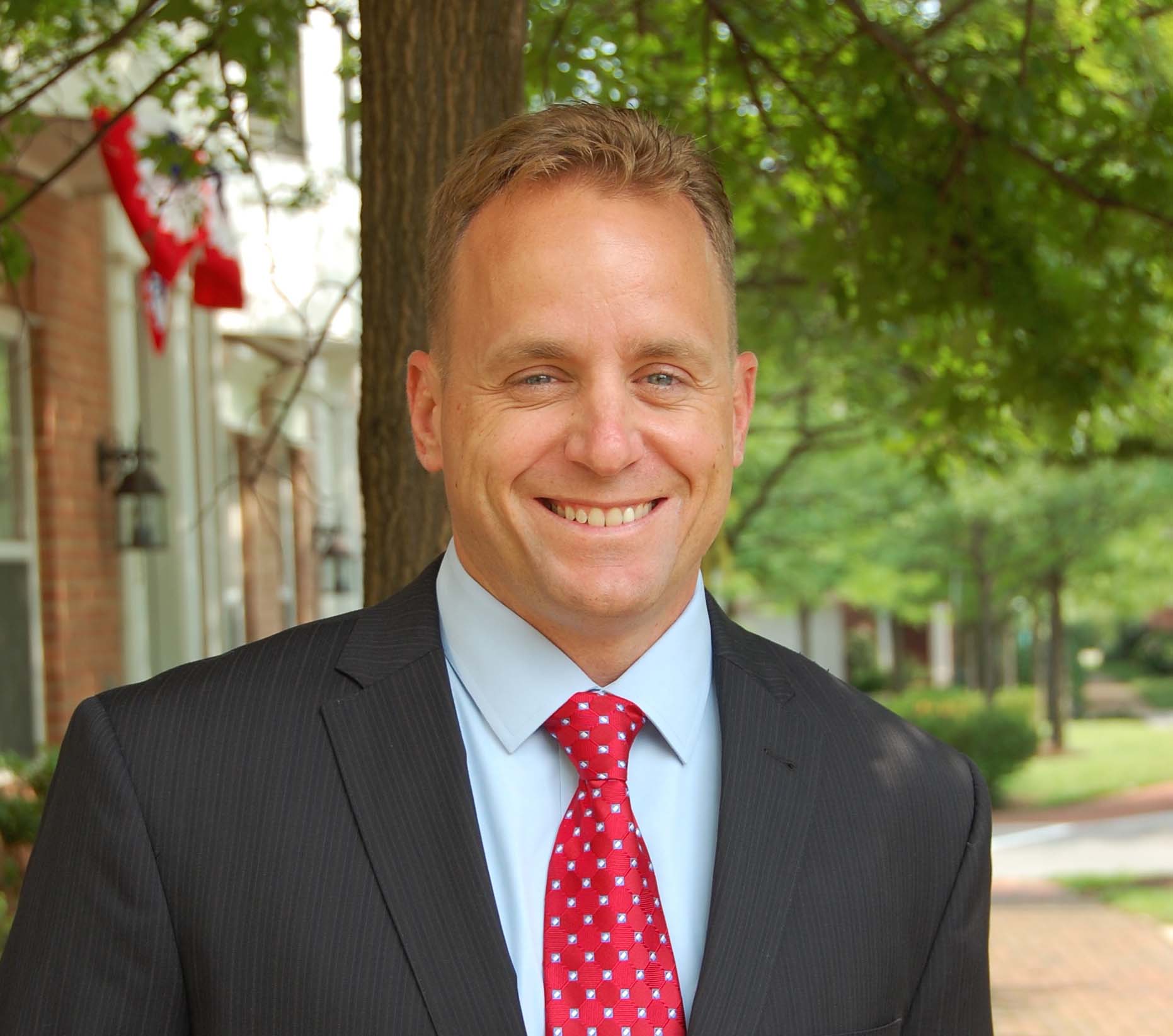
Jason Roncoroni
Jason Roncoroni is a retired Lieutenant Colonel and former aviation battalion commander from the United States Army. He served 33 months in combat and has the unique distinction of having transitioned from the military twice. He departed as a junior captain only to return to the military after 9/11, and he most recently retired after 21 years of active duty service. He advises military leaders, policy makers, and government officials on military transition and civilian reintegration. The founder of Ordinary Hero Coaching, Inc., Jason helps prepare transitioning leaders for meaningful opportunities after military service.
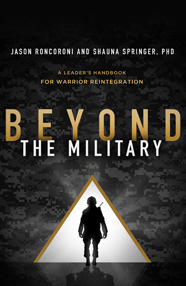
📚 Books by Jason Roncoroni
Transcript
[0:00:17] NVN: It has been said that leaving the military and transitioning back to civilian life might just be the most difficult mission for any military leader to undertake. When military veterans return to civilian life, they’re often confronted with challenges that never occurred to them and that they come to find, they were not prepared for. For many veterans, it can even feel like an identity crisis of sorts. This is not to mention the impact it has on their families, who also often find themselves starting over again, outside of the community of people who understand their unique set of experiences. Veteran and executive coach, Jason Roncoroni and psychologist and nationally recognized expert, Dr. Shauna Springer have come together to create a workbook to help design veterans to work their way through this pivotal time of transition. Beyond the Military serves as a comprehensive, interactive resource to address the deeper psychological, cultural and relational aspects of reintegrating into civilian life. It does this through more than 30 exercises presented through the framework of the military decision-making process, so that veterans can confidently, comfortably and successfully navigate this transition back into civilian life. With this guidance, veterans will be walked through the process of unleashing their full potential outside of the uniform. Jason and Shauna, usually I like to reserve our discussion about the book for a little bit into the interview, but I feel like the book you two have written is so unique in terms of coming from a different angle than most books in this genre. I kind of like you to start there and give listeners an idea of what sets your book apart from other books out there?
[0:02:04] Jason Roncoroni: Well, thanks for that question, Nikki and what I would say is that the start point for this book is my personal experience, as somebody who did transition and did it poorly. Not just once but twice. I left the army as a junior captain right around the turn of the century. And then I went back into the army after 9/11 and recently retired. So, I had two chances to get this right and both times, I had the full support of the conventional transition resources available to me in terms of working on the job, trying to get my resume together, interview skills, going to career workshops and both times I got it wrong. And so, that really kind of provided the foundation framework for t here’s more going on here than just finding another job. This is really about having confidence in stepping into your new life. The creation of this handbook has taken Shauna and I decades to get to where we’ve created this handbook of over 35 exercises. And we did that, we compressed a six-month coaching program and relationship consulting into a deliverable of just $30, you know? We created this to have the greatest impact on the most people as possible. And we did it with the intention or with the belief that servicemen and women, who are leaders, will still continue to do their jobs. They will not leave their jobs to tend to their transition because that’s just not who they are. So, we wanted to create a process where they can do both. They can do their jobs in the military and work on through this identity crisis stuff to figure out the next steps to beyond the military. To build their bridge between the two worlds and live in way to where they are that example, that they want to be for themselves and their family
[0:04:12] SS: Yeah. So, Jason sends me manuscript and I read through this just as a kind of early reviewer and I say, “this is brilliant. This is different, this is the deeper reintegration that we are totally missing that is the most critical thing we need to focus on.” And so, our book takes a totally different approach. What Jason and I know based on decades of our experience, is that it’s not just a job to be in the military. It’s really a way of life that pulls from deeply held values that service members have. And service members are not like coworkers. They’re family. When they come out of the service, we need to be asking different question, you know, “how do we support a group of people who have just lost contact with the family they’ve been surrounded by and the culture that they understand and they feel part of. How do they navigate a different world and a different culture entirely?”
[0:05:13] NVN: So, if I’m understanding then, this is the gap that you guys are approaching here, is so many resources and books out there right now are treating transitioning from the military into civilian life as though you’re leaving one job and entering another. Is that correct?
[0:05:32] Jason Roncoroni: Yeah, I think that that’s really a lot of the motivation which inspired us, to kind of sit down and put this down into paper, and to make this handbook a reality. Is that, there’s so much of that focus on the transition, focusing on that job. And what we wanted to do was is say that it’s not about a kind of a lateral transfer into another job. What we’re trying to do is just have the service members take a look at the entirety of their lives, from even the time period before they joined the military, look at what inspire them to join the military and then frame the military experience as actually a stepping stone into something bigger. Because that’s really kind of the deeper anthropological foundation that we draw from in this book, is that civilization has been transitioning warriors since the dawn of time. And what they’ve always done is, they’ve always repurposed their warriors into veteran leaders for their society for the good of the social order. So, what we’re trying to do is challenge men and women to look at their military experience like that and then ask themselves, “how can I shape and improve and contribute to society in a more meaningful way beyond the military?”
[0:06:54] NVN: Fascinating. Okay, I’m going to back us up for a little bit here and Shauna, ask you specifically, what is your background?
[0:07:03] SS: Right. So, I’m a psychologist and before I ever worked with the military and veteran population. I spent about a decade of my life really deep diving into what makes relationships work. Part of that was following 200 newlywed couples over four years. We had them fight in the lab, we studied the things that were stressors in their lives. In 2008, I studied about 1,200 women who were trying to setup strong partnerships which is a lot like the partnerships that warrior wives setup with their partners and vice versa. Sometimes you know, the woman is serving in the military and she has a spouse who is not. But these partnerships are – partnerships of people that are both strong and when one is focused on the mission, the other has to be a leader in the family. And so, trying to kind of bring together two strong people and recalibrate those roles is really what I’m focused on beyond the military handbook. I’m focused on all of that relationship transition, where transition locks even very solid relationships. And then, people who are single, there are certain risk factors in terms of getting married and what I call the cocaine rush phase of a relationship and really having a lot of extra chaos in their lives as a result. So, in this book, I’m really focused on the relationship adjustment. Whether you’re single, dating or married. That can help you thrive during and through the transition from the military.
[0:08:36] NVN: Great. How did you guys come to know one another originally?
[0:08:40] Jason Roncoroni: So, we actually linked up serendipitously at a retreat in California. A veteran’s retreat in California is where we originally kind of met one another. I’m from North Carolina. Shauna’s from California and we started talking and throughout this time of this retreat for veterans, what had happened was is, we realized that we saw this population in many of the same ways and our experiences were coming at it from a different perspective. Shauna from more of the practitioner and myself as the service member who lived a lot of these things, we really found the strong common ground and we’ve kind of remained in contact with this desire to kind of collaborate on projects as they came up and as luck would have it, this ended up being the first thing that we decided to collaborate on. Because we both share this passion and this belief that our veteran communities can be so much more in our society. Both in terms of their health, but also in terms of how they lead and contribute to society when they’re done with their military service.
[0:09:47] NVN: So, with that in mind, Jason, I want to weave back to your personal experience. You mentioned that as you transitioned out of the army, you did it ‘incorrectly’ two times. These elements that you guys are talking about, I’m particularly intrigued by the idea that in the military, coworkers are not just coworkers. They’re family, there’s a deep bond there and also, this sort of anthropological idea of placing former warriors in such a way that they can contribute to society. Were those elements not present in your transition and if not, tell me what that look like and how it felt for you?
[0:10:30] Jason Roncoroni: So, my notoriety is my failure in transition. But I really thought that I was just a soldier and everything about the soldier life that I had learned from the time that I went into the military, which was about two weeks after high school, I didn’t know how to be any other way. I didn’t really have an identity other than my military leader identity. And so, what happened was is that, I showed up at a job and it was a well-paying job. I had all the mannerisms and nuances that I brought forward and the norms from my military life. I was miserable in the job and I ended up actually taking a second job working with at risk young adults because I didn’t feel like my job had enough people connection. The problem that I had was, I had no idea where to start looking to find the right kind of opportunity. I took a job at engineering because I had a degree in engineering. And I had no idea how to look for something that really kind of connected to me in a meaningful way. So, I just did what I thought I was qualified to do. So, that was the first time. And then the second time, when I retired, I thought I was a little bit wiser, you know, I had gone back to school, I got a degree in organizational psychology, I got an MBA and I thought that this time, “I’m going to crush my transition.” What happened was, I completely underestimated the impact that this was going to have on my family. I started looking for jobs that were commensurate with what I thought my ability was and I just wasn’t finding anything that resonated over both transitions. I had eight jobs over a period of three years because I couldn’t find something that really kind of connected. To me, what I felt my values were, what my greater why was. And really, the gifts that I thought I could give to the world, I just didn’t find that kind of a job. And I wanted to do more than simply be the person who went to work and came home and live that kind of life. I wanted to have a sense of meaning and it was lacking. And when we stumbled on to this identity crisis, that was at the core of what I was going through. I had no idea who I was when I wasn’t wearing the uniform. So, the challenge was, “well, how do we figure that out?” That’s what Shauna and I tried to do in this book was really kind of make a connection to the reader and to help guide them through a process so they can figure this out. So, that when they start looking for that job, they’re looking for something which better aligns with the person that they are. The person that was great as a leader in the military, absolutely. But also, can be a great leader beyond the military.
[0:13:30] NVN: So, let’s talk about some of the key things that you guys are having readers think through in this book, as they go through this transition?
[0:13:45] SS: So, one of the things to add to what Jason was just saying. We realized that transition is not a matter of one person going through a change. Transition fully impacts the entire family and when a family comes through transition from the military, they’re often moving away from a society, a culture that has sustained them where they’ve been deeply plugged in to people with similar values in a kind of interdependent way. And so, their family members are also probably going through a lot of parallel changes. Spouses, kids and so really, helping the family to lead themselves and the couple to think about how they are going to stay together as a very strong team and accelerate into the kinds of conversations they need to have to navigate this, is something that is also a unique part of what we’re writing about.
[0:14:46] NVN: That’s so fascinating. Thinking about this as a civilian who hasn’t been through it, my only thought was how happy the family would be to be intact once again which is making the assumption that the person coming home was not here. Which is a big leap there. But I hadn’t stopped to consider that you're absolutely right, the entire family is moving away from community. That’s huge.
[0:15:13] Jason Roncoroni: And really, to Shauna’s point on that, my entire marriage has been through the military and my kids, their entire lives have been through the military. You can imagine when the population at large is only about 6% military in the country. They’re really going from an environment where everybody has the same experiences to where they’re really a stranger in a strange land. It’s very difficult for families as well, not just to servicemen. Which only adds of course to the service member’s stress of going through transition.
[0:15:49] SS: Exactly.
[0:15:50] NVN: I’m sure, okay, fascinating. Keep on going, what else might we not think about?
[0:15:55] Jason Roncoroni: Well, when Shauna and I wrote this, we wanted to make sure that we were writing this with the intimacy that was necessary to address what the service member is feeling and their family are feeling when they’re going through this process, which is you know, quite frankly, the fear. And the fear is the big F word that it doesn’t matter. The level of bravery that these men and women have when they’re kind of leaning headstrong into combat is one thing. And I think many of them would choose to do that again before they think about actually leaving the military service. Because everything within their psychology has informed around the military. And so, what we’ve done was, we’ve tried to make this as a conversational tone very personal to make a connection with them to help them build confidence through this process. The other thing that we’ve done is we’ve broken this process down, using something that they’re familiar with, which is the military decision-making process. And we’re introducing military transition and reintegration process which is a parallel to a decision-making protocol that they already are familiar with, applied to transition and reintegration and we’re identifying six factors. We’re talking about optimizing wealth and wellness, socialization, cultural assimilation, economic stability, professional preparedness and family adjustment. So, what we’ve done is, we’ve taken this very scary process and we’re pushing it through a recognizable, really kind of protocol, a system that they’re actually very familiar with to help give them a new perspective and help really uncover some things about themselves and what they really want for their lives after the military. So, that’s really a lot of what we’re trying to do here to get after that identity crisis for what happens after they leave the service.
[0:17:56] SS: One of the big ‘aha moments’ for me in working with so many veterans in transition is that the kind of courage this takes is a different kind of courage than the courage required for physical battle. We’ve had a lot of really interesting work in recent years from Brene Brown who has done some interesting pieces on why vulnerability is courage. I think that’s so valuable. At the same time, many of my patients wouldn’t be able to take action on that kind of insight, unless they understood why they keep their armor on. What I found is that for veterans, a lot of times, this traces back to a kind of protective instinct. Why they are having such difficulty sometimes being vulnerable. Part of it is also how communication is learned and deployed in the military. Military service members train and train until these communication skills are implicit. So, that they’re all operating by the same play book and they can just signal to each other using hand signals or the smallest, most subtle cues to know what to do next. And when you go through transition, it requires an enormous amount of both vulnerability and explicit communication. And so, sometimes helping people understand psychologically why they keep their armor on, how this impacts trust, how this impacts intimacy and then what is the process for moving towards conflict when necessary, you know, moving through difficult situations and conversations which is part of life, you know? It’s one of many transitions that will happen is part of the perspective that we’ve taken.
[0:19:45] NVN: Jason, I’m curious. Since you’re sort of our guinea pig here who has been through this, what was your experience with vulnerability?
[0:19:53] Jason Roncoroni: I think my initial reaction was to just ignore it and deny it and just try to kind of toughen my way through it. When I lost my job, the first time, when the tech bubble burst, I was laid off from that high paying job that I had and then I was really at a point to where I had to figure out what it was that I was going to do with my life. I was broke at the time and I didn’t really know where to start going to try and find the next thing that I was going to do. Now, 9/11 happened and I was really inspired to go back into the military. So, that was kind of solved for that piece there. But when it came to my own vulnerability, I didn’t really start to address it until I had left the service the second time. And my wife had come to me and she was very upset and she was depressed about where her life was. And the fact that she had lost her network and how the kids were being asked things at school that were kind of unsettling about my deployment time in Afghanistan and oh you know, “Hey, was your dad involved with killing people?” And questions that they weren’t normally going to be asked if they lives in the military culture. And that is when it really told me that holding up this veneer or this shield so to speak wasn’t helping my family at all and I needed to get real about who I really wanted to be and have the courage to step into that. And yeah, it was really hard for me to do that, especially coming from being a battalion commander where your whole persona is built up by this entire military, this façade that you have in terms of your own image. And when all of that falls away, you really come to grips with who you are now and what you see when you look in the mirror you know? That deeper why, your values, your intrinsic strengths, the things that you’re naturally good at that you’re going to do naturally good at as a civilian, as a leader out in society. So, for me, it took a while for me to embrace that vulnerability and I think that’s why I had such a hard time. And that is the whole reason why this book is written in the tone that it is because Shauna and I really appreciate where these military leaders are, these people who we really kind of recognize as heroes in our society. And that is why we say that transition or leaving is the hardest mission that military leaders will have to do because they have to really step into that vulnerability and that is why that is hard.
[0:22:42] NVN: So, Shauna since you in particular specialize on relationships, what sort of guidance do you have for people who might be struggling with this sort of emersion into a different community and that lack of intrinsic understanding. How can people begin to create that in an environment where as you guys said, 6% of people are in the military, so you are vastly in the minority, what are some ways around that?
[0:23:12] SS: Well, I think that sometimes there is a tendency to think that the best thing for veterans is just to associate with other veterans. And Jason and I have talked about this a lot. We both agree that it is really important to stay connected with the tribe of those you serve with because there is a level of comfort with people that you have served with and deployed with and known at a deep level of trust that is very important for people. At the same time, we don’t favor the approach of only associating with other veterans because the reality is that this is a shrinking population and people are going to need to reintegrate into the bigger society. And to navigate these difficult conversations and set boundaries and be open with each other in their marriages about where they’re struggling and how as a family, they want to move into the same space together. We get very practical about this in the book. We talk about this through a number of exercises where people can actually set sort of social challenges for themselves and think about breaking down the steps. One of the ones that was in my part of the relationship manual component was about joining a local sports team. You know helping coach for your kids because that can be a place where you can meet other parents and other couples and get reintegrated into families in your neighborhood. And Jason has a number of things in his part of the writing about these social goals. Jason, do you want to share some of those pieces?
[0:24:46] Jason Roncoroni: A lot of it starts with basically just saying hello to your neighbors. Like I live in a neighborhood now where there are no veterans. And so, going out and having conversations with people and being proud of your service, but not leading necessarily with the fact that, “Hey, I am a veteran.” And being comfortable with that and being comfortable with, “Look, these are the interest that I have and yes I am a veteran, but I am also so much more.” And so, it was really hard initially to kind of do a lot of that because it is easier just to gravitate towards veterans to say, “what unit were you in, were you deployed?” The challenge with that is that like Shauna said, we are at a 6% right now of the population and that is going to be about 3% in another 20 years. So, the veteran population is becoming a shrinking demographic. So, if the strategy is that you have to go out and connect with veterans it is going to be harder and harder to do that. Which means that fewer and fewer employers are going to be populated with a lot of members who have knowledge about what it means to serve in the military or have family members who serve in the military. So, some of the things that I have done is I have coached my kids’ sports teams. I am currently running an organization for their baseball team in terms of I am a member of the board for that. I have partnered with a non-veteran in terms of starting a business initiative. So, these are just some of the things that I have done to really get connected with a bunch of people who really look at me and respect me for who I am as a leader and you know the veteran thing is a great thing to have, but it is not the only thing that I am so that is what I’ve done.
[0:26:35] NVN: I am curious for you specifically and then Shauna maybe you can also give me some insight in the larger sense, but Jason this identity crisis that you mentioned, have you found that as you have worked through this and established a new life, your identity has shifted? Or is it that you have been able to take all of those elements of you that made you successful in the military and find a way to apply them in civilian life?
[0:27:04] Jason Roncoroni: Yeah, I think that what you find is that everything that you have done in the military has been you working through the military and I think we lose sight of that. That we are the element that makes the uniform great. It doesn’t go the other way around. So, service men and women are better than the uniform. But we hold the uniform in such high esteem that sometimes we think that it is the uniform that is the best. So, once you get comfortable with saying, “Okay, the uniform is not here anymore, all of these skills that I have I recognize how I can apply them,” and these are character attributes, these are competencies, these are intrinsic strengths. This is your belief structure, these are factors that led to your success in the past, all of these elements can all be really reoriented towards a higher goal that is even bigger that what you did in the military. Because what we believe is and one of the things that service rooms I think struggle with is this idea of, “Well I am going to be focusing on myself and that feels selfish.” And I challenge that by saying that the greatest gift that you can give to society, the greatest thing that you can do for your family is be the fullest expression of yourself. And that is what we are trying to get after with this handbook is to help men and women be just that- the fullest expression of themselves. So that as they step into life beyond the military, they are living the example of the life they want for themselves, for their family, for their community, for their coworkers. They are essentially that same example that they were in the military, except now they are out of the military. So, it is a repurposing of all of those qualities and attributes to be that veteran leader in society.
[0:28:57] SS: And I think to add to that and answer your question, to think about identity as something that is not static. It is not meant to be static throughout the lifespan. That military transition is you know one of many transitions that we go through in life. I remember when I became a mother and the challenges and the changes that that brought in my life and in my identity and in my character. Just going through that. I learned a lot about myself. Sometimes good, sometimes not so good you know? Things I have to work through and I remember having a conversation with a dear buddy of mine who is a Marine and he said, “You know I am a Marine so I am proficient at suffering. But having a new born, that was a whole other level of suffering.” And so, just thinking about all of the transitions that we go through, we are meant to continually evolve. We are meant to evolve in our marriages. There is no such thing as finding your soul mate and if you do, you’re both going to change anyway. So, you’ve got to learn instead of, “how do I find the perfect puzzle piece that fits me?” You find a person who is open to growing in the right way and then you grow together and you become a stronger team than you ever were before. So, one of my messages is that these kind of tunnels of chaos as I call them, they can break us down, but they can also be the crucible that grows us into a stronger couple and a stronger person than we ever were before. And if we look at it from that perspective and don’t see growth as the enemy, but as something that will help us evolve, it changes everything.
[0:30:40] NVN: What a beautiful and profound point even outside of this topic, amazing.
[0:30:46] SS: Thank you.
[0:30:47] NVN: So, I am wondering if the two of you have any favorite examples you can share of any veterans who you have seen really apply some of the ideas in this workbook and create something new and very fulfilling for themselves?
[0:31:04] Jason Roncoroni: I think the best one that I have is when you go through the identity analysis, the first thing that we do is we walk you through trying to understand your purpose. We then take a look at values and then we address the fear straight on and have men and women set goals that are really beyond that fear of really kind of getting past that. And then what happens is we take a look at the intrinsic strengths and we attach the strengths to values. And in order to find their strengths, what we do is we go back and we do a data dive into all of their evaluation reports throughout their career to take a look at the common language that is used at different points through your career to really orient them towards saying, “Wow, you know what communication might be a strength of mine.” And we link that to a value. And the thing that we are finding that is happening is that people who are going through is that when they are just looking at their military evaluation reports, one of the things that people are finding is that a lot of their values are not being fully represented through their military experience, which is phenomenal and very revealing to say that they are actually bigger than the military. In other words, they have so much more to offer than just what they did in the military. And so, the challenge is, “Okay so now the military helped you to express your values and purpose to this level. Now I want you to imagine if you were fully expressed. And you can represent the fullest intention of you in civilian society what does that look like?” And I would say that that has been the most powerful exercise in this identity analysis because it convinces people that yes in fact that what I have experienced in the military has been wonderful and it has been a very rewarding experience on so many levels, but it opens their mind and their hearts to the possibility that there is actually more out there. There is more to them, more that they can offer and more that they can actually enjoy in life after the military.
[0:33:13] SS: And I can share a story about risking vulnerability and really thinking about that and redefining what strength is. So, I have this veteran who is a highly trained very, very tactically skilled combat veteran like a warrior’s warrior and he looked at me with a face full of fear one day in a clinical session, which really gets your attention. The guy looks at you with a face full of fear and you know they have deployed eight or 10 times and he was fearful because I had told him to take his armor off with his wife and tell her how much he needed her. And he said, “Doc, I would rather go into an ambush any day than tell my wife how much I love her and I need her.” And the case, in the background of the case is that he was getting into a lot of fights with strangers and so initially he was referred to me as a standard angle management case, pull out the manual and teach them how to manage his anger. And that is always kind of funny to me because veterans and those who have served are actually really good at regulating themselves. They are trained as much to inhibit their force as to exert it. And so, there is this myth that they are out of control, but actually they’re trained over hours and hours and hours to regulate their own bodies so that they can fire on targets with accuracy. They can gently squeeze the trigger; they can get their breathing under such control that it doesn’t affect to their shot and they inhibit fire as much as they exert it, in combat scenarios. So, there is definitely a story behind a story with this veteran as of many of my patients and what he told me was that his wife had always been his rock in life. But lately, since he had transitioned out, she wouldn’t touch him and she kept turning away from him in this kind of dismissive way that he said, “It feels like she’s saying you’re dead to me.” And I remember him saying in one of the sessions we had, “It feels like I am reaching out my two arms to her.” “And she takes out a sword and she cuts off my arms and I am there and I am bleeding out and she just walks away.” And so, he was really in this state of what I would call primal panic. It is a term related to Sue Johnson’s work actually, but he was in this attachment trauma state. And so, to break through this, he had to take off his armor, which was the scariest possible thing that he could have done. But we talked through very specifically how to do it and he did it. And he used that courage, he hold deep from within himself and used that courage and he told her how he felt and she said, “Well you know, I am going to tell you what is going on.” And so, she took her armor off in response and she said she found a letter that said that he had voluntarily redeployed when she was pregnant with their kid and that he had told her he had to go back and so she felt abandoned and she was not wounding him in return. And so, they broke down. And they held each other and he came back to the next session and he was just a different man. He was just reset, his wife and him were back together and they had a new process and a new understanding of why they had to take off their armor with each other. And how they could move through even the scariest conflicts and stay together as a team. So, that is one of many stories about how there is often a story that we don’t hear at first. And if we built that trust with our veterans or whoever we are trying to help or work with or be friends with in life, we often get a different story and we can really help people move through things.
[0:37:03] NVN: That is incredible. All right, is there anything we haven’t gotten to in the natural course of answers that you guys want to be sure you share with listeners?
[0:37:14] SS: You know Jason and I as authors hit a fork in the road and we had to go back to our values. So, Jason took a year of his life writing this and for both of us as he said, it is based on decades of expertise. Kind of the best for me of what I have to offer in terms of relationship insights. It is in this book and Jason’s work on transition and identity it is just brilliant and new and different and he spent a year of his life writing it. And so, the fork in the road was, “do we sell this as an integrative program of transition?” Because it is about 400 pages and service members, veterans they can walk themselves through this. It is very, very approachable and that would have cost $100, 150, $200. And we decided that, “no, our value is that we hit the greatest number of people with this for the greatest impact possible.” So, what we wanted to do was price it at the cost of a date at the movies. So, for $30 any veteran can buy it for them self, any military family member can buy it for somebody that they love. People can buy it as a better way of saying, “Thank you for your service.” They can give for $30 a gift that would help people work through the crisis of who they are going to be after the military and how they get there and what that process is. And then we had a vision of partnering with organizations and companies that might purchase this in bulk and just provide it to people. And that we would partner with them and provide some guidance and some web-based teaching, so that we can really help amplify that effort to really have the greatest impact. Because we would really like at the heart of hearts in all of this to change how military service members are supported through their military transition. And so that is where Jason went back to our why and who are we, why are we doing this? And decided on that strategy.
[0:39:15] NVN: Beautiful you guys. Thank you so much for joining us and you two are such a great pair.
[0:39:23] Jason Roncoroni: Oh well thanks. I like to think that I am here to support Shauna because she is definitely the smart one here and with the passion and the work that she does, you know Shauna makes herself available to people 24/7, who are out there in the space and she really opens herself up to people. And so, it is really easy to work with somebody who has that kind of character and a commitment to this population. So, it’s been my privilege.
[0:39:52] SS: Well, for the record I am not the smart one. You know I am the one that asked you if you would consider letting me be your co-author because I was so excited about what you’re doing Jason. But thank you and likewise. It is just you know this partnership has been such a pleasure and so easy and Jason and his warrior wife have just such a strong team and I’ve got my husband behind me and it just feels like such a good and exciting thing that we are about to do that I am just really loving being on this journey and thanks Nikki for your support and spending this time with us today.
[0:40:26] Jason Roncoroni: Absolutely. Thank you, Nikki.
[0:40:27] NVN: My pleasure you guys. Good luck with this book and thank you for putting some good in this world this sounds like a piece of work that is going to be truly impactful and I love nothing more than hearing about projects like that.
[0:40:41] SS: Thank you.
[0:40:42] Jason Roncoroni: Thank you.
[0:40:43] NVN: Thanks for joining us for this episode of Author Hour. You can find Beyond the Military, on Amazon. A transcript of this episode as well as all of our previous episodes is available at authorhour.co. For more Author Hour, subscribe to this podcast on your favorite subscription service. Thanks for joining us, we’ll see you next time. Same place, different author.
Want to Write Your Own Book?
Scribe has helped over 2,000 authors turn their expertise into published books.
Schedule a Free Consult