Fallon Ukpe: Life Is A Squiggly Line, I walked away with, not one, but two Post-it Notes
Read the full transcript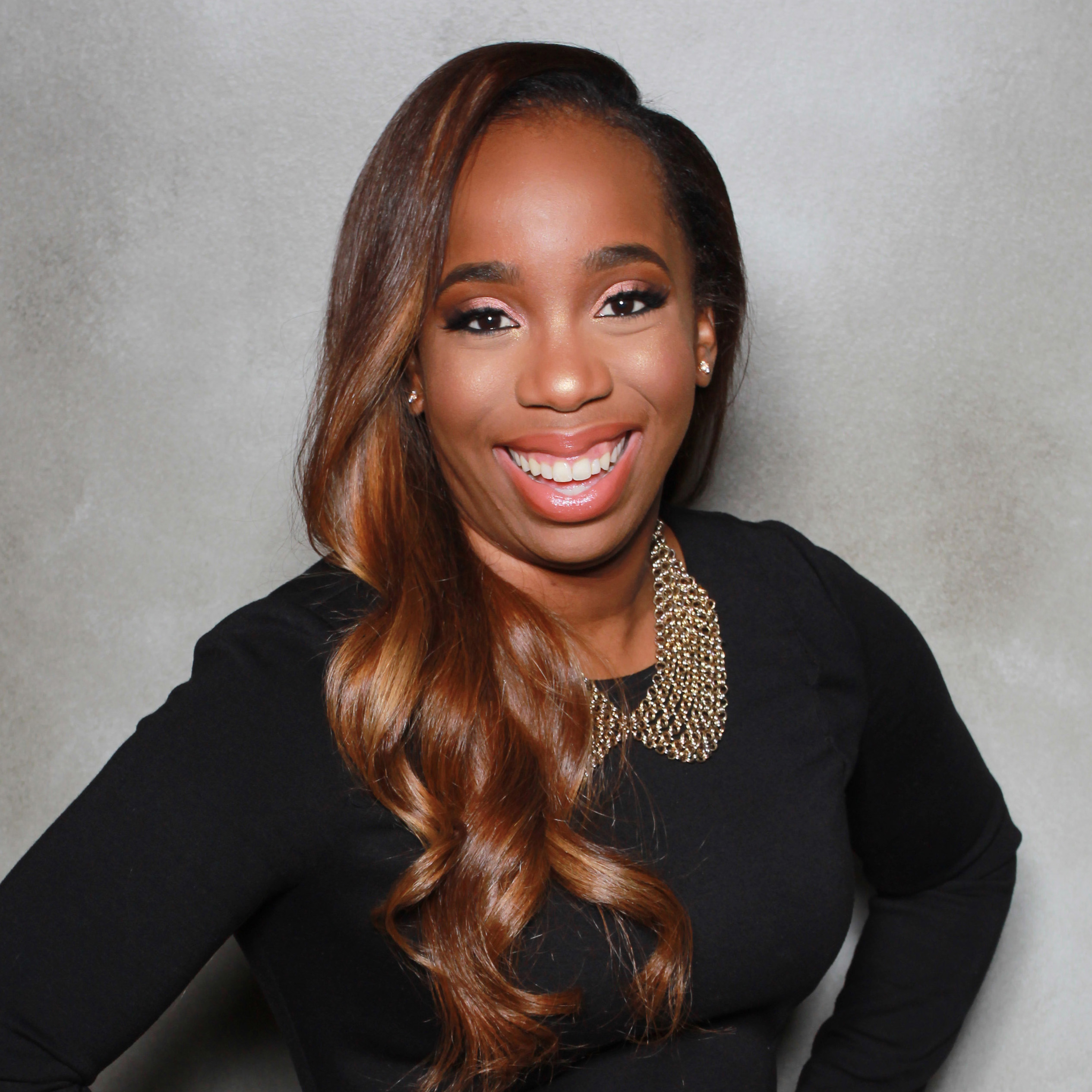
Fallon Ukpe
Fallon Ukpe, MD, MBA, is a speaker, author, and entrepreneur whose mission is to live boldly and reach her highest potential while inspiring others to do the same. A first-generation Nigerian-American born and raised in Houston, Texas, she earned a B.A. in French and Spanish at Johns Hopkins University before simultaneously completing an MD at Duke University's School of Medicine and an MBA at Duke's Fuqua School of Business. Having navigated four distinct career paths and two professional degrees by her early thirties, she knows a lot about managing life's squiggly line. In Life Is a Squiggly Line, she shows readers how to shift their focus away from checkbox milestones and handle life's ups, downs, and transitions. She lives in Atlanta, Georgia.
📚 Books by Fallon Ukpe
Transcript
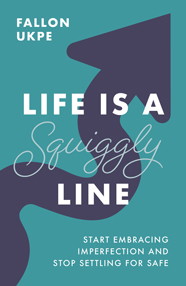
[0:00:25] NVN: For me, the mark of a good interview is when I walk away with a Post-it Note of wisdom to stick on my computer as a reminder. In this interview with Fallon Ukpe, author of Life Is A Squiggly Line, I walked away with, not one, but two Post-it Notes. In her new book, Fallon talks about how we tend to think of life as a straight line with an arrow pointing up and to the right. Really though, life is more like a squiggly line filled with ups and downs, and unexpected turns. As she points out in this interview, with the benefit of time, we actually look back at these squiggles, and the points of life that appear to be valleys in the moment, as some of our greatest peaks. Fallon discusses moving away from the myth of perfection, and instead, embracing imperfection. Forgetting about checkbox milestones and refusing to settle for safe. Finally, Fallon shares the one important question that we should all ask ourselves as we design our most fulfilling life - squiggles and all. Fallon, what a great name: Life Is A Squiggly Line. Tell me about the title and what that means to you?
[0:01:35] Fallon Ukpe: You know, personally, I’ve lived on a squiggly line, and the way that the title came up was, I was actually writing a note to a family friend’s daughter. She’s graduating from college, and it was really nice, her family asked for people that were close to write notes for her that they could compile. One of the big things that I put in there, and one of the first things I told her is that life is not a straight line up and to the right. I actually drew it in there. I said, it actually looks a bit more like this. I drew a squiggly line. I told her that, it meant that life wouldn’t be perfect. It meant that there would be some hard moments, and even though it was hard and it wasn’t perfect, it didn’t mean that she did anything wrong. It was just a natural part of the journey, and that things would evolve, and that she would grow, and she would learn, and it would be a really great experiment and experience. But just to take it easy on herself and enjoy the journey. And, certainly that’s been true for me. So, as a kid, at seven, I wanted to be a doctor, and did all the things, went to school and that type of thing, but today after having gone to medical school and business school, I do not see patients. I’ve had a great time, I’ve done lots of really neat things. I worked for a global consulting firm. I worked on starting a venture capital fund. Now I’ve written a book. I spent a lot of my time coaching, and mentoring, and speaking. It’s phenomenal and I love it but it just certainly not what I thought I would be doing at seven.
[0:03:00] NVN: Yeah, okay. Let’s back up here a little bit. Getting either an MD or an MBA is a big deal. How did you do both of those things?
[0:03:11] Fallon Ukpe: Very carefully but, you know, it’s interesting. When I was in undergrad, I decided that I either wanted a law degree or a business degree, and it was because I thought with that in combination with my medical degree, I could do more in healthcare. I could have a bigger impact in healthcare. Because, what I started to learn and understand was that the people who are running healthcare organizations, whether they were hospitals or insurance companies, or that type of thing, they all understood business, and law, and how things worked. And one of the biggest things for me about going into medicine, was that I wanted to take care of people, but I also wanted to have a bigger impact. That’s what drove the decision, and I went to Duke, which I loved. Had a fantastic time at Duke, an incredible experience. And they have a dual degree program, and so I was able to do both medical school and business school. I did them both in five years, kind of alternated. I started in medical school, then went to business school, and then finished up medical school. And in the end, kind of shocked everyone when I said, “Oh hey, I’m not going to go to residency yet. I’m actually going to go into the business side of things.”
[0:04:15] NVN: Wow, what foresight. That is not a standard plan, but that was a really smart plan.
[0:04:24] Fallon Ukpe: You know, I think it’s – I talk about this in the book, and when I’m talking to people, it was the evolution of understanding myself. And so it’s interesting, because I think we have ideas about the path that we want to take, the vision that we have, and it’s fantastic. I think it’s so important to have a plan, but it’s also important to let it evolve because what happens is that, as you have more experiences, and as you learn more about yourself, you understand what you’re really passionate about and what you really want to do. That vision is going to shift and it will evolve and that’s what happened. It didn’t mean that I didn’t love those things, or I wasn’t interested in them, but I started to understand a broader set of interests that I had, and started to think more about how I wanted to spend my day, and understand what I believe my talents are, and how I want to deploy them I the world. And so that’s how all that came together on a very squiggly line, but it certainly wasn’t all planned.
[0:05:20] NVN: As you were talking about your family friend and writing that letter, I just had a flash of wishing someone had written me a letter like that when I was about to go to college, because I distinctly remember that feeling, of feeling like I had to make decisions, and have everything be planned out, and deviating was not okay. Did you go through that period, or is that just not part of your composition? Were you always okay with the squiggly line?
[0:05:52] Fallon Ukpe: Oh no. I am as Type A as they come. I am the planner of the planner of the planner, still. So I wrote a book, and I’ve told everybody, “Hey, life is a squiggly line, and I’m still trying to be Type A in the plan!” Not at all. And actually, it’s funny that you said it, the reason why I wrote the book was because, after I wrote that letter, I wound up giving a speech to a group of sophomore women, super smart sophomore women and they said, “Fallon, talk about whatever you want,” and that was the first time I talked about the squiggly line, and the reason why is exactly what you said. I said to myself, “What do I wish I knew when I was their age?” It was, “I wish that I knew life was a squiggly line. I wish I knew that it wasn’t going to be perfect. I wish I knew that I didn’t need to be perfect. I wish I knew that so many different roads and paths could lead to where I wanted to go.” So, the pressure was really off, you know? You couldn’t really do that much wrong as long as you gave it your best shot and you kept going, and so that’s how that came to be, and that actually drove speaking, which led to writing the book after I gave that speech and saw the response from the women, saying that it was so helpful to know.
[0:07:09] NVN: It’s such a powerful message, and I love that you were able to give that message as you will be doing with this book, but to people who were actually in that moment. So, I’m in my early 40s, and looking back now, I’m so grateful for those squiggly lines. All the best things happened in the squiggles. Thank god for them. However, under the veil of youth, without knowing that, I feel like I missed out on some of those moments because I was so concerned about making that line straighter again.
[0:07:40] Fallon Ukpe: Absolutely. One of the things that I talk about – so there are two things. One is that you absolutely need the valleys for the peaks to happen, right? The valleys, they do not feel good when you’re going through them, but when you look back, it’s interesting how some of the toughest moments that you’ll experience actually become a peak. Because, then, with hindsight, you see that it was leading you somewhere else. More specifically, there were decisions I made to leave jobs. When I made the decision to transition from Medicine to Business, that was very scary and at that time, it felt terrible. I was so afraid that I was making the wrong decision. When I look back now, having made that decision six, seven years ago, I see that as a peak and I understand what that transition did and how important it was for me to make it. I think that part is just so important in understanding, “Yes, they’re hard,” but with hindsight, a lot of those valleys actually become the peaks and they really turbo charge your growth and where you go. But, the tough part about life is that oftentimes, you can’t understand it until your past a certain point, and you look back and you appreciate it.
[0:08:54] NVN: Yeah, so well said. You may have just addressed that in your answer about making that transition from medical school to getting your MBA, but I’m curious if there is one squiggle in your line that really stands out to you as being a tough one?
[0:09:11] Fallon Ukpe: I’d have to pick two. One of the toughest ones, absolutely, was choosing not to go to residency. Finishing medical school and going into business. That was really hard. I would say, that was probably one of the first really big – if you say, “sharp right turn,” that was a super sharp right turn. That one was really big. There’s a whole chapter on it in the book actually. Around how I navigated that, and I got really great advice, and I’ve been so fortunate to have such great family, friends and mentors along the way. I got really great advice that helped me better make that decision. That was absolutely one of the toughest. I would say the next toughest, actually, is where I am now. The last big transition of going in to speaking and writing, and coaching, is what I do full time, and that led to writing the book, and all the things that I’m doing now. That was a really tough one. The reason why was because there’s not a school for say, “I want to be a speaker and an author, and I want to coach people.” There’s not a specific degree that pulls that all together, and so, again, going back to me being the Type A, and I like to plan and that type of thing. That was a really hard transition to make because there was a lot of uncertainty, and also because it required me to really believe in myself and what I wanted to do. I actually talk about that in the book as well as one of the last chapters in the book.
[0:10:45] NVN: That’s great. Full circle. In this second squiggle, did understanding that life is a squiggly line by that point – did that help alleviate any of the fear at all, or is it still just as scary, even when you understand at this point that life is not a straight line.
[0:11:03] Fallon Ukpe: It is just as scary I think, and so, it is tough, because on one hand, I think it made it easier to at least see what I wanted and say, “Okay, you're going to make a pivot, and this is what that pivot’s going to look like.” That, and structuring that, and understanding that – that was easier because of having navigated the squiggly lines before and having made transitions. But it didn’t take away some of the fear and some of the uncertainty and some of the questions of, “who can really do this.” That was still there, and I think it’s human nature to be honest, and so, I think that even as I’ve written this book and I talk about it, and even as people read the book and hopefully enjoy it, and take some things from it, one of the things that I say is, “Don’t be so hard on yourself.” There are times when you’re really going to say, “I’m leaning into the squiggly line and it’s going great, and I’m moving with the changes, and there are some times where it’s like, ‘Oh crap. This doesn’t feel great, and it’s really scary, and I don’t like it right now.’” That’s okay. It’s human. The only thing that you can do is just keep going. Because it does get better, even on the toughest days. They do not last forever.
[0:12:19] NVN: You mentioned an ingredient of all of this as having the ability to believe in yourself. Do you have any advice for people who might be looking at making some kind of change but are trying to summon up that belief in themselves, for some gumption?
[0:12:38] Fallon Ukpe: You know, I think one thing that is important, and that I’ve certainly benefited from, is having a really good support community around you, and I don’t think that that should be taken for granted. You know, I talk a little bit about having really good family and friends, and mentors, and how that’s just been so incredible as I have navigated the squiggles. And I think that it helps and it helps make some of those hard moments and those hard days easier when you’ve got people in your corner who understand who you are, who believe in what you’re trying to do and can give you that extra push when you get into the valley. When you’re having a tough day. And so I think that becomes super important. I say this, but it’s also important to be very thoughtful in how you pick that group of people as well. You want to make sure that you’ve got the right set of people, or maybe it’s just one person that doesn’t have to be a big group. But the right set of people, or a person, that can help you and be your partner on the journey.
[0:13:41] NVN: I love that. Let’s talk about this idea of checkboxes? Tell me a little bit about your thoughts on that?
[0:13:51] Fallon Ukpe: Checkboxes. So, I talk a little bit about what I call the “straight line”, and so when I say is that there’s a squiggly line, there is a straight line, and a lot of what I focus on is getting people off the straight line. So, out of the checkboxes that somebody gives you, and on to the squiggly line, and creating your own bucket list for your life. Really, when I say that, what I mean is that it’s really important to define for yourself what’s important to you, what matters most to you, what your purpose is, what’s going to give you meaning, what’s going to give you fulfillment, and ultimately, what success means to you. You know, one of the big things that I say in the book is that success is an inside job, you can’t let society, or somebody else define what success is, or what you should go do. That has to come from you. If it doesn’t come from you, you will wind up achieving so much, but feeling so unfulfilled, and not feeling like you lived a life of meaning, and there’s a danger in that. I honestly think that that is one of the biggest issues you see right now, is that you have so many people in a time where so many people are so educated, and they have a decent amount of financial security, and certainly, they’re doing better than the vast majority of the billions of people on this planet, but they’re still not happy, they’re still not fulfilled. It’s because whatever measures are being used to define what success looks like, what good looks like, or trying to keep up with the myth of perfection, right? That’s what’s driving how people are making decision and doing things. It’s not internally driven, and so without internally driving defining that, you wind up living by a checklist that’s kind of been handed to you for your life. That’s just you know, if nothing else, what I hope that people do is that they just pause and they take a step back, and they answer for themselves, “What do I want my life to look like, and what does success look like? What kind of impact do I want to have?” And create their own bucket list rather than living by somebody else’s checklist.
[0:16:05] NVN: Yeah. So, you mentioned as part of that, an element that I feel like is really important in this book, which is this idea of perfection and the myth of perfection. Talk to me a little bit about that.
[0:16:19] Fallon Ukpe: Absolutely, so this is actually so important, and I start the book talking about perfection, because it is just that incredible. There is a big mindset shift that I think is really necessary. So, you know we talked about this a little bit, but I just think that somehow along the way, you know, as we are growing up, as we are thinking about what we want to do, we feel like life is supposed to be perfect. It seems like there is supposed to be this straight line up and to the right. It seem like there is continuous progression. That everything goes exactly according to plan. It seems like that, and we actually expect that from everything around us. So, there is a point where we have to understand that that is not life. Life isn’t perfect. We are not perfect, and what I talk about is just getting out of this idea, this myth of perfection, because it is not real, and at the end of the day, perfection is unattainable, it is unnecessary, and it is unfulfilling. And I think probably the biggest issue is that we feel like we need to be perfect to be successful, to achieve what we want, to make sure that people accept us, and that we feel good about ourselves, but it is not true, and at the end of the day, if we are living just trying to be perfect, it is really unfulfilling. That is absolutely a recipe for a life that is not meaningful and is not fully lived, and so the big thing, and the big mindset shift that I think is so important, is to let go of the need for perfection. Embrace imperfection, know that you are not perfect and you don’t need to be, and that is absolutely okay.
[0:18:09] NVN: Did you have a personal moment where it stuck you that perfection was not working or fulfilling and it was time to embrace imperfection in your own life?
[0:18:20] Fallon Ukpe: That is a tough question. I feel like you know, I don’t know that it has been one moment. I actually feel like it’s been multiple moments. So, you know, even if I think back, I think the first big thing happened early when I was in college, and I think it is tough because, as you are growing up and you’re in school, the only way that you understand that things are on track is by comparing yourself to other people. Not good to do but – how our education system works and things like that – It is like, “Okay, I am 18 I am starting college. I am 22, I am finishing college.” That type of thing, and one of the big decisions that I made was that I was going to study abroad, when I was an undergrad. So I spent half the year in Spain, half the year in France. Absolutely one of the best decisions I have ever made, but when I came back, the other decision that I made was that I wasn’t going to go directly to med school after undergrad. I was going to take a year off because if I didn’t, I was going to have to squeeze in taking the MCAT. So the test I needed to apply to medical school, and all of this stuff in a really short window of time, and I absolutely would not enjoy the last year of college. That was a really hard decision and that was probably one of the first times that idea of imperfection, not following the exact path, not doing four years of undergrad and then going directly to medical school, and going that way. That was the first time I really deviated and I was like, “Oh boy, that is really scary.” Because at that point, I made my own path right? There wasn’t another thing that I could look at and say, “Okay, I am on the right path.” I was charting my own territory, and so that was probably the first and most poignant one where I was like, “Okay, this idea of perfect and doing this in this many year increments at this time. I am not doing that. I want to live my life. I want to enjoy it. I want to enjoy my last year of school, and life is not going anywhere if I go to med school one year later, that’s okay.” It is fine and so I think that was the biggest and first point where I really let go of that need to be perfect and do it exactly according to the book.
[0:20:29] NVN: 100%. The final topic I wanted to bring up with you is, the subtitle of this book is Start Embracing Imperfection and Stop Settling for Safe. Talk to me about this correlation between “settling”, and “safe”.
[0:20:45] Fallon Ukpe: Absolutely. So, you know, I think that a lot of times, we tend to not want to take risk, right? We tend to not want to do things differently. We want to stick to what we know, often because it is comfortable. It is easier. It is more predictable, and as humans, generally, we don’t like change, and what I think is most important is that we let go of the need for perfection. That we are okay with things being imperfect, and we really push ourselves. We set really bold aspirations for what we want to do, and that we don’t set limits on those things, and we don’t settle for getting half way there just because it is good enough, or because we are afraid of taking the next step. And if that is what you really want to do and you really feel driven to do that, you really feel like that is your purpose, and that is a calling for you, then you go after it and you go do it. And you don’t let fear stop you, and you don’t let limiting beliefs stop you, but you really get after it. And so really, when you talk about settling and safe: it is about not sitting on the sidelines when you could push yourself further, and stepping out of your comfort zone.
[0:22:04] NVN: Something about what you just said was so powerful that I literally started writing a Post-it Note to myself as you were talking, saying, “What are you afraid of?” Because, I feel like that is just such an insidious thing. We can start to make decisions around, without even realizing what we are doing.
[0:22:24] Fallon Ukpe: It is incredible. I think fear is one of the most powerful and sneaky emotions that we have. You absolutely hit it on the head, and it is interesting because fear – there is a good side of fear and then there is a bad side of fear, right? So there is good fear that is protective and that is instinctual, and that can tell you, “Hey, this is not a good idea.” And that is important, but there is the fear that can be paralyzing. It can stop you from doing the thing that you really want to do and it can really hold you back. And so to the point that you made, I think it is really important to ask ourselves and be very conscious of what we are afraid of, and one of the biggest questions that I will ask when I am working with somebody and we are trying to figure out a transition that they want to make, a big pull that they have, this is absolutely one of the biggest parts. I talk about the fear and the fog and the fear piece is, what are you most afraid of? What would you do if you knew you could not fail? When we get into these questions and people are really honest about what those things are, it really transforms how they then think about what next steps to take, and how they can mitigate and address their fears so they can move forward.
[0:23:48] NVN: Do you have any stories that really stand out to you of people you have worked with who, to you, just exemplify this idea of being able to step out of what they are fearful of, and move forward in the direction that they want to go?
[0:24:04] Fallon Ukpe: You know I have worked with entrepreneurs and especially, I worked actually especially with a lot of women entrepreneurs, which has been really exciting. And the biggest things that we have worked on are believing. Someone really saying, “Okay, I believe in myself. I value the experiences that I have and what I can bring to the table.” And the other part like we just talked about is the fear piece and really being able to say, “Okay, this is what I am most afraid of. I am going to call it out. This is how I can address those fears.” So, sometimes, you know, when there are things that they are afraid of, they are things that they can work through, or they are things that they can say, “Okay, I am going to take this action, this action, and this action, to make sure that I can mitigate that,” or they can say, “I understand that I am afraid of that, so I’ve called it out and I see it, and I can move forward.” Rather than the fear kind of working in the background. So for instance, more specifically, I worked with one woman who transitioned from being in the corporate world to launching her own business. And one of the big things that she feared was not having financial security, and that was super important to her. So the risk of becoming an entrepreneur and not necessarily having steady cash flow, and being able to manage for that, and add more predictability was super important. And that actually came from how she grew up, and her childhood, and things like that. So what we did was we had to talk about that, explore that, and understand that. Call that out, and then as she looked at building her business plan, figure out, “Okay, what are ways that you can build redundancy? What are ways that you build a super air-tight pipeline for your business? What is the level of savings that you are going to need to feel really comfortable?” And she is married, so, part of it was, “What is the conversation you have with your husband so that you two are on the same page, and you feel comfortable and supportive and you know he’s got you?” And so, really, it is a conversation around addressing the fear, mitigating it, and working through self-limiting beliefs, and so making sure that she felt confident in the experiences that she had. She is super brilliant, had a phenomenal background, and had so much value to bring to her clients, and I just worked so hard with her to make sure that she believed it, and felt confident in it. She is probably one of the most exciting people that I have worked with. And to see her go from working at a company, to starting her own company and doing really well, and exceeding all of her own goals that she set for her company and for herself: it just has been absolutely phenomenal, and really, really exciting.
[0:26:55] NVN: You know hearing you say that it strikes me that this is sort of – this idea of reconciling yourself with the squiggly line is – originally I was thinking of this as, sort of, an issue of youth, where it seems like things “should be one way”. And you follow this trajectory straight up and to the right, but hearing this story made me realize, you know, I think as we get older, we realize that life is not a straight line, however the stakes become higher, and it becomes scarier to squiggle in a lot of ways because you have resources and things like that. So you have to work through issues like the one you were just talking about with this woman. It feels like there is more risk to it.
[0:27:37] Fallon Ukpe: Absolutely, the squiggly line as you said it doesn’t – as you get older it does become clearer because you’ve navigated and you’ve made transitions, and you have seen the ups and downs, but, to the point that you made, it doesn’t necessarily get easier, and so the thing that I focus on, especially with people that are in mid-to-later stages of their career, is not only being very clear about the vision and where they want to go, but also being very, very intentional about thinking about what matters most to you. If you think about yourself, your personal life, and your career: what is most important in each of those? Are there certain financial obligations that you need? Is there a certain amount of time that you want to be able to spend, whether it is with family or friends? Are there certain places that are important to live, especially as parents age? And so, you have to be super thoughtful about all of those things, and then you are going to have to make tradeoffs at a certain point. And so there is certainly risk, and there’s probably a bit more to think about as we get a bit older and we have families, aging parents, and we have a career trajectory that we have built, and that we are trying to build upon. There are some complexities to work through, but you can work through them by being very thoughtful and honest. A lot of this is about being honest with yourself, which is very hard, but being honest about what matters most, and what you need. And then also understanding, “What do I need versus what do I want?” That tradeoff and that inner play can be very interesting to work through as well.
[0:29:18] NVN: Perfect. There is something about the tone of your voice: it is so reassuring that I just feel like I can stop recording today and do anything. I love it.
[0:29:27] Fallon Ukpe: You can.
[0:29:30] NVN: That is right, I can. Forget you, sneaky fear. Is there anything we haven’t gotten to that you want to make sure listeners hear?
[0:29:41] Fallon Ukpe: You know, I think one of the hardest questions that anyone will ever have to answer, and it certainly has been true for me, is, “What do you want?” And that one question is so short and it seems like it should be so easy to answer, but it is really, really hard to answer, and I think it is just so important to make sure that people keep a pulse on that, and what the real answer to that is, and then you make sure that the steps that they take, and what they are doing line up with what that answer is. That answer is going to evolve. It is going to change but what is most important is that that answer is true to you. Not true to you, and your eight friends, and your family. It has to be true to you. You have to focus on yourself and be honest with yourself in answering that question. I think that is the big thing that I would want to leave with people because once you understand an answer to that question, the rest of this, like setting a vision and understanding your purpose, following your purpose, building a life that is meaningful and fulfilling – that becomes easier. But the first and most important question you have to answer and be honest about is what you want.
[0:30:56] NVN: I just added that Post-it Note to my computer too. So thank you, Fallon. This has been a productive interview for me.
[0:31:03] Fallon Ukpe: Good.
[0:31:05] NVN: Thanks for joining us for this episode of Author Hour. You can find Life Is A Squiggly Line, on Amazon. A transcript of this episode, as well as all of our previous episodes, is available at authorhour.co. For more Author Hour, subscribe to this podcast on your favorite subscription service. Thanks for joining us, we’ll see you next time. Same place, different author.
Want to Write Your Own Book?
Scribe has helped over 2,000 authors turn their expertise into published books.
Schedule a Free Consult