Jonathan Satovsky: Episode 380
Read the full transcript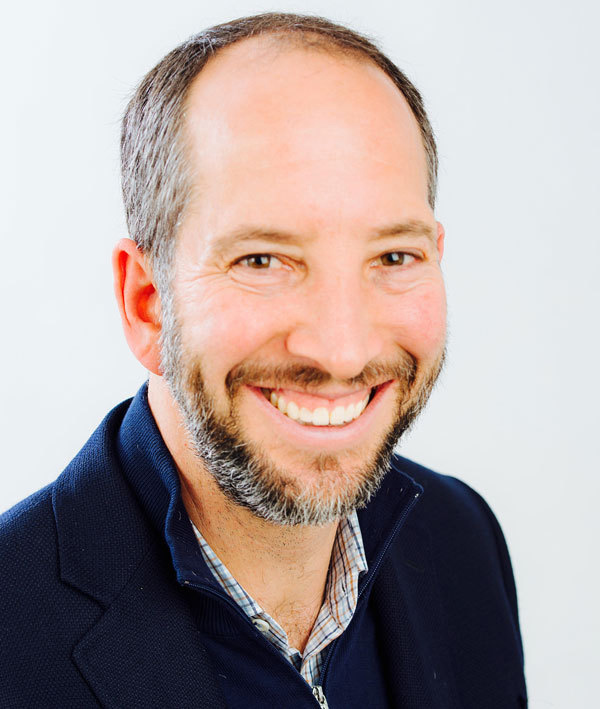
Jonathan Satovsky
Jonathan M. Satovsky founded Satovsky Assets Management in 2007, which provides advice on over $2 billion in assets and manages more than $700 million. Previously, Jonathan spent over thirteen years at American Express Financial Advisors, joining the Chairman’s Advisory Council as one of their youngest top ten advisors.
Jonathan recognizes every client has unique visions, goals, and preferences and offers a custom-tailored approach, aligning advice and portfolio structure to deliver financial peace of mind. He follows industry trends and technology developments, emphasizing continuing education and professional evolution.
Jonathan lives with his wife, Stacey, and their children, Adam, Julia, and Aerin.
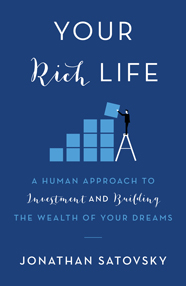
📚 Books by Jonathan Satovsky
Transcript
[0:00:20] NVN: I had the pleasure of meeting author Jonathan Satovsky when he first began working on his book almost four years ago. And t was a thrill to interview him all this time later to celebrate the publication of Your Rich Life: A Human Approach to Investment and Building the Wealth of your Dreams. Here is what I love about talking to Jonathan. Not only is he deeply knowledgeable about the logistics of investment and asset management but he approaches them from an entirely human perspective and talks straight talk. Jonathan’s advice are almost philosophic in nature. He understands how humans think and feel when it comes to money and why that matters when it comes to investment and growing wealth. Most of all, Jonathan firmly believes that money is just one element of a truly abundant life. Jonathan, let’s start by telling listeners a little bit about you and how you got into this field?
[0:01:16] Jonathan Satovsky: Okay, so, I went to college, I went to the place I happened to be born in, Ann Arbor, Michigan which is the University of Michigan. And a friend of mine’s father had told me that when you go to school at this amazing university, you have an opportunity to explore a very wide range of topics. My father happened to be in the medical profession, so I did take all the premed classes my first two years and once I got to the slicing of the frog, I was like, “okay, I don’t think – “ I adjusted and took a very wide range of classes across business and communications and philosophy and psychology and sort of stumbled into New York post college with a job actually at Lehman Brothers as a computer analyst which I was very excited about. This was in May of 1992. And that department folded. I moved to New York anyway and stumbled around for a bit and then saw a marketing piece by American Express that said, “whose looking at the big picture?” It said, “When people becomes successful, they have an accountant, an attorney, a stock broker, insurance agent, a mortgage broker, a banker, six or seven handlers, all which may be extraordinarily competent, but nobody speaks to each other and mistakes happens, so we need people to do financial planning to basically look at the big picture and like the Rubik’s Cube of someone’s life, figure it out and try to help people navigate and tile the pieces together.” That piece really struck me because I thought, “Wow, this is fascinating, they don’t teach you anything about financial literacy in high school or college so this could be a really great opportunity for me to do for two years and I’ll go do something else.” “At least I’ll learn something about money,” I remember as a freshman in Michigan, as I was walking in to the stadium, there was an MBNA credit card offer for freshman students that if I signed up for a free MBNA credit card that I would get a free Michigan hat. Being a poor freshman, I said, “Well, this is a great deal. I get a free hat and a credit card, you know? What could be bad about that?” So, that was the extent of financial literacy that I got in college.
[0:03:28] NVN: I did the same for a Bart Simpson shirt which has aged really not well is my first financial choice. You’re ahead of me at least.
[0:03:38] Jonathan Satovsky: So, that’s really what got it all started and 25 years later, I’ve met with people that have nothing to people that have a hundred million dollars and it seems to be universal that there’s a lot more to money than you would think. You would think people that have money have it figured out, people that are older have it figured out, people that are in finance have figured out and quickly people that were pinnacle of their fields, doctors, lawyers, hedge fund managers, mutual fund managers, people in venture capital, people in banking. CEO’s, corporate executives. I mean, it was amazing. I realized, “Wow, it’s actually everyone needs help with someone sort of like a coach, someone to look at their blind spots and hear what someone says they’re trying to do and see what they’re doing and see where there’s misalignment.” And I sort of took it to heart that you know, while the profession really should be more like a family doctor, you know? If you call the doctor and you give them a cough, you don’t want them prescribing some medication from a really beautiful pharmaceutical sales person that walks out the back door. You want them to really know your blood type and your family history and what you're allergic to and you know, really understand what is going to work for you and help educate you about the options, you know? In my own experience, I had a funny doctor that would say, “Well, we can cure you three ways, we can give you a big needle and shoot you in the butt and in 24 hours, you’re going to be better, we can give you some pills and you got to take for two weeks, these big horse pills or we can give you like a little liquid that you drink and you have it for a month.” Pick which one’s going to work for you. So, it was interesting, the optionality of decision making became readily apparent to me then. I realized that in a way, you want a confident doctor to say, “Yeah, we need to do surgery. “But sometimes, that overconfident surgeon just performing surgery may not be in your best interest, maybe there’s an incentive bias in the decision-making process that’s causing him to say, “Well, I got to hit my quota of surgeries this month so why don’t we do another surgery?”
[0:05:45] NVN: You’re touching upon something that’s always stood out to me about you which is that, I just always thought of finance is such a black and white thing. Exactly what you said. There is a prescription for it, that is what you do. But you really have taken this whole Rubik’s cube analogy very seriously and look at people from a holistic place. Can you talk to me a little bit about that?
[0:06:12] Jonathan Satovsky: Well, I’ve been trying to do it and I go back to the medical example because in my experience, when I moved to New York, the first 10 years I was in New York, I had four sinus surgeries every two years, like an auto mechanic, he would just clean me out and two years later I would come back and he would clean me out again. But he never really got to the root of the problem. After my own self-discovery and adventure, changing my eating habits, changing my environment, you know, now 15, 20 years later, I haven’t had any procedures. So, amazing, I didn’t get that advice from a doctor. From a holistic perspective, I think when someone asks a question, you know, says to their finance person, “What are my fees and what’s my performance?” When that may or may not be anything to do with the big picture of someone’s finances to be able to make them healthy, wealthy and wise over a lifetime. And why do I say that is because the context of looking at someone’s picture of finances is no different again than the doctor analogy where yeah, if someone’s giving you 1% of their net worth to invest, sure, the fees and performance may or may not be relevant and I think some people might view the relationship with their financial planner as investment manager or a portfolio manager or a coach or a consiglieri or depending on the nature of their upbringing, their experience. But if you look at someone’s entire balance sheet and their cash flow statement, the idea of financial planning is trying to look at it from a very wide lens to make sure from the idea of psychological safety, well, Maslow’s hierarchy of need. Well, step number one, we got to make sure that the person has enough liquidity or lines of credit so that their balance sheet is bullet proof enough that they can remain calm and maintain a very good temperament through whatever happens in the world. And that point about temperament is really important for me because when you grow up, everyone highlights the importance of intelligence. Someone could be really book smart, but not have very high emotional intelligence and that emotional intelligence manifests in a lot of emotional decision making. That emotional decision making is almost blind, it’s like flying blind, you’re not seeing it through the context of the aggregate of someone’s entire picture, where that they can create a balance sheet even that they can be greedy when others are fearful and fearful when others are greedy. You know? But looking at it in a magnet of you know, you can pick any timeframe you want, almost every day, week, month, quarter, year, you can pick out a moment in time and say, “Oh my gosh, you know, the fourth quarter of 2018, I lost money.” You’re planning for 40 years of your life; does it really matter? You know, the mindset of owning businesses over years of your life, does it really matter what happens in a short period of time, but if someone’s obsessive in a short period, they can let fear certainly run over their ability to make sound long term decisions.
[0:09:19] NVN: Yeah, I think that’s a pretty common experience at least in terms of a lot of people I know. And I think it’s because of exactly what you just touched on which is that our sense of security is so tied to money in so many ways that we can just get really reactive. So, talk to me about your viewpoint on abundance, what is abundance to you?
[0:09:43] Jonathan Satovsky: Well, we were talking about it, been contemplating of the idea of starting a podcast about the idea of seeking www, you know, not the world wide web, but wisdom, wealth and wellness. You know, we have access at our fingertips to more information, you know, at the click of a button that we’ve ever had before and yet, there’s a tremendous amount of anxiety and society, there’s a tremendous amount of stress. So, for me, I think the idea when you're young that you’ll trade your time and energy for money and then later, you have money and you don’t have time and energy to enjoy it, how do you find the equilibrium where that you can spend your time doing what you love with people you love and that you can provide for the lifestyle that you want, that you can feel good about it every day. Abundance for me is trying to find the equilibrium in people’s lives that they can thrive. It’s not just about the money because again, you can have a lot of money and be unhealthy. Orr you can have great health and have no money and you know, that creates challenges too. So, trying to find the right equilibrium is the abundance that you know, I’m trying to seek for myself and as a byproduct, trying to share the kernels of wisdom that I learned long the way that might be beneficial to people I love.
[0:11:06] NVN: So, not everyone will have the experience of consulting with you personally, but I’d love for you to just kind of walk listeners through how you talk to your clients, to help them think about what it is that is truly going to offer them abundance because I feel like when we think about these things for ourselves, it kind of seems like it should be a cut and dry thing, but it’s not always necessarily.
[0:11:31] Jonathan Satovsky: So, you know, being a little bit of a math nerd back at school, I did get – I thrived in calculus, statistics and logic were my three favorite subjects. So, I have a little nerd in me and the nerd in me thinks about the idea of you know, “What is financial abundance?” Because people hire me and they want to talk about money but we end up spending 90% of the time talking about something aside from money. On the money side, endowments like Harvard, Michigan, Yale, you know, major universities have a spending policy. Spending policy is normally four to 5% of their endowed dollars. And I’ve been fortunate to work with some smaller endowments and all of a sudden, quickly registered for me, the principle of how do you apply this principle to individuals. The only difference really is well, a couple of differences, but one difference is taxes and the second difference is mindset. Taxes are something that we can control in the accumulation of money. How and where people save. You know, tangential, but I’m not someone that never made more than $50,000 a year a whole life and came to me with like three, four million dollars and I said, “How is that even possible?” She said, “Well, my mother told me, when I was doing my paper route at 11, to save a dime of every dollar and I did that religiously every year from 11 till 55.” It was amazing, it was incredible, so it was pretty profound. So, I tell you that story because it’s both in the accumulation of assets that someone has to be tax mindful of how they accumulate, that’s an also on the back end of how they distribute their money of how they can be tax conscious of how they draw out money. But the second thing and probably even more important is the mindset, there’s a money mindset and the money mindset is both how do you live now and how do you deal with both delayed gratification later. And there’s a big concept called lifestyle drift where that you know, someone starts out, they might make a small salary, 20,000 and then go up to 50 and a hundred and you know, 200 or whatever happens to be. Someone is not getting rich if the elevate their lifestyle proportionally to the income they’re making, someone could be making a million dollars a year and be poor and someone could have $50,000 of a year in income and be rich. It’s the proportion of the money relative to the spending that’s important which is why I go back to the net worth and cash flow and using the endowment idea, we try to formulate and say,” Well, why don’t you just spend 3% of your assets?” If you spend 30,000 a year, it would be a million dollars or 300,000 a year would be 10 million dollars, that’s the simple formula of how much money you would need to be able to provide a multigenerational endowment mindset, where that you can, whatever you want to do, sit on the beach or kite surf in the Caribbean, you would be passively invested in other people’s labor so that you can enjoy your life and not spend time with the day to day anxiety of needing the market to go up every day or your investments to perform every day, every week, every quarter. I mean, that you would be able to be resilient even through adverse conditions or pure times that didn’t go the way that you like it. You’re building in sort of your own margin of safety on your balance sheet and your finances so that you can have that degree of mental freedom. You know, what’s the constitution, life, liberty and the pursuit of happiness. That’s sort of funny. We’re all pursuing something, we’re in the pursuit of, aspirational, we’re on the pursuit of freedom, but then, you know, we trap ourselves with money and it could be complexity of money, it could be in obligations around money, it could be the personal freedom of not being able to live where you want with who you want, when you want, do the things that you’re really good at. Tangentially, I’m reading a book about maybe heard of it as a famous, called The Artist’s Way.
[0:15:34] NVN: Yes.
[0:15:35] Jonathan Satovsky: The idea that probably I would imagine a larger percentage of population or block creatives and they don’t even know it. They’re taking a job and you’re doing something that you have a specific job and a task, “You have to do this every day.” Well, humans aren’t really wired to do something day in and day out like a machine which is why you can say this is fearful or exciting that technology and automation is taking over a lot of people’s lives. Well, humans aren’t wired to do something repetitively a million times for 30, 40 years. I mean, I don’t know a human soul that wouldn’t be burned out from that.
[0:16:09] NVN: Totally.
[0:16:09] Jonathan Satovsky: So, freedom is finding a way to be able to explore what your unique talents are, gifts are, try to spend time on your pursuit of your rich life. In a way that is not constrained purely by decision centered around money but decisions around how to build a life.
[0:16:29] NVN: I like that, this is just a part of that life.
[0:16:33] Jonathan Satovsky: It is, I mean, certainly, you can look at it as very constraining or you can look at it as very tremendously constructive, you know? I think the decisions of viewing things in terms of your total resources, if you’re viewing your assets as your total resources, not just money resources, but your asset resources are, your unique talents, gifts and your ability to be able to make a difference in the world with whatever gift that you may have and some people may be a great artist, some people may be a great baker, some people may be a great lawyer. Some people may be a tremendous surgeon, you know, whatever happens to be. And finding a way to spend the time where someone thrives is only part and parcel to the picture. But you know, the decisions that are made in terms of financial literacy are sometimes blind because without having a coach or someone looking at the big picture, you know, I see time and time, all sorts of very peculiar things but the most obvious of which is someone may have a 5% mortgage on their balance sheet and if you’re really conservative and you don’t want to give yourself a chance to out earn the cost of borrowing, why not pay off the mortgage? And why invest, why don’t you look at it from balance sheet perspective? Then on the other extreme, you know, it’s not uncommon to see 70-year old’s come to us and say, “Oh, I have a really healthy balance sheet.” And you look at it and they have 90% of their money in New York apartments, five-million-dollar real estate and they spend 300,000 a year to live and they have a million dollars of investible assets. You say, “Well, how is this math going to work? You got three years? I mean, what are you going to do when you’re four, you basically have to sell your home our get a reverse mortgage or do something.” And that may be generational thing where some people are like, “I’m totally averse to debt, well, okay, you can be averse to debt, “but you know, if you really want to stay in the home, the math is not going to work.
[0:18:28] NVN: Yeah.
[0:18:28] Jonathan Satovsky: I got a little technical there, forgive me.
[0:18:31] NVN: No, that actually really struck me because it made me think that those of us who are not well educated in money, we know the basic ‘rules’ of what we’re supposed to do. It occurs to me that it’s incredibly easy to air that way because there’s not a thinking process that’s applied to it. It’s just these rote tasks that we’ve been told to take. We do them over and over again, without thinking it through it all.
[0:18:58] Jonathan Satovsky: Yup, you know, there was a funny commercial that said, “Like what is your number?” I remember there was like clipping hedges and saying, “What is your number?” And you know, they would have an image roll over each person’s head, “This person’s number is three million, this person’s number is 30 million,” you know whatever. There might be a different number to provide someone financial freedom mentally and it’s different for each person. But I think understanding the interrelationship between the rote activities that someone is doing, what the cumulative impact of that could be over 20, 30 years. Just back tracking a little bit, sort of in the realm of mindfulness and everyone in this generation trying to find a way to be present and enjoy each moment because you know, yesterday’s history, tomorrow’s a mystery, today’s a gift, that’s why they call it the present, you know?
[0:19:49] NVN: Yes.
[0:19:50] Jonathan Satovsky: I find the whole idea of planning even perplexing from this standpoint. We can sit with someone without any preconceived notions of what was or what is going to happen in the future, you know? Because obviously, the past performance on investments is no guarantee of future results. So, you sit with someone at a moment in time and you’re trying to plan for a future. Well, it takes someone out of the joy of being in the moment in a way because the future creates some anxiety. The past creates some anxiety; you know? My family told me that the idea of the word retirement is like putting out to die or getting ready to die. I think retirement is sort of a ridiculous concept. I mean, 50% of the population is probably going to live past a hundred birthday because of advances in healthcare and the like. If you have a longer journey and you thought about it, “Well, wait a second, I have to live to a hundred or 120. I have to design a life that II can create an abundant life and freedom throughout.” So, instead of having a lot of pressure to say, “I got to make a lot of money so I could retire. Well, how can I design a life that can enjoy the journey for the next 50 plus years, you know?” Because often times, the traditional retirement was people would retire at 65 and live to 67. Well, that’s not the case anymore. I have a friend that may change his career, sell his business and start playing guitar and writing music. He has a little trepidation about it but his eyes light up and he gets so excited when he talks about it. You know, I hope he pursues and I hope he succeeds, I hope he thrives. But it’s not as easy as going to work and getting a paycheck, it creates a lot more angst, he’s got to find a way to find an equilibrium there where he can pursue something he loves and not make it about the money and yet, be able to support his family and his obligations and the lifestyle that he’s gotten accustomed to at the same time. So, it’s not easy, but it’s a mindset that we’re all battling with every day to be able to create some form of life that we find abundant.
[0:21:51] NVN: Yeah, I’m curious, this idea that we are likely going to live much longer. I can speak for myself and say that, “Well, I feel like I know that theoretically. I think it’s natural to look toward our parents and grandparents and just sort of assume we’re generally going to have the same basic life trajectory and plan for that.” Do you think people are snapping out of that mindset in your experience or do you think that’s still a shift that a lot of people have to make it this point is understanding your life may very well and retirement or whatever will likely look much different than it has in previous generations?
[0:22:31] Jonathan Satovsky: It is funny the words you chose to say that is most people. You know I was talking to my father about a concept and he said, “Oh, most people or nine out of ten people would say that.” And I said, “Well, does that make it right? Like who said nine out of 10 people are correct and they are thinking, you know? I don’t get it.” So, I can’t really speak to most people. I find being, again going back to my mathematical curiosity when someone says, “Oh, nine out of 10 people believe this to be true.” I sort of then get curious about the one out of 10. I’m like, “Wait a second, if everyone thinks that some things must be wrong…” And, I bring it back to the – I think last week there was an article that was October 11th there was a headline. The most fear in financial markets since the Lehman crisis in 2008, meaning like people have been selling more equity and long-term investments and they have put over $300 billion into cash and short-term investments in the last six months because they’re petrified about the future, which is fascinating to me. And you know consumer sentiment is really negative and people are – I think it is media fatigue. You have 10 to 17 to one bits of negative information thrown at us and being human, if you are not taking drugs every day, you know it is pretty hard to buffer yourself from 10 to one bits of negative information. You need to have like a Jedi mindset to be able to battle that negativity to look at the fact that, “Wait a second. If everyone is negative does not mean that the opportunities are amazing?” You know going back to being greedy when I was fearful of others, a greedy concept like it’s amazing. That is a blessing, how do you not see it? So common wisdom isn’t necessarily the right framing because, well inside, the word impossible is possible. People are definitely discovering new things every day that are changing what is possible. I mean the idea of scientific discovery I think 70% of the earth’s surface is water and 95% of the area underneath the water is undiscovered. So, we know nothing. You know in the Carl Sagan idea of like we’re of this little blue dot in this wild universe like what do we know? So yes, people do get pre-framed on the idea of, “Oh, my father died of a heart attack at 57 so I never expected to live this long. So, I have framed my life that way.” The one important thing I would say about that, is it seems to me the vast majority of decision making that people have, are hardwired between the age of zero and eight years of age. Like a computer, we are being programmed as you are raising your own two-year-old, “Don’t touch that, do this, don’t do that,” you know you are implanting all of these fears and anxieties amongst your two- year-old, from your own experience. Now, I went to the children’s museum on the Upper West Side in New York and I remember seeing something about this and my wife probably thought I was very lazy by not getting off the couch when my son was about to fall down the stairs or touch a hot stove. But I was of the mindset that, “Wait a second, aren’t you supposed to follow them around and let them explore their curiosity so they could find their own limits rather than me implanting my fears amongst the kid? Like that’s insane. “But by human nature because particularly with first children many parents, it’s like this precious egg they don’t want to hurt, they don’t know what to do. Most of a child’s framing from zero to eight causes a lot of subconscious decisions that are rooted from eight to 88. So, you know I was joking with you earlier, I said I think the two greatest ages in life are eight and 88 because at eight you are not worried about anything. You are not worried about the future and the past. At 88, you are not worried about the future and the past, you’re just totally in the moment. Everywhere in between you are worried about how other people perceive you and how you’re showing up and your authentic self and you know, whether you are placating other people. Or you sang the right thing or you are doing the right thing, being a good father or son or husband or wife or co-worker partner or business colleague or compassionate to the person serving you lunch, it is amazing. It is a really fascinating thing so I am trying to live like an eight-year-old at the moment.
[0:26:42] NVN: I love that. I think that is aspirational.
[0:26:48] Jonathan Satovsky: Well, with responsibility. An eight-year-old with responsibility of course.
[0:26:51] NVN: Exactly. So, I’d love you talk a little bit about this because I want to give listeners a chance to potentially identify themselves and hear some more if it applies. I think you have already mentioned a few of these ways, but in the book, you talk about how people get in their own way when it comes to maximizing lifetime returns. How so? Is there anything we haven’t talked about here yet?
[0:27:17] Jonathan Satovsky: Well, I think that philosophy is very important. I think that in the age today, information is free. You know investing is free. You can do everything for free. So, how do you establish value over a lifetime? I have been very blessed and fortunate to have a lot of multigenerational families we work with as a firm and as a team for the last 25 years. But how do you establish value over 25 years or 50 years of someone’s life? I could show you 200 balance sheets plus that someone’s net worth could go from nothing to two million, five million, 10 million, 20, 30, $50 million. And it is not because they’d play the lottery. You know my son jokes with me and says, “You know if you met two people a year after, one becoming a paraplegic and the other hitting the lottery, who’s happier?” He reminds me that the paraplegic is happier because the person who hit the lottery everyone is chipping and clawing at him and that the paraplegic is just thrilled to be breathing and all of a sudden reveling aware of the beautiful colors in the sky. But in the abundance of money specifically in the book I talk about Warren Buffett because Buffett has been in the field of finance for the last 50 years. The most identifiable character around capitalism for 50 years and he’s had immense success. Now, he’s not perfect. The more you learn, there is no perfect person in that regard, but if you look at his investing results in the last 25 years or you could pick any timeframe. But I just pick the 20-year period. And I showed a slice and I said, “Well, if I had a blind trust for you set up and it was called Berkshire Hathaway and you didn’t see it and you didn’t touch it for 20 years, great.” But the reality is because information is so prevalent every day, you can see a ticker price every single day, every week, every month and if you are measuring it relative for example to the S&P 500, which is the most widely talked about measure of the perceived thermometer gauge of health of US economy. He has underperformed the market by magnitudes of 20 to 60%. Now, if it was not called Berkshire Hathaway and it was not the Oracle of Omaha, how probable would an investor sit still? What is the likelihood that an investor would sit still if an absolute relative fashion they were measuring their success to something, to a benchmark or a bogie or their peers or their social network? How likely is it that they would sit still? Probably close to zero. So, one of the things that I think has happened with the access to information, is everything is free, everything is readily at their fingertips, but people don’t know how to measure success and abundance. Because if you are measuring it every day by performance, even if you are with the greatest investor in the last 50 years, you would have been miserable 40% of the time. So part of it is understanding as fast as you can yourself and finding a way to develop good habits. And if you can’t develop good habits on your own, which is probably 99.9% of us using the golf analogy like Tiger Woods has a golf coach. I mean everyone needs someone to help keep them focused moving forward during periods of setbacks or to keep them resilient. The habits that are required to be able to have sustainable success keeping, saving and investing even during periods when you’re feeling like, “How can I possibly invest? Aren’t you reading the headlines?” “How do you possibly not know that this is – you know everyone I know has all of their money in cash, why would anyone invest now, you know?” And it takes a mental fortitude to block out the 10 to one bits of negative information on the news, to block out the social pressure, your friends, your neighbors and to be able to develop a partnership with someone or some firm or some culture that can help you collaborate and engage in a way that you can see that you’re not going to be able to necessarily do it all alone. You know my stepfather is a doctor and he used to say a patient would come to him, they would be 250 pounds and they would need to lose weight and he said, “Well you need to start eating better, you need exercise and here is a regiment that we’d prescribe.” And then a year later, they’d come back 300 pounds and he’d be like, “Well, how can I…” in the field of medicine it became sort of difficult and I wonder this is the fate of finance, how can the medical doctor or the financial professional be held accountable if the patient isn’t meeting the doctor or professional halfway? If the patient isn’t doing their part and his example is malpractice would go up every year and he would say, “Wait a second, my malpractice insurance is going up and meanwhile my patients aren’t complying so I can’t practice medicine anymore.” Well, it seems to me with complexity of finance and the complexity of financial planning and the complexity of investing over a lifetime, you know it is a very intimate experience that takes a lifetime to be able to develop and a passion for wanting to help people in this way, but it is definitely not for everyone. And I think a lot of good people may not want to put themselves in that coaching spot to be able to be the accountability coach for someone else’s future because nobody knows what the future is for sure but you still have to keep moving forward and using the best judgment and the best tools possible to focus on multigenerational thinking rather than what is going to happen in the next week, month, quarter, year. You know you are trying to think of how do you design a structure to make people as bulletproof as possible.
[0:33:16] NVN: Yeah, as you are talking I am thinking there is so many things that you have to contend with in your job and we have talked about a lot of them, but you know, another thing to consider here when we’re thinking about finance and asset management is there is also this sort of idea of mortality in there also and that’s tricky for people. I feel like people’s brains kind of start doing some strange things once there is a whiff of that in the air.
[0:33:43] Jonathan Satovsky: Oh, for sure. I mean there is also you know, people’s mind and brain changes overtime. There is cognitive challenges. I remember I was working with the woman I loved and I would speak to her every week actually and it is funny there was a point in time that she called me. She goes, “I haven’t spoken to you in years.” And I’m like, “I just spoke to you Friday.” So, you know that’s some really perplexing thing to be able to manage expectations. I heard this formula, I don’t know who shared it with me but it was interesting, happiness equals expectations minus reality. So, I like the idea that high hopes and low expectations and you’re never disappointed. I know it sounds like I am setting the bar low, but you know, if I jump over a low hurdle then you know I am not disappointing anybody. If I tell someone that you’re going to compound your money at 20% a year, you are going to beat the S&P 500 every year. I mean come on, give me a break. Give it up, why not just accept the averages and stop trying to think that you are better than everyone? And I think there is such a competitive nature where everyone wants to be smarter than everyone else. That is what you are taught about the intellectual capital going up and we don’t have to be smarter than everyone else. You just have to trust the collective conscience of seven billion people in the planet.
[0:34:55] NVN: Okay, so my last question for you Jonathan, I don’t know if this will end retreading territory or not, but if there is one thing that you really wish people would listen to you about, one piece of advice that people just don’t like to wrap their heads around and take with them, what is that?
[0:35:16] Jonathan Satovsky: I’ve been thinking about this quite a bit and I know that even myself every day I try to come up with ideas, either creating new ideas or consuming ideas, one or the other. But the idea that I would share with you is when making decisions, ideally and maybe this is partly the Jeff Bezos, regret minimization idea. “If I do this, if I make this decision am I going to be okay regardless of what happens to the world for the next five to 10 years?” “Can I make a decision that I can stick with for a decade plus rather than what will happen in my experience is decision fatigue if you think a decision needs to be made every week, every month, every quarter?” You can make longer term decisions and reduce the decision fatigue because you’re not a computer and knowing that you are not a computer, if you make fewer better decisions like I made one good decision, you know I married the right spouse. If you marry the right partner then I don’t have to make any other. You know I say, “Look, I make all the big decisions, you make all the little decisions,” and my big decision is I married the right person. She makes everything else, we’re good.
[0:36:24] NVN: I like that idea actually. Jonathan, is there anything we haven’t gotten to yet that you want to be sure to save to share with listeners?
[0:36:34] Jonathan Satovsky: You know I wrote a book that I tried to capture, trying not to be a know it all and an expert that you know, “Here is the formula, here is the answer, just you know, buy McDonald’s burgers and you’re going to be rich overnight.” You know the world is changing, it is a very complex place. There is some fundamental basics like blocking and tackling that people should be mindful of. and if you get the blocking and tackling done, you know the consciously competent or unconsciously competent part of your world then try to spend time surrounding yourself by people who are continually learning. By people that are aspiring to do good in the world. and I got a lot to learn. I joke, I say at 18 I knew everything. Now 30 years later I have a tremendous amount to learn. So, I am working on it and I figured you know if I try to flush it out in a couple of pages, maybe I did learn something in the last 30 years. Learned how little that I know. But we’re working on finding a way to be a – you know it is not all about the dollars and cents and it is not all about performance. You know there’s the field of financial planning, it requires a tremendous amount of compassion and empathy and trying to care for others like you would want somebody to care for you. and I think that is probably one of the golden rules I suppose that goes back to every religious faith in culture and society and if people practice by that virtue then I think everybody should be okay. You know going back, we were talking about the sense of discovery. And I realized that people don’t always understand where some of their social tension or angst comes from but I just thought about this the other day. You know 96% of the money in the world is invested in the top 11% of publicly traded companies. So, what that means is that 4% of the money in the world is invested in the other 89% of the world’s publicly traded companies. I don’t know the exact count now but let’s say they are somewhere between 40 to 50,000 publicly traded companies. So, when people talk about the S&P 500, it is just a fraction of where most of people’s lives are entangled in smaller businesses. So, if 89% of the businesses are battling against a behemoth, it is extraordinarily the opportunities historically speaking, all of the wealth in the world has been created from smaller companies. But it is perceived to be riskier to invest in smaller companies, but systematically and you’re not going to move in synch with the world. You know this is sort of a nature of discovery and adventure and abundance has all come from the David and Goliath story and I think that is an important reminder to people as they think about multigenerational planning. You know you would want your children or grandchildren to take risk in lives and be entrepreneurs and start something new and you’d want them to have the opportunity to be able to use their creative exploits to be able to do good in the world. So, you know, it is an interesting thing to remember and you know by that token, when people think about their investing habits, you got to remember you can concentrate to get rich and you diversify to stay rich. So different people are in different ends of the spectrum of their life that they may be doing one or the other and it is not right or wrong because they’re on some end of that spectrum. So, in the George Kinder of three questions, “If you are a financially secure now or in the future, how would you like to live now?” “If you had five years to live, how would you spend your time or if you had one day to live, what dreams have been left unfulfilled?” You know pondering those things for people to pause and reflect and think through their decision making with a little bit more judicious intentionality.
[0:40:31] NVN: Yeah and in terms of those that 89% of other companies too, it seems like that’s such an exciting thought right now because things are changing so quickly and there is so much innovation out there and just really potentially game changing things to get involved with on some level.
[0:40:49] Jonathan Satovsky: Right. But the idea is that the best strategy for each individual person is the one that they’re most likely to stick with. If you create a concentrated portfolio with someone that has the temperament of someone that needs a very diversified portfolio that is not going to work. If you create a diversified portfolio for someone that really wants to concentrate that is not going to work. If you invest in small companies and people are looking at the S&P 500. And say, “Why am I not tracking this every day?” that is not going to work. So, respecting the fact that each one of the seven billion people in the planet are very unique and there isn’t one solution that is going to work for everybody.
[0:41:26] NVN: Yeah, I feel like that is a great takeaway from this is as you’re investing and plotting out your strategy, be really honest with yourself about who you are.
[0:41:34] Jonathan Satovsky: It is a hard thing to know. It could take a lifetime to figure out.
[0:41:38] NVN: Seriously, back to the eight and 88-year-old right there.
[0:41:42] Jonathan Satovsky: There you go. Now I am looking forward to 88, that’s going to be fun.
[0:41:45] NVN: Hey, any day now.
[0:41:49] Jonathan Satovsky: I am halfway between those two so you know?
[0:41:54] NVN: I’m middle line I am there with you.
[0:41:55] Jonathan Satovsky: I am in the middle of the road, exactly. Thank you very much for giving me the opportunity to speak about the book and on other topics and you know just trying to move forward every day and to help others be resilient and you know feeling good by doing good I suppose.
[0:42:10] NVN: Yeah, I love all of that Jonathan. You’re doing good work.
[0:42:13] Jonathan Satovsky: Thank you.
[0:42:15] NVN: Thanks for joining us for this episode of Author Hour. You can find Your Rich Life, on Amazon. For more Author Hour, hit the subscribe button on your favorite podcast service. Thanks for joining us, we’ll see you next time. Same place, different author.
Want to Write Your Own Book?
Scribe has helped over 2,000 authors turn their expertise into published books.
Schedule a Free Consult