Vince Annable: Episode 386
Read the full transcript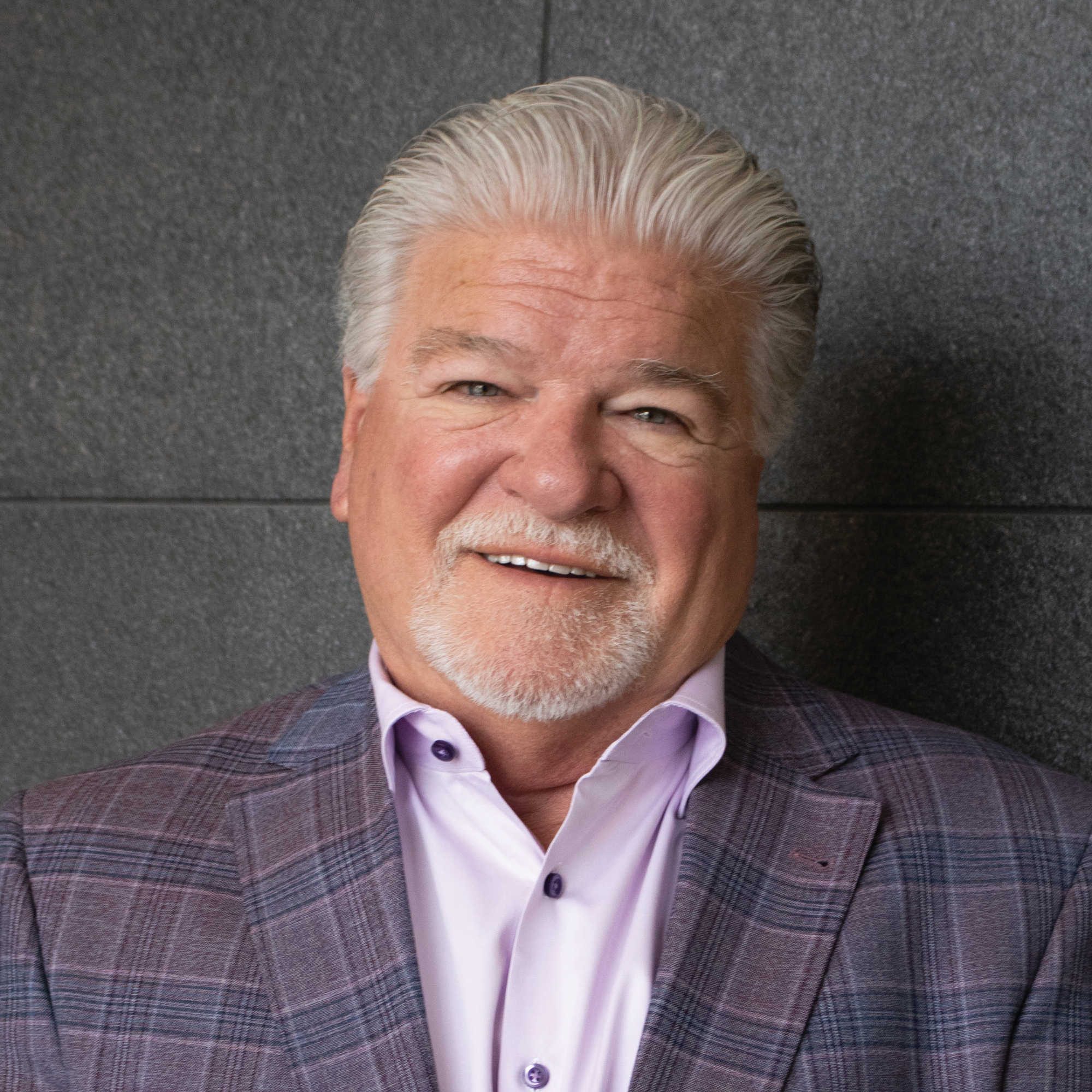
Vince Annable
Vince Annable, CRPC, is the creator of The Household Endowment Model and the founder and CEO of Wealth Strategies Advisory Group. He has been involved in the financial services industry since 1981 and prides himself on bringing new investment methods to high-net-worth families. Families have approached him after learning his method to say they did not understand why their own advisors had never told them about it. He has taken his message to the public on The Michael Wall Show and ABC15 Sonoran Living, and as the host of the podcast Your Money Manual. Vince lives in Scottsdale, Arizona, with his wife and enjoys fine food and wine, traveling, and reading.
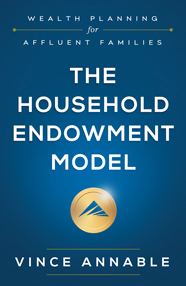
📚 Books by Vince Annable
Transcript
[0:00:31] NVN: In the wake of the 2008 recession. Vince Annable realized that there had to be a better way to invest that included more than just stocks and bonds. He wanted to find a way for his clients to as he puts it, S.W.A.N, or sleep-well-at-night, even during economic downturns. It was as a result of this that Vince created the household endowment model. A comprehensive solution that designs investment portfolios in such a way that they utilize alternative investments, which don’t move in sync with the stock market. Because of this, they’re not volatile. In this podcast and in his new book, The Household Endowment Model, Vince explains how to invest more wisely and also, how to take care of holistic wealth management. While his book is geared primarily toward wealth management for affluent families, Vince’s model also paves the road for those who are looking to increase their affluence. Hi Vince, let’s start by giving listeners an idea about your background?
[0:01:31] Vince Annable: My background is, I was born and raised in Long Beach California back in the 50s. Don’t want to give away the exact birth date and then I grew up on the beach in the 60s. So The Beach Boys, Surfing USA, et cetera. 70s, I went in the Air Force, met my wife, got married and in the early 80s, I became interested in the financial business, went to work in the commodities world and from there, my business has grown and evolved within the total wealth management business that we currently have.
[0:02:14] NVN: You have seen a lot of trends I’m assuming over the decades you’ve spent in this field?
[0:02:20] Vince Annable: Correct.
[0:02:21] NVN: What is it that made you want to write this book and specifically to write it now?
[0:02:27] Vince Annable: Because there are so many people that are taking such antiquated advice about how their investment portfolio ought to look, i.e., 60% stocks, 40% bonds, same thing they were recommending in the 60s and 70s. It’s just not the right mix anymore. Times have changed. We no longer have doctors advertising the recommend Camels and we really don’t think that we should have advisors recommending us strict 60/40 investment model. Number two is that the market has been in a ‘bull phase’, if you will, since 2009. It is going to come to somewhat of an end. We do have a recession, nothing serious, more than likely coming up, but people need to plan for that. What I see is the opportunity for people to understand how the endowments and major institutions have invested money over the years. That same type of strategy can be available to individuals now and they need to take advantage of it. The other reason that we looked at building this portfolio was 2008, 2009, remember? Everybody think back, 2008, 2009. What was happening? Yeah, you thought the world was coming to an end. Your bank account was down, your brokerage account was down, your 401(k) was down. They had major institutional, hundred-year-old banks on Wall street, they were going out of business, being bailed out by the treasury department and everybody thought we were going to have a global calamity People were running scared and losing money and we decided that there had to be a better way to manage our client’s wealth. We started looking at Yale, and how they were managing money, we looked at David Swensen who began managing money at Yale back in 1986 and he made a total shift of going from the majority of the assets being in public securities to the majority of the assets and the Yale endowment model being in private securities, non-correlated as we talked about earlier. We wanted to find a solution to help people withstand these volatile times that we were going through at that time and so that the next time it comes along, our clients can have that S.W.A.N effect.
[0:05:00] NVN: That is truly incredible because not that ‘recession’ has ever been a word that has instilled good feelings in anyone but I feel like with the 2008 recession still so close in mind, just that word instills terror in people.
[0:05:18] Vince Annable: Well, let me tell you something. People forget. They have short memories. They see the market running. They want to put all their money in the latest, hottest, greatest, whatever it might be, and they aren’t protecting themselves from the downside like they should be. They’re relying on advisors who are also not protecting their downside. People have short memories. It’s that whole fear and greed element that comes into it. 2008, 2007 is a long time ago and today, you don’t have the same circumstances so people think it’s not going to happen to them, or again. But you have to plan for it.
[0:06:03] NVN: Interesting. Okay, what stands out to me is we’ve seen so many sectors totally transform with technology and just with changing society. What do you think it is about finance and investment that have caused it to just remain static as the world has changed all around it?
[0:06:25] Vince Annable: It’s got a lot to do with the source. Things have changed. Times have changed. Investment opportunities have changed so that we now have a lot more opportunity to invest in private investments, private equity, private real estate transactions. The jobs act helped enable that by reducing a lot of the regulation, allowing sponsors of investment types to come out with the programs that are similar to what our scene at institutions and endowments are using that are private in nature, not correlated to the stock market, and they are now much more available. The problem is most advisors are not educated on how they work and a lot of the major brokerage firms have their own, shall we say, investments that they want to sell their own mutual funds. Their own different types of investments. They really don’t want to get involved in the private side, they don’t want their advisors recommending things they don’t understand to protect them. They also are typically so large that if they were to take down a 30, 40, 50, 100, 250 million dollar offering, it would be snapped up in seconds and so they stay away from it for that reason. So, on the independent side, what we’ve been able to do is access those private investments that are the 20, 30, 50, 150 million dollars that the big boys don’t even look at and their advisors don’t recommend. I guess the final say on that is – what has happened is the advisors are not motivated or educated as to how to relay that message to their clients. The clients are still investing, 60/40 and that’s also what the advisors are used to selling and managing, that’s what they look at.
[0:08:29] NVN: Interesting. When it comes to your clients, generally speaking, on average, do you have them completely pull out of the stock market or do you just ask them to shift their percentages?
[0:08:43] Vince Annable: No, we just reallocate. We still want to be in the stock market and there’s a lot of different ways to have exposure in public securities that can be built to provide correlation and non-correlation to what the stock market’s doing. If you go back, my book was based off of what David Swensen at Yale has done and that is created a very well diversified portfolio that is minimally involved in public stocks and bonds and much more heavily weighted into alternatives or private investments They do a tremendous amount of venture capital, private equity, and a lot of the endowments have all switched over to that since the 80s. That’s the way we design our program, more so for an individual than an endowment because an individual needs more liquidity but it’s still a diversified portfolio made up of a lot of different asset classes and different public and different private securities.
[0:09:46] NVN: Okay, let’s talk a little bit about some of those different asset classes.
[0:09:51] Vince Annable: Okay. First of all, venture capital, people need to – depending on their risk profile, their age, need for liquidity, need for income, et cetera, all the disclaimers that go with it. People should have some venture capital. It might be 2% of their portfolio might be 5% of their portfolio. If they’re young, aggressive, high income earners, high net worth, they could have 10 to 30% in venture capital. Venture capital also has different stages, you have angels that come in the beginning with startup money and then as the company or the project continues to grow, progress, improve its worth, then more and more people in different rounds will add more money into it. Private equity is going to be similar except it’s typically going to be in our mind, an established company and investment and in an established company that may need additional capital for acquisition.It may need to do a buyout. It may need to provide an exit strategy for the founder or the founder’s families. There’s a lot of different things that can be involved in raising capital for private equity. Then we talk about real estate. Well, real estate has many different sectors in it and they don’t all work in sync with what’s going on in the stock market obviously. We have triple net lease. We have office, we have value add, we have storage, we have a lot of different asset classes and what we do is we find the different managers, and this is another key piece to the endowment model at Yale, is find the best of class money managers that are out there in all of the different sectors. So when we look at real estate or private equity or venture capital or the stock market, we’re looking at finding a manager who has a great deal of depth, experience, track record, et cetera.
[0:11:54] NVN: Wow, I mean, I can’t even imagine the kind of insight that comes with that, that’s just not available to most people.
[0:12:02] Vince Annable: Correct.
[0:12:03] NVN: So let us talk about what I am assuming are some of the common denominators between these alternate assets. Why do you encourage people to go in that direction and I’d like to specifically ask that question in light of what you mentioned earlier about the fact that we are coming up on a recession, not the end of the world but, you know, it is where we’re going to be.
[0:12:26] Vince Annable: Sure, well first of all, if you just like David Swensen has done at Yale and others have done at other endowment and institutional type funds, what happens is if you put all of your money into public securities and then the stock market goes down and everything is correlated, then if the stock market goes down 20%, your account is going to go down at 20% or more, and what we want to do is smooth out that volatility, reduce the risk, hopefully be able to increase the returns by having assets and investments that are totally private. And if the Dow Jones goes up a 1,000 or goes down 2,000, it doesn’t have any effect on the private investments. So if we are able to build out a portfolio that is both public and private, it gives us the ability to watch our clients be able to have what we refer to as the S.W.A.N effect, sleep-well-at-night because while the stock market is going down, they know that a major portion of their portfolio is not being affected on a day to day basis.
[0:13:36] NVN: I love S.W.A.N effect.
[0:13:39] Vince Annable: Yes, so do our clients.
[0:13:41] NVN: I’m sure they do. No doubt about that. Okay, I mean, another thing you talk about in your book is, after stabilizing client’s portfolios you want to look at holistic wealth management. Talk to me about what that entails and why it’s important.
[0:13:57] Vince Annable: Look, if you go to the super rich, the super wealthy, you hear the term ‘family office’. So Bill Gates does not go down to the Meryl Lynch office or the UBS office or some brokerage office or to his bank and talk about his investments. He does not go over to an accounting firm and talk about his taxes. He has hired accountants, financial managers, he has hired attorneys, he has hired everybody he needs to manage his entire wealth, right? So that is a family office. They manage one family’s wealth and they manage it for both the immediate family and then also the generations that are going to be coming, the charities, the foundations, etcetera. Now, most individuals that have five million, 10 million or a $100 million are not going to go out and have a payroll that includes all of these lawyers and accountants and financial people because it is just cost-prohibitive. So what we do is we create a team of experts and create for our clients what is called a ‘virtual family office’, and that is that we don’t have these people on the family’s payroll at all times but they are available for any consultation that we need and more important, when we start building out a wealth management plan not just an investment plan, then we are able to bring in our team of these attorneys and accountants, etcetera to look at the whole picture of our client situation, what their goals are, what their objectives are, etcetera, and we have a holistic approach. We have a holistic team and this helps us to be able to optimize the client’s financial world because we are looking at all things money not just the investment. We are not just an investment adviser. We are what we refer to as a virtual family office for our clients. So it is total wealth management. The main point of the book is, is that there is a way for affluent families and those aspiring to be an affluent family – there are ways for them to manage overall their wealth, and we have found that the top five concerns that people have are number one, capital preservation, so we want to make sure we design a portfolio that is there to mitigate the risk and the loses, etcetera. The number two concern of wealthy people is tax mitigation. They would rather pay less taxes and if we can help them pay less taxes that gives us more money to invest for them, which is more money to grow and to meet all that is important to them. The third is estate planning. People want to make sure that their assets that they have built up are going to who they want those assets to be going to upon their demise. The way they want those assets to be received and not have it determined by a roomful of angry family members and attorneys and a probate judge. And number four, asset protection, we mentioned that earlier. A business owner, any individual that has accumulated wealth, does not want to risk losing it because of a frivolous law suit, which there are many these days. So asset protection is very important. How all of the family wealth is structured on etcetera And then last, 80% of all clients that are of some means that have done well, 80% of them want to give back and so we help them work on the charitable giving aspect and how to do that. So bottom line is there are many different concerns that people have about their money. We believe we have provided a solution to help people understand there are ways to manage it efficiently and not just worry about the investment side. You have to focus on the entire family wealth or all of the assets that they have built not just the investment side.
[0:18:21] NVN: With this holistic approach in mind, I am assuming that your’re problem solving to an extent here. So I am wondering if there are blind spots people tend to have that they are just not looking out for or don’t think to be aware of.
[0:18:36] Vince Annable: Well, if they have not come aboard and work with our virtual family office and our team, they probably have quite a few blind spots and one of the things that we offer to those that are interested in learning more about what we do and how we do it is we offer a stress test. Look, if you are wondering about your health, sometimes you go into the doctor to get a second opinion. You maybe have to have a stress test. There is a lot of different things that you are going to check out to make sure that your health is in good shape and you’re not having any problems that are going to pop up. The same token, you should be doing that with your financial wealth. You should have everything looked at. Make sure that your goals are going to be achieved no matter what happens. You want to make sure that legally you do not run the risk of having a lawsuit because you backed over a fire hydrant and hurt somebody. You want to make sure that you are minimizing your taxes to the Nth degree legally as opposed to just getting a report from a CPA or accountant that says, “Okay you gave me your shoebox. I took all the receipts out. You owe a $150,000 due by the 15th, which by the way is in three days,” and instead of that, if they have a team that was working on their wealth back the prior year in August, September, October, November, there would have been tax planning going on. So that there would be strategies and the solutions available for the client to reduce their tax obligation. So there is many different things that people have no idea they have some holes in their boat until after it starts sinking.
[0:20:27] NVN: Yeah that’s a lot of corners you guys are looking around.
[0:20:31] Vince Annable: Yes it is.
[0:20:33] NVN: One thing that is really interesting to me hearing you talk is you are talking about the S.W.A.N effect and the stress test. So I am seeing a correlation here with you in terms of stress levels and money and I just would love you to speak about that a little bit.
[0:20:49] Vince Annable: Well, you hear about the stock market. You know, Trump tweets something about China and the stock market goes down 800 points and many clients if that happens for a day or two, not our clients but those out there investing start becoming stressed about what is going on. I can assure you that when Trump tweets and the market goes down 600 or 800, or whatever it does, we do not get a phone call during the day with our clients wondering, “What happened to my money today?” “What is happening to my money, it’s been down for a week now. We’ve had a 10% correction, what is happening?” Our clients do not live in that fear. They have that S.W.A.N effect because they know their portfolio has been designed specifically to withstand many different types of issues that can come up financially.
[0:21:44] NVN: That’s amazing, especially in this day and age because everything does feel volatile, whether it actually is or not there is just so much noise around the market.
[0:21:55] Vince Annable: Oh it is volatile, trust me, it is volatile. You go look at the charts and you go look at short term charts, you look at long term charts and you see all of this up and down whiplash nonsense going on and it is scares the daylights out of people but typically what will happen is the market is going to be going up. Everybody thinks the market is going up. It’s been going up so people are afraid they are going to miss it. So the little bit of fear and greed comes in there so they don’t want to miss it. So the market’s getting near the top maybe, and they start buying more and more, and then when we have a correction and it goes down, instead of buying some more, they are selling everything in a panic at the last minute before it makes a turn to come back up again and that volatility, we don’t have to try to manage the volatility to the extent of on a daily basis because we have the investments designing the portfolio to smooth out that volatility.
[0:22:58] NVN: I am sure that that contributes to a S.W.A.N effect in your own life as well.
[0:23:02] Vince Annable: Absolutely. I don’t have to worry about the phone ringing, “Oh no, oh no, oh no! 10 phone calls I got to return because everybody is losing their money!”
[0:23:14] NVN: Thanks for joining us for this episode of Author Hour. You can find The Household Endowment Model, on Amazon. For more Author Hour, hit the subscribe button on your favorite podcast service. Thanks for joining us, we’ll see you next time. Same place, different author.
Want to Write Your Own Book?
Scribe has helped over 2,000 authors turn their expertise into published books.
Schedule a Free Consult