Andrea Barrica: Episode 390
Read the full transcript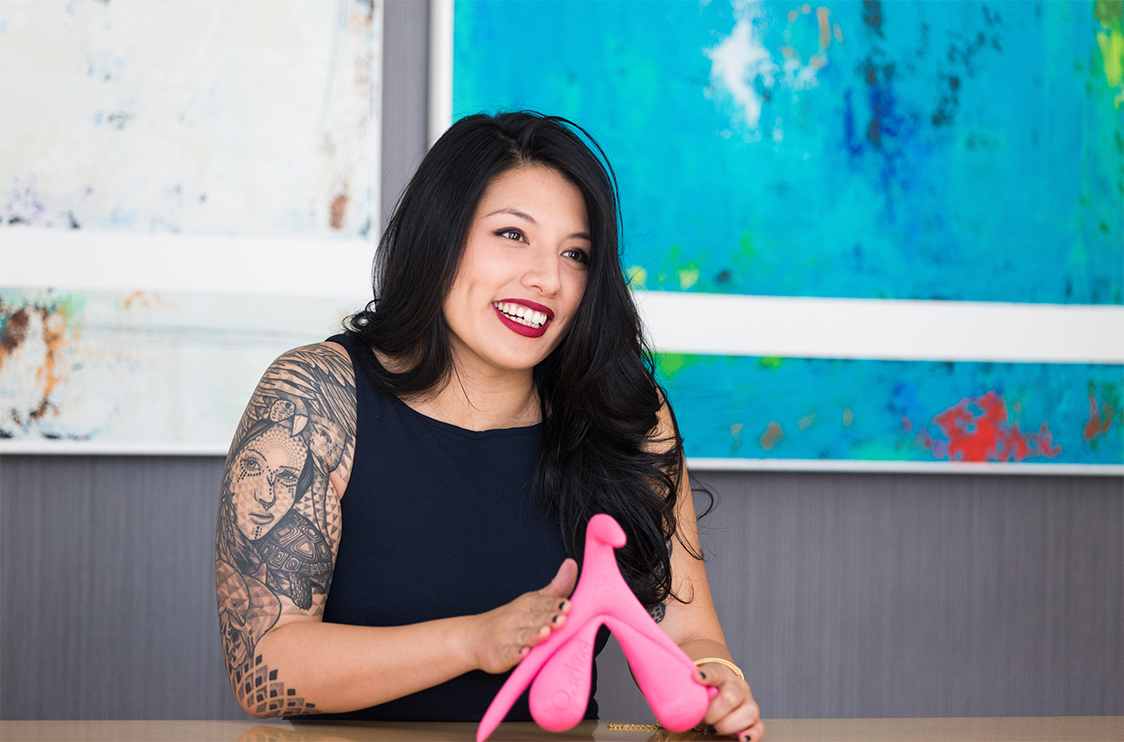
Andrea Barrica
If you ask Andrea Barrica, it’s embarrassing it took this long.
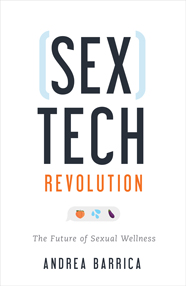
📚 Books by Andrea Barrica
Transcript
[0:00:25] NVN: Sextech Revolution author, Andrea Barrica is the CEO and founder of O.School, a judgment free, sexual wellness online resource where visitors can learn about sexuality and pleasure. But this isn’t always this space Andrea was comfortable existing in. She grew up at a strict Filipino Catholic household and her sex education in school consisted of fear-based tactics. It wasn’t until Andrea began her own quest to figure out and find answers about our own sexuality that she realized how little information on the topic is actually out there. She was shocked to discover that the sexual wellness tech space basically consisted of Planned Parenthood and Pornhub without anything in between. This combination of personal experience and her own background in startup investing led Andrea to realize that sexual wellness is the next blue ocean for tech entrepreneurs and investors. In this episode of Author Hour, Andrea talks about her own experience O.School and the reason why tech investors and entrepreneurs should turn their attention toward the recession proof sexual wellness tech market. Andrea, thank you for joining us today.
[0:01:35] Andrea Barrica: It’s a pleasure to be here.
[0:01:37] NVN: We’re talking about your book, Sextech Revolution which as I was saying to you, before we started rolling here. This is a topic that I’ve never read about before and that’s so rare in the book world to actually have a different topic.
[0:01:55] Andrea Barrica: Yeah, I was really shocked myself when I started to research sexual wellness as a category especially as an entrepreneur and as a former venture capitalist, I was working at a venture capital fund and I really didn’t know any resources out there that were about the business side of the sexual wellness industry.
[0:02:14] NVN: Amazing. Let’s up a little bit here and first of all, let listeners know about your background with founding O.School and how you came there to get a handle on where you’re coming from?
[0:02:27] Andrea Barrica: Absolutely. I’ll start really back. I grew up Filipino Catholic. Grew up in a very traditional Filipino American home where we went to church every Sunday and there is absolutely no discussion about sex whatsoever. I had the abstinence only sex-ed from the church and then I had the very fear-based sex-ed in school. And so, for me, the only thing I was really ever taught about sex growing up was never to have it. That was pretty much it. I think a lot of other people’s experiences too that I’ve met. Fast forward, you know, I really didn’t have a relationship to sex or sexuality at all. I did the very good daughter thing, I waited till marriage, you know. I thought I wanted to wait till marriage and I kind of put all of my efforts and time and energy into work. So, I started of actually building accounting software at about 20 years old. I teamed up with two other entrepreneurs and we got into Y Combinator, we built accounting software. So, for the first kind of few years of my technology career, learning everything I had to, to build our company. And after that, I was actually tapped to work in venture capital as a venture partner and entrepreneur and residence aa global seed fund called 500 Startups. Those two places like I really got the operational experiences startups and then I got the kind of wide view, across the different types of businesses, business models. And during this process was the time that I started to really start thinking about my own problems. Again, I was in the closet sexually. I had definitely issues I was working through. And it was ironic that I was working on internet and internet companies and just thinking about the Internet all day long for my work. But then, when it came down to my own issues, the Internet wasn’t helpful at all. And I found that it was like, “Okay. It’s Planned Parenthood or Pornhub.” That was it. I was working in very traditional spaces that you know. I started to talk to my friends and different people that I knew, that I trusted about sexual wellness and sex tech as an industry and was getting a lot of feedback that you know, “This is really not something that traditional tech and venture look at.” It’s a different ecosystem, it’s just a different – most people can’t tell you the big businesses in the space, right? If you ask people who are the big tech companies that you can recognize, they’ll tell you about Amazon and Facebook and Google and all of these types of companies. But yet, when I started to really dig deeper in the adult space and the sexual wellness space and all these awesome spaces, it was really like there were no big brands that people could tell me about.
[0:05:17] NVN: I’m going to interject, hold that thought please, just a couple of things. I want to tether this down in time a little bit. Around what year was this when you were on the lookout?
[0:05:27] Andrea Barrica: I started to become obsessed in 2016.
[0:05:30] NVN: So, recently? Wow! Did you know what you were looking for or was it just sort of this – the way we go to the Internet sometimes where there’s this vague notion that the answers are out there somewhere?
[0:05:44] Andrea Barrica: I just became really curious about the subject. I started going to a lot of in-person classes. I was lucky enough to be going through this in San Francisco where there is a plethora of options to get educated in person, right? There’s workshops. There are so many people that I could learn from at Good Vibrations, there were resources to learn about. But what I found too was it was very extreme, right? I had curiosity about learning the space but it was often times like spaces that were for advances folks or people who were you know, really deep in their education about things – Just like basic things like how to have an orgasm is one of the areas that a lot of people, especially women struggle with. I definitely was like in a spot in my life where I started to become curious about, “All right, well, how am I going to educate myself on this thing that because of the upbringing I had, I had no idea to talk to?” I had no one to learn from and I was really lost. Going through this process, going to in person classes healed me, changed me. I became overnight, just more powerful and work and my relationships and friendships. It just was a really life changing experience. And then, you know, around this time in 2016, when I was starting to finally feeling in my own power, in my own sexuality, I started to become obsessed with this question like, “What, if I hadn’t been born an hour or two away from San Francisco. What if I’d been born in the middle of Wyoming or Oklahoma or Kansas?” And I started to look at resources elsewhere? It started to really nag at me like why hasn’t the Internet solved this problem like why can’t they go online and find these types of awesome experiences that I was experiencing in person and that’s what led me on the journey to start building prototypes which eventually became O.School.
[0:07:36] NVN: Okay, I want to go in there but this calls to mind a question for me which I’m guessing you’ve thought about. I mean, clearly the Internet is not averse to sex because porn, all over the Internet. Why do you think it is that sexual wellness and sexual education was almost entirely ignored?
[0:07:56] Andrea Barrica: Oh man! We need a lot more time.
[0:07:58] NVN: Saddle in folks.
[0:08:02] Andrea Barrica: You know, is really that as a culture, we’ve really evolved to rely a lot on religious institutions to tell us what’s okay and not okay. And a lot of what’s okay in our culture is informed by that. Not by doctors, not by the medical and evidence-based institutions and public health institutions. A lot of it is just stigmatized and taboo. I mean, this extends to so many parts of society. You know, definitely, I love to talk about how this is represented in the tech, in the fund raising and the venture capital community. But even outside of that, you kind of – it’s kind of not surprising that it hasn’t reached the private sector in the business world if you consider that the average medical doctor only gets about 10 hours of sex education themselves in medical school.
[0:08:49] NVN: Woah! I did not know that. That is stunning.
[0:08:55] Andrea Barrica: And so, a lot of the things that we talk about where the Internet kind of evolved because of porn and porn and adult content, we’re huge drivers for technological innovation. Yet again, like I said before, it operated in a different ecosystem. Kind of in a dark ecosystem. You have to have different funders, different platforms, different technology, different tools and it’s ironic that the porn world really push technology. Yet it’s largely ignored when you talk about tech. Because it’s taboo. That stigma again, it’s so far reaching, it starts from you know, even the earliest experiences that people have, being taught about their bodies to public school education, to religious institutions, to the way that sex education is funded, you know? Over two billion dollars has been spent on abstinence only until marriage education. Even though, we know that there is absolutely no evidence that it decreases rates of STI’s or teen pregnancy.
[0:09:56] NVN: Yeah.
[0:09:57] Andrea Barrica: It is definitely a cultural and widespread problem. That’s really the point of the book is really answering this question, why didn’t this happen yet? Why are there more brands that help people with their sexuality in holistic and medically accurate way? Not just porn which is not a bad thing by the way. I’m not anti-porn. It’s just there’s so much more than porn that’s needed for there to be sexual wellness for everyone globally.
[0:10:22] NVN: Well, absolutely. I think and obviously, I’m far from an expert on this topic like you but I think that the issue is, if porn is the only thing available, then there’s a certain sector of the population that will use that as some form of education in a way which you know, obviously, there is so much more to sex and sexual wellness than what we see in porn.
[0:10:45] Andrea Barrica: The defacto sex educator in the world right now is porn, I would say.
[0:10:49] NVN: Yeah.
[0:10:50] Andrea Barrica: The average exposure to porn due to the exposure to mobile phones, right? The average age that a person gets access to a mobile phone is around nine to 10 years old. And unsurprisingly, that now coincides with the average exposure to hardcore pornography, right? There’s so much porn on the Internet and without the context and the education and the cultural communication that’s needed, family communication, the openness, this is a recipe for a lot of pain. And I’ve seen this firsthand because I do speak to college audiences regularly every year. You know, I feel that generations today have different struggles. Additional struggles because of the technology that allows them to see this. And I don’t think that again, the answer is banning all porn or censoring all porn, it’s really not the answer. The answer is having a society where it’s okay to talk about sex, where private sector, there are brands and great companies in the private sectors who are aiming to make this type of education widespread and accessible. And you know, making it so that it’s not something that people have to struggle with alone and Google alone and who knows what they’re going to find online?
[0:12:03] NVN: Yeah.
[0:12:02] Andrea Barrica: That’s really the problem that we’re trying to solve. And when explaining O.School to people, they often really struggle to think of examples of companies where it’s not just for titillating or arousing purposes and it’s not also just medical and you know, do I have a problem that I need to go see a doctor about – There’s this whole wide, amazing world of information and content and stories and experiences that really are just about getting back to this idea that sex should feel good. And it’s okay to talk about it and it’s an important part of our health and wellness just like yoga and meditation. The thing that is baffling to me is that it’s 2019 and it’s still hard to convince people that you should be spending as much time thinking about you know, how much water you’re drinking, how many hours of sleep you’re getting. But people really aren’t thinking about what’s my sexual wellness, what’s my relationship to my sexuality and how can this be improved for overall better health? You know, science tells us, the evidence tells us that pleasure is part of sexual wellness. Is an important driver of immunity, of better sleep, of things that are really good for overall health. There’s a rampant problem with stress and sexual pleasure is one of the ways that we can really help that. And there are millions of people struggling in some way or another with dysfunction and sexual wellness products, like vibrators and lubricants are really key to helping there. Yet, we don’t have the language or the spaces to talk about that sometimes.
[0:13:48] NVN: It’s interesting, you know? I feel like in some ways, as a society, we are very focused on sex but you're absolutely right that it’s in a specific voyeuristic way. Like I don’t think anyone has ever talked to me about sexual wellness. If I really stop and think about it. I’m 41 years old, I don’t think that’s ever happened. Including my doctors.
[0:14:08] Andrea Barrica: This is a very common experience and we’ve spoken to hundreds of doctors now who want to but also, it’s really difficult for them. Therapists, you know, there are many people in public and professional situations where they know that people are struggling with this but it’s difficult for people, even in those positions because they haven’t been educated or they have past shame or they’re afraid of what their funders or their bosses or their colleagues will think. This is a social problem. This is a widespread problem. And on the other side of it, there is overwhelming need for these things, from the consumer side, from people who know what it’s like to struggle with these problems. I know from my experience, I didn’t have any education and it did lead to many years of feeling like really lost and really afraid of how to deal with these problems. And what I hope the book is that more people jump into the space because we need more innovators. We need more people who are speaking up about this because as I said, sexual wellness is more about wellness than sex. The fear that you know, it’s going to degrade into something that’s dirty or bad or potentially harmful is I think keeping the conversation from happening.
[0:15:27] NVN: Yeah, absolutely. So, I have a couple of sort of disparate questions for you, and then I want to look at the industry more and where you think it’s headed in general. My first question for you, let’s just give listeners a little bit more of an idea about what O.School is all about, so it’s sexual wellness. What types of things can they find there?
[0:15:45] Andrea Barrica: At O.School, we produce and are so proud of having medically accurate information about sexuality and pleasure, gender identity. All things that are hard to talk about for people and we have tools, videos, lots of different ways that people can explore and really get in touch with their own experience of sexual wellness including people who are asexual and for them, a good sexual wellness relationship means having no sex. For some people that means that they are having lots of sex with different people. So, we cover dating, we cover all these types of topics for people online.
[0:16:23] NVN: And then for you, who came from this strict upbringing where sex wasn’t talked about, what is it been like personally to go from that to being in this field?
[0:16:36] Andrea Barrica: It’s been amazing. I love my work, I love being able to help other people with something that I struggle with myself, O.school something that I really needed when I was younger. And a question I get all the time is how do your parents feel about it and my heart always swells when I get this question because my parents are absolutely my biggest advocates now. And they both tell people who disagree with what I do how important they think it is. And I have told people that arguably one of the best things to come out of O.school, the process is being able to connect with my parents in this way and have them not only reflect on the upbringing that I had but have them apologize and also reflect on the ways that they needed O.school growing up. And that has been such a healing and awesome experience and I love helping other people all around the world with their parents. Because again, sexual wellness is really about getting rid of shame. It is about feeling good about yourself and the things that you want and feeling good about saying no to what you don’t want and it is also about coming into terms with your truth and coming into terms with my truth and coming into terms with my family has been a huge, huge source of power for me. And actually when I talk to people about O.school, it is often about their parents and their families what I want to say is there is an integration that has to happen, you know? And what O.school tries to help people do is integrate their life outside to often what feels like their secret sexual life. And I know that that work very personally and being able to help people with that is I know life changing for them.
[0:18:17] NVN: You know it is so interesting. I realized as you were saying that there is this part of me that even as a parent myself now, my parents are just firmly in this box of my parents. Like I know they had a life before me and that they were younger but that doesn’t entirely land in some way. And I realized as you were saying this that I mean if current generations need this, certainly they went through this experience when they were younger of shame and fear-based education and not being able to have these conversations. So, that is really incredible to be able to open it up to them.
[0:18:56] Andrea Barrica: Absolutely. And one of the biggest misconceptions about what we do at O.school and what I do as a sexual wellness entrepreneur is that sex education is for kids. And that is just not true. Everybody throughout their whole life needs to be educated throughout their whole life. Because as we know there is learning about sex at the early ages, which is critical. You need to learn about bodily autonomy and consent and health and anatomy. And then later on, you start to have different experiences. You start to explore desires. You start to date. There is education needed there about how to communicate how to ask for what you want, how to explore different types of relationships. And then maybe you have a baby and then what happens then? And how do you reconnect with your pleasure after you have a baby or when you get divorced or when you have a medical problem? Maybe you are struggling with anxiety and depression. And sadly, for a lot of people you know one of the things that we definitely want to do more of is helping people with reclaiming their bodies after sexual trauma, right? There is so many of this. I remember when the #MeToo movement was really happening, I had a lot of people who were excited about O.school because there is only acceptable conversation about sex when it is about the really scary and bad things that happen about sex. And what is not okay is to talk about the healthy and the healing aspects of sexuality. When the #MeToo movement was happening, we had a lot of people who are excited to balance that with, how do we support people who’ve experienced sexual trauma still live full and happy sexual lives?
[0:20:35] NVN: Man, you are you saying so many things that are so obvious but that I had never really stopped and thought about in a linear way before. You are absolutely right that is how we tend to talk about sex is when it’s these very dark topics.
[0:20:50] Andrea Barrica: It is only acceptable – like I always say too that it is like what is allowed in business? You know you are allowed to talk about sexual dysfunction, right? There is lots of funding that goes into pharmaceutical solutions for things like erectile dysfunction. You know take Viagra. You can see Viagra commercials on TV. But if you talk about things that help people feel good especially people who – women, absolutely that is not acceptable to talk about how to make sex feel pleasurable. It’s like it is okay to talk about erections but when you talk about vaginal dryness and wanting to increase lubrication, “Oh no that is inappropriate,” right? This is a major gender based biased that needs to change absolutely like immediately because the future generations aren’t going to stand for that.
[0:21:40] NVN: Yeah and thank God. Thank God for that. It shouldn’t be stood for. So, let’s take our conversation in that direction, looking at the future. So first of all, in the short time since you have opened up O.school, have you seen the sexual wellness industry grow at all or are there more options than there were when you are initially looking a few years ago?
[0:22:03] Andrea Barrica: Absolutely. It is a burgeoning blue ocean space. There is so many great companies that are starting. I don’t have time to name them all. There is so many new sexual wellness product companies. There is new content companies. And slowly but surely, I mean it is still hard to talk a lot about just the challenges in the space and there are many. But absolutely what is more important is that all of us who are in sexual wellness know in our hearts and from our data and experience running our companies that there are billions of people in the world who want the things that were offering. And that is very different than tech companies who are inventing products for problems that don’t exist, which I have been living in Silicon Valley I can tell you there is tons. I have useless things and you know it is great. But again, I love entrepreneurship. I love risk taking but the time for sexual wellness is really here and the future generations – we talk about this a lot in the book. Millennials are twice as likely to identify as LGBTQ. One third of Gen Z people know someone who uses gender non-conforming pronouns like they-them. Like the world is really changing. Unmarried women outnumbered married women for the first time in US history in 2009, which means people are waiting longer until marriage. The ways that people connect through dating apps have changed the way people connect. There are so many amazing areas for innovation here.
[0:23:33] NVN: Yeah totally. I’m enjoying this conversation too. This is threading back to something that you just said about how we only talk about the darker topics about sex especially in the media. There is so much hope in what you are talking about. It makes me feel really good about where we’re at and where we’re headed in the future in terms of sexuality and body autonomy.
[0:23:55] Andrea Barrica: Absolutely and we will not move past the #MeToo Movement and I am so glad that it happened because really it is bringing to light something that should have been brought to light so long ago. And there is so many people who have been hurt and we need to support people who have experienced sexual trauma. And also, there is no future past this where we do not also talk about pleasure and the positive aspects of sexuality from early ages. You cannot have one without the other and it is so exciting for me to build a future with more sexual respect and more sexual wellness. Because at the end of the day the people to blame for what is happening are the institutions who refuse to educate our generations about sex.
[0:24:39] NVN: You’re right. I mean for as long as sex remains a taboo topic that just really opens up the door for abuse because it is too hard to talk about when you are a survivor of sexual abuse in that case. So, if we can start this conversation that begins to shift everything.
[0:24:56] Andrea Barrica: Everyone needs it too, men, women. At O.School we have always helped people of all genders of all ages. There is so many stereotypes about who needs sex ed and we already went over how everyone needs it throughout their whole life. But everyone struggling with something I find are a lot of people are struggling and not telling their doctors, not telling people. And the more that we can bring it to light that’s really where technology and The Sextech revolution comes in. Because now we have so many more ways of reaching people about these topics in a way that can feel private and safer and I am really excited about that.
[0:25:34] NVN: Yeah, okay so you have some couple of really stunning statistics in your book, which are first of all the sexual wellness tech revolution is recession proof. And also, it is going to be worth an estimated $122 billion in a little more than five years. So you are in such a great position as someone who has a background in both investing and entrepreneurship and obviously living in this space of sex tech. So, what do you have to say to people who may be interested in starting a business or investing in this field?
[0:26:13] Andrea Barrica: It is funny that there are so many clichés about tech. And it is shocking to me how few people have this on their radar, talking to me to have to explain to people that sexual wellness is a massive market because every human, aside from the people who are conceived through procedures like In vitro fertilization of course, every human being exists because two people had intercourse, you know? And I think that people are not seeing that this is just the beginning. After you help people with basic education and getting over sexual dysfunctional problems, the expiration and the vibrance of someone’s sexual wellness life is huge and has huge potential and should be invested in. And to all the entrepreneurs who are definitely excited about the space, I invite all of them to join now because the world is changing. I don’t think that we would have seen, you know 50 Shades of Grey would not have happened 10 years ago. We wouldn’t see like the kinds of programming on Netflix and HBO, you’ve got Euphoria, you’ve got Sex Education on Netflix. You have now these cultural drivers and I see only indication that this is going to be a massive sector for innovation, a massive sector of growth, right? For a lot of women especially I mean just getting access. We’re still fighting reproductive health battles like there is still people fighting for just basic stuff and I think it is hard for people to see that once the world changes. And reproductive life is respected this could be just massively more reason for people to serve other needs than just helping people preserve their basic access to health care, right? So, I think that is actually one of the things that I think is an advantage of this space that people are still – there is still a lot of fear around it. But I see it as an opportunity to help people in something that we know is really important to them but that a lot of brands, a lot of organizations aren’t brave enough or aren’t prepared or aren’t designed to go after it and that for me just spells out a massive opportunity.
[0:28:37] NVN: Since you’re sort of an insider in this way, can you say do you think that Silicon Valley is open to this at this point?
[0:28:47] Andrea Barrica: In a lot of ways there is still a lot of hush-hush attitudes about it and frankly, from a purely financial aspect it is going to take some time because venture capital is based really on the idea of finding an untapped opportunity and really creating dominant business models in the space. And a lot of early stage opportunities are evaluated also by what else is happening in the market, what type of companies have been successful? And sexual wellness as a sector really doesn’t exist right now if you really look at it. It exists but it is quite small. It is quite fragmented. There aren’t any huge brands, right? The last company that I think has large mainstream like brand that went public was Playboy in the early 1970.
[0:29:34] NVN: Wow.
[0:29:35] Andrea Barrica: Well this is how I have raised money just by asking investors, “What has happened since Playboy?” What happened and no one can answer me and no one can answer what is the future of this sector without pointing to all of the ways that foreign companies that are not allowed in certain spaces and I always have to say, “No, no, no what sexual wellness is, is not that you know? It doesn’t have to be that.” And I am really excited about the future. I hope that there is more innovators who join us who are in it building because again, the number of problems to be solves, the number of opportunities to take advantage of are huge and I do see that the venture community is slowly but surely starting to pay attention. But definitely it is still a huge challenge to get funding in the space.
[0:30:25] NVN: Excellent. What a fascinating interview. Is there anything else you want to add that we haven’t gotten to yet?
[0:30:33] Andrea Barrica: This book as my offering to people wanting to get into the space either as an investor or entrepreneur. And I hope that people will also take this opportunity to think about their own sexual wellness. I am really certain that one of the ways to create a better world is to eliminate sexual shame and to empower people in all over the society to respect sexual wellness and to talk about it because I think everyone stands to benefit from a world with more sexual respect.
[0:31:06] NVN: Amazing. You are doing such good work. It is fascinating to hear about.
[0:31:11] Andrea Barrica: Thank you so much for having me, Nikki.
[0:31:13] NVN: Yeah so listeners, you can pick up Sextech Revolution, Andrea’s new book, The Future of Sexual Wellness and anywhere else that listeners can find you.
[0:31:23] Andrea Barrica: I am @andreabarrica on Instagram and you can find O.School @odotschool on Instagram as well. And of course, come visit us online at O.School.
[0:31:34] NVN: Excellent, thanks for joining us today.
[0:31:36] Andrea Barrica: Thank you for having me.
[0:31:38] NVN: Thanks for joining us for this episode of Author Hour. You can find Sextech Revolution, on Amazon. For more Author Hour, hit the subscribe button on your favorite podcast service. Thanks for joining us, we’ll see you next time. Same place, different author.
Want to Write Your Own Book?
Scribe has helped over 2,000 authors turn their expertise into published books.
Schedule a Free Consult