Randy Carver: Ultimate Vacation, looks at it differently
Read the full transcript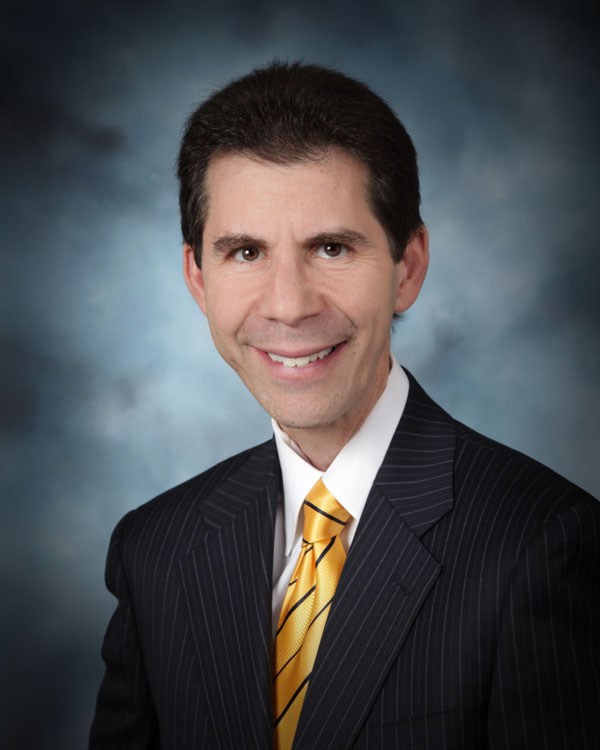
Randy Carver
Randy Carver is the founder and president of Carver Financial Services, a firm he established in 1991. He has worked in the financial services industry since 1986. He and his team developed the Personal Vision Planning process, which they use to help clients plan for and fund the retirement they want. He is the author of Ultimate Vacation: The Definitive Guide to Living Well Today and Retiring Well Tomorrow.
📚 Books by Randy Carver
Transcript
[0:00:19] NVN: Thinking about retirement planning can be a stressful experience for a lot of us. It’s certainly not something to get excited about, Randy Carver, the author of Ultimate Vacation, looks at it differently. Whereas most financial planning companies are about selling products, he looks at retirement as creating a vision. In his new book, he walks readers through that process. How will you visualize and plan for your ultimate vacation without decreasing the quality of your life today? In our conversation, Randy makes some fascinating and refreshing points about how to look at retirement and retirement planning from a refreshing point of view and provide some food for thought about how longevity and technology have shifted the way we look at retirement. And Randy knows, he’s the founder of Carver Financial Services, which is one of the largest independent financial services offices in the country where he manages 1.7 billion dollars in assets. He’s also been named a top adviser by Baron’s, Forbes and the financial times and quoted in publications such as USA today, The New York Times and The Wall Street Journal, check it out. Randy. Before we started to press record here, you were telling me an anecdote about how you used to have a radio show that broke the Internet. Is that in any way related to what you’re writing about in your book?
[0:01:39] Randy Carver: Well, you know, the radio show actually covered a lot of the topics more broadly but the book is certainly more refined as that was about 20 years ago that that happened.
[0:01:52] NVN: Wow.
[0:01:53] Randy Carver: Now I get 20 years of experience to include in the book.
[0:01:56] NVN: Just to fill listeners in on this conversation, we were talking about how you did this Internet radio show in the more versioning days of the Internet and a million people logged on and broke it which is such a fabulous story. Much harder to break the Internet these days.
[0:02:12] Randy Carver: It really is.
[0:02:15] NVN: So let’s start by talking a little bit about your background. You are the founder of Carver Financial Services — which is one of the largest independent financial service offices in the country and you guys manage 1.5 billion dollars in assets. Tell me about how you got to this place? What was your path here?
[0:02:36] Randy Carver: You know, our firm is only different. I got into the business almost by accident but in wanting to build a business to make people’s lives better. It wasn’t about the financial planning that was more of a tool to accomplish the bigger goal and when I got into the industry, originally, what I saw is most firms were very product focused and very sales driven as opposed to vision focused or service driven and so after about three years, I decide to start my own firm in 1990 with the vision of simply making people’s lives better and developing and refining a process to do that. And so over the years, that’s really been what’s driven us but in so doing, what we found is, people tell their friends and quite frankly, we’re in a small mid-west town and as you said, we manage just over 1.5 billion dollars for people all over the world and quite frankly, it’s 99% word of mouth, organic referrals. In fact, at this point, that’s pretty much how all of our clients come to us, a friend or a family member tells them about the process or what we’re doing and they want to learn more.
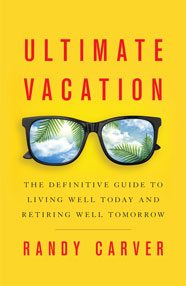
[0:04:02] NVN: Wow, it’s believable to me that you guys are doing something different because looking at your book cover, first of all, the title is Ultimate Vacation and it reminds me of being at the beach. It’s sunglasses with the reflection of a palm tree and blue skies on there and just about the last cover you would expect to see for a book that is ultimately about retirement savings but also about figuring out how to save while still living a good quality of life before that. So talk to me a little bit about how you look at that and how your point of view is different from that of other people’s?
[0:04:43] Randy Carver: Again, I think in the industry and generally, financial planning is just that, it’s based on numbers and investments and you have so much money. Our take is, that again, those are just a means to an end. We want to know what someone’s personal vision is. What do they want to do? What’s retirement look like and quite honestly, one of the biggest problems I think is people don’t know. Someone will say, I want to retire. Well when do you want to retire? Maybe they know, I want to retire at 65. Well, tell me what the day looks like? And they just don’t’ know. I think what we do that’s very different is we start with trying to help somebody understand their vision and really, the book focuses partially on that but also in the idea that you don’t have to starve today to have a good future. And I think sometimes, the whole concept of retirement is kind of either too far away or just too big and scary and so people don’t want to tackle it. Or, the third issue is people think, boy, I’ve just barely doing what I want to do today, I don’t want to give that up. I need to deal with that and I’ll get to the retirement in the future. So the idea is I think, first of all, people need to figure out what they want but once they do that, then it’s absolutely possible to enjoy today and have a great life but at the same time, prepare for the future.
[0:06:14] NVN: Yeah, I mean, I think you really touched on something here which I know I feel as someone who is saving for retirement. It’s so hard, even if we know, we’re hopefully all going to land there someday. It is sort of this illusive concept, it’s really hard to put yourself in that place where you can really envision what retirement looks like for you without freaking out in the process because it can seem daunting. So how do you help guide people into that space where they can really look realistically at, “Okay, what do I want my retirement to look like?”
[0:06:54] Randy Carver: Yeah, exactly, that’s part of what thee book looks at. I think the way to look at it is like planning a trip. First of all, you got to know where you want to go. You know, if you just say, I want to go on vacation, that’s not going to really help. You say, I want to go on vacation to Europe, that’s a little better. But when do you want to go? How do you want to get there? Those types of things. The premise is, looking at retirement is a lot like planning the ultimate vacation. And so, firstly they want to figure out is what do I want to do when I get there? When do I want to get there?And how do I want to get there? But once we have an idea, you know, if someone says I want to retire when I’m 60 or 65 or 70 and here’s what I want my day to look like, we can either work backwards and really break it down into manageable steps. So once we know when you want to get there, then we can start to look at how to get there and we can get a better idea of where you are today and what we need to do. Kind of like picking the route for a trip but again, as we talked about, I think the industry gets it wrong that they look at the tools or the vehicles first. They say, this is a good investment or this is a bad investment without really knowing what we’re trying to do which I think is absolutely wrong and so it’d be like, if you’re planning a trip to Europe and you just looked at vehicles, say wow, Ferrari is a really good car. Well it is a good car, but it’s not going to get you to Europe. We need to be looking at planes or boats and so it’s the wrong vehicle for the journey and so one of the things that I think is very important is not to get it backwards as far as that goes. It’s as like you said, I think people get so kind of freaked out about how daunting it is that they just don’t start or it become so overwhelming you put it off. The other mistake we see a lot of is that people plan based on their parent’s experiences. It used to be people retired at 65 and they died at 70. Now, people retire at 55 and they never die. They live forever. And so, for a lot of people, retirement could be longer than they worked and I think that we need to plan for that and understand our parent’s experience isn’t our experience. That’s a lot of what the book starts to get into is to try to make it not just understandable like planning a trip but going to the steps of figuring out what do I need to do. Once we understand that, I don’t think it’s that frightening at all.
[0:09:40] NVN: Yeah, you know, as you were talking, it struck me that this really is just a mindset shift because I mean, I can sit and plan a vacation and I can save for a vacation because it’s saving for a reward. I definitely visualize my vacation beforehand as I’m saving. I love that idea. It really frames retirement in a different way.
[0:10:04] Randy Carver: Exactly.
[0:10:07] NVN: You spoke to something that I think a lot of us think about is when it comes to retirement, there is this unknown equation because we don’t know how long we’re going to be here for. How do you help people work with that?
[0:10:21] Randy Carver: That’s a great question because as we know, I think that the simple answer is you want to hope for the best but plan for the worst and in this case, the worst is you live to be about 110 years old. I think we’re going to make of the fears people have is outliving their money. You know, start is, I’m going to outlive my money and certainly one of the questions we have all the time is, how much do I need to retire and then unfortunately the answer is well, it depends on what you want that vacation to look like? You know, what are you doing and how are you going to do it but I think again, the first step is figuring out what the optimal retirement is based on your personal vision. Planning for a lot longer than we generally plan, we generally plan to 90 or a hundred and it’s interesting because people say well, my family doesn’t live that long or I’m just not healthy and what I find ironically is, the people who think they’re going to keel over tomorrow, tend to live forever. 50-year-old jogging vegans, they keel over in their driveways. There’s no way to know. I think you know, planning, especially when you have a spouse or other people that depend on you, it’s really important to plan for that and so, you know, we look at that kind of like road hazards when you’re traveling. There’s always things that come up but for the most part, if you’re prepared, it’s more of an annoyance than really a problem. The second thing I think that’s really important is you have to monitor your progress. This is not – it’s not a onetime thing, it’s a dynamic process that it becomes part of your life. And again, I think it can be fun. You know, often, a vacation might be a week but you spend a year planning it. The planning can be a lot of fun as you research it, you get into it, same thing with retirement and you can be as involved or not involved. You know, on a vacation, you might hire a travel agent or you might do it all yourself. Absolutely the same thing with retirement but the idea with the book is, to give you some of the things to think about whether you choose to use a professional advisor, A.K.A travel agent or you choose to do it yourself but it gives you that kind of you know, voters guide, start, if you will.
[0:12:51] NVN: Yeah. I love that. Really, talking to you, it just makes me realizes what a silly thing it is that I know there are a lot of us who just pretend like this is not going to happen. You know what I mean? It’s easy to see how you can get yourself into a real jam that way if you’re not willing to sit down and really look at what that is going to look like.
[0:13:16] Randy Carver: Well, the other two things I think are important is not that thinking – I think there’s this predisposition to think of retirement as kind of sitting in a rocking chair doing nothing and that’s – be further from the truth. You know, people are doing stuff. However, we do a lot of trips for our clients because people, they’ve been so successful saving, we want them to enjoy what they have. We started doing trips 20 years ago and again, people are very active — forever. I think once you have that vision of something that’s fun, it’s really not retirement so much as just a change, you know, another kind of journey or adventure, another phase to your life. So instead of retired, it’s maybe re-fired kind of thing. Something to get excited about.
[0:14:04] NVN: What do you mean by you started doing trips for your clients. Were you guys creating trips or planning? What did that look like?
[0:14:12] Randy Carver: You know, what happened was, going through our process, our clients — they work their whole lives, they’d saved, they had a nice nest egg and now, that they weren’t necessarily enjoying it or they didn’t know what to do. About 25 years ago, we started doing annual trip for the clients where it’s something they wouldn’t or couldn’t do on their own and we’d take care of everything. We’ve gone to the Amazon river, we’ve gone to Israel, we went to Cuba, we just went to south Africa. So they’re trips and basically, we take care of every aspect of the trip.
[0:14:46] NVN: Randy, that is so cool. I’ve never heard anything like this form someone in the financial sector. I love that.
[0:14:54] Randy Carver: Well, it helps build community too because what happens is, they find other likeminded people, and then they hang out, when they come home, and they’re doing things together, it’s building relationships with people that’s a little bit different.
[0:15:09] NVN: Wow, I have to imagine you seeing some incredible things through that. Are there any experiences that really stand out in your mind from one of those trips you can share?
[0:15:09] Randy Carver: You know, it’s amazing. I have one couple, he’s 90 and his wife is 86. He’s actually going to retire this year, he’s owned this company still. I think it’s what’s keeping him alive.
[0:15:31] NVN: Yeah.
[0:15:32] Randy Carver: But to see them do stuff in the Amazon, you know, hiking, it’s just amazing to me but the most amazing thing to me, because I’ve been in the industry just over 30 years now. I started very young. So, I opened my first office when I was 21 years old.
[0:15:51] NVN: Wow.
[0:15:52] Randy Carver: When I set up my company, I was 26 so I’m going to be around hopefully quite a while but the most amazing thing is to see people that we met 20 or 30 years ago and have them say, you know, I never imagined I could do all these things. It’s just – we have so much peace of mind. Not worried about running out of money, we’re not worried because we have a plan and we’re having fun. That’s the most incredible thing to me to see that and by contrast, you know, when they say our friends don’t know how we have more money today than we did when we retired and that was really part of the reason for doing the book is that we can’t reach that many people face to face, there’s only so many people our team can meet with but with the book, hopefully you know, we can reach out to thousands and have them enjoy the same benefits our clients are seeing.
[0:16:49] NVN: So just so that I understand what you are saying, you are saying these people have been set up in such a way that their money is just continuing to compound so their worth is going up instead of down during retirement, is that right?
[0:17:02] Randy Carver: In some cases, absolutely. You know they got more money now than when they retired and so you know it is a piece of mind thing. You know, people sometimes they want to pass it on, sometimes they want to give it to charity but I think the most important thing is that peace of mind. They are not worried about if something happens as a catastrophic medical expense or what if we want to do something that they are just not worried about that. Once you take that concern off the table, quite frankly I think people are healthier and they just enjoy themselves more and again that is really the reason for writing the book was so that they could try to communicate that with people we wouldn’t ordinarily reach.
[0:17:47] NVN: Wow. Since you have been in the industry for so long I am curious if your thoughts about financial planning or retirement have shifted or evolved in any major way since the time you first started your company when you were 21.
[0:18:04] Randy Carver: Yeah you know it is amazing how much has changed and what hasn’t. So you know if you think back to when we started there was no Internet. If you want communicate with someone, you wrote them a letter or you called them. We didn’t have fax machines, they were just coming out at the time and actually that is a side story. It was interesting because when the Internet came out in 1995, I wanted to be able to email clients and there was no Internet provider in our county. So I actually set up the first ISP in Lake County, Ohio. I set up an Internet company so we could have email for our clients, which is why we had the – ended up getting into their radio show and all the other stuff. So certainly I am a tech junkie. Having said that what is interesting is I don’t think that the planning concepts have changed at all. The vehicles have changed 100% the investments today are totally different than 10 or 20 years ago and again, and again it comes back to the original point. If you’re investment centric, I think it is certainly not geared towards the individual and it is going to become obsolete. If you’re vision centric, you know if Nikki’s vision or Randy’s vision that doesn’t change and so the other thing I have seen again is when we started, retirement was much shorter because people retired 60, 65 and they really didn’t live as long that they literally were dying at 70, 72 and now people retire at 50, 55 and they literally are living much longer. So I think that longevity risk it’s one of the biggest problems people face potentially if they’re not prepared for it. As an industry, the other thing I am seeing more recently is to move away from talking to people and a move to trying to use technology to replace human contact. So you’ll hear a lot about “robo advising.” You will hear about certainly when you fall in a place, you get voice mail. A lot of financial planning firms are moving to models. So they do the same thing for everybody. Our firm actually there was just a number of articles in the main stream media about this. So actually increasing our people in what we use steadier technology to support what we do. We’ve actually increased the contact. We don’t have voice mail, for example, you are going to talk to a person. So I think it is interesting the way that technology is being used to replace people and honestly, I don’t think it is a good thing. It will be a problem because again, all of this stuff is focused on the numbers and the money and that is not what people are about of people want to do things. They are not investing typically just to make money they are investing to do something whether it is pay for kid’s education or take a trip or buy a second home or buy a boat or an airplane or something but it is not about the money. It is about the experiences.
[0:21:16] NVN: You know both of those things you just mentioned, the longer lifespan and this turn toward technology — it struck me as I was hearing you talk that we are in this weird sort of transition period in so many ways right now figuring out how life fits together. With all of these gifts that we really have but they are gifts that change things in a lot of ways. So I guess I haven’t really thought much about this but it strikes me as sad, that we do have this ability to live longer now. Most people do, the average age of shifting up but rather than that being something that we are able to wholesale celebrate instead there is this fear that comes with it and that seems like a gap that we have to bridge.
[0:22:06] Randy Carver: It is — and I think a lot of that has to do with again, you know the uncertainly breeds fear if we don’t know something. So once somebody has a better handle on where they want to do and how they want to get there, I think it really helps alleviate a lot of that concern and stress and certainly who knows what the future holds but it is amazing how quickly things are changing and so you know one of the problems too with traditional financial planning is people create this plan and throw it out on a shelf and they never look at it again. But frankly, it’s no good, as soon as it is done things are going to change and I think as I say it is more of a dynamic process. You know if you are on vacation, you can plan a lot but certainly things are going to happen. Flights get cancelled, you run into bad weather, you know the hotel is oversold, et cetera but again, if you’ve got a good guide that those are just experiences they are not problems and so it is the same thing I think with planning as we said kind of the ultimate vacation. You know the other thing is I think people have a mindset that the retirement date is the goal post and it really isn’t. I would say that the goal post is when you pass away. Retirement is just a shift from building assets to using your assets. You have worked your life to accumulate, now you are going to turn them on so they can support you.
[0:23:40] NVN: Okay. Yeah I can actually feel myself relaxing a little bit listening to you talk. These are just such fear filled topics that we don’t really talk about. It is easier to avoid them or to stay up in this space of like, “Well I am not going to think about it. I will think about that later.”
[0:23:58] Randy Carver: Well it is overwhelming. You know, you are talking about technology and change. When we started in the industry, one of the biggest roles I think of a financial adviser was getting someone information. If you got a 401(k) statement once a year or the markets did something that you didn’t know for a couple of days and it might be in the newspaper. Well now, it is like drinking from a fire hose and I think that the problem is you are getting so much information that’s incomplete or just wrong or it is not applicable. That the role of an adviser or at least being educated for yourself is how do you sit through this deluge to find out what is relevant to you and again, I think that helps eliminate some of that fear. One thing I will say thinking back to your question that has changed, the media has always had a negative bias and a sensational bias but since the 2016 election it is almost 100% negative and I think people forget that the role of media today especially like cable news is not to inform. It is to sell advertising. It is entertainment and so back in the day when you had your Tom Broke on your NBC, ABC, it was real news. Today, whether you are on the left, the right, the centre, I think most of it is entertainment and the problem is they’re giving you very short term information or as when you think about retirement, it is a long term solution we need and so we can kind of lose the forest from the trees as we get deluged with all of these stuff and that is where having a plan and knowing what you are trying to do can be of immense help and create some peace of mind and certainly working with a trusted adviser — whomever that may be.
[0:25:51] NVN: Yeah.
[0:25:52] Randy Carver: One of the things that we hope with the book is again whomever of someone chooses to do it with an adviser as opposed to on their own it gives them enough information to ask the right questions and to make informed decisions as opposed to just blindly doing it.
[0:26:09] NVN: Excellent. So one last thing I want to be sure to talk to you about because I feel like this will be of interest to a lot of listeners is this idea that we can accomplish this without sacrificing from our life today. Can you speak to that a little bit?
[0:26:26] Randy Carver: It’s a great question because I think more than ever people feel like they are barely getting by or they are falling behind and it comes down to really looking at the numbers to where people are spending money and what they are saving and certainly creating some priorities and as you indicated, people do save for vacations and they do it because it is fun and they look forward to it and they can make the number work. It is the exact same thing for saving for retirement that once it is more of a fun definable goal that we can make it a manageable thing. It is not that hard but a lot of it comes down to prioritizing what is important and then figuring out the best way to do it and certainly it is not necessarily about just making more money. It may be about saving money somehow. If you can reduce your taxes for example, which I talk about in the book, that puts more money in your pocket. That money can be used towards retirement or anything else you want to do today and so one of the things we get into is how to figure out what are you really doing today and then are you allocating your resources as efficiently as possible and a lot of times, it is just a matter of making a few tweaks, nothing major.
[0:27:45] NVN: This is kind of neither here or there but I think my brain started firing away based on some of the things you were talking earlier about how technology has changed things in some ways that maybe we are not consciously aware of and what occurred to me is I am pretty financially responsible, however, one way technology has definitely impacted my financial life is Amazon. I used to think before I went out to buy things and now, if I think I need that I just press a couple of buttons and it is there. There is not the discernment that there used to be without that technology.
[0:28:22] Randy Carver: And it is worse than that because I say if you like this, you are going to like that. You look and you go, “Yes I do like that. No, I like that,” and I need all of these things. Yeah, I have to admit I am a bit of an Amazon junkie myself. You know the nice thing about those things though since very easy it may be very depressing to track exactly what you are spending because it is there and one of the things that we talk about is getting a handle on how much people really are spending. Because there is a large extent that people have no idea. As you said, the technology makes it very easy to do a lot of things we didn’t do before and possibly or impulsively but it also gives us a tool to monitor real time what our progress is whether it is saving for retirement, maybe it is saving for a trip such as the ones we do.
[0:29:14] NVN: Can you talk to that a little bit? Maybe in terms of the experience you had with clients, in terms of getting them to actually really track and look at their spending, what their reaction is and if that affects change.
[0:29:27] Randy Carver: Well it is interesting because most people think they know what they are spending. They say how much you are spending that often throw a number out and it is usually the number that they throw out is much lower than what it really is and so the first thing is kind of getting a real number. People forget about the wedding gifts they bought last year or the furnace that blew up or the fact that when they went to Disney they had to spend $500 for a bottle of water. You know whatever it is. So the first thing is I think getting a real number on what people are spending and then figure out where it is going but the nice thing is that there are a lot of fairly easy ways to do that and there are a lot of very minor corrections you can make that add up to bigger dollars and one of the things that I think is important to note is obviously the sooner you start, the easier it is. Having said that even if you are retired or you are close to retirement, it is never too late to start. And I think that that’s an important thing for people to realize but obviously the sooner the better but there is never a deadline on trying to improve things because we cannot change the past but we can certainly alter the course of the future.
[0:30:47] NVN: Yeah, I mean I think there is that human tendency to think, “Well I blew it up to this point so I am throwing my hands up in the air. It is too late to change it now.”
[0:30:57] Randy Carver: Exactly.
[0:30:58] NVN: Yeah, Randy is there anything we haven’t gotten to that you want to make sure listeners know?
[0:31:03] Randy Carver: No, I think you have covered it. I think the most important thing is it’s doable. You know this is within reach of anybody just with some basic information and it is not that complicated. You know I would say is it is simple it is just not easy. It is like losing weight. You know losing weight is very simple. Taking less calories than you burn off but it is not easy because 70% of Americans are overweight and that is because it takes a knowledge of what to do. It takes the discipline to do it and the persistence to keep doing it and so hopefully with the book, we can at least give people the knowledge that you know, make them feel comfortable enough to have the persistence to stick at it because it is absolutely doable by anybody.
[0:31:52] NVN: Excellent. The book is Ultimate Vacation: The Definitive Guide to Living Well Today and Retiring Well Tomorrow and Randy is there anywhere else listeners should be on the lookout for you?
[0:32:05] Randy Carver: The easiest way to reach me is randy.carver@raymondjames.com. They can find me on Facebook and they could look for my blog just by Googling my name.
[0:32:18] NVN: Perfect. Thank you for joining us today, I have learned a lot from this conversation.
[0:32:22] Randy Carver: Thanks Nikki, my pleasure.
[0:32:24] NVN: Thanks for joining us for this episode of Author Hour. You can find Ultimate Vacation, on Amazon. For more Author Hour, hit the subscribe button on your favorite podcast service. Thanks for joining us, we’ll see you next time. Same place, different author.
Want to Write Your Own Book?
Scribe has helped over 2,000 authors turn their expertise into published books.
Schedule a Free Consult