Paul Estes: Episode 402
Read the full transcript
Paul Estes
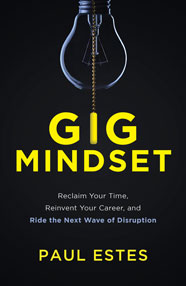
Paul Estes is an advocate for the gig economy who is dedicated to creating opportunity, reskilling by doing, and bringing more flexibility to how people work. After twenty years driving innovation in big tech, with roles at Dell, Amazon, and Microsoft, where he led gig economy strategy, he embraced life as an independent, remote worker. In his book Gig Mindset: Reclaim Your Time, Reinvent Your Career, and Ride the Next Wave of Disruption, he shows overworked professionals how to use on-demand experts to reclaim their time, drawing on his own experience and a process he calls the T.I.D.E. Model: Taskify, Identify, Delegate, and Evolve.
📚 Books by Paul Estes
Transcript
[00:00:18] NVN: I don’t know about you, but when I hear about the gig economy, I mainly hear about it through the lens of freelancers and contractors, the people who are working within the gig economy. In his new book, Gig Mindset, author Paul Estes talks about how companies and professionals with more standard nine to five jobs can leverage with the gig economy for their own growth. In this fascinating interview, Paul talks about how the gig economy requires a new mindset. He explains how we can retrain ourselves in terms of how we set expectations, think about delegation, and reconsider our own role in our professional and personal endeavors. Paul, thank you so much for joining us today.
[00:01:04] Paul Estes: Thanks for having me, Nikki.
[00:01:05] NVN: So I am intrigued by your new book, because you are talking about the gig economy but you're talking about it with a different slant than people usually do, which is instead of talking about how it can serve freelancers or contractors, you’re talking about how the gig economy can work for business owners and for employees. Talk to me a little bit about how you came here.
[00:01:31] Paul Estes: I think one of the things that’s important to understand is that the concept of the gig economy is made up of a bunch of different parts. On one side, you have the business consumer side which everybody is the most familiar with, which is Uber, Lyft, DoorDash, and all those sort of companies where primarily you have a relationship with the company. I don't know the name of my Uber driver but I do know that I paid Uber. On the other side, you have freelancers doing project-based work on the business to business side. So you could be using platforms like Upwork or Toptal or Business Talent Group or many of the others that are out there to find a lawyer and accountant. Doing project-based work, short-term projects is very different than sort of managed services. So about four years ago, I started working with my first freelancer from an online platform, and it really changed the way that I looked at working and living. The more and more I started to work that way, it started re-skilling me and teaching me things that I just started to in some ways become paranoid that I was atrophying, that I wasn’t learning modern skills. I looked around and say, “Wow! I'm really enjoying working this way.” The freelancers that I were engaging with were very passionate about what they did. They were generally happy. Look, there are struggles on both sides. Being an employee got its struggles and being a freelancer has its struggles. So I really leaned in to see what I could learn, and that's why the name of the book is Gig Mindset, is, what can you learn from working with a distributed team remotely? What can you learn by breaking your project down and finding an expert for every single part? What kind of diversity of thought and diversity does bringing – does working with people from around the country and around the world bring to you? For me, it was life-changing.
[00:03:22] NVN: Yeah. So talk to me a little bit about that. So the way I understand it, you were struggling to balance your home life with your work. So you hired a virtual assistant, which you credit with transforming your life. Tell me what happened there exactly.
[00:03:37] Paul Estes: It was a Saturday. I can still remember. It was a Saturday, and I was working on an executive presentation. There’s a lot of folks that are in big corporate might relate to, and I had just had my second daughter and I remember my wife was hanging out with them in the background. Here I was working on this PowerPoint presentation. A friend of mine who had a startup had a virtual assistant. He said, “Hey! You need to check this out. But you’re busy. It sounds like things are out of whack.” In that moment, I reached out and I hired a virtual assistant. It was to help me basically search the Web and find something to do with my family on Sunday. Looking back on that, it sounds crazy that I didn't have enough time to go and search the Web. If you ever searched the Web to try to find something, it’s not – It takes a little bit longer than you might think. So they came back with a strawberry festival that was three miles away that I didn't know about it. We went there on a Sunday, and it was sort of in that moment that I started to reevaluate everything on my list. Was I working efficiently? Was I using all the resources at my disposal to get things done in an efficient way and to reclaim some of my time, to reclaim some of my time to do things, like I've always wanted to write a book? Reclaim some time to do things like, “Hey! I want to do a podcast where I get to talk to people and try to unlock what's possible.” None of those things were possible at that time. I'd spent, as many people do, a lot of my days sitting in meetings, a lot of my nights working in triaging email, and then weekends working on big projects. I mean, it was all out of whack. This, to me, in a lot of ways felt like the first time I ever held an iPhone or the first time I got on Uber or the first time you are on the Internet. Those times felt very transformative. You can see that it would be different like when you started using digital music. The chances that I would be back buying 45 records in the record store didn’t seem like that was a future to believe in. So this is one of those transformative moments.
[00:05:40] NVN: It's so interesting to hear you explain it like that. So once you had this realization, how did you start to shift some things from there, both personally and professionally, however that looked for you?
[00:05:52] Paul Estes: I went all in. I mean, it’s part of my – It’s got good parts and bad parts, but I’ve always been somebody who would experiment with things. In big companies, I was more of an entrepreneur working on risky startup-type projects, not large-scale traditional projects. So I started experimenting. I’ve got three or four websites that had never seen the light of day and other types of projects but for me it was learning. I have a hard time sitting down and taking a LinkedIn learning course or Udemy course; any of those courses. For me, I wanted to roll up my sleeves and just start doing stuff. So I started tasking, trying all sorts of different projects, side projects, any kind of idea I had. Then I started saying, “Wait!” I’d be in a meeting. I remember this one time I was in a meeting with a bunch of executives and they asked a really intelligent question nobody knew the answer to. So I reached out to a freelancer and I said, “Hey! Could you help me do some research on this topic?” Four hours later, it comes back in an email. He said, “Hey! I did some research and here –” Everybody's blown away like, “Oh, wow! That was amazing.” It started to teach me that I could be exponential, that I could take my skills of digesting that information and making it relevant to the audience, in this case executives, without spending the two hours that it probably took to do the research and sort of curate what was needed to do. So I started thinking about everything as a project that had a number of different parts, not a large project.
[00:07:23] NVN: This is still interesting to me, and it really brings your title into focus for me, Gig Mindset. Because as you were talking, I was thinking. So I’m a Gen Xer. I was born right at the cusp, just a couple years before the millennial timeline sets in. It's amazing what the differences are between millennials and Gen Xers. They’re – I mean, I've experienced it. There was such a cut off there. I feel like one of those things that had – didn’t really occur to me in the way that you were speaking about it until you said it was this idea that, “Oh! I don't have to do it all myself,” because I think that with all this technology now, it is easy for so many of us to drown in all of the options and all the information. You’re absolutely right. That Googling where to go on the weekend can turn into a whole maze of a thing. So I can absolutely see how this is a mindset shift that some of that can be outsourced. That's part of utilizing these resources.
[00:08:24] Paul Estes: It’s not if you’re going to drown. You are going to drown. When I think about just a sheer amount of data and sheer amount of information in the complexity of everything that's going on, and just look at software as a service. Those products are now releasing monthly. If you use a bunch of different products, you’ll never keep up with the features. We’re getting into a place where it’s exponential what you're being asked to know. There was a statistic. I forgot the exact statistic. What it would take a doctor to stay current on their profession. Literally, they don't have the time to stay current, which makes you wonder about your doctor. So you have to find new ways to use technology. You have to find a new way to rely on expertise. If you believe that you're going to fix everything yourself, give it a try. You’re not going to do it without a team. More and more, you’re not going to do it without a very diverse team. I’m a big advocate for the diversity of thought that nontraditional roles and nontraditional thinking are the things that really help exponential innovation, and this is one of those things that I really enjoy. I have lots of different people that do lots of different projects, and they're constantly teaching me. So it’s not just that I’m getting outcomes done, but I feel like I’m getting current skills that are going to keep me relevant. Because if there’s just one thing that everyone wants is to be relevant and valuable. So I think in my experience in the big corporations I’ve worked for, there’s been some interesting projects but so much of my time was spent not, in my opinion, driving value to the company or driving value to myself. I was in meetings and just these sort of functions that I continued to struggle with until I found a new way to work.
[00:10:11] NVN: So talk to me about what this might look like for the average listener. So what sort of scenario could they find themselves in where they could find a way to task it out to the gig economy and a way that benefits them and moves them ahead?
[00:10:26] Paul Estes: Yeah there’s two places I always tell people to start. You could just start by saying, “Hey! Lemme try one of the grocery services.” I know it sounds really simple, but you start to give up some control. I was talking to my wife and I usually go to the grocery store because I enjoy it. But I said, “Hey!” She goes, “I want to try this. What are you talking about?” I said, “Hey! Try getting one of the grocery services to bring you groceries.” She goes like, “I can’t.” I said, “Why?” She went down the list of things because she couldn't give up control of having somebody else pick her bananas or pick a piece of produce that she wanted. So I – Well, it sounds very simple. It's one of those things that when you move into this way of work or in this way of living, you have to be able to learn to set expectations. You have to be willing to give up control and realize that there may be things that aren’t perfect. But the ROI that you get on the returns of your time as you do it more and more is in my view a pretty fundamental unlock. So as I would progress from there, I would go to other things. There is a service that I used before called Fancy Hands, which is a virtual assistant service, and you get 15 tasks every month. I would teach folks, “Hey! Every morning or every other morning in a month, wake up and put a task in.” Just to that point get yourself used to putting tasks and training yourself without expectations, because you don’t have the same virtual assistant every time. So the idea that this is a simple thing to do and you just wake up one day and your life changes is not the case. You are retraining yourself. You’re retraining yourself on how to work with people that don't have shared context, in some cases, don’t even have shared cultures and may not even speak the same first language as you. So there’s a lot of re-skilling you have to do, and so those are the things that I tell people on how to get started. Then you start looking at places that it can help you do your job. If you’re a small business owner, chances are you’re already working with freelancers. If you’re a mid-market company, chances are you have some freelancers. But large companies are just starting to learn this trend. So the reason I took on the book now is I saw more and more Fortune 500 companies starting to say, “Hey! What does on-demand mean? What is working with freelancers on these online marketplaces mean for my business or for my total talent strategy? What does working with remote people mean?” That’s one of those things that still to this day a lot of companies struggle to have a remote policy.
[00:12:48] NVN: What did you feel like are some of the corners that companies who were just delving into this gig economy, into the freelancer remote pool, are generally not able to see around?
[00:13:00] Paul Estes: I think the number one thing right now is the compliance. There is not – worker classification is being figured out at the federal, state, global and local level right now. So companies have to spend some time to understand what types of projects, what type of work, what type of partners will help with some of their compliance and worker classification. I think over time that will all be addressed. I think it’s being addressed now. I think there are policies that you can put in place to help ensure that you're doing it responsibly. The biggest thing is culture. Again, one of the reasons I wanted to write the book is you have a lot of folks and you were saying you’re a Gen Xer, and I’m a Gen Xer as well. There’s a lot of people I would say that work their way up to manager and did so over their 20-year career. That’s what it looks like. “I sit at the head of the table. I manage my folks. My folks all sit in hallways, and I walk around and I have my staff meetings.” That's the way managing was done. When you start working this way, it’s much more distributed. You require a lot more trust. It’s required to empower people at the edges, not in a command-and-control sort of way. So I think the number one challenge that companies are having is that their middle managers who’ve been rewarded for certain way of working for an extended period of time need a reason to change, need a reason to go to their teams and support this kind of change. Leaders who have large organizations need to understand the importance of experimentation and learning things like remote work, learning how to tap into on-demand talent. My hope is that this book helps bring some examples and do some of those teachings.
[00:14:40] NVN: I love that you’re creating a guide to that, because you're right. From a human perspective, it's just really difficult when you've spent years and years learning to do something and do it well one way. Then all of a sudden, the game changes. That’s tough, and I think it's easy to discount how tough that is.
[00:14:59] Paul Estes: I never discount it. I encourage people to say, “Hey! What’s the option if I don't re-skill?” If I'm, let’s say, 40 years old and I'm a middle manager and my desire is to stay relevant for a long period of time, if I don't disrupt myself or maybe disrupt is too big of a word. If I don't start looking forward and getting new skills, do I believe that the horizon until I want to retire is going to stay the same? Forget AI for a second. Forget that you’re going to be disrupted by a computer knowledge work that’s going to take your job. I think there’ll be in the next 15 years some major changes to that. But just in general, if you don't think you're going to need new skills, I think you should rethink it. So the number one thing that I encourage middle managers to do or even line level people to do is really start to question their assumptions, really start to question the way you work, really start to say, “Hey! Is there a better way that we can get work done? Is there a better way we can re-skill and have relevant futures and skill sets?” I moved from 20 years in big tech to now working for a fully distributed company and I can't tell you the fundamental difference in the way those two environments and those two cultures operate on. For me, in the new distributed environment, I feel modern again. I feel like I'm working in a way at a pace providing value in a way that I haven't felt probably since I started my career.
[00:16:25] NVN: Wow! That has to be really cool. I would imagine that’s incredibly reinvigorating.
[00:16:32] Paul Estes: It is and it only lends me to giving more passion to the idea of the power of working remotely, the power of working with distributed teams, the idea that – look, there is – one of my favorite stories, I was sitting down with a designer once, and we were working on some project. He goes, “Well, I’m the only person that can do that.” With that, I’m like, “There are seven billion people on the planet, give or take, and you’re the only one that can do this.” I didn't say it in a judging way. I was really – I just said, “Hey! You just don’t think anybody – Why don’t you think anybody else can do this? I know this area. I've been thinking about this.” It's one of those mindsets. You could call it the growth mindset versus the fixed mindset. There’s a lot of ways to look at it. But in my particular case, I say, “Wait! There are other experts around the country and around the world that can do this work. By the way, they might be able to do it better and teach you something in the process.” So I think there's a lot of insecurity that people feel, and there’s also a lot of change is hard, and the hardest thing to do is to get people to evolve, especially after they spent, like I said, 15, 20 years to get to this level of you know, “I've made it. I’m the manager.”
[00:17:42] NVN: Absolutely. So an answer to that I presume, you've created the TIDE model to help people integrate into this idea of working in the Gig Mindset. Can you share a little bit about that?
[00:17:55] Paul Estes: Sure. TIDE stands for taskify, identify, delegate, and evolve. One of the things that I kept seeing, I kept seeing the same patterns over and over and over again. People would say, “What can I freelance?” They tell me a project. Then I’m like, “Wow! That’s a big project. Now, let’s break it down into its parts. Let’s look at the different tasks.” If I’m doing a PowerPoint presentation, I might need research. I might need design. I might need some video that goes inside of it. There’s different parts of a presentation or any type of project. So what are the various tasks? Once you find those tasks, it’s now time to identify. What’s my role in getting that project to completion successfully? Where can I find other experts who might be better than me at getting a task done? Right? Then the hardest part, how do I learn to delegate? Once I know all the tasks, then a number of people go, “Well, I'll let somebody try this one.” But all these I need to do, because it’s hard for me to believe that somebody else is going to be able to resolve this on time. You have to teach yourself how to start writing things down, how to set expectations, how to do milestones. So people who aren't used to rigorous program management or project management have to learn new skills. Then the third part is how do I evolve from that first project to a larger project and another project and another project. More importantly, how do I fail and then take those learnings and keep going? I think in life in general, too many times we fail once and then we find all sorts of reasons why to say whatever we were trying to accomplish was somebody else's fault. There was some reason that it went wrong. I think this is just one of the important areas that you have to look around the world and say, “Wow! There’s amazing people who have amazing talent. How do I tap into that?” If you believe in that abundance of knowledge, that abundance of talent, then it becomes something you’re chasing, not something you’re sort of dismissing and going back into your own, “I need to do everything.”
[00:19:54] NVN: Yeah. It occurred to me as you were saying that; I feel like the ability to delegate effectively can be a problem for some people, especially as they're moving up toward leadership. So I loved that in doing this, it seems to me like as a user you're actually really honing that skill of delegation.
[00:20:15] Paul Estes: The thing that was interesting to me as I started working this way is, I started celebrating that I didn't do everything. I started talking about the model by which I was getting these amazing outcomes, the model that teams were using to really scale their capability. There was a team that I had, and 4X-ed the output of the team with a lot less money that we then reinvested to all sorts of other projects. So the more I sort of let go, the more it was okay to say, “Hey! I did this part. I did that part. My job was to deliver this outcome.” I think there was a lot of people, at least in the early part of my career that would take ideas and say, “Well, if I don’t own this, then I don’t own – If I don’t own this piece of information –” if they believe it came from somebody else, their subordinate or if, “I got it off the Web,” that it would somehow diminish their value. That they would somehow be less or at risk. The more I started working this way, I was open about the idea of using a vast network of people, whether they were internally or freelancers or wherever they might be to accomplish better outcomes.
[00:20:15] NVN: I love that. I continues to amaze me the different ways in which technology in a lot of ways actually makes us more human, and it sounds like that's kind of what you're speaking to there in some ways.
[00:21:32] Paul Estes: It's interesting, when I went from working in an office, you know, 20 years of getting in my car, driving to an office, sitting in meetings, doing [inaudible 00:21:40]. It’s not going to an office. I was really worried about social isolation. I’m a pretty social person. I've always enjoyed having somebody to go to lunch with, and what I've noticed is I actually have more time to do my work and focus and I’m on – like we slack all day and we do Zoom and I'm talking to people. I’m interacting all day long. But now, I have time to go for a run. Now, I have time to sit and read those articles that are helping me think about the work I'm doing, whereas before I didn't. I was exhausted, I was stressed, and I was doing my work at times when I should be eating dinner with my family or when I should be taking care of myself and doing exercise. So this mindset in many ways has helped free me to understand that there needs to be more balance, and I think a lot of people are afraid to talk about balance. Look, now, we’re talking about mindfulness everywhere, right? I mean, there is this need to take care of yourself. There is this need to spend time on hobbies and respect that, but you need to make that time. So the old mindset that you will either do a lesser job at work or you take time for yourself was binary. I believe if you can change the way you think, if you can change the way you work, if you change the way your team works, the way your company works, there’s a pretty big unlock for the health of the team, you can accelerate the projects and make them better, and everybody's reskilling at the same time.
[00:23:12] NVN: You are not the only person who thinks this. So one of the things that’s really interesting about your book is you’ve talked to a lot of leaders from leading companies today about their thoughts on the Gig Mindset. Tell me what some of the most interesting commentary you heard over the course of these interviews was.
[00:23:31] Paul Estes: Well, it’s not the interview. If you looked at my – One of the fortunate things is my LinkedIn message box. It’s got just tons of people reaching out saying, “Tell me more.” I have these amazing stories of people who want more flexibility, who are trying to find that. So there's a real hunger out there for working differently and thinking differently. But for the book specifically, there were a couple of people I spoke with; Steve Rader who’s over at NASA. For me, he was one of the people that I chose, because NASA was probably one of the last places that I thought would be finding new models to reach out to the crowd in finding innovative things. So I won't spoil it but there are some really interesting stories about space station and about starbursts and all sorts of things where NASA really found answers in some unexpected places. Dyan Finkhousen who is over at GE who was trying to really help them understand open innovation, and she’s got some great insights there. John Winsor who’s been leading the open innovation idea for a long time came from a pretty significant background in advertising and has always tried to disrupt the model, which is still being disrupted to the day. Mike Morris at Topcoder who’s been running an open innovation platform, and I was fortunate enough to speak at his event down in Houston at the Topcoder Open where he brought people from all around the world who were competing to these algorithms. The interesting thing that I learned by watching all of these amazing people get on stage and compete and really get excited about this is the narrative too many times is all these people that are doing these crowd things, it’s a race to the bottom. They have to do this, and the people that were on the stage, and there was 20, 30, 40 of them. One guy said something that was profound to me. He goes, “Why is it okay that a bunch of people play video games but it’s not okay for me to compete in writing algorithms because I enjoy it? Maybe I’ll earn some money at the end of it, but it’s not why I compete in this. This isn’t why I participate on this platform. There’s other people who get excited about what I get excited about.” That was a really interesting insight, because I hear too many times people discounting people that participated in various platforms and why they do it. Then the last person is your very own Tucker Max. I thought it was very important to be transparent about how my book was created, why I chose Scribe Media over a traditional publisher, and the insights of how Scribe works and how these books work. The entire process is just something that I thought was life imitating art. Tucker is quite the character as you know, so it was great to get his voice in the book as well.
[00:26:17] NVN: Yes. Tucker is always a colorful interview. That much is assured with him.
[00:26:21] Paul Estes: Yeah. The book editors were quite busy.
[00:26:26] NVN: So one thing I really appreciate about this book is that you have a list of appendix here for people who are just kind of maybe trying to dip their toe into the water, showing 50 tasks that you've done previously at work and at home, just to get people some real-world ideas of how they can start to put this into practice in their own lives. Another thing I’m wondering about is, for people or businesses who are just starting out, where are some of the top places that they could start to look for virtual assistants, for example, or any other great professional sources that you love?
[00:27:02] Paul Estes: There’s tons out there. I from a business perspective recommend a couple places to start. Upwork is a great place to start. Toptal is really this sort of top talent in design, development, finance. It’s a good place to start. Business Talent Group, which is a lot of ex-consultants, a lot of brainpower there. Again, all these marketplaces cover different areas. There's places like The Second Shift, which has amazing women who are senior in their careers who have run the gamut of types of projects they can do and many, many, many more.
[00:27:38] NVN: It seems like one of those things where you could probably use your first virtual assistant to help you identify some of the best places to go for it.
[00:27:47] Paul Estes: I've actually done that. I’ve actually done – If I wanted to find a marketplace or find something to do something else. Or have an assistant help you get your groceries, those kinds of things. In the early days, when I was experimenting or when I’m just trying to figure out, what are the things I can do? What are the things I can do where somebody will handle my credit card or my personal information? That's kind of when I was trying to understand, because there's limits to what can be done today and with the technology support and the business model.
[00:28:18] NVN: Yeah. It’s always interesting to me the books that catch me off guard, and this is one of them where I sort of think, “Well, this will be an interview where I can learn about something new, but it's probably not that applicable to me.” You’re making me realize how much more difficult I’m making my life in ways that it doesn't need to be, and that I can be taking advantage of. I really resonated with your produce comment. I probably don't need to be picking out my own produce, although it feels like I do. But I’m willing to accept there might be another way.
[00:28:48] Paul Estes: Well, I mean, we did it for a month. So we did it for a month. I said, “Hey! Look. I’m not going to go to the grocery. You’re not going to go to the grocery. We’re going to use one of the service.” Because I want to just see. I want to see like, “Look. Are they going to bring us avocados that are bad or bananas or apples?” You know what? There was only one time in that whole month experience. There’s one time, and it wasn’t like it was terrible. It was just kind of like okay. It’s not something that we would have picked up, but the time that we saved was unbelievable. So I just – I encourage people. My hope with this book, and the reason I spent two years writing it and thinking about it is that at least it jars something loose in everybody to say, “Hey! There might be a different way.” If I’m stuck and I don't have a lot of time, if I'm stressed out and I don't have time to spend with my kids or find that new job or do that hobby I want or participate in something, maybe this is a way to find a little bit of that time. Maybe just a little way to break free and get some of your sanity back, because if the one thing that everyone says is that there’s too much information and we’re too busy, and something's got to give. I hear that time and time again and I see it on people's faces when I was in Corporate America. So people that are in that position, people that are in a position where they want to stay relevant to the end of their career, look, you’re going to have to play by a new rule book. This along with books, many other books. I read a ton of books. But my hope is that this along with some others help people with a path to continued relevance and continued balance. It did wonders for me. It’s done wonders for a lot of people that I’ve been able to help, and my hope with the book is that it gets out to more.
[00:30:29] NVN: So talk to me, Paul, about how incorporating freelancers from the gig economy is actually part of a company's diversity practice.
[00:30:39] Paul Estes: They don't look at it that way today. I was on stage at a conference and I asked. I said, “How many people have a diversity and inclusion program?” There’s probably 450 people in the audience, and every hand went up.” I said, “Well, how many of you have instituted a remote program?” All the hands went down. I said, “It’s hard for me in this day and age, especially having a technology background, to understand how you have a robust diversity and inclusion program when a vast majority of you only work with people that are within a certain driving distance of your facility.” Or maybe you four or five different facilities around the country or maybe a couple around the world, but the idea that we’re not going to meet people where they are given that we have the technology really makes me question, are we looking at diversity and inclusion the right way. I mean, when I go and I look at my network of freelancers, I probably have 50 or 60 that I’ve worked with on a regular basis. 70% of them are women. I don't have a diversity and inclusion program. I have a who can do the work and who’s really good at it and committed and all those things. A lot of them are stay-at-home moms. Look. Some of the amazing people that I work with in the creation of the book that weren’t prescribed media were freelancers or stay-at-home moms saying, “Look. I love this work, because it’s work I can do on my own time and I can – It’s flexible. It can go on my schedule. No, I can't pick up and drive an hour and a half to an office and then come home at 5:00 and try to piece it together.” I encourage people who are in charge of thinking about diversity and inclusion to think about the benefits that a remote program or an on-demand program could bring to their efforts, whether its race, religion, diversity of thought, diversity of location. I think it’s an important and often not spoken about aspect of a diversity and inclusion program.
[00:32:32] NVN: Excellent. Again, so many different ways to think about this that are not intuitive at this point.
[00:32:39] Paul Estes: That's why I spend a lot of time trying to help people at least think differently. If you spend a little bit of time, and I try to do it with the podcast and the other stuff, I spend a little bit of time and walk out saying, “Hey! There is a different way to do this.” Then you start taking steps toward it. I think you’ll end up in a good place.
[00:32:56] NVN: Beautiful. My last question for you, Paul, since you’re an expert in this topic, where do you think that we’re headed right now with the gig economy and delving further into this Gig Mindset in ways that the unversed person might not be able to predict at this point?
[00:33:14] Paul Estes: I think if you look at it now, 20% of the market and this is in the general market, are independent workers. It used to be that – look, if you had a full-time job, you had stability, right? You show up to work 35 years. It’s in the book. I’m a third-generation company man, and my grandfather and father both had pensions and both had gold watches. It’s not like something that’s a joker meme in my life, and my father and grandfather both had the pensions and the gold watches. There was no chance that I'm going to get a pension. There’s no chance that I'm getting a gold watch, and the sand beneath my feet as I was working wasn't solid. There was no guarantee. I work at [inaudible 00:33:51] state. So when I look at the future in the next 10 or 15 years, what was guaranteed safety is going to be no longer guaranteed safety. What we’re starting to see a pretty significant trend of companies moving independent workers. More project-based work, less secure work. So you’re going to have to start to understand how to build a career given that instability because you don't want to be caught flat-footed and say, “Oh! Well, I had a job and I got laid off. But then I didn’t have the skills because I've been focused and so busy doing my job, I didn't re-skill, and now the skills that I have don't have a market value, right? So I think when I reach into this world and I work with freelancers, I'm constantly learning what the value of various skills are. I'm constantly learning what I need to be able to do to work in a more fluid way. I’m learning what it means to be an independent worker and not an employee. Most of the freelancers I work with, they’re entrepreneurial. So I'm learning those skills as well after 20 years in Corporate America. For me, working this way is exposing me to a new way of working that I think is important; how to work remotely, how to work with people that don't have shared context, and helping me see what the future is going to look like in 10 or 15 years when having a secure company job may be the exception, not the rule. That's where I think we’re headed and that's why think it's important for everybody to pick up the book and maybe just start to understand where the world is going.
[00:35:25] NVN: Fascinating. I love all those intangibles. All right, Paul. So let’s share with listeners where they can find you.
[00:35:33] Paul Estes: You can find me on LinkedIn at Paul Estes or on Twitter @PaulFEtes. I have a weekly newsletter I put out that has all of the curated stories from around the Web. Also, I have a podcast. It’s the Talent Economy podcast. We release it weekly. You can find it on Apple or on Google. I am also the editor-in-chief of staffing.com. So we have a website that is really dedicated to helping HR procurement and staffing companies understand the rise of remote work in our demand.
[00:36:00] NVN: The book is Gig Mindset: Reclaim Your Time, Reinvent Your Career, and Ride the Next Wave of Disruption. Thank you for joining us today, Paul.
[00:36:09] Paul Estes: Thank you for having me, Nikki.
[00:36:11] NVN: Thanks for joining us for this episode of Author Hour. You can find Gig Mindset on Amazon. For more Author Hour, hit the subscribe button on your favorite podcast service. Thanks for joining us. We’ll see you next time. Same place, different author.
Want to Write Your Own Book?
Scribe has helped over 2,000 authors turn their expertise into published books.
Schedule a Free Consult