Lee Ann Pond: Episode 403
Read the full transcriptLee Ann Pond
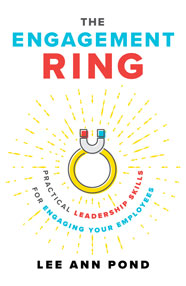
Lee Ann Pond is the founder and CEO of Engaging Leadership, a firm dedicated to helping organizations engage their leaders, teams, and employees for peak performance. She is the author of The Engagement Ring: Practical Leadership Skills for Engaging Your Employees and the creator of the Engagement Ring framework. With an MBA, an executive coaching certification, and fifteen years of C-suite experience, she brings together leadership development and employee engagement. Her book offers specific, immediately usable steps for building more fulfilled, productive, and happier teams.
📚 Books by Lee Ann Pond
Transcript
[0:00:24] NVN: Today, I'm joined by Lee Ann Pond, author of the new book The Engagement Ring: Practical Leadership Skills for Engaging Your Employees. In today's business world, we talk a lot about the importance of employee engagement for things like culture, productivity and longevity. Yet still, as Lee Ann shares in this podcast, Gallup recently found that only 30% of employees are actually engaged at work today. In this podcast, Lee Ann explains her straightforward ring system, which refers to relationships, inclusion, a sense of being needed and growth. She also offers the empowering message that no matter the culture of the company or what's happening in the C suite, it's actually the women and men on the ground and heading up departments that can impact engagement for the better. Lee Ann, thank you so much for joining us today.
[0:01:08] LAP: Oh, thanks, Nikki. I'm so glad to be here,
[0:01:10] NVN: So I really like the name of your book, The Engagement Ring.
[0:01:16] LAP: Thanks. Yeah. Looking for a sort of a catchy a summation of my book and the ideas behind it.
[0:01:23] NVN: Yes, it works. And for listeners, this is not a book about marriage or engagement. It's actually a book about employee engagement and leadership within that. So before we get into the specifics of the book, Lee Ann, talk to me a little bit About what made you want to write this specific book.
[0:01:42] LAP: Okay, well, I have a background sort of unrelated to this just in accounting. I have an MBA. I moved up in the corporate world and became CFO. And when your CFO, you get other departments. So I had other departments, including HR, and my last position was at one location for 11 years. So during that time period, I got interested in what develops leaders. How did they know if they're a good leader, how can I help train the leaders in this organization and I actually work for an EMS organization. So emergency medical service is it was the 911 provider in the city and so very interested in particular, a young supervisor, such as a paramedic who was very good at their clinical skills. How could you help them once they got promoted? So they're good clinical skills got them promoted, but then they were using different skills to lead other paramedics. So, you know, how could I help them learn and develop what they needed to know to be successful in their new role? Because leadership skills are a lot different than the technical skills that got you promoted. So I just sort of I've always been interested in leadership. And, you know, we've all had bosses, bad bosses, good bosses and so I'm always interested in what does it take to be a good boss and I was a boss then. I wanted to be a good boss and I didn’t know if I was doing a good job, so I would always take classes. And there's all this theory for leadership and you're excited during the course. But then you get back to work Monday and you're like, What? Yeah, but what's the first thing I do? And how would I know if I did a good job? What would be some data or some statistics that would tell me that. So, I think that's what brought me to developing The Engagement Ring. I've since left the corporate world and started my own business doing leadership engagement and development programs, workshops, trainings and coaching. So trying to help other leaders know what to do.
[0:03:37] NVN: I love that finance just lead you along this entirely different, and I'm guessing unexpected, path.
[0:03:45] LAP: Right? I don't know. I don't know. Maybe I missed my calling, but I always wanted to be a teacher in the time when I was choosing my college major. There were too many teachers. You couldn't get a job, so I thought, Well, I'll go into business. And what part of business? Well, I always have a job. Well, accounting. I'll always have a job. But I never lost that wanting to teach. And I always found opportunities my whole life in teaching others anything I could. So I think this is, I've come full circle.
[0:04:08] NVN: that makes a lot of sense, especially because of how you've gone about writing this book, which is your very specific that it's a guidebook for leaders who want to better manage their employee engagement. So talk to me a little bit about why you took the guidebook route to writing about this and what exactly that entails.
[0:04:31] LAP: Yeah, in looking at how, you know, what makes a good leader. How do you know if you're a good leader? I kind of had to think right from the start. If you're a leader, you have followers. What's a successful follower? An engaged follower? Somebody's engaged if they are just willing to go that extra bit, they're committed to the mission. They're committed to the organization. They're willing to put in that extra discretionary effort for that organization. And so if employees are engaged, how do we know if they're engaged? Well, there's employee engagement surveys, so there is a way to actually track and monitor. And I like that. That's there's the data driven, so trying to think that's true. I basically took an employee engagement survey, and you can Google the questions from a lot of places. But there's pretty much 15 to 20 general questions and be things like, “In the last 30 days has someone in leadership position giving you feedback on the job. Do you have the resources you need to do your work?” You know a lot of questions like that, and the questions want a yes answer if a yes answer is a successful answer, so I kind of took those questions and just wrote down for each of these questions, what would a supervisor need to know or do to get a positive response? From that long, long list, I kind of divided it into buckets to say these are practical skills I could teach leaders. And in my business, they fall into 12 workshops and in the book, pretty much 12 chapters. And they range from things to how to give feedback specifically at what words to use, why you do it, how often to get positive and negative, how to handle pushback. There's how to delegate work. Why to delegate work to grow your employees, how to track delegation, how to celebrate successes, coaching skills, how to connect the employee to the mission and communication skills keeping employees in the loop. So team building. There’s workshops like that which then became chapters and so in looking to try to figure out if somebody took this course, they were say a new supervisor, and they got through all 12 workshops, the whole thing and hopefully really learned it. But then they went to think back, what could it be like an acronym or something they could really key into? Because I'm a visual learner, so I like acronyms. And that's when I came up with The Engagement Ring because the R I N G of the ring are the four elements of employee engagement and all those chapters and all those workshops fit into those one of four or some of them even cross over all four. So the R is for relationships. Seventy per cent of an employee engagement score is based on questions related to their direct relationship with their supervisor. Also, how you get along with your team, your relationships with your co worker, that Gallup that does a lot of employ engagement surveys, they even have a question that says, “Do you have a best friend at work?” The I of the engagement ring is for inclusion. If your employee feels included part of the team, a sense of belonging, are they in the loop on communications? And the interesting part of feeling belonging to a team is they also need to feel that they bring a value and a diversity and a uniqueness to the team that is appreciated. The N of the ring is feeling needed, so that is, the employee needs to know what the organization's mission is, feel committed to that mission, and they need to know how every task they do all day long moves that mission forward. And then the G of the engagement ring is providing opportunities for personal and professional growth at work, and that will lead to more engaged employees.
[0:08:20] NVN: What strikes me is you run through all of these things is sort of like you were mentioning at the EMS company, where people who were promoted to supervisors were not utilizing the skills that had gotten them promoted in the first place. I think most of us have had some version of that experience, and in a lot of ways it strikes me as unfair to leaders that I mean, this knowledge isn't going to be innate. It's not that it's rocket science, but it's also not straightforward. If this is not what you've built your job around.
[0:08:59] LAP: Right, exactly. And I think I look at my guidebook as I call my book. I look it as being a fake it till you make it so. Here are practical steps that are proven to increase an employee engagement score. I'm telling you how to do them step by step, and then you can add them to your repertoire. Start out with that and then develop your own leadership style based on them. So this isn't, you know, taking the place of cookie cutter leaders and telling them exactly how to do it. Everybody has to develop their own style, but these are basics that every leader should know and should be doing. And it also applies not even in the corporate world, not just in the corporate world but also in volunteer agencies, in trade associations, anywhere that people gather and someone is in a leadership role. You can use these steps. I am president of our local chapter of NAWBO, which is the National Association of Women Business Owners. And I used all these there. So, I want the members of the organization to be engaged. So how can I do that? Well, I keep them in the loop on communications, I over-communicate. I give them feedback, somebody helps put on on event. They're gonna hear positive feedback from me. If we need to correct something, then we're you know we're gonna correct it. I delegate. Sometimes things are not always done the way I might want them exactly. But you know whether it doesn't mean they're done wrong by someone else. And if I don't delegate, there will never be new board members or a new president in the future. So all those things really can be used for any organization, whether for profit, non profit, corporate volunteer agency. So all of them, we all want to know and care about our mission of whatever organization we're giving our time to, whether we're being paid for that time or not. And we need to know that the efforts were making are gonna move that mission forward. So it's the engagement ring could be used for various organizations and for any type of leadership.
[0:10:55] NVN: That makes a lot of sense. Okay, in your experience, I'm wondering if you found that there is any particular area where leaders tend to especially struggle when it comes to effectively engaging employees, whether it's because it's not an obvious thing or because it's difficult in practice, whatever the case may be.
[0:11:21] LAP: I think a couple difficult ones are feedback and delegation, and I know for myself as a leader all those years. I gave feedback, but it's always I preferred to give more positive feedback, which you should, more positive than negative. Find people doing something right. But it was always difficult to give negative feedback. And part of what my research that I've come to and then I put in the book is that feedback doesn't need to be, you don't don't wait for a big problem. It should be micro interventions. So small interventions. When you see something, say something and when you say something, have it be very short. Don't put any emotion in it. Don't get mad or upset if it's negative, you're about to give negative feedback. It should be three parts. Could I give you some feedback? Because the listener needs to be ready to hear it. Maybe they're having a bad day, and it's not the time for them to hear it. If they give you an affirmative action then when you do X, it causes Y. So in the future, please do see, and that's it done. And that's it for positive or negative. You know, when you come early to the meeting, it helps us get set up on time, and it makes the meeting go smoother. And please continue that in the future or when you turn in a report late. It causes the next department to be late in the future. Please turn your report on time soon. So, it may be used for positive or negative. When you do X, it causes Y, so please do see in the future. Feedback’s really for changing future behavior can't change the past, so you want to change future behavior; that’s the only reason for it. That's number one. But the number two that I think it's harder or was harder for me is delegation, and you know it's just easier sometimes to do it yourself. I just like I was saying about being president of NAWBO. Something might not be to my liking my taste the way I might have done it. But it doesn't mean it's wrong. And if I don't let people do it, they will never grow so the same thing with delegation. A leader has to purposely delegate duties to employees that will help them grow. I calm them stretch assignments. Give them something to grow that's outside of their usual position description and something they can stretch. And you're right there with him you're checking in with them, you're giving them guidance. You have milestones they should be hitting. You're not leaving on by themselves because the leader is ultimately responsible for what does get done with all the delegation. So it is a tough one to let go of. But it's so important to grow employees, and it's that G of the engagement ring. Opportunities for personal and professional growth will engage your employees. Also, your department can increase the amount of work that it's processing. If you can delegate some of your lower level duties to someone who works for you, they will not only learn and grow, but you freed up some of your time to take on new projects and maybe be delegated by your boss and get those stretch projects yourself. So I think feedback and delegation are to that kind of trip up leaders.
[0:14:29] NVN: Yeah, you know, the way you talk about delegation. I've never heard anyone speak about it quite that way before, and I'm not good at delegation at all. And it made me realize hearing you talk about it that way, that the failure to delegate is sort of a selfish act in some ways. Like I don't think I had ever made that stretch to thinking about how it's not allowing other people the ability to move forward or to prepare the company or organization, or whatever the case may be for what happens when, when I'm not there anymore.
[0:15:06] LAP: Right. And a lot of the excuses are, it's easier to do it myself. This is an important project I need to make sure it's done right. I don't want to overload my employees. They're already overworked. And sometimes it can even be that the supervisor doesn't want to give up some of their duties because maybe they won't be so needed anymore. Maybe they want to be indispensable. So there's a lot of elements that go into it. And I think leaders need to really think about why am I not doing this? And you're not doing it to take work off your plate? Because I might be just as much work or more, you're doing it to grow your employees, and I think that's important to keep in mind.
[0:15:46] NVN: Yeah, very interesting. Do you feel like there are any great myths about establishing employee engagement that people tend to fall prey to and leadership?
[0:15:58] LAP: Yeah, I think they think they can observe if employees are engaged. Everybody seems happy, and it's, I think it's not something you can see from the outside. Employee engagement survey is really important, and there's elements to that to that has to feel absolutely anonymous to the employees or you won't get honest answers. But the statistics, and Gallup does a lot of these statistics. But the statistics show that only 30% of all US employees are engaged at work, so only one out of every three employees are engaged at work. So you know, leaders need to take a hard look at that and, you know, find out. You know which of my employees are engaged and which are not. Another interesting statistic I read that, a study was done, and 35% of the respondents said they would trade their raise this year if their boss could be fired this year. Oh, yeah, there are some unhappy employees. And so you know, with 70% of all employee engagement questions and 70% of the score being related directly to their relationship with their supervisor, it's a supervisor job this employee engagement can't come down from, but the C suite it can't come from HR, every individual supervisor’s responsible for the engagement within their department. And there's a lot of organizations that don't care about engagement but an individual supervisor might, and they can make a difference. They can do, I say from the items in my book all The Engagement Ring and all the parts that go into it, that this is something you can start to do today and it doesn't cost any money. And so if they know it, they can do all of this themselves, whether their organization has a culture of engagement or not, and engaged organizations, actually, Gallup shows they're 21% more profitable than unengaged or organizations, and they have 41% less absenteeism. So they estimate that unengagement, or unengaged employees costs US corporations 550 billion a year in sick days and lost productivity. So it's a bigger deal, I think, than people realize or think about. Another. Interesting to statistics is that 51% off all employees in the US are looking for another job right now.
[0:18:23] NVN: More than half of the work force. Wow, wow. These are some pretty stunning statistics so I won't want to talk about a couple of them specifically with you. The first one you said really kind of blew my mind that only 30% of employees are actually engaged at work. And what's stunning to me about that is I feel like this idea of workplace engagement has been part of the conversation. Probably, I don't know. For about five years now, it seems like it's not that new of a concept. So what do you think that we're still getting wrong? That the numbers of actual engagement are still so low?
[0:19:03] LAP: I think they're that a lot of organizations are missing the mark on it, and you can't throw money in it. It's been shown that a raise or perks at work only increase engagement for a short period of time. So these are the things you know that I talk about in my book, these are the things that will increase engagement for the long term, and I give an example of just a picture employee engagement in the US. If you had a rowboat and you took 10 US employees just random 10 from any organization and put them in the rowboat. Three would be upfront and they'd be rowing diligently toward the mission. Those air the 30% that are engaged. In the middle, there will be five employees, not rowing, sitting, looking at the mission, not rowing. Those are the 50% that U. S. Employees that are unengaged. They're doing their job. They’re probably fulfilling their position description, but they're not getting any discretionary effort or extra effort. There's no oomph to them. And in the back of the rowboat would be two people, 20% that are actively disengaged and they’re rowing against the people in the front. So 20% of all US employees are actively disengaged, 50% are unengaged and only 30% are engaged.
[0:20:26] NVN: And this is not to mention the five that want to jump off the boat into a or the three that want to throw their boss into the water, off the boat.
[0:20:34] LAP: You’re right. Exactly. That's it. So you know, the two in the back of the boat, actively disengaged. We all know who they are. HR knows who they are. There needs to be, you know, steps taken, to put them on a performance improvement plan possibly they need to be terminated. But that's an HR issue. That leader needs to get its are involved in that one to turn them around, if possible, and if not, maybe find them another rowboat where they will be motivated to row. But the five in the middle, the unengaged. That is the biggest chance for organizations to make a difference. And that's really you know, my book targets that you know, I don't engage employees. I don't target the employees, although an employee might be interested in reading the book. But I target the leader because the leader’s the only one that can change someone unengaged into engaged.
[0:21:23] NVN: You know, the thing you're talking about here that seems really powerful to me is, I feel like I've heard so many times in so many different formats that in terms of culture and from culture engagement, it all trickles down from the C suite. So what does that mean for supervisors? If you think of it in that context, it means it doesn't really matter. It sort of is what it is based on what happens above you. I love this idea, though, that regardless of what's happening in the rest of the company, you still have the power to create the sort of micro culture that you want to exist in and that the people who work for you are going to be happy coming into every day.
[0:22:04] LAP: Exactly. That's right. And you know, every department can make their own culture. Every leader has the ability to make their own culture, and they say that culture is not what you celebrate. It's what you tolerate. It's the lowest level of behavior that gets tolerated in your department or your organization, and so you could talk a big game. But if you let things go, if you let people be late, if you tolerate shoddy performance, whatever it is, that's going to become your culture. So it's wonderful if the C suite, if the CEO has a culture of employee engagement that makes your job even easier. But you in your own department need to carry that forward because you can either have a culture not of engagement, or you can do the opposite of the C suite if they're not caring about engagement and you can make a culture of engagement, I was saying in the book that your CEO can't make your employees engaged and your HR department can't make your employees engaged. Your HR department can make their own employees engaged because it's an individual supervisors job responsibility to do it.
[0:23:11] NVN: Yeah, yeah. I mean, when you say that it makes so much sense if I really think back on it, it has always been my supervisor. That's made all the difference, regardless of what was happening, but it's still were kind of told to pass that off. So if you don't think about it, it's sort of easy to think about in the wrong way,
[0:23:30] LAP: Right. Yeah, exactly.
[0:23:32] NVN: So I'm curious if you, either at the EMS company or through the work with your company Engaging Leadership, if you've seen any situations that really stand out in your head in terms of a leader who's been able to change the mark or really shift the engagement within their department and what sort of impact that has had?
[0:23:58] LAP: Yes, I've seen a few. Unfortunately they are harder to come by, I'm afraid, than the bad bosses, as I say. The good bosses are a little harder to come by, but when it happens, what a difference that can make and what a wonderful environment. I mean, a supervisor has the ability to influence a person's life. We spend more time at work than we do with our families, and you know how we feel at work, comes home with us and transfers to the family transfers out in the community. So, a good boss who is keeping their employees informed and in the loop and he's delegating and helping them grow and who is, you know, acting in a professional manner and, you know, is helping them set goals and measuring them and is coaching them instead of solving their problems for them, giving them feedback, you know, building the team, making sure there are opportunities for them to connect with their teammates. These supervisors are having individual meetings in a consistent basis with each employee. These are the ones making a difference for an individual employees and in the world. So I say in the book that any supervisor reading this you have this ability in your hands and what a gift it is to give to your employees. We all want to enjoy our time at work and, you know, this has the benefit of also increasing productivity, reducing absenteeism, making happy and fulfilled employees and, hopefully, a happy and fulfilled leaders. And hopefully the leaders are engaged. That's another element that can be missing. It's harder to engage your employees if you don't feel engaged yourself.
[0:25:40] NVN: Excellent, Lee Ann. And there's a lot to think about here. And I have a very vivid picture of a pretty chaotic rowboat in my head right now. So thank you for that. You're welcome. Let's let listeners know where to find you.
[0:25:54] LAP: All right. My company is called Engaging Leadership. My website is www.engaging-leadership.com and they can find me there. I'm on LinkedIn. Lee Ann Pond.
[0:26:10] NVN: Perfect. Thanks for joining us today, Lee Ann. Thanks for joining us for this episode of Author Hour. You can find The Engagement Ring on Amazon. For more Author Hour, hit the subscribe button on your favorite podcast service. Thanks for joining us. We'll see you next time. Same place, different author.
Want to Write Your Own Book?
Scribe has helped over 2,000 authors turn their expertise into published books.
Schedule a Free Consult