James Maskell: Episode 404
Read the full transcript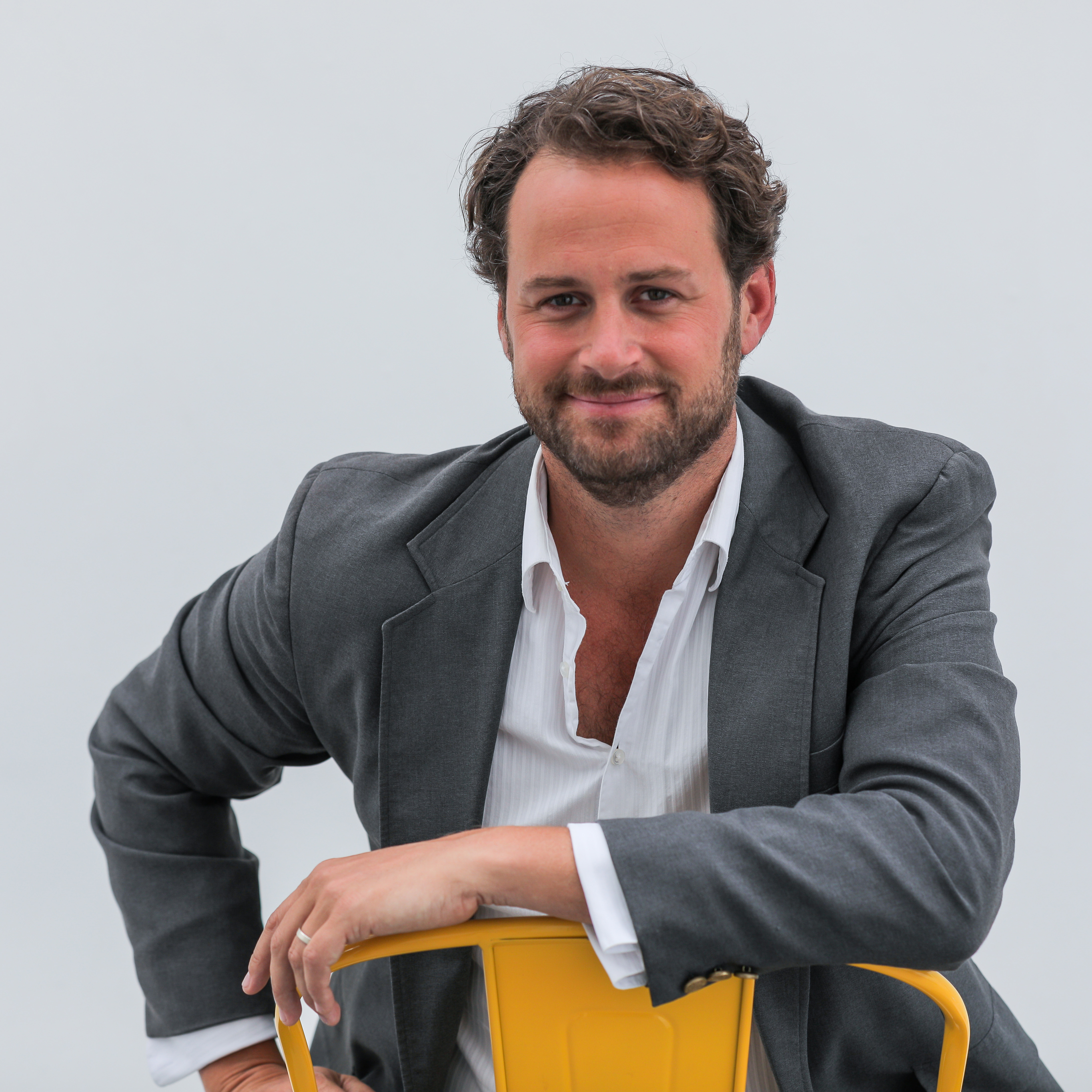
James Maskell
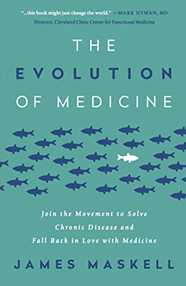
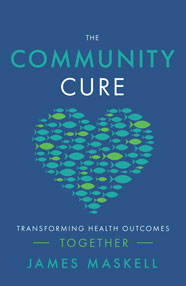
James Maskell is the founder of Evolution of Medicine and the creator of the Functional Forum, an integrative medicine conference. His work focuses on the intersection of functional medicine and community-based approaches to health. He is the author of The Community Cure: Transforming Health Outcomes Together and The Evolution of Medicine, and has spoken at events including TEDMED and TEDx.
📚 Books by James Maskell
Transcript
[00:00:18] NVN: Dr. Mark Hyman, a New York Times best-selling author and a leader in the world of functional medicine says about today's guest’s book, “Everyone in healthcare should read this book.” Dallas Hartwig, the New York Times best-selling author of Whole30 says, “Finally, a book with a real solution to the epidemics of social isolation and loneliness.” The book generating all of this buzz is The Community Cure, written by James Maskell, who also authored Evolution of Medicine and has been featured on TEDx, TEDMED, and HuffPost Live among others. In our chat today, James talks about a single solution that solves so many of the issues plaguing the healthcare industry today. This includes things like chronic disease, escalating costs, physician shortages, care access and affordability, loneliness, and mental health. Don't miss this fascinating episode of Author Hour, which just might make you think differently and far more hopefully about the future of healthcare. James, thank you so much for joining us today.
[00:01:36] James Maskell: Great to be here. It’s such a pleasure.
[00:01:39] NVN: So, you are the author of the new book The Community Cure. Tell me a little bit about your background and specifically why you've merged together this idea of functional medicine and community.
[00:01:52] James Maskell: Yes. So, I've been 15 years living in America. With a background as a health economist, looking for the solution to what is possibly the world's most vexing problem, which is we have exponentially increasing healthcare costs. Whether you're in America, whether sort of hodgepodge system of employers and, government and individuals, whether you're in the UK with single-pay healthcare or Canada where the government pays for everything. The problem is the same everywhere, which is if you have the majority of the population on chronic medication for chronic disease, you have sort of an exponential increase in cost. I’d been looking for a solution to that. The first part of that solution was an operating system of medicine where the goal is self-efficacy, where the goal is people being independent of the healthcare system and just healthy. That's what led me to functional medicine. And I’ve been involved in many different roles over the last 15 years and popularizing it to doctors and helping doctors start practices. But in this book actually, I sort of come out of the closet, if you will, as someone who was actually born in community like on a commune in Colorado. So, community has always been a thread. And the community is important because, one, functional medicine is all about root cause, and the root cause of the root cause is the desecration of community and social isolation as a sort of a driver of chronic disease. But also, that the only way that functional medicine can be delivered in a way that makes it to the neediest and most vulnerable in society is through this new way of delivering it, which is group-delivered care, a group medical visit or a shared medical appointment. Essentially in the book, I sort of traced the history of functional medicine group visits and group visits and group medicine altogether. Show how it's being down and how it's currently transforming all different verticals in medicine. And sort of give my sort of vision for the future and my thesis for health cost containment no matter where, whatever medical system it is. That's really the purpose of the book.
[00:04:05] NVN: This is fascinating, and I'm especially intrigued that you are a healthcare economist, which frankly I didn't even know that that was a position that existed. I have to say that I feel somewhat heartened hearing you talk about how this is sort of a global problem. Not that I'm happy it’s so widespread, but it does feel like such an American issue right now and indicative of so many other things.
[00:04:30] James Maskell: America is the worst example of terrible return on investment from healthcare investment. So, over the last four decades, the amount we spend on healthcare has gone up ridiculously, and the results of that if you were to look at it as an example let's say, as an example, the life expectancy. I mean, for the first time in human history, life expectancy has gone down for consecutive years in the US. That’s never happened before. So, the return on investment is shocking. But I would just say it's not a US problem uniquely at all. In fact, just yesterday, we have the election of Boris Johnson in the UK, and that means a conservative government and that means there’s not going to be that much more capital and investment in the National Health Service in the UK. So ultimately, that's going to provide some back pressure to do things differently. My thesis, that’s the last chapter of the book, is universally applicable, whether you're in the US, whether you're in the UK, because the problems are fundamentally the same, which is like an exponential increase in cost, not enough physicians, not enough doctors to do anything about it. What I argue in the book is fundamentally the premise is wrong, because the goal of conventional medicine today is symptom suppression and symptom management, whereas really the goal of an evolved healthcare system would be root cause resolution and self-efficacy.
[00:05:59] NVN: So, in this book, you're talking about group medical visits as the solution to so many of the challenges that healthcare is facing today. So, these include things like chronic disease, escalating costs, physician shortages, care access and affordability, physician burnout, loneliness, and mental health. That’s a lot. So, I am so curious to hear, first of all, what group medical visits are.
[00:06:26] James Maskell: Yes. I mean, it’s a pretty simple concept. I mean, if you think for more than almost 80 years, if you have alcohol addiction, you go to the Alcoholics Anonymous group. The reason why you do it in a group is because, one, it's efficient. But, two, it’s because it's actually really powerful to hear from other alcoholics to share how they've beaten alcoholism. In fact, it's more valuable to hear from other people who have had the issue than it is to hear from any sort of expert like an addiction expert who may have never been addicted to alcohol. Ultimately, if you look at that example, lifestyle-driven chronic diseases like type II diabetes and heart disease and autoimmune diseases and mental health issues share a lot more in common with alcoholism than they do with getting hit by a car. Yet we treat the diseases that are those chronic diseases like you’ve been hit by a car, because that's just the way that medicine was set up. Like just subtle things like who's the first person you engage with? You always engage with the doctor as the first port of call in primary care who has access to the prescription pad. Ultimately, that’s just sort of like a hangover from the fact that if someone came into the doctor with an infection, you would want the best diagnostician there to do the diagnostics, come up with the issue, and then give the pill right there. But in chronic disease, if the issue is driven by lifestyle and the issue is driven by sort of – The word that I use in the book is biopsychosocial. So, there’s biological reasons why you’re sick, there may be psychological reasons why you're sick, and there may be social reasons why you’re sick. If it's those three things that have contributed to your illness, then a biological input isn't going to solve it. It can’t solve it. So ultimately, what we need is a biopsychosocial delivery system for care. Ultimately in over the last 10 years, what we’ve started to see is the group model being used by people in the world of functional medicine and integrated medicine to be able to bring groups of people together to be able to harness that sort of peer-to-peer accountability and value by introducing people who want to be healthy to each other, recreating community, solving loneliness, and the results are spectacular. The goal of this book is really to popularize the concept and to showcase all of the different verticals that are currently being transformed by group medical visits, and that could be something like pregnancy, where the most effective and transformational way of reducing preterm births is just to introduce pregnant women to each other and have them sit in a circle and reduce their social stress. But then it could be psychiatric illnesses. It could be heart disease. It can be trauma. It can be autoimmune diseases. All of these chronic illnesses are much better served by group care. So, what do we have to do? We have to popularize it on the patient side, make them want it, and then my work for the last 15 years has been on the physician side, speaking to physicians and speaking to health systems. So, one of the goals is to sort of popularize group visits in health systems through the book.
[00:09:43] NVN: You know what strikes me as truly genius about this right now is you talked about how this idea of community is actually integral to our health. As we all know, because of technology today and the rising of social media, this idea of community is shifting from something that's physical to something that's much more ethereal and out there on the Web and on our phones. So, it strikes me that in addition to solving all of these healthcare problems that we have, it’s also addressing that too, which I have to imagine this community aspect of health is only going to get more and more pressing as the years go by.
[00:10:22] James Maskell: You’re absolutely right on that. We live in the most socially isolated society in human history. We don't know our neighbors. We’re helplessly independent. We’re reliant on strangers who work at Amazon and Uber take us around and bring stuff to our house. It is going to get worse, because Gen Z and millennials are the loneliest generation in history. Some quarter of millennials have no friends, zero friends. So, where those people are now entering the health system. In years gone by, people under the age of 40 didn't interact with the health system at all, because they were just well and now, they're in therapy and they have chronic illnesses because of not just loneliness. It’s also an environmental issue. There’s a number of other things that play into it. But, yeah, we are going to have a huge problem very, very soon. Without meaning to be like too smug or sure of myself, it does seem that we are going to be operating in a very serious resource constraint. If you look at the way that group visits come around, they grown. It’s really because of resource constraints. If you look at nature actually, when, for instance – I don't really actually talk about this in this book, but it is relevant is that in nature, when resources are tight, things grow in community because they need those in positive feedback loops in order to survive. So, this is just a natural way of dealing with those resource constraints, and it's really about the reemergence of community.
[00:11:55] NVN: So, walk me back in time here. I believe you said it was 2013 when you first came across this idea. Tell me a little bit about that.
[00:12:03] James Maskell: Yeah. I was speaking at a conference. I'd been in this world for eight years. I had seen what functional medicine and this kind of medicine was capable of in terms of reversal of chronic illness. But it was always just nagging at me that like, “How are we going to get this to poor people? Are we really –” Most of the industry's cash, most people doing it don't take insurance for very valid reasons. You can't do a 90-minute deep dive with someone and charge to insurance, which is what’s necessary to get to the root cause. So, it’s just kind of like gnawing in the back of my mind. Then this doctor was talking there. Here name is Dr. Shilpa Saxena, and she said like one – She's just running a busy practice and she realizes that one afternoon the following week, she was going to see 16 patients back-to-back. She had about six minutes for each of them, and they all had type II diabetes. So, she said and her – I think her physician's assistant was on maternity leave. So, she was like, “This is going to be nuts.” So, she said, “Why don’t you just call those people? And instead of having a five-minute appointment in that hour and a half, why don’t you just say come in at the beginning, and we’ll all sit together for 90 minutes and we’ll all talk about diabetes together?” She had been trained in functional medicine, so she had a lot to say. There’s a lot of reasons why people get type II diabetes that are modifiable. What you eat, how you interact with toxins in the environment. There are definitely reasons why people get type II diabetes that you could change, and you could reverse it if you change significantly. It was the first time she did it. She was just like, “Oh, my God! I’ve been missing on this value the whole time, which is that the person that's moderately diabetic, that’s had a little bit of success already by changing her diet is way more inspiring to the person who’s just getting started than I am. I need to try and find ways to facilitate that peer to peer delivery.” So, she started building these groups and doing a lot more work in groups. And I just sat there at the back, especially as someone who had been born in a commune and was very aware of the ways that things had been. I was just like, “This just feels totally right.” I think for the last six years, I've looked at opportunities and ideas and innovation through the lens of sort of access and the lens of how do we get this to everyone, because it really all comes back to the original problem that I’ve been trying to solve, which is, “How do you constrain costs?” The way to constrain costs is to have a whole population that’s healthy, and there’s no way that there’s enough healthcare to do that and there's no way that healthcare delivered in the way that it is today can even do that.
[00:14:42] NVN: So, if this comes into fruition, what would basically happen then is hospitals would be limited to people who are truly sick and need medical assistance. Is that correct? Then there’s community care for –
[00:14:56] James Maskell: Yeah. The thesis is basically that if you have an acute issue, you go away where you go with an acute issue today. We have a great infrastructure for doing that. If you get hit by a car in the US or the UK, you're in a great situation. Two of the best countries to get hit by a car.
[00:15:12] NVN: It can all take more than that.
[00:15:13] James Maskell: But if you have a lifestyle-driven chronic disease, you should not be going near the emergency room. You should be in community. You should be in a consistent group to work on the fundamentals of health, and the group does two things. One, it's solving loneliness, which is the biggest driver of all-cause mortality, and I can’t be more clear about this. We all know that smoking and alcoholism and food and stress all contribute to disease. Social stress, loneliness is a bigger driver of all-cause mortality than any of those, and I talk about that in the book. So that's the first thing is that we’re solving community. The second thing is the community is the right container for people to actually execute healthy behaviors like eating well, sleeping well, dealing with their stress, mindfulness, all of that stuff, exercising. In some cases, some of the groups I share, not is it just a container to learn how to do it. Like, “Let’s actually do it. Let's actually meditate. Let's actually exercise. Let’s actually eat in community.” Some of the most exciting groups are doing it during the session. Not just teaching you how to do it but actually doing it. Yeah, so that's the double whammy, and there’s just an incredible synergy between those two things to the point where most of these groups in whatever vertical are outrageously successful.
[00:16:35] NVN: Yeah. I mean, what strikes me about what you're saying, it sounds so compelling, because not only are we solving this healthcare cost crisis and improving outcomes. But also, it just seems like having these groups around and fostering this sense of community would have trickle-down impacts that we probably can't even begin to completely wrap our heads around. At this point, totally outside of healthcare.
[00:17:00] James Maskell: 100%. You will see, if you follow me and you get the book and you’re up to date with what we’re doing, there are examples already of community being delivered. There’s been an example that I’ve been talking about a lot in Frome, which is a place in the UK where they actually executed pretty much the plan that’s in the book and they have 400 meet up groups going on. Simultaneously, that same place created a new way of thinking about democracy. It’s called flatpack democracy and it was actually people being really involved civically and people taking care of themselves and each other. So, yeah, the knock-on effects of community are sensational too. And this is what I'm doing for the next decade is helping systems. It makes sense to build these communities inside healthcare. One because lonely people end up in the healthcare system. And, two, there’s already budget allocated to do it. Medicare, Medicaid, government spending, like all of that stuff is already there. So, it makes sense to do that. But really, the potential of this movement goes way beyond the medical system. Ultimately, we need to re-create community in society generally, and what we’re really starting to see is that the movements that have the most potential, the most exciting models are ones where people have a transformative experience in in one of these groups and then have an opportunity after really betting these skills in to teach those skills to other people. Then you sort of have the baseline for really an exponential movement, which is an exponential movement is really what's necessary to solve a problem of such magnitude.
[00:18:39] NVN: I’m stunned hearing you talk about this. It’s such a compelling idea that I've never heard of it before, ever. This is the first time.
[00:18:46] James Maskell: Well, look. Here you go, The Community Cure: Transforming Health Outcomes Together. I would just say like get the book. Download it. Buy it, in physical copy. Give it to the head of your health system. Give it to your local doctor. This is an idea whose power is really exponentially increased by the community that gets excited about it. So, I would just say, if you're listening to this, you probably have a role to play in these ideas moving forward. I'm really just a conduit for the ideas. I’ve just had the opportunity to bear witness to this and I was like, “This seems like my thing to do based on what I've done.” So, I’ve created the book. But ultimately, this is necessary and is applicable to every country, to every health system, and it’s going to take real participation to further it. I talked about this in my TEDx talk in 2015. I first heard about the concept in 2013. I’d been advocating for it here and there for the last few years. It’s a mixed bag. Anytime it's something new, people have concerns about privacy or about certain things. It’s a new skill set for people. What really sort of encouraged me to write the book and to really take this is, one, I did one interview with the first doctor who's like the godfather of group visits, and it really just blew my mind. We put it out as a podcast last year, and he really talked about solving the social determinants of health for the really vulnerable in society with groups and how he does that. I know that that’s desperately needed, and so to see an example of that. But another big moment was last year I had actually visited the Cleveland Clinic, which is sort of like a storied institution for many reasons. It has a ton of credibility. It is known for innovation, and they were the first major medical institution to back functional medicine by building a functional medicine center. When I went there, what I saw was a 10-week, two-hour-a-week group program called Functioning for Life, where people had to go through this 10-week program. During those 10 weeks, they really learned self-efficacy. They learn how to meditate. They learn how to sleep properly. They learn how to eat healthily. They learn how to read their own labs. They really – It was a self-efficacy machine. And it didn't even require doctors. It was run by health coaches and dietitians and physicians’ assistants, and those practitioners could execute these groups because of the content was like pre-shared. It was easy to scale up. You could have these practitioners get good at it within a few weeks. The results are spectacular. Half the people who go through that program – We’re talking about really chronically ill people here, people who have been referred to functional medicine because conventional medicine hasn't worked. The results are that 50% of people who go through that program are so much better that they don't ever need to see the doctor afterwards and that – For those of you who are kind of grittily in healthcare, I'm talking about an improvement of five PROMIS points, which is ridiculous, and anyone who knows anything about PROMIS scores will know how good that is. I mean, you’re literally talking about the reversal of chronic illness in that 10-week period. So that was a really exciting moment. Then I just – I let – I reached out to my community. I had written a book three years ago called The Evolution of Medicine, and that, through different efforts, had gotten me quite a large community, and I reached out. I said, “Look. I want to be anyone who's doing anything innovative in groups,” and come to find out there's a ton of innovation and lots of people using groups and lots of different ways that I'd never thought of. So, this book is really a compendium of all of those ways and all of that innovation.
[00:22:38] NVN: So, I understand that this idea is in its infancy right now. But since you’ve been in it, talk to me about how you've seen it spread. Where is that at at this point?
[00:22:48] James Maskell: Yes. I mean, we've done our own work to spread it inside our Practice Accelerator program. We've actually seen some real innovation in the program. We’re seeing a lot of doctors that are working it out. We’re seeing innovation in the functional medicine space. One doctor I talk about in the book has combined group visits with remote patient monitoring, which is now insurance deductible. So, imagine a group of diabetics where the health coaches running the groups can actually track people's vitals in real time in-between appointments on a dashboard. That’s exciting. There are certainly ways that it’s been used to make the really inefficient parts of functional medicine like the intake and lab review much more streamlined in a group. But some of the most exciting stuff, Jim Gordon, who's the head of the Mind-Body Medicine Institute out of DC, he's trained teams to go into places like Kosovo and Puerto Rico after the hurricane and Gaza and teach mindfulness-based stress reduction in groups to people and teach teachers. In this case, it’s not always health professionals. It could be teachers and social workers and even policemen, and learning the skills. They’re seeing 80% of people who go through these programs, like an 11-week program in mindfulness-based stress reduction, 80% of them don't have PTSD at the end, living in the most traumatic war zones on the planet like Gaza. Where is more traumatic than that? Yet mindfulness-based stress reduction in groups is causing a transformational effect. So that's what I'm really excited about is once people read the book and just realize how powerful this is. And I think it's that inspiring that people want to be part of it.
[00:24:32] NVN: Yeah. I just cannot overstate how incredible.
[00:24:36] James Maskell: I think you want to be part of it.
[00:24:37] NVN: Yeah. Seriously. I’m sold. So, I know that will all of this stuff though, there are always naysayers, and there are hurdles to overcome. I mean, for those of us who want to see this move forward, arm us with some information about what's some of the arguments against this are and how to answer to that.
[00:24:59] James Maskell: Well, the biggest issue that comes up straightaway is privacy, and people feel like it's an invasion of privacy, and they don't want to share, which I totally understand. We have a very privacy-focused medical culture really, because it goes all the way back to the Hippocratic Oath. But really, there’s a synonym for privacy, which is isolation, and it’s – We’ve isolated people by this, so we need to really look at this. Even so, the people who would say that privacy is a problem probably still use Google and Facebook and unwittingly giving their data to everyone else who doesn't have their best interest at heart. You literally have a group of people who want to help you reverse your type II diabetes. You’re giving Zuckerberg all of his fodder every day. Let’s just be real about what the world of privacy that we live in today. So, privacy is a big one. And then I think actually doing new things like behavior change. But I think also, let’s be real. People have had traumatic experiences of community. A lot of people find their family traumatic. I certainly found school traumatic. Remember your first job. We have all been forced into communities that have not had our best interests at heart and have ended up being quite traumatic. I'm not surprised that people don't want to be friends in a certain way, because we’ve all been somewhat abused by the communities that we've been forced into through our life. I would just say that it’s okay. Those things have happened. But what we’re really talking about here is something very different, which is people going into a process where the intention is for everyone to heal. Everyone's well-intentioned and everyone's in it for the right reasons. I would encourage anyone that is skeptical about it because of their own previous traumatic history of being in groups to understand that groups built around salutogenesis, groups built around introducing people who want to get healthy to each other is a very different kind of a group. My highest recommendation to everyone is just to experience it. Because what we see time and time again is that everyone is resistant to the group until they do it and then they realize, “Oh! A lot of these people are just like me.”
[00:27:13] NVN: Do you think that there is going to be a hurdle at some point as this begins to grow with insurance since in some ways it seems to me like this is threatening big business? Or do you think these two things can coexist without too much turmoil?
[00:27:28] James Maskell: Well, the good news is that insurance is paying for group visits. Health insurance is paying. Medicare is paying. Medicaid is paying. Commercial insurance is paying. So that's one of the big reasons for it. I think the pharmaceutical industry might be annoyed that people are getting off their drugs. And I think that there’s probably going to be some pushback there. But ultimately, what we’re really talking about is a resource constraint, and there’s just not unlimited money to just keep paying for more and more drugs of people. So, we are coming to the end of what's been a great run for them. Ultimately, it’s time for the pendulum to swing back in the other direction.
[00:28:06] NVN: So how hopeful do you feel about this right now since you're on the ground watching this come to life?
[00:28:12] James Maskell: I'm super hopeful. I mean, I am – I’ll put that in context by the fact that I'm generally quite hopeful and maybe overoptimistic about things. But I would say that the great thing – So I'm hopeful, one, because the truth is true, and people love it, and we are built to be in community. We are social beings, and it’s only really in the last 200 years that community wasn't our default setting as a human. So, this just feels very natural to people. The second thing that I would say is that the adoption of group visits, it’s unique in the fact that, – like I said, say in the UK, we’re operating under a resource constraint, because it’s a government-funded program. So, there's not enough money, and we’re going to have to work out to save money. This saves money. Whereas in the US, where hospitals, where functional medicine is never really taken off for no other reason apart from it’s very hard to make money doing functional medicine as a hospital system. It’s a lot easier to make money doing heart stents than counseling people about how to change their diet, so they don't need a heart stent. So, the unique thing about group visits is that it’s simultaneously efficient and profitable. Because if you can imagine, if you're doing a group visit with a health coach that you’re paying for their time and then you’re billing 16 people's insurance or whatever that looks like, it's both profitable and efficient. Then I’m also hopeful from the fact that once people experience this, then they are very excited about it and the impact that goes beyond it. People will recruit people into it. So, there's many reasons to be hopeful, and particularly this concept at this moment I think is an idea whose time has come.
[00:29:52] NVN: Well, I certainly know you’ve made me hopeful. In case you can't tell, I am really into this idea. I can't wait to tell people about it. I think it's brilliant on multiple different fronts. So, thank you for your good work. I know you have your own podcast. Let’s let listeners know where they can find you, both your podcast and anywhere else.
[00:30:13] James Maskell: Yes. So, I have a podcast for health professionals called the Evolution of Medicine podcast. You can go back and actually listen to the whole series that we’ve done on group visits this year. Very, very interesting characters that I've introduced and interviewed on that. That’s for health professionals. I'm actually the co-host of a podcast called Big Bold Health with Dr. Jeffrey Bland, who’s the godfather of functional medicine, where we’re sort of charting a course away from disease-centric medicine towards health-focused medicine, which is kind of what you’re hearing here. So, Jeff, that’s a really good one for consumers, because it's really like changing the way that we think about disease management and health creation. So those are two places where you can hear me, and check out the book. I also created a show called the Functional Forum, which is a Web show. We’ve done an episode every month for six years, and the January event is called the Community Cure for the National Health Service, which is an event that I shot in the UK. Then, the February one is going to be a shift in our focus. So, 2019, our focus is all on groups, and that was led to all of this. So, in 2020, we’re shifting our focus to resilience. We’re going to have a year’s conversation about resilience, because ultimately that is a concept that is about health independent of disease. Ultimately, we’re sort of retraining systems around thinking about things like resilience, rather than, let’s say, prevention. Prevention is very disease-focused. Resilience is very health-focused. There’s a subtle difference, but we think that that difference makes all the difference for the future of healthcare.
[00:31:52] NVN: It’s interesting. I keep hearing the word resilience popping up all over the place in like the last six months or so. It seems like there's sort of a universal shift toward that right now, which is great.
[00:32:02] James Maskell: Absolutely, yeah. Well, we’re riding the wave.
[00:32:05] NVN: Awesome. Well, James, thank you for your good work. This has been absolutely fascinating. I can't say it enough.
[00:32:11] James Maskell: Thank you. I really appreciate the opportunity. It’s been great working with your company and I appreciate all the team there. Yeah, excited to see. Check out The Community Cure: Transforming Health Outcomes Together. It's on Amazon. It's everywhere that you want to get it. But you can go to thecommunitycure.com and you can get – We’ve got some bonuses there for everyone for people who buy the book.
[00:32:34] NVN: Perfect. Thank you, James. Thanks for joining us for this episode of Author Hour. You can find The Community Cure on Amazon. For more Author Hour, hit the subscribe button on your favorite podcast service. Thanks for joining us. We’ll see you next time. Same place, different author.
Want to Write Your Own Book?
Scribe has helped over 2,000 authors turn their expertise into published books.
Schedule a Free Consult