Joe Geng: Episode 405
Read the full transcript
Joe Geng
JOE GENG grew up among the tanneries of Canada helping his father make gloves, and he has spent his entire life studying industrial hand safety, overseeing glove R&D, and consulting with leading companies like Toyota, Honda, SpaceX, General Motors, Bombardier Aircraft, and Shell Oil. He presently acts as vice president at Superior Glove, the Geng family business considered one of the world’s most innovative and disruptive glove manufacturers. Superior is a major global supplier to aerospace, automotive, oil & gas, and construction companies, and has been named one of Canada’s best-managed companies seven years in a row by Deloitte. Joe holds degrees from Trinity Western University and attended Reutlingen leather school in Germany, which he describes as the "Hogwarts of leather making." He lives in Oakville, Ontario, with his wife and three kids.
📚 Books by Joe Geng
Transcript
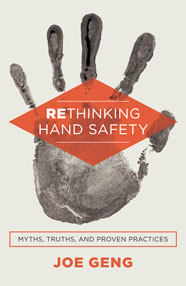
[00:00:13] NVN: If you work in an industrial field such as manufacturing, construction and oil and gas and your employees’ hand safety isn't at the top of your mind, well, it should be. According to Joe Geng, author of Rethinking Hand Safety, hand injuries are the number one preventable industrial accident around the globe. In this podcast, Joe shares what he has learned throughout his career, overseeing glove R&D at his father's tannery and consulting with leading companies that include Toyota, Honda, Space X, General Motors, Shell Oil and more. He might even give you pause about how you think about employee safety in general, an insight into changing up some of your philosophies and strategies that can cultivate a better culture and a more profitable bottom line. Joe, thank you so much for joining us today.
[00:01:03] Joe Geng: My pleasure.
[00:01:04] NVN: So I love to start out by talking about your childhood and how you helped your father make gloves. This is a story that I feel like I've never heard from anyone before.
[00:01:14] Joe Geng: Yes, my father. He bought this business Superior Glove in 1961. He was a leather tanner from Germany and he came over and was making leather for different companies. And then eventually he just decided to start his own glove company because he was making a lot of off leather glove companies and then so kind of blood, sweat and tears grew the business, and I had two older brothers working in the business. So I was growing up; I was the youngest by far, and then it just kind of on weekends and that kind of thing. He would bring me in. And as a side job, like during middle school, I would sell gloves at garage sales. So just, like asked local people if I I could join the garage sale. It's so close, said the something looks like farmers and things like that. And they’d be haggling with me. Yeah, kind of like it was in the blood sort of thing, but basically, yeah, all through during school, my dad bringing me in the weekends and then just he was great in that like he would just give you the worst jobs. I remember, like one of the first days he brought me over, and there was this leather tanning pit and was just felt with sledge. And he's like, here's a shovel, like get to work, clean it out and like it would probably should not be against some labor laws to do that, it was just noxious. But, like, really made you like It was probably five minutes in, and I am definitely going to university. There's no I’m doing this.
[00:02:33] NVN: I love that. So was this something that you felt passion for or came to feel passion for? Or was it initially just sort of what you did is a member of your family.
[00:02:43] Joe Geng: Yeah, it was the latter. It wasn’t, I had no passion for it. I was a little bit that black sheep because my brothers kind of, especially my older brother. He joined the business and he was full in early on, and I during university, I said that there's no way I'm joining and I'm not part of the business and went to school and had no intention of returning. I was like, I'm not going back there. But then they would just sort of grew on me like I worked in the summertime a few times. And then when I got actually got into doing it, then it started to be really fun, because I wasn't cleaning out the sludge pit, I guess.
[00:03:14] NVN: Go figure. So, you were won over. And then after you went to university, you continued on to a leather school in Germany, which you describe is the Hogwarts of leather making. I'm not even going to attempt to say that school name. I'll let you go ahead and say it.
[00:03:33] Joe Geng: Yeah, I was actually, and this was another thing that, like, I really have to credit my father for. It was actually after high school. He had arranged for me to do an apprenticeship in Germany. And so I just went over to Germany for a year, and that was really like baptism by fire because I went over there and I didn't speak a lick of German. So I just went over there and started working in the tanneries over there. And that was a transformative experience, because I really had to work hard to learn the language and get used to a new culture and be on my own. Yeah, for me. I like I could not think my dad enough for that experience, but at the time, it was really kind of a bit — there were definitely difficult moments there where I was questioning why he had done that.
[00:04:14] NVN: That's a lot. I mean, that's full immersion right there. It sounds like in every way.
[00:04:19] Joe Geng: Yeah, it was. But you learn quickly, and I think like there's just something where in high school, I don't know. It just sort of awoke something in me, in the high school, it was maybe not hard enough or I don't know what it was, but it was there that I kind of learned. Okay, actually, if I apply myself that, I can really I'll learn a lot were in high school, I don't know why, but I never really occurred to me. I just kind of did the bare minimum, and I kind of I just learned how to learn. They're really out of necessity.
[00:04:47] NVN: Yeah, it's interesting. Personally, I experienced that same shift over time where it was like an obligation to learn when I was younger and then all of a sudden It's like it clicks and become something very different.
[00:04:58] Joe Geng: Yeah. I think it was, like, kind of that come to Jesus moment where you’re like, yeah, you got to do this or else, like you're not going be able to get food. But then, yeah, then that light went on. If I work hard at this, it I can learn this language and actually be proficient at it.
[00:05:14] NVN: So what happened from there? Did you come back to Canada? Just guns blazing, understanding a direction for your life at that point. Or what did that look like when you came back?
[00:05:26] Joe Geng: It wasn't the straight path by any means. So after that, then I came back and applied to university and went to university and a cougar at Trinity Western. But then I had found, I guess, a new work ethic, really and dedication, but not a clear path. I had no intention of joining the family business at that point. It's only after university that I reluctantly sort of agreed with my dad to give it a shot after a lot, lot of conflict between us, like years, so really that was kind of my course.
[00:05:55] NVN: Okay, so it sounds like I got the chronology wrong here. The leather making school in Germany happened before university.
[00:06:03] Joe Geng: Yeah, that's right. It was kind of like I guess a gap sort of thing between high school and university. It was really impactful for me. I don’t think I would have done well in university if I had gone straight from high school.
[00:06:13] NVN: Yeah. Yeah, that makes perfect sense. And how you must have been so much more worldly coming back, having learned a completely different language and being immersed in this whole different way of doing things.
[00:06:26] Joe Geng: Yeah. And I cut my teeth and made a lot of mistakes. Suffered abuse in Germany, that kind of thing.
[00:06:32] NVN: Totally. So, in the time since then, you have come to study industrial hand safety, overseeing glove R&D, and also gone on to consult with leading companies like Toyota, Honda, General Motors, Shell Oil, SpaceX, talk to me about where that cross over for you was between glove R&D and stepping into industrial hand safety.
[00:06:59] Joe Geng: Most of what we've done really is, is on the glove side, so I mean, we’re a glove company, and that's like what we do day in and day out. And I'll tell a story that kind of illustrates this from my dad is that he started off it when he was making cloves for retail. So mostly he was selling to like hardware stores and that kind of thing in downtown Toronto, and he had an old Volkswagen Beetle and he took out all the seats. You just had the driver seat in there full of gloves and then drive down on a like a Thursday night and sell the gloves to these hardware stores in order to make payroll on the Friday. And he said, like the shopkeepers, they were very sharp, and they could more less smell desperation on him. So they were always negotiated down on price and and he really was barely surviving hand to mouth. And then one day he got a call from a local company just in the neighboring town, and it was a steel manufacturer and he went in there and they said, Oh yeah, we're really having problems with our gloves, we’re having these hand injuries. I don't know what we can do. Would you mind come taking a look? So he went in there and, like, sort of a light went off for him in that he just saw how many gloves they were using and that and how poorly they were designed. So he came back, and my mom tells a story like she basically didn't see him for 48 hours. He was at work, work the whole time and, like, slept in the office. And then he went back like, two days later, had a glove design for them that was so much better than what they had had before and more or less on the spot that handed his this PO. And he said the PO was really 1000 dozen gloves or something like that. He said it was more than he’d sell in half a year to all the hardware stores and he walked out there. He's like, I am never sell it to a hardware store again. That's this is where the business is. That's kind of the motto that we've sort of followed since then is like go in to factories find out what the problem is and then design accordingly. And then that’s been our niche and our sweet spot. So I kind of just done that and put all our efforts into being good at designing for to solve those problems. So that's what's got us into, that’s why we're selling to General Motors and Honda and those kinds of people because we're kind of follow that exercise and designed the products specifically for the weird and niche applications that they have. And then the industrial hand safety part is really more just the realization that even when we were making the best gloves that we could and our customers were were using really good products, that they're still having hand injuries. And so we're just kind of sitting down like, what else can we do to help them? And we really didn't know. So that's what sort of spawned the idea of a book. It's like, okay, let's go down this road and do the research and write a book on it. And the just the book writing exercise was the discipline to kind of get us to those answers of how can we help our customers more and maybe even to take a step back, like the problem that we're kind of having is like the, we were like, the man with a hammer except our hammer was gloves so that every problem we thought we could fix with a glove so like, well, just if you're having hand injuries, we can fix it with the glove. Are you having employees not wearing the right products or having them, they don't want to wear safety products. We could make a glove, but the reality is we couldn't solve everything with just glove design. So then we had to dig a bit deeper.
[00:10:12] NVN: Interesting. So talk to me about some of those issues you found that you weren't anticipating ahead of times where you realized there's something bigger happening here that we can't completely solve through the gloves.
[00:10:24] Joe Geng: So it was really like it was just the mystery of like why does this company, they’re using a really good glove, why are they still having injuries? Why did these injuries occur? Why do people take their clothes off and not wear them? So that was kind of like one group of companies and the other one was where companies wouldn't be willing to pay for the right protection for their employees and, like, how can we help them? Because they're really making, they’re just making a huge mistake and that people are getting injured and it's actually a poor financial decision. So I remember going into one place and there there's handling like the sheet metal for making doors for an automotive company. And they're using cotton gloves, which is really a very poor choice because cotton doesn't offer really need protection against sharp sheet metal. And we walked in. And the guys said, I'm sorry, I can’t meet with you today. Somebody got killed by one of the robots here, and he like just the guy totally didn't observe this safety rules. It stemmed from just a culture that didn't really care about safety, where production was more important and the purchase price of safety materials or like personal protection, was the overriding factor rather than protecting employees. So we kind of like wondered, like how do we get through to those people as well, where they're just making really bad choices. And why would why would they make that choice. We tried to dig deeper there.
[00:11:41] NVN: Interesting. So for people who are not aware of this, as you talk about in your book, this is a big thing. So right now, hand injuries are the number one preventable industrial accident, and that includes manufacturing, construction, gas, all types of industries.
[00:11:58] Joe Geng: Yeah, that's the case. It’s actually back is the number one injury. But the reality is like back injuries like you could be sitting at your desk and you move the wrong way and you've got a back injury. So we kind of consider those not as preventable where the hand injuries really almost all of them are, like if you have the right glove on and you were wearing, it probably would have been prevented or few. The machines were properly guarded, that kind of thing, like there's clear steps that could have almost all of them, could be avoided. But in the workplace they’re not considered like they're not as much focus given to him. It's more like the injuries that lead to death. So, like people falling off a roof, that kind of thing like there's a bit more attention given to that. Where hands was kind of an afterthought, and in some places it's like, well, we can wear gloves if you want to that kind of thing, it really it's not good, because people's are getting cut and having serious hand injuries all the time.
[00:12:46] NVN: That makes sense. And also, from a business standpoint, I would imagine that it's lowering productivity, too. If you want to bring it down to the bottom line. If your workers are working in these industries and not protecting their hands and injured, there has to be a cost to that.
[00:13:02] Joe Geng: Yeah, definitely. There's a story in the book where one of our sales guys, he was in one of the local beer bottling plants, and I forget what the number was exactly. But they're having, like, 10 relatively minor cuts in the day, and the sales guys like, oh, that's not too bad. And the safety manager said really that's terrible. Every time there's a cut, that guy’s got to leave that line. It slows everything down. He's got to get stitches or a Band-Aid and take some 45 minutes to come back and that's a huge loss of productivity. And then he's probably be working a little bit slower because he's got a cut on his hand, that kind of thing. So the productivity loss is significant, even from minor little cuts. Then, if you're getting stitches or you're off for a few days, to order hand injuries where you're off for a few months like it, it really is very costly. And then there's the even just. We've seen places where when they get into wearing the right glove or they make those right choices, the productivity goes up because you can feel that parts better and that kind of thing. We've seen cases where automotive manufacturers can speed up the line if they're wearing just really good gloves.
[00:14:02] NVN: And I'm curious. Did you find that there was a morale or psychological component to this, too? Like I have to imagine that if I was in a job where I was hurting myself consistently or seeing my coworkers hurt themselves, that would have some sort of impact on me.
[00:14:20] Joe Geng: Yeah, there's a huge impact there where you kind of, if you're working for a company and they're not providing you proper protection, you don't feel supported and you feel like there's us against them mentality where the reverse is If the company’s doing their best to look out for you and to make you feel safe, then you feel like they really are looking out for me and I'm going to look out for them. Yeah, we tell a story like a really interesting story from the CEO of Alcoa and this is like in the eighties and he took over Alcoa Steel of one large steel manufacturers in the US. On his first call with Wall Street he told them, if you want to know how our financials are doing or how we're doing is a company, the first number you need to look at is our safety numbers. How many lost on injuries, that kind of thing. And after the call, the stock dropped dramatically because more or less, they said, this guy's a hippie. He’s not going to pay attention to the financials and the stock plummeted. And like over the course of of his tenure, which was quite long, Alcoa dramatically outperformed the S&P500. It was a huge financial success and because he kind of realized that if we look after people, they will take care of the company. And the best way to look after people in an industrial setting is to make sure that they go home safe. It was kind of that realization, and then gloves is just a piece of that, right. If you're looking after people's hands and making sure they have good gloves, it's one way of saying wait, we care about your safety.
[00:15:46] NVN: Smart. So this guy was just a little ahead of his time. It sounds like.
[00:15:50] Joe Geng: He was quite a bit.
[00:15:51] NVN: With that in mind, I know that in the course of this book, you spent a lot of time asking questions of companies, of safety experts, safety managers, industrial psychologists, a whole host of people, and all of that is in the book. But I'm wondering for listeners today if there are one or two things that really stand out in your mind from those conversations as either important or something people wouldn't guess at anything like that that you'd like to share.
[00:16:21] Joe Geng: Yeah, there's a lot of a lot of stuff that came out where it was really surprising that relatively minor tactics had a pretty big impact on hand injury reduction. But my favorite story that we came across from one of the safety experts be interviewed, he said he was working with an oil and gas company in Alberta, and so in western Canada, and they what they did is, they had a hand safety campaign and they gave everybody working on this oil rig. They gave him a pair of pink gloves, and they said, when you see one of your co workers doing something unsafe, it's up to you to go up to them, hand them the pink gloves and they have to wear those pink gloves for the rest of the day and then as a company, we will donate $5 to breast cancer research. And so the effect was basically that all the co workers in a sort of a fun sort of jovial like camaraderie, they were giving their co workers a hard time if they had done anything unsafe and they were there kind of eyes and ears of the safety manager, and then that person was wearing the pink gloves and their coworkers were giving them a hard time the rest of the day and the net result was their hand injuries drop about 30% and they stayed low even after the campaign was over. It was just this really interesting way of applying peer pressure, you know, in a really positive way, and that having said it worked because they already had a very strong culture. And like that, you knew that that person was doing it out of your best interests and not because they're trying to give you a hard time or it was coming from a good place, essentially. So it worked well for them because they had already developed that. So that was one story that really stuck out another one. There was one study that that was really surprising is that they did a study at a shipyard where they improved housekeeping more or less of the facility, and they anticipated something like a 25% reduction in overall injuries. And instead it was shockingly high that when everything was put away and in its place, everything was tidy, they had like a 70 or 80% reduction in overall injuries, and it was just like little things like that can make a huge difference. And if you're applying several those tactics at once, that can be very powerful. Can I tell one more story that occurred to me as well?
[00:18:32] NVN: Yes, of course.
[00:18:33] Joe Geng: This one I thought was so good. We were talking with one safety manager. He was working at some kind of metal fabricating company, and when he took the job as part of the interview, he said, “I’m only gonna take this job if you let me work on the floor for the first week”. And the person said, “Sure, I guess so”. They kind of thought it was a little bit odd. And so this first week he goes out on the floor and he says, like, make sure you put me in the most difficult jobs and more or less the people in the floor kind of like making fun of him or like they were kind of laughing that thought it was a joke and then they realized, no, this guy's serious. He's for real. He's going to be working side by side and he's really going to understand what we're doing. And I immediately established this huge trust because he knew they knew that he was willing to get his hands dirty and also that he had understanding of really, what would work to keep them safer so that I guess that sort of principle of really getting your hands dirty and getting it on the floor stuck out to me as well.
[00:19:28] NVN: What I'm hearing, there seems like an overlap in a lot of these stories is that there is such a human element to this.
[00:19:34] Joe Geng: Definitely, I think the first thing like the most important part of reducing injuries is building trust. So whether that's trust from the CEO or trust from the workers that are doing the job. So that safety manager, if that person typically responsible for safety, is kind of caught in the middle, they have to make sure that they're managing up so that the CEO and upper management buys into their programs because if they don't, it's gonna fall flat. And they have to make sure that the people that are doing the work and that are in the front line, trust that they're acting in their best interests as well.
[00:20:08] NVN: And my last question for you, I'm curious. I've noticed that it seems like there are myths in every industry across the board. Do you feel like there are any myths within the safety industry that people are buying into but aren't necessarily serving them or don't play out in reality?
[00:20:28] Joe Geng: Well, I guess the one thing that we did come across, I don't know if it was really a myth, but it was a like a common thought pattern that well, you can't prevent all injuries. So some things are gonna happen. They gonna be inevitable. Sometimes people do dumb things that those accidents were gonna happen. And it was those places that tended to have higher injuries, and the converse attitude was, no, if we dig in deep enough, we can figure out why somebody's acting in that way and then prevent that. So I think it was really, it was more an attitude maybe than a myth. Another myth was around safety incentives. So there's been quite a bit of discussion. This has gotten better over the last couple years, but it's it's not totally cleared up because we're still seeing it. But it's that attitude of like okay, well, if we throw a pizza party, if people have a low injury, right? So if you like to see those signs, like 100 days since the last injury are, or 365 days since the last injury. Typically, those are rewarded by okay, a pizza party or everybody gets a hoodie at the end of the year or something like that. That is a very bad idea in that what it leads to is just under reporting. So what happens is like someone gets hurt. And then everyone says, I could just be quiet about it. You're okay. And because if you if you do, we're not gonna have that pizza party. And then so what that leads to is not only that person injured and not getting proper treatment, but the root causes, no one knows about it so it can't be prevented for the future. And maybe something worse is going to happen the following time.
[00:21:57] NVN: That makes so much sense once you break it down. I would have never thought of that, though.
[00:22:03] Joe Geng: Yeah, I didn't think about it either. And that when we dug into the research like, oh, yeah, that's really —there's quite a few stories around that bad injuries happening and being hidden.
[00:22:11] NVN: So finding, has doing all of this research made you change any assumptions or practices you had before going into this book? Or has it served to solidify a lot of what you already thought?
[00:22:23] Joe Geng: No. It was the first thing we didn't know that much about how to really prevent hand injuries. And it's really influenced how we’re thinking and what we're doing when we go into those customers and the recommendations we’re making. So instead of just buy more gloves, were like, okay, well, these are other things you could be doing that may cost very little that can have a huge impact on reducing your injuries.
[00:22:42] NVN: Amazing. A double win. You informed yourself, and you're informing everybody else. I love it. Okay, Joe, where can listeners find you?
[00:22:51] Joe Geng: So LinkedIn. I'm on LinkedIn or my email address is joe@superiorglove.com.
[00:22:57] NVN: Excellent. Thank you so much for joining us today.
[00:22:59] Joe Geng: Thanks very much.
[00:23:01] NVN: Thanks for joining us for this episode of Author Hour. You can find Rethinking Hand Safety on Amazon. For more Author Hour, hit the subscribe button on your favorite podcast service. Thanks for joining us. We'll see you next time. Same place, different author.
Want to Write Your Own Book?
Scribe has helped over 2,000 authors turn their expertise into published books.
Schedule a Free Consult