Nick Bare: Episode 406
Read the full transcript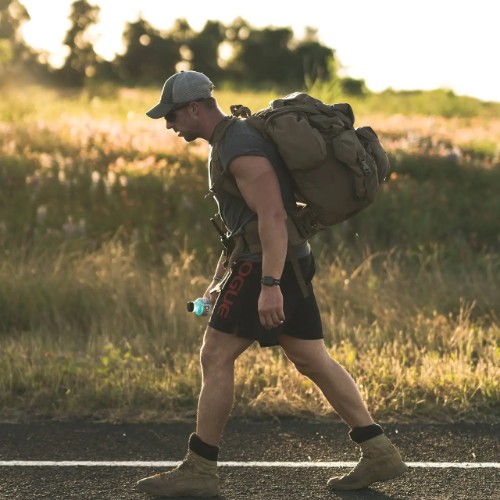
Nick Bare
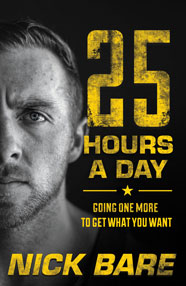
Nick Bare is a fitness entrepreneur, hybrid athlete, and US Army veteran. He founded Bare Performance Nutrition in 2012 out of his college apartment while studying nutrition and serving in Army ROTC, then built it into a multimillion-dollar supplement brand while on active duty as an infantry officer. He holds a Bachelor of Science in nutrition, served four years in the US Army, and completed Ranger School. In his book 25 Hours a Day: Going One More to Get What You Want, he shares the philosophy of pushing past perceived limits that shaped nearly a decade of building his company and serving in the military. He lives in Austin, Texas.
📚 Books by Nick Bare
Transcript
[00:00:31] NVN: If you find yourself making excuses for all of the things you are not doing or building, this is the podcast for you. Today I'm joined by author, social media influencer and Bare Performance Nutrition founder, Nick Bare. On this episode, he talks about why he came to write his new book, 25 Hours a Day and how so many of the lessons and mottos disgusting it, such as ‘embrace the suck,’ ‘go all in,’ and ‘live like you have an extra hour,’ allowed him to build a seven-figure business. While he was serving as an infantry officer in the U. S. Army. Nick, thank you for joining us on Author Hour today.
[0:01:09] Nick Bare: Absolutely. Thank you for having me
[0:01:12] NVN: So happy to have you here. You have such an interesting background, which I'm really curious to hear about. So, you served four years active duty as an Infantry Officer in the Army and completed Army Ranger school. Correct?
[0:01:06] Nick Bare: That is correct. Yep.
[0:01:27] NVN: So, tell me about what these experiences were like and especially how you think they influenced you?
[0:01:37] Nick Bare: I think they had a massive, massive impact on my life. I graduated college in 2013 and immediately went into the Army as an Infantry Officer. So, in the Fort Benning, Georgia, I was there for a year. I did Ranger School, Airborne School, the Infantry Officer Basic Course. And those schools, molded me into the person I became. When I then got stationed at Fort Hood, Texas, and took over a platoon. They changed my life. ‘Embrace the suck,’ ‘go. one more’ mentality. All the things I talk about my book, in my life, on social media, those all originated during like that that year at Fort Benning, Georgia, where I did those schools. And those really carried on into me building my business.
[0:02:19] NVN: Wow, you were so young. I mean, that just requires so much more dedication than the average 18-year-old has.
[0:02:27] Nick Bare: Oh, yeah. I mean, it was different because I saw all my friends graduating college going to do their jobs in the city and whatnot. And when I went down to Fort Benning, Georgia, you know – I was in Ranger School for 141 days. Like four and 1/2 months. That's a 61-day course which we can talk about. They're on this podcast we want to talk about in my book. But I recycled that course twice. So typically, people spend 61 days in this course. I was there for 141 days. That really reinforced the impact of that school in my life. I was 20 maybe 22, 23 years old at the time. And I would say like it matured me very fast and it made me realize, like what my passion was and what I wanted to do from that moment on.
[0:03:17] NVN: So why did you do it two times? Why did it take you that extended period of time?
[0:03:22] Nick Bare: So, Ranger School has, like a 50% pass rate. There's three phases. The first phase starts at Fort Benning, Georgia. The second base goes to Dahlonega, Georgia in the mountains, and the third phase is in the swamps of Florida. Now, each phase you can recycle for multiple reasons. Whether that's an injury or failing a patrol, for example. You get put into a leadership position in each phase, and you have to pass that leadership position to move on the next phase. If you don't pass that leadership position, you have to do that whole phase over again. So, I started –It was February 23rd in Fort Benning, Georgia, and I failed the first phase for not passing on patrol. But because of the date that I went into Ranger school, it was a six week hold over. Now this is just six weeks, just sitting at Fort Benning, waiting for the school start again because it was this thing called, ‘Best Ranger Competition.’ So essentially Ranger school shuts down for six weeks because they hold this competition there to find out who's the best already qualified Ranger. And if you are one of the unfortunate Ranger candidates during this time, you just kind of help out with the administration stuff to make sure that this competition run smoothly. So, I started Ranger School, and that was about three-week interval, failed that, had a six week-hold over. After that hold over went back in for another three weeks. Past moves on the mountains. I got the mountain phase that for three weeks I failed my patrol again, so I had to do another three weeks passed that. Went to Florida, passed my first time. Graduated Ranger school with that Ranger tab on my shoulder. But a lot of lessons learned throughout the process.
[0:05:02] NVN: What do you think was the most powerful lesson that you took away from that?
[0:05:06] Nick Bare: I think it was this whole ‘embrace the suck’ mentality. It's not something I'm not the first person talk about it. It's been in the military for decades and decades and decades. It's something that everyone knows. If you've been in the military, you know of the phrase ‘embrace the suck.’ But there was a moment there in Ranger school where I was just so tired. I was so beat down so lethargic and hungry and just, like, depleted like that wasn't just a phrase anymore. That was something I was like, “I'm here. I'm at that moment. I'm feeling the effects of that right now. And the only way to get through it is to embrace it.” And because I reached that low when I was there, it kind of set the precedents for what the rest of my life was going to be in terms of what the perception of hard is. Because that was difficult, that was hard. And I realized that every moment after that the rest of my life, there probably will be very few things that are that difficult, hard for that extended period of time that you can't get out of. And I realized that when I was there and the perception of what is hard kind of changed after that.
[0:06:11] NVN: I mean, this is easy for me to say, since I didn't live through that. But from an outsider's perspective, what a gift to realize that when you were so young. I mean, that just lays the rest of your life out for you.
[0:01:06] Nick Bare: Yeah. I think it's kind of funny where your perception of what is hard, kind of changes in how you kind of respect that process. I mean, it's like everyone was talking about, like, enjoy the process of certain things. Well, that's easier said than done. Ranger School, I couldn't enjoy the process, but I could respect it and respect it for what it was in knowing that coming out of that, that you're going to take all these lessons and values away from the experiences, whether good or bad. So, like realizing that, saying yes and taking these opportunities and learning from these opportunities. Well, that's like a foundation for everything I do from here on out. I try to challenge myself in things because I know it’s an opportunity. I know whether I succeed or fail. I'm going to learn a lot from it.
[0:01:06] NVN: So, tell me about the ‘go one more’ philosophy.
[0:01:06] Nick Bare: So, it was probably a year and a half ago. And I was training for my second marathon and in the brim of my hat, on the bill of my hat, I wrote, “One more. Go one more.” I actually currently have that tattooed on my forearm. But at the time I wrote, “Go one more,” on the bill of my hat, took a picture of it posted on social media, in a YouTube video on Instagram. And I talked about this mentality where – it was like it was after a long run and before, like finishing that run, I was just sucking that day. I was hurting. My body just didn't want to finish that run that day. I just kept telling myself like just stop, just stop, just stop. I got angry, literally angry at myself because my body wanted to quit. My body wanted to stop. It was trying to convince my mind to stop. So instead of just finishing the run, I ran an extra mile over where I was supposed to do that day. Just drive it into me. And I use that mentality in like all these things afterwards, where if you're ever trying to fight this conscious willingness, like to stop and quit and give up well, don't finish it. Go one more pass, whether that's like one more rep in the gym, or read a few more pages or work on your business for one more hour. One more week. Give it one more month Keep going one more. You know, run one more mile. In the face value of it doesn't seem like it's that great. ‘What's one more mile going to do for me? What's one more rep going to do it for me one time?’ Well, that’s the thing. If you do it one more time, it does nothing. But if you do that one more thing over and over and over again, it compounds. So, before you know it, you've done 1000 more reps. You read 1000 more pages. You spent 1000 more hours on your business or on a project. And over time, you’ve added all these skills in this time, this resource to your skill set, where you're stronger, more educated, better person. Stronger leader, smarter leader. So, there's one more mentality and ever since I post on social media, everyone started writing on the bill of their hats or writing on their notebooks or getting the tattoo. It's this mentality that if you adopt and like use every single day, it has mass effects on your life in a in a positive way. It pushes you over time that closer where you want to be, and that's what the whole ‘go one more’ mentality is all about.
[0:09:25] NVN: I feel like that's such a powerful message to yourself, too, if you know you want to stop something which never really feels good when you let yourself stop something, no matter how bad you want to stop, there's always that feeling of defeat to it. But instead not just finishing but going beyond that. It just seems to me like there has to be so much what’s the word? There's so much of velocity behind that.
[0:09:49] Nick Bare: Oh yeah, it propels you forward.
[0:09:53] NVN: Love that. You talk in your book about this idea that for most of us there's a massive gap between what we think we can do and what we're actually capable of doing. Do you feel like that experience is tied, that your experience with the Army Rangers is tied to that philosophy?
[0:10:11] Nick Bare: Yeah, I think part of it. I mean, I remember growing up where they in high school. I wanted to be, you know, your typical. I wanted to be a professional baseball player. And I thought that I could be there. And the thing was that, well, I didn't have what it took to get there. So, the Army really told me that if you want to do something and you truly your passion about you want to make it work well, it's going to take work. And it's going to require a lot of work and dedication to get there. So, I took from what I learned in high school playing sports as just thinking that I was going to get what I wanted because I wanted it. But I quickly realized, “Well, I wasn't good enough in sports, right? To make a career out of it or even go to college for it.” When I was there, I kind of thought, “Well, maybe I just like I'm not good at anything. Maybe I'm just super average. Maybe I'm not meant to do anything great in this world.” And I remember thinking that in high school. And I knew I was going to join the Army. And when I got the military and went through these schools and had the opportunity to lead a platoon, I realized, “Well, everyone has the potential. It's just like, how much are you willing to tap into that potential or what are you willing to sacrifice?” And I talk about in my book. But there were there was a moment when I first got my platoon and I realized that all these guys in my platoon have all this potential mental and physical potential. They were smarter than me. They were stronger than me. They were faster than me. But a lot of them didn't think they had it in them to succeed. They didn't believe in themselves. And I saw this. I got mad. I would always get mad, and that's honestly one of the reasons I wrote this book. It's for people like the guys in my platoon people like that because if you just harness that power that everyone has, everyone's just sitting on it, thinking that they don't have the ability to do something great. But in reality, it's just like taking that step. Taking that action
[0:11:49] NVN: That's powerful. What do you think – I mean, I'm sure that this answer is sort of individualized from one person to another. But since this is something that you're acutely aware of, I'm wondering if you have any thoughts about what creates this gap for people. Are there any common sentiments you see, the people have a hard time breaking through so that they're not crossing that gap between their potential and what they're actually doing?
[0:12:16] Nick Bare: I mean, I think a lot of it's just experience, putting yourself out there. Like, I think one of the reasons my business has been successful is because, for one, I'm kind of ignorant to the risk that I'm taking sometimes. If there's something I want to do it and I'm really passionate about it, I will mitigate risk where I can. But I know I'm going to be taking some risks somewhere. And a lot of people, I think, are afraid to take any risk. And sometimes that risk is like it's failing. Like if there's a risk of failing at something, they just don't do it at all because they're afraid to put themselves in that position. But I think I'm sometimes ignorant to the fact that I can fail at things, and I believe that I really can do anything I want so I just put myself out there. I mean I’ve failed many, many times at a lot of different things. I've probably failed more than I've ever succeeded. But like the probability of those successful actions, taking some words big when you put yourself out there that many times.
[0:13:06] NVN: So, speaking of succeeding and you also referenced your business after the Army, you went on to found and serve as the president of Bare Performance Nutrition, which is a seven-figure supplement company. Now, am I understanding correctly, that you started building this company when you were still in active duty?
[0:13:26] Nick Bare: Well, actually started the company in 2012 when I was in college.
[0:13:29] NVN: Wow. Okay,
[0:13:31] Nick Bare: So, I was going to college for nutrition, and I was in ROTC program. So, I knew that I was going to go active duty Army a year later, in 2013. So, I started this company Bare Performance Nutrition in 2012 out of my small college apartment. Took on a $20,000 loan to start this business, naively thinking that it was enough to start a business, especially product-based business. And I quickly realized that it was going to be a lot harder than I thought. So, 2012 I start this business first year in revenue we do about $20,000 but I quickly, soon after, ship out to Fort Benning, Georgia to complete the military training where I'm in and out of the field. I'm always gone. Didn't have time to scale or spend time in the business, and it was kind of like that for the first couple of years. Now on 2014 I started social media. So, you know, most people nowadays they start social media first, they establish a following and they started business. Why did it the opposite way? I started my business in 2012 started doing social media 2014 and really just dedicated a lot of time to filming YouTube videos and putting myself out there and creating a community and platform around my personal brand, around training and nutrition and my time in the military. And behind the scenes of building my business. And as my social media president started to grow, so did the company's presence at the same rate. Almost.
[0:14:53] NVN: I can't believe you were able to balance these things in any way, shape or form. That's really incredible to me.
[0:15:00] Nick Bare: I think learning some of those ‘embrace the suck’ lessons in the military prepared me for that. So, I quickly realized that I don't need as much sleep as I thought I did. I don't need as much food as I thought I did. If it's something I really want to do. Yeah. I mean, there were times – because my unit was sent over to South Korea for nine months, so I was growing and scaling the business while in South Korea for a while. And that's when it really started to pick up. So, when I transitioned back to the States from South Korea, that was probably the craziest year of my life before transitioning out of the military because at the time I was still working full-time for the military. We just signed a lease for a first warehouse, which was about an hour away from where I worked. So, I was sleeping maybe an hour and half, two hours a night max between working with the Army, building the warehouse filming YouTube content, doing all the business administration work. It's just like it was a blur. So, like literally a schedule day in the life early 2017 I'd be up like 4, 4:30 to drive into work, and we have P.T., physical training with the military from like 6 to 7 30. And then from 7:30 to 8:45, I would sleep in my truck. I would have to be at work from nine until like 5,6PM. If we weren't in the field and I would sleep in my hour lunch break in my truck. And then after work was over, I would drive to the warehouse. We start working on the warehouse home and YouTube content now edit until 2AM. sometimes get a few hours of sleep and be back the next day. And I was like that for almost a year. And it was wild, but it worked. It helped us scale the company to seven figures.
[0:16:43] NVN: Yeah, you are embodying this 25 hours a day philosophy of your book. Except honestly, it sounds more like 29 or 30 hours a day that you were really pulling there.
[0:16:54] Nick Bare: Felt like it sometimes.
[0:16:57] NVN: So, I don't know if this is just something that I happen to have never heard before. But I can't think of anyone I've ever spoken to who was in the military and also running, maybe and let alone building, but running their own business in the process. Is that something people do or did that set you apart in and of itself?
[0:17:15] Nick Bare: Yes, so when I first entered the military – I mean, you have to get approval by your chain of command to have a side business while you're in. So, when I first got in, I got approval for my commander that I could do this because there wasn't really much going on that – we weren't doing much volume. It was a few orders a month at most. So, it didn't require much time at all. But the closer I got the transitioning out, it started acquiring more time. So, when I transitioned back from Korea and that last year, the military, that's when it finally started to grow. So, it's started requiring more time. And that's kind of one of the reasons I decided to get out of the military because one, the business was growing and I was really passionate about it, and I wanted to pursue it, and I was at a point where I had to choose one or the other. I couldn't keep doing both 50 50% because it wasn't fair to, you know, my military contract. It wasn't fair to the business and the employees, so I had to choose one of the other because it was only fair to each party. So, I finished on four-year contract with the Army, transitioned out and then went all in on Bare Performance Nutrition.
[0:18:16] NVN: So, really straightforward question for you when you're talking about that year after you got back when you were, you know, sleeping for an hour and half or two per night. Did you pay a price for that? I mean that just thinking about that in a sustained way, while I understand how far it got you, it seems like it could negatively impact your health also.
[0:18:39] Nick Bare: You would think. But I think that this is the only way to describe it –I'm sure doctors would probably disagree with me. I think we're just – you know, it was me. My brother moved down from Pennsylvania because he believed in the passion, the vision as well. And our buddy Joe, he moved down from Pennsylvania to help out as well, too. He's still with the company. We were just running on such a high from passion behind what we're doing. It was almost like the feeling of like when you're younger, waking up for Christmas. It was that every single day for a year. Because it was new, it was exciting. We were seeing growth. We were all stepping into this massive space of uncomfort and the unknown in big risk. But like it was so exciting that, like there wasn't anyone or need to slow up. I didn't crave sleep. I didn't crave a day off. I was just so in it that I didn't want to stop.
[0:19:30] NVN: I get that. When you do stumble upon that thing, whatever it is, it's almost like there's this kinetic energy that sort of overtakes you.
[0:19:38] Nick Bare: It was amazing. 2017 even though it wasn't – we've had much, much more successful years since then. It was like that foundational year that I'll never forget.
[0:19:47] NVN: Yeah, I'm sure. I mean, just hearing you talk about it, it sounds so vibrant. I can kind of see you running from one place to the next, sleeping in your truck. The whole thing
[0:19:56] Nick Bare: It was nuts. I miss it. I miss that moment.
[0:19:59] NVN: Yeah, that's saying something. That's a true creator’s mindset right there. I think
[0:20:04] Nick Bare: That's one of things I love is creating. And I talk about in the book how I used to think I loved like all these different passion projects. Like when I was younger, I got really into construction young. I was like, you know, in high school, early high school, they asking for power tools for Christmas. And I got really into, like, landscaping, where I was pushing my lawnmower all around town before I could drive to mow grass. And I got really into, like, cooking foods. And I searching for this passion, what was going to stick. And then I felt like fitness and nutrition and my company and just like, it clicked. And just knew like this is this is my passion. This is what I’m meant to do. This is what I want to do.
[0:20:42] NVN: So now that you're in this state where the company is further along, you've been very successful. How does this 25 hour a day philosophy fit into your life currently? Or does it?
[0:20:54] Nick Bare: I think one of the biggest problems is when people they finally get the momentum moving and the ball rolling, they become complacent. And the things that made them there got him to the point that today, they forget about, because here they can kind of step back a little bit. I think that drives my fiancé crazy little bit because I don't stop that momentum. So, it's always like I want to be at the forefront. I want to be proactive rather than reactive, like I don't want to be second or third place. I want to be the best supplement company in the world. I want our team to be the best team in the world. So, what can I keep doing that pushes that limit that keeps pushing us? So, for me, I keep. It's like signing up these challenges, physical challenges, that give us content for my personal brand and company through like YouTube and Instagram and Facebook and social media stuff. Gives us content for podcasts, and it helps motivate, inspire and push people. A few years ago, 2017 I did 150-mile Ruck March from Austin, Texas, to Houston, Texas, and we did that to raise money for Hurricane Harvey, actually. So, I raised over $10,000 before even stepping all for Hurricane Harvey victims by rucking from Austin to Houston. And then –
[0:22:10] NVN: Okay. Sorry to interrupt. I have to ask you what is rucking? The 150 mile and marching part of this I get but the ruck I'm not following.
[0:22:18] Nick Bare: So, it's in the military. You carry a rucksack, which carries all your stuff. Okay, It was about 50 pounds I had on my back, my combat boots and I walked 150 miles from Austin to Houston. We filmed the YouTube video out of it raised money and awareness for Hurricane Harvey, and it was an awesome experience. I learned a lot from that experience. And then, ever since that I've tried to, like, push my limits. See like how far I can push myself. So, you know, I've signed up for marathons, and then I signed up for the Bataan Memorial Death March every year which is a 26-mile ruck march in the high desert of White Sands, New Mexico. This past November, I did my first Iron Man, which is 2.4 miles for swim, 112-mile bike ride, 26.2-mile run. Right now, I'm training to qualify for the Boston Marathon, which is a sub three-hour marathon. Yep. And then, after this, I'm training and going to document that process of training for an ultramarathon.
[0:23:15] NVN: So, I have to ask you what is the most difficult or daunting thing you've ever done?
[0:23:21] Nick Bare: I would say the most difficult thing I’ve ever done was Ranger school. I don't think anything I've ever done has compared that it was so long. It was four and half months of no communication with the outside world. You're in this bubble. We don't know what's going on the outside world. There's no distractions, which is great You're so focused on this one mission of accomplishment. But that was just like your mind is in such a different place, your mind and body is in a different place there. I’d say that was a hardest thing I've ever done. And I think sometimes I search for that, a similar feeling to that again. That's why I keep pushing myself, because I love the feeling of just being beat down and tired because honestly, it, like it creatively energizes me. And that's where I think about, like, the vision of where I would take my company and how I want to lead the team and the example I want to set for the people that follow us. Follow the company. People that you want to join our team. I need to be the example of what we represent, so I need to keep pushing those limits further.
[0:24:20] NVN: Now, in your book, you talk about a few different concepts, including, like you've mentioned a few times embracing the suck. If it were easy, anyone could do it. Surviving the tough times, turning yourself into a learning machine, entitlement, going all in, winning the day back and going one more. Of these things, do you think there's any one area where people struggle the most? Or where there's the most cognitive dissonance?
[0:24:49] Nick Bare: I'd say, probably going all in. And this is the reason you know – my business wasn't successful in the first three years. For one, I couldn't spend all my time because in the military. But sometimes I didn't go all in initially. I didn't fully dedicate all my time all my resources is everything did building this brand. And I think a lot of people take on these new challenges or they want to become this new person, this new thing, but they don't go 100% all in. Like they have one foot in the door and one foot out, and they're waiting for that moment pull that foot out to step away. And I recently did a podcast with the Dakota Meyer, and we're talking about breaking a switch, and I think what happens is you will have this on and off switch in their mind. And I recently described in a YouTube video where I actually took a switch like a light switch and I was flipping it on and off. And that's how people treat like their dedication to going all in on things. Like when they want to go all in on something, they'll turn on. But when they're done that turn it off and it's the reason they never get anywhere because they're just teetering the switch on and off, on and off. Well, the intent is to break that switch turned on and break it so you have to go all in all the time on what you want to do. I think the reason people struggle with succeeding in anything, it's because they just don't stick with it. They don't follow through on the things that they want to do because it looks all glamorous from the outside. It looks like this easy path, but I am a walking testament that to build the business that we've built. It's been seven years, and it was not easy at all. There's a lot of highs and lows, ups and downs, but because we went all in at some point, there was no turning back.
[0:26:25] NVN: It feels to me like it's human nature too that's coming into play here where you might want this thing. But where you are is safe. So it's safer to halfway out so that you hold on to what you've got and then sort of really stretch your hand out as far as it will go to try and get the other thing. So, you're mitigating the risk. Basically,
[0:26:27] Nick Bare: Yeah, it's easier to not do anything and stay where you're at than taking this big step in the unknown and ultimately failing, possibly.
[0:26:56] NVN: Yeah, totally. But I mean, it's really interesting to that. Feels to me like one of those mind tricks that happens just a za result of being human, because when I think about most of the successful people I know or know about, there is very much this element of going all in. Like that sense of safety is abandoned to really go for what they believe in and want.
[0:27:17] Nick Bare: Yeah, I think you can you can sense out passion in someone pretty early on, if it’s something they really want to do. Like if you start a business and you're not truly passionate about it, you're not going to make it work. You know you're going to be in and out. And turn that switch on and off. You treat that business or that project or whatever it is like it's your baby and like, you have to nurture it. And you have to, like, be with it through the hard times and the good times and everything in between. You're along for the ride with it. You know, you're just, you're trying to right through, but it's a necessary evil.
[0:27:51] NVN: Is there anyone you really look up to or admire who embodies some of these things that you're talking about here?
[0:27:59] Nick Bare: You know, like the top of my head? I did this thing a while back where I actually it was before I started in the book. I unfollowed all these people I used to follow. Because I didn't want to be influenced by things they were saying. And I'm sure this is very different from what a lot you on they're going to talk about and tell you, but in like the industry that I'm in, in the sports and supplement dietary supplement industry, there's a lot of competitors. And to get ahead, you have to be proactive. And what I see all the time is if you're constantly absorbing and taking in all this information, people around you, who are your peers, your competitors, that influences you a lot. And for me to really like once you step ahead and be at the forefront of what we're doing, I like to like, eliminate all the distractions of competitors and people in my space and try to work with my team to figure it out on our own. Puts us in a completely different creative, like proactive space. So, at the moment, like there's no one I'm looking at that I'm saying I want to be there. But there have definitely been people throughout my life that have impacted me and inspired me. I mean, my dad was the first person who told me, like if it was easy, everyone would do it. And I'll remember that the day I told him I was starting my company, he told me it was easy, everyone would do it. And then I had a lot of leaders in the military that had a massive impact and influence on the person I wanted to be, the leader I wanted to be and how I was going to get there.
[0:29:28] NVN: So, for people who are listening to this and who are resonating with what you're saying, but for whatever reason, there is that little slice of them that's holding back that maximum effort or maximum vision. What would you say to them to really encourage them to let go and go for it?
[0:29:48] Nick Bare: I think it's one of the things that you have to constantly look at it. You have to pull yourself away big picture and look at what you're doing where you want to be and you to be true to yourself. Like, “Are you flipping the switch? Are you turning it on turning it off?” Which is essentially discipline? Are you turning on your discipline on and off that is preventing you to get to where you want to be? And you have to eliminate distractions that aren't contributing to where you want to be. And I consciously telling yourself, “I'm going all in. Here is my goal.” I talk about, like, backwards, planning a lot. And I think this works for a lot of people because it’s a visual tool backwards. Planning is essentially get a white board. And on that whiteboard on the left side of that board, put today's date and on the right side that board put where you want to be. Like, what is your goal? What do you want to have, like a $1,000,000 company? You're going to have $100 million company. Do you have, like, a top-rated podcast? What is it? And with all that space in between make little marks of things you have to do to get the point A to point B. That's backwards panning. Allocating time to certain tasks from today to end result to get to that point. And then I will keep you on this streamlined process of, “Okay, this event was knocked off. This event was knocked off one step closer, one step closer.” Obviously, there's going to be ups and downs. You're going to miss out on some things and you grab some setbacks. But I think if you backwards plan, and you go all in, you know where you want to be. Well, that's the first step to getting there.
[0:31:16] NVN: I really love that in terms of accountability, like reminding you of your purpose continually and also giving small wins as you go.
[0:31:25] Nick Bare: Oh, absolutely.
[0:31:27] NVN: I'm totally going to do that. That's great, Nick.
[0:31:30] Nick Bare: It's something used the military that I think the civilian like population should use more often. And I think it's one of those things that when people get out of the military, they don't realize how great it was because it's like second nature. When you're in, it's constantly being reinforced and taught and used. I mean, I've used that for every part of building my brand when I got out.
[0:31:49] NVN: You know, the more you talk. I said at the top of our conversation that I had never really heard about anyone building a business while they were in the military before. I can kind of see the more you talk, though, how it's actually a great compliment in terms of getting you in the mindset that you really want to be in when you're building something.
[0:32:07] Nick Bare: Yeah, it's funny because when I first decided I was going in the military, I was going to go infantry. Everyone told me, “Don't go infantry because there's no applicable skills to the outside world when you get out.” I was like, “Well, that sucks.” And then I was in and I was like, That's the dumbest and overheard everything being told is how to manage resources time, personnel and money. You're taught to be a manager, a leader of all these things. And the best part is you're being taught and kind of inspired to be this leader who asked to lead people to follow you. Influences people to make decisions not based off the fact they're getting paid more money because they're not getting paid any more money, but because they trust and believe in what you're saying. That's the best part about leadership in the military is it teaches you how to work with people to influence people and inspire people to follow you when it's not based on any sort of money.
[0:33:04] NVN: Beautiful. And it also seems like you'd have to do that in the midst of stressful circumstances, potentially and in scenarios where you have to make really big decisions quickly.
[0:33:16] Nick Bare: I mean part of the reason I call it 25 hours a day is it goes back to this story when I was at Fort Benning, Georgia, and we're in the classroom and these officers from the 75th Ranger Regiment were there, asked him a question. I said, “Hey, how do I become like a really good leader when I get to my unit? Sir.” And he just pointed across the room and he pointed this other captain and he said, “You see that guy over there? That guy. When the shit hits the fan, when it's just absolute chaos, he actually becomes calmer. He's as cool as the other side of the pillow. And when everyone else is freaking out and go nuts, that guy just takes a step back. Give himself a minute to digest it, then establishes a plan without freaking out.” He said, “That's the guy you want to be.” And from that moment on, I said, “That's the guy I want to be.”
[0:33:59] NVN: That's true power right there when you could do that. All right, Nick well, thank you for joining us today. I've taken a lot away from this conversation, beginning with the fact that I will be white boarding as soon as we're done talking.
[0:34:12] Nick Bare: Oh, it's an absolute step in getting you where you want to be. I appreciate it.
[0:34:16] NVN: Let's let listeners know where they can find you.
[0:34:18] Nick Bare: Yeah. If you just go on YouTube and search Nick Bare, B-A-R-E. I have 500 plus videos. I’m on Instagram. It is @ Nick Bare Fitness, and our company is www.bareperformancenutrition.com.
[0:01:06] NVN: Excellent. Thanks for joining us today, Nick. Thank you so much. Thanks for joining us for this episode of Author Hour. You can find 25 Hours a Day on Amazon. For more Author Hour, hit the subscribe button on your favorite podcast service. Thanks for joining us. We’ll see you next time. Same place, different author.
Want to Write Your Own Book?
Scribe has helped over 2,000 authors turn their expertise into published books.
Schedule a Free Consult