Sam Marrella: Your Retirement Game Plan
Read the full transcript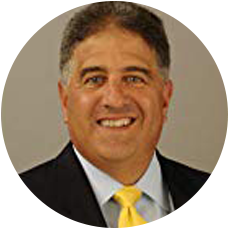
Sam Marrella
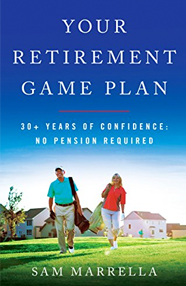
Sam Marrella began as a financial advisor with EF Hutton before moving on to Morgan Stanley Dean Witter, where he worked for fifteen years and rose to the position of Senior Vice President. In 2002, he joined Marrella Financial Group, the wealth management business founded by his father and brother. A self-described people person, Sam is a Certified Financial Planner professional, a Retirement Income Certified Professional, and a Certified Planner in Long-Term Care who has dedicated his career to helping hundreds of clients achieve a comfortable and confident life after work. He is the author of Your Retirement Game Plan: 30+ Years of Confidence: No Pension Required.
📚 Books by Sam Marrella
Transcript
[0:00:44] Charlie Hoehn: You’re listening to Author Hour, enlightening conversations about books with the authors who wrote them. I’m Charlie Hoehn. Today’s episode is with Sam Marrella, author of Your Retirement Game Plan. Have you ever wondered how much you’ll need to save in order to retire? Well, Sam believes that’s the wrong question to ask, what you need to be thinking about is where your income is going to come from after you retire. Sam is a wealth manager with three decades of experience and his focus is to help you overcome the three biggest risks of retirement: bad timing, inflation and living longer than you expected. By the end of this episode, you’ll have a powerful retirement strategy that will allow you to create a continuous stream of income for the rest of your life. In just a quick note, this episode is specifically for people who are close to retirement. If you’re 60 years old and above, this episode is for you. Now, here’s our conversation with Sam Marrella. Sam, tell me how you got started in this journey, where did you realize that maybe you didn’t know about how to properly retire, that you didn’t have a retirement game plan. How did you learn about this stuff?
[0:02:19] Sam Marrella: Well, I’ve been a wealth manager for over 30 years and really, through trial and error and just experiences with clients over the 30 years have I developed a strategy to really help people fulfill one of the biggest goals that they have and that’s to be able to retire and as I define it, retire with confidence.
[0:02:44] Charlie Hoehn: What does that mean? Retire with confidence?
[0:02:47] Sam Marrella: I would suggest to you that most people don’t plan or plan properly, they kind of do things by the seat of their pants and when you don’t have a plan in place, you’re at a deficit. Because retirement is a very complicated journey today with many risk and in the book, I elaborate or I define and elaborate these risks quite a bit. If you don’t have a plan, you tend not to be confident in what you’re doing and you just fly by the seat of your pants and I don’t think you make nearly as good financial decisions when you don’t have this level of confidence as supposed to creating a plan that accounts for the big risks that you’re about to face in retirement and having confidence that this plan is going to work despite all the potential ups and downs and carpals of the retirement may present to you. What I find is when clients embark on a journey of retirement with confidence that the plan that they have in place is going to work, they enjoy the journey a lot more than those that don’t.
[0:04:01] Charlie Hoehn: Tell me a story of a typical client who comes in and they are flying by the seat of their pants? What does that look like to you?
[0:04:12] Sam Marrella: I think a lot of times, clients ask me the wrong question and that is, “Do I have enough money to retire? I’ve accumulated this much in assets and this much in my different retirement vehicles or whatever. Is that enough for me to retire?” I really think that’s the wrong question. I think the more appropriate question is, “Do I have – how much income do I need and where is it going to come from?” Not how much money do I need to retire. All roads lead to income and when you’re retired, you need to convert these assets into predictable long term income streams.
[0:04:53] Charlie Hoehn: In other words, just to clarify, you’re saying that the money should continue coming in, it’s not about saving for a set amount but really, how do you keep the money coming in after you retire, is that right?
[0:05:09] Sam Marrella: Yeah, let me just clarify that if I could. When you retire, you’re basically saying that you no longer want a paycheck and you’re going to live off of any income strings that are there for you, social security and maybe a pension although that’s less and less people today. Then you’re going to live off your portfolio. The question is, how do I create income streams from my portfolio? That are A, going to last the rest of my life which is the first misunderstood aspect of retirement that people are living much longer lives and they don’t account for that, they don’t think along those lines. Even though they may have parents in their late 80’s, they don’t think that they’re going to live to the late 80’s or 90’s themselves. The second aspect is factoring in inflation. People are pretty good about having enough income today to do the things that they want to do but they don’t understand the impacts of inflation. Because inflation is kind of like ether. It kills you slowly, it just smack you in the head like a ton of bricks, it’s just little by little. A lot of times I’ll ask the client the question, “How long have you lived in your house?” They’ll say, “30 years.” I said, “Do you remember what your real estate tax bill was your first one 30 years ago?” “Yeah, kind of,” “Now, relate that to what your last real estate tax bill was a few months ago.” They go, “Oh.” Yeah, that’s inflation. The difference, it’s the same real estate, it’s the same school district, it’s the same everything. The only thing that’s changed is inflation has caused it to be larger in number.
[0:06:49] Charlie Hoehn: Why doesn’t inflation get talked about more? Because I’m totally with you on this Sam, it always drives me nuts that home owners talk about how much they’ve made from their home but inflation is literally never factored in to the equation and it goes with anything. It goes with the cost of food and everything.
[0:07:12] Sam Marrella: Charlie, great point. First of all, it starts at the top, the government the last few years has told us there’s no inflation and retirees have gotten almost no increase the last four years in their social security payments. That’s crazy.
[0:07:30] Charlie Hoehn: Yeah.
[0:07:31] Sam Marrella: I tell clients three things, I said, if I look at the outflow statement of my clients, my client’s out flow statement, what they spend their money on. These three things were in the top five, almost every time. One, again real estate taxes, have they gone up? Yeah, two, food. Are you kidding me? I don’t know if you food shop Charlie, I don’t, but my wife complains almost every week about how she can’t touch anything in the store under four bucks. That has a two part problem for retirees because what’s a favorite past time of retirees? Going out to eat.
[0:08:07] Charlie Hoehn: Yeah.
[0:08:08] Sam Marrella: That has never been more expensive which makes sense because the underlying food cost are so much more. The third aspect or factor is healthcare cost. There won’t be one person listening today that will argue with me that healthcare cost haven’t risen dramatically. By definition, that’s inflation and from one year to the next, it can kind of absorb it but over a decade or two, it’s a huge problem for retirees. The way I position with clients, I say, when you retire, if you have a fixed income, you have “not fun expenses” and then whatever’s left, you can use for fun. Every year those not fun expenses become more and you have that money, has to come out of your fun budget if you will. Then what happens, you hit the point where it all goes to not fun. And now, you’re too late to get back in the work force, you may do something like go to wall mart and put smiley stickers on kids just to generate some income so you can do some fun things with. It’s really sad and it’s happening more and more because people are living into their 90’s. When I ask my clients that are 80, 85, “If you can think back 50 years ago when you were 30 or 35 or 40 years old, what do you think the chances were, you thought the chances were that you’d be alive at 85 today?” I don’t even finish the sentence, you know what they say?
[0:09:33] Charlie Hoehn: Zero, yup.
[0:09:35] Sam Marrella: Because nobody lived that long. It’s a real problem today in that these are real issues and people have in factor them in to their retirement planning.
[0:09:47] Charlie Hoehn: Right. You know, I’m glad we’re having this conversation because I remember when I was in college, learning about Roth IRA’s for the first time and I’m so mad because I just thought,”How am I just now hearing about this?” I was so frustrated, I felt like there was so little that I’d been taught about personal finance and even recently, I learned that it’s not enough just to have a Roth IRA to have automatic deposits going into it so that you’re continually investing. You have to know what the top 10 holdings are of a Roth IRA. You have to know the management history of the Roth IRA because there’s all these other factors that go into it that I know, the average person has no idea about because I read about this stuff and I still don’t see that kind of information, right?
[0:10:46] Sam Marrella: Yeah.
[0:10:47] Charlie Hoehn: What percentage of your clients like, that you see coming in are prepared and knowledgeable to the level they need to be where versus where they actually are like and let me clarify. They come in, they think they’re very knowledgeable that they have a good game plan in place. How many of them actually do versus where they need to – where they need to be, does that make sense?
[0:11:15] Sam Marrella: yeah, I don’t know the percentage but it’s very few and that’s multifaceted. Some people don’t have the education on investing and investments themselves and other people, most people are very unprepared for what I would call the infrastructure or retirement planning. Understanding the math, understand even what the risks are and where the hurdles are that exist.
[0:11:42] Charlie Hoehn: Yeah.
[0:11:43] Sam Marrella: The world is so complicated today, it’s very difficult to be an expert on really more than maybe what your field is. You know, that’s an evolution of continuing education and continuing to better yourself just in that niche that you work in every day. I tell clients all the time, the uninformed in this world get shafted.
[0:12:06] Charlie Hoehn: Yup.
[0:12:08] Sam Marrella: The informed get ahead and it’s really hard to be informed of all aspects of your retirement planning and your overall financial situation, there’s too many moving parts. I mean, look at IRA’s for example, what are the two magic numbers for IRA’s? 59 and a half and 70 and a half. Are you kidding me? Pick a number, no one would care if it’s 59 or 60 or 69 or 70 or 70 or 71. There’s so much confusion created by that 70 in the half number that people make mistakes and their penalty is 50% of the mistake that they make.
[0:12:43] Charlie Hoehn: Right.
[0:12:44] Sam Marrella: Ouch.
[0:12:45] Charlie Hoehn: Yeah, big time. You’ve been doing this for you said, three decades, right? Awesome.
[0:12:53] Sam Marrella: I know I don’t sound that old but I am, yeah.
[0:12:55] Charlie Hoehn: Yeah, you sound very young. Author Hour is sponsored by Book in a Box. For anyone who has a great idea for a book but doesn’t have the time or patience to sit down and type it out, Book in a Box has created a new way to help you painlessly publish your book. Instead of sitting at a computer and typing for a year, hoping everything works out, Book in a Box takes you through a structured interview process that gets your ideas out of your head and into a book in just a few months. To learn more, head over to Bookinabox.com and fill out the form at the bottom of the page. Don’t let another year go by where you put off writing your book. Sam, let’s talk about the actual game plan for somebody who’s listening and they have their retirement coming up, they know someday, right? Maybe in 20 years and you’re sitting down with them at your desk, what kind of things do you end up telling them that they need to think about it in their game plan. What are the things they need to change and implement in their lives?
[0:14:12] Sam Marrella: Yeah. The game plan itself is really designed for somebody that’s right, is nearing that point in time where they’re going to retire. The conversations are different for the younger folks that are 20, 25 years away from retirement.
[0:14:29] Charlie Hoehn: Okay, so the book is really for people like 60 years old roughly?
[0:14:35] Sam Marrella: Yes, people that are at the precipice of that retirement decision.
[0:14:40] Charlie Hoehn: Got it. What do you tell them?
[0:14:43] Sam Marrella: The first thing that we want to talk about is, how much income, I give them a homework assignment actually Charlie, “how much income do you need for one, when you’re retired?” That number, the solution to that question, the answer to that question is what makes their whole retirement game plan evolve. The next thing that we have to define is, “what are your – what I call floor incomes? What are your social security benefits?” You know, typically they’re married so it’s husband and wife and there’s a lot of conversation that goes along those lines on how to maximize your social security. We talked about things being complex, social security is extremely complex and most people don’t maximize it, they make mistakes with it just to – you know, want to get into it too deeply but – And then, you know, they may or may not have a pension, typically, they don’t have a pension in today’s world. We have a core amount of income, a floor income to start with, but typically, the answer to the question of how much income they need or want is a larger number than that. We have to create –
[0:15:50] Charlie Hoehn: Can you give some specific numbers just to give us something to kind of anchor on to?
[0:15:54] Sam Marrella: Yeah, in the book, I go through a case study that goes through that step by step but let’s just say somebody needs, they have $2500 a month in social security and they need or want $5,000 a month. So they have a gap of 2500 hours. The real science behind this is not only filling that gap in year one if you will, that’s the year that they retire but adjusted for inflation filling that for 30 years and like I said, most people have no concept of how that all works and how to do that. It’s funny some people try to do it on, I don’t know sometimes they even have a program but at most times, they kind of do it on a spreadsheet type of thing and it’s usually pretty far off.
[0:16:46] Charlie Hoehn: Like how far off is it?
[0:16:48] Sam Marrella: If you haven’t factored inflation in, the $5,000 of income 20 years from now is going to be $10,000 worth of income if not more than that.
[0:16:58] Charlie Hoehn: Right, yeah so how do you close that gap then? I mean let’s say you have factored for inflation, they still have that $2,500 gap. So what do you tell them if they’re like I was planning for retirement, I don’t have any passive forms of income set up, what do I do?
[0:17:16] Sam Marrella: Well we create them. We use investment tools to create, to do both fill in the gaps and also create income streams that will last their lifetimes, husband and wife’s lifetimes. So we use a combination of those techniques.
[0:17:34] Charlie Hoehn: Can you give some examples of the tools and techniques?
[0:17:39] Sam Marrella: You know a pension in its basic form is an annuity. By definition an annuity is an income for life, a monthly income for life and that’s what a pension is and pensions end when people lives end. So we can buy pensions. We can take money and go to insurance companies and buy ourselves pensions and depending on the circumstances that can be a really smart thing to do to at least cover your basic expenses, your needs if you will and then we’ll create other streams to cover your wants and your desired income, to cover your desired expenses. So in a nutshell, a lot of times what happens is a client will have a two million dollar portfolio and using these different tools might require $1.3 million which leaves them a safety net or what I call in the book a safety segment of $700,000 and that safety segment will cover the extra things, the special occasions, taking the family to Disney which I don’t know if you have been to Disney lately, that costs an arm and a leg and if you have a plan in place to make that decision. When you already have a block of money that’s set aside to do those things, it takes the financial decision, the stress of the financial decision out of the picture because the money is already, that’s what it’s there for and you’re not disrupting your current or future income streams. Most people do not have it dialed into that level and when they make that decision, they don’t do it with confidence. Then they go on the trip and they cut corners. And they worry about can I really afford this and what implications is that going to have down the line and it’s worry-worry-worry which is just a lack of confidence and that’s why I’m such a big believer and use that word all the time with my clients and when I talk to others about what I do and my book, in this case.
[0:19:45] Charlie Hoehn: That’s really interesting. So much of this even though it does ultimately boil down to the math, so much of it is rooted in the emotional state of the retiree and how much they have the confidence of making it work?
[0:20:02] Sam Marrella: You brought up a great word, if you don’t mind if I elaborate on that, one of the big risks of retirement is controlling your emotions and emotions, we’re wired to do things incorrectly with money emotionally okay? Children and money, our emotions kind of lead us astray if you will. So I think about this, when just the fact that you retired and stop getting a paycheck which you may have gotten for 35 to 40 years, that in it of itself is unnerving because now you’re living off of social security and your portfolio and one of the big things that I talk about is timing risk, retiring in a bad time. If you happen to time it poorly and we get into economic turmoil, soon after you retire now you are drawing on your portfolio. You are looking at your portfolio to provide you with this income stream and it is falling in value because we’ve had economic distress. That allows your emotions to really at least bother you and here’s what happens that compounds the felony if you will. When we’re having economic distress, I don’t care what kind of media you consume, TV, radio, internet or the newspaper it’s all saying the same thing. “The world is coming to an end” and then you panic and when you panic and sell out, I’ve got to tell you, it’s an almost impossible road back and it all stems from not having confidence and allowing your emotions to overwhelm you and I call it behaving badly as an investor.
[0:21:37] Charlie Hoehn: Right, you know this brings up a point that I never thought about which is it makes sense to have a financial adviser or somebody investing on your behalf not because necessarily that they can make a 100 times better decision than an uninformed investor who maybe doesn’t do it for a living but because they act as an emotional buffer. They can be more subjective or objective with your money and prevent you from making really bad decisions when you are in those emotional crisis.
[0:22:12] Sam Marrella: Yeah, I mean totally on point there Charlie and sometimes you are an emotional buffer between husband and wife. Just because you’re married it doesn’t mean you think alike especially with monetary decisions and one is wired emotionally, completely different than the other and it’s one hand, I am honored to be able to be in the position to help them in that capacity but sometimes, it’s pretty tough because you are trying to get two people. You are not going to get them on the same page but on a page where they can both be comfortable.
[0:22:51] Charlie Hoehn: Yeah, absolutely. So Sam tell us about your favorite transformations that you’ve seen in your clients. I know your book isn’t out yet so we can’t really talk about the effect the book has had on the readers but tell me what kind of results do your clients see? What is the before-after picture look like?
[0:23:15] Sam Marrella: I will give you two. One, when this happened early in my career, a guy came to me, a perspective client came to me. Wanted me to invest the money that he was going to rollover with me from his 401(k) plan and I said, “Before we do that, I need to know a lot more about you” and I ask a lot of questions and I listened. I always tell people that God gave us two ears and one mouth for a reason, use them proportionately. So as I went through a battery of asking questions to this guy, I realized it made no sense for him to retire and I said to him, “When are you planning to retire?” He said, “I just did. We just had my retirement party last Saturday”. He’s had a couple of weeks’ vacation and left and “I’m done” and to make the long story short, I encouraged him to tuck his tail between his legs and ask for his job back which to his credit he did and then five years later, he retired and then I helped him with this rollover. You know when I asked him more and more questions and then finally I said, “Why are you retiring now? It really doesn’t make any financial sense?” he said, “Because all of my friends retired. Every day is a Saturday for them and I want to be like them”. I said, “Yeah but they don’t have a junior in high school that needs to be educated nor do they have a home equity loan that needs to be paid off and nor do they have a wife who’s merely 58 years old”. When we talk about longevity, women live longer and she’s younger to start with. So he could have easily gone to the next guy and retired and rolled over his money but to his credit, he really listened and we both agreed years later he did exactly the right thing.
[0:25:04] Charlie Hoehn: That’s awesome.
[0:25:05] Sam Marrella: Yeah, a second story. I had a client come in and I didn’t know this but she had already go on to HR, told them she was going to retire three separate times and each time something happened, I think at least two of the three, we had some economic disruption and the markets got crazy and then the noise got loud with the media and she got spooked but we sat down and I went through this game plan with her and she didn’t realize but she was in great shape to retire. I can’t even tell you the difference between when she walked in –
[0:25:40] Charlie Hoehn: Between men and woman?
[0:25:42] Sam Marrella: And when she walked out, it was like a whole other person and you know body language. I’m sure you do, unbelievably different. She called HR the next morning and retired at the end of the month and this is only a year or so ago and I talked to her and she’s just loving the retirement life.
[0:26:05] Charlie Hoehn: That’s so wonderful.
[0:26:06] Sam Marrella: Yeah.
[0:26:06] Charlie Hoehn: You know it’s funny I have read and I’ve seen it, I know it, there is some real difference in how the level of confidence in men and women when it comes to finances. Men tend to be far overly confident and women tend to be very practical and can be sometimes to a fault. Now this is not everybody of course, this is a generalization but they’ve shown this in CEO’s of companies. Women CEO’s tend to be down to the penny understanding their cost and everything. Where men can be overly confident and going and spending money fairly loosely and even recklessly and so that makes sense.
[0:26:53] Sam Marrella: You know I have it that is written in my book. It is a fact and in my experience is that women are way better clients overall and way better with money. They’re patient, they tend to be much better listeners and I guess I can be critical to some degree since I am one and I share some of those same faults. So I am not being – any place I am being critical it’s self-reflecting. Yeah, I talk about that in the book and my brother actually wrote a book. Designed to help women in transition especially widows and –
[0:27:30] Charlie Hoehn: What’s that book called?
[0:27:31] Sam Marrella: What Now: A Widow’s Guide to Financial Independence, I believe is the official title.
[0:27:39] Charlie Hoehn: It’s a good title. So tell me Sam, what is a parting piece of advice you have for aspiring authors?
[0:27:49] Sam Marrella: Just like not to steal the tagline from Nike, you just do it. I mean you can make all the excuses that you want ahead of time in how you can do it and you don’t have the skills, if you feel that way call Book in a Box and get help. What you will find is a really, really neat experience. It’s very rewarding, it’s very fulfilling, it’s exciting, far better than I imagine. Just do it, don’t procrastinate or make excuses or why it won’t work just do it.
[0:28:18] Charlie Hoehn: Love it and the guys will be really happy to hear that from you so thanks for saying that and yeah.
[0:28:27] Sam Marrella: You deserve it.
[0:28:28] Charlie Hoehn: Oh thank you. So how can our listeners connect with and follow you?
[0:28:33] Sam Marrella: So the book is going to be on Amazon in mid-September both ebook and paperback form. My website is www.marrella.com. My email address is sam.marrella@raymondjames.com and I have a presence on LinkedIn, Facebook as well as Twitter.
[0:29:00] Charlie Hoehn: Awesome. Sam this has been fantastic, thank you so much for sharing all of these with us. This was really great.
[0:29:07] Sam Marrella: Oh my pleasure and thank you for having me if you will.
[0:29:12] Charlie Hoehn: Absolutely. Many thanks to Sam Marrella for being on the show. You can buy his book, Your Retirement Game Plan on amazon.com. Thanks again for listening to Author Hour, enlightening conversations about book with the authors who wrote them. We’ll see you next time.
Want to Write Your Own Book?
Scribe has helped over 2,000 authors turn their expertise into published books.
Schedule a Free Consult