Jen Arricale: Episode 411
Read the full transcript
Jen Arricale
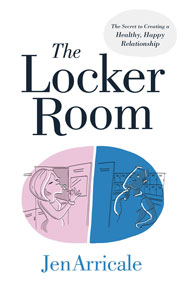
Jen Arricale is a healthy living expert who coaches entrepreneurs and executives to greater success by focusing on their wellbeing. As a coach with CEO Coaching International, she facilitates Healthy Business, Healthy Life workshops around the world. She spent twenty years as a financial executive and won bronze for the United States in the Ms. Natural Olympia competition. In The Locker Room: The Secret to Creating a Healthy, Happy Relationship, she uses real-life stories to help readers take care of themselves, re-establish their identity, and practice healthy communication.
📚 Books by Jen Arricale
Transcript
[0:00:25] NVN: I truly enjoyed my conversation with Jen Arricale, author of the new book, The Locker Room: The Secret to Creating a Healthy, Happy Relationship. In this book, Jen looks at the ways in which we can create happier, more meaningful relationships in our lives by taking the focus off of others and instead, placing it on ourselves. The idea here is that by improving ourselves, we will naturally improve our relationships. This book is primarily geared towards enhancing romantic relationships but as you’ll see, the information Jen provides here can really be applied across the gamut of our lives. From personal to professional which makes sense because as a healthy living expert, Jen coaches entrepreneurs and executives about how to achieve greater success by focusing on their wellbeing. Today, I’m happy to welcome, Jen Arricale to Author Hour. Jen, thank you for joining us today.
[0:01:19] Jen Arricale: My pleasure, Nikki
[0:01:21] NVN: I’m going to start in a place that I wouldn’t normally start with authors but it feels appropriate with you, which is to tell me about how you got to the point where you became married to the love of your life which you are today?
[0:01:37] Jen Arricale: By making many, many mistakes and learning from every single one of them. In all honesty, I wasn’t looking for that, I finally got to a point in my life where I was just looking for meaningful relationships and romantic and otherwise. Really started later in life, realized that I need to take care of myself, then my life would be open for maybe, possibly, having meaningful relationships with other people. That’s how it came to be.
[0:02:08] NVN: The reason that I ask you this obviously is because your new book, The Locker Room, is about some of the things that we are – are not leading us to meaningful relationships and how we can begin to look at this differently. My first question in that vein for you is how did you come to the name, The Locker Room?
[0:02:28] Jen Arricale: That’s a great question. Early in my relationship with my husband, he actually made the suggestion of doing something a little unorthodox when you live with someone in a romantic relationship. That was, “Why don’t you take the nice big bathroom and the big walk in closet and call that hers? I’ll take the guest bathroom and guest closet and call it his.” I thought, “That’s really strange, what is he trying to hide from me, you know?” Was the first thing on my mind. But you can ask him and said, “Is there something you’re embarrassed about or”– he explained to me and in fact this is the world preview of the very first chapter in the book, the first principles that’s here. It’s based on this premise that think about a sports team, each team has their own private locker room where they get their A team together. They do what they need to do in their own personal way to bring their best self out to the field. That’s a little bit of an analogy of how we use separate bathrooms to get ready, get dressed, you to come together when we have a date night or anything else where we’re not doing personal grooming, messy things in front of each other. I leave stuff out everywhere who needs – guess what? That’s one less pressure points in a relationship and a little bit of surprise on as well.
[0:04:01] NVN: Tell me about how this idea of separate locker rooms has impacted your relationship with your husband?
[0:04:08] Jen Arricale: I would say, primarily, it allows me to be fully accountable for myself, meaning I can’t blame anything on anyone else. Also, you know. Just being in that moment of being yourself, being your own individual person, looking yourself in the mirror, quietly thinking through things as you’re getting ready, letting your mind go where it does. Sometimes it’s the only five minutes of private time or 20 minutes of private time I have in a day between working with clients, being with other people. I’ve actually come to really enjoy that as my kind of my sacred quiet space as well.
[0:04:52] NVN: I love that you’re identifying – it sounds to me like one of the key elements of your relationship, being this time that you have to yourself.
[0:05:02] Jen Arricale: Yes, that’s a good observation. It took me a long time to realize this, accept it, and then train myself and then practice concept of having take care of myself first before I could be in any sort of shape to receive or give in another relationship.
[0:05:25] NVN: You talk about this in your book. Let’s take a bit of a wider view here and tell me about why it was important to you to write The Locker Room and to express this idea of cultivating meaningful relationships within ourselves to start with?
[0:05:42] Jen Arricale: Right. I appreciate that question because it actually points right to, I mean, my why is very important in writing this book. It’s to share something that has worked for me and hopefully if there’s one or two things in the book that someone, anyone can take up and it makes an improvement in their relationships and life, I would feel so rewarded, even though I may not know that directly. You know, kind of lets us know these things [inaudible 0:07:32] back so to speak and business. Also, living life as a human being on this big planet. I’ve interacted with many, many people and a lot of this to say, even in different cultures, there’s relationship thing, whether it’s men and women and romantic relationships, same sex romantic, friendships, family relationships, work relationships, any kind of relationship that involves communications can so many of these principles, they’re basic and simple and in their form. It’s the root, it’s the foundation of having a great relationship. I just hope that this can help some people to stop, look at themselves, ask them questions, be honest and then go from there.
[0:07:00] NVN: I want to dive in to what some of those observations are. But before we do that, I have to say that one of the things that struck me about your book, because I’ve certainly seen this a play in my own life in certain points and in my friend’s lives as well is, how we can be driven by this fear of being alone and make decisions from that place, rather than a place of wholeness. Can you speak to that?
[0:07:28] Jen Arricale: Yes, unfortunately, I can speak of it very firsthand, very first person. I think that it’s such a common thing and here’s how I look at it, right? I even share some personal experiences in the book. Fear is real, I think it stems from – we’re social beings, human beings. But I think taken too far and what I find is a lot of times, in a very unhealthy way, this is how I found myself almost depending on this other person to fill my void. If I was unhappy with myself, with my life, with my job, with my physical being somehow, I wanted this other person to fix it, help me, be my crutch. You know, I was going to set a goal, I wanted him to do it with me because it was too hard to do it by myself and then you find yourself – you’re with a person who maybe isn’t supporting on these things you’re trying to do, maybe it’s growing in the same direction and maybe is actually a bad, abusive person in the worst-case scenario. But we're so afraid, we don’t know what life is going to look like without this other person. The number one thing to do and I realized it took a long time to realize this is that you have to ask the what first, you have to ask, “Am I happy? Is this the relationship I want?” Without thinking about the how and if the answer is no, you at least know at that point, you shouldn’t be in that relationship. Being alone will be better, even if you can’t imagine that and you know what that looks like, you got to figure out, “What is it I need to do?” Then solicit support, help, figure out how you do that, what you know is the right thing.
[0:09:12] NVN: You know, it struck me, you are speaking a little bit earlier about how some of these concepts are quite simple, at least in theory, they’re simple and that really strikes me as one of them is asking that question, “Am I happy? Is this the relationship I want?” Taking action on that, I feel like can be difficult especially if you’re in a situation where your lives are enmeshed.
[0:09:38] Jen Arricale: Absolutely. It is very difficult, there’s no flirting around that fact. But does that make it right to be unhappy, you know? I just ask, I asked myself and I would encourage others, you know, you will find a way. You are a survivor and inherently, human beings are good people and we’re survivors and we are social. We’re going to make meaningful connections. If there is this negative block in our life, we’re never going to be exposed to what a real, healthy relationship feels like. First, we have to do is cut that out of our life, don’t be afraid to be alone. Take that alone time to do some real serious work and be very conscientious and aware of relationships you make when you are alone. Don’t look to latch on to the next great thing, think about meeting meaningful people. I often tell my friends and I have to live this and it actually worked, that is how I met the love of my life. Don’t go out looking for a date! Go out and do stuff you like with people you enjoy. It doesn’t matter if you’re the only single person in a couple event. It doesn’t matter if you’re 30 years younger than all these other people at a barbeque. You being you and showing up as the true you and just enjoying the moment, you have no idea what life has in store for you and who those people know that you might be needing.
[0:11:09] NVN: I love that. You know, another thing that struck me as you were talking is that it almost sounds like there can be this element of outsourcing our own work too, where we can use relationships as a crutch for that.
[0:11:23] Jen Arricale: Yeah, it’s a real easy way to place blame. It’s another one of the other things, in the blame game. I mean, ultimately, there comes a point in our lives where we are in control of our destiny or maybe not our destiny but our choices, however everyone look at it. There’s a point where we become mature adults where we’re in charge now and so blaming poor results or unhappiness on anyone else, just doesn’t work, it’s not real, it’s a fantasy belief. It’s when we don’t like things, we should get ourselves out of that situation, stop doing the things we don’t like. Without knowing what’s going to replace it, at least take the first step and stop the negative, stop the pain, stop the hurt, stop the emptiness. Then, go to neutral and then things will get better.
[0:12:13] NVN: In your book, you help guide readers through this. Let’s dive into some of that. One of the things that you’re showing readers how to do is how to take care of themselves. Let’s just talk a little bit about what that looks like?
[0:12:29] Jen Arricale: Nikki, that means different things for different people and I work with executives. One thing I see – when it’s very easy to put ourselves last. Granted there are things that happen in our lives that are truly out of our control or not – other priorities we have to tend to. For the most part, we can always find a way to find some time to take care of ourselves. Whether that means having 10 minutes of private, quiet, sanctuary time yourself when you’re getting ready. Shut your phone of, don’t be WhatsApping or texting or you know, give yourself some white space to just see where your mind goes. Taking care of yourself physically is so important and it’s so easy for us to put that last, whether it be doing what you need to do to be yourself even if you don’t have someone going to the gym with you or eating like you do, I find often times, people will go on a diet or workout initiatives and they expect their mates to do it with them. Well, no, if you want to do it, you need to do it for you and not worry about what another person’s doing. That’s what I mean by taking care of yourself.
[0:13:41] NVN: Okay. Along those lines, you talk about fix yourself, by yourself, for yourself. Which to me, I mean, it’s like you said, these ideas are simple but they’re powerful. I love you to talk a little bit about this idea of doing all of these things for ourselves.
[0:14:03] Jen Arricale: Well, depending on your personality, sometimes it actually feels better to do things for other people and I – a lot of things I’ve read and lots of different philosophies, it does feel really good, they’re often times is a way to avoid and going with some deep personal things that you don’t want to deal with. Taking care of others is often a distraction so by doing all of these things and I am suggesting it turns the focus back on you, which I believe is the best relationship and the most important relationship that you could possibly ever have in your life is with yourself. It is like in a building. Taking care of ourselves we are the foundation of a building and if we don’t have that solidly built, anything we try to put on top of that will eventually topple or crumble. So, taking care of ourselves no one else can do that for us. We are in full control and we have full accountability for taking care of ourselves the way we need to be, for growing ourselves in the direction you want to grow and then from doing something with ourselves that you know is good. We need to put ourselves in the world that makes us feel good and that is all up to us, ourselves.
[0:15:25] NVN: It is so true that I think it is easy to discount some of this stuff. It can be easier to put the attention on other people but it is also true that you can pick out those people in a room who are taking care of themselves and being very true to themselves. There is almost like a magnetic energy that comes from that.
[0:15:46] Jen Arricale: I think so as well. Typically, you’re going to find those people aren’t selfish. Actually, there is a lot of things for other people. But they have taken the time to take care of themselves and be that strong beacon, as you mentioned, for others. There is almost like a light in the room, right? And that is very giving and inspiring and that helps other people, it sets a good example for others. I am pretty sure many of those people the personality that you are describing they are doing a lot of things. They are taking care of a lot of other people. The thing I say in my workshops to the executives sitting around the table, they are usually high level executives. I say, “You know, you cannot be a good leader for your people who are depending on you every day if you don’t take care of yourself. Your family, your employees, all these people are expecting you to be there for them and support them, or whatever the situation is. If you are not taking care of yourself, you are only giving half of yourself to those people that you really want to give a lot to.” That is one way I get people who have hard time focusing on themselves in a strange way you kind of say, “Oh okay, so really by taking care of myself, I’m still giving to others,” and that’s exactly right.
[0:17:03] NVN: I mean that makes perfect sense because you are not giving from a well that is empty and there is a very significant difference between those two things.
[0:17:12] Jen Arricale: I agree. I mean, if you have something to give, I believe it is our duty to give it fully and to give fully means you need to keep the tank full in your own life to be the best.
[0:17:22] NVN: Yes. Another thing you talk about that’s very intriguing to me is this idea of being a good truth teller and receiver. I feel like this is something that we know, but telling the truth can be difficult sometimes. So, talk to me a little bit about what you mean here and how people can focus on this in their own lives.
[0:17:46] Jen Arricale: Yeah, this is a tough one for many – most of us, I will say. This is one of the areas where it just take a two-way agreement. People, whether it is on relationship or at work or in family or whatever the situation may be, to have an optimal healthy relationship we all know what communication, how important that is. How many times have you been in a situation where someone totally misunderstood something and you’re like, “I told you that,” or, “I already explained that to you”? Well, in your mind you did tell them that so you’re right. But in their mind, they didn’t hear that, but does that make them wrong? No. How can both people be right, you know? So, by being a good truth teller and a good truth receiver, what this means is two people come together and agreeing and I give them techniques on how to do this, agreeing with each other that when I have something to share with you, I am going to share it with you as an observation and I am going to tell it you how I feel, because it is my truth, so don’t tell me I don’t think or feel this way because it is my truth. I will be respectful and timely and I will talk to you about things directly not behind your back. A good truth receiver in that pair, people is going to listen, take it – don’t be emotional about it. Try to just hear literally what is being said. I think a lot of times when we start to get emotional, we stop really listening to what the person is saying and we start creating our own conclusions or finish their sentences in our mind. But truly listen and then acknowledge and in fact maybe even reply or say back in your own words what you think you just heard and now that is being a good truth receiver. Now by saying I hear you and I understand you, that doesn’t mean you agree or disagree. But now you have someone who’s been able to express what they think, know they have been heard. Now imagine that doesn’t cancel out misunderstanding, which it likely will do at the very least they’ll have people who have respect for each other that they’ve expressed how they feel and now we can decide what to do about that and that takes a lot of the emotion out of it.
[0:20:10] NVN: So, let me ask you this, the concepts that you are talking about here and the people who you work with, this can apply to both personal and professional lives. I mean relationships come in all different forms obviously. This strikes me though, well I guess what I am trying to ask is I am curious how this can apply in a more professional context in terms of making this agreement with other people.
[0:20:38] Jen Arricale: Oh, that’s actually very appropriate and comparable in business. We see this in a lot of the teams we work with where it is more of a leadership team when they come together or a department when they come together for group meetings. Think about all the times in the work environment where you are at the water cooler and someone is talking about someone else, how they’re not responsive on e-mails, they never respond, they’re the last person. You go to that person saying that thing and saying, “Well, what does so and so say when you brought that up to them?” Often times they’ll be, “Well, I haven’t gone to that person and told them that,” you know? So, here is an example of being a good truth teller and receiver that wouldn’t be having that conversation, unless they had already gone to that person and said, “There is something I really think I’d like to share with you” that person would say, “Well yes.” But it gets you in the frame of mind, right? Where it’s like, “Okay, I am going to hear something. Let me listen. Let me turn my emotions off.” There you go. Instead of making conclusions, assumptions about why someone’s doing something or not doing something. That is such a great way to avoid conflict.
[0:21:49] NVN: The reason that I am so focused on this is because I actually work for a company where this is principle. And I found that in a professional context, it is a game changer. It can feel really scary at first because I think in a lot of companies this is not a thing, but once you get into the practice of telling your truth and having these conversations, everything starts to transform for the better.
[0:22:14] Jen Arricale: Oh, that is so exciting to hear that your company actually implements that because that like you said, a game-changer and just think of all the time you are saving, all the meetings you’re not having to have because people are telling the truth. It is easier coming to the surface right away. No one is pointing fingers. You know half the time when someone’s not doing something right, they just don’t realize it.
[0:22:36] NVN: Absolutely.
[0:22:37] Jen Arricale: Or just needed a little spotlight on it and they’re up to the races corrected versus letting stuff stew and thinking someone could be a mind reader or they should know this. People are going to make mistakes. We overlook things, we forget things, help each other out.
[0:22:55] NVN: Right, we can fall into a pattern of expecting a lot of psychic talent from the people that we work with without even realizing it.
[0:23:02] Jen Arricale: Same thing in relationships, right? It’s like well, “He should know I like that.” Well, why don’t you tell him, why don’t you ask, why don’t you remind them?
[0:23:10] NVN: Totally, yeah and again you can see where the overlap is here because once you practice this and get it in one area of your life, I think it’s really difficult to not infuse it in all areas of your life. It begins to get almost uncomfortable.
[0:23:24] Jen Arricale: Exactly.
[0:23:25] NVN: I’m curious about this one last topic that I like to address here, which is stay off his rollercoaster. Explain what you mean by that.
[0:23:39] Jen Arricale: This is probably one of my favorites and it is one of the things that’s really helped me personally a lot over the years. And something I got from a therapist I was working with and those were her exact words and I will never forget it. I was so worried and stressed out about something that was going on in my husband’s world, his life at the time, and it was something heavy and in his life. It really had nothing to do with me. But because I love him so much and I am such a supporter and I want to help him and I want to do what I can, it was literally affecting my health and so I remember my therapist said, “Jennifer, you need to get off his roller coaster.” He said, “You cannot help him when you are screaming up there with him. You can only help him when you come on the ground, when he comes off the roller coaster, you’re calm, confident, supportive and loving.” And I thought, “Wow. I am on that roller coaster all the time,” because I am thinking that is being supportive, right? And it wasn’t. It is so much more helpful being that at that steady grounded being when the person we care about is going through their ups and downs.
[0:24:53] NVN: Makes so much sense. So, let’s talk a little bit about how in your professional life you do work with – you coach entrepreneurs and work with executives as well as working with individuals. So why did you decide to focus this book primarily on romantic relationships?
[0:25:12] Jen Arricale: Nikki, this is probably more what I would call a passion project, because I have met a number of people over the years who have seen me in my down period and they have seen me in my life for the last 10 years and they cannot believe that what a great improvement it is. I believe the person I am today was always there, I just allowed myself to be in some situations that were just getting in the way of me being my best. This encouragement from other people like I think, “Wow this is so amazing, such a healthy relationship. You are so healthy, I can’t believe –” you know, many compliments and observations but the reason writing a book on the relationships is people saying, “Gosh, you need to write a book. I need it.” Or I would talk about something we do and literally my friends or my colleagues were writing notes you know? And so, I just thought, “Gosh, this is just fun.” I am very passionate about it. I am going to celebrate and share some of these things that can help anyone out there just to be a little more good to themselves and open their life up to having these beautiful relationships because they’re out there and there is so many of them and none of us should ever be in anything less.
[0:26:26] NVN: You know one of the most empowering parts of what you just said is this idea that your relationships didn’t always look like this. And you were able to make these shifts and change the scope of your life that way in a way that is perceptible to the outside world.
[0:26:42] Jen Arricale: Yeah, I was definitely on a train of just repeatable things over and over again, which is I am not special. A lot of others do that so recognizing that and getting some professional help and realizing, “Okay the only one who can take me out of this hole is me.” And it was really lonely for a while. I lost a lot of my old friends and was truly alone and doing some scary things on my own when I – had been a serial relationship person, you know? So, I had never really have gone to dinner alone. I have never gone on vacation alone and just experiencing those things for the first time is a little unnerving but wow, did I feel like super woman after the first time. You know once you actually get through that scary thing. So yes, it is very rewarding. I am not doing this for people to acknowledge or say it to me back. It is more to say, “You know this is real. We are all there. We can all be somewhere better.” I have seen it.
[0:27:41] NVN: I love that so with that in mind, what is your greatest hope for readers of this book?
[0:27:48] Jen Arricale: Nikki, I think that if a reader of this book feels touch, have some emotions swell, I would love that because to me that means something is making a connection with them. And that could be very clear to them right away. They may connect right away and either be reminded of things that they already knew and give them a little jolt or it could give them an idea of something they hadn’t really thought about that can make their life better. And like I said, this may not be for everyone. Some people may read this and be very happy and not do any of these things. This isn’t about right or wrong. This is a way that worked for me and I’ve seen work in a lot of other situations like in and out of personal life. So, it is just my hope is that people can make a connection with it and improve their life a bit.
[0:28:38] NVN: Well I know I have taken a lot away just from this conversation. So, I am excited to see the book out there. Again, it is called Locker Room and it’s available on Amazon. Jen, where else can listeners find and interact with you?
[0:28:53] Jen Arricale: Well, I am on the CEO Coaching International website as one of the coaches. You can find my bio there and learn more about our company. We coach CEO’s all over the world and they’re executive week leadership – you can also find me on LinkedIn or Facebook, just my name pretty simple and I am happy to interact with people that way.
[0:29:16] NVN: Perfect and to spell your last name for listeners, it’s A-R-R-I-C-A-L-E. Jen, thank you so much for joining us today.
[0:29:26] Jen Arricale: Okay, my pleasure. Thank you, Nikki.
[0:29:28] NVN: Thank you. Thanks for joining us for this episode of Author Hour. You can find The Locker Room, on Amazon. For more Author Hour, hit the subscribe button on your favorite podcast service. Thanks for joining us. We’ll see you next time. Same place, different author.
Want to Write Your Own Book?
Scribe has helped over 2,000 authors turn their expertise into published books.
Schedule a Free Consult