Re Perez: Episode 419
Read the full transcript
Re Perez
Re Perez is the CEO, founder, and Chief Brand Strategist of Branding For The People, an award-winning branding agency that utilizes the diverse expertise in Fortune 500-level branding strategies, forward-thinking design, and conversion-oriented marketing best practices to create authentic, disruptive, and profitable brands. With a proven track record advising clients across 100+ different industries and professions, from high-growth entrepreneurs to expanding small-to-midsize businesses, his clients often credit him for doubling, tripling, or quadrupling their business and impact, while in the process transforming their approach to how they run their business and lives.
📚 Books by Re Perez
Transcript
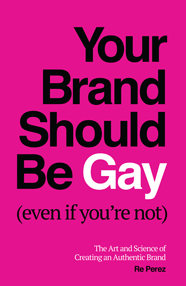
[0:00:21] NVN: The CEO and founder of the award winning company, Branding for the People, Re Perez, joins us today to talk about his new book, Your Brand Should Be Gay, Even if You’re Not. In this book, Re walks readers through the process of creating a truly authentic brand, one that brings you and your business into flow. A brand that is a true expression of who you are and what you stand for and it will naturally draw the attention of the people who are built for you. As Re puts it, with these tools, brands will make the journey from embarrassingly inauthentic to courageously authentic. This book has generated a lot of praise, including from New York Times bestselling author Suzanne Evans who says, you won’t want to put this book down because you’ll fall in love with who you discover your brand to be. Here’s Re. Re, thank you so much for joining us on Author Hour today.
[0:01:16] Re Perez: I’m excited to be here, thank you so much for having me.
[0:01:19] NVN: I am so excited to talk about your book because I see a lot of titles and this book title really stands out to me. It is, Your Brand Should Be Gay Even If You’re Not: The Art and Science of Creating an Authentic Brand. Talk to me a little bit about that title and how you got here?
[0:01:37] Re Perez: Well, I got to tell you, it was certainly a creative process over brainstorming all the different ways that I could name my book. I sort of led with, how can I demonstrate the power of branding by way of the title of the book. I didn’t want to have another boring book title, I probably – breaking all the rules of what – how long book titles should be. You know, but that’s kind of authentic to me. I sort of break all the rules, I sort of carve out my own path and so I wanted to teach the power of branding that grabs people’s attention that oftentimes is polarizing. You know, people either immediately love you or they’re immediately repelled by you and at the same time, I wanted to demonstrate an aspect of my own personality, you know, I happen to be a gay man, although, that’s not a big factor of who I am but it’s one aspect of it and so It’s another way of me sort of not hiding out of who I am and you know, it teaches all of it, the power of branding is really about grabbing people’s attention and getting them to stop in their tracks and to be peaked by you know, their curiosity peaked. Sort of landed at that and it just works and it’s inclusive, you know? I added the even if you're not. If you’re not gay, it’s totally okay, you know? Even if you're not, it’s sort of just inclusive of everyone and that’s what I wanted to make sure that the book conveys as well so that you're not repelled that you feel like you’re part of the conversation. Another reason why this book also seems to be personally important to me in my journey as a gay man. Always questioning or wondering, is it safe to be me, is it okay to be who I am in different environments. You know, I went to all-boys Jesuit high school. I lived in Dubai for work for a period of time but in many different circumstances, I think my whole life’s journey has been – is it safe and is it okay to be authentically me? It’s no surprise that I got into branding which is about creating an identity for people and through my own journey is really coming into a space where not only am I creating my identity but I’m owning it. What I found in my own life’s journey is that the moment that it shifts for me, to completely own and be powerful in my own identity, the easier it becomes, the more powerful I feel and the more confident I am as a human being but as a professional, as an entrepreneur, as an author. I want that for more people. I want that for people to be inspired to just be unapologetically themselves and to know that that is a more powerful way of being in the world.
[0:04:31] NVN: I love the actual title of your book sounds like it’s a meta version of the message of your book.
[0:04:38] Re Perez: Yeah.
[0:04:39] NVN: Perfect. I want to get into authentic branding more generally but you’ve said something – you’ve used the word “repelled” a couple of times which really stands out to me and you talked about how people can be either immediately drawn to you or immediately repelled. When it comes to the type of branding you’re talking about, is it okay if a certain sector of people are repelled by you because they’re not your people or what kind of context do you put that in?
[0:05:08] Re Perez: Yeah, oftentimes, you know, when they say when you don’t have a target audience, you don’t – or when you're appealing to everyone, you don’t have a target audience. By way of branding, it’s about declaring who you are and also who you're not. That should be crystal clear when you're going to market and communicating your business, your products, your offerings, that should be crystal clear. The more clear you can make that, the easier it is to identify the people who are not only going to be your one-time customers but your lifetime customers, the people who are going to be raving fans. It’s okay that you might repel some people, whether they’re overt about it or not, it’s the fact that you are clear on who you are and you're not apologetic about it. You're just declaring who you are and by nature of that, naturally, people are not going to be drawn to you because you can’t please everyone. But the important message really here is that – Because the book really is about authenticity and when you’re fully authentic in who you are and who you’re not then as long as you're okay, knowing that you’re doing you then it’s okay that you’re not going to please everyone and you have to be okay with knowing that you’re not going to. You have to be okay with that and I think you’re fully in your power when you’re just fully authentic and that’s really what I want more people to be inspired by and encouraged to be because that’s in my opinion the best way to represent yourself in the world rather than trying to be something other than you’re not.
[0:06:55] NVN: You know what’s really interesting? I absolutely do not want to side line us into a political discussion right now but what you are saying jarred my memory about an article I was reading last night and it was this really fascinating article about unexpected results during the state polls, meeting up to the elections and they were saying that a big part of the problem was that candidates just were being very murky in what they actually stood for and who they are and so voters just didn’t know where to go with them. That strikes me as something parallel to what you're talking about here where you have to be authentic and let people know who you are and what you’re all about.
[0:07:37] Re Perez: I think we’re – as consumers, I think we’re all becoming more and more savvy at identifying or fishing out whether someone is authentic or not. When you're not genuine or authentic or real, people consciously or subconsciously that registers in their mind and sometimes it creates confusion and I’m sure you’ve heard the phrase, a confused mind says no. The point here is not to create that confusion but rather, to create clarity. And be confident and clear in who you are so that you enable people to make a powerful decision yes or no. Rather than leaving them with I don’t know. I don’t know what action I should take, right? When you get people to be clear on who you are and who you’re not, it makes it easier and faster for them to make a decision.
[0:08:31] NVN: It makes so much logical sense and I know that I certainly have seen that myself as a consumer where I think some brands are overly focused on the repellent part of what you're talking about. It’s ultimately not memorable, there’s nothing really to connect with either.
[0:08:50] Re Perez: Yeah, repelling just to riff off of that, I want to be clear when I say to repel audiences. There’s a big difference between repelling people just for the sake of it, versus repelling people by way of just being who you are authentically, you know? Rather than using your brand as a tactic or a strategy and a tool to repel people. What I’m saying here is that when you're just naturally authentic in who you are, by default, you will repel people. It’s not a tool, I can’t teach business owners, I can’t teach people how to be authentic, I can only give them the tools for them to just surface out and just naturally be authentic because by definition, it’s not really a tool or a tactic, it’s a way of being that’s natural and genuine, does that make sense?
[0:09:49] NVN: Absolutely. Let’s break this way down to its most basic element. Authentic is one of those words that is used very frequently in this day and age and I feel like it can mean slightly different things to different people.
[0:10:03] Re Perez: Yeah.
[0:10:05] NVN: What to you is an authentic brand, how would you define that?
[0:10:10] Re Perez: I’m glad you asked that because you're right. Depending on what you're reading or who you follow, I’m sure that’s one of those overused words and I want people to hear it in the context of how I’m describing it. I first started with, how I define brand and branding. Because it’s very different than probably what other branding professionals or experts think about or might even be very different than what most people might relate to brand and branding. You know, oftentimes, people think that your brand is your logo or it’s your colors or your website or the name of your company. While those are all useful and valid tools for creating a brand, that’s not your brand. Your brand in my – and the definition that I’ve bene using in my career, it’s ab out creating a desired perception. Brand is about creating a desired perception, you technically don’t own your brand. It resides in the minds of the people that you’re communicating to. Therefore, branding is a process and its discipline of creating, shaping and influencing that desired perception. The reason I want ed to insert that definition first is because when I think about an authentic brand, I’m referring to the perception that you’re trying to create in the market place is so closely aligned to the perception of who you actually are and the perception of how you see yourself. When the gap is so big, if you see yourself as let’s just use a very basic adjective but if you see yourselves as introverted and the perception that you’re creating is extroverted, is that authentic or is it a ploy or is it a tactic to create a false impression so that you’re liked by more people. In my premise is that why don’t you just create the perception of who you are and have that be so closely aligned with what you’re communicating to the outside world. So that when people see you on stage, or if they see you or if they listen to you on a podcast like this and then that even person. Or they hang out with you in person, they’re like wow, you’re the same person offline and online. To me, I think that’s a bit more important whether as supposed to wow, I just have a different impression of that person because how they portray themselves is very different than how they actually are in person.
[0:12:39] NVN: I’m curious about in your work with branding, what sort of elements do you see holding people or companies back from truly being authentic. The reason I ask that is this strikes me as one of those things that absolutely makes perfect sense when you’re saying it but that may be more difficult or intimidating than it sounds in practice?
[0:13:06] Re Perez: Yeah, I would assert that oftentimes, whether on human level or even on a business level. Oftentimes, we’re guided to or we find that it might be more comfortable or safe to be liked by everyone or to be desired and be more attractive to more people and I remember very early on when I started doing a lot of personal development work – is that, when your context is wanting to be liked by other people, that will only get you so far. Because the people who are leaders, who are making an impact in the world who are standing for something, their context is not, how can they be liked by everyone? Because their context is about, what are they standing for? Oftentimes, when you’re standing for something, you might not be liked by everyone because your stand is so much greater and so much bigger than just being liked by everyone. The same thing with building a brand and as a business is that every brand in my opinion stands for something. It stands for something, it’s creating a movement, it’s about having an ethos that guides everything about how they deliver their products and services, how they run their organization, how they drive the internal culture off of a company. That stand, usually it’s a very positive or aspirational stand for the lot of the businesses that I worked with, you know, they’re out to change the world or out to improve something or out to better something. You know, when that context is so much bigger, it’s not leading with how can we just be liked or loved?
[0:14:52] NVN: Yeah, it makes sense. So in your book, you share stories and you also walk readers through this process of building an authentic brand and you talk about both the science of it and the art of it and also living your brand, which I believe you touched on earlier. Talk to me about what both the science and the art of this look like?
[0:15:18] Re Perez: Yeah, so you know I always tell people that branding is not necessarily rocket science. It is an art and a science and so what I mean by that is that branding while we take people through a linear process to building a brand like “do this and then do this and then do that” branding is also non-linear, meaning sometimes you have to look at your brand and the context and the environment in which it lives and so there is like a feedback mechanism that you want to be attuned to when you are expressing your brand in the market place. Is the perception that you are trying to create matching what people are actually or how they are actually perceiving you. Maybe something needs to be tweaked and modified along the way and so the science of it really takes the strategic approach, this analytical and strategic approach of understanding who your target audience is and what are the problems you solve for them and why should they listen to you. And how to position your brand relative to your competitors. You know there is all these analytical thinking that helps you carve out what language you should use and what’s the position and the voice of your brand. And then the art of it is more the right brain is turning that into a visual expression and this is where we get into colors and shapes of your logo and the type of photography and imagery that you use and how things are designed and laid out. And while that’s not everything, it does have a factor in people’s minds of whether or not they are drawn to your visual or not. So you might have for example a look and feel of your brand, this is the art side of things. It might have a look and feel that looks very mass market, very sort of for everyone and very mass market or down market but you might be trying to appeal to a high end market place, a high end purchaser and so there is a disconnect if you are trying to appeal to a high end market. But you look down market, well the chances of you attracting that target audience is going to be a struggle. You know if you are trying to attract a client that is more mass market and you look too high end then you might be unattainable or unapproachable as a brand and so this is where the new ounces of a creative brand designer or anyone who expresses your visuals kind of really dials in the exact type of colors, the exact type of imagery and the exact type of look and feel. That is going to best resonate with your target audiences and it is the marriage of both the art and the science of branding that really delivers a more powerful and effective way to go-to-market to your target audiences.
[0:18:02] NVN: And to speak to the efficacy of authentic branding, I love to hear your story about a company who you have seen really transform itself through authentic branding whether it was someone that you’re company branding for the people worked with or just a company that we might all be aware of sort of in that public periphery.
[0:18:24] Re Perez: So while there is no singular brand that I will point out to, I might point out a couple of different options but you know I think thematically what I see across a lot of the clients that I work with is that they don’t shine with their personality or they convey a personality that is inauthentic to who they are. So for reference we like to say this quote that professional is not a personality. So if you are going to a branding firm, you are saying, “Hey make my branding look more professional.” Well that’s great. That’s good and all except I mean you might want to have it professionally done but you never want to have a brand that’s professional because professional is not a personality. You know Oprah and Ellen and Dr. Phil they’re all professionals but they all have distinct personalities. So we say that professional with personalities. A lot of times when clients come to me they want to rebrand, they can’t identify what the problem is and so when we audit their brand. And we kind of look at the attributes or the characteristics of the personality that is being conveyed in their branding, it looks inauthentic when you get to know who they actually are. One might look more conservative and stuffy and you know more corporate but when you meet this person, I could think of one of our clients, Mallory, who when you meet her in person she’s the opposite of buttoned up and corporate. In fact, she’s a bit more down to earth and quirky and nerdy but fun. And so we wanted to make sure that that personality gets conveyed. You know whether you are a personal brand or even you’re a company brand, personality is what people buy that is what people are bought into and oftentimes they buy into personalities of a brand that they’re aligned with or they connect with or they’re drawn to. So you know just thematically that’s usually a big one of making sure that the personality of your brand matches who you are.
[0:20:26] NVN: That is such an interesting point about the descriptor professional.
[0:20:30] Re Perez: Yeah.
[0:20:31] NVN: Yeah, one of the things you say on the cover of your book, which really caught my attention is that with this process that you have companies are moving away from being embarrassingly inauthentic to courageously authentic both in life and in business. I am intrigued by that the whole way through. I mean both just the wording of it is so evocative and also it seems like you are talking about a cross section here where this touches both the people and the business. So I would love you to just speak to that.
[0:21:08] Re Perez: Yeah, I remember when I first started the company years ago and I had left working for the Fortune 500 branding firms and working with major corporations and I started helping with entrepreneurs and small businesses with their branding and they had no idea about the world of branding or what is possible with branding. They thought that branding was just their logo and so forth and I started to pay attention to energetically how they showed up with their brand. And the biggest indicator that I found was they’d always hand over their business card or they’d always give me the link to their website and they are embarrassed. They’re like, “Don’t make fun of my logo. Don’t make fun of my business card or don’t look at my website” and I was picking up on that. It’s like, “Why are they embarrassed about who they are?” do they not pay any attention to making sure that it was the best representation of who they are? And so I have noticed is like why are you embarrassed and they are embarrassed because it is not an accurate reflection of their business or what they stand for or who they are. Maybe they didn’t get the right help to create the right branding for them but that embarrassing part was something that I wanted to go to work on. I wanted to help people be more confident and more proud of representation of their business and their brand and so what I found because I work with entrepreneurs and business owners that oftentimes our business is an extension and it is a correlation of who we are in life. Granted, it is very easy to sort of have what you do for a living be caught up and identified with who you are as a person. Those can be two distinct things. That might be a whole separate conversation in it of itself but oftentimes for business owners, you know what you do is a big part of who you are an individual and as a person and so if we can impact, if I can impact and inspire people to work on their brand, their personal brand inevitably and extensively it will impact and influence how they show up as a business brand because they are interlinked. You know I work with a lot of CEOs, a lot of founders of the company and of course they want their brand to be a reflection of who they are and you know I think when you can merge the two and making sure that it has an impact on your personal life and your business life, you are even that much more powerful and excited and proud of your representation in the world.
[0:23:37] NVN: I mean a couple of things, first of all I feel so bad for those people who handed over their business card and were embarrassed because no doubt, they paid a lot of money for that embarrassment but also, as you were talking it really struck me that the way you’re talking about branding seems so aligned to me with the direction workplace culture is moving in, in general where there is no longer this division between who we are outside of work and who we are at work that’s starting to blend together more, which is great.
[0:24:10] Re Perez: Yeah, I love that because we spend a majority of our time as professionals or even as business owners, we spend a majority of our time working on our business and oftentimes again like since I work with a lot of CEOs and founders that they put their heart and their soul and their passion into their business and so you might as well have something that is the best representation of who you are because it will only get you further and farther. And you’ll attract and repel the people that you are meant to not only acquire as customers and clients but people who want to be part of your business and your brand whether they are partnering with you, whether they are promoting you or whether they’re potential employees who want to work for you. You know there is a whole conversation around your brand being sort of this 360 degree impact where it is not just about the customers, it is about who you are attracting into your business. Employer branding, I used to consult with some companies and the major multi-national companies where they looked at their employer brand how do they position themselves as a company so that they can attract the right people into their organization. So I look at it at a holistic approach of your brand stands for something and it can appeal to all of your target audiences not just customers and clients but everyone who is a part of the growth trajectory of your business.
[0:25:39] NVN: As you can attest to I am sure very vividly at this current point, writing a book is something that takes so much time and energy, what are you hoping that readers take away from this?
[0:25:51] Re Perez: You know you’re right. You know writing a book definitely takes something. I do a lot of speaking and so my natural gift is more speaking on stages and also working with clients and more a conversational like this but translating what is in my head and putting that into words and also storytelling, you know really took something but I did it because I knew that people learn in different ways. People want to receive information in different ways. And my hope is that more and more people will get inspired by not just creating a brand, right? There is probably some courses and some classes you could take or you could hire other people. It is not just about creating a brand. It is about being your brand. It is a way of life. It actually does not have a beginning and an end. It is a way of being that you show up in the world and in the business world, in a certain way that feels so aligned with who you already are. And by default, you are going to magnetize and attract the people into your business, into your life effortlessly, more speedily. I am all about flow and so when everything is just – when you are authentic with who you are everything just flows. I know that from experience, I know that from my clients, how they show up, it’s just things naturally happen and sometimes building a business it takes something but when you are building a brand it should make it easier. You know I always like to say, branding and marketing usually go hand and hand but oftentimes people think that they are the same but they’re different and I always like to say that marketing helps you eat but branding helps you sleep like you could put your head on your pillow every night knowing that what you stand for and who you are is absolutely aligned with everything of your whole way of being and that helps you sleep at night not just about making money. It helps you sleep and be confident and comfortable with who you are.
[0:27:54] NVN: I love putting it that way. I think we can all relate to that. Re, thank you so much for joining us today. The book is, Your Brand Should Be Gay (Even If You’re Not) and Re, where else can listeners find you?
[0:28:06] Re Perez: Well I think the best way is to go and check out yourbrandshouldbegay.com, where you can find all the information about the book. That is usually a good starting point for people to get connected with me and when you go to yourbrandshouldbegay.com, you will find a few different opportunities to take advantage of not only purchasing a book but there is some special bonus options for you to get more support or more help should you need and want that. But certainly, definitely I encourage you to check out the book. We put a lot of love and thought and time and energy into making this book not only available but make it actionable and insightful to empower you and inspire you to not only build a brand but to build an authentic brand.
[0:28:50] NVN: Re, thank you so much for joining us today.
[0:28:53] Re Perez: Thank you, I had fun. Thank you so much.
[0:28:55] NVN: Thanks for joining us for this episode of Author Hour. You can find Your Brand Should Be Gay, on Amazon. For more Author Hour, hit the subscribe button on your favorite podcast service. Thanks for joining us, we’ll see you next time. Same place, different author.
Want to Write Your Own Book?
Scribe has helped over 2,000 authors turn their expertise into published books.
Schedule a Free Consult