Nick Davis: Episode 423
Read the full transcript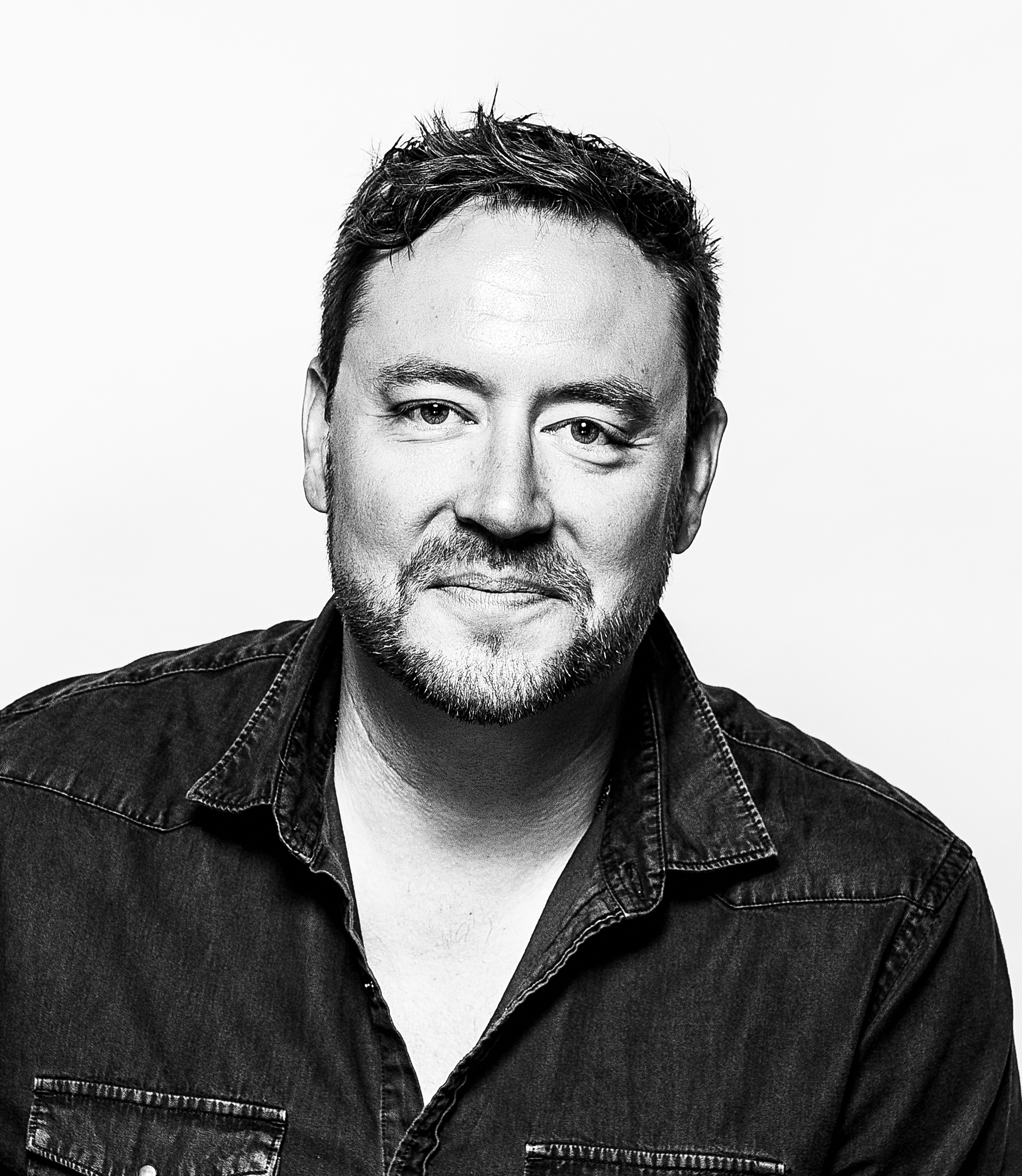
Nick Davis
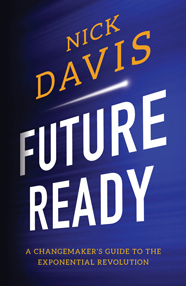
Nick Davis is a managing partner at Reaching the Future Faster and the former VP of Enterprise Solutions and Faculty Chair for Corporate Innovation at Singularity University. A thought leader in innovation, strategy, and technology, he specializes in identifying exponential trends that help organizations deliver customer value through new and existing technology platforms. He is also a venture partner at Bold Capital and has previously served as an external innovation leader for PwC and director of corporate development for the Anderson School of Management at UCLA. In his book Future Ready: A Changemaker's Guide to the Exponential Revolution, he shares the frameworks Singularity University uses with clients, along with case studies of enterprises that have applied them.
📚 Books by Nick Davis
Transcript
[0:00:26] NVN: Nick Davis spends a lot of times thinking about the future. Today, he’s here to talk to me about it. As the Faculty Chair for Corporate Innovation at Singularity University, Nick is a recognized thought leader in the innovation space. He identifies exponential trends that enable organizations to incorporate and build upon new and existing technology platforms. We’re talking about things like AI, blockchain and 5G. Of course, all of this is easier said and done. In today’s world of exponential technology, when things are changing at lightning speed, and we only see technology as it reaches its final stages of evolution, how do companies wrangle all of this and keep up? In his new book, Future Ready. Nick shares with business leaders the same framework that Singularity University uses with their clients so that they can leap ahead and stay there. Don’t miss out on this fascinating interview about what the future of technology means for businesses today and in the future. Nick Davis, thank you so much for joining us today to talk about your new book, Future Ready.
[0:01:34] Nick Davis: Well, thank you for having me, I’m so excited to have this conversation and look forward to hopefully have – some banter back and forth on a couple of the main concept sections.
[0:01:44] NVN: Absolutely. I’m really excited to learn from you because you’re talking about technology like AI, blockchain, 5G, all of which I obviously am aware of but not very educated on. I’m super curious to hear your take on where everything is going, especially as it pertains to business.
[0:02:07] Nick Davis: Yeah, it’s an interesting time for us I think as business professionals or just people on society in general of we seem to have reached a point where the knowledge that these technologies exist in the world now is fairly ubiquitous but the impact of what it’s going to have in our life, our business, our family, society in general is still a little bit nebulous, right? It’s really made an impact in some areas like you know, Amazon and Alexa and delivering things to your home and at the same time. You know, things like you know, augmented and virtual reality being used for surgery and you know in remote locations is something that you know, people are talking about but not sure when it will arrive. And so, I think one of the interesting things that we can definitely chat about a little bit is you know, timing, right? How and when do see need to begin to get ready and when will it be available to the masses versus you know, is it still a little bit more hype curve and not quite ready yet?
[0:02:48] NVN: Perfect. I am so into this conversation and yeah, I mean, it is – I think about this all the time, I’m 42 and so you know, I’m not that young but I’m not that old either and I feel like I’ve been dated so quickly just - I mean, the world is such a different place, even looking back 12 years ago before everyone had a smart phone, we’re just living in a totally different existence than we were not very long ago.
[0:03:27] Nick Davis: It’s very true and it’s a statement we use often when we’re teaching in our courses is that today is the slowest day you’re ever going to experience for the rest of your life. You know, it’s a weird thing to think about it that way. Really the pace of acceleration is accelerating and as funny as that is to think about. We as you know, as humans have a hard time being able to really wrap our heads around that. I mean, this idea of you know, what we are linear creatures, we typically see the world as you know, one step at a time, one day at a time, you know, at most, a few years at time. As we start to begin to think more abstractly about the future and where things are going and the impact of these technologies, how fast they’ve been coming and will continue to come faster at us, it’s really hard to kind of wrap your head around it. And you know, this idea of you know, exponential trends is really a mathematical formula very fun to think about something growing so quickly but the tricky part is, you know, that we teach often our programs is that exponential curve that most part only happens really substantially towards the end. It can feel kind of boring and then all of a sudden, you have this fundamental shift like boom, iPhone and changes the way that we all communicate and live and act in this world in a very fundamental way. You know, the joke I’ll often make with our clients is, you know, “Does anyone remember the Razr phone,” right? Everyone’s like, “Oh my gosh, yes. The Razr phone was such a cool phone and you know, we remember buying it and interacting with it.” And you know, for me, like I felt like my mind, “This had got to be the pinnacle. This is the coolest phone ever. How could they ever beat this?” You know, and then obviously along comes the iPhone which just absolutely destroyed the entire market and you know, I think we’re going to continue to feel and see those fundamental shifts happen more and more often because the convergence of these technologies is starting to accelerate where you know, the power of AI is now being obviously moving to new areas with machine learning and deep neural networks and adversarial networks which is then empowering augmented virtual reality and censors and autonomous vehicles and just, it’s a compounding effect that’s really going to start to creep into every part of our lives for sure.
[0:05:40] NVN: Man, it’s crazy to hear you talk about it like that. I mean, I feel like this could be a philosophical conversation that goes on for a couple of hours very easily, along with everything else.
[0:05:50] Nick Davis: It often does.
[0:05:52] NVN: I’m sure. Let’s back up a little bit here and give listeners an idea about your background and how you relate to all of these ideas.
[0:06:03] Nick Davis: Yeah, I tell people often, my background’s kind of a three-part combo of the work that we do both at Singularity and a lot of the clients that I’ve worked with over the years before that. Early on in my career, I had spent some time at UCLA, the Anderson School of Management where I focused on executive education, leadership, management, I ran some of our courses around director education, MNA, leadership and diversity and so on. It’s kind of the human part of it, right? If you think about the framework that we’re using in the book, you know, there’s a lot that goes on around leadership and culture, how do we as individual leaders think about you know, enabling ourselves to the future? That was really kind of my foundational training and kind of executive coaching and leadership that came from my years at UCLA. From there, I moved into what you would call ‘corporate innovation’ so I worked at Price Waterhouse for a few years where I focused really then became a – how do we think about you know, this hundred year plus firm that’s focused on accounting and auditing, how do we think about this new paradigm of technologies? And how do we make the firm more competitive, more innovative and really think about doing business differently for our clients? This idea of building new solutions, working with entrepreneurs, leveraging design thinking and co-creation to find new solutions for really tough problems, that became kind of the main core focused of my career quite frankly. So, you know, with Singularity, I’m still the faculty chair of corporate innovation. It certainly is deep passion of mine as product development and ideation, bringing new products to market. And then from there, you know, I’ve kind of gone back and forth as most serial entrepreneurs do between starting startups and having exits. I still do a lot of venture capital work. I’m a venture partner at Bold Capital in LA which is an exclusively focused on exponential technologies. And then teaching a lot, obviously. That really gives me I think a lens by which I see the world through this leadership focus, this entrepreneurship innovation focus. And then ultimately, you know, for at this point, I’m about to turn 40. Big milestone this weekend for me. I’ve worked with about half of the Fortune 500 at this point. So,you know, I’ve seen just ab out every way that they’re trying to think through solving this innovation conundrum. You know, both good and bad. And so, that’s given us some really good kind of behind the curtain insights on what works well and what doesn’t. And hopefully the book, we can bring forward some of those examples and help these companies get future ready.
[0:08:29] NVN: Excellent. Let’s dive in there and talk about some of the more common things you see legacy companies doing to prepare for the future of technology that might make sense but are perhaps not going to serve them best moving forward?
[0:08:47] Nick Davis: Yeah, everything for us is kind of based around the main framework that we introduce early on in the book and like I said, this is really kind of a collaboration of hundreds, if not thousands of different methodologies and frameworks that we’ve seen our clients get exposed to, try and leverage with you know, if a little of success. We’ve tried to bring a lot of that learning into this kind of comprehensive framework and so while it’s fairly high level, we certainly go deeper within each one of the chapters, I think it gives us a pretty good way to at least start to think and wrap our head around the different areas that we need to be working on in order to get ourselves again, ‘future ready.’ For those four areas, what we’re basically saying is that you need to have a future-focused strategy and that doesn’t mean, your five-year corporate planning cycle. You need to understand what your vision is for that future that’s 10, 15, 20 years out. What you're hoping to be and create in this world? And then ultimately, understanding deeply the different potentials for alternative futures that could happen to get you there. Specifically, you know, one of the fun was on the media right now, Tesla, right? Elon Musk, no one is going to argue that that man doesn’t have a vision for what he thinks the future should be, right? He is pushing full on into markets, you know, being entirely disruptive because he has a very clear vision of the future that he thinks that we should be marching towards. And then ultimately doing everything within his power with his companies to realize that future. Not everyone can be Elon Musk certainly but we do think that there’s a really great lesson learned amongst the Jobs’ of the world or the Musk’s of the world or the Bezos of the world, who are saying, “We believe that the future is great. We believe the future can be better. We’re going to leverage these technologies to really start to create that for our companies, for our constituents, our communities,” and so forth. So, that’s a big piece of this, right? Let’s get clear in a narrative that we’re trying to create. From there, what we’re really going to say then is okay, for innovation specifically, mainly many companies, most companies at this point have gotten innovation processor methodology, they understand they need to be developing ideas, ‘open innovation.’ They know they need to be leveraging design thinking, they know that they’re running accelerators. A lot of hype recently of calling it innovation theater, it’s just being done to get press and not really being integrative into the overall strategy. So, what we’re recommending is focus on having a comprehensive innovation strategy that’s deeply tied into your corporate planning, your vision, it’s really the engine that’s driving you towards that future and you have to get fast. One of the main things that we really focus on is really helping our clients understand that you can successfully take a product to market but if it takes you three years, you’re too late. Right? 10 years ago in the innovation space, we used to say, “Execution was the problem. We have to get things out to market, it’s always getting stuck in bureaucracy or getting stuck in committee.” Anymore, even if you’re successful at getting it all the way through your innovation process, you're ultimately hitting a place here where if it’s not out within the six months or a year or just much faster. The market is already left you behind. We think that’s just going to increase. There’s this need to kind of leap ahead of your competition and continually do and leverage this exercise of kind of jumping ahead and getting faster and faster within your new product development. We flip it there over to the culture and the leadership piece. Ultimately, areas and we’ll go deep in is really having a culture of impact diversity and exploration. Giving your people a mission alignment where they feel that there’s impact focus, right? We live in the world today where the technology allows us to both do the right thing for our business but also do the right thing for the world. Right? I mean, solar for the first time is cheaper than coal, right? We can be a power company where we say we’re going to make a lot of money and we’re also going to stop burning fossil fuels, it doesn’t have to be one or the other. And then finally, ultimately, it’s developing the leaders of tomorrow. You think of things like the future of work, the way that we are changing the way that we are going to leverage robots and AI to augment the work that we are doing. We’re going to be leveraging our creativity, our problem-solving skills but a lot of the automation, the repetitive tasks, those are going to go away. We have to think about how to shift our mindset, unlearn the things that we knew before that got us here. And ultimately you know, develop and attain these new skills of tomorrow that will keep us competitive.
[0:13:22] NVN: There’s just so much here. First of all, I’m stuck on this thing that you said earlier in the interview which makes so much sense but I had never thought of before which is that in terms of exponential growth, we are actually seeing things when they’re at the end phase. For example, the iPhone, there was all this technology happening that maybe people weren’t aware of or paying attention to necessarily and then there’s this seismic shift in the way that we do things. How can businesses make themselves more aware of that change that’s happening and where things are heading before we get to that point where it’s visible and action needs to be taken?
[0:14:03] Nick Davis: Yeah, I think that kind of goes back to the strategy piece we were discussing ultimately. You have to get this really good sensing, we call it the radar in the book. You have to have an ability to feel what’s going on in and around you. Technologically speaking, business model speaking, industry shift, political, whatever it may be. Starting to create this kind of storyboard in front of you that helps you understand the good context to the possibilities of those changes. Ultimately, you know, as we say in the book, no one can predict the future perfectly with all certainty. What we have to be able to do is start to say, “We deeply or believe we deeply understand where A is going.” There’s a lot of work that’s going on that field. We have a pretty good line of sight of where that’s going to take us. For example, let’s say that you're a big automotive company, right? We know that you’re going to have an impact to autonomous vehicles. Clearly AI is a converging technology that’s having a huge impact in that field. You combine that with cameras and LiDAR, sensors in IT. You know, obviously, you’ve got a lot of different technologies that are coming in to the vehicles to allow that trend to begin to happen. At the same time, you’ve got disruptive work going on in, you know, different modes of transportation. You know, Uber, Lyfts or trains or different things that are going on around augmented and virtual reality which means you would never need to travel to begin with because you can just go to your meeting as an avatar. You have to think through the implications of, “if this technology starts to come online, you know, now or faster than we think, what would do to me as an individual, our company and organization, society as a whole?” And what we try to practice, kind of toggle back and forth between those alternative futures. If this, then what? Right? Ultimately. Then you can really start to really understand, let’s back up to today, “Do we think or are we seeing evidence in the startup world, the VC world, the labs and university research going on around the world? Are we seeing early points where this is starting to accelerate faster than we may have thought? Thus, we need to start investing in it now or you know, buy it or build it or grow to ourselves.”
[0:16:07] NVN: What I would love to do is all of these ideas, tether them down into a practical scenario. To put all of this in perspective for listeners, are there any companies out there that people might be familiar with who you feel like have taken these concepts that you're talking about that involve leadership strategy, innovation culture, and I guess I’m thinking primarily about a legacy company here, that’s managed to tie all of these things together and the way that you’re talking about and be ahead of the curve or lined with where they need to be going?
[0:16:43] Nick Davis: Yeah, for sure, I mean, we can get a couple of different examples for ones that are both I think leading into that work as well as you know, trying to reinvent themselves in a way that allow them to stay competitive in this market. The obvious answers are clear, right? Your Tesla’s, your Amazon’s, ones that are already digital natives if you will. They grew up being digital first and AI bound. But they’re obviously killing the market, right? They are doing wonderful and that is because they were born of this way if thinking and they didn’t have to do it from the middle shift like a legacy company would. One that I think is really interesting I mean retail is a fun one to look at obviously because we all see it and feel it in real time. You know Walmart for example. You know here is a company that’s been around for a long time, we all have been exposed to the brand, you know Walmart is around the world. They’re biggest company that’s ever existed. But I would call them a traditional, legacy for years and in a time where they’ve had to see this formation and evolution of Amazon really start to impact them, they are at this fundamental shift that they must undertake where they are moving as fast as they can to ecommerce with some of the acquisitions they’ve made. They’ve had to retool their innovation capability top to bottom that have a very compelling group that can actually do amazing products development to reach their people doing better ways because they happen to rethink how they take their people from a ‘come to our giant store in your neighborhood’ to a ‘curb side delivery’ or eventually I believe, delivery right? To be able to compete with Amazon. You see this movement back and forth within all the things that they’re doing around like I said the new acquisitions, their innovation work. You have teams in customer experience and technologies that are being integrated into the shopping experience. You can see and feel that going well as a customer of theirs and it is all because they are trying to I guess lead into and push this market into a new way where. They are not waiting for Amazon to do it to them. They are trying to actually leap ahead of themselves and continue to gain market share. And so, it is an interesting one to see someone like that who is very proactively trying to go after this and not sitting back and saying, “You know what? We are going to let it happen to us.” Whereas you know on another one and I won’t name a brand here but we had a client before that’s also one of the big retailers in clothing. I’ve met with their innovation leader about a year and a half ago and you know in the conversation with him it’s like we all know this brand and have shopped there for most of our lives. For him to get on the phone with me and say, “We literally just think, our board just thinks this is another retail trend. They are not recommending we change anything. This is business as usual and just as slump.” To be that unaware that we have reached an entirely new paradigm in the world with these technologies is the scary part. When we see clients who don’t really “get it” that AI and the new technologies that are coming in through sensors of beacons and new ways of doing ecommerce, there is all technologies coming online at the same time is so severely going to impact those that are playing that sit and wait game that you know by the time that they wake up and think, “Oh no actually this is different than it has ever been before. We need to start learning.” Sadly, in most cases it’s almost too late. It is extremely hard to catch up once you get to a certain point and you can let it all pass you by.
[0:20:01] NVN: It is surprising for me as an outsider to hear that there are big companies left that are playing a sit and wait game. I feel like we have seen industries collapse at this point. You know there are such concrete examples of why sit and wait does not work no matter how established you think you are.
[0:20:20] Nick Davis: Yeah it is an interesting one. I mean if you think about this is as societal issue, I think we probably got overall. I mean you’ve got boards usually made up of people who are be it five years or probably already in retirement. They are much more risk averse. They’ve already made their money quite frankly and they are in the position where they can afford for themselves personally to kind of play this, “You know I am good right now, let’s just see what happens.” And I think that that does feed down into the strategies of a lot of these legacy companies. I would say less so and less even two years we’ve just started to see one topple after the other where I find it hard pressed to go to conference and that any big legacy company look me in the eye and be like, “Oh we’re good. We don’t have to change.” I would hope that I wouldn’t see that but that is a very new occurrence. You know I was with one of the large automotive manufacturers probably three years ago in London at a venture capital conference. I was in the lobby talking to their head of innovation and it was a Tesla sitting in the lobby and I’m like, “Are you worried about them?” And he kind of laughed at me like, “Oh, they’re not getting on our radar. We don’t even think of them as a competitor.” Well, how about now right? Those high valued automotive company in the world. So, I think that that’s still is a little bit of a naysayer skeptic in a lot of executives that are out there. And that is a really dangerous mindset to have these days. Now to your point, I think very quickly everyone who was asleep is now waking up and now we are seeing this point where everyone is just rushing around saying, “Okay, we get it, a huge shift going on. We don’t want disruption to happen to us we’d like to lead into it but how?” Right? How do we do it? Is really the question, which is obviously why we center around that question so much in the book.
[0:22:08] NVN: Yeah, I mean how is a huge question in this particular sector. The other thing that has struck me as you have been talking about this is it seems to me that one of the really exciting parts about where we’re at right now is there is so much room for creativity and just really untethering your vision of what’s possible and where business can actually go.
[0:22:34] Nick Davis: It is so true and you know that idea of unlearning that we often talk about at both SU as well as a lot of client work that we do in all the areas. You know it makes a lot of sense when you think about it, right? I have always done this way. It is always worked. We hear all kinds of fun stories where people say that in meetings like, “In 20 years it hasn’t been broken yet, let us keep doing it this way.” That idea I think has been propagated a lot. These last couple of years that that’s not just the right way to think so I think people understand intuitively that we need to do something different. But like what did we unlearn? Do I unlearn my basic skills? Like I am an accountant like do I unlearn that or do I unlearn some of their aspect of my role as far as me being a leader? And I really do think that it is a lot of the soft skills, where we have to rethink how we are coming at the problem. The creativity to be able to say, “You know I don’t have to come at this in the same way and replace this problem with a bunch of bodies maybe that can go in to do this work.” You know the AI can actually accomplish this five times faster and three times cheaper than if we were to put consultants on this or whatever. You know those examples of thinking creatively around leveraging the technologies in the right way, is such a big deal. I mean like data for instance is such a huge question right now. Everybody’s got data people, everyone is getting data, everyone is building a platform to leverage data, data, data, data, data. Well if you don’t know what you’re asking it or what you’re trying to do with it, ultimately data can be just as much noise as anything else, right? And so, how we can creatively think about leveraging the vast power of machine learning now or predictive analytics in a way that makes sense for our business and it makes sense to ask it smarter questions and we can actually move that forward in a more creative way very powerful. Turning it on just because you want to look at your other CIO friends at a conference and be like, “We’re doing data too, are you doing data? I am doing data.” Like to what end, right? And really how we are using it in the best way that you can to empower ourselves and our customers that’s the critical piece of this and then what I see and worry about a lot is everyone doing not just the innovation theater but just the technology theater. “I’ve got AI so I must be good.” Well, what kind and where and how? What do you mean by that?
[0:24:45] NVN: I’m curious of all of these technologies is there – I don’t even know if you can answer this but is there anything that you’re particularly excited about when it comes to business or that you feel like people are not focusing on to the extent that you could be?
[0:25:02] Nick Davis: AI is certainly the biggest one that we get the questions about the most. So ultimately AI is a huge focus and I think the ones probably going to have just the most universal impact on lots of different stuff because it is basically the enabler, right? Like every exponential technology that you talk about the most part has got some AI component to it. It’s is going to be empowered. The one that for me that I find the most interesting or scary maybe is a better word for it or exciting, I am not sure depending on what we do with it is genomics. So I mean the power that we have seen from being able to map our genome now heading very quickly with CRISPR into edit our genome and to what it can do for us from disease eradication to human performance to lots of different things that we’ve got with even societal and ethical questions that are possible but we don’t think we should do it but we can do it. When we layer on AI and as soon approaching quantum computing behind that, we are going to have absolute power over our genetic code and being able to manipulate it. What’s scary about that is like ultimately you know we’ve got different countries with different viewpoints on the ethics around changing a human genome for some who might be passed down hereditarily to children. And so, as a human, we worry a lot about there will become agent that at arms raise we’re all of a sudden one country starts to make people taller, faster, smarter. And the rest of the countries have to be able to think about do we want to do that to compete or do we not, right? Or disappearing middle class that is going on in the future of work as we think about the wealthy getting wealthier and you know society having some serious questions around availability and access to these technologies, well will arrive to a day where if I have the means I can program another 50 IQ points into my children because we can do that now. But the question is should we? And so a lot of those questions I think are ones were huge applications to our businesses, you can imagine if you are a big pharma company right now and you are developing drugs that have a 10 year development horizon and another 10 years for FDA approval. But right now, you know what one breakthrough in genetics allows us to just in all perpetuity cure that thing and we would never need a drug to be able to address it again. It is a really big deal for health care in general and us as a species. It is going to really have us come up to a point where we have to have some serious conversations with ourselves around what is ethical and what is not.
[0:27:33] NVN: Hearing you unravel that really makes me realize that to some degree we have to train ourselves to think in a new way because there are all these implications that shoot often so many different directions. It is difficult to get an entire picture of what something might mean.
[0:27:49] Nick Davis: It is, yes. I mean this is – you know we’ve got fun clients who have us do like future projections and renderings on like a Jetson’s type future and what would that look like for us. And then I’ve had clients come to me and say, “You know we want you to scare us. You know we really want you to show if this doesn’t go the way we think it’s going to go or we hope it is going to go, what are the implications of that for us you know as a company and as a society?” Sadly, it is everyone’s guess right now, right? I mean we think we all have an intuitive part of us that’s hopeful that these technologies are going to allow us to do some amazing work to help a lot of people. You know I have spent a lot of my time, you know my philanthropic part of my life trying to address the issue of hunger and food insecurity. But if you think about 30% of all food is left in the field and if we could recover that amount there wouldn’t be a hungry person. It’s amazing right? Can technology allow us to solve for that problem so we can ensure that we are getting the food to its maximum productivity? You know we are using new lab room B for instance to be able to give people protein at the right amount, right time and not having to have such a vast amount of our resources and land dedicated to cows for instance. There is things there that we are going to see as fundamental shifts in even how we operate in the world that are going to be net positive, some amazing things that will help us solve issues like hunger or environmental issues that come from obviously raising cattle. Great, perfect, right? Let us point our energy and our time towards that. But the things like genetics or others where they’re going to help cure millions of people of things that they would have otherwise would not have been able to, wonderful. It also has a risk, what will these technologies be used for that we don’t expect. How do we think about that and plan for than in time to put things in place where they can’t be used for the opposite reasons? But you know, we are all human as we say at least for now. It’s still the part chief right there. Who knows? We may get that bit programmed out. But I think it is probably coming with us with everything.
[0:29:49] NVN: I mean it occurs to me as you were talking through all of that though the ethics and leadership is always important but it is important in a way now that it never has been before.
[0:29:59] Nick Davis: It is. I mean I got a lot of questions around regulations, right? Like, “We’re a highly regulated company. We can’t innovate in this way or we can’t innovate fast enough.” Got it. Like there is some things that we can do to speed things up so companies will innovate in a more effective way. But you know for autonomous vehicles for instance, when you think about all the rules and regulations that go around transportation now all the cars all of a sudden within a snap of a finger are driving themselves, right? You are doing work. You are sleeping in the car. I heard someone recently reference the fact that like, “Well, no one is getting a speed ticket. No one is getting a DUI more, how are the courts going to get funded?” I think all of a sudden you just slowdown that come in an economic standpoint that are so interesting for us to think about and consider and we have to plan for them in the right amount of time otherwise what is a vastly new technology that can really take this human condition better actually ends up destroying an entire market and it can cause us some serious implications to our economy and otherwise.
[0:30:54] NVN: So, Nick this is such a big topic and you’re talking about so much in this book. So, I know I am asking you to boil this down in kind of a difficult way but what is your main hope for readers as they walk away from this book? What do you really want them to grasp?
[0:31:11] Nick Davis: For me I really want a reader to understand that this future while not perfectly predictable is one that they can lean into and help create. And so, I think engagement is a huge question and a huge need for us as individuals, as leaders, as companies. If we start to say to the world, “we believe that this is going to be a wonderful positive future and this is the world that we are going to play to help create it,” that’s what we need to be able to do all of us, right? Engage, really lean into it and build the things that we want to build that impact us all in a positive way. It is less scary that way. There is a model, there are frameworks for us to think about how to get ourselves future ready in an absolutely positive way but to sit back and passive and let’s see how it happens and you know it is too far away so I don’t have to worry about it yet mentality is sad to say. But this future is here. It is coming much, much quicker than we think. And you know ultimately, we really want to be able to give our people the tools and frameworks to engage in the right way.
[0:32:10] NVN: Excellent. The book is Future Ready: A Changemaker’s Guide to the Exponential Revolution. Nick, thank you so much for joining us today. Let’s end by giving listeners an idea where they can find you and reach out?
[0:32:25] Nick Davis: Yes. So, the book will be available on all major places where you can obviously purchase a book, both digital, print and online and the website is futurereadythebook.com.
[0:32:35] NVN: Thank you so much, Nick.
[0:32:37] Nick Davis: Yes ma’am. Great talking to you today.
[0:32:40] NVN: Thanks for joining us for this episode of Author Hour. You can find Future Ready, on Amazon. For more Author Hour, hit the subscribe button on your favorite podcast service. Thanks for joining us, we’ll see you next time. Same place, different author.
Want to Write Your Own Book?
Scribe has helped over 2,000 authors turn their expertise into published books.
Schedule a Free Consult