George Farag: Episode 429
Read the full transcript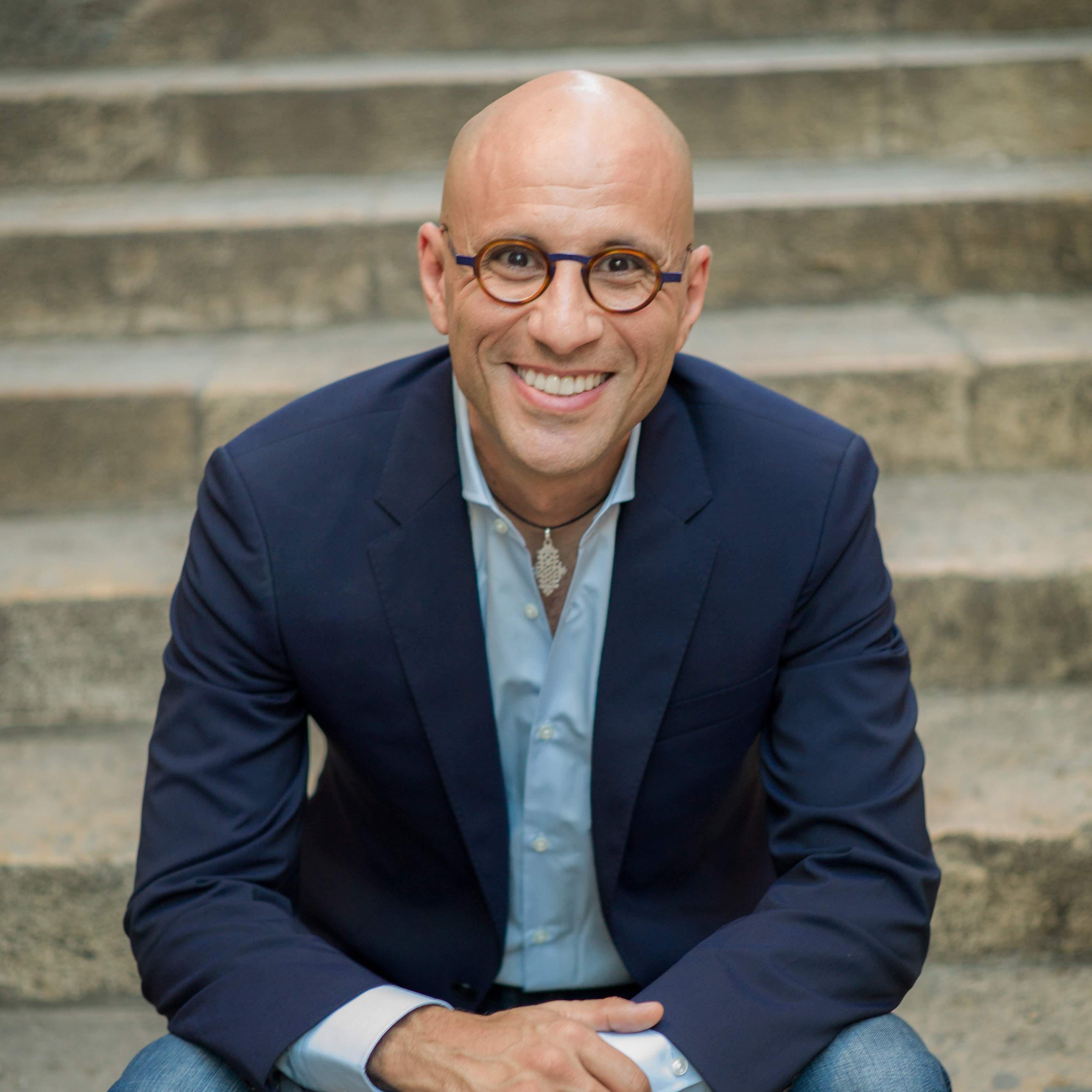
📚 Books by George Farag
Transcript
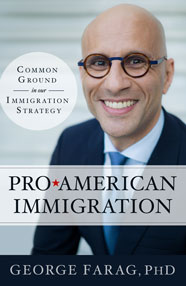
[0:00:26] NVN: Dr. George Farag has an intimate understanding of immigration from both a personal and professional point of view. George Immigrated to America from Egypt with his family when he was a child. After watching the twin towers fall from where he stood on a rooftop in New Jersey on 9/11, George decided to take action. For him, this meant serving as a diplomat and counsel, processing thousands of visa applications for those who sought to come to America in the years that followed. Throughout his career, George has received several honors including the Department of State's Superior Honor award, the Meritorious Honor Award and the George P. Schultz Consular Certificate. In his new book, Pro American Immigration, George talks about the lesser discussed and largest secret of immigration, legal immigration. Through which more than one million people immigrate to America each year. He explains how immigration law works and the various forms of legal immigration, where there are gaps in the law, what some potential solutions are and how we can take action together to create a system in which everyone wins. George, thank you so much for joining us today.
[0:01:40] George Farag: It is my pleasure.
[0:01:42] NVN: I’m very excited to talk about your new book, Pro American Immigration. But I’d like to start by sharing with readers a little bit about your own background and how it led you to write this book right now.
[0:01:56] George Farag: Yeah, right. Well, first, thank you for having me on. I’m really excited to talk about the book and I appreciate that question. I think a bit of an interesting background. I was born in Egypt, we immigrated, my family and I immigrated to the United States, years ago and I like to say that immigrating to America didn’t change my life, it actually saved my life. The US government, the American people were very good to my family and I. Everything from public schools to social assistance programs, all the way through university, a scholarship to go to university. I really felt like I was indebted to the American people and to the US government quite frankly. When September 11th hit, I was actually at home in Jersey City, New Jersey and I ran up to the roof of our building and I think like many people, I couldn’t’ believe what I was seeing, I actually watched one of the towers collapse. I literally could not believe what I was seeing. But it was a moment that changed me, as I think it changed many people. It was a moment that I decided that now is the time for me to pay back the debt that I owe to the US and to the American people. And I became a US diplomat.
[0:03:09] NVN: That’s powerful. Is it fair to say that change the course of your life?
[0:03:13] George Farag: Absolutely. I mean, there’s been certain inflective points in my life and that was certainly one of them, just seeing that, you know, especially, I was raised in the New York area and the twin towers were a piece of our lives. The first time I went there was with my uncle who also immigrated to America and you know, we went up to the top of twin towers, looked at New York in complete awe. I was a young kid. I couldn’t believe I was there. You know, to see that, to see it come down is just a moment that you know, I will never forget and in a moment that it did change my life, it did change my perspective and as I said, I took the foreign service exam at that point and I was fortunate enough to be successful and I became a diplomat and a consul officer. As part of my work, as a consul officer. I was the decision maker on visa applications for both immigrants and non-immigrants that wanted to come to America. I interviewed applicants, I reviewed their applications, I reviewed their supporting documents and I decided, if that visa was going to be issued or not. It was something, obviously, that I took very seriously. Now, as I listen to the debate over immigration — it’s an important debate. I think that President Trump has really brought it to the fore of the dialog. I think that my perspective as both an immigrant but as a diplomat and an official who worked in immigration processing is quite unique and I’m hoping that I have something to offer that conversation, which is why I wrote the book.
[0:04:52] NVN: I love to land on your work a little bit before we really dive into the book because you know, it strikes me, I think that ideally, people do feel like their job is having some sort of impact in some way. Your work, it seems to me, you literally are changing people’s lives and I’m just wondering if you could give me a sense of what that feels like, making those, reading those stories, making those determinations.
[0:05:23] George Farag: Yeah, it’s a huge responsibility because you listen to the stories of these folks who want to come to America and you know, sometimes as Americans, we take for granted the power of the United States and the power of the America is the dream. People dream of coming to the United States and making a life for themselves. When they come to the embassy, you hear that dream too either immigrate here or you know, they’ve always wanted to visit America, they have friends here, they want to study here, whatever the case might be. Regardless of what that story is, you have to listen to it and you have to evaluate it based on immigration law. It is the law of the United States that guides or that guided my every decision on immigration. It’s a responsibility in terms of implementing the law but also, knowing that you can either make a dream come true or just completely shatter it. It’s a bit heavy to carry around but nonetheless, it is the job.
[0:06:25] NVN: I would imagine. Especially for someone like you who profoundly and personally understands the impact of that decision in a way that for other people, it might be theoretical. For you, it’s your life story to some degree.
[0:06:38] George Farag: Right, absolutely. That was a prism that I couldn’t help but listening to folks to the stories of people and reflecting my own experience on that. Nonetheless, I couldn’t let that shadow my responsibility to implement the law.
[0:07:00] NVN: Absolutely. Let’s talk about those laws? Based on your work, I’m sure that you are far more intimately acquainted with these laws and the average Americans. In your perspective with where we stand now, what do you think really works well with our immigration law and where are some gaps? Let’s look at both of those things?
[0:07:26] George Farag: Well, in terms of what works well, I think a lot of things work well, I think the folks who are on the ground in the embassies, at USCIS, US Citizenship and Immigration Services, the human resources that we have working on immigration are just tremendous, these are professional men and women who take these jobs very seriously and are well educated on the law and how to implement the law. This is something that I take a lot of confidence in that they implement the law to the best of their abilities and that’s something I think is really good. Another thing is that we have an immigration infrastructure that is welcoming. I know that when we listen to the news today, it sounds like you know, immigration is just really tough and all the kind of stuff. But at the end of the day, we welcome over a million legal immigrants to America each year, which is significant. Again, a million people, think about that, a million people every year, their lives are changing because they get to come to America and live out their American dream. That’s something that I think is just remarkable and really a gift that the United States offers, a gift that I benefited from myself personally. In terms of what can be improved, that’s where the book comes in. What I’m doing in my book, Pro American Immigration is I’m first and foremost describing to an American audience how people legally come to America. In the news, I think that illegal immigration has really caught most of the headlines. Most of the news, most of the visuals. I think that’s where the mindset of most people is with illegal immigration. Again, legal immigration accounts for the vast majority of people who come to America on an annual basis which is over a million people. I want people to understand, I want my readers to understand, how do people immigrate to America? We talk about immigrant visa process, we look at naturalization, we look at the diversity visa, which is also called the visa lottery. We look at all these different elements of how people legally come to America. But another thing I do is that I use my experience, my family’s experience and my professional experience to identify gaps in the legal immigration process that I believe are not to the advantage of the American people.
[0:10:00] NVN: I love that. I know this is all in the book but for listeners, I would love it if you touch on one of those gaps to give us an idea of what’s out there.
[0:10:11] George Farag: Sure. Let’s start with the first one that I discuss in the book, which is birthright tourism. For some of our listeners, this might sound familiar and the reason is that the administration, the Trump administration, just addressed birthright tourism a couple of weeks ago. You know, as somebody who has been writing about this for the past year, I was excited that it’s become a hot topic in the news and something that the administration is addressing. Birthright tourism, basically means, folks who come to America legally, they get visas from embassies abroad and they use those visas to give birth in the United States. Now, normally speaking, the purpose expressed by the applicant while they were interviewing for these visas were likely not to give birth in America. You know, we can go into details of why that is but let’s just say, and you can get more details of this in the book, but let’s just say that for the most part, somebody will come apply for a visa for a variety of reasons, from attending conferences, visiting friends and family, visiting Disneyland, whatever the case might be. But then they’ll use that visa to give birth in the United States. The reason they’re doing that is because they want to take advantage of birthright citizenship laws that we have. Birthright citizenship basically says, if you are born in America and you fall under American jurisdiction which is American law, you are automatically an American citizen. These folks want their new babies to become American citizens and there are a variety of reasons of why they want that. It’s not necessarily just because, you know, they might be economically disadvantaged and they’re trying to give this baby a new opportunity financially. There are many more reasons than just that. But the problem is, at least in my estimation, that birthright citizenship, that 14th amendment privilege, that we have was not meant for people to get visas at embassies, come to the US, give birth and leave. You have one group on the debate, president and supporters who say that they want to do away with birthright citizenship. You have another group who say no, this is part of the constitution and we want to keep it as is. My argument is that we need to find a middle ground on this. The middle ground that I’m recommending is that if you were to use a tourist visa, to give birth in the United States, then you no longer qualify, both parents no longer qualify for further tourist visas. This might sound common sensical to our listeners, but this is not the case. There are many situations in which folks will get a tourist visa, give birth in America and then go back to their home countries, apply for more tourist visas and get them.You know, while doing the research for my book, I actually had a couple of interviews that really stood out. One of them was a woman who used her tourist visa to give birth to two children in America, went back to her home country, got another tourist visa and gave birth to her third child. Which quite frankly, I just found ludicrous. This is a type of gap that I’m looking to address. Now, today, there is a new rule, administered by the Trump administration that gives the consul officer a right to deny a woman if her intention is to give birth in the US. In actuality, this is a very small percentage of people who come to the embassy and actually say, “You know I want to give birth in the US.” They’re pregnant, they want to give birth, a very small percentage. So the new rule provided by the administration I think is a good step because it brings awareness to the issue but I say that it is more perception than a policy. The perception is that something is being done about birth right tourism. But in terms of a real policy, there is still a lot of work to be done and I think that the recommendation that I am making, at least I hope that the recommendation that I am making is something that can compliment the current new rule to help move this conversation further.
[0:14:49] NVN: So what you are talking about it sounds like are very moderate reasonable changes.
[0:14:58] George Farag: I like to think so. I like to think that what I’m recommending are things that Americans on both side of the debate can agree on. Because the situation today is just so polarized that I don’t think we can move forward or we can make progress if everyone is just on an extreme end of the conversation. So what I am trying to do is just inch these folks to the center just a bit. Inch these folks into the middle a bit so that at least we can open the dialogue that says, “Okay, this makes sense.” And it is something we can agree on and we can move forward. Because if we can’t start that conversation, if there is no common ground it will be very difficult to create a policy that is lasting. Because what’s happening on immigration specifically in the previous administration during the Obama administration and now during the Trump administration, the president is using their power of the executive order, which is great for a relatively short time. That is not law, those are rules that are being implemented during the time of the presidency and those rules can be overturned with a new president. My hope is that we can implement laws that are more long lasting. And as part of this, in the book I tell my readers that we can do something about this. So you kind of see what is going on with congress, not much movement in congress, not much action. Again everybody is so polarized that hardly anything is getting done. Which is why the president has to use executive orders. And I say well, if you read the book, if you agree with one, two, three or even all five of the points, I am encouraging people to jump on my website and sign a petition. So where you agree or where you feel that this is something valuable to express that sign up for those areas and where you don’t agree, you don’t have to or you can tell us why or how we can make it better. But if we have enough people joining this movement, we can then demand our rules, our own rules to be discussed in congress and this is the point I want to get to, I want to empower my readers by knowing what the law is, as it stands today, what the gaps are and what we can do to help close those gaps.
[0:17:40] NVN: I love that. In my opinion, we need more of that sort of political action in so many areas across the board right now and you made a point at the top of this interview related to that, which has been running through my mind as you have been talking, it is so obvious when you say it but I hadn’t even considered that there is so much fixation with the media on illegal immigration right now that you’re absolutely right. It is very easy as the average American citizen to lose sight of all of these other types of immigration and really even have an understanding of what is happening in that arena.
[0:18:21] George Farag: Right and this is why I wanted to bring a focus into legal immigration certainly because the media is just flooded with the illegal immigration and the visuals, again the pictures that we see of folks trying to cross the river and all of this kinds of stuff. So it’s obviously becoming a media issue. But also because again, the majority of people who come to America come through the legal immigration system. So if we want to make a lasting impact that’s where we need to work.
[0:18:54] NVN: So in your insider’s view, where do you feel like generally the legal immigration system stands right now? Is it in pretty good shape? Are there a lot of these gaps and a lot of work to be done? Where are we at right now?
[0:19:11] George Farag: I discuss five gaps and there are many, many more. But certainly in one book you can’t go into all of them. I think that there is a lot of work to be done and in order for that work to happen people need to be educated. They need to know what’s going on, they need to have a vision for the future and what worries me is that again, everything is just so polarized that this is not necessarily happening right now. Now, I am actually quite pleased with the fact that this administration is really bringing immigration to the forefront of the conversation. I understand fully that there may be a lot of people who are turned off by the rhetoric but none the less, the fact that is just really important, the fact that it is so prevalent in the political dialogue today is something that is pleasing to me because if it is being talked about, it is something that can be moved forward. Just the other day, I read an article that Rutgers University in New Jersey, my home state is actually offering an immigration certificate for the first time and what this is a certificate program for lawyers just so that they can demonstrate that they have knowledge of immigration issues. Which is interesting because it is demonstrating that the political rhetoric whether you agree with it or not is affecting programming on the ground. So again, you know whether you agree with the rhetoric or you disagree, the fact that the conversation being had, the fact that new rules are being issued almost on a monthly basis is, in my mind, it’s good news for the topic of immigration because there is a lot of work that needs to be done and we need to start somewhere.
[0:21:09] NVN: You know one thing that I just want to point out to listeners is you’ve done a really great job in your book of taking this information, which seems to me like it could be very easily presented in legalese or be so dense that it was difficult to wave through and really make sense of if this wasn’t your area of specialty and made it incredibly accessible to really begin, for the average person to really begin to wrap their head around how this actually works.
[0:21:41] George Farag: Well listen, I would rather have a root canal than have to go through a whole bunch of legal jargon and I think that most readers would agree. So what I try to do is to just make it a conversational type book in which I use real life examples for my own family. I am not pointing fingers to others who took advantage to these gaps. I am using my own family experience to illustrate many of these gaps and I try and use language that is accessible to anyone. Who is just interested to know more about this. And another thing that I used and I hope that readers will enjoy it or appreciate it is an opportunity for them, for the reader to be the consul officer. So I actually put them in the shoes, in my shoes actually, you know my shoes from a few years ago and they’re at an embassy, they are behind the window. The applicant comes and now you’re doing the interview and I give you the parameters. And it is now up to you to make that decision and what I am hoping that does is that it brings home the gap in a real life way that they say, “Okay yeah, if the law as this and I need to make a decision based on this law but I also know this is a gap. Well, what do I do?” So I want them to ask this question, because I think my asking this question that’s how the gap becomes accessible, becomes clear in the minds of the readers because God help us, if it was just a bunch of legal arguments, I would not recommend the book to anybody.
[0:23:22] NVN: And we love you for that George. I mean it is easy to do with topics like this and I also feel like the truth of the matter is this is a loaded topic right now, not specifically what you are writing about but immigration in general has become one of those words right now and it is so polarized. So yeah, I think that writing about it in this way is just really powerful. Really, really powerful and humanizing because the other thing I feel like it’s easy for people to do is just lock down into a stance thinking they understand the issue when really like you said, there is this ocean beyond what we are just hearing about in the media that is really important to be informed about.
[0:24:11] George Farag: Right. Absolutely and I hope that this will be a contribution to that.
[0:24:16] NVN: So in your mind, in your dream world generally speaking, where would you like to see America move to, over time in terms of immigration, big picture.
[0:24:31] George Farag: I would like to see more of an emphasis on merit based immigration and that is something that is being discussed right now in the news. The administration has put that forward. What I have done in the book is that I recommended that a certain visa, which is called the Diversity Visa it’s more popularly known as the visa lottery. This is an opportunity for folks throughout the world to just literally apply for a lottery and it is almost like you are applying for a lottery. And you could win a Green Card to America and you have statistically a better chance of winning that than you do than in the New York State lottery, believe it or not. So this is an amazing opportunity for many people around the world but in order to qualify for that, all you need is to have graduated high school or two years of work experience in a profession designated by the US government. I see that to be more to the advantage of the potential immigrant rather than to the United States. What I would like to see is at least — and that’s 50, 55,000 visas per year, which is a significant number. So what I would like to see is that program, the Diversity Visa program to be moved towards a more merit-based system, as a test to see, okay if the folks who can apply for Diversity Visas, we want them to have certain profiles and it doesn’t have to be, you know we want everybody to be doctors, nurses or IT professionals. You might say that we are looking for farmers. We are looking for truck drivers, we are looking for other professions that are equally as important but maybe not as glamorous, you know these higher professions. So I would like to see merit based immigration grow in the consciousness of our immigration system not to say that family-based immigration should be thrown out of the window. It would be nice to see more of a balance there.
[0:26:41] NVN: Beautiful. George, earlier in this interview you mentioned a website where listeners and readers can go to find the petition and more information. Can you tell us what that website is?
[0:26:54] George Farag: Sure, it is just my name, George, last name Farag, georgefarag.com, all one word and you can also go to proamericanimmigration.com and connect with me there as well. Both are just fine.
[0:27:07] NVN: Excellent. Again, the book is Pro-American Immigration: Common Ground in Our Immigration Strategy. George, thank you so much for joining us today. This has been really educational.
[0:27:20] George Farag: Thank you. The pleasure was absolutely mine. I appreciate it.
[0:27:23] NVN: Thanks for joining us for this episode of Author Hour. You can find Pro-American Immigration, on Amazon. For more Author Hour, hit the subscribe button on your favorite podcast service. Thanks for joining us, we’ll see you next time. Same place, different author.
Want to Write Your Own Book?
Scribe has helped over 2,000 authors turn their expertise into published books.
Schedule a Free Consult