Robert Imbeault: Episode 430
Read the full transcript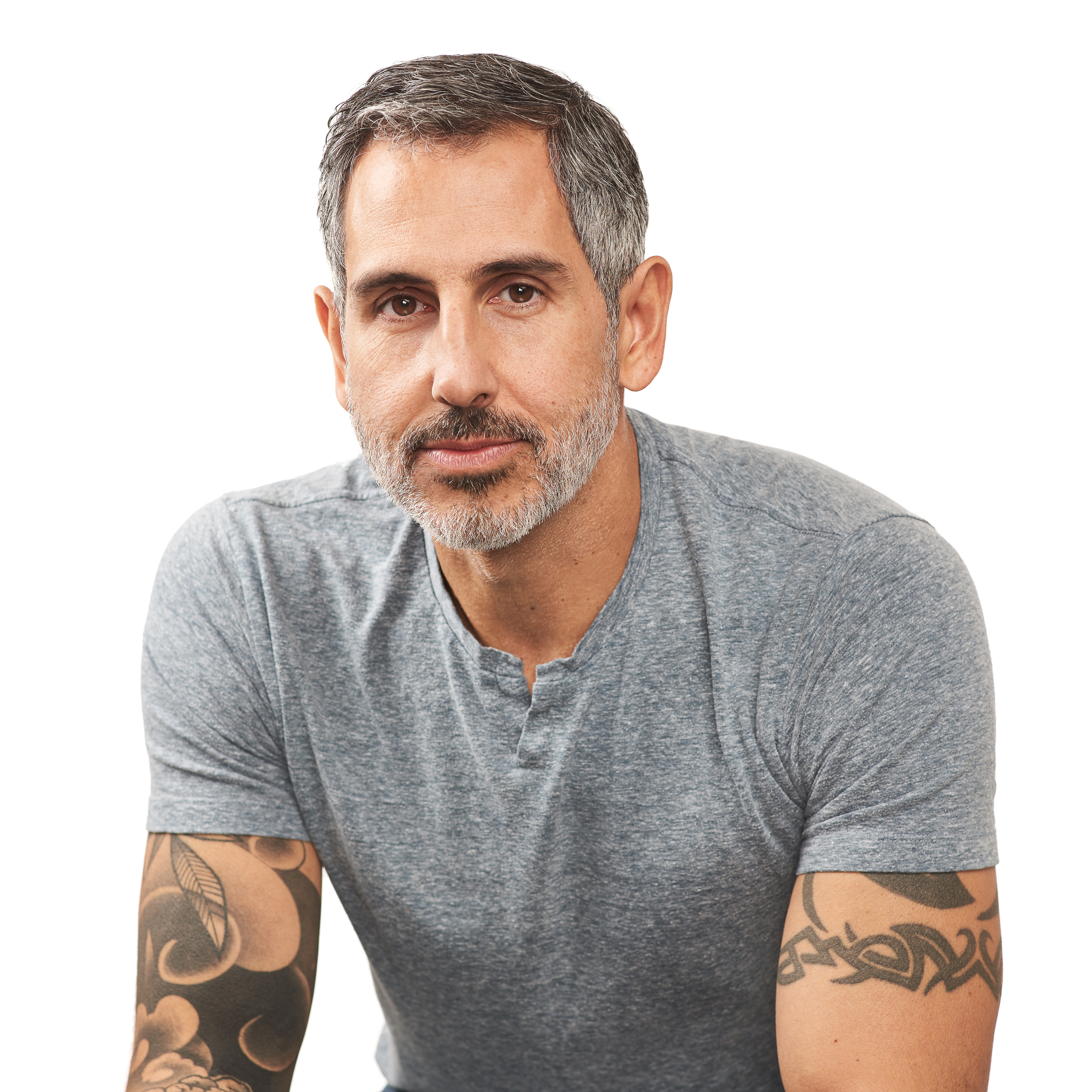
Robert Imbeault
Robert Imbeault is an entrepreneur, author, and childhood abuse survivor. He is the co-founder of a successful software startup, which he helped build while privately struggling with addiction. In his raw memoir he shares his road to recovery, how he learned to love himself, and how forgiveness became central to his healing. A columnist for The Good Men Project, he lives in Ottawa, Canada, with his wife and daughters. He is the author of Before I Leave You: A Memoir on Suicide, Addiction and Healing.
📚 Books by Robert Imbeault
Transcript
[0:00:20] NVN: When Robert Imbeault began writing, what would ultimately become his memoire, Before I Leave You, he had a very different purpose in mind. His intention was to end his life once the document was written. At the time, Robert was in the midst of a five-year suicidal drug and alcohol binge in response to unearthing repressed memories that had surfaced from his childhood. What Robert didn’t expect to find was healing in the process of telling his story. In this book, Robert shares his story and a message of hope. I’m very happy to welcome him to Author Hour today. Robert, thank you so much for joining us today to talk about your new book, Before I Leave You.
[0:01:01] Robert Imbeault: Thank you for having me.
[0:01:02] NVN: Let’s start by talking about why you wanted to write this book initially?
[0:01:08] Robert Imbeault: I didn’t really set out to write a book. What I was starting to write was kind of a secret goodbye to all my loved ones. And it was kind of an explanation as to where my mindset was and why I felt that ending my life was a good idea. But in writing, I found solace and it was a form of therapy. I just sort of kept it up. It turned into a giant apology and when I ended up sharing it with people close to me, they really encouraged me, well first, they’re shocked because they didn’t know. But second, they really encouraged me to share my story because they felt it could help other people and that’s when it became a network project.
[0:01:43] NVN: Wow. Writing this book literally, not only changed your life but saved your life. It sounds like.
[0:01:50] Robert Imbeault: It really did. Even the title whereas the title from the beginning, Before I Leave You. It’s kind of like a dark humor because I wrote down the things I wanted to get done and silly things like finish business things but also, make sure my passwords got to the right people, my partners, my ex, you know, that sort of thing. In writing, it definitely healed me.
[0:02:09] NVN: I’m assuming the passwords were extracted from the final published copy.
[0:02:15] Robert Imbeault: Yeah. They were. They were.
[0:02:16] NVN: Good editing right there. Talk to me about first of all, how long did you actually spend writing this?
[0:02:26] Robert Imbeault: I guess over the course of about four years. That first chapter I wrote in the thick of it and I was very serious about my endeavor. When it became a network project, I was married to my then girlfriend and we started travelling and she just sort of gave me time every day, I said gave me time in every day because we had a toddler so I had a few hours every day to write it.
[0:02:50] NVN: That is a generous gift. And it’s hard to find time with a toddler.
[0:02:54] Robert Imbeault: Yes, yeah, very much so. I get to the gym and get a couple of hours of writing in almost every day.
[0:02:58] NVN: Was it after that first chapter that you realized that this document, I suppose at the time was not initially what you thought it was which was essentially a goodbye?
[0:03:09] Robert Imbeault: Yeah. It was very much a therapeutic journal and I was able to be vulnerable because it wasn’t my intention to share it with anyone. When it eventually did seek out therapy, that became a part of it and I was encouraged to keep a journal. I was able to just be raw and honest and authentic and just put it out in paper. And you know, there’s a famous quote that says, I’ll tell you what I’m thinking when I can write it down. It’s really true. Once you write it down, you’re sometimes surprised yourself with what you’re thinking and where you’re going.
[0:03:38] NVN: It’s so true. And I feel like especially as far as memoirs go, your position certainly was not optimal, I think the memoirs that hit the hardest are the ones where you aren’t thinking about the reader at all and you’re free to just be vulnerable and just really share your truth and be fully human rather than editing or polishing or in any other way thinking about how readers are going to perceive you.
[0:04:07] Robert Imbeault: Yeah, I definitely wasn’t thinking that but I’ve always loved writing, I wrote a lot when I was in my teenage years. I actually spent time editing my own thoughts just to make sure that I got the language right and making sure that I articulated my feelings properly if that makes sense. And really, that brought about insights that I didn’t know I had or I discovered as I was writing.
[0:04:30] NVN: What important or pivotal things did you figure out about yourself or life as you were in the process of writing this, what really stands out to you?
[0:04:40] Robert Imbeault: There’s so much. I had an editor. My wife gifted me a memoir writing class and the teacher and I hit it off and I shared with her my work and she was instrumental in – you know, “I think we can work together. This would be a beautiful book and so I did it.” After working on it, handing it over, there was a lot of red ink let’s say, digital red ink, you know, that she prepared me for and it happened over the course of months and months. but there’s one part and she’s an award-winning author herself, there’s one I guess comment I remember reading and she says, “if I could read you describing women in this way again, I’m going to scream.” That caught me off guard for a few reasons. A, I mean, part of it is being a novice writer for sure but part of it is asking myself, “Is this how I view women?” I need to know this because I have two daughters. Now, I had one daughter then, I have two daughters now and I had to step back and realize that maybe I did objectify a little bit. Even the sense of I have daughters that I should protect. Well, I think that’s a form of objectification. I have daughters that I need to empower. I need daughters to be confident and be self-aware and have a strong sense of self. I wrote in my acknowledgements, you know, that my editor made me a better person as well as a better writer. That was one big thing, not sure if that was what you were looking for but that was one big shock in writing, it is how I think and then how I can fix, I think.
[0:06:12] NVN: I love that. It’s sort of like holding up a mirror to yourself, it sounds like.
[0:06:18] Robert Imbeault: Yeah, especially the way I wrote because I originally wrote not to share it. I wanted to be raw and honest and so I had to take a lot of long looks at myself throughout the process.
[0:06:29] NVN: Let’s shift a little bit to talk about what was happening in your life at the time? You say in your book that you wrote this as you were in a midst of a five-year suicidal drug and alcohol binge. Can you take me back to that period of your life and just sort of where you’re at and what living like that was like for you?
[0:06:53] Robert Imbeault: It was a very real prospect. There’s a couple of suicide attempts that I didn’t succeed thankfully. And I decided to – Think Leaving Las Vegas, I wanted to spend all my money. I wanted to just be lost in that escape with drugs and alcohol. I brought down friends with me. And it was only when I was looking to heal is when I really shared the book and it turned around and it became something of I guess a network project like I said. In the midst of it, it wasn’t like I was partying and coming back and writing about it. I think I had written about it and said, “You know, what? I’m going to leave this on the shelf for some time.” And then kind of got on to some rock bottoms and it was only after I had received therapy and there’s a bunch of other catalyst that helped me heal that included the writing.
[0:07:43] NVN: Were you dealing with addiction on an ongoing basis or did that enter your life during this period where you’re basically deciding whether to live or die it sounds like.
[0:07:54] Robert Imbeault: I didn’t see it as addiction back then in the thick of it to be perfectly honest. I mean, my drug of choice was ecstasy and some complimentary drugs. And it was like a party drug so we went out Thursday night. Generally, the party wouldn’t stop till Monday or Tuesday in the worst of it. You know, three or four days, three or four nights rather of being constantly high, it was continuous and it had a big impact. And of course, I’m building this startup that has now become a very large company and I think I’m hiding it really well. But at one point, I realized how ineffective I was growing. I was going from speaking to college graduates to not being able to hold the meeting because my confidence was lost and I didn’t know what was real.
[0:08:40] NVN: You know, you speak to something there that I feel like intellectually, we all know this is the case but I think it’s part of being human where it sounds like by all appearances, you were a successful person and we just tend to assume that people who are successful have it all together and they’re not in pain. What was that like?
[0:09:02] Robert Imbeault: That’s something that’s really coming back at me right now is I did the pre-release and I sent out about 180 copies to friends and family. And they really thought I was living my best life, right? I have this fancy car. I have all the things and a lot of travel to Vegas and all these fancy places and always partying and always paying and I was always in a good mood. But that was on ecstasy. I think that was helping it. Always surrounded by good people and wanting to have fun and we did amass some good, authentic friendships out of it and some not so authentic, I’m sure you can realize. They really thought I was living my best life at the time so when I shared my story, they’re all coming back with, “I didn’t know, I wish I could have helped or I wish I would have known.” So many people like of the 180 or so that I’ve sent out, 130 of them read the book in the first three days, they couldn’t stop. Granted, this is friends and family and friends and families are going to be that. But still, they were reading it like really fast and sending me all this love and all these encouragements.
[0:10:05] NVN: How does that feel?
[0:10:07] Robert Imbeault: That’s in itself, a little difficult like people calling me brave and courageous. I’m still figuring out how to integrate that, you know? I’ve worked so hard to integrate the bad stuff, the previous trauma that that’s caused all this, that my therapist is you know, “It’s okay to integrate the good stuff.” Right now, just receiving with pure gratitude. That’s how I live my life, grateful for every single moment of joy and there’s a lot of it now.
[0:10:32] NVN: Yeah, you know, I think it can be so much more difficult to share writing like this with friends and family than the public at large because the public’s anonymous, these are people who actually know you and are part of y our life and that you’ll see again and not – it’s just extra vulnerable.
[0:10:50] Robert Imbeault: Yeah, it’s definitely nerve-wracking leading up to this because we have friends and family and there are stories about my history in there and how does that affect my mother’s perspective? My father’s perspective? They have to learn about all this stuff, at a very intimate level.
[0:11:06] NVN: Let’s address that a little bit because this was the trigger for the bingeing and the suicidal thoughts, correct? The experience that happened to you when you were a child?
[0:11:16] Robert Imbeault: Yes, yeah.
[0:11:17] NVN: Can you share what that was and also, how that resurfaced for you?
[0:11:22] Robert Imbeault: It was in the early stages of building this company and I was probably at a great time in my life from the outside looking in anyway. Where I was married to someone I loved and I was just reading in bed and I was reading Christopher Hitchens’, God Is Not Great. He talks about the stoning of a woman for speaking with another man under sharia law or whatever. I was really saddened by it. I was like, “I can’t believe that someone would do that to a little boy” and then the memory just sort of came back to me. I knew that there was part of a memory because it tormented me my entire life. I knew something happened in that room when I was eight years old. But it went from a blurry photograph to a full length 4k motion picture and it wouldn’t leave my mind. I got the entire play by play of me being raped when I was eight years old. I just looked at my wife and I just sort of ran to the washroom and I was just sort of sat there catatonic for about 24 hours.
[0:12:24] NVN: How old were you when this came back to you?
[0:12:27] Robert Imbeault: I was 38.
[0:12:29] NVN: For 30 years, that was there vaguely under the surface and then it just came up?
[0:12:35] Robert Imbeault: Yeah. I mean, I know repressed memory is an interesting topic in itself. But I knew that something had happened and that informed how I behaved. That informed who I became, it was lot of acting out as a kid, a lot of sometimes violence as a kid and I used work. Work was a distraction. It was my own addiction for so many years, turns out that work made me monetarily successful. But the distraction took away from looking within and looking to those dark corners and that was the book really shedding a light on those dark corners.
[0:13:07] NVN: The human mind is just so amazing to me that it can hold so much in it. To an extent, it’s almost like our own lives are a mystery in some ways.
[0:13:17] Robert Imbeault: it’s amazing how resilient it can be. It was for me and that’s what it was, it was resilient for an eight-year-old boy who couldn’t process what was going on. He put it away. I didn’t tell my mother. I didn’t tell anyone. I have all my report cards from my childhood and it was all attentive, participating, happy kid and then just fell off. Daydreaming, gone, doesn’t participate. You can read it in the cards, it’s amazing.
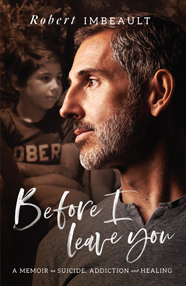
[0:13:48] NVN: The picture for listeners who are not looking at this cover, the cover of your book is so powerful. It’s a picture of you in present day is an adult in the forefront and then a picture of you as a little boy in the background wearing a Robert T Shirt which is so heartbreaking, such a sweet little picture.
[0:14:10] Robert Imbeault: Yeah, we had a good cry on that one. And the designer of the publisher really encouraged me to have my photo on there and I was kind of reluctant. I’m not really a celebrity. You know she said, “This is your story, this is your truth.” And then I came across that picture I’m like, how about this? She loved it and my mom still kisses the book cover every time she sees it.
[0:14:31] NVN: I mean, obviously in my line of work, I look at a lot of book covers, this is a really powerful book cover.
[0:14:38] Robert Imbeault: Definitely, when you know the story, I think it tells it nicely on the cover. Was really lucky.
[0:14:41] NVN: Absolutely. With all of this in mind, you could have very well gone on this writing journey, done it as a form of therapy and healing and just telling your own story to yourself without sharing it at large. I am curious why it is that you want to put this out there and share it with the public?
[0:15:05] Robert Imbeault: I think in sharing it I have already helped people. I am blown away by that. There has already been donations to the center where I am dedicating the proceeds that’s actually happening now. And it is a part of my healing too. I think a lot of the people that’s read the book and responded, there was a decent segment shared their trauma with me. So, in my being vulnerable for them, they were able to be vulnerable with me and telling me things that they haven’t told anyone. And so that is part of the journey. I am in a men’s group now. And I did so not only for my healing but I can learn how to provide a safe space for other people’s sharing and there’s actually a back story here. I reached out when I realize that I was going to be ready to memoir, I had researched all the best memoirs and I came across another memoir from Theo Fleury. He is one of the NHL best hockey players of all time, I’m Canadian. I don’t know. He is kind of a whistle blower and you know he was raped 150 times by his coach and he came out and just sent shockwaves through the country really and he’s now become just a really big advocate. And anyways, I found his website that he does personal mentoring. So, I reached out and we had a two-hour conversation and he told me those things. He’s like, “Okay well, get ready for people to share and it is going to come in different packages,” right? “It is going to come in people being vulnerable. It is going to be people coming in and asking for help, some people might even blame. But be prepared and furthermore, be prepared that you can’t help everyone but that’s okay, right?” So, you help as many people as you can and realize that wave is going to send maybe a bit of sadness your way but you can deal with it. So, I am really, really happy he did that because even early in the process people are sharing and so now, I am able to thank them for sharing and provide a safe space.
[0:16:59] NVN: That’s incredible. Over what sort of time period has this whole journey taken place from the moment when you read the book and everything came flooding back until now, here is a published author.
[0:17:12] Robert Imbeault: Well I am 47 now so I guess about eight years, nine years.
[0:17:17] NVN: Wow! That is one hell of a decade.
[0:17:20] Robert Imbeault: I joke about when I finally went to the men’s group, my therapist had wanted me to go for about seven years and I’m like, “Okay it took me seven years to get here but I am here now.” I had an awkward experience with the men’s group in San Francisco. I wrote about it in the book and I didn’t look back but it because less about me and more about a safe space for people sharing. So, it is easier that way for me, if I explain it that way, right?
[0:17:42] NVN: That makes sense. So, your life it sounds like such an interesting study and contrast. There had been these highly traumatic experiences and then so much success on the other end. There is a line here in your bio that says you have gone from sleeping on the street to building startups and even meeting the Queen, something not many people can say. What do you think it is about you that has given you so much resilience to go from one extreme to the other?
[0:18:19] Robert Imbeault: I believe we have an intrinsic knowledge that in the worst of times we know that’s not the right thing. That eight-year-old knew that wasn’t right. If I was mistreated throughout I knew that wasn’t right. So, I for some reason wanted to make it right and I have that chance now with being a father and being the cycle, being that transition person and leading with love and providing a safe space. So, I didn’t know that was there for me but I think I always wanted to just be happy. And even now if I get a little irritable because I am human, something sets me off and I’m like, “You know what? I don’t want to feel shitty so why am I feeling shitty?” And I’ll look inside and I’ll stop feeling shitty or I’ll work it out somehow.
[0:19:01] NVN: Presumably someday your daughters will read this. What do you hope that they take away from it?
[0:19:06] Robert Imbeault: I really hope first, I bet I can frame it properly for them. But I want to be as often to be honest with them and this is something that has happened. This is something that does happen and I regret not telling anyone. In the end I don’t think there was a safe space for me to do so and I want to have that dialogue. And also, if they see something, they see something that doesn’t gel to come and talk to us even with their friends that we want to know. We just want to be, “Our family does this. This is how our family behaves.”
[0:19:39] NVN: You know you said just a minute ago and that answer about how you regret not saying something at the time. I feel like the world has just changed so much since then. This would have happened in the 80s correct? I mean I am a child of the 80s myself and it is just stunning to me when I look back at the way we looked at trauma and mental health and all of those things I mean it really was a different world in that way 30 years ago.
[0:20:11] Robert Imbeault: It really, really was. I did a lot of research just because I wanted to understand a repressed memory. I wanted to understand trauma and complex trauma. And in Canada and in the US, there is still a disconnect between diagnosis of complex trauma, treating symptoms and treating the actual trauma. So, the treatment itself it is encouraging that there are many awesome treatments that are coming to bear. But there is no accepted diagnosis of these incest trauma and the child of sexual abuse trauma because all the diction goes back to trauma. And if we can treat the trauma we can solve, we can heal the addiction. So, it is amazing in this research that I am doing and it is coming out now, though right? I say this with a greater context that this is the best time of our species existence, right? We chose to live anywhere like Obama says, you know this would be it because if you look at what happens in the past because we have been able to solve a lot but what that does is trying to light on these new things that we didn’t look at before. These childhood sexual abuse or childhood abuse that we may just have shrugged our shoulders or turned a blind eye or that is not possible and let’s keep it in the family that sort of thing I think that is becoming less and less acceptable and look at MeToo. I think MeToo is kind of a cousin of childhood abuse, right? It is one group treating the other group with impunity like Joaquin Phoenix says. I think it is very, very related and topical now.
[0:21:41] NVN: So, you brought up an interesting point there that there is still not one accepted agreed upon way of dealing with trauma and helping people work through this specific sexual trauma or incest. Just out of curiosity, was there a specific sort of therapy you took that personally worked for you? Was it the talk therapy, EMDR, you know what I mean?
[0:22:05] Robert Imbeault: You hit the nail on the head. It is very unique to the individual experience. What worked for me I mean at home, meditation was a big one I think that thought me self-love and gratitude. But the treatment itself, yeah, EMDR was the foremost that kicks my ass every time. I am still doing it. Neuro feedback didn’t really take for me. I tried it in different ways but I don’t think I did it for long. I only did 14 sessions. But yeah EMDR you do it one session. And it takes me two or three days to work through and then it’s enveloped, it’s integrated and I can move onto the next thing.
[0:22:38] NVN: The reason I am curious about that is I have actually done EMDR myself and I agree with you. It’s like, “Whoa,” and then your world is rocked upside down for a couple of days. Yeah. But I also know other people who it hasn’t worked at all for. Other things worked for them. So, it is fascinating not surprising maybe but fascinating how different all of our minds and nervous systems work together.
[0:23:02] Robert Imbeault: Yeah, our brains are amazing thing and some neuro pathways are stronger than others. Yeah, if I am doing an EMDR I definitely reserved the rest of the night to either eat crappy food like cake. I definitely indulge in some silly things just to make “You know I am going to indulge.” And if you know me, I am actually super healthy. I don’t really eat that much junk but after an EMDR session like, “All bets are off.”
[0:23:24] NVN: Robert, you are a man after my own heart. I agree that pizza is the correct – well you didn’t say pizza but for me, pizza is the move after it. I am realizing that for listeners we should probably explain EMDR. I don’t know if I can explain it very well. Do you have an explanation that can sort of hold water here?
[0:23:43] Robert Imbeault: It’s eye movement and some other scientific words. It’s based on bilateral stimulation and it could be either through your eyes or your ears or through your touch. And so, through your ears, you put on earphones and would beep on one side and beep on the next side and you float back to the memories that cause you distress and you relive them and you dig a bit deeper, while this bilateral stimulation is happening. And what it does I am not entirely sure physiologically. I know it marries the right and left brain. It is amazing that it actually brings out more memories around it and you start asking yourself questions and that’s it. You go through that and I do 20 to 40 minutes and you allow your body to be in distress during those 20 to 40 minutes and you really look at what is bothering you and why and you address all different senses. And it was described that if you are thinking of your neural pathways as sleds in the snow, going through EMDR is like a new snow fall and you are creating new sleds in your neural pathways, leaving your tracks in your snow if you will. That is the way it was explained to me.
[0:24:52] NVN: I like that. It is at least in my experience it is such an interesting thing because I know that it works. I had it worked many, many times now. But every time I go in there, I do it holding tappers in my hand, which seemed like such of silly things. I’m like, “This is not going to work,” and every time two minutes later I am like whoosh and there it is, my world getting rocked upside down in a good way.
[0:25:14] Robert Imbeault: That’s true, my last one was with the hand ones too and I didn’t realize it at the time but I was gripping onto those things so tightly. I looked down and there was these imprints in my hand and I had no idea that I was doing this, you know? Going through these memories but it’s so true.
[0:25:32] NVN: Totally. Thank you for walking along that side road with me. But I think it is interesting people different experiences with therapies, for others who are listening at least just a starting point. And again, as you mentioned what works for one person might not work for another person but it is just interesting to hear about some of the options out there.
[0:25:53] Robert Imbeault: If you are looking to get therapy, I would suggest interviewing therapists because you are about to be vulnerable with that person. I describe that in the book where I went in and I was just full of shit with a lot of these people and I went through six different ones until I found this woman with two Ph.D.’s who not only saw through my bullshit she didn’t put up with it. She’s like, “If you are going to waste my time just get out” and I kept her.
[0:26:15] NVN: There is so much chemistry to it, you’re right. And honestly people get lucky the first time I am like, “Wow that is really amazing that you were able to find your person the first time out the gate.”
[0:26:27] Robert Imbeault: That therapist has since retired and actually found one, I just did a lot of research and I found one that I like right off the bat on the second time. So, it is actually really worked out really well and she was certified with EMDR and other treatments.
[0:26:40] NVN: I would like you to take a moment to speak to people who might stumble upon this podcast who are perhaps dealing with some of the things that you dealt with, with drug and alcohol binging with the traumatic experience as if they have not yet processed, suicidal thoughts, what would you like to say to them?
[0:27:00] Robert Imbeault: I think the one thing to remember is the one thing we count on Is change. So, everything is going to change there is famous Buddhist saying where this too shall pass. So, you hold onto that because things will change whether you start them or not. So, things will get better. When things do get better, ride that momentum. You can actually take charge and making them even better that’s what I did. And even if you stumble like I describe my journey as one step forward four steps back. And then getting up and one more step forward and then maybe only three steps back until I have some momentum. You know it is a few steps forward and now it’s only forward. One thing to remember is to treat yourself as you would treat someone you loved most and I think sometimes that’s lost. If your daughter had dropped some milk, would you start screaming at her? But if you do yourself, you’re like, “Oh you idiot,” you know? You know you treat yourself with kindness.
[0:27:57] NVN: I love that realistic take on it that it is not working through this and then stepping into the magical world of unicorns and rainbows where everything is perfect now.
[0:28:05] Robert Imbeault: So true, yeah it is very true and forgiving yourself. You step back and like “Oh, it turns out I am human. Oh, that’s right, I am human but I can still do this. I can still go forward.”
[0:28:14] NVN: Robert thank you so much first of all for writing this book and second of all for joining me today. I really appreciate talking to you. Again, it’s Robert Imbeault and the book is called Before I Leave You: A Memoir on Suicide, Addiction and Healing. Robert where else can listeners find you?
[0:28:34] Robert Imbeault: On my website, it’s Rob Imbeault but I bought the URL beforeileaveyou.com as well so you can find me there and I am on Twitter and Facebook. I don’t do the Instagram. It gives me too much anxiety.
[0:28:45] NVN: So, we’ll stay away from that. It is hilarious because Instagram gives you anxiety and Twitter doesn’t though just by personal preference.
[0:28:54] Robert Imbeault: I think there is so much more hate on Twitter but I don’t know, I guess I put it in a good place.
[0:28:58] NVN: All right, Robert. Thank you so much for joining us today. Best of luck with the book.
[0:29:03] Robert Imbeault: Thank you so much for having me. It was a great conversation.
[0:29:06] NVN: Thanks for joining us for this episode of Author Hour. You can find Before I Leave You, on Amazon. For more Author Hour, hit the subscribe button on your favorite podcast service. Thanks for joining us, we’ll see you next time. Same place, different author.
Want to Write Your Own Book?
Scribe has helped over 2,000 authors turn their expertise into published books.
Schedule a Free Consult