Frank Cowell: Episode 442
Read the full transcriptFrank Cowell
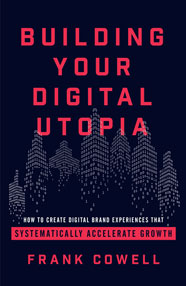
Frank Cowell is the CEO of Digitopia, a digital strategy agency that works with CEOs, CMOs, and VPs of marketing who want to create strong brand experiences while accelerating growth. A self-taught programmer with twenty years of digital marketing experience, he blends brand development with marketing know-how to offer fresh perspectives on complex marketing concepts. In Building Your Digital Utopia, he lays out a blueprint to align an organization around a strategic plan for engaging target audiences, and shares five philosophies to bring focus, clarity, and growth.
📚 Books by Frank Cowell
Transcript
[0:00:28] NVN: In his new book, Building Your Digital Utopia, Digitopia CEO, Frank Cowell guides readers through creating a digital brand platform that will simplify strategy and align marketing sales and service teams so that they are one powerhouse growth team. But what Frank is also doing is demonstrating how businesses can create a true, almost old school relationship with potential customers while effectively leveraging the modern tools at their disposal. I am joined today by Frank Cowell, the author of Building Your Digital Utopia: How to Create Digital Brand Experiences that Systematically Accelerate Growth. Frank, welcome to Author Hour.
[0:01:11] Frank Cowell: Nikki, thanks for having me, I’m excited to be here with you.
[0:01:12] NVN: I’m so excited to have you. Let’s start by talking a little bit about your company, Digitopia which you’re the CEO of, what do you guys do exactly?
[0:01:23] Frank Cowell: Well, really, just like the book subtitle says is that we help B2B organizations build digital brand experiences that systematically accelerate growth. What that means is, we’re consulting with our clients on how they can build a better business model, a better go to market approach by engaging their target audiences with value first relationship driven content and then developing a funnel that matches that relationship driven approach so that way, as they’re engaging their target marketplace, all those people who aren’t ready to buy, they’re receiving value, your brand is standing out. The positioning of the brand is being established. Those people who are ready, we have ways for them to engage your organization and understand how you’re different and then for everybody else in between, you know, there are long term nurturing things that take place. We help our clients through the consulting and implementation of that as well as take some of those things off of their plate, if they don’t have enough in house resources but first and foremost, I think what’s really important to differentiate what we do is we’re looking to help our clients install this methodology into their organization and they work with an analyst and coach on a month in, month out basis to make sure that those things are happening and we’re helping them push that forward. And then, on top of that, we can help them execute things that they just don’t have enough bandwidth to execute.
[0:02:43] NVN: Beautiful. Generally speaking, are you working with companies who don’t have much of a presence in the first place or who are leveraging their presence to the extent that they could be.
[0:02:55] Frank Cowell: I think it’s the latter, right? Most organizations have a presence, it’s just not being leveraged and they’re certainly not taking advantage of what’s possible on the internet today. We help them figure out how to leverage that but more importantly, how to get much more strategic with it.
[0:03:11] NVN: Let’s start there, to help listeners identify themselves in this. What are some of the most common, either misses or just elements that you see companies not capitalizing on to the extent that they could. Where do people sort of go wrong with this?
[0:03:28] Frank Cowell: Okay, one of the absolute biggest misses is that organizations are often too wide in their go to market approach, they’re trying too many buyer personas across too many pain points, they have too many offerings that they’re trying to put out in the marketplace so the absolute biggest miss is that people don’t get narrow enough, they don’t get hyper-specific as we talk about in the book, this idea of hyper-specificity and hone in on one buyer persona with one pain point and start there. The fact that they’re too wide is a huge miss. And then the other miss that I find is there’s just a lack of commitment and consistency in organizations, you know, they try something for 90 days and they say, well, that didn’t work and so they jumped from thing to thing to thing and they never create the most important thing in business and that is momentum. I preach this constantly to my team, to people I coach, when I’m on stage speaking. Momentum is the absolute number one thing you’re after, it’s not perfection, it’s not a magical strategy, it’s not some creative campaign that’s better than another, it’s momentum. You will only ever get momentum if you have commitment and consistency. In reality, you don’t need the best plan on the planet, you just need to execute the hell out of the halfway decent plan to be able to give yourself that momentum. Again, one not focusing, you’re too broad and then two, they just don’t execute enough to be able to gain momentum.
[0:04:57] NVN: I can see how that’s a stalling point for people because especially when it comes to all things digital, we’ve been conditioned to think of speed and lack of attention spans and things like that. Just based on hearing this messaging all of the time, it sort of goes against what we’ve been conditioned to do, to think about building momentum and taking our time doing that.
[0:05:21] Frank Cowell: Yeah, if we look at how people would go to market in the olden days, right? With air quotes. You know, there is a lot of fear around getting it right because once you put out that TV ad, you can’t take it back, once you put out that print ad, you can’t take it back. Once the catalogue is printed, you can’t pull it back. That’s the beauty of digital, is you don’t have to worry about perfection because heaven forbid, there’s a typo in your blog post, you can actually fix it. It’s okay. I think what we’re seeing that is resonating today is stuff that looks less polished, less produced, things that look much more conversational and come across much more authentically, that’s the stuff that’s winning today so I think organizations, they have to reposition in their minds what this format actually is and this format isn’t most of the time meant for a polished, highly produced kind of presentation, it’s a place, it’s a format where you can engage people in very raw, real, human ways. I think that’s the thing that people have to remember is that this is an opportunity to just make things happen much quicker, without having to worry about all the polish and the glitz. Because that will absolutely paralyze you and again, to what I said a moment ago, you will never achieve momentum that way.
[0:06:40] NVN: There’s so much freedom in that.
[0:06:41] Frank Cowell: Absolutely, you just need to act and do, right? I said in a moment ago, I’ll say it again, if you just execute the hell out of halfway decent plan, you’re going to get much further ahead than people who sit around and deliberate trying to get everything just right and just perfect and we need to have meeting after meeting about let’s have a meeting to then discuss the decision and let’s wait on it again like stop, you know? Just start doing and if you do that within the spirit of serving your target audience, better than anyone else on the planet. By the way, your marketing and your sales should be viewed as the new customer service, right? These are your customers, they just don’t know it yet, they’re not paying you with dollars but they’re paying you with their time and attention and in today’s world, that is a form of currency. If you start serving them, instead of thinking you’re putting out these promotional things that need to be polished and glitzy. If you serve them with that spirit, they’re going to receive value. They’re going to like what you have to say, they’re actually going to want to receive your marketing. But only if it’s only through that lens and only if it’s within that spirit.
[0:07:44] NVN: Do you have an example off the top of your head of what that would look like, really good strategy.
[0:07:50] Frank Cowell: Yeah, let’s say for example, you have a buyer persona, I’ll give you an example of the one we use at our company. He’s called President Pete and President Pete, he’s the president of a five million dollar B2B organization and this person is struggling to figure out how to differentiate his organization in the marketplace because things initially start to take off, they’ve been in business about 10 years but recently, things have been stagnating. More and more competition is coming into the market place. This person is really struggling to figure out how they differentiate their brand. I mean, it’s all these noise and chaos and everything they’ve tried to do from a marketing standpoint just doesn’t seem to work. That’s his big pain point. He knows he needs to do something once and for all, that differentiates their brand, but all of these like flavor of the month campaigns just don’t seem to be cutting it. When you take that person with that pain point and then you look at how we might serve them. What we’ll do is we’ll make sure we have educational content and information that President Pete can read, it’s targeted just for that person and help him understand how you create a relationship driven funnel. By the way, this is where the idea of the book came from, right? I’m going to use kind of the book in our content as an example because its’ very meta and you can really grasp on to the idea by using that as an example. By teaching President Pete, the reason he’s failing is because he’s not focusing on buyer personas, he’s not obsessing about their pain points and he’s not creating a relationship driven funnel, this is why he’s having such a hard time gaining traction and so, through that content and through the book, we can teach president Pete about that. The next step might be, okay, let’s empower President Pete, so President Pete, now that he’s learning this information and sharing it with his team, we can give him tools and resources. Now he’ll be able to download blueprints and templates and checklists and spreadsheets, things that allow him to take action on what he’s learned and then from there, we can inspire him by giving him additional content that shows him what people like him are doing by employing this methodology, by employing these strategies and tactics and how they’re achieving success. That’s just an example of how you could put together some content just for that one person around solving that one pain point, becoming obsessed about it, going really deep on that problem with that one person and truly giving value. By the way, through this process, President Pete hasn’t given us a dime, right? He has not spent money with our organization, he may have purchased a book, which I would say that you don’t really make money off a book, right? But above and beyond that, he may have read the free information online and so generally speaking, he’s not "done business" with us but the lens there is that, he is no less a client, he’s no less a "customer" because he hasn’t given us money. He’s actually exchanged his time and his information so through that, we’re able to serve.
[0:10:45] NVN: Do you find, when you’re working with clients that this idea of providing information like that for free is something that you have to sell them on or is that intuitively making sense to people at this point?
[0:10:58] Frank Cowell: I would say it’s a mixed bag, you get some people who get I , you know, the see where the world has already gone to and where the world’s come to and then you have some people who just don’t get it and trying to convince them is not something I’m usually a fan of in my entire career, I’ve never made it a point to try to strong arm, convince people of a thing, right? Of a concept. Of a place, of marketing, belief or whatever. For those people that don’t believe it, yes, they struggle because they’re like, I don’t want to give away this information. What if my competitors get it? You know, you can see like they have the circle that wag in kind of mentality and you know, I try to remind them that that world doesn’t exist anymore. You're holding on to a believe that is outdated and if you do not change the way you think, you’re going to be left behind and so I try to hit people with that dose of reality but ultimately, it’s that saying, you can lead a horse to water but you can’t make the horse drink. That’s my approach. I can show them the reality. But ultimately, they have to believe that fundamentally, our world has changed and so that’s what I try to do with that crowd and then there’s another whole half a crowd, they get it, they see how the world has changed. They see that the go to market play book, that we used to have yesterday, no longer works today.
[0:12:16] NVN: That makes so much sense to me if I just think about my own habits as a consumer. If I’m not familiar with a company and for some reason, need to purchase from them, first of all, I go down a huge reviewing spiral and then will moderate my purchases because I have an established trust. But, there are absolutely these companies that provide content where they’ve won my trust and respect way before I ever go to buy anything. Once I finally do exercise purchasing power, I’m not holding back. I’m more likely to make a significant purchase off the bat.
[0:12:50] Frank Cowell: Absolutely. In fact, the company HubSpot who puts out a marketing sales and service platform, some of your listeners may have heard of this platform, they’re really big, they’re really popular, amazing company, they live these values really well by the way, they’ve estimated that B2B buyers have 60 to 80% of their decision already made before they even engage with your brand. If you’re hearing that for the first time and you’re listening to me, that should scare the you know what out of you. Because you’ve got all these people making up all these assumptions about the problems they’re experiencing and the ways that potentially, those problems can be solved and they have yet to talk to you. If you’re not there digitally as a way to be that source of information and inspiration, to help them understand your approach to solving that problem, you’re going to have a hard time winning in that battle.
[0:13:40] NVN: The other thing I’d like to dive into and you touched on this in the President Pete example, but I’d like to be a little bit more on the nose with it. Is this idea of hyper-specificity? Can you talk to that a little bit?
[0:13:53] Frank Cowell: Yeah, what we want to do is, we don’t want to speak in general terms about our buyer personas. President Pete, we’ve given him a specific name but we want to be really specific with the kind of company he’s the president at. Who else does he deal with inside of his organization, what’s his cohort, what are his exact challenges, what are the exact fears. Who are the influencers for President Pete. By the way, I don’t use the word influencers like the way a lot of people use the word influencer, we’re not talking about Insta famous people. We’re talking about who are the people that if you were to say that name to President Pete, he would absolutely know that person and they would absolutely know it and get it and it would resonate. But the average person wouldn’t know who that is, right? For example, like let’s just use golf as an example, if you were trying to engage with a golf enthusiast if you were to say the name Tiger Woods, he would know who you're talking about but so would everybody else because everyone knows who Tiger Woods is. But you would have to actually choose and find a name within the golf world that only he knows, that only that persona knows. That I, who am not a golf enthusiast wouldn’t know. You’re getting that specific to try to understand who this person is emotionally and bring them to life so that way, as you engage with them, you can speak to those emotions and you could speak to that persona in a way where it feels like wow, this was written just for me, right? I’ve often said, you know, if you would have take some sort of weight loss product, right? Who is better to write copy for the weight loss product, someone who has been overweight and known the struggle and known the heartaches of that and then went through the journey of beating that or the person who is just you know, studied copywriting. That’s what you're after. You’re trying to connect with people on such a level, they feel like someone just like them wrote that message.
[0:15:43] NVN: It’s so fascinating to me the cross section between technology and humanity, which especially now it is coming to the forefront as we are in the middle of this pandemic and really our options of interacting are more and more limited to technology and what you are talking about just sort of calls that to mind to me.
[0:16:06] Frank Cowell: Yeah it really does and I think that is the thing that people have forgotten is that just because we have this digital engagements, you know I call it the clicks and ticks, right? You open up your Google analytics and you see a bunch of clicks and ticks. Just because we have these amazing tools to be able to do amazing things at scale, we have forgotten that there are still real relationships being formed and we haven’t viewed it that way and that is what I am advocating for in this book. Is that we must get back to the idea that we are building relationships and we can progress those relationships digitally in many to one engagements. But make no mistake, a relationship is forming and so I think you’re right. This recent pandemic has really brought that forefront for everybody that, wow, that human connection is more valuable than we could have ever imagined and I think it is a good wakeup call. So I am encouraging brands to understand that it is about relationships. Now you can’t certainly go brag about that in your website that we are the best at relationships because people don’t use that in their buying qualification. They only care about the ones they are doing business with you but if you approach how you serve them through your marketing, through your selling process, through how you service that people, you are going to stand out. You are going to create relevance and differentiation in their lives. And that is the spirit of what I hope everybody who reads this book moves forward with. Again that phrase or they’re your customers they just don’t know it yet.
[0:17:40] NVN: It is such an interesting juts to position because in a lot of ways it is this old school business mentality just applied to new ways of doing things that happen on a grander scale.
[0:17:51] Frank Cowell: Absolutely, you know it is funny that the more technologically advance we get, we think we are beyond certain old school methods and modes but the more that we are reminded that those things will never go away. That is why the saying you know people buy from who they like and trust. That is not going to change, that will never change. And so you have to learn how to apply that in a digital world, that’s the thing that changes. It’s just the tactic that changes. The strategy never changes.
[0:18:20] NVN: You know it is really interesting, I have talked to a lot of people about marketing and digital marketing in particular, but I have never had it driven home quite this way before.
[0:18:31] Frank Cowell: Yeah because by the way, way too many digital marketing agencies and digital marketers out there — like our industry has become so saturated because there is almost no barrier to entry in our industry and so this is why they’re such a proliferation of this obsession with tactics. SnapChat and you got to be doing you know who is it and what’s it and you got to be doing the email and you got to be doing the Twitter and there is just so much and that you got all of these gurus out there, you know, “Hey here is how you hack Facebook ads and here is how you do this” and it is so tactic driven right now because our industry is too easy to get into. It’s not like if you wanted to start a doctor’s office. You got to go through quite a bit of pain to start a doctor’s office, right? That is not an easy hurdle. The barrier to entry there is really high. In our industry there is almost no barrier to entry and so it creates lots of noise. It creates lots of tactically focused people and it is confusing the market place and very smart business people who know better end up getting caught up in chasing these tactics and so anybody who has ever seen me talk and attended any of my webinars or anything like that knows I am all about the fundamentals and regular execution of the fundamentals. We have to get back to that because otherwise we are just going to drown in the sea of noise, right? Because your buyers in almost every industry have no shortage of options and they’re able to get roughly the same thing at roughly the same price. That is across almost every industry, so with that kind of commoditization, how are you going to differentiate? How are you going to stand out? And so we have to go back to fundamentals and we have to go back to this idea of relationships and figure out who and what are we going to be obsessed about because if we are not obsessed, you know we are not going to have a fighting chance.
[0:20:12] NVN: So going back to a point you just made in there. I think it is very true that every company feels like they have to be on every platform. What do you specifically say to that?
[0:20:24] Frank Cowell: Yeah, you don’t. You need to be where your buyer persona is and I think if you take a hard look at your buyer persona and by the way, you may have multiple but if you read the book, you’ll know that what I suggest is you start with one and that is not to say you turn off activities that are working. That is not what I am saying, but as you look to change how you go to market and change how you create differentiation, you start very narrow. So when you start with one, you really want to examine where is that person? Are they on TikTok? I don’t know, maybe, maybe not. But you need to look at that and ask the question before you think you’ve got to be on all available channels and surprisingly, you know there are probably very few channels you need to even worry about until you can create momentum right? Because momentum will then create a separation between your effort and your return. A separation between your cost and your top line and with that separation, you can now start to use that and snowball it to your favorite, where maybe you do decide to explore TikTok and do something experimental there. Maybe you now have some breathing room to start being proactive and taking some chances. There is nothing wrong with that but in order for that to happen, you have to dominate in small areas first.
[0:21:37] NVN: That makes sense. Is there a brand you can point to that maybe we all know of or maybe it is a smaller brand who has really gone about this and what you feel like is an effective way?
[0:21:49] Frank Cowell: So I will use HubSpot again as an example. Because I think they do this extremely well, right? They were one of the early companies to pioneer this concept called in-bound marketing whether you call it that or you call it something else. It is this idea that you are going to serve an audience through content information and look, as a side note, I know that content is really saturated these days and so what I am suggesting people do is follow the advice in this book. Which is to get much more narrow with your focus and building a relationship driven model in your funnel but with that as a side note, HubSpot does an amazing job at this and they really obsess about their buyer personas and the kind of content they put out is actually worth paying for but you can get it for free, the kind of training they give you, which is free and the kind of tools and resources they give you to literally take action free and so they embody this in an amazing way. And so I think what is interesting is they kind of weren’t one of the ones to own this idea of being an enterprise platform. I am not going to disparage anybody but there is another brand out there that’s a competitor to them that owns the enterprise a little bit more. But what is interesting is that you’ll see that because HubSpot has been very focused about how they go to market and just living true to it, they are starting to take a foot hold in there. Because the product is really amazing that it actually does quite a bit more and it is way more powerful and easier to use than a lot of these “enterprise platforms.” And so you actually see them start to chip away at that and to see that happen against a really entrenched big player is pretty impressive because usually it is not good business advice to try to go and chip away at a very big deeply entrenched player. They own a position, find a different position. Find out where there is a gap in the market place and fill a different position and I don’t think HubSpot is explicitly gone out to try to topple that one competitor specifically but you can see that happening because they just live this so well and they just continue to wake up every day and serve in this manner. They just have grown and grown and grown.
[0:23:52] NVN: That’s great. I love that. One thing that I'd like to discuss specifically just because clearly we are about to step into this sort of unknown commodity as far as business goes from this point forward. What would you say to companies out there who have spent a lot of resources on their digital platform so far and with things being uncertain or perhaps hesitant to change gears right now?
[0:24:21] Frank Cowell: Well I think first and foremost getting a handle on what’s actually happening and are you measuring your efforts and so I would go to the data and take a look at who is doing what, why they’re doing what they are doing, what does the data actually show, do you have a history to determine if what you are doing is working or not working? Do you see a positive upward trend and so I am real big on people looking at trends and not getting caught up in campaign performance. That is important at a tactical level but when you are trying to make strategic decisions, you need to look at trends. And so do you have a positive trend upward and if you don’t then clearly something is not working and so I would go back to the fundamentals and take a look at why are you doing what you are doing, what is the strategy behind it and who are you engaging with, where do you have an opportunity to be creating the real differentiation and real transformation in the lives of your buyer personas. And then take an inventory of that, what does that audit look like and if there is an investment in a platform that just isn’t serving you, well then you’ve got to rip it out. There is a lot of platforms that will work and don’t require that and so to me it is less about the platform even though our approach to platform or my approach to platform when we talk about it in the book is to make sure that you have alignment and a cross process platform and people. That is important but the actual tech again, you know I am a HubSpot fan, the actual tech can be accomplished in a lot of different ways. So if the tech truly is a bottle neck then yes, you got to rip it out but I would say start with what’s actually happening. Start with who and why and making sure you have a strategy behind what you are doing and are you committing to it. Are you relentlessly executing it? One of the things that we look at and our agency, Digitopia, is we look at this thing that I call KPAs, which are compliments to KPIs. Everyone knows what a KPI is. But a KPA is a key producing activity and so you can think of a KPA as if you were to show up to the gym and you don’t have mastery over every piece of equipment but man, you really own the stair stepper, right? You show up and like no one out stair steppers you, that is your jam. That would be a KPA. That’s the thing like, “Hey, I am not doing all of these other things but I do that and it gets me a huge percentage of the way to my objective." And so within your business when you look at the various funnels or legs of your digital growth strategy, what are those key activities that if you were to crank them every single week without fail get you to your objective in a very big way and so just taking a look at those things and making sure that you are very methodical about how you look at those things. There is a blueprint tool that is part of the book at the buildingyourdigitalutopia.com website, you can get it.
[0:27:05] NVN: So tell me about this blueprint.
[0:27:07] Frank Cowell: Yeah, so one of the things that I find is our industry has unnecessarily complicated what a digital growth strategy should look like and so through the book, we try to simplify that conversation and again, emphasize what we have already talked about with value first and relationship driven and all of that but one of the things that I think is sorely lacking is when people try to communicate their digital strategy to the executive team. It usually just too much information and so what we have developed is a blueprint that accompanies the methodology where you can define for each of your digital brand experiences who the buyer persona is, what I call business math, which helps you understand how you are going to go about acquiring this person and at what cost and then the flip side of that blueprint is a spot for you to draw in, for you to identify what your relationship driven funnel is going to be for this buyer persona. And then surrounding that, what are the engagement and re-engagement activities that you are going to participate in to then engage that relationship driven funnel and so this is a strategic document. It is not a tactical document where you have your content calendar coming off of it and everything else. But it will allow your team especially the executive team by the way to easily understand in one simple view who we’re trying to attract, what are the business economics based on what we are trying to do. And how are we going to engage them through content offers and engagement and re-engagement activities so that I can understand and it is absolutely transformed the way executives buy into the process and understand what is going on and why we are doing it. So that blueprint tool is just an amazing asset, again just to be true to our own methodology, we give that away for free by the way.
[0:28:50] NVN: That’s amazing, a major barrier to entry you’re taking down for a lot of businesses, I would assume.
[0:28:56] Frank Cowell: Yeah and if you want a copy of this blueprint, you can get it at the book’s website, which is buildingyourdigitalutopia.com.
[0:29:03] NVN: Frank, thank you so much for joining us today. The book again is Building Your Digital Utopia and let’s let listeners know where else they can find you outside of the book.
[0:29:14] Frank Cowell: Yeah, so buildingyourdigitalutopia.com is where you can go check out a preview of the book and we’ll have some podcast episodes up there. We’ll have some things you can download as well as some other very cool things coming out. If you are looking for someone to speak or if you want me to speak to your organization, that website will tell you exactly how to do that. If you are looking for an implementation coach to coach you through this type of methodology and getting it installed in your organization, we have information about that there. So buildingyourdigitalutopia.com is a great place to start. I am also available on most of the social channels @frankcowell and if you ever want to just shoot me an email that is always a good idea too, frank@digitopia.agency and I have a tea of people that help me monitor that email address as my calendar fills up pretty quickly and I do a lot of business travel. You know we can make sure to get any questions answered that you might have about what something like this would look like in your organization or if you just have questions about the approach. So buildingyourdigitalutopia.com, we are going to continually build out more and more resources there around community and academy and hiring coaches and what not so I would start there and also again, if you want to just hit me up direct @frankcowell and frank@digitopa.agency.
[0:30:27] NVN: Frank, thanks again for chatting today and best of luck with the book.
[0:30:31] Frank Cowell: Thanks Nikki, I appreciate it.
[0:30:34] NVN: Thanks for joining us for this episode of Author Hour. You can find Building Your Digital Utopia, on Amazon. For more Author Hour, hit the subscribe button on your favorite podcast service. Thanks for joining us, we’ll see you next time. Same place, different author.
Want to Write Your Own Book?
Scribe has helped over 2,000 authors turn their expertise into published books.
Schedule a Free Consult