Henrik Werdelin: Episode 447
Read the full transcript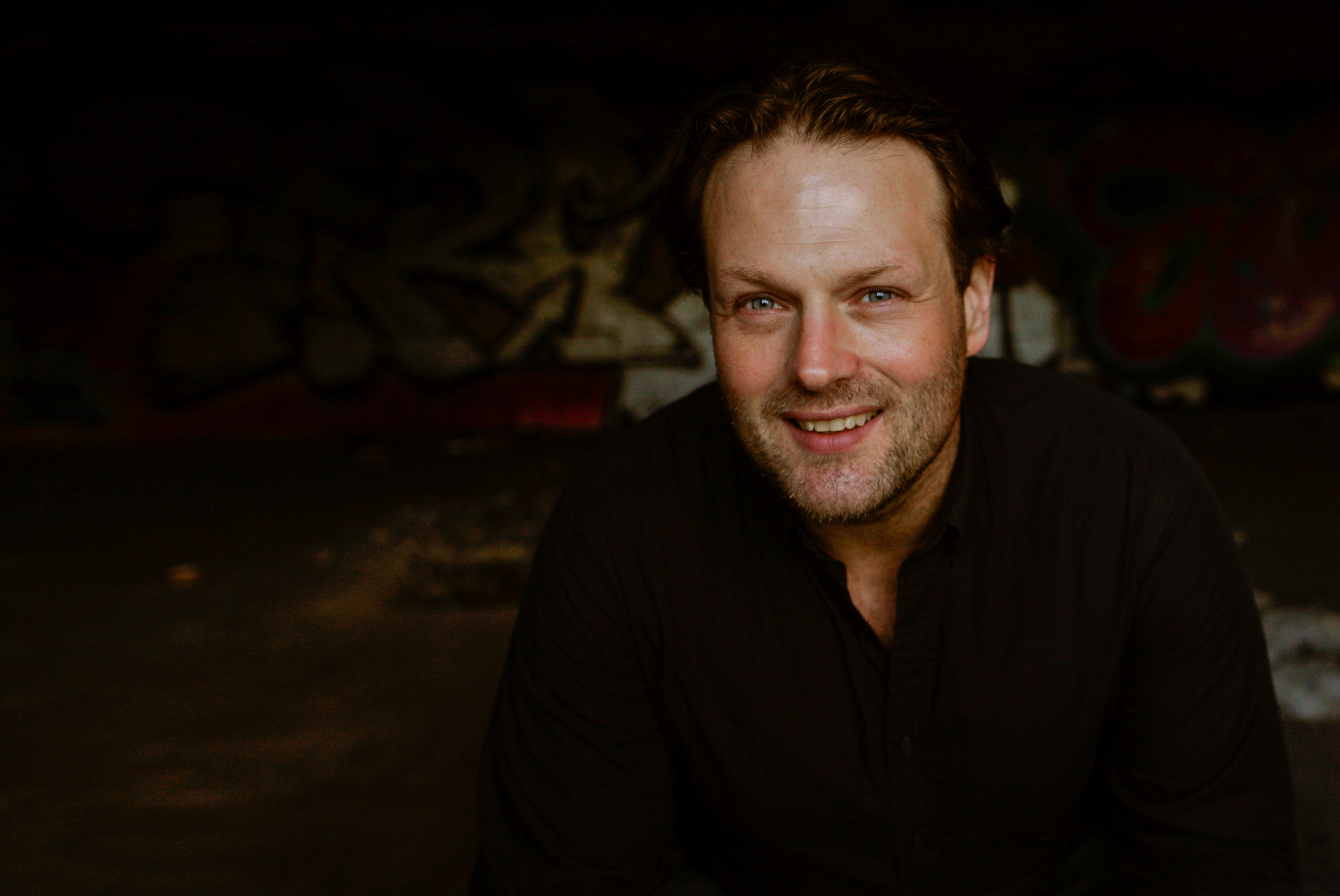
Henrik Werdelin
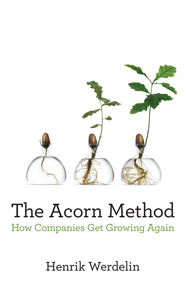
Henrik Werdelin is the co-founder of BARK, the maker of BarkBox and one of America's fastest growing pet brands, and a founding partner of Prehype, an international venture studio that helps entrepreneurs and companies build new businesses. His methods for launching new ventures inside existing organizations are taught at Stanford and other leading universities and have been featured in Harvard Business Review, Bloomberg, and Fast Company. He is the author of The Acorn Method.
📚 Books by Henrik Werdelin
Transcript
[0:00:15] NVN: I’m joined today by BarkBox cofounder and founding partner of Prehype, Henrik Werdelin. Henrik is also the author of the new book, The Acorn Method: How Companies Get Growing Again. Part philosophy, part process, this book draws form Henrik’s own experience both at his one companies and as an advisor to companies like Coca-Cola, Lego and Verizon. In this episode, Henrik explains how businesses should think about growth as a process of expanding out like a forest rather than up like a tree. But he explains it better than I do. So here he is. Henrik, thank you so much for joining me today.
[0:00:55] Henrik Werdelin: Thanks for having me on.
[0:00:57] NVN: I am very excited to hear a little bit about your career up to this point. It seems to me that you’ve done some really cool things.
[0:01:06] Henrik Werdelin: I guess so. I think they sound cooler than maybe they felt when I was doing it but I definitely done a lot of different things.
[0:01:13] NVN: Talk to me specifically about BarkBox, how did you come up with that idea and what is the trajectory been like form your perspective?
[0:01:22] Henrik Werdelin: Well, we started Bark, I guess almost eight years now and at the time, it wasn’t really supposed to be that big of a business. My cofounders and I were kind of riffing on something to do almost like a side hustle and we were all three big dog lovers and wanted to do something that makes our own dogs happy and then so we came up with basically finding the best products and then putting them in a box and then sending it to everyone. At the time, we didn’t really know that this was like a huge industry and we didn’t really know how big it could become and now eight years later, we are serving millions of customers and we have hundreds of staff and we are kind of one of those very fast growing companies here in the US and doing all sorts of products and services from dog toys to dental products, to food, to dog carts and what else you can think of to make a dog happy.
[0:02:15] NVN: Your side hustle has turned out okay, basically.
[0:02:19] Henrik Werdelin: The side hustle definitely turned out.
[0:02:22] NVN: Since you have experience in the startup space, I’m interested in if what your experience here is sort of bares out. I love that you just started it because it was something that you’re into and you love dogs. Is there something to that as far as startups go?
[0:02:40] Henrik Werdelin: You know, I do think that it makes it easier if you sought something that you’re passionate about because there’s just so many long days and nights where you have to work on it and if you don’t have the energy, you can't find the energy from somewhere then it’s just like a very long time and I think a lot of people kind of like just throw in the towel at one point. There’s definitely that element of that. I don’t think necessarily it has to be just do your passion. I think I’ve been involved in growing businesses that I felt was intellectually very interesting but way I didn’t have the same kind of personal passion. It wasn’t the same personal passion as making dogs happy. I think if you start your own, I think that’s definitely a great benefit if you can kind of resonate that. But I think there’s a lot of entrepreneurial people sitting in companies and doing something which is not as kind of like emotional as making dogs happy. I think if you can be passionate about just growing those businesses too.
[0:03:35] NVN: When you put it that way, I really can’t think of a better job than yours, making dogs happy.
[0:03:42] Henrik Werdelin: It is a luxury to be able to get customer kind of emails and it’s just a picture of a dog being very excited about our product you made. We’re definitely spoiled on that side.
[0:03:52] NVN: Totally. In your time both with BarkBox as a startup and other startups, talk to me about some of the biggest lessons that you’ve learned?
[0:04:02] Henrik Werdelin: Well, I think, in many ways, the book describe a lot of those and for me, it is that there is both an art but definitely all sorts of science of building something out of nothing, building from scratch. I think one big insight is definitely that if you're a little bit systematic about how you are conducting your business that then you have a better chance of success. I think there’s just kind of like idea that when people are building something new, they kind of just go all in and they work really hard and then they come on top or not. I think what I’ve learned is that it’s really about experimentation and it’s really about having a thesis and then really developing the muscle that allow you to test something really quickly and if it works, then you double down on it and if it doesn’t work, then you kind of ruthlessly move on to the next thing.
[0:04:53] NVN: Ruthlessly moving on to the next thing sounds difficult to me.
[0:04:59] Henrik Werdelin: Yeah, I think it is specifically because I think people who are building new things get very passionate about their project and so – and I think there’s also this kind of inherent issue that if you are somebody who built something new, often, what you are good at is to kind of think of a potential future that doesn’t exist yet. You have to pitch that to people, you have to pitch that to investors or your boss or your spouse or your staff and sometimes when that thing doesn’t work, when the data basically doesn’t seem to support the thesis you have, it can be very complicated to kind of accept that and so, I work with a principle I call default debt. That’s basically a little system that I’m trying to put in place for myself that only allow me to allocate a certain amount of time or certain amount of money to a new experiment. If I don’t see the data basically supporting the thesis I have, I default kind of kill it instead of default and trying to continue it.
[0:06:03] NVN: I like that. That strikes me as a very clever safety net to check your emotions and passions and investment and how all of that can play into this.
[0:06:13] Henrik Werdelin: Totally, I think a lot of times, specifically and I think people who work in larger companies, you know, this will resonate but it is so difficult to get an organization to do something new, that by the time that you pitched everybody, you kind of feel like now you have to make it a success. And then I think what big companies sometimes do is they just throw more money at it and sometimes more money is not necessarily the problem, it’s basically, that the problem that you are trying to solve for customer isn’t really perceived as a problem for the customer or the customers don’t like the solution that you have for the problem. Money can’t solve that problem and so, I think a lot of times, you kind of get into this kind of evil spiral where you finally get something kind of approved and get the green light to kind of move forward with and then suddenly you realize, this data doesn’t support the idea and then you really don’t have any way to go back.
[0:07:04] NVN: I’ve sort of backed us into this at this point but I would love you to describe to listeners what exactly 'the acorn method' is?
[0:07:13] Henrik Werdelin: Yeah, 'the acorn method' is a both a philosophical stand and a practical guide for how companies can learn how to build new products and services or new companies again. The reason why I use that methodology was because I got very inspired for how Amazon and Google and companies and Apple and companies like Bark kind of like was becoming very good of becoming not just a single products company but really understood how that they needed to build different types of products and services when they are first product had kind of matured. I was kind of looking around to try to find a good way to explain it. I stumbled over this book called The Secret Life of Trees and it’s a forestry book. It’s nothing to do with business. But suddenly it dawned on me. That threes over 300 million years have learned that at one point, when a tree grows up, it can’t just grow further up, it can’t become bigger, you have to invent a system for regeneration that runs it into a forest instead of just a bigger tree. Suddenly it dawned on me that if you look at what Apple have done over the last 30 years, if you look at what Google is doing successfully, what they’re all doing is that they have a core business and they identified fertile ground around it and then they basically invent the equivalent of acorns and they drop those acorns in the fertile ground around him. Then they use their root system to basically support these new entities and they grow up and become powerful. Suddenly, I feel like for me, it unlocked a way to explain a system for growth that trees have had for 300 million years but that that wasn’t really documented and there wasn’t really any good vocabulary capillary for us in the business world.
[0:09:03] NVN: It’s amazing, I love it when an idea that sort of nebulous in my own mind crystalizes because of something that actually has nothing to do with that idea in the first place but encapsulates it perfectly.
[0:09:15] Henrik Werdelin: Yeah, I think you’re totally right. A lot of innovation, a lot of ideas comes in like the fringes, right? At the intersection of different kind of industries and different sciences. Sorry about that. My dog is barking at the background which I guess is very on brand for BarkBox.
[0:09:32] NVN: Right, very appropriate. We know you just pressed a button to add that little bit of ambience on.
[0:09:39] Henrik Werdelin: Trying to remind my dog Molly that nobody’s scared of a slightly overweight yellow lab but she is defending the fort, she’s defending the home.
[0:09:47] NVN: True love. What I love about this is you’ve taken this idea and tethered it down to a process that businesses can actually follow as they look to build their own forest. Can you talk to me about what that looks like in action?
[0:10:06] Henrik Werdelin: Yeah, I guess the three core elements of the acorn method is basically first you need to figure out as a company what is the equivalent of your acorn. What is the team and what is the system that you put in place in order to build something from zero to one. A lot of organizations, they have good tech teams and good marketing teams and good business development teams and procurement teams and all those ones. But they are really optimized to make sure your existing business just grows bigger. Very few have teams that are trying and that are very good at building something from scratch. First, you need to figure out what is your regeneration system, what is your equivalent of the acorn? For me, it’s a lot about the type of talent that you employ to do those things and it’s a lot about the methodology that you deploy it. It’s different to grow a sprout tan it is to build another branch for example. The first element is basically like the talent and the system around that. The second is that where do you have permission to play, where is the fertile ground around your business. I think there is a lot of different elements that goes into that that I describe in the book. To give you an example, you kind of have to have permission from your customers to play in new areas. I have a thought experiment that I think sometimes kind of bring that point home. If I told you that Nike was making a new hotel, I think you would have a visual of what that hotel might look like. But if I told you that Hilton is making a new shoe, you probably wouldn’t know what that would look like. Some companies have brand permission to go into other spaces around them and that is one of the components that you need to look at. The opportunity spaces around the tree. The third one which is almost more important than the other ones is how do you make sure that the core organization support this new relationship. How do you make sure that it doesn’t become too big and overshadowed this sprout but at the same way, how do you make sure that it facilitates, with nutrients in and kind of benefits and resources that will make this new sprout grow quicker and faster and just upwards and that system is something which is very difficult for a lot of organizations also to build. And so those three components, the talent, the opportunity space and the systems of support is what I described in the book.
[0:12:28] NVN: I was really intrigued by what I believed you called brand permission. Is that the phrase you used?
[0:12:35] Henrik Werdelin: Yeah.
[0:12:36] NVN: Okay because that was exactly where my mind was going was this idea makes so much sense but can it collide with branding in anyway. I guess my question around that is this idea of brand permission and using your example that the Nike hotel would conjure up an image to mind whereas as a Hilton shoe would leave customers wondering what that was all about. Is there any way for companies to sort of build toward brand permission from early days with the idea or at least leaving themselves the room to build a forest over the long run or is this something that has to happen more organically than that?
[0:13:21] Henrik Werdelin: I think the answer is both. I think the core of what companies that often have permission to become forest instead of large trees have is that they are trying to solve a problem rather than being a utility. And what I mean by that is I’ll take my company Bark as an example. When we set out to build that company, our core thing that we wanted to solve was that we wanted to make dogs happy. That has always been the ethos of what we are trying to do. We were never a box subscription business and so sometimes people ask me, “Well when are you building cat box?” And I think that question is the underlying question there is they see our company as a company that is very good of putting things in a box and sending that to people. But our core competencies is not doing that. We are obviously good at that since we have done that millions and millions of times but what we really see ourselves good at is making dogs happy. And so our next product was a dental product and a dog park and all of these other things because that is what we understand how to do and I think the reason why we could do that and the reason why our customers allowed us to do that was that they had always felt that what we were set out to do was to solve our problem instead of becoming a utility and there’s other companies that are very good utility companies and they do something very specific very well. And then they can go in and provide that utility to a lot of different verticals but for us it was about making the dogs happy.
[0:14:50] NVN: That is so interesting to me because as you were saying that it occurred to me well of course, you guys could have gotten away presumably with going in the other direction of making a cat box and a gerbil box and a parrot box and going from there, in a different scenario. So I’d like to land there for a second and I understand this is hypothetical but do you think that had you taken that alternate route, it would have worked for you or not? Would something had been lost if the forest had grown in that direction?
[0:15:23] Henrik Werdelin: I mean like I think it is increasingly difficult to just do that because I think a 21st century company is all about the strength of the relationship it has with its customers and I think in these days it is difficult to create a long-lasting business that don’t obsess about the customer’s problem and saying we see that as our business to come up with anything we can to help you solve that. If you are just providing utility at one point people might lose the utility and therefore then they also lose the relationship. I will give you an example, one of the companies that I’ve helped advice is Dow Jones and the Wall Street Journal and I think they cleverly see themselves as a financial information company not just a newspaper and so if your core business was to print stuff on paper then obviously you would be facing a pretty uncertain future as the world is moving away from that. But if you see yourself as somebody who is very good at taking very complicated information and then distill and synthesize that into something that decision makers can use on a daily basis then suddenly your coal business is not printing 300 words in a paper format, your core business is that and that allow – that have allowed Wall Street Journal and its parent company Dow Jones to move into a compliance business and into the events business into a lot of businesses around what a professional person kind of needs. And so I think it is increasingly difficult if you’re just a utility provider. And then you need to be the world’s best at that specific utility and sometimes even if you are that then the world changes around you.
[0:17:09] NVN: That makes a lot of sense. This topic strikes me potentially particularly relevant right now as we’re in the midst of this pandemic, which obviously has had a lot of economic fallout and there is uncertainty ahead of a lot of businesses. Do you have any thoughts that relate to this idea of using an acorn to grow a forest that you feel particularly apply to business owners who might be looking for potential ways out of this, understanding that things are going to look different than they did before?
[0:17:44] Henrik Werdelin: Yeah, I obviously didn’t know about this pandemic when I wrote the book. That would be freaky.
[0:17:50] NVN: That would be another book.
[0:17:51] Henrik Werdelin: But there was definitely a sense of change happening in the business environment, even without this pandemic and that was because if you take existing companies, you suddenly have a lot of the big technology companies that are moving into a lot of new industries. You have a lot of startups that are trying to disrupt very lucrative parts of existing businesses and then you have macro-environment changing. You know, people using computers more and what have you. And so The Acorn Method for me is very much a book about how do you find new ways to grow in uncertain times and I think it really is about trying to create vocabulary for the leaders in organization that sees themselves as much as hunters than just farmers, as much as explorers as exploiters. And I think you need both in your organization but over the last 20, 30 years there’s definitely been a general trend. Of just doing what you did very well and making sure that you did that in many markets and then buy your competitors and then that was the ethos of how you were building growth and I think ingenuity and entrepreneurship and experimentation and all of these other tools of the explorers and of the hunters are like tools that will be required in order for your organization to keep growing and we haven’t had a lot of methodology and a lot of terminology to even describe that. And the terminology has been very reserved to the startup world, which is awesome but you can’t really take startup methodology and directly apply that to a big organization. You have to adapt it to that kind of culture and to the problems that they have and so I very much think that the acorn method is probably even more relevant now after that we are seeing what nature can throw at us, than it was before.
[0:19:56] NVN: Yeah the timing is kind of uncanny and it is also interesting to me to say that you are sensing a shift coming regardless of this. That makes sense.
[0:20:08] Henrik Werdelin: Yeah I definitely think that technology had changed to the requirements of the organization and I think it had disrupted a lot of things like I described in the book when you were creating a direct to consumer company like a Bark 30 years ago, I would have needed an R&D team and a factory and a big warehouse and a big ERP system and all of those different and probably like a deal with a big retailer and that was kind of like before I got started. And now, I could 3D print an idea. I could get it made overseas and shipped relatively cheap. There are these things called 3PLs, which are basically like warehouses but that you just connect with through the internet and so you don’t even have to really own a warehouse and then you could sell stuff directly through Facebook. And so all of those elements that you need in order to set up a business just wasn’t there before, which is great for an entrepreneur. But if you are a company that has been doing this for 30, 50, a hundred years and suddenly you know a Danish person could come in and disrupt your toy business and then that is not so good and then you need to learn to do that yourself.
[0:21:21] NVN: It strikes me listening to you talk, while this is certainly a scary time in a lot of ways, we’re probably actually going to see a lot of really cool things come out of it in the long run.
[0:21:33] Henrik Werdelin: Yeah I think it is a scary time for established companies because I do think that there is a lot of new stuff happening and I agree that it is also a very opportune time. I mean like I think the reason why it is important to have this conversation is because I think that the world is a better place, the more products and services are being offered by a more broader spectrum of suppliers. And so I am concerned for existing companies because if you just look at how long they seem to be surviving that time is getting shorter and shorter. And I am not sure that I think it is a good thing if we all get our products and services from only three or four companies. I think having hundreds of companies to choose from is something that is important and I think startups play a role in that and I think the big tech companies play a role in that but I also think it’s important that some of these companies has been around for a 100 years that are building good values and employ a lot of people. It is important that they stick around and I think for them to stick around they need to start to understand that they need to build a new capabilities and that is what I am trying to describe in the book.
[0:22:47] NVN: Henrik thank you so much for joining me today. Again, the book is The Acorn Method: How Companies Get Growing Again. Henrik, where else can listeners find you?
[0:22:57] Henrik Werdelin: I am active on the internet, as you might imagine. If you go to Twitter my last name Werdelin, I post quite a bit there, otherwise I am on LinkedIn and then I teach through a network of entrepreneurs that I created called Pre-Hype and so I am prehype.com there is also more information about all of this stuff.
[0:23:18] NVN: Awesome and I am guessing everything else aside you’re worth following because there has to be so much good dog content coming from you.
[0:23:25] Henrik Werdelin: If you’re a dog lover then you’ll definitely get your daily dribble of cute puppies.
[0:23:31] NVN: Perfect, there is something we all need more of now.
[0:23:35] Henrik Werdelin: Exactly, right?
[0:23:36] NVN: Henrik thank you so much. Best of luck with the book.
[0:23:39] Henrik Werdelin: Thank you so much.
[0:23:40] NVN: Thanks for joining us for this episode of Author Hour. You can find The Acorn Method, on Amazon. For more Author Hour, hit the subscribe button on your favorite podcast service. Thanks for joining us, we’ll see you next time. Same place, different author.
Want to Write Your Own Book?
Scribe has helped over 2,000 authors turn their expertise into published books.
Schedule a Free Consult